Recent from talks
Knowledge base stats:
Talk channels stats:
Members stats:
Kandahar
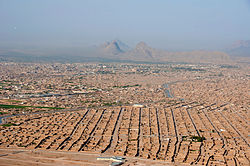
Kandahar is a city in Afghanistan, located in the south of the country on Arghandab River, at an elevation of 1,010 m (3,310 ft). It is Afghanistan's second largest city, after Kabul, with a population of about 614,118 in 2015. It is the capital of Kandahar Province and the centre of the larger cultural region called Loy Kandahar.
The region around Kandahar is one of the oldest known areas of human settlement. A major fortified city existed at the site of Kandahar, probably as early as c. 1000–750 BC, and it became an important outpost of the Achaemenid Empire in the 6th century BC. Alexander the Great laid the foundation of what is now Old Kandahar (in the southern section of the city) in the 4th century BC and named it Alexandria Arachosia. Many empires have long fought over the city due to its strategic location along the trade routes of southern, central and western Asia. In 1709, Mirwais Hotak made the region an independent kingdom and made Kandahar the capital of the Hotak dynasty. In 1747, Ahmad Shah Durrani, founder of the Durrani dynasty, made Kandahar the capital of the Afghan Empire.
Kandahar is the founding city and spiritual center of the Taliban. Despite the capital of Afghanistan being Kabul, where the government administration is based, Kandahar is the seat of power in Afghanistan as the supreme leader and his spiritual advisers are based there. Kandahar has therefore been called the de facto capital of Afghanistan, though the Taliban maintain Kabul as the official capital.
Kandahar is one of the most culturally significant cities of the Pashtun community and has been their traditional seat of power for more than 300 years. It is a major trading center for fresh and dried fruit, including food grains, sheep, wool, cotton, silk, and felt. The region produces fine fruits, especially pomegranates and grapes, and the city has plants for canning, drying, and packing fruits. Kandahar continues to experience violence, with numerous armed clashes, bombings, and attacks that harm civilians.
The modern name of the city derives from the name of the original city built here, Alexandria. This city (often referred to as Alexandria in Arachosia to distinguish it from other Alexandrias) was founded after the invasion of Alexander the Great in 330 BC. The name "Alexander" in the local Pashto language is rendered as "Iskandar". It is believed that over time this transformed into "Scandar", and eventually the modern "Kandahar". The change of the name from "Scandar" to Candar is mentioned by the 16th-century Portuguese historian João de Barros in his most famous work, Décadas da Ásia.
A folk etymology offered is that the word "kand" or "qand" in Persian and Pashto (the local languages) is the origin of the word "candy". The name "Candahar" or "Kandahar" in this form probably translates to candy area. This probably has to do with the location being fertile and historically known for producing fine grapes, pomegranates, apricots, melons and other sweet fruits.[citation needed]
Ernst Herzfeld claimed Kandahar perpetuated the name of the Indo-Parthian king Gondophares, who re-founded the city under the name Gundopharron. However, modern historians and linguists generally find this derivation implausible.
Macedonia 330 BC–312 BC
Seleucid Empire 312 BC–304 BC
Maurya Empire 304 BC–204 BC
Seleucid Empire 204 BC–c. 180 BC
Greco-Bactrian Kingdom 180 BC – c. 150 BC
Yavana Kingdom c. 150 BC–142 BC
Indo-Scythians 142 BC–32 BC
Parthian Empire 32 BC–19 CE
Indo-Parthian Kingdom 19–36
Kushan Empire 36–230
Sasanian Empire 230–645
Rashidun Caliphate 645–661
Umayyad Caliphate 661–750
Abbasid Caliphate 750–861
Saffarid dynasty 861–977
Ghaznavid Empire 977–1175
Ghurid dynasty 1175–1207
Khwarazmian Empire 1207–1222
Mongol Empire 1222–1256
Ilkhanate 1256–1347
Kart dynasty 1347–1382
Timurid Empire 1382–1507
Mughal Empire 1507–1649
Safavid Empire 1649–1711
Hotak dynasty 1711–1738
Afsharid Empire 1738–1747
Durrani Empire 1747–1818
Principality of Kandahar 1818–1839
United Kingdom (Company Raj) 1839–1842
Principality of Kandahar 1842–1855
Afghanistan 1855–present
Hub AI
Kandahar AI simulator
(@Kandahar_simulator)
Kandahar
Kandahar is a city in Afghanistan, located in the south of the country on Arghandab River, at an elevation of 1,010 m (3,310 ft). It is Afghanistan's second largest city, after Kabul, with a population of about 614,118 in 2015. It is the capital of Kandahar Province and the centre of the larger cultural region called Loy Kandahar.
The region around Kandahar is one of the oldest known areas of human settlement. A major fortified city existed at the site of Kandahar, probably as early as c. 1000–750 BC, and it became an important outpost of the Achaemenid Empire in the 6th century BC. Alexander the Great laid the foundation of what is now Old Kandahar (in the southern section of the city) in the 4th century BC and named it Alexandria Arachosia. Many empires have long fought over the city due to its strategic location along the trade routes of southern, central and western Asia. In 1709, Mirwais Hotak made the region an independent kingdom and made Kandahar the capital of the Hotak dynasty. In 1747, Ahmad Shah Durrani, founder of the Durrani dynasty, made Kandahar the capital of the Afghan Empire.
Kandahar is the founding city and spiritual center of the Taliban. Despite the capital of Afghanistan being Kabul, where the government administration is based, Kandahar is the seat of power in Afghanistan as the supreme leader and his spiritual advisers are based there. Kandahar has therefore been called the de facto capital of Afghanistan, though the Taliban maintain Kabul as the official capital.
Kandahar is one of the most culturally significant cities of the Pashtun community and has been their traditional seat of power for more than 300 years. It is a major trading center for fresh and dried fruit, including food grains, sheep, wool, cotton, silk, and felt. The region produces fine fruits, especially pomegranates and grapes, and the city has plants for canning, drying, and packing fruits. Kandahar continues to experience violence, with numerous armed clashes, bombings, and attacks that harm civilians.
The modern name of the city derives from the name of the original city built here, Alexandria. This city (often referred to as Alexandria in Arachosia to distinguish it from other Alexandrias) was founded after the invasion of Alexander the Great in 330 BC. The name "Alexander" in the local Pashto language is rendered as "Iskandar". It is believed that over time this transformed into "Scandar", and eventually the modern "Kandahar". The change of the name from "Scandar" to Candar is mentioned by the 16th-century Portuguese historian João de Barros in his most famous work, Décadas da Ásia.
A folk etymology offered is that the word "kand" or "qand" in Persian and Pashto (the local languages) is the origin of the word "candy". The name "Candahar" or "Kandahar" in this form probably translates to candy area. This probably has to do with the location being fertile and historically known for producing fine grapes, pomegranates, apricots, melons and other sweet fruits.[citation needed]
Ernst Herzfeld claimed Kandahar perpetuated the name of the Indo-Parthian king Gondophares, who re-founded the city under the name Gundopharron. However, modern historians and linguists generally find this derivation implausible.
Macedonia 330 BC–312 BC
Seleucid Empire 312 BC–304 BC
Maurya Empire 304 BC–204 BC
Seleucid Empire 204 BC–c. 180 BC
Greco-Bactrian Kingdom 180 BC – c. 150 BC
Yavana Kingdom c. 150 BC–142 BC
Indo-Scythians 142 BC–32 BC
Parthian Empire 32 BC–19 CE
Indo-Parthian Kingdom 19–36
Kushan Empire 36–230
Sasanian Empire 230–645
Rashidun Caliphate 645–661
Umayyad Caliphate 661–750
Abbasid Caliphate 750–861
Saffarid dynasty 861–977
Ghaznavid Empire 977–1175
Ghurid dynasty 1175–1207
Khwarazmian Empire 1207–1222
Mongol Empire 1222–1256
Ilkhanate 1256–1347
Kart dynasty 1347–1382
Timurid Empire 1382–1507
Mughal Empire 1507–1649
Safavid Empire 1649–1711
Hotak dynasty 1711–1738
Afsharid Empire 1738–1747
Durrani Empire 1747–1818
Principality of Kandahar 1818–1839
United Kingdom (Company Raj) 1839–1842
Principality of Kandahar 1842–1855
Afghanistan 1855–present