


Community hub
Recent from talks
Contribute something
Nothing was collected or created yet.
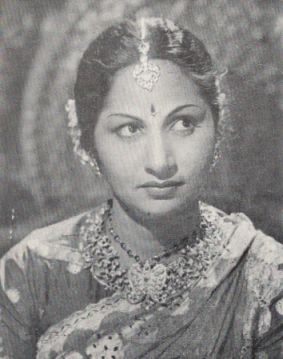
P. Kannamba
View on Wikipedia
Pasupuleti Kannamba (Pasupulēţi Kannāṃba) (5 October 1911 – 7 May 1964) was an Indian actress, playback singer and film producer of Telugu cinema, of Andhra Pradesh, India. She acted in more than 170 films and produced about 25 films in Telugu and Tamil languages from the 1930s to the 1960s.[1][2]
Key Information


Career
[edit]Kannamba was born on 5 October 1911.[3] Her birthplace is Owku in Nandyal district. Her parents were Lokamba and M. Venkanarasaiah, a government contractor. She was their only child and grew up with her maternal grandparents in Eluru.[3] She started acting in dramas at the age of 13. She performed many characters such as Sati Savitri, Anasuya and Chandramati.
Her film career began with the Chandramati character in Harishchandra (1935) of Star Combines. She acted in about 150 films and won accolades for her roles in Draupadi Vastrapaharanam, Kanakataara, Saranagadhara, Gruhalakshmi and Chandika. She acted in the title role of Kannagi in Tamil and in Palnati Yudham as Nayakuralu Nagamma, opposite Govindarajula Subba Rao. She acted in Ashok Kumar (1941) as Queen, opposite another great actor, V. Nagayya.[4] She acted together with P. U. Chinnappa in many movies, such as Kannagi, Mahamaya, Harischandra and Tulasi Jalandhar.[5]
She married Kadaru Nagabhushanam in 1941. They established "Raja Rajeswari Films" and produced about 30 films, including Sumati, Padhuka Pattabhishekam, Saudamani, Peda Raitu, Lakshmi, Sri Krishna Tulabharam, Sati Sakkubhai and Sati Anasuya. Their movie Navajeevanam (1949) was awarded as the best film by Combined Madras state.
She died on 7 May 1964.[1]
Filmography
[edit]Actress
[edit]This is the complete list of her films compiled by H. Ramesh Babu.[6]
| Year | Film | Language | Character |
|---|---|---|---|
| 1934 | Seeta Kalyanam | ||
| 1935 | Harishchandra | Telugu | Chandramathi |
| 1936 | Draupadi Vastrapaharanam | Telugu | Draupadi |
| 1937 | Kanakatara | Telugu | |
| 1937 | Sarangadhara | Telugu | |
| 1938 | Gruhalakshmi | Telugu | Radha |
| 1939 | Mahananda | ||
| 1940 | Krishnan Thoothu | Tamil | Draupadi |
| 1940 | Bhoja Kalidasa | ||
| 1940 | Chandika | Telugu | Chandika |
| 1941 | Ashok Kumar | Tamil | Tishyaralshithai |
| 1941 | Talliprema | Telugu | Santha |
| 1942 | Kannagi | Tamil | Kannagi |
| 1942 | Sumati | ||
| 1944 | Mahamaya | Tamil | Mahamaya |
| 1944 | Harichandra | Tamil | Chandramathi |
| 1945 | Mayalokam | Telugu | |
| 1945 | Maya Machhindra | Telugu | |
| 1945 | Paduka Pattabhishekam | Telugu | Kaikeyi |
| 1946 | Mugguru Maratilu | Telugu | |
| 1947 | Palnati Yudham | Telugu | Naagamma |
| 1947 | Tulasi Jalandhar | Tamil | |
| 1947 | Deivaneethi | Tamil | |
| 1948 | Gnana Soundari | Tamil | Gnana Soundari |
| 1949 | Navajeevanam | Tamil | |
| 1949 | Mangaiyarkarasi | Tamil | |
| 1951 | Saudamini | Tamil | |
| 1951 | Saudamini | Telugu | |
| 1951 | Sudharshan | Tamil | |
| 1952 | Ezhai Uzhavan | Tamil | |
| 1952 | Peda Rytu | Telugu | |
| 1952 | Mugguru Kodukulu | Telugu | |
| 1952 | Moondru Pillaigal | Tamil | |
| 1953 | Lakshmi | Tamil | |
| 1953 | Lakshmi | Telugu | |
| 1954 | Manohara | Hindi | Queen |
| 1954 | Manohara | Tamil | Queen |
| 1954 | Manohara | Telugu | Queen |
| 1954 | Sati Sakkubai | Telugu | |
| 1955 | Anarkali | Telugu | Jodha Bai |
| 1955 | Anarkali | Tamil | Jodha Bai |
| 1955 | Chella Pillai | Tamil | |
| 1955 | Pennarasi | Tamil | Queen |
| 1955 | Sri Krishna Tulabharam | Telugu | |
| 1955 | Vadina | Telugu | |
| 1956 | Charana Daasi | Telugu | |
| 1956 | Naga Panchami | Tamil | |
| 1956 | Naga Panchami | Telugu | |
| 1956 | Umasundari | Telugu | |
| 1956 | Mathar Kula Manickam | Tamil | |
| 1956 | Thaikkupin Tharam | Tamil | Meenatchi |
| 1957 | Makkalai Petra Magarasi | Tamil | Angamma |
| 1957 | Todi Kodallu | Telugu | Annapurna |
| 1957 | Engal Veettu Mahalakshmi | Tamil | |
| 1957 | Neelamalai Thirudan | Tamil | |
| 1957 | Vanangamudi | Tamil | Mangalam |
| 1958 | Aadapettanam | Telugu | |
| 1958 | Avan Amaran | Tamil | |
| 1958 | Anna Thammudu | Telugu | |
| 1958 | Kaathavaraayan | Tamil | Kamakshi/Goddess Parvati |
| 1958 | Kathavarayuni Katha | Telugu | |
| 1958 | Kudumba Gauravam | Tamil | |
| 1958 | Kutumba Gouravam | Telugu | |
| 1958 | Shri Krishna Maya | Telugu | |
| 1958 | Periya Koyil | Tamil | |
| 1958 | Uthama Puthiran | Tamil | Queen |
| 1958 | Vanjikottai Valiban | Tamil | Sivakami |
| 1958 | Mangalya Balam | Telugu | |
| 1959 | Manjal Magimai | Tamil | |
| 1959 | Raja Makutam | Telugu | |
| 1959 | Raja Magudam | Tamil | |
| 1959 | Raja Sevai | Tamil | |
| 1959 | Rechukka Pagatichukka | Telugu | |
| 1959 | Veera Bhaskaradu | Telugu | |
| 1959 | Nalla Theerpu | Tamil | |
| 1959 | Uthami Petra Rathinam | Tamil | |
| 1959 | Thaai Magalukku Kattiya Thaali | Tamil | Thanabakkiam |
| 1959 | Uzhavukkum Thozhilukkum Vandhanai Seivom | Tamil | |
| 1959 | Vaazha Vaitha Deivam | Tamil | |
| 1960 | Abhimanam | Telugu | Mother |
| 1960 | Dharmame Jayam | Telugu | |
| 1960 | Jalsarayudu | Telugu | |
| 1960 | Maa Babu | Telugu | |
| 1960 | Padikkadha Medhai | Tamil | |
| 1961 | Jagadeka Veeruni Katha | Telugu | Parvathi Devi |
| 1961 | Krishna Kuchela | Telugu | |
| 1961 | Bhagyalakshmi | Tamil | |
| 1961 | Marutha Nattu Veeran | Tamil | |
| 1961 | Pelli Thambulam | Telugu | |
| 1961 | Thaai Sollai Thattadhe | Tamil | |
| 1961 | Pendli Pilupu | Telugu | |
| 1961 | Usha Parinayam | Telugu | Wife of Banasura |
| 1962 | Thayai Katha Thanayan | Tamil | |
| 1962 | Aatma Bandhuvu | Telugu | |
| 1962 | Nichaya Thaamboolam | Tamil | Kamakshi |
| 1962 | Dakshayagnam | Tamil | Daksha's wife |
| 1962 | Dakshayagnam | Telugu | Daksha's wife |
| 1962 | Swarnamanjari | Telugu | |
| 1962 | Padithaal Mattum Podhuma | Tamil | Mangalam |
| 1963 | Aapta Mitrulu | Telugu | |
| 1963 | Idhu Sathiyam | Tamil | |
| 1963 | Lava Kusha | Tamil | Kausalya |
| 1963 | Lava Kusa | Telugu | Kausalya |
| 1963 | Paruvu Prathishta | Telugu | |
| 1963 | Needhikkuppin Paasam | Tamil | Saraswathi |
| 1963 | Kulamagal Radhai | Tamil | Radha's Mother |
| 1964 | Aathma Balam | Telugu | |
| 1964 | Ramadasu | Telugu | Ramadasu's wife |
| 1965 | Antastulu | Telugu | |
| 1965 | Chaduvukunna Bharya | Telugu | |
| 1965 | Keelu Bommalu | Telugu | |
| 1968 | En Thambi | Tamil | Kannan Mother (Photo Image Used) |
Playback singer
[edit]These are some of the Telugu songs voiced by her for the films.
| Year | Film | Songs |
|---|---|---|
| 1935 | Harishchandra | "Jananamu Dhanyata Gaada", "Karunakara", "Sritajana Bandhu" |
| 1937 | Kanakatara | "Ee Vasantha Sobha" |
| 1938 | Gruhalakshmi | "Badha Sahaname", "Naa Premaye", "Sagamu Rathiri Ayyane", "Yashoda Nandana" |
| 1940 | Chandika | "Anandamaye Naho", "Eme O Koyila", "Nene Raninaithe" |
| 1941 | Talliprema | "Jo Jo Nandabala", "Prema Nidhanamu" |
| 1942 | Sumati | "Jayahe Thrishooladhari" |
| 1945 | Maya Machhindra | "Dhanyambayyenu Janmamu", "Haayiga Paadedanu", "Meluko", "O Malathi" |
| 1946 | Mugguru Maratilu | "Stree Bhagyame Bhagyamu", "Teerugada Asha Nedu" |
| 1947 | Palnati Yudham | "Evaravaya Deva", "Thana Pantamu Naathona", "Thera Teeyagarada" |
Producer
[edit]She has produced about 25–30 films along with her husband Kadaru Nagabhushanam under the banners of Sri Rajarajeswari films, Rajasri pictures and Sri Varalakshmi films.
| Year | Film | Language |
|---|---|---|
| 1941 | Talliprema | Telugu |
| 1942 | Sumati | Telugu |
| 1944 | Harishchandra | Tamil |
| 1945 | Paduka Pattabhishekam | Telugu |
| 1946 | Bhakta Tulasidas | Telugu |
| 1949 | Navajeevanam | Tamil |
| 1949 | Navajeevanam | Telugu |
| 1949 | Tulasi Jalandhar | Tamil |
| 1951 | Saudamini | Tamil |
| 1951 | Saudamini | Telugu |
| 1952 | Ezhai Uzhavan | Tamil |
| 1952 | Peda Rytu | Telugu |
| 1953 | Lakshmi | Tamil |
| 1953 | Lakshmi | Telugu |
| 1954 | Sati Sakkubai | Telugu |
| 1955 | Shri Krishna Thulabaram | Telugu |
| 1956 | Naga Panchami | Tamil |
| 1956 | Naga Panchami | Telugu |
| 1958 | Sri Krishna Maya | Telugu |
| 1959 | Veera Bhaskarudu | Telugu |
| 1960 | Dharmame Jayam | Telugu |
| 1961 | Usha Parinayam | Telugu |
| 1962 | Dakshayagnam | Tamil |
| 1962 | Dakshayagnam | Telugu |
| 1963 | Apta Mithrulu | Telugu |
| 1965 | Chaduvukunna Bharya | Telugu |
References
[edit]- ^ a b c V. Raman, Mohan (30 September 2011). "She walked tall in tinsel town". The Hindu. Archived from the original on 3 October 2011.
- ^ "Kannamba Pasupuleti". Archived from the original on 8 January 2014.
- ^ a b Nalini Shivkumar; Rema Mahalingam (17 October 2020). "Pasupuleti Kannamba". Cinemaazi. Retrieved 13 May 2023.
- ^ "Ashok Kumar 1941". The Hindu. Chennai, India. 25 January 2008. Archived from the original on 29 January 2008.
- ^ "Harishchandra 1944". The Hindu. Chennai, India. 3 July 2009. Archived from the original on 6 November 2012.
- ^ Dhruvatara Kannamba (telugu), Compilation by H. Ramesh Babu, Chinni Publications, Nagar Kurnool, 2008
External links
[edit]- P. Kannamba at IMDb
| International | |
|---|---|
| National | |
| Artists | |

P. Kannamba
View on GrokipediaEarly life
Family and upbringing
Pasupuleti Kannamba was born on 5 October 1911 in Cuddapah, Andhra Pradesh, to parents Lokamba and M. Venkanarasaiah, the latter being a government contractor.[1][2] As the only child of the family, she was raised primarily by her maternal grandparents in Eluru following early family circumstances that separated her from her parents.[1][2] The family's socioeconomic background was middle-class, sustained by her father's contracting work and her grandfather Nathamuni Naidu's role as a village doctor, while her grandmother served as the village nurse.[1][2] In Eluru, a culturally vibrant town in Andhra Pradesh known for its regional theatre traditions and literary heritage, Kannamba received supervised education from her grandfather, who was an enthusiast of literature and poetry.[1] This environment provided her early exposure to the performing arts, including Carnatic music, which she began learning as a child and demonstrated natural talent in singing.[1][2] These foundational influences from her family's cultural inclinations and the artistic milieu of rural Andhra Pradesh nurtured Kannamba's burgeoning interest in the arts, setting the stage for her later pursuits in theatre during adolescence.[1][2]Entry into theatre
P. Kannamba's entry into theatre occurred in 1927 at the age of 16, when she impulsively took the stage during a performance of the mythological play Harishchandra staged by the Narala Nataka Samajam in her hometown of Eluru.[1] Attending the show, she criticized a subpar portrayal of the character Chandramati, prompting a challenge from the actress; Kannamba then demonstrated her talent by singing and acting the role with such emotional depth that she moved the audience to tears, securing her immediate inclusion in the troupe.[1] This debut marked her transition from a musically inclined upbringing—supported by her literature-loving grandfather in Eluru—to professional stage performance.[1] Quickly rising as the lead actress in the Narala Nataka Samajam, Kannamba portrayed iconic roles in Telugu mythological plays, including Anusuya, Savitri, and Yasodha, which allowed her to refine her expressive acting and integrate her Carnatic music training into dramatic singing.[1] These performances, often drawn from epics like the Ramayana and Mahabharata, emphasized devotion and resilience, honing her versatility in conveying complex emotions through dialogue, gesture, and melody.[1] By 1934, she co-founded the Sri Rajarajeswari Natya Mandali with her future husband, expanding her repertoire to social plays critiquing societal norms while touring across the Madras Presidency and Nizam's Territories, further sharpening her skills amid live audiences.[1] As a young woman entering the male-dominated Andhra Pradesh theatre scene of the early 20th century, Kannamba faced significant societal resistance, where female performers were rare and often stigmatized for defying traditional gender roles confined to domesticity.[1] Her bold onstage improvisation not only challenged patriarchal expectations but also navigated logistical hurdles, such as limited opportunities for women in professional troupes and the physical demands of touring in an era without modern infrastructure.[1] Despite these obstacles, her natural charisma and technical prowess in blending acting with vocal performance established her as a trailblazer, paving the way for greater female participation in regional theatre.[1]Career
Acting career
P. Kannamba made her film debut in the Telugu mythological Harishchandra (1935), portraying the role of Chandramati opposite lead actor Addanki Srirama Murthy, marking her transition from stage acting to cinema under director P. Pullaiah.[3] This early role established her as a prominent figure in Telugu cinema, where she quickly rose to stardom, eventually appearing in over 170 films across Telugu and Tamil industries from the 1930s to the 1960s.[2] Her debut performance, influenced by her theatre background, showcased a commanding screen presence that blended dramatic intensity with emotional depth, drawing audiences to mythological narratives.[1] Kannamba excelled in mythological and historical roles, embodying strong, resilient female characters that resonated with audiences. In Chandika (1940), she played the titular valiant warrior princess in a pseudo-historical tale of court intrigues and power struggles, demonstrating her ability to handle action-oriented sequences.[2] She took on the iconic lead role of the chaste Kannagi in the Tamil epic adaptation Kannagi (1942), based on the ancient Silappatikaram, where her portrayal of a woman avenging her husband's wrongful death led to the film's massive success, running in over 110 centers and viewed by more than a crore people.[4] In Palnati Yudham (1947), a Telugu historical drama, she depicted Nayakuralu Nagamma, a pivotal figure in the legendary battle, earning praise for her authoritative and nuanced interpretation of a strategic leader.[2] Another significant performance was as Queen Tishyarakshita in the bilingual Ashok Kumar (1941), where she navigated complex emotions of jealousy and intrigue opposite Chittor V. Nagaiah's Ashoka, despite initial language barriers in Tamil.[5] Her acting style evolved from the exaggerated, stage-influenced expressions of her early theatre days—where she had trained with troupes like Sri Rajarajeswari Natya Mandali—to more subtle, realistic portrayals in film that emphasized psychological depth and strong-willed women.[1] This versatility extended to social dramas, such as Gruhalakshmi (1938), where she played Radha, a devoted wife highlighting domestic themes, and negative roles like vamps or scheming queens, allowing her to explore a spectrum of emotions from pathos in Kanakadhara (1936) to fiery passion.[1] Kannamba's foray into Tamil cinema not only broadened her repertoire but also bridged the Telugu and Tamil industries, paving the way for subsequent Telugu actors by mastering Tamil diction and collaborating on bilingual projects, thus fostering cross-regional talent exchange.[1]Playback singing
P. Kannamba made her debut as a singer in the Telugu film Harishchandra (1935), providing vocals for her own role as Chandramati in songs such as "Karunaakara Karunimpavaa," "Naa Priya Manoramanaa Nanunepu Dituvale," and "Kattaa Ekkada Lere Deenajana Rakshaadakshulu."[6] In this pioneering sound film, her contributions marked an early instance of integrated vocal performance in Telugu cinema, where she sang directly for on-screen sequences while also extending her voice to other characters.[6] Kannamba's playback singing gained prominence in Draupadi Vastrapaharanam (1936), a mythological drama where she rendered key songs emphasizing themes of devotion and trials, such as those accompanying the central narrative of Draupadi's ordeal.[7] Her vocals in this film, often in duet or solo formats, underscored the epic's emotional intensity and helped establish her as a versatile voice in early Telugu soundtracks.[7] Trained in Carnatic music by her grandfather from a young age, Kannamba's style fused classical ragas and rhythmic precision with the melodic accessibility required for cinema, delivering songs with resonant timbre, strong diction, and pathos suited to mythological contexts.[1] This approach allowed her to adapt traditional elements like bhajans and kritis into film compositions, enhancing dramatic expression without compromising vocal purity.[1] Over her career, Kannamba provided playback vocals in several films, including Grihalakshmi (1938), Talliprema (1941), Sumati (1942), and Mugguru Maratilu (1952), predominantly in mythological and devotional genres that dominated early Telugu cinema.[8][9] Her recordings, such as the popular gramophone hit "Krishnam Bhaje Radha," further amplified her influence, contributing to the popularization of Telugu film music by bridging stage traditions with emerging cinematic audiences.[2]Film production
In 1941, P. Kannamba co-founded Raja Rajeswari Films with her husband, K. P. Nagabhushanam, transitioning their successful theatre troupe into a film production venture that adapted stage plays for the screen.[10] This banner marked a significant entrepreneurial step for Kannamba, who leveraged her theatrical expertise to enter the burgeoning South Indian film industry.[1] Under Raja Rajeswari Films, Kannamba and Nagabhushanam produced 25 to 30 films primarily in Telugu and Tamil, emphasizing social dramas and mythological narratives that highlighted women's resilience, devotion, and societal roles.[8] These productions often drew from traditional stories to address contemporary issues, promoting empowering portrayals of female characters amid the era's patriarchal norms.[2] A standout example is Navajeevanam (1949), a social-themed film that tackled themes of livelihood struggles and personal reform, reflecting Kannamba's commitment to meaningful storytelling.[11] Throughout these projects, Kannamba played an active role in production oversight, influencing script development and creative decisions based on her extensive theatre experience.[1]Personal life
Marriage and family
P. Kannamba married theatre organizer and producer K. P. Nagabhushanam in April 1934, marking his second marriage.[1] The union formed a close professional and personal partnership, with the couple launching the Sri Rajarajeswari Natya Mandali drama troupe later that year to perform across Andhra Pradesh and beyond.[1][2] The couple had no biological children but adopted a son, who was a tabla player, and a daughter named Rajarajeswari.[1][2] Rajarajeswari later married C. S. Rao, the son of director C. Pulliah.[1][2] Family life revolved around their shared artistic endeavors, integrating adopted children and troupe members into daily routines and travels.[2] This marital collaboration extended to cinema, as they co-founded Raja Rajeswari Films in 1941 to adapt their stage successes.[1] The partnership influenced Kannamba's career by necessitating relocations from Andhra to Madras for film production opportunities, blending family support with professional expansion.[1][2]Later years and death
In the 1950s, P. Kannamba experienced a gradual slowdown in her acting and production activities, attributed to deteriorating health and financial strains from her earlier film production ventures, amid evolving industry dynamics that favored younger talent and new production models in Telugu and Tamil cinema.[2] Despite these challenges, she continued selective engagements, appearing in supporting roles that showcased her enduring presence as a character actress. Her final professional activities in the early 1960s included roles in notable Telugu films such as Raja Makutam (1959), the blockbuster Lava Kusha (1963), Abhimanam (1960), and Athma Bandhuvu (1962), with her last appearance in Bhakta Ramadasu (1964).[2] These performances highlighted her versatility in mythological and dramatic genres, though her output diminished compared to her prolific 1930s–1940s phase. Kannamba died on 7 May 1964 in Chennai, at the age of 52, from health complications.[1][2] Her funeral was a modest affair attended by industry peers, reflecting her respected status despite the personal hardships of her later years, which were somewhat mitigated by the stability of her long-term marriage partnership.[2]Legacy and recognition
Contributions to cinema
P. Kannamba emerged as a trailblazing figure for women in Telugu cinema, acting in over 170 films and producing approximately 25 others between the 1930s and 1960s, often centering narratives on female protagonists and social empowerment.[1] Her entry into the industry at a time when it was largely taboo for women broke significant barriers, establishing her as the first female superstar of South Indian cinema and inspiring subsequent generations of actresses to pursue multifaceted careers in acting, singing, and production.[2] Through her production company, Sri Rajarajeswari Films, co-founded with her husband, she championed female-led stories, such as in Gruhalakshmi (1938), which highlighted the devastating effects of alcoholism on women, and Thalli Prema, promoting themes of maternal strength and familial bonds.[1][2] Kannamba played a pivotal role in bridging the Telugu and Tamil film industries by introducing Telugu talent to Tamil audiences and vice versa, overcoming linguistic challenges like her Telugu accent to deliver compelling performances in bilingual productions.[1] Her success in Tamil films such as Kannagi (1941), where she portrayed the iconic Silappatikaram heroine, encouraged other Telugu actors to venture into Tamil cinema, fostering cross-industry collaborations that enriched both linguistic traditions.[2] This integration not only expanded opportunities for Telugu performers but also influenced stylistic elements, including dialogue delivery and music composition tailored for multilingual appeal.[1] Her influence extended to genre development, particularly in mythological films, where she excelled in portraying strong, archetypal female characters that blended devotion with resilience, as seen in roles like Chandramati in Harishchandra (1935) and Kausalya in Lava Kusa (1963).[2] In social dramas, Kannamba infused empowerment themes, advocating for women's agency amid societal constraints through characters in films like Palnati Yuddham (1947), where she played the formidable Nayakuralu Nagamma, a figure of political and moral authority.[2] These portrayals helped elevate mythological and social genres by emphasizing female perspectives, contributing to a more nuanced representation of women in Telugu and Tamil cinema.[1]Awards and honors
P. Kannamba's production Navajeevanam (1949) received the Best Film award from the Government of Madras for its progressive theme addressing untouchability. Her acting performances earned critical acclaim from contemporary film critics and associations. In Chandika (1940), she was praised for her valiant portrayal of the titular warrior queen, demonstrating remarkable commitment by performing scenes involving live tiger cubs.[2] Similarly, her role as Nayakuralu Nagamma in Palnati Yudham (1947) was much appreciated for its depth and historical authenticity, contributing to the film's success and her reputation as a versatile lead actress.[2] Posthumously, Kannamba has been honored through industry tributes recognizing her pioneering role in Telugu and Tamil cinema. Film archives and historians, such as those at Cinemaazi, have commemorated her as the first female superstar of South Indian films, with features highlighting her contributions up to 2020 and ongoing acknowledgments by Telugu cinema bodies in subsequent years.[2]Filmography
As actress
P. Kannamba appeared in over 150 films across Telugu and Tamil cinema from the 1930s to the 1960s, often portraying mythological figures, mothers, and queens.[1] Her roles spanned genres including mythological dramas and social stories, with credits documented in film archives and historical reviews. The following table lists her major acting credits, grouped by decade for clarity, including year, title, language, and role where specified. This compilation draws from verified film databases and period reviews, though exhaustive records for early Indian cinema remain incomplete.1930s
| Year | Title | Language | Role |
|---|---|---|---|
| 1934 | Seeta Kalyanam | Telugu | Not specified |
| 1935 | Harishchandra | Telugu | Chandramati |
| 1936 | Draupadi Vastrapaharanam | Telugu | Draupadi |
| 1937 | Kanakadhara | Telugu | Not specified |
| 1938 | Gruhalakshmi | Telugu | Not specified |
1940s
| Year | Title | Language | Role |
|---|---|---|---|
| 1940 | Uthama Puthiran | Tamil | Not specified |
| 1940 | Bhoja Kalidasa | Telugu | Not specified |
| 1940 | Chandika | Telugu | Chandika |
| 1940 | Krishna Thoothu | Tamil | Not specified |
| 1941 | Talliprema | Telugu | Santha |
| 1941 | Ashok Kumar | Tamil | Not specified |
| 1942 | Kannagi | Tamil | Kannagi |
| 1944 | Mahamaya | Tamil | Mahamaya |
| 1947 | Palnati Yudham | Telugu | Naagamma |
| 1949 | Navajeevanam | Telugu | Not specified |
1950s
| Year | Title | Language | Role |
|---|---|---|---|
| 1951 | Sudarshan | Tamil | Not specified |
| 1954 | Manohara | Tamil | Queen Padmavathi |
| 1955 | Dakshayagnam | Telugu | Not specified |
| 1955 | Pennarasi | Tamil | Not specified |
| 1956 | Charana Daasi | Telugu | Not specified |
| 1957 | Todi Kodallu | Telugu | Kamala |
| 1957 | Vanangamudi | Tamil | Not specified |
| 1958 | Aadapettanam | Telugu | Not specified |
| 1958 | Vanjikottai Valiban | Tamil | Not specified |
| 1959 | Raja Makutam | Telugu | Not specified |
| 1959 | Thaai Magalukku Kattiya Thaali | Tamil | Not specified |
| 1959 | Vazha Vaitha Daivam | Tamil | Not specified |
| 1959 | Thanga Pathumai | Tamil | Not specified |
1960s
| Year | Title | Language | Role |
|---|---|---|---|
| 1960 | Padikkadha Medhai | Tamil | Not specified |
| 1961 | Usha Parinayam | Telugu | Not specified |
| 1961 | Jagadeka Veeruni Katha | Telugu | Not specified |
| 1961 | Thaai Sollai Thattathey | Tamil | Not specified |
| 1961 | Bhagya Lakshmi | Tamil | Not specified |
| 1962 | Punar Janmam | Telugu | Not specified |
| 1962 | Nichaya Thamboolam | Tamil | Not specified |
| 1962 | Aathma Bandhuvu | Telugu | Not specified |
| 1962 | Padithal Mattum Podhuma | Tamil | Not specified |
| 1963 | Lava Kusa | Telugu | Not specified |
| 1963 | Needhiku Pin Pasam | Tamil | Not specified |
| 1963 | Kulamagal Radhai | Tamil | Not specified |
| 1963 | Aapta Mitrulu | Telugu | Kamalamma |
| 1963 | Idhu Sathiyam | Tamil | Not specified |
| 1964 | Ramadasu | Telugu | Ramadasu's wife |
| 1965 | Thayin Karunai | Tamil | Not specified |
| 1965 | Keelu Bommalu | Telugu | Not specified |
| 1965 | Padikkadha Medhai | Tamil | Not specified |
As playback singer
P. Kannamba lent her voice as a playback singer in numerous Telugu films during the 1930s to the 1950s, frequently providing songs for her own characters and occasionally collaborating with other artists. Her singing contributions added emotional depth to mythological, social, and historical narratives, blending classical influences with film music of the era. Many of her playback roles overlapped with her acting performances, showcasing her versatility in early Telugu cinema.| Film | Year | Song Title | Co-Singers | Notes |
|---|---|---|---|---|
| Grihalakshmi | 1938 | (Various songs, including devotional and narrative pieces) | None specified | Playback for her role as Radha; one of her early singing credits in a social drama.[8] |
| Talliprema | 1941 | Prema Nidhanamu | C. S. R. Anjaneyulu | Sung for her own role as Santha in this family melodrama.[29][30] |
| Mahatma Gandhi | 1941 | Antha Santhi Kada | None | Provided voice for her character in this biographical film on the leader's life.[31][32] |
| Sumati | 1942 | Jaya He Trisooladhari | None | Playback for her lead role in this mythological tale based on a stage play.[33][8] |
| Mayalokam | 1945 | Cheliya Manakelane | None | Contributed to the fantasy film's soundtrack, enhancing romantic sequences.[34] |
| Palnati Yudham | 1947 | Thaana Panthamu | G. Narasimha Rao | Sung for her role as Nagamma in this historical epic on regional folklore.[35][36] |
| Palnati Yudham | 1947 | Ee Kuhuratri | None | Another contribution to the same film, focusing on emotional night-time lament.[36][37] |
| Anarkali | 1955 | Prema Janga | Jikki, S. V. Ranga Rao | Playback involving dialogue integration; for her supporting role in the historical romance.[38] |
As producer
P. Kannamba co-established Raja Rajeswari Films in 1941 alongside her husband, director and producer Kadaru Nagabhushanam, under which they financed and produced around 30 films in Telugu and Tamil cinema through the 1960s, emphasizing mythological tales and social issues relevant to women's roles and family dynamics.[39][2] She often contributed to scripting and overall production logistics, leveraging her influence to promote narratives that highlighted moral and societal values. The company's output included bilingual productions to reach wider audiences in South India, with Kannamba frequently taking on lead acting roles in several. Below is a selection of key films produced under the banner, showcasing their thematic focus:| Year | Title | Language(s) | Director | Brief Theme |
|---|---|---|---|---|
| 1941 | Talliprema | Telugu | Jyotish Chandra Sinha | Familial love and devotion. [40] |
| 1942 | Sumati | Telugu | Kadaru Nagabhushanam | Social drama on women's education and empowerment.[10] |
| 1944 | Harishchandra | Tamil | Kadaru Nagabhushanam | Mythological story of truth and sacrifice.[41] |
| 1945 | Paduka Pattabhishekam | Telugu | Kadaru Nagabhushanam | Mythological epic based on Rama's exile and return.[42] |
| 1946 | Bhakta Tulasidas | Telugu | Lanka Satyam | Devotional biography of the poet-saint Tulsidas. |
| 1947 | Thulasi Jalandar | Tamil | Kadaru Nagabhushanam | Mythological tale of devotion and redemption. |
| 1949 | Navajeevanam | Tamil | Kadaru Nagabhushanam | Social drama addressing widow remarriage and reform. |
| 1949 | Navajeevanam | Telugu | Kadaru Nagabhushanam | Social drama on family and societal awakening. |
| 1951 | Rajani | Telugu | K. B. Nagabhushanam | Social narrative on justice and relationships. |
| 1951 | Saudamini | Telugu | Kadaru Nagabhushanam | Social issues of marriage and inheritance.[43] |
| 1951 | Sowdamini | Tamil | Kadaru Nagabhushanam | Social exploration of family conflicts. |
| 1952 | Peda Raitu | Telugu | Kadaru Nagabhushanam | Social commentary on peasant struggles and land rights. |
| 1952 | Ezhai Uzhavan | Tamil | Kadaru Nagabhushanam | Social drama on rural poverty and labor. |
| 1953 | Lakshmi | Telugu | Kadaru Nagabhushanam | Mythological-social blend on prosperity and devotion. |
| 1953 | Lakshmi | Tamil | Kadaru Nagabhushanam | Themes of divine intervention in human affairs. |
| 1954 | Sati Sakkubai | Telugu | Kadaru Nagabhushanam | Mythological story of wifely devotion.[44] |
| 1956 | Naga Panchami | Telugu | Kadaru Nagabhushanam | Mythological worship of serpent deities. |
| 1956 | Naga Panchami | Tamil | Kadaru Nagabhushanam | Folklore and divine protection narrative. |
| 1957 | Sati Savitri | Telugu | Kadaru Nagabhushanam | Mythological epic of love conquering death. |
| 1957 | Sati Savitri | Tamil | Kadaru Nagabhushanam | Devotional tale of marital fidelity. |
| 1958 | Shri Krishna Maya | Telugu | Kadaru Nagabhushanam | Mythological depiction of Krishna's illusions and leelas.[45] |
| 1961 | Usha Parinayam | Telugu | Kadaru Nagabhushanam | Mythological romance from Mahabharata lore.) |
| 1962 | Dakshayagnam | Telugu | Kadaru Nagabhushanam | Mythological drama on Sati's self-immolation.[46] |
| 1963 | Aapta Mitrulu | Telugu | Kadaru Nagabhushanam | Drama on true friendship and loyalty. |
| 1965 | Chaduvukunna Bharya | Telugu | Kadaru Nagabhushanam | Social story on educated women and marriage. |