
Recent from talks
Madras Presidency
Knowledge base stats:
Talk channels stats:
Members stats:
Madras Presidency
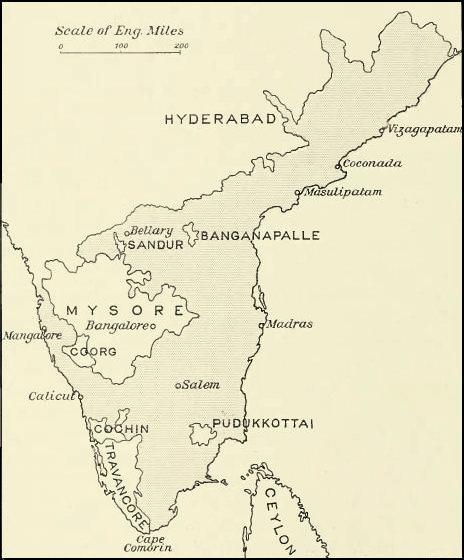
The Madras Presidency, officially called the Presidency of Fort St. George until 1937, later the Madras Province, was an presidency of British Raj and later its successor, Dominion of India. At its greatest extent, the presidency included most of South India, including all of present-day Andhra Pradesh, almost all of Tamil Nadu and northern parts of Kerala, parts of Karnataka, Odisha and Telangana in the modern day. The city of Madras (present-day Chennai) was the official and winter capital of the presidency and Udagamangalam (present-day Ooty) was the summer capital.
In 1639, the East India Company purchased the village of Madraspatnam and one year later it established the Agency of Fort St. George, precursor of the Madras Presidency, although there had been Company factories at Machilipatnam and Armagon since the very early 1600s. The agency was upgraded to a Presidency in 1652 before once more reverting to its previous status in 1655. In 1684, it was re-elevated to a Presidency and Elihu Yale was appointed as president. In 1785, under the provisions of Pitt's India Act, Madras became one of three presidencies established by the Company. Thereafter, the head of the area was styled "Governor" rather than "President" and became subordinate to the viceroy in Calcutta, with Madras' titulature that would persist until 1950. Judicial, legislative and executive powers rested with the Governor who was assisted by a Council whose constitution was modified by reforms enacted in 1861, 1909, 1919 and 1935. Regular elections were conducted in Madras up to the outbreak of the Second World War in 1938. By 1908, the province comprised twenty-two districts, each under a District Collector, and it was further sub-divided into taluks and firqas with villages making up the smallest unit of administration.
Following the Montagu–Chelmsford Reforms of 1917, Madras was the first presidency of India to implement a system of dyarchy, and thereafter its Governor ruled alongside a prime minister. In the early decades of the 20th century, many significant contributors to the Indian independence movement came from Madras. Madras was later admitted as Madras State, a state of the Indian Union at the inauguration of the Republic of India on 26 January 1950.
The discovery of dolmens from this portion of the subcontinent shows inhabitation as early as the Stone Age. The first prominent rulers of the northern part of the future Presidency were the Tamil Pandya dynasty (230 BC – AD 102). Following the decline of the Pandyas and the Cholas, the country was conquered by a little known race of people called the Kalabhras. The country recovered under the subsequent Pallava dynasty and its civilisation attained a peak when the chola kings started acquiring vast places in Tamil Nadu during the 10th century. Following the conquest of Madurai by Malik Kafur in 1311, there was a brief lull when both culture and civilisation began to deteriorate. The Tamil and Telugu territories recovered under the Vijayanagar Empire, founded in 1336. Following the empire's demise, the country was split amongst numerous sultans, polygars and European trading companies. Between 1685 and 1947, a number of kings ruled the areas that became part of the Madras Presidency.
The southwestern portions of the presidency, which together constitute Tulu Nadu and Kerala, has a distinct history, language, and culture from its eastern counterparts.
On 31 December 1600, Queen Elizabeth I of England (1533–1603) granted a group of English merchants a charter to establish a joint-stock company which became known as the East India Company. Subsequently, during the reign of King James I (1567–1625), Sir William Hawkins and Sir Thomas Roe were sent to negotiate with the Mughal Emperor Jahangir (1569–1627) to permit the establishment of trading factories in India on behalf of the company. The first of these were built at Surat on the west coast and at Masulipatinam on the country's eastern seaboard. Masulipatinam is thus the oldest English trading post on India's east coast, dating back to 1611. In 1625, another factory was established at Armagon, a few miles to the south, whereupon both the factories came under the supervision of an agency based at Machilipatnam. The English authorities decided to relocate these factories further south, due to a shortage of cotton cloth, the main trade item of the east coast at the time. The problem was compounded when the Sultan of Golconda started harassing the local officers. The East India Company's administrator Francis Day (1605–73) was sent south, and after negotiations with the Raja of Chandragiri, he obtained a land grant in 1639 to set up a factory in the village of Madraspatinam where the new Fort St George was built. An agency was created to govern the new settlement, and the factor Andrew Cogan of Masulipatinam was appointed as its first Agent. All the agencies along India's east coast were subordinated to the East India Company presidency of Bantam in Java. By 1641, Fort St George became the company's headquarters on the Coromandel Coast.
Andrew Cogan was succeeded by Francis Day (1643–1644), Thomas Ivie (1644–1648) and Thomas Greenhill (1648–52 and 1655–58). At the end of Greenhill's term in 1652, Fort St George was elevated to a Presidency, independent of Bantam and under the leadership of the first president, Aaron Baker (1652–1655). However, in 1655 the status of the fort was downgraded to an Agency and made subject to the factory at Surat, until 1684. In 1658, control of all the factories in Bengal was given to Madras, when the English occupied the nearby village of Triplicane.
In 1684, Fort St George Black Town where the 'natives' lived. The White Town was confined inside the walls of Fort St. George and the Black Town outside of it. The Black Town later came to be known as George Town. During this period, the presidency was significantly expanded and reached an extent which continued into the early 19th century. During the early years of the Madras Presidency, the English were repeatedly attacked by the Mughals, the Marathas and the Nawabs of Golkonda and the Carnatic region. In September 1784, by Pitt's India Act, passed by the Parliament of Great Britain to unify and regulate the administration of the territories of the East India Company, the President of Madras was made subordinate to the Governor-General of India based in Calcutta. In September 1746, Fort St George was captured by the French, who ruled Madras as a part of French India until 1749, when Madras was handed back to the British under the terms of the Treaty of Aix-la-Chappelle of the previous year.
Hub AI
Madras Presidency AI simulator
(@Madras Presidency_simulator)
Madras Presidency
The Madras Presidency, officially called the Presidency of Fort St. George until 1937, later the Madras Province, was an presidency of British Raj and later its successor, Dominion of India. At its greatest extent, the presidency included most of South India, including all of present-day Andhra Pradesh, almost all of Tamil Nadu and northern parts of Kerala, parts of Karnataka, Odisha and Telangana in the modern day. The city of Madras (present-day Chennai) was the official and winter capital of the presidency and Udagamangalam (present-day Ooty) was the summer capital.
In 1639, the East India Company purchased the village of Madraspatnam and one year later it established the Agency of Fort St. George, precursor of the Madras Presidency, although there had been Company factories at Machilipatnam and Armagon since the very early 1600s. The agency was upgraded to a Presidency in 1652 before once more reverting to its previous status in 1655. In 1684, it was re-elevated to a Presidency and Elihu Yale was appointed as president. In 1785, under the provisions of Pitt's India Act, Madras became one of three presidencies established by the Company. Thereafter, the head of the area was styled "Governor" rather than "President" and became subordinate to the viceroy in Calcutta, with Madras' titulature that would persist until 1950. Judicial, legislative and executive powers rested with the Governor who was assisted by a Council whose constitution was modified by reforms enacted in 1861, 1909, 1919 and 1935. Regular elections were conducted in Madras up to the outbreak of the Second World War in 1938. By 1908, the province comprised twenty-two districts, each under a District Collector, and it was further sub-divided into taluks and firqas with villages making up the smallest unit of administration.
Following the Montagu–Chelmsford Reforms of 1917, Madras was the first presidency of India to implement a system of dyarchy, and thereafter its Governor ruled alongside a prime minister. In the early decades of the 20th century, many significant contributors to the Indian independence movement came from Madras. Madras was later admitted as Madras State, a state of the Indian Union at the inauguration of the Republic of India on 26 January 1950.
The discovery of dolmens from this portion of the subcontinent shows inhabitation as early as the Stone Age. The first prominent rulers of the northern part of the future Presidency were the Tamil Pandya dynasty (230 BC – AD 102). Following the decline of the Pandyas and the Cholas, the country was conquered by a little known race of people called the Kalabhras. The country recovered under the subsequent Pallava dynasty and its civilisation attained a peak when the chola kings started acquiring vast places in Tamil Nadu during the 10th century. Following the conquest of Madurai by Malik Kafur in 1311, there was a brief lull when both culture and civilisation began to deteriorate. The Tamil and Telugu territories recovered under the Vijayanagar Empire, founded in 1336. Following the empire's demise, the country was split amongst numerous sultans, polygars and European trading companies. Between 1685 and 1947, a number of kings ruled the areas that became part of the Madras Presidency.
The southwestern portions of the presidency, which together constitute Tulu Nadu and Kerala, has a distinct history, language, and culture from its eastern counterparts.
On 31 December 1600, Queen Elizabeth I of England (1533–1603) granted a group of English merchants a charter to establish a joint-stock company which became known as the East India Company. Subsequently, during the reign of King James I (1567–1625), Sir William Hawkins and Sir Thomas Roe were sent to negotiate with the Mughal Emperor Jahangir (1569–1627) to permit the establishment of trading factories in India on behalf of the company. The first of these were built at Surat on the west coast and at Masulipatinam on the country's eastern seaboard. Masulipatinam is thus the oldest English trading post on India's east coast, dating back to 1611. In 1625, another factory was established at Armagon, a few miles to the south, whereupon both the factories came under the supervision of an agency based at Machilipatnam. The English authorities decided to relocate these factories further south, due to a shortage of cotton cloth, the main trade item of the east coast at the time. The problem was compounded when the Sultan of Golconda started harassing the local officers. The East India Company's administrator Francis Day (1605–73) was sent south, and after negotiations with the Raja of Chandragiri, he obtained a land grant in 1639 to set up a factory in the village of Madraspatinam where the new Fort St George was built. An agency was created to govern the new settlement, and the factor Andrew Cogan of Masulipatinam was appointed as its first Agent. All the agencies along India's east coast were subordinated to the East India Company presidency of Bantam in Java. By 1641, Fort St George became the company's headquarters on the Coromandel Coast.
Andrew Cogan was succeeded by Francis Day (1643–1644), Thomas Ivie (1644–1648) and Thomas Greenhill (1648–52 and 1655–58). At the end of Greenhill's term in 1652, Fort St George was elevated to a Presidency, independent of Bantam and under the leadership of the first president, Aaron Baker (1652–1655). However, in 1655 the status of the fort was downgraded to an Agency and made subject to the factory at Surat, until 1684. In 1658, control of all the factories in Bengal was given to Madras, when the English occupied the nearby village of Triplicane.
In 1684, Fort St George Black Town where the 'natives' lived. The White Town was confined inside the walls of Fort St. George and the Black Town outside of it. The Black Town later came to be known as George Town. During this period, the presidency was significantly expanded and reached an extent which continued into the early 19th century. During the early years of the Madras Presidency, the English were repeatedly attacked by the Mughals, the Marathas and the Nawabs of Golkonda and the Carnatic region. In September 1784, by Pitt's India Act, passed by the Parliament of Great Britain to unify and regulate the administration of the territories of the East India Company, the President of Madras was made subordinate to the Governor-General of India based in Calcutta. In September 1746, Fort St George was captured by the French, who ruled Madras as a part of French India until 1749, when Madras was handed back to the British under the terms of the Treaty of Aix-la-Chappelle of the previous year.
Recent media