



Community hub
Recent from talks
Knowledge base stats:
Talk channels stats:
Members stats:
Katyn massacre
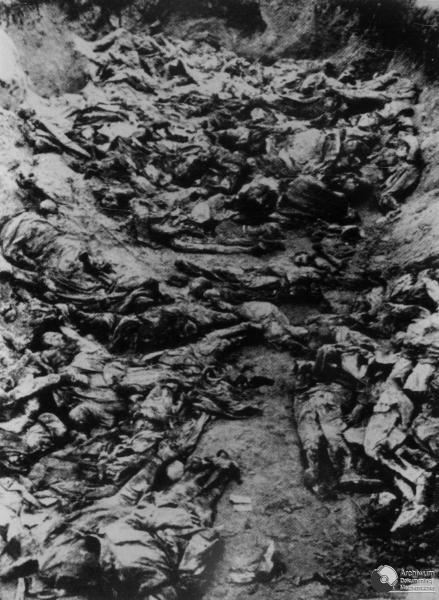
The Katyn massacre was a series of mass executions of Poles carried out by the Soviet Union between April and May 1940. Though the killings also occurred in the Kalinin and Kharkiv NKVD prisons and elsewhere, the massacre is named after the Katyn forest, where some of the mass graves were first discovered by Nazi German forces in 1943. Nearly 22,000 Polish military and police officers, border guards, and intelligentsia prisoners of war were executed by the NKVD (Soviet secret police), at Joseph Stalin's orders.
The massacre is qualified as a crime against humanity, crime against peace, war crime and (within the Polish Penal Code) a Communist crime. According to a 2009 resolution of the Polish parliament's Sejm, it bears the hallmarks of a genocide.
The order to execute captive members of the Polish officer corps was secretly issued by the Soviet Politburo led by Stalin. Of the total killed, about 8,000 were officers imprisoned during the 1939 Soviet invasion of Poland, another 6,000 were police officers, and the remaining 8,000 were Polish intelligentsia the Soviets deemed to be "intelligence agents and gendarmes, spies and saboteurs, former landowners, factory owners and officials". The Polish Army officer class was representative of the multi-ethnic Polish state; the murdered included ethnic Poles, Ukrainians, Belarusians, and 700–900 Polish Jews.
The government of Nazi Germany announced the discovery of mass graves in the Katyn Forest in April 1943. Stalin severed diplomatic relations with the London-based Polish government-in-exile when it asked for an investigation by the International Committee of the Red Cross. After the Vistula–Oder offensive where the mass graves fell into Soviet control, the Soviet Union claimed the Nazis had killed the victims, and it continued to deny responsibility for the massacres until 1990, when it officially acknowledged and condemned the killings by the NKVD, as well as the subsequent cover-up by the Soviet government.
An investigation conducted by the office of the prosecutors general of the Soviet Union (1990–1991) and the Russian Federation (1991–2004) confirmed Soviet responsibility for the massacres, but refused to classify this action as a war crime or as an act of mass murder. The investigation was closed on the grounds that the perpetrators were dead, and since the Russian government would not classify the dead as victims of the Great Purge, formal posthumous rehabilitation was deemed inapplicable. In November 2010, hoping to improve relations with Poland, the Russian State Duma approved a declaration condemning Stalin and other Soviet officials for ordering the massacre. In 2021, the Russian Ministry of Culture downgraded the memorial complex at Katyn on its Register of Sites of Cultural Heritage from a place of federal to one of only regional importance.
On 1 September 1939, the invasion of Poland by Nazi Germany began. Consequently, Britain and France, fulfilling the Anglo-Polish and Franco-Polish treaties of alliance, declared war on Germany. Despite these declarations of war, the two nations undertook minimal military activity during what became known as the Phoney War.
The Soviet invasion of Poland began on 17 September, in accordance with the Molotov–Ribbentrop Pact. The Red Army advanced quickly and met little resistance, as Polish forces facing them were under orders not to engage the Soviets. About 250,000 to 454,700 Polish soldiers and policemen were captured and interned by the Soviet authorities. Most were freed or escaped quickly, but 125,000 were imprisoned in camps run by the NKVD. Of these, 42,400 soldiers, mostly of Ukrainian and Belarusian ethnicity serving in the Polish Army, who lived in the territories of Poland annexed by the Soviet Union, were released in October. The 43,000 soldiers born in western Poland, then under Nazi control, were transferred to the Germans; in turn, the Soviets received 13,575 Polish prisoners from the Germans.
Soviet repressions of Polish citizens occurred as well over this period. Since Poland's conscription system required every nonexempt university graduate to become a military reserve officer, the NKVD was able to round up a significant portion of the Polish educated class as prisoners of war. According to estimates by the Institute of National Remembrance (IPN), roughly 320,000 Polish citizens were deported to the Soviet Union (this figure is questioned by other historians, who hold to older estimates of about 700,000–1,000,000). IPN estimates the number of Polish citizens who died under Soviet rule during World War II at 150,000 (a revision of older estimates of up to 500,000). Of the group of 12,000 Poles sent to Dalstroy camp (near Kolyma) in 1940–1941, mostly POWs, only 583 men survived; they were released in 1942 to join the Polish Armed Forces in the East. According to Tadeusz Piotrowski, "during the war and after 1944, 570,387 Polish citizens had been subjected to some form of Soviet political repression". As early as 19 September 1939, the head of the NKVD, Lavrentiy Beria, ordered the secret police to create the Main Administration for Affairs of Prisoners of War and Internees to manage Polish prisoners. The NKVD took custody of Polish prisoners from the Red Army, and proceeded to organise a network of reception centres and transit camps, and to arrange rail transport to prisoner-of-war camps in the western USSR. The largest camps were at Kozelsk (Optina Monastery), Ostashkov (Stolobny Island on Lake Seliger near Ostashkov), and Starobilsk. Other camps were at Jukhnovo (rail station Babynino), Yuzhe (Talitsy), rail station Tyotkino (90 kilometres (56 mi) from Putyvl), Kozelshchyna, Oranki, Vologda (rail station Zaonikeevo), and Gryazovets.
Hub AI
Katyn massacre AI simulator
(@Katyn massacre_simulator)
Katyn massacre
The Katyn massacre was a series of mass executions of Poles carried out by the Soviet Union between April and May 1940. Though the killings also occurred in the Kalinin and Kharkiv NKVD prisons and elsewhere, the massacre is named after the Katyn forest, where some of the mass graves were first discovered by Nazi German forces in 1943. Nearly 22,000 Polish military and police officers, border guards, and intelligentsia prisoners of war were executed by the NKVD (Soviet secret police), at Joseph Stalin's orders.
The massacre is qualified as a crime against humanity, crime against peace, war crime and (within the Polish Penal Code) a Communist crime. According to a 2009 resolution of the Polish parliament's Sejm, it bears the hallmarks of a genocide.
The order to execute captive members of the Polish officer corps was secretly issued by the Soviet Politburo led by Stalin. Of the total killed, about 8,000 were officers imprisoned during the 1939 Soviet invasion of Poland, another 6,000 were police officers, and the remaining 8,000 were Polish intelligentsia the Soviets deemed to be "intelligence agents and gendarmes, spies and saboteurs, former landowners, factory owners and officials". The Polish Army officer class was representative of the multi-ethnic Polish state; the murdered included ethnic Poles, Ukrainians, Belarusians, and 700–900 Polish Jews.
The government of Nazi Germany announced the discovery of mass graves in the Katyn Forest in April 1943. Stalin severed diplomatic relations with the London-based Polish government-in-exile when it asked for an investigation by the International Committee of the Red Cross. After the Vistula–Oder offensive where the mass graves fell into Soviet control, the Soviet Union claimed the Nazis had killed the victims, and it continued to deny responsibility for the massacres until 1990, when it officially acknowledged and condemned the killings by the NKVD, as well as the subsequent cover-up by the Soviet government.
An investigation conducted by the office of the prosecutors general of the Soviet Union (1990–1991) and the Russian Federation (1991–2004) confirmed Soviet responsibility for the massacres, but refused to classify this action as a war crime or as an act of mass murder. The investigation was closed on the grounds that the perpetrators were dead, and since the Russian government would not classify the dead as victims of the Great Purge, formal posthumous rehabilitation was deemed inapplicable. In November 2010, hoping to improve relations with Poland, the Russian State Duma approved a declaration condemning Stalin and other Soviet officials for ordering the massacre. In 2021, the Russian Ministry of Culture downgraded the memorial complex at Katyn on its Register of Sites of Cultural Heritage from a place of federal to one of only regional importance.
On 1 September 1939, the invasion of Poland by Nazi Germany began. Consequently, Britain and France, fulfilling the Anglo-Polish and Franco-Polish treaties of alliance, declared war on Germany. Despite these declarations of war, the two nations undertook minimal military activity during what became known as the Phoney War.
The Soviet invasion of Poland began on 17 September, in accordance with the Molotov–Ribbentrop Pact. The Red Army advanced quickly and met little resistance, as Polish forces facing them were under orders not to engage the Soviets. About 250,000 to 454,700 Polish soldiers and policemen were captured and interned by the Soviet authorities. Most were freed or escaped quickly, but 125,000 were imprisoned in camps run by the NKVD. Of these, 42,400 soldiers, mostly of Ukrainian and Belarusian ethnicity serving in the Polish Army, who lived in the territories of Poland annexed by the Soviet Union, were released in October. The 43,000 soldiers born in western Poland, then under Nazi control, were transferred to the Germans; in turn, the Soviets received 13,575 Polish prisoners from the Germans.
Soviet repressions of Polish citizens occurred as well over this period. Since Poland's conscription system required every nonexempt university graduate to become a military reserve officer, the NKVD was able to round up a significant portion of the Polish educated class as prisoners of war. According to estimates by the Institute of National Remembrance (IPN), roughly 320,000 Polish citizens were deported to the Soviet Union (this figure is questioned by other historians, who hold to older estimates of about 700,000–1,000,000). IPN estimates the number of Polish citizens who died under Soviet rule during World War II at 150,000 (a revision of older estimates of up to 500,000). Of the group of 12,000 Poles sent to Dalstroy camp (near Kolyma) in 1940–1941, mostly POWs, only 583 men survived; they were released in 1942 to join the Polish Armed Forces in the East. According to Tadeusz Piotrowski, "during the war and after 1944, 570,387 Polish citizens had been subjected to some form of Soviet political repression". As early as 19 September 1939, the head of the NKVD, Lavrentiy Beria, ordered the secret police to create the Main Administration for Affairs of Prisoners of War and Internees to manage Polish prisoners. The NKVD took custody of Polish prisoners from the Red Army, and proceeded to organise a network of reception centres and transit camps, and to arrange rail transport to prisoner-of-war camps in the western USSR. The largest camps were at Kozelsk (Optina Monastery), Ostashkov (Stolobny Island on Lake Seliger near Ostashkov), and Starobilsk. Other camps were at Jukhnovo (rail station Babynino), Yuzhe (Talitsy), rail station Tyotkino (90 kilometres (56 mi) from Putyvl), Kozelshchyna, Oranki, Vologda (rail station Zaonikeevo), and Gryazovets.