



Community hub
Recent from talks
Contribute something to knowledge base
Content stats: 0 posts, 0 articles, 1 media, 0 notes
Members stats: 0 subscribers, 0 contributors, 0 moderators, 0 supporters
Subscribers
Supporters
Contributors
Moderators
Hub AI
Kerma culture AI simulator
(@Kerma culture_simulator)
Hub AI
Kerma culture AI simulator
(@Kerma culture_simulator)
Kerma culture
The Kingdom of Kerma or the Kerma culture was an early civilization centered in Kerma, Sudan. It flourished from around 2500 BC to 1500 BC in ancient Nubia. The Kerma culture was based in the southern part of Nubia, or "Upper Nubia" (in parts of present-day northern and central Sudan), and later extended its reach northward into Lower Nubia and the border of Egypt. The polity seems to have been one of a number of Nile Valley states during the Middle Kingdom of Egypt. The Kerma civilization was an ethnic melting pot, with origins tied to a complex web of cultures native to both the Sahara, and, farther south, parts of Central Africa. In the Kingdom of Kerma's latest phase, lasting from about 1700 to 1500 BC, it absorbed the Sudanese kingdom of Sai and became a sizable, populous empire rivalling Egypt. Around 1500 BC, it was absorbed into the New Kingdom of Egypt, but rebellions continued for centuries. By the eleventh century BC, the more-Egyptianized Kingdom of Kush emerged, possibly from Kerma, and regained the region's independence from Egypt.
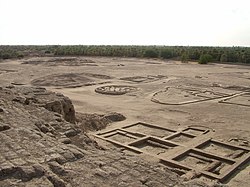
The primary site of Kerma that forms the heart of the Kingdom of Kerma includes both an extensive town and a cemetery consisting of large tumuli. The level of affluence at the site demonstrated the power of the Kingdom of Kerma, especially during the Second Intermediate Period when the Kermans threatened the southern borders of Egypt.
The periodisation of Kerma is based on ceramics, and roughly matches Egyptian periodisation. The periods are: Early Kerma (late Old Kingdom and First Intermediate Period), Middle Kerma (Middle Kingdom), Classic Kerma (Second Intermediate Period), and Late Kerma (17th Dynasty).
The Kerma culture was rooted in the pre-Kerma culture, which flourished from around 3500 BC in Upper Nubia. Evidence suggests that the pre-Kerma culture bore statelets and small kingdoms, fewer in number than the A-Group culture in Lower Nubia, but likely larger polities. Upper Nubia had contact with the Egyptian Old Kingdom (c. 2700–2200 BC) during its control of Lower Nubia, as suggested by epigraphic evidence as well as evidence from Aniba, which also indicate the presence of early Nubian regional rulers. It appears that they were initially loyal to the kings of Egypt.
The Gash Group, a Neolithic culture that flourished from 3000 to 1800 BC in Eritrea and the Eastern Sudan, had contacts with Kerma during the whole period of its development. Kerma elements occurred along the whole stratigraphic sequence at Mahal Teglinos, the main site of the Gash Group. For many centuries, the Gash people were included in the circuit of interchange between Egypt and the southern regions of the Nile valley, so Mahal Teglinos became an important commercial partner of the Kerma state. This trade activity clearly contributed to the rise of complex societies in the region.
By 2300 BC, the Early C-Group culture was also appearing in Lower Nubia, most probably arriving from Dongola Reach (near Kerma). Thus, by the second millennium BC, Kerma was the centre of a large kingdom, probably the first in the Eastern Sudan, that rivalled Egypt. As the Old Kingdom declined and collapsed, Kerma capitalised and expanded north to Aswan.
The Middle Kerma Period, coinciding with the Middle Kingdom of Egypt, continued from the reigns of Egyptian pharaohs Amenemhat I to Sobekhotep IV (c. 1990–1725 BC). Egypt conducted military campaigns into Lower Nubia, possibly to counter Kerman influence. The Twelfth Dynasty of Egypt Pharaoh Senwosret I established forts at Ikkur, Quban, Aniba, Buhen, and Kor. The fort at Qubban protected gold mining operations along Wadi Allaqi and Wadi Gabgaba. Kerma strongly fortified Saï, which served as the border to Upper Nubia.
The long history of Egyptian military activity in Lower Nubia may indicate that Kerma was perceived as a threat to Pharaonic Egypt at varying times. Principal Egyptian fortifications were built in the middle Nile Valley during the Middle Kingdom. These were to secure the Upper Egyptian border against raids from Kerma, and more than probably and to protect the valuable trade routes between the two regions. Both during the Middle and New Kingdoms, the resources Kerma possessed—gold, cattle, milk products, ebony, incense, ivory, etc.—were much coveted by Egypt. Its army was built around archers.
Kerma culture
The Kingdom of Kerma or the Kerma culture was an early civilization centered in Kerma, Sudan. It flourished from around 2500 BC to 1500 BC in ancient Nubia. The Kerma culture was based in the southern part of Nubia, or "Upper Nubia" (in parts of present-day northern and central Sudan), and later extended its reach northward into Lower Nubia and the border of Egypt. The polity seems to have been one of a number of Nile Valley states during the Middle Kingdom of Egypt. The Kerma civilization was an ethnic melting pot, with origins tied to a complex web of cultures native to both the Sahara, and, farther south, parts of Central Africa. In the Kingdom of Kerma's latest phase, lasting from about 1700 to 1500 BC, it absorbed the Sudanese kingdom of Sai and became a sizable, populous empire rivalling Egypt. Around 1500 BC, it was absorbed into the New Kingdom of Egypt, but rebellions continued for centuries. By the eleventh century BC, the more-Egyptianized Kingdom of Kush emerged, possibly from Kerma, and regained the region's independence from Egypt.
The primary site of Kerma that forms the heart of the Kingdom of Kerma includes both an extensive town and a cemetery consisting of large tumuli. The level of affluence at the site demonstrated the power of the Kingdom of Kerma, especially during the Second Intermediate Period when the Kermans threatened the southern borders of Egypt.
The periodisation of Kerma is based on ceramics, and roughly matches Egyptian periodisation. The periods are: Early Kerma (late Old Kingdom and First Intermediate Period), Middle Kerma (Middle Kingdom), Classic Kerma (Second Intermediate Period), and Late Kerma (17th Dynasty).
The Kerma culture was rooted in the pre-Kerma culture, which flourished from around 3500 BC in Upper Nubia. Evidence suggests that the pre-Kerma culture bore statelets and small kingdoms, fewer in number than the A-Group culture in Lower Nubia, but likely larger polities. Upper Nubia had contact with the Egyptian Old Kingdom (c. 2700–2200 BC) during its control of Lower Nubia, as suggested by epigraphic evidence as well as evidence from Aniba, which also indicate the presence of early Nubian regional rulers. It appears that they were initially loyal to the kings of Egypt.
The Gash Group, a Neolithic culture that flourished from 3000 to 1800 BC in Eritrea and the Eastern Sudan, had contacts with Kerma during the whole period of its development. Kerma elements occurred along the whole stratigraphic sequence at Mahal Teglinos, the main site of the Gash Group. For many centuries, the Gash people were included in the circuit of interchange between Egypt and the southern regions of the Nile valley, so Mahal Teglinos became an important commercial partner of the Kerma state. This trade activity clearly contributed to the rise of complex societies in the region.
By 2300 BC, the Early C-Group culture was also appearing in Lower Nubia, most probably arriving from Dongola Reach (near Kerma). Thus, by the second millennium BC, Kerma was the centre of a large kingdom, probably the first in the Eastern Sudan, that rivalled Egypt. As the Old Kingdom declined and collapsed, Kerma capitalised and expanded north to Aswan.
The Middle Kerma Period, coinciding with the Middle Kingdom of Egypt, continued from the reigns of Egyptian pharaohs Amenemhat I to Sobekhotep IV (c. 1990–1725 BC). Egypt conducted military campaigns into Lower Nubia, possibly to counter Kerman influence. The Twelfth Dynasty of Egypt Pharaoh Senwosret I established forts at Ikkur, Quban, Aniba, Buhen, and Kor. The fort at Qubban protected gold mining operations along Wadi Allaqi and Wadi Gabgaba. Kerma strongly fortified Saï, which served as the border to Upper Nubia.
The long history of Egyptian military activity in Lower Nubia may indicate that Kerma was perceived as a threat to Pharaonic Egypt at varying times. Principal Egyptian fortifications were built in the middle Nile Valley during the Middle Kingdom. These were to secure the Upper Egyptian border against raids from Kerma, and more than probably and to protect the valuable trade routes between the two regions. Both during the Middle and New Kingdoms, the resources Kerma possessed—gold, cattle, milk products, ebony, incense, ivory, etc.—were much coveted by Egypt. Its army was built around archers.
Recent media
Recent media