Hubbry Logo
Kit carKit carMain
Open search
Kit car
Community hub
Kit car
logo
8 pages, 0 posts
0 subscribers
Be the first to start a discussion here.
Kit car
Kit car
from Wikipedia

Fiberfab FT Bonito, a kit car on a VW Beetle chassis
Locost frame and body panels
1972 Sterling Nova/ Purvis Eureka/ Eagle (South Africa)

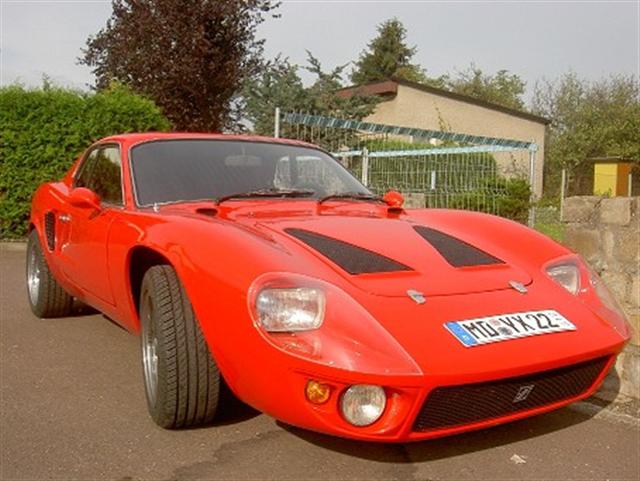
A kit car is an automobile available as a set of parts that a manufacturer sells and the buyer then assembles into a functioning car. Usually, many of the major mechanical systems such as the engine and transmission are sourced from donor vehicles or purchased new from other vendors. Kits vary in completeness, consisting of as little as a book of plans, or as much as a complete set with all components to assemble into a fully operational vehicle such as those from Caterham.

[edit]

A subset of the kit car, commonly referred to as a "re-body", is when a commercially manufactured vehicle has a new (often fiberglass) body put on the running chassis. Most times, the existing drive gear and interior are retained. These kits require less technical knowledge from the builder. Because the chassis and mechanical systems were designed, built, and tested by a major automotive manufacturer, a re-body can lead to a much higher degree of safety and reliability.

The definition of a kit car usually indicates that a manufacturer constructs multiple kits of the same vehicle, each of which it then sells to a third party to build. A kit car should not be confused with

  • a hand built car or special car, which is typically modified or built from scratch by an individual for a specific purpose (such as hillclimbing, road or circuit racing, or record attempts). "Rally specials" and "homologation specials" have, especially since the Second World War, typically referred to special series-produced cars built by manufacturers.
  • a component car, which is a self-assembly car in which 100% of the parts required to build the car are purchased from a single company. Component cars are distinguished from kit cars as all parts are quality controlled and designed to fit together perfectly. They can be built in significantly less time than a "kit car". See also knock-down kit, a term usually applied to a similar but larger commercial exercise.

History

[edit]
Replica of Porsche 550 Spyder made from a kit

Kit cars have been around since the earliest days of the automobile. In England in 1896, Thomas Hyler-White developed a design for a car that could be assembled at home. Technical designs were published in a magazine called The English Mechanic.[1] In the US, the Lad's Car of 1912 could be bought for US$160 ($5,000 in 2023) fully assembled or US$140 ($4,400 in 2023) in kit form.[2]

Kit cars became popular in the 1950s. Car production had increased considerably and with rustproofing in its infancy, many older vehicles were being sent to breaker yards as their bodywork was beyond economic repair. An industry grew up supplying new bodies and chassis to take the components from these cars and convert them into new vehicles, particularly into sports cars. Fiber-reinforced plastic was coming into general use and made limited-scale production of automobile body components much more economical.[3] In the UK up to the mid-1970s, kit cars were sometimes normal production vehicles that were partially assembled. This avoided the imposition of a purchase tax, as the kits were assessed as components and not vehicles.

During the 1970s, many kits had bodies styled as sports cars that were designed to bolt directly to VW Beetle chassis. This was popular as the old body could be easily separated from the chassis, leaving virtually all mechanical components attached to the chassis. A fiber-reinforced plastic body from the kit supplier would then be fitted. This made the Beetle one of the most popular "donor" vehicles.[4] Examples of this conversion include the Bradley GT, Sterling, and Sebring which were made by the thousands. Many are still around today. Volkswagen-based dune buggies also appeared in relatively large numbers in the 1960s and 1970s, usually based on a shortened floor pan.

Current kit cars are frequently replicas of well-known and often expensive classics. They are designed so that anyone with the right technical skills can build them at home to a standard where they can be driven on the public roads. These replicas are in general appearance like the original, but their bodies are often made of fiberglass mats soaked in polyester resin instead of the original sheet metal. Replicas of the AC Cobra and the Lotus Seven are particularly popular examples. The right to manufacture the Lotus 7 is owned by Caterham Cars, who bought the rights to the car from Lotus founder Colin Chapman in 1973. Caterham cars are component cars and are a continued development of Chapman's design. All other Lotus Seven-style cars are replica kit cars costing significantly less than the Caterham without the residual value. These replica kit cars enable enthusiasts to possess a vehicle closely resembling a vehicle that they may not be able to afford due to scarcity, and at the same time take advantage of modern technology. The Sterling Nova kit originally produced in the UK was the most popular VW-based kits being produced worldwide. It was licensed under several different names with an estimated 10,000 sold.

A common concern about kit cars is that it appears to many to be technically impossible to assemble a car at home and license it for public roads, including meeting standards for the mandatory quality control (road worthiness test) that is required in most countries. For example, to obtain permission to use a kit car in Germany, every such vehicle with a speed over 6 km/h without a general operating license (ABE) or an EC type permission (EC-TG) has to undergo a technical inspection by an officially recognized expert. In the United Kingdom it is necessary to meet the requirements of the IVA (Individual vehicle Approval) regulations. In the United States SEMA has gone state by state to set up legal ways for states to register kit cars and speciality vehicles for inspection and plates.

A survey of nearly 600 kit car owners in the US, the UK and Germany, carried out by Dr. Ingo Stüben, showed that typically 100–1,500 hours are required to build a kit car, depending upon the model and the completeness of the kit.[5] As the complexity of the kits offered continues to increase, build times have increased. Some accurate replica kits may take over 5,000 hours to complete.

Several sports car producers such as Lotus, Marcos, and TVR started as kit car makers.

Kit car manufacturers

[edit]

Australia

[edit]
A Robin Hood kit car

Austria

[edit]

Belgium

[edit]

Canada

[edit]

Germany

[edit]

Italy

[edit]

Mexico

[edit]

Netherlands

[edit]

New Zealand

[edit]

New Zealand had a long history of small garages and vehicle enthusiasts modifying and creating sports and sports racing cars. In the early 1950s, with the advent of fibreglass bodied cars, a new opportunity arose for local companies associated with car enthusiasts to create car bodies. Among these early manufacturers was Weltex Plastics Limited of Christchurch, which imported a Microplas Mistral sports car mould and began making bodies and chassis in 1956. They were followed in 1958 by Frank Cantwell's Puma and Bruce Goldwater's Cougar.[6] Also in New Zealand during this period, Ferris de Joux was constructing a variety of sports racers. De Joux is noted in particular for his Mini GT from the 1960s.

Saker GT

Ross Baker's Heron Cars started in 1962 making racing cars and eventually began producing kit cars in 1980. Bill Ashton, formerly of Microplas and Weltex, joined with Ted George in the 1960s and made the Tiki. Three were known to have been made. Graham McRae with Steve Bond of Gemini Plastics imported a replica Le Mans M6B styled GT mould in 1968, The cars were made and sold by Dave Harrod and Steve Bond of Fibreglass Developments Ltd, Bunnythorpe as the Maram. McRae went on to make a Porsche Spyder replica in the 1990s.

A number of new companies entered the market in the 1980s – Almac 1985, Alternative Cars (1984), Cheetah (1986), Chevron (1984), Countess Mouldings (1988), Fraser (1988), Leitch (1986), and Saker (1989). Some recent ones are Baettie (1997), which became Redline in 2001 and moved to the United Kingdom in 2007 as Beattie Racing Limited, and McGregor (2001).

Two companies who specialise in making replicas of various models to order are Classic Car Developments (1992) and Tempero.

Slovakia

[edit]

The K1-Attack Kit car is produced by Slovakian company K1 Styling & Tuning. Their cars are customizable and have come in many different variations since 2001. K1 offers engines produced by Honda, Toyota, etc. in the 130HP to 800HP range. Due to its light weight it achieves the same power output–weight ratio as Lamborghini Gallardo, Audi R8, or Ferrari F430 even with a 280 hp engine.

The (cheapest) complete kit costs around $15,000, and is based on the Honda Accord 4/5G F20/F22 (2.0L–2.2L) engine. A complete kit with Honda Civic Type-R 9-10G K20C1 achieves 320HP (at request, the engine can be tuned to 400–500HP). Many more engines, such as Honda K24, Toyota 3SGTE are available.

Customer projects have included engines such as the VW 1.9 TDI, VW 1.8T, (not specified) 2.0 Subaru engine, 2.5L V6 Ford, 3.0 V6 Jaguar, 3.0 I6 BMW, or 4.2L V8 from Audi R8.

Though based in Slovakia, the company markets itself as producing Czecho-Slovakian products.

South Africa

[edit]

The specialist car builder Hi-Tech Automotive does not venture to supply cars in kit form at all, but only builds fully-assembled "turnkey-minus" continuation series cars with chassis, bodywork and interior trim finished off, ready for engine installation. Almost all cars are exported, mostly to the United States as "glider kits".[7]

Sweden

[edit]
Dala 7, is a sevenesque kit-car made in Stora Skedvi, close to Säter in Dalarna.

Technically, kit cars are not allowed in Sweden, but provided that most of the components and material are sourced by the builder personally it is possible to register them as amateur built vehicles. Before the law requiring a mandatory crash test in 1970 there was a booming kit car industry in Sweden with most companies basing their kits on the VW Beetle chassis. By the time amateur-built vehicles were once again allowed in 1982, all kit car makers in Sweden were out of business.

The inspection (SVA equivalent) in Sweden is handled by the car builders' association SFRO who does two inspections: one when the car has reached the rolling chassis stage and the second when the car is finished. Amateur-built cars are currently limited to a power ratio of 15 kW (20.4 PS) per 100 kg (182 hp/ton). Until 2003, the limit was 10 kW (13.6 PS) per 100 kg, so for very light cars (like a Lotus 7 type car) it was a problem to find a suitable engine.

United Kingdom

[edit]
Dutton Sierra kit car chassis and GRP bodywork prior to installation of mechanical components
Quantum Mark 1 Hatchback, one of very few kit cars to have a glass-reinforced plastic (grp) monocoque construction

Vehicle regulations in the UK allow the production of up to 200 vehicles a year without the extensive regulation and testing requirements applied to mass-market vehicles. This has led to an expanding industry of small producers capable of offering partial and complete kits, some for export, and finished vehicles for domestic use.

The Driver and Vehicle Licensing Agency (DVLA) regulate kit cars in the UK, which helps to ensure that vehicles used on the road are safe and suitable for the purpose. The current test for this is Individual Vehicle Approval (IVA), which has replaced Single Vehicle Approval (SVA). When SVA was first introduced in 1998, many believed this would kill off the kit car market, but in reality it has made the kit car market stronger, as the vehicles produced now have to meet a minimum standard.[citation needed] IVA was introduced in summer 2009 and it is too early to tell what impact this will have on the industry.[needs update]

A significant number of kit cars do not receive a 'Q' registration plate, which signifies a vehicle of unknown or mixed age. All kit cars are subject to a Vehicle Identity Check, VIC, by the DVLA to determine the registration mark a kit car is assigned. This will be either, a new, current year, registration; an 'age-related' registration; or a 'Q' plate. Once a kit car has been correctly registered, a V5C, or log book, will be assigned and then a kit car is treated in exactly the same way as a production car, from any larger manufacturer. A kit car must pass its MOT test and have a valid car tax, or have a valid Statutory Off-Road Notification (SORN) declaration. As part of the IVA, a kit car can sometimes be permitted to assume the age of a single, older car (the donor car) if the major parts were taken from it in its construction.[8] If the age identifier assigned to a kit car falls before 1980 the vehicle may be road taxed free of charge.[9]

According to figures given to Kit Car magazine, the most popular kit in the United Kingdom in 2005 was made by Robin Hood Sportscars, who sold 700 kits a year. The editor of Kit Car Magazine suggests in 2016 the MEV Exocet was the best selling kit car.

Lomax 224


United States

[edit]
A Bernardi roadster, from the Blakely Auto Works

A glider kit is a term used in the United States for a kit of components used to restore or reconstruct a wrecked or dismantled vehicle. Glider kits include a chassis (frame), front axle, and body (cab). The kit may also contain other optional components. A motor vehicle constructed from a glider kit is titled as a new vehicle.

More common terms include "partial-turnkey," "turnkey-minus," and (though it technically refers to a vehicle without a body, rather than body without drivetrain) "rolling chassis," or "roller."

Examples of US kit manufacturers and cars include:

See also

[edit]

Notes

[edit]
Revisions and contributorsEdit on WikipediaRead on Wikipedia
from Grokipedia
A kit car, also known as a component car or replica car, is an automobile sold as a collection of parts—including a body shell, , suspension, and other structural elements—that the buyer assembles into a functional , typically by integrating a from a donor car such as a used , transmission, and differential. These kits allow enthusiasts to build customizable vehicles, often replicas of classic or exotic models, using a mix of new and refurbished components to create road-legal cars. The origins of kit cars trace back to the early 20th century with mail-order cyclecars and designs promoted in publications like The English Mechanic, but the modern industry took shape in the 1950s with the introduction of affordable fiberglass molding, enabling lightweight, rust-resistant bodies. The first small-scale commercial use of fibreglass for car bodies in the postwar era is generally credited to American boat-builder Bill Tritt, who established Glasspar in 1949 and marketed the Glasspar G2 fibreglass sports-car body from about 1951. In Britain, specialist firms began offering fibreglass panels and complete bodies by the mid-1950s. The material's acceptance in series niche sports cars was underscored by Lotus’s Type 14 "Elite", unveiled in 1957 and produced 1958–1963 with a stressed-skin fibreglass monocoque, and by manufacturers such as TVR and the newly founded Ginetta (established 1958) adopting fibreglass bodies for low-volume models and kits. The sector boomed in the 1960s and 1970s, driven by accessible donor vehicles like the Volkswagen Beetle, of which over 21.5 million were built between 1938 and 2003, and Ford Pinto, and small manufacturers offering kits for sports car replicas amid rising interest in DIY automotive projects and the lowering cost of polyester resins, with contemporary trade directories and specialist magazines recording several hundred small kit suppliers in the UK and US by the early 1970s, turning kit production from cottage industry into a sizeable niche market. In the UK, the rise was particularly notable in the 1970s, with fibreglass panels transforming ordinary saloons into two-seater sports cars, exemplified by models like the Sterling Nova (1971), a Beetle-based design sold for over 26 years. Kit cars encompass various types, including full kits that require minimal assembly and bare-bones panel sets for extensive customization, with popular examples replicating icons such as the Shelby Cobra (via Factory Five kits) or (via or ). They appeal to hobbyists for their lower costs compared to production cars—starting as low as £2,000 for basic kits—and the satisfaction of personal involvement, though assembly can demand 100-150 hours and specialist tools. Legally, in the United States, kit cars fall under the EPA's 1994 policy requiring substantially used drivetrains in imported kits and the National Highway Traffic Safety Administration's low-volume manufacturer exemptions, allowing up to 325 replicas annually of models at least 25 years old while meeting emissions and basic safety standards. In the UK, they must undergo Individual Vehicle Approval (IVA) testing by the Driver and Vehicle Standards Agency to obtain a and 'Q' plate for registration; a 2025 DVLA policy update clarifies rules for modifications but retains IVA requirements for vehicles with unverified identities. As of 2025, the market remains niche but active, with ongoing innovations in electric conversions and challenges from disputes with original automakers.

Definition and Terminology

Definition

A kit car is an automobile available as a set of parts supplied by a manufacturer, which the buyer assembles into a complete, functional . This assembly process typically requires the owner to perform significant labor, distinguishing kit cars from fully manufactured vehicles produced in factories. Key characteristics of kit cars include the provision of essential components such as body panels, chassis elements, suspension parts, and assembly instructions, often utilizing a mix of new and used elements like donor drivetrains from existing vehicles. The emphasis is on do-it-yourself (DIY) construction, where the builder sources or supplies additional items like engines and transmissions to create a roadworthy . This approach contrasts with mass-produced automobiles by shifting production responsibilities to the individual assembler. The primary purpose of kit cars is to enable cost savings, extensive customization, and appeal to automotive enthusiasts by allowing the replication of or exotic designs without the expense of original models. Builders can personalize aspects like and , achieving access to high-performance or rare-style cars at a fraction of factory prices. Historically, kit cars have empowered home builders to circumvent limitations of and regulatory hurdles for by treating assembled under specific exemptions. Terms like "component cars" refer to similar but more modular assembly options, often using pre-built subassemblies. The term "kit car" originated in the during the , with the earliest recorded use appearing in 1953. Its development was driven by post-war enthusiasts seeking affordable alternatives to production vehicles, often to circumvent high taxes on assembled cars. In contemporary enthusiast contexts, synonyms such as "DIY car" are commonly used to describe these projects, emphasizing the hands-on construction process. Kit cars are distinct from replica cars, which prioritize aesthetic and sometimes mechanical imitation of or exotic models, whereas kit cars broadly encompass any unassembled parts sold for builder assembly; thus, replicas qualify as kit cars only when provided in unassembled form. Component cars represent a subset of kit cars, typically involving a donor from production models for , , and other major elements, with the kit supplying primarily body panels and minor fittings rather than a complete new build. Other related terms include "," a low-cost variant of kit car inspired by the , featuring a and donor parts for economical as detailed in Ron Champion's build guide. "" denote custom one-off vehicles hand-built by individuals without reliance on commercial kits, often predating the modern kit car era and focusing on unique modifications. In contrast, factory-built replicas are fully assembled vehicles produced by manufacturers to mimic originals, excluding them from the kit car category due to the absence of buyer assembly.

History

Origins and early development

The origins of kit cars trace back to the early 20th century, particularly with the rise of cyclecars in and the from around 1910 to the early 1920s. These lightweight, inexpensive vehicles were engineered for affordability amid the growing desire for personal motoring, often utilizing engines, simple tubular frames, and minimal bodywork assembled from off-the-shelf components. Manufacturers produced them in small batches, while many enthusiasts constructed their own using surplus parts, fostering a culture of hands-on vehicle building that prefigured modern kit cars. Following , the influx of surplus military materials, including engines, axles, and elements from wartime production, accelerated the creation of "specials"—custom vehicles pieced together by hobbyists seeking performance or unique designs. In the , this era marked a surge in experimental builds, where readily available parts enabled affordable customization without full-scale . The post-war economic constraints further encouraged such resourcefulness, blending ingenuity with practical necessity. A key milestone came with the Austin Seven, launched in 1922 by the in the UK as an aimed at broadening access to automobiles. Priced at around £225, it featured a simple 696 cc inline-four engine and compact , making it ideal for modifications into specials; builders often fabricated bodies to transform it into or variants. By , its widespread availability—over 250,000 units produced by 1939—solidified its role as a foundational platform for early kit-like assemblies. The assembly-line principles popularized by Henry Ford with the Model T from 1908 onward also shaped pre-World War II kit car evolution, emphasizing modular construction and interchangeable parts to democratize vehicle ownership. This ethos inspired European designers and builders to offer initial commercial kits in the 1930s, providing pre-cut components for home assembly on donor chassis like the Austin Seven, thereby enabling cost-effective personal motoring amid rising demand. World War II disrupted civilian automotive activities, redirecting resources to military production and halting kit developments, but the accumulation of surplus wartime components—such as engines and frames—provided essential materials that would later fuel enthusiast projects, establishing the technical and cultural foundations for broader kit car growth.

Post-war expansion

Following the end of , the experienced a surge in interest for personal vehicles as petrol concluded in 1950 and economic recovery spurred demand for accessible motoring options. The kit car sector capitalized on this by offering affordable sports cars that bypassed high purchase taxes through self-assembly formats. The , introduced in 1957 by founder , became a seminal example; priced at £526 as a kit, it utilized a simple tubular steel spaceframe and allowed buyers to avoid the 33% purchase tax on complete vehicles while assembling the minimalist roadster themselves. This model addressed the post-austerity desire for lightweight, high-performance cars, with its design emphasizing simplicity and driver involvement to keep costs low. The 1960s and 1970s marked the globalization of kit cars, with the concept spreading to the where replicas of iconic models like the gained traction. These kits, emerging in the 1970s, enabled enthusiasts to build V8-powered sports cars using donor components from readily available Ford vehicles, recreating the 1962 original's performance at a fraction of the cost. Amid the 1973 and 1979 oil crises, which quadrupled fuel prices and shifted preferences toward efficient, customizable builds, kit cars offered economic appeal by allowing modifications for better mileage with small engines. In the UK, the transition to (VAT) in 1973 replaced the selective purchase tax (rates up to 66% for luxury goods) with a flat 10% rate, simplifying tax structures for partial-assembly kits and easing home builders' entry into the market. The 1980s represented the peak of the UK kit car industry, with dozens of manufacturers producing diverse models and total annual sales climbing into the thousands as enthusiasts embraced DIY construction amid ongoing economic pressures. Over 50 firms operated at the height of the boom, fostering innovation in donor-part integration for affordability. The Robin Hood kit car, launched in the early 1980s by Robin Hood Engineering, emerged as a cultural icon; based on Ford Sierra components, it delivered sports car dynamics for under £5,000 and symbolized the era's accessible customization trend, with the company achieving sales of around 500 units annually by the late 1990s. The kit car industry encountered significant hurdles in the 1990s and 2000s due to escalating environmental regulations, particularly the Clean Air Act Amendments of 1990, which imposed stricter emissions controls on automobiles and complicated compliance for custom-assembled vehicles. These changes raised barriers for builders relying on older donor parts, contributing to a slowdown in production and sales. A key revival came with the Low-Volume Motor Vehicle Manufacturers Act of 2015, embedded in the Fixing America's Surface Transportation (FAST) Act, which permitted low-volume manufacturers to produce up to 325 vehicles annually—resembling models at least 25 years old—exempt from certain federal safety and emissions standards beyond basic equipment requirements like lighting and brakes. This legislation expanded market access for completed s, previously limited to self-assembly kits, and spurred renewed interest among enthusiasts. Online platforms and communities further fueled resurgence by simplifying sourcing of kits, parts, and expertise during this period. From the 2010s through 2025, technological advancements transformed kit car development, with (EV) conversions gaining prominence as builders integrated modern powertrains into classic designs for reduced emissions and enhanced performance, aligning with regulations like the UK's Zero Emission Vehicle (ZEV) mandate requiring increasing EV sales shares from automakers. Kits from providers like EV West and Chevrolet's eCrate system enable straightforward retrofits, using components such as 400V motors and lithium-ion batteries to electrify donor-based builds. Additive manufacturing via emerged as a major innovation, allowing precise, on-demand production of custom parts like body panels and brackets from lightweight polymers, minimizing waste and enabling . The amplified a DIY , boosting participation in kit car assembly as part of a broader surge in classic and custom vehicle hobbies, with online sales and home workshops becoming central to the revival. As of 2025, the kit car market reflects ongoing shifts toward and advanced features, with builders increasingly incorporating recycled composites and bio-based materials to align with global eco-standards while maintaining structural integrity. Trends also include optional autonomous add-ons, such as retrofit ADAS kits from Comma.ai, which add steering, braking, and sensor capabilities to custom for semi-autonomous operation. Overall, the sector sustains steady growth through enthusiast-driven customization, supported by low production costs and a focus on performance enhancements like upgraded suspensions.

Types

Replica kit cars

Replica kit cars are specialized vehicles assembled from prefabricated components that closely imitate the appearance and proportions of classic or exotic production models, allowing enthusiasts to own facsimiles of rare automobiles at a fraction of the original cost. These kits typically feature body panels crafted to replicate iconic designs, such as the curvaceous lines of the or the mid-engine silhouette of the , using lightweight construction for durability and ease of assembly. The bodies are produced via molds derived from detailed measurements of surviving originals, ensuring a 1:1 scale accuracy that captures the aesthetic essence without the structural limitations of vintage manufacturing techniques. A hallmark of replica kit cars is their flexibility in powertrain integration, often incorporating optional donor engines from readily available modern sources to enhance reliability and performance while maintaining visual fidelity. For instance, kits can utilize crate engines like those from Blueprint Engines, which drop into the without extensive modifications, providing outputs far exceeding the originals—such as over 500 horsepower in a replica compared to the period-correct 289 cubic-inch V8. This modularity extends to upgradability, enabling builders to incorporate contemporary suspension geometry and braking systems that address shortcomings in the donor models, like improved cockpit ergonomics for larger drivers or enhanced safety features absent in designs. Among the most popular examples are replicas, particularly the Factory Five Mk4 Roadster, which has become the world's best-selling kit due to its precise replication of the 427SC model's proportions and its use of modern body panels molded from original blueprints. These kits offer significant cost advantages, with a base kit priced around $22,000 (as of 2024)—approximately one-third the value of even a modest original , which can exceed $1 million at auction (as of 2024)—while allowing for customizable upgrades like supercharged V8s for superior drivability. Similarly, GT40 replica kits from manufacturers like and Race Car Replicas (RCR) emulate the Le Mans-winning racer's gullwing doors and low-slung profile using bodies scaled to match the 1966 originals, often paired with Ford V8 donor engines for track-ready performance at a build cost under $100,000 versus millions for authentic . Other notable replicas include 356 kits from builders like Chesil Speedster Reproductions, which mimic the air-cooled roadster's rounded fenders and chrome accents through shells fitted to donor , and rarer Ferrari 250-inspired kits that prioritize the grand tourer's elegant lines for aesthetic appeal over exact mechanical duplication. The design process for these replicas emphasizes reverse-engineering to achieve high-fidelity aesthetics, beginning with or manual measurement of extant originals to create digital models that inform mold production. This method focuses on visual and proportional accuracy—such as the Cobra's long hood-to-cabin ratio or the GT40's wide stance—rather than performance optimizations, allowing kits to evoke the emotional allure of while incorporating subtle modern refinements for practicality. Builders then assemble the body around a tubular steel frame, ensuring the final product visually indistinguishable from the at a distance, though purists note that material substitutions like for aluminum prioritize affordability and weight savings over period authenticity. Kit cars vary from bare panel sets requiring full fabrication to near-complete rolling chassis needing only donor integration.

Component and donor cars

In kit cars, a "donor" vehicle refers to a production car from which key mechanical components, such as engines, transmissions, rear axles, , and suspension systems, are sourced, often from salvaged or low-cost examples. The kit itself typically provides the core structure, including the or spaceframe and body panels, while the builder is responsible for acquiring, restoring, and integrating these donor parts to create a functional . This modular approach promotes cost-efficiency by reusing readily available OEM components, reducing the need for custom fabrication. Prominent examples include the , a Lotus Seven-inspired design that frequently employs a Ford Metro as the donor for its and suspension, enabling complete builds for under $5,000 through economical sourcing of parts. Similarly, and YKC kits, such as the Roadster and Berlinetta models, incorporate components from or Sierra donors, including engines like the 1.6-liter and rear axles, which deliver reliable performance derived from established production engineering. These donor-based kits offer benefits in durability and maintainability, as the OEM parts benefit from extensive aftermarket support and proven longevity in everyday use. Variations in donor kit designs often feature spaceframe chassis constructed from lightweight tubular steel, which enhances rigidity and reduces overall weight compared to using a donor's full floorpan. This configuration is especially prevalent in the and , where such kit cars are favored for track day events and rally applications due to their agile handling and customizable powertrains.

Modern variants

Modern kit cars are evolving through the integration of electrification, enabling builders to transform classic designs into efficient, high-performance electric vehicles. Conversion kits utilizing Tesla-derived powertrains have become popular for replicas, such as Cobra models, where companies like Scorpion EV offer the Venom plug-and-play system featuring a Hyper 9HV motor paired with seven Tesla Model S battery modules for rapid acceleration and seamless installation in under a day. Similarly, the Superformance GT40 chassis—a staple in replica kit car assembly—has been electrified by Everrati, delivering 600 horsepower from electric motors, a top speed of 174 mph, and a real-world range of over 150 miles on a 75 kWh battery pack with 80 kW fast charging capability. The revived Bradley GT (relaunched in the late 2010s) offers full-electric variants as of 2025, incorporating modern battery technology into lightweight bodies, achieving spirited performance with ranges suitable for daily driving and track use while honoring the original design. These electric variants prioritize and instant , often exceeding 500 horsepower, without compromising the DIY assembly ethos of traditional kit cars. Advanced materials are enhancing modern kit car performance by significantly reducing overall vehicle weight and improving structural integrity. Carbon fiber reinforced polymer (CFRP) panels, now more accessible due to lower-cost fabrics curable outside autoclaves, can replace components with up to 75% less weight; for example, a carbon fiber hood weighs 8-12 pounds compared to 35-40 pounds for , aiding better and in electrified builds. 3D-printed panels further enable customized, lightweight designs, with additive manufacturing achieving weight reductions of up to 82% in structural automotive parts—such as battery enclosures or suspension mounts—while cutting production time from days to hours and allowing complex geometries unattainable with traditional molding. Hybrid powertrain options blend gasoline and electric systems for versatility in kit cars, particularly for builders preferring extended range without full commitment to battery-only operation. Blue Dot Motorworks' Narwhal kit, targeted at trucks and adaptable to custom chassis, adds a 35-40 mile electric-only range via a compact battery box and drive shaft-mounted motor, enabling plug-in hybrid functionality installable in one day for 6,0006,000-9,000 plus labor, with seamless switching to gas for longer journeys. Flux Hybrids provides similar upfit kits for new or existing vehicles, integrating electric motors with internal combustion engines to achieve up to 50% emissions reductions in fleet or personal applications. Niche modern variants cater to specialized uses, including off-road evolutions of buggies that leverage updated for rugged terrain. The Remastered Classic kit revives the iconic 1964 design with a fully restored Volkswagen-based , custom-tuned , and hand-finished body in limited-edition finishes, offering turn-key assembly for on- and off-road driving starting at $68,995. These kits emphasize durability with modern brakes and tires while preserving the open-air, lightweight appeal of traditional buggies. Autonomous-ready frames represent a forward-looking niche, designed with modular architectures to accommodate future self-driving technologies. Some modern kits are designed as autonomous-ready, with drive-by-wire systems compatible with open-source platforms like ROS.

Construction and Assembly

Kit components

Kit car packages typically include a core set of structural and foundational components that form the basis of the vehicle's assembly, allowing builders to create a functional automobile from unassembled parts. The , often a tubular steel frame or structure, serves as the primary load-bearing element and is precision-engineered for rigidity and compatibility with various powertrains. Body panels, usually constructed from fiberglass-reinforced (GRP) or other composites, provide the exterior shell, including fenders, doors, hood, and trunk lid, which are molded for aerodynamic shapes and lightweight performance. Suspension mounts and brackets are standard, enabling the integration of front and rear systems such as control arms, springs, and shocks, while a basic wiring harness simplifies electrical connections for lights, ignition, and accessories. Fasteners, including bolts, nuts, and rivets tailored to the kit's specifications, along with a detailed assembly manual with diagrams and instructions, complete the essential package to guide the builder through integration. Optional and add-on parts extend customization but are frequently sourced separately to keep base costs low, with engines and transmissions often derived from donor like Ford Mustangs or Mazda Miatas for reliability and affordability. Interiors, such as seats, dashboards, and upholstery, wheels, tires, and braking systems can be purchased as upgrades, allowing builders to match performance needs or aesthetics. Basic kits generally range from $8,000 to $20,000, depending on the model and inclusions, with complete packages excluding major mechanicals to enable modular sourcing. Quality variations in kit components reflect differing manufacturing approaches, from entry-level bodies and mild to premium options using advanced composites like carbon fiber for reduced weight and enhanced durability. materials commonly include high-strength 1010 or 1020 DOM tubing for resistance and , while body panels may incorporate gel-coated GRP for UV protection and ease of repair. Emphasis on is a key principle, with components featuring standardized mounting points and bolt-on interfaces to facilitate upgrades such as kits or reinforced frames without major redesigns.

Building process

The building process of a kit car typically spans several stages, beginning with thorough preparation to ensure a smooth assembly. This initial phase involves setting up a dedicated garage workspace with adequate ventilation, , and storage, often requiring at least 200-300 square feet of space for maneuvering large components. Builders must also acquire a donor if the kit relies on salvaged parts, such as an , transmission, or rear from a compatible production car, to integrate existing mechanical systems. Inventorying the kit contents upon delivery is crucial to identify any missing or damaged items promptly, allowing time for resolutions before proceeding. Following preparation, the frame and assembly stage forms the structural foundation. Many kits provide pre-fabricated tubular frames that require precise bolting or MIG welding of crossmembers and reinforcements to achieve rigidity and alignment. Builders use a level surface and measuring tools to ensure squareness, often employing temporary fixtures like clamps to hold components in place during . This step demands basic skills, with welds inspected for strength to support the vehicle's weight and stresses. Once the frame is complete, body fitting involves attaching the fiberglass or composite panels to the chassis using bolts, adhesives, or mounting points specified in the kit manual. Panels are trimmed for fitment around doors, hoods, and fenders, requiring careful alignment to avoid gaps or distortions that could affect or . Essential tools here include a , files, and sanders to refine edges. Mechanical integration follows, encompassing the installation of brakes, suspension, , , and components. Brakes and suspension are mounted to the frame, followed by routing electrical harnesses for lights, ignition, and gauges, often necessitating custom adaptations for donor parts. A ensures fasteners meet specified tensions, while jacks and stands facilitate undercarriage access. This phase integrates the powertrain, with the engine and transmission secured and connected to the exhaust and cooling systems. The finishing stage polishes the vehicle with interior trim, upholstery, and exterior paint. Panels are prepped, primed, and painted in a controlled environment to achieve a durable finish, followed by installing seats, dashboard, and weatherproofing elements like seals and glass. Final adjustments, such as wheel alignment and fluid checks, prepare the car for initial testing. The entire process for a basic kit typically requires 200-500 hours of labor, depending on the builder's experience and kit complexity, spread over months or years in a home garage setting. Key tools throughout include a welder for frame work, torque wrench for secure fastening, floor jacks for lifting, impact drivers, socket sets, and measuring instruments. Common challenges include alignment issues during frame and mechanical assembly, where minor deviations can lead to driveline vibrations or uneven handling, often resolved through shims or adjustments. Rust prevention is critical, particularly on frames exposed during ; applying primers or rust-inhibiting coatings to bare metal before assembly helps mitigate from or workshop contaminants. Novice builders can benefit from joining online forums or communities for guidance on , such as verifying specs or sourcing compatible parts.

Certification processes

Certification processes for kit cars ensure that assembled vehicles comply with safety, emissions, and construction standards before they can be registered for road use, primarily through technical inspections conducted by authorized bodies. These processes verify that the vehicle, often built from components rather than mass-produced, meets applicable regulatory requirements without undergoing full type approval testing reserved for high-volume manufacturers. In many jurisdictions, schemes like the UK's Individual Vehicle Approval (IVA) serve as models, involving application submission, documentation review, and physical examinations of key systems such as and emissions. The core steps begin with the builder submitting an application to the relevant authority, accompanied by required forms and evidence of construction. This is followed by scheduling and attending an , where examiners perform visual assessments, functional tests on (including and balance checks), emissions evaluations to confirm compliance with pollutant limits, and verification of structural integrity. If the lacks a Vehicle Identification Number (VIN), authorities assign one based on the provided details to enable traceability. Successful completion results in an approval certificate, which supports subsequent vehicle registration. In the United States, similar steps apply under state departments of motor vehicles, often incorporating federal oversight from the National Highway Traffic Safety Administration () for safety standards and the Environmental Protection Agency () for emissions. Documentation is a critical component, requiring builders to maintain detailed records throughout the assembly. This includes logs of the building process, receipts for major parts (such as , , and body kits) to demonstrate sourcing from certified suppliers, and declarations affirming amateur-built status to qualify for simplified approvals. For emissions, kits must align with previously certified configurations, with labels indicating make, , and tune-up specifications. Low-volume kit cars, particularly or those using donor components, benefit from exemptions on crash testing; for instance, NHTSA exempts low-volume manufacturers producing up to 325 vehicles annually from full (FMVSS) compliance, provided they self-certify adherence to applicable parts standards and requirements. Similarly, EPA policies exempt vehicles substantially using rebuilt or used parts (e.g., within 500 pounds of certified weight) from new emissions certification if they retain the original certificate's coverage. The overall timeline typically ranges from 1 to 3 months, encompassing 10 to 20 working days for application processing and inspection booking, plus time for any necessary re-tests or modifications. Costs vary by region but generally fall between $1,000 and $5,000, including inspection fees (e.g., £450 for a statutory basic IVA initial inspection on amateur built cars like kit cars in the UK (as of 2022), plus potential re-inspection charges of £90), documentation preparation, and ancillary services like VIN assignment. Self-certification plays a role in limited scenarios, such as for low-volume manufacturers attesting to compliance without exhaustive testing, though individual builders usually rely on independent inspections to avoid liability.

Regional variations

In the , kit cars are primarily regulated under the Individual Vehicle Approval (IVA) scheme, which replaced the earlier Single Vehicle Approval (SVA) process and ensures compliance with safety and emissions standards for vehicles built in small quantities or modified significantly. The IVA involves inspections by the Driver and Vehicle Standards Agency for aspects such as braking, lighting, and structural integrity, applicable to passenger cars and light goods vehicles under 10 years old. In the broader European context, the framework allows for type approval of kit cars produced in limited volumes, with individual type approval available for single or very small quantities, while small series approvals can cover up to 500 units annually depending on the vehicle category. This aligns with UN Economic Commission for Europe (UNECE) regulations under the World Forum for Harmonization of Vehicle Regulations (WP.29), promoting standardized technical requirements across member states to facilitate cross-border compliance. In the United States, federal regulations under the (NHTSA) provide a low-volume manufacturer exemption for motor vehicles, allowing up to 325 units per year to be produced or imported without full compliance to certain (FMVSS) and EPA emissions requirements, provided the replicas are based on models at least 25 years old. However, state-level variations apply, with imposing stricter emissions controls through the (DMV) and Air Resources Board (ARB); kit vehicles there often require a Special Construction Vehicle (SB100) exemption, referee inspections for smog certification, and adherence to California-specific standards that may exceed federal EPA rules. Other regions exhibit diverse approaches to kit car certification. In Australia, individually constructed vehicles (ICVs), including kit cars, must undergo engineering sign-off by authorized professionals to verify compliance with Australian Design Rules (ADRs) covering safety, emissions, and construction standards, with reports submitted to state transport authorities for registration. South Africa offers exemptions for low-volume vehicles under certain conditions, such as for models manufactured before 1965 that are not previously registered domestically, allowing certification through roadworthiness tests rather than full type approval, though modifications must still meet national safety norms. Globally, there is a trend toward harmonization through UNECE WP.29, which develops uniform regulations for vehicle approvals to reduce barriers for low-volume production like kit cars, influencing updates in over 50 countries to balance innovation with safety.

Manufacturers

United Kingdom

The has long been the epicenter of the kit car industry, with roots tracing back to the post-World War II era when enthusiasts began modifying donor vehicles for affordable performance motoring. Pioneering designs like the , introduced in 1957 by , emphasized lightweight construction and minimalist engineering, setting a template for self-assembly sports cars that prioritized driver engagement over luxury. Lotus Cars laid the foundation with the Seven series, produced from 1957 until 1973, when the company ceased manufacturing to focus on higher-volume models. , originally a Lotus dealer, acquired the rights in 1973 and evolved the design into a range of kit and factory-built variants, maintaining the original's tubular steel chassis and cycle-wing aesthetics while incorporating modern powertrains. Flagship models like the continue to embody this heritage, with over 7,000 units produced since the takeover, appealing to builders seeking a balance of historical authenticity and contemporary performance. Ginetta, founded in 1958 by the Walklett brothers in Suffolk, emerged as another key player with its early focus on kit cars for club racing and road use. The G2, their debut model, utilized a tubular frame chassis compatible with Ford components and an aluminum body, enabling cost-effective assembly and customization; production ran through the 1960s, influencing subsequent models like the G4 and G21 roadster kits. Ginetta's emphasis on adaptable designs helped establish the UK as a hub for replica and original sports car kits, with the company still offering self-build options today. In the modern era, has contributed innovative high-performance kits, notably the series launched in 1996. Designed as an open-wheel, lightweight track-focused vehicle with a spaceframe and engine options, the Atom is available as a kit, particularly in export markets, allowing builders to install components like the inboard suspension and aero elements. Over 2,500 Atoms have been produced, underscoring Ariel's role in pushing kit car boundaries toward extreme agility without traditional bodywork. Westfield Sportscars, established in 1973, specializes in Lotus-inspired replicas, including the XI model—a faithful recreation of the 1950s Lotus Eleven racer using MG Midget donor parts for its chassis and drivetrain. Production of the XI resumed in 2004 after an initial run ending in 1986, with kits emphasizing period-correct styling and track capability; the company also produces popular Seven-style models like the SEiW, contributing to Westfield's annual output of around 450 chassis across its range. MK Sportscars, founded in 1997 in , offers the MK Indy as a Locost-inspired replica, featuring a modular for donor integration and options for road or track use. The Indy's design prioritizes affordability and ease of assembly, with variants like the RX-5 providing up to 140 horsepower in a lightweight package; hundreds of units have been sold, making it a staple for entry-level kit builders. The UK's kit car sector, which accounts for a significant portion of global production due to its regulatory support for self-build vehicles, is adapting to in 2025. Caterham's EV Seven concept, unveiled in 2023 as a demonstrator, explores battery integration while preserving the Seven's sub-700kg curb weight, signaling a shift toward electric variants amid rising demand for sustainable performance kits.

United States

In the United States, the kit car industry centers on high-performance replicas of iconic American sports and muscle cars, leveraging donor parts from modern vehicles for enhanced reliability and power. Prominent manufacturers include Factory Five Racing, based in Massachusetts and founded in 1995 as the world's largest producer of build-it-yourself component kits, specializing in Shelby Cobra replicas such as the Mk4 Roadster and Mk5 Roadster, as well as the Type 65 Daytona Coupe. In 2025, Factory Five celebrated its 30th anniversary with limited-edition kits, including special Mk5 Roadster variants. Superformance, operating under official licenses from Carroll Shelby Licensing and Safir Spares, focuses on Ford GT40 continuations, offering models like the MKI, MKII, and 50th Anniversary editions that replicate the 1960s Le Mans winner with modern engineering. Various smaller outfits and kits also produce Dodge Viper clones, often adapting donor chassis from vehicles like the Pontiac Fiero or Chevrolet Corvette C4 for a more accessible build, emphasizing the Viper's aggressive styling and V10-inspired performance. A flagship example is Factory Five's Mk4 Roadster, a introduced in the late that has become the best-selling model of its kind, with over 4,000 units shipped by and continued strong demand into the through updated versions like the Mk5. These kits typically accommodate powerful V8 engines, reflecting the domestic preference for raw acceleration and track-ready dynamics over lightweight designs. The U.S. market has grown thanks to the 2015 Fixing America's Surface Transportation (FAST) Act, which includes provisions for low-volume manufacturers to produce up to 325 vehicles annually—resembling production models at least 25 years old—while exempting them from certain , provided they meet emissions and labeling requirements. This regulatory framework, finalized by the in 2022, has spurred and kit options by easing compliance for builders. As of 2025, kit car trends emphasize seamless integrations of GM's LS-series V8 engines, valued for their , high output (often exceeding 400 horsepower from affordable variants), and compatibility with donor transmissions, enabling builders to achieve supercar-level performance in replicas at a fraction of original costs. The overall market remains niche, with annual production across major firms estimated in the low thousands of units, driven by enthusiast demand for customizable, V8-powered builds that blend aesthetics with contemporary drivetrains.

Other countries

In , kit car production emphasizes high-performance replicas and custom builds, often drawing from iconic European designs. has a strong tradition of replicas, with manufacturers like Quelet Composites producing fiberglass body kits that transform donor vehicles, such as the Coupé, into faithful recreations of the 1960s-1970s rally icon. Designer Philippe Chalot's Smarlinette project exemplifies this approach, combining lightweight composites with modern underpinnings for accessible assembly while preserving the original's aerodynamic silhouette and handling characteristics. Similarly, companies like IXO Collections offer full-scale replica kits, including adaptations and interior components, enabling builders to create road-legal versions powered by various engines. In , the kit car scene revolves around bespoke exotics and body kits that enhance luxury vehicles, with firms like Larte Design providing carbon fiber panels and aerodynamic upgrades for brands such as Ferrari and , allowing custom assembly into one-off supercars. Puma, an Italian-origin kit car specialist active from the to , produced modular designs based on components, influencing a wave of custom builds that blend Italian styling with practical donor integration for export markets. Beyond , hosts a vibrant kit car industry centered on classic replicas, with Pace Super Cars manufacturing and GT40 kits featuring tubular steel frames and fiberglass bodies for self-assembly using Ford or Chevrolet donors. Birkin Sportscars and Classic Revival also produce high-end variants, emphasizing lightweight construction and V8 powertrains, supported by local regulations that facilitate home builds. In neighboring , enthusiasts often import and adapt designs like the Pilgrim Speedster, a replica with a spaceframe , creating crossover projects that incorporate regional modifications for right-hand drive compliance. South Africa's kit car heritage includes the GSM Dart (also known as Delta), a 1960s fiberglass sports car built on or underpinnings, with approximately 116 units produced by Glassport Motor Company in ; modern replicas and parts kits continue this legacy through enthusiast groups restoring the gullwing-doored design for contemporary use. In , Exomotive's Exocet kit, a minimalist based on Miata donors, has gained popularity for its track-focused assembly, with the first street-legal registration achieved in 2016, highlighting adaptations to Canadian safety standards like full roll cages. Emerging markets show accelerating growth in kit cars, particularly in , where China's electric vehicle sector is expanding conversion kits for 2025 models; manufacturers like Rawsuns and Shinegle offer complete EV powertrain assemblies, including motors up to 200 kW and battery integrations, targeted at retrofitting classic or donor for urban mobility. In , VW-based specials dominate, such as the L'Automobile Ventura from the , a wedge-shaped using Beetle or Type 3 components for cost-effective assembly, and the Puma GT, which exported kit forms blending Italian aesthetics with air-cooled VW reliability.

References

Add your contribution
Related Hubs
User Avatar
No comments yet.