



Community hub
Recent from talks
Contribute something to knowledge base
Content stats: 0 posts, 0 articles, 1 media, 0 notes
Members stats: 0 subscribers, 0 contributors, 0 moderators, 0 supporters
Subscribers
Supporters
Contributors
Moderators
Hub AI
Kota Kinabalu AI simulator
(@Kota Kinabalu_simulator)
Hub AI
Kota Kinabalu AI simulator
(@Kota Kinabalu_simulator)
Kota Kinabalu
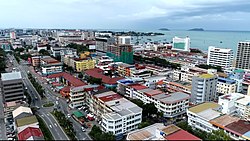
Kota Kinabalu (Malaysian: [ˈkota kinaˈbalu]; formerly known as Jesselton), colloquially referred to as KK, is the state capital of Sabah, Malaysia. It is also the capital of the Kota Kinabalu District as well as the West Coast Division of Sabah. The city is located on the northwest coast of Borneo facing the South China Sea. The Tunku Abdul Rahman National Park lies to its west and Mount Kinabalu, which gave the city its name, is located to its east. Kota Kinabalu has a population of 452,058 according to the 2010 census; when the adjacent Penampang and Tuaran districts are included, the metro area has a combined population of 628,725. The 2020 Census revealed an increase in the municipal population to 500,421, while the wider area including the Penampang and Putatan districts had a population of 731,406.
Historically, the Kadazandusuns called the area by the name of Dondoung. In the 15th century, the area of Kota Kinabalu was under the influence of Bruneian Empire. In the 19th century, the British North Borneo Chartered Company (NBCC) first set up a settlement near the Gaya Island. However, it was destroyed by fire in 1897 by a local leader named Mat Salleh. In July 1899, the place located opposite to the Gaya Island was identified as a suitable place for settlements. Development in the area was started soon after that; and the place was named "Api-api" before it was renamed after Sir Charles Jessel, the vice-chairman of NBCC, as "Jesselton". Jesselton became a major trading port in the area, and was connected to the North Borneo Railway. Jesselton was largely destroyed during World War II. The Japanese occupation of Jesselton provoked several local uprisings notably the Jesselton Revolt but they were eventually defeated by the Japanese. After the war, NBCC was unable to finance the high cost of reconstructions and the place was ceded to the British Crown Colony. The British Crown declared Jesselton as the new capital of North Borneo in 1946 and started to rebuild the town. After the formation of Malaysia, North Borneo was renamed as Sabah. In 1967, Jesselton was renamed as Kota Kinabalu, Kota being the Malay word for City and Kinabalu after the nearby Mount Kinabalu. Kota Kinabalu was granted city status in 2000.
Kota Kinabalu is often known as KK both in Malaysia and internationally. It is a major tourist destination and a gateway for travellers visiting Sabah and Borneo. Kinabalu Park is located about 90 kilometres from the city and there are many other tourist attractions in and around the city. Kota Kinabalu is also one of the major industrial and commercial centres of East Malaysia. These two factors combine to make Kota Kinabalu one of the fastest-growing cities in Malaysia.
Kota Kinabalu is named after Mount Kinabalu, which is situated about 50 kilometres east-northeast of the city. Kinabalu is derived from the name Aki Nabalu meaning the 'revered place of the dead'. Aki means 'ancestors' or 'grandfather', and Nabalu is a name for the mountain in the Dusun language. There is also a source claiming that the term originated from Ki Nabalu, Ki meaning 'have' or 'exist', and Nabalu meaning 'spirit of the dead'.
The word kota comes from Malay word kota which in turn comes from the Sanskrit word कोट्ट (kota) which means 'fort, fortress, castle, fortified house, fortification, works, city, town, or place encircled by walls'. It is also used formally in a few other Malaysian towns and cities, for example, Kota Bharu, Kota Tinggi, and Kota Kemuning. It can also be used informally to refer to any towns or cities. Hence, a direct translation of the name Kota Kinabalu into English would be "City of Kinabalu" or "Kinabalu City".
Besides Jesselton, there are also other older names for Kota Kinabalu. The most popular is Api-Api, or simply Api, which is a Malay word meaning 'fire'. Wendy Law Suart wrote in her book on North Borneo, The Lingering Eye, "there is in the Sabah State Museum a Dutch map of Borneo and the Celebes dated 1657 in which the settlement where Jesselton was to stand is clearly labelled Api Api. It may have some connection with the seaside tree with breathing roots that bears the same name". There are claims, however, that Kota Kinabalu was actually named after a nearby river called Sungai Api-Api. In Chinese, the city is still known as Api, which is the Hakka pronunciation for 亚庇 (Simplified Chinese; Traditional Chinese: 亞庇; pinyin: yà bì).
Another suggested historical name is Deasoka, which roughly means 'below the coconut tree' in the Bajau language. The Bajau locals purportedly used this name to refer to a village in the southern part of the city which was filled with coconut trees. Yet another name was Singgah Mata which literally means 'transit eye', but can be loosely translated as 'pleasing to the eye'. It is a name said to have been given by fishermen from Gaya Island referring to the strip of land that is today's downtown Kota Kinabalu. Today, all these names have been immortalised as names of streets or buildings around the city. Some examples are Lintasan Deasoka, Api-Api Centre and Singgah Mata Street.
Since the 15th century, the area of what is now Kota Kinabalu came under the influence of the Bruneian Empire. In the late 1800s, the British North Borneo Chartered Company (NBCC) began to establish colonial settlements throughout North Borneo. In 1882, NBCC founded a small settlement in the area known as Gaya Bay, which was already inhabited by the Bajau people. The first settlement was at Gaya Island. However, in 1897, the settlement was burned and destroyed by the indigenous Bajau-Suluk chief Mat Salleh.
Kota Kinabalu
Kota Kinabalu (Malaysian: [ˈkota kinaˈbalu]; formerly known as Jesselton), colloquially referred to as KK, is the state capital of Sabah, Malaysia. It is also the capital of the Kota Kinabalu District as well as the West Coast Division of Sabah. The city is located on the northwest coast of Borneo facing the South China Sea. The Tunku Abdul Rahman National Park lies to its west and Mount Kinabalu, which gave the city its name, is located to its east. Kota Kinabalu has a population of 452,058 according to the 2010 census; when the adjacent Penampang and Tuaran districts are included, the metro area has a combined population of 628,725. The 2020 Census revealed an increase in the municipal population to 500,421, while the wider area including the Penampang and Putatan districts had a population of 731,406.
Historically, the Kadazandusuns called the area by the name of Dondoung. In the 15th century, the area of Kota Kinabalu was under the influence of Bruneian Empire. In the 19th century, the British North Borneo Chartered Company (NBCC) first set up a settlement near the Gaya Island. However, it was destroyed by fire in 1897 by a local leader named Mat Salleh. In July 1899, the place located opposite to the Gaya Island was identified as a suitable place for settlements. Development in the area was started soon after that; and the place was named "Api-api" before it was renamed after Sir Charles Jessel, the vice-chairman of NBCC, as "Jesselton". Jesselton became a major trading port in the area, and was connected to the North Borneo Railway. Jesselton was largely destroyed during World War II. The Japanese occupation of Jesselton provoked several local uprisings notably the Jesselton Revolt but they were eventually defeated by the Japanese. After the war, NBCC was unable to finance the high cost of reconstructions and the place was ceded to the British Crown Colony. The British Crown declared Jesselton as the new capital of North Borneo in 1946 and started to rebuild the town. After the formation of Malaysia, North Borneo was renamed as Sabah. In 1967, Jesselton was renamed as Kota Kinabalu, Kota being the Malay word for City and Kinabalu after the nearby Mount Kinabalu. Kota Kinabalu was granted city status in 2000.
Kota Kinabalu is often known as KK both in Malaysia and internationally. It is a major tourist destination and a gateway for travellers visiting Sabah and Borneo. Kinabalu Park is located about 90 kilometres from the city and there are many other tourist attractions in and around the city. Kota Kinabalu is also one of the major industrial and commercial centres of East Malaysia. These two factors combine to make Kota Kinabalu one of the fastest-growing cities in Malaysia.
Kota Kinabalu is named after Mount Kinabalu, which is situated about 50 kilometres east-northeast of the city. Kinabalu is derived from the name Aki Nabalu meaning the 'revered place of the dead'. Aki means 'ancestors' or 'grandfather', and Nabalu is a name for the mountain in the Dusun language. There is also a source claiming that the term originated from Ki Nabalu, Ki meaning 'have' or 'exist', and Nabalu meaning 'spirit of the dead'.
The word kota comes from Malay word kota which in turn comes from the Sanskrit word कोट्ट (kota) which means 'fort, fortress, castle, fortified house, fortification, works, city, town, or place encircled by walls'. It is also used formally in a few other Malaysian towns and cities, for example, Kota Bharu, Kota Tinggi, and Kota Kemuning. It can also be used informally to refer to any towns or cities. Hence, a direct translation of the name Kota Kinabalu into English would be "City of Kinabalu" or "Kinabalu City".
Besides Jesselton, there are also other older names for Kota Kinabalu. The most popular is Api-Api, or simply Api, which is a Malay word meaning 'fire'. Wendy Law Suart wrote in her book on North Borneo, The Lingering Eye, "there is in the Sabah State Museum a Dutch map of Borneo and the Celebes dated 1657 in which the settlement where Jesselton was to stand is clearly labelled Api Api. It may have some connection with the seaside tree with breathing roots that bears the same name". There are claims, however, that Kota Kinabalu was actually named after a nearby river called Sungai Api-Api. In Chinese, the city is still known as Api, which is the Hakka pronunciation for 亚庇 (Simplified Chinese; Traditional Chinese: 亞庇; pinyin: yà bì).
Another suggested historical name is Deasoka, which roughly means 'below the coconut tree' in the Bajau language. The Bajau locals purportedly used this name to refer to a village in the southern part of the city which was filled with coconut trees. Yet another name was Singgah Mata which literally means 'transit eye', but can be loosely translated as 'pleasing to the eye'. It is a name said to have been given by fishermen from Gaya Island referring to the strip of land that is today's downtown Kota Kinabalu. Today, all these names have been immortalised as names of streets or buildings around the city. Some examples are Lintasan Deasoka, Api-Api Centre and Singgah Mata Street.
Since the 15th century, the area of what is now Kota Kinabalu came under the influence of the Bruneian Empire. In the late 1800s, the British North Borneo Chartered Company (NBCC) began to establish colonial settlements throughout North Borneo. In 1882, NBCC founded a small settlement in the area known as Gaya Bay, which was already inhabited by the Bajau people. The first settlement was at Gaya Island. However, in 1897, the settlement was burned and destroyed by the indigenous Bajau-Suluk chief Mat Salleh.
Recent media
Recent media