Hubbry Logo
Leona AndersonLeona AndersonMain
Open search
Leona Anderson
Community hub
Leona Anderson
logo
8 pages, 0 posts
0 subscribers
Be the first to start a discussion here.
Leona Anderson
Leona Anderson
from Wikipedia
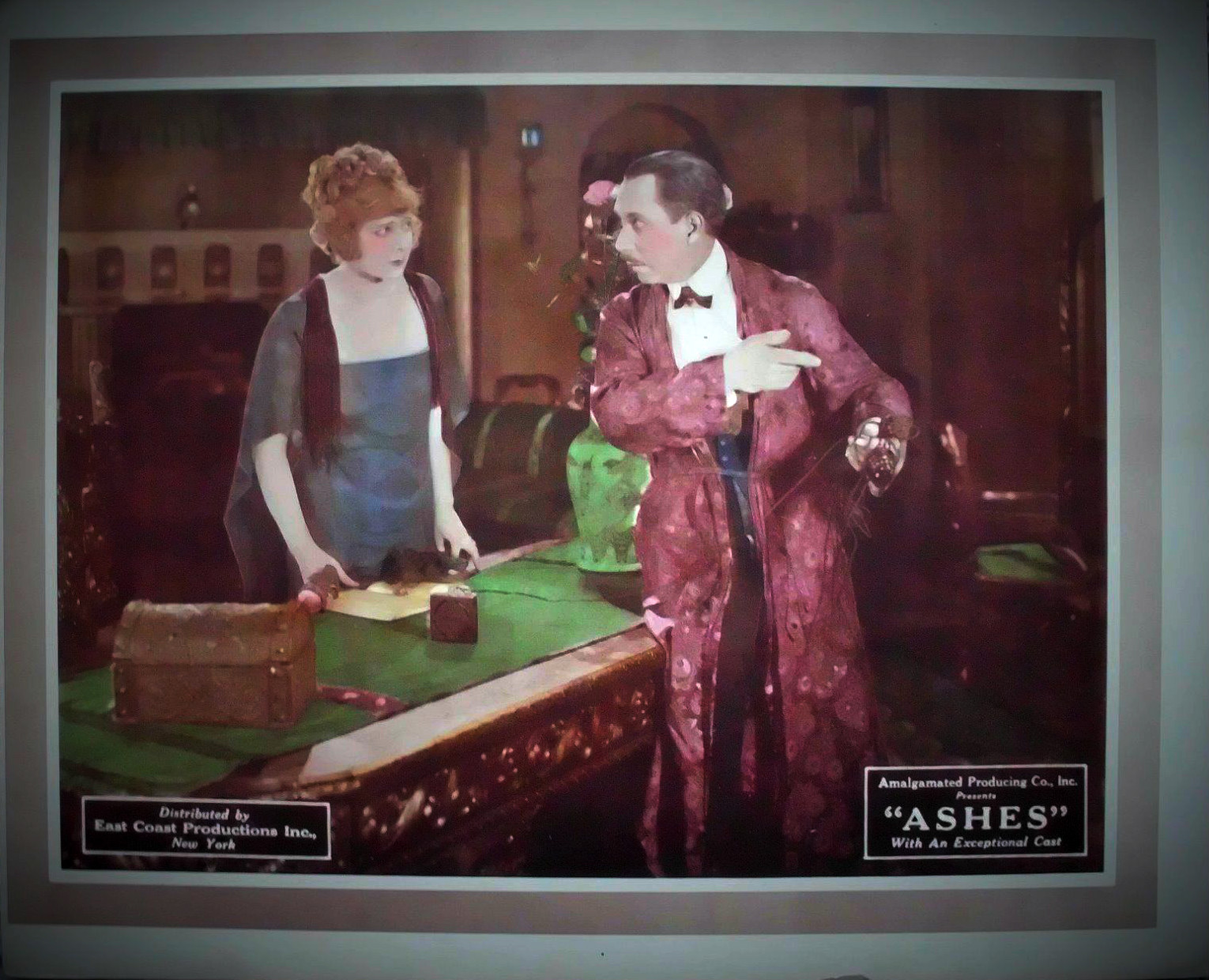
Lobby card from Ashes (1922).

Leona Anderson (born Leona Aronson; April 3, 1885 – December 25, 1973) was an American silent film actress who is possibly best remembered for her 1957 shrill music album Music to Suffer By.[1]

Biography

[edit]

Leona Anderson was born as Leona Aronson on April 3, 1885, in St. Louis, Missouri. She was the younger sister of Broncho Billy Anderson, who co-founded Essanay Studios in Chicago in 1907.[2] She appeared in several films for Essanay Studios without much success beginning in 1914. In 1915, she appeared with Charlie Chaplin in the Essanay Studios comedy In the Park. In 1922, she had a starring role opposite Stan Laurel in the comedy Mud and Sand, a spoof of the Rudolph Valentino film Blood and Sand.[2]

In 1953, Anderson revived her career in music, billing herself as "the world's most horrible singer" and becoming a favorite of comedian Ernie Kovacs and appearing several times on The Ernie Kovacs Show.[3] Kovacs' widow, Edie Adams, later recalled that "She (Anderson) knew she was camp, but she was very funny, and very sweet."[1]

In 1953, Anderson recorded a single, "Fish", for a small New York City record label. The song would later appear on the 1997 CD collection The Ernie Kovacs Record Collection.[4] This led Columbia Records to issue two singles by Anderson in 1954–55.[5] This was followed by the comedic album Music to Suffer By on Unique Records in 1957,[1] later reissued in 2011 on Trunk Records. Music to Suffer By featured Anderson slaughtering several classics and standards, such as Georges Bizet's "Habanera" from Carmen and Cole Porter's "I Love Paris", as well as new material such as "Rats in My Room" (which earned enough notoriety to be covered by Danny Neaverth and Joey Reynolds, and by NRBQ a few years later)[6] and "Limburger Lover". By the late 1950s, she had become widely known for her bad singing, which was apparently an act she created to mock the pompous style of serious opera singers; "Opera singers just can't kid themselves properly ... they can never let their voices go," Anderson was quoted as saying.[1] Music critic Ned Raggett asserts "hearing her crack, strain, burble, and otherwise demonstrate that her singing voice is completely surplus to any requirements might either be seizure-inducing or seizure-removing, depending on how you place your speakers."[3]

Anderson's final film appearance was as the frightening Mrs. Slydes in the 1959 horror film House on Haunted Hill, directed by William Castle and starring Vincent Price. In 1973, at age 88, she died in Fremont, California.[2]

Partial filmography

[edit]
  • The Shanty at Trembling Hill (1915)
  • In the Park (1915)
  • A Horse of Another Color (1915)
  • Her Realization (1915)
  • Suppressed Evidence (1915)
  • Broncho Billy's Mexican Wife (1915)
  • Ashes (1922)
  • Mud and Sand (1922)
  • Johnny Gunman (1957)
  • House on Haunted Hill (1959)

References

[edit]
[edit]
Revisions and contributorsEdit on WikipediaRead on Wikipedia
from Grokipedia
Leona Anderson (April 3, 1885 – December 25, 1973) was an American actress and singer renowned for her intentionally discordant and shrill vocal performances that parodied operatic singing styles. Born Leona Aronson in , Missouri, as the youngest of seven children, she was the sister of pioneering actor Bronco Billy Anderson. Anderson launched her entertainment career at age 15, debuting in a George M. Cohan revue and pursuing formal opera training before shifting to satirical acts in vaudeville, radio, clubs, and early films. In the 1910s, she appeared in silent shorts such as In the Park (1915) and The Shanty at Trembling Hill (1915), and later in features including Mud and Sand (1922) as Filet de Sole and Ashes (1922) as Mrs. DeCourcey. By the 1950s, after winning a "worst voice" contest that highlighted her comedic potential, she released her debut single "Fish" and the novelty album Music to Suffer By (1957) on Unique Records, featuring exaggerated renditions of songs like "I Love Paris" and "Indian Love Call," earning her the moniker "the world's most horrible singer." She performed on television variety shows, including The Ernie Kovacs Show, and made a memorable cameo as the eerie Mrs. Slydes in the horror classic House on Haunted Hill (1959). Her work, bridging silent-era acting and mid-century outsider music, has been compared to performers like Florence Foster Jenkins and influenced later intentionally "bad" performers like Mrs. Miller.

Early life

Birth and upbringing

Leona Anderson was born Leona Aronson on April 3, 1885, in , , to Harry Aronson, who hailed from , and his wife Esther Ash Aronson. As the youngest of seven children and the only daughter, she grew up in a bustling family environment typical of late-19th-century immigrant households. Her early childhood unfolded in a working-class home in , shaped by her father's role as a traveling salesman, which underscored the economic realities faced by many Midwestern families during that era. The Aronson family maintained stability in throughout Leona's formative years into adolescence, immersing her in the cultural and social influences of urban Midwestern life. Her older brother, Maxwell Aronson—later renowned as —would eventually draw her into the world of .

Family connections to entertainment

Leona Anderson was the younger sister of Gilbert M. "Broncho Billy" Anderson, born Maxwell Henry Aronson in 1880, a pioneering silent film actor, director, and producer who became the first major star of the Western genre. As the youngest of seven siblings in a Jewish family originally from and , Leona, born in 1885, grew up in the shadow of her brother's rising fame in the nascent film industry. Broncho Billy's success profoundly shaped Leona's early exposure to entertainment, as he co-founded in in 1907 with George K. Spoor, establishing one of the earliest American film production companies focused on short Westerns. From 1907 to 1918, Essanay operated primarily out of before expanding to Niles, , where Broncho Billy produced over 300 one- and two-reel films featuring himself as the titular hero, introducing innovative techniques like on-location shooting and character-driven narratives that popularized the genre. This family connection provided Leona with direct access to the industry; inspired by her brother's achievements, she left school in and traveled to in 1914 to join him at Essanay's facilities, marking her entry into the Chicago- and California-based film scene. The Aronson family's broader ties to entertainment were limited but centered on Broncho Billy's pivotal role, with no other siblings noted for significant involvement in acting or production. His mentorship and studio resources offered Leona initial opportunities amid Essanay's heyday, though the company's dissolution in 1918 shifted the family's industry footprint westward.

Film career

Silent film era

Leona Anderson made her acting debut in 1914 at Essanay Studios in Chicago, where she joined the stock company thanks to her brother, George "Broncho Billy" Anderson, one of the studio's co-founders. Despite her familial connection, her early roles were modest, reflecting the limited opportunities for women in the burgeoning film industry, where actresses often faced grueling schedules, physical demands from outdoor shoots, and typecasting in supporting parts without creative control. At Essanay, known for its westerns and comedies, Anderson appeared in several short films, typically as ingénues or comic foils, but achieved little recognition amid the studio's rapid production pace. In 1915, Anderson had a notable supporting role in Charlie Chaplin's Essanay comedy short In the Park, playing "The Count's Fancy," a flirtatious woman whose interactions with Chaplin's contribute to the film's chaotic park bench antics. The 14-minute film exemplifies early style, with Chaplin's character meddling in romantic encounters involving pickpockets, suitors, and police, highlighting Anderson's ability to convey exaggerated expressions essential to silent-era humor. This appearance marked one of her more visible early credits, though it did not propel her to stardom. Anderson's most prominent silent role came in 1922 with the lead female part in Mud and Sand, a satirical short directed by Gilbert M. Pratt and starring Stan Laurel as the bumbling bullfighter Rhubarb Vaselino. Parodying Rudolph Valentino's dramatic Blood and Sand from the same year, the 20-minute comedy follows Vaselino's rise from dishwasher to arena hero, complicated by his entanglements with three women—Anderson as the elegant Filet de Sole, alongside Julie Leonard and Mae Laurel—leading to pratfalls, jealous rivalries, and a disastrous bullfight climax. As Filet de Sole, Anderson's character represents the sophisticated love interest, contrasting Laurel's clumsiness and underscoring the film's send-up of matinee idol tropes; her performance added poise to the ensemble's physical comedy. Beyond these highlights, Anderson accumulated minor credits in Essanay productions from 1914 to around 1918, including supporting roles in dramas like The Shanty at Trembling Hill (1915) as Frances Warfield and Suppressed Evidence (1915) as The Wife, and comedies such as A Horse of Another Color (1915) as A New Lady in Snakeville and Her Realization (1915) as The Singer. The studio's closure in 1918, following financial struggles after Chaplin's departure and competition from Hollywood, severely limited her opportunities, as many Essanay actors dispersed without established careers elsewhere. This transition forced Anderson into sporadic work through the mid-1920s, including Ashes (1922), where she played Mrs. DeCourcey in a about and social ambition, amid the industry's shift toward feature-length films and away from short-format independents.

Later film roles

Following a string of appearances in silent films during the and early , Anderson effectively retired from for over 35 years, a period influenced by the industry's abrupt transition to talkies in the late , which sidelined numerous performers from the silent era, and by personal circumstances including two marriages. She made a brief return to the screen in 1957 with a minor credited role as Leona in the low-budget crime drama Johnny Gunman, directed by Art Ford, marking her first film appearance since 1922. Anderson's most prominent later role came in 1959, when she portrayed Mrs. Slydes, the blind and menacing housekeeper, in William Castle's horror-comedy , starring . In the film, Mrs. Slydes and her husband Jonas (played by ) serve as caretakers of the eerie mansion where a group of guests is invited for a deadly party; Anderson's character notably appears in tense early scenes, silently pouring tainted drinks for the arrivals with a vacant, unsettling stare that heightens the gothic tension and blends unease with subtle humor. Her performance, delivered with a chilling economy amid the film's campy shocks, contributed significantly to the movie's atmospheric dread and playful frights, underscoring her enduring screen presence despite the long absence.

Musical career

1950s revival

In 1953, at the age of 68, Leona Anderson emerged from a long hiatus in her entertainment career by transitioning into , marking a deliberate pivot to a comedic persona that capitalized on her vocal shortcomings. This resurgence began with appearances on The Show, where her intentionally off-key performances quickly captured attention for their humorous absurdity, leading to multiple guest spots on the popular variety program. Anderson embraced and amplified her lack of vocal talent, self-promoting as "the world's most horrible singer" in a style that parodied tone-deaf divas, featuring shrill, warbling vocals delivered with exaggerated theatrical flair. Her act drew parallels to earlier figures in intentionally poor , transforming what might have been dismissed as amateurishness into a novelty that appealed to audiences seeking lighthearted mockery of music. This persona not only revived her visibility but also highlighted her longevity in , building on a foundation from her earlier days. The buzz from her television outings prompted to release two novelty singles by Anderson in 1954 and 1955, including "The Mama Doll Song" b/w "I'm a Fool to Care" and "Limburger Lover" b/w "Yo-Ho," which fit into the era's burgeoning lounge and scene characterized by whimsical, ironic takes on popular standards and operatic tropes. These recordings exemplified the 1950s trend toward humorous , where deliberate imperfection provided comic relief amid the polished and sounds dominating airwaves.

Recordings and performances

Leona Anderson's debut album, Music to Suffer By, was released in 1956 on Unique Records (LP-115), featuring her intentionally off-key renditions of pop standards, opera excerpts, and novelty originals designed to evoke comedic discomfort through deliberate dissonance and exaggerated vocal flaws. The LP included tracks such as the warped takes on "I Love Paris" and "," produced with minimal orchestration to highlight Anderson's screeching high notes and pitch instability, which amplified the humorous effect of her self-proclaimed status as "the world's most horrible singer." This production approach, emphasizing raw, unpolished sound over technical polish, underscored the album's satirical intent, drawing comparisons to earlier novelty acts while establishing Anderson's unique brand of auditory parody. Beyond the album, Anderson's output included a 1953 78 RPM single "Fish" on a small New York label, co-written by Tony Borrello and Tom Murray as an early showcase of her intentionally atrocious vocal technique, and a later 7-inch promotional single "Yo Ho! The Crow!"/"Limburger Lover" on Columbia (PR 4-40459). She also contributed tracks to novelty compilations, such as her appearance on The Ernie Kovacs Record Collection (Caedmon TC 1191, 1970), which repackaged selections from Music to Suffer By alongside other comedic recordings. Anderson's style—characterized by wavering pitch, harsh shrieks, and comically poor intonation—was central to these works, intentionally mimicking and exaggerating the flaws of performers to provoke laughter through absurdity. Anderson's television performances in the late 1950s further popularized her act, with multiple appearances on The Ernie Kovacs Show where she delivered live renditions emerging from a knight's armor visor, her stage presence marked by a poised, exaggerated elegance that contrasted sharply with her discordant vocals. These spots elicited mixed audience reactions, often blending amusement with feigned horror at her pitch-drift and shrill delivery, as Kovacs framed her as a recurring novelty act to heighten the comedic chaos. She also performed on under hosts and , as well as The New Steve Allen Show in 1963, maintaining a theatrical demeanor that amplified the intentional humor of her "suffering"-inducing style. Her overall remained confined to these releases—a single LP, two singles, and compilation features—reflecting a niche novelty career sparked by her exposure on The Show. Commercially, the works achieved limited mainstream sales but endured as cult favorites among fans of outsider and comedic music, valued for their bold embrace of imperfection over the era's polished standards.

Personal life

Marriages and relationships

Leona Anderson was married twice. Her first husband was L.G. Young, general manager of the International Engineering Company, whom she married around . The identity of her second spouse remains undocumented. These marriages occurred amid her active years in entertainment, a period when female performers often navigated personal commitments alongside demanding professional schedules. No children are recorded from either . In contrast to her of origin—where she was the youngest of seven siblings—her adult partnerships appear to have been discreet and supportive of her professional independence rather than defining it. During the early , relationships in the entertainment industry for women like Anderson were frequently overshadowed by professional demands, with marriages sometimes concealed to preserve marketable images of youth and availability. Many actresses formed partnerships that facilitated career moves, such as relocating for stage or screen work, yet these unions rarely received public scrutiny unless tied to . Anderson's low-profile personal life exemplifies this era's trend, where female performers balanced relational privacy with the exigencies of a male-dominated field.

Later years and residence

In the years following her final film role in in 1959, Leona Anderson retired from show business and relocated to , where she resided in a during her later decades. This move allowed for a quieter life after years of cross-country travel for radio shows, club dates, and East Coast performances, including appearances on NBC's Tonight with in New York. The retirement home in Fremont was situated not far from Niles, —the site of her brother Broncho Billy Anderson's pioneering film productions—providing a subtle connection to her family's entertainment roots in the region. Throughout the and early , Anderson led a low-key existence in this setting, with limited public records of her daily activities or interactions with family and former industry contacts in .

Death and legacy

Death

Leona Anderson died on December 25, 1973, in , at the age of 88. Her death occurred on Day, providing a poignant close to a life that bridged the silent film era and mid-20th-century musical revivals, from her birth in 1885 to 1973. She had been residing in a near her brother's longtime home in the area. Anderson was buried in . No public records detail specific family attendance or notifications at the time of her passing.

Cultural impact and reissues

Leona Anderson's intentionally exaggerated vocal style has positioned her as an early precursor to the genre, influencing later artists known for their unconventional or parodic interpretations of popular songs. Her shrill, off-key renditions, such as those on her 1957 album Music to Suffer By, prefigured the work of figures like , whose 1960s recordings similarly embraced "bad" singing for comedic effect, though Anderson's approach was marked by greater self-awareness and operatic flair. This connection is highlighted in Irwin Chusid's seminal book Songs in the Key of Z: The Curious Universe of (2000), which includes Anderson's tracks on its companion compilations and frames her as a satirical innovator rather than an unwitting outsider. The album Music to Suffer By received renewed attention with its remastered by Trunk Records, marking the first official CD edition and restoring the original 1957 vinyl's audio quality for modern listeners. The release preserved the album's 12 tracks, including standards like "Rats in My Room" and "Habanera," while incorporating the original that detail Anderson's career and her embrace of the "world's most horrible singer" persona. This edition has sustained interest among collectors and enthusiasts of novelty recordings, with the label emphasizing its status as a "best worst album" of humorous musical . Anderson's work has appeared in retrospectives on novelty music and mid-century television, notably through her track "Rats in My Room," which was featured on the 1997 compilation The Ernie Kovacs Record Collection—a collection celebrating the comedian's affinity for eccentric performers. Her frequent guest spots on The Ernie Kovacs Show in the 1950s, where her vocal antics complemented Kovacs's surreal humor, have been referenced in histories of broadcast comedy and entertainment. Today, Anderson maintains a within niche communities dedicated to and intentional "bad" singing, genres that celebrate her campy orchestrations and unpredictable phrasing as enduring examples of musical absurdity. Fans engage with her legacy through reissues, radio programs like those on that spotlight outsider tracks, and compilations such as the Songs in the Key of Z series, fostering appreciation for her blend of highbrow parody and lowbrow charm.

References

Add your contribution
Related Hubs
User Avatar
No comments yet.