


Community hub
Recent from talks
Contribute something to knowledge base
Content stats: 0 posts, 0 articles, 1 media, 0 notes
Members stats: 0 subscribers, 0 contributors, 0 moderators, 0 supporters
Subscribers
Supporters
Contributors
Moderators
Hub AI
Li Keyong AI simulator
(@Li Keyong_simulator)
Hub AI
Li Keyong AI simulator
(@Li Keyong_simulator)
Li Keyong
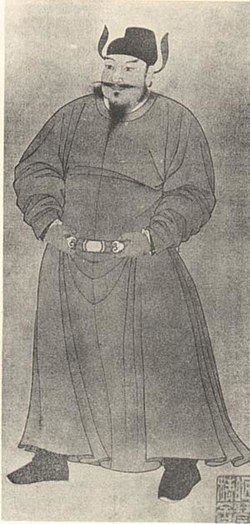
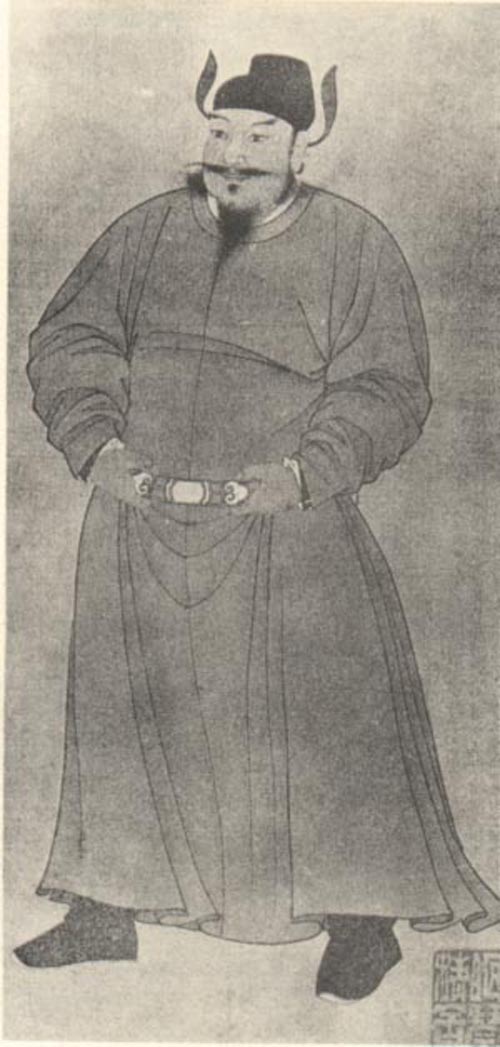
Li Keyong (Chinese: 李克用; pinyin: Lǐ Kèyòng) (October 24, 856 – February 24, 908) was a Chinese military general and politician of Shatuo ethnicity, and from January 896 the Prince of Jin (Chinese: 晉王; pinyin: Jìn Wáng), which would become an independent state after the fall of the Tang dynasty in 907. Li served as a Jiedushi provincial military governor during the late Tang period and was an instrumental figure in the development of a Shatuo base of power in what is today's Shanxi Province of China. His son Li Cunxu (Emperor Zhuangzong), a child of his concubine Lady Cao, would succeed him as Prince of Jin and eventually become the founding emperor of the Later Tang dynasty in 923.
Li Keyong—although he would have initially carried the surname of Zhuye—was born in 856, during the reign of Emperor Xuānzong. His father was the Shatuo chieftain Zhuye Chixin, whose people were then living in the Shenwu River (神武川, flowing through modern Shuozhou, Shanxi) region. His mother was Lady Qin, and it is not clear whether she was Zhuye Chixin's wife or concubine. He was Zhuye Chixin's third son.
In 869, during the reign of Emperor Xuānzong's son Emperor Yizong, as the Tang imperial general Kang Chengxun was commissioned to suppress the rebellion of Pang Xun at Xu Prefecture (徐州, in modern Xuzhou, Jiangsu), he invited Zhuye to bring his Shatuo soldiers and serve under him. Zhuye agreed, and then-14-year-old Li Keyong fought in the campaign so fiercely that he became known as the "Son of the Flying Tiger" (飛虎子). After the campaign, to recognize Zhuye Chixin's contributions during the campaign, Emperor Yizong bestowed on him the imperial surname of Li, and gave him a new name of Guochang. Li Keyong presumably took the imperial surname of Li at that time as well. Li Guochang was subsequently made the military governor (Jiedushi) of Zhenwu Circuit (振武, headquartered in modern Hohhot, Inner Mongolia). Li Keyong went to Zhenwu as well to serve under his father.
As of 878, Li Keyong was serving as the deputy commander of the Shatuo troops at Datong Circuit (大同, headquartered in modern Datong, Shanxi) and stationed at Yu Prefecture (蔚州, in modern Zhangjiakou, Hebei). At that time, the commander of the Shatuo troops at Datong was Li Jinzhong (李盡忠), who, along with his officers Kang Junli, Xue Zhicheng (薛志誠), Cheng Huaixin (程懷信), and Li Cunzhang considered the Tang realm to be in such disarray due to agrarian rebellions (the chief of which was Huang Chao's rebellion), and Li Jinzhong wrote Li Keyong, encouraging him to overthrow the defender of Datong, Duan Wenchu (段文楚), who had drawn the ire of the soldiers by deducting their clothing and food stipends and being harsh in his enforcement of laws. Li Jinzhong then started a mutiny at Datong's capital Yun Prefecture (雲州), arresting Duan and his assistant Liu Hanzhang (柳漢璋). Li Keyong soon arrived, executed Duan and four of his subordinates, and claimed the title of defender of Datong. He sought imperial commission, but then-ruling Emperor Xizong refused.
Upon hearing of Li Keyong's mutiny, Li Guochang, then still the military governor of Zhenwu, initially submitted a petition to Emperor Xizong proclaiming his loyalty and asking Emperor Xizong to commission another defender of Datong—going as far as stating that if Li Keyong refused, he would be willing to attack Li Keyong himself. Instead, the imperial government requested that Li Guochang write a letter to Li Keyong to promptly receive the newly imperially commissioned defender, Lu Jianfang (盧簡方). Believing that Li Keyong would nevertheless reject Lu, however, the imperial government changed tactics and named Li Guochang the new military governor of Datong, believing that Li Keyong would not resist his father.
However, Li Guochang was hoping that he and Li Keyong would be allowed to retain two circuits, and therefore, when he received the transfer order, he tore up the edict and rose in rebellion as well, joining forces with Li Keyong. Initially, their joint forces were successful, capturing Zhelu Base (遮虜軍, in modern Xinzhou, Shanxi), and then defeating the joint forces of Cui Jikang (崔季康) the military governor of Hedong Circuit (河東, headquartered in modern Taiyuan, Shanxi) and Li Jun (李均) the military governor of Zhaoyi Circuit (昭義, headquartered in modern Changzhi, Shanxi) at Hong Valley (洪谷, in modern Xinzhou), killing Li Jun in battle. (The defeat of the Hedong forces also appeared to lead to a chain reaction of several mutinies at Hedong, in which Cui was killed, and his successor Li Kan (李侃) resigned; after Li Kan's resignation and the natural death of his successor Li Wei, the subsequent successor Li Shao (李邵) was deposed, and Li Shao's successor Kang Chuangui (康傳圭) was killed.)
By summer 880, however, the tide began to change against Li Keyong and his Shatuo forces. As the newly Tang-commissioned military governor of Datong, Li Zhuo (李涿), was joining forces with Li Keju the military governor of Lulong Circuit (盧龍, headquartered in modern Beijing) and the Tuyuhun chieftain Helian Duo against Li Keyong, Li Keyong left his officer Gao Wenji (高文集) in charge of his base at Shuo Prefecture (朔州, in modern Shuozhou, Shanxi) and stationed himself at Xiongwu Base (雄武軍, in modern Chengde, Hebei) to defend against Li Keju. Li Zhuo used this opportunity to entice Gao to surrender. Li Keyong tried to return to Shuo to recapture it, but was intercepted by Li Keju's officer Han Xuanshao (韓玄紹) and defeated, with Li Jinzhong and Cheng killed in battle. Meanwhile, Li Zhuo and Helian attacked Li Guochang at Yu Prefecture, defeating him. Both Li Guochang and Li Keyong were forced to abandon the region and flee to the Dada (達靼, then in the Yin Mountains region).
Helian was made the new defender of Datong, and he subsequently bribed the Dada chief, asking the Dada chief to put Li Guochang and Li Keyong to death. Li Keyong heard of this, but, pretending not to know about it, feasted with the Dada nobles. During the feast, he showed off his archery skills, such that he was even able to hit a leaf and a needle. He stated to the Dada nobles:
Li Keyong
Li Keyong (Chinese: 李克用; pinyin: Lǐ Kèyòng) (October 24, 856 – February 24, 908) was a Chinese military general and politician of Shatuo ethnicity, and from January 896 the Prince of Jin (Chinese: 晉王; pinyin: Jìn Wáng), which would become an independent state after the fall of the Tang dynasty in 907. Li served as a Jiedushi provincial military governor during the late Tang period and was an instrumental figure in the development of a Shatuo base of power in what is today's Shanxi Province of China. His son Li Cunxu (Emperor Zhuangzong), a child of his concubine Lady Cao, would succeed him as Prince of Jin and eventually become the founding emperor of the Later Tang dynasty in 923.
Li Keyong—although he would have initially carried the surname of Zhuye—was born in 856, during the reign of Emperor Xuānzong. His father was the Shatuo chieftain Zhuye Chixin, whose people were then living in the Shenwu River (神武川, flowing through modern Shuozhou, Shanxi) region. His mother was Lady Qin, and it is not clear whether she was Zhuye Chixin's wife or concubine. He was Zhuye Chixin's third son.
In 869, during the reign of Emperor Xuānzong's son Emperor Yizong, as the Tang imperial general Kang Chengxun was commissioned to suppress the rebellion of Pang Xun at Xu Prefecture (徐州, in modern Xuzhou, Jiangsu), he invited Zhuye to bring his Shatuo soldiers and serve under him. Zhuye agreed, and then-14-year-old Li Keyong fought in the campaign so fiercely that he became known as the "Son of the Flying Tiger" (飛虎子). After the campaign, to recognize Zhuye Chixin's contributions during the campaign, Emperor Yizong bestowed on him the imperial surname of Li, and gave him a new name of Guochang. Li Keyong presumably took the imperial surname of Li at that time as well. Li Guochang was subsequently made the military governor (Jiedushi) of Zhenwu Circuit (振武, headquartered in modern Hohhot, Inner Mongolia). Li Keyong went to Zhenwu as well to serve under his father.
As of 878, Li Keyong was serving as the deputy commander of the Shatuo troops at Datong Circuit (大同, headquartered in modern Datong, Shanxi) and stationed at Yu Prefecture (蔚州, in modern Zhangjiakou, Hebei). At that time, the commander of the Shatuo troops at Datong was Li Jinzhong (李盡忠), who, along with his officers Kang Junli, Xue Zhicheng (薛志誠), Cheng Huaixin (程懷信), and Li Cunzhang considered the Tang realm to be in such disarray due to agrarian rebellions (the chief of which was Huang Chao's rebellion), and Li Jinzhong wrote Li Keyong, encouraging him to overthrow the defender of Datong, Duan Wenchu (段文楚), who had drawn the ire of the soldiers by deducting their clothing and food stipends and being harsh in his enforcement of laws. Li Jinzhong then started a mutiny at Datong's capital Yun Prefecture (雲州), arresting Duan and his assistant Liu Hanzhang (柳漢璋). Li Keyong soon arrived, executed Duan and four of his subordinates, and claimed the title of defender of Datong. He sought imperial commission, but then-ruling Emperor Xizong refused.
Upon hearing of Li Keyong's mutiny, Li Guochang, then still the military governor of Zhenwu, initially submitted a petition to Emperor Xizong proclaiming his loyalty and asking Emperor Xizong to commission another defender of Datong—going as far as stating that if Li Keyong refused, he would be willing to attack Li Keyong himself. Instead, the imperial government requested that Li Guochang write a letter to Li Keyong to promptly receive the newly imperially commissioned defender, Lu Jianfang (盧簡方). Believing that Li Keyong would nevertheless reject Lu, however, the imperial government changed tactics and named Li Guochang the new military governor of Datong, believing that Li Keyong would not resist his father.
However, Li Guochang was hoping that he and Li Keyong would be allowed to retain two circuits, and therefore, when he received the transfer order, he tore up the edict and rose in rebellion as well, joining forces with Li Keyong. Initially, their joint forces were successful, capturing Zhelu Base (遮虜軍, in modern Xinzhou, Shanxi), and then defeating the joint forces of Cui Jikang (崔季康) the military governor of Hedong Circuit (河東, headquartered in modern Taiyuan, Shanxi) and Li Jun (李均) the military governor of Zhaoyi Circuit (昭義, headquartered in modern Changzhi, Shanxi) at Hong Valley (洪谷, in modern Xinzhou), killing Li Jun in battle. (The defeat of the Hedong forces also appeared to lead to a chain reaction of several mutinies at Hedong, in which Cui was killed, and his successor Li Kan (李侃) resigned; after Li Kan's resignation and the natural death of his successor Li Wei, the subsequent successor Li Shao (李邵) was deposed, and Li Shao's successor Kang Chuangui (康傳圭) was killed.)
By summer 880, however, the tide began to change against Li Keyong and his Shatuo forces. As the newly Tang-commissioned military governor of Datong, Li Zhuo (李涿), was joining forces with Li Keju the military governor of Lulong Circuit (盧龍, headquartered in modern Beijing) and the Tuyuhun chieftain Helian Duo against Li Keyong, Li Keyong left his officer Gao Wenji (高文集) in charge of his base at Shuo Prefecture (朔州, in modern Shuozhou, Shanxi) and stationed himself at Xiongwu Base (雄武軍, in modern Chengde, Hebei) to defend against Li Keju. Li Zhuo used this opportunity to entice Gao to surrender. Li Keyong tried to return to Shuo to recapture it, but was intercepted by Li Keju's officer Han Xuanshao (韓玄紹) and defeated, with Li Jinzhong and Cheng killed in battle. Meanwhile, Li Zhuo and Helian attacked Li Guochang at Yu Prefecture, defeating him. Both Li Guochang and Li Keyong were forced to abandon the region and flee to the Dada (達靼, then in the Yin Mountains region).
Helian was made the new defender of Datong, and he subsequently bribed the Dada chief, asking the Dada chief to put Li Guochang and Li Keyong to death. Li Keyong heard of this, but, pretending not to know about it, feasted with the Dada nobles. During the feast, he showed off his archery skills, such that he was even able to hit a leaf and a needle. He stated to the Dada nobles:
Recent media
Recent media