Hubbry Logo
LifeloverLifeloverMain
Open search
Lifelover
Community hub
Lifelover
logo
8 pages, 0 posts
0 subscribers
Be the first to start a discussion here.
Lifelover
Lifelover
from Wikipedia

Lifelover was a Swedish band formed in 2005 by Jonas Bergqvist and Kim Carlsson in Stockholm. Following six years of activity the group split up in September 2011 after the death of Bergqvist, as he was the lead composer and one of Lifelover's founding members. While widely considered being metal, Lifelover combined several genres into their sound, citing black metal, post-punk, dark ambient, doom metal and gothic rock among other influences. The band called their music "narcotic metal", which was described in a Decibel interview with Carlsson where he stated "anyone should be able to figure that out [what that means] or make their own conclusion about it."[1]

Key Information

With Lifelover's depressive lyrics, musicianship and atmosphere, the band are credited for being one of the biggest influences on the black metal subgenre depressive suicidal black metal (also known as DSBM).[2]

History

[edit]

Formation and first releases (2005–2006)

[edit]

Lifelover was formed in June 2005 in Stockholm, Sweden by the two individuals Jonas "B" Bergqvist and Kim "( )" Carlsson. A demo called Promo 2005 was recorded the same month, but was never officially released and consisted of Carlsson and B playing guitars provided with ambient sounds across two very long tracks (the first track being 28:46 long and the second track being 24:59 long) both totaling up to 53 minutes and 45 seconds of recording length, the band described these two tracks as "improvised misery". After this release, the recording of Pulver began in April 2006, along with a major shift in musical direction compared to the Promo 2005 demo. The backing vocalists/lyricists LR and 1853 were recruited to the band at this time, and the album was finished in May 2006. It was released by Goatowarex in July 2006.

Erotik, Konkurs and Sjukdom (2007–2011)

[edit]

The band's second album Erotik, was released by Total Holocaust Records on 24 February 2007; guitarist H. had joined the band by this time. In late 2007, Lifelover signed a contract with Avantgarde Music and recruited two new members, Fix on bass and S. on drums for upcoming live shows. LR left the band in April 2008. Lifelover played their first live show in Stockholm in September 2008 and their third album, Konkurs, was released by Avantgarde the following month.

Osmose Productions re-issued both Pulver and Erotik on CD in 2009, Erotik was re-issued on 21 January 2009 and Pulver on 7 May. Member 1853 and live drummer S. both left the band in May 2009. Lifelover released a mini-album, Dekadens, in July 2009 (on Osmose Productions), the first (and only) Lifelover release with real drums which is in contrast to the drum programming the band would use on all their other albums. The drumming was provided by the band's then newest member Non. In February 2011 their fourth full-length album, Sjukdom, was released by Prophecy Productions. Drummer Non had left the band by this point, while LR and 1853 returned to contribute to the album.

The death of B and final performances (2011–2015)

[edit]

On 10 September 2011, it was confirmed that band member B died the previous day.[3] An official statement released on 16 September stated that he had died in his sleep after overdosing the night before on his prescription drug medication. It was proven to be an accidental death after an investigation following had suicide and foul play ruled out, and an official autopsy report released months later indicated "poisoning and overdose"[4] as the cause of death. The remaining members ultimately decided to split up, citing B's irreplaceable role as songwriter and lead composer, and stated that their final shows were those performed in Belgium and the Netherlands the weekend following B's death.[5] After these concerts, the band had planned on playing one more show on 14 October 2011 dedicated to B, but later decided against it, laying the band to rest out of respect to him. Despite this, Lifelover did perform one more live show in November 2015 for the band's 10th anniversary since they formed in 2005. The concert took place in Quebec, Canada, which was the first time ever that Lifelover performed a show outside of Europe.[6]

Band name

[edit]

The name for Lifelover came from when Jonas "B" Bergqvist was called a "life lover" by a man whom he loathed. He named the band Lifelover with the idea in mind that people can "call us anything [they] want." Former drummer Joel "Non" Malmén added onto this by saying "we're all life lovers in our own sense; our own personal sense."[7]

Members

[edit]
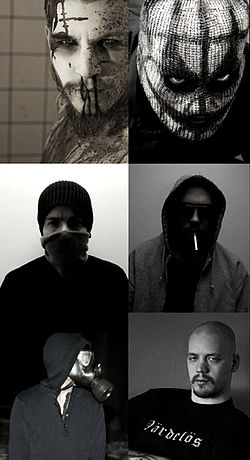
Lifelover performing live in Stockholm, 2008.
Final lineup
  • Jonas "B" Bergqvist (deceased)[8] – vocals, guitars, bass, piano, lyrics (2005–2011)
  • Kim "( )" Carlsson – lead vocals, guitar, lyrics (2005–2011)
  • Henrik "H." Huldtgren – guitar (2006–2011)
  • Felix "Fix" Öhlén – bass guitar (2006–2011)
  • Johan "1853" Gabrielson[9] – additional vocals, lyrics (2005–2011)
  • Rickard "LR" Öström[10] – additional vocals, lyrics (2006–2011)
  • Fredrik Kral – drums (2011)
Previous members
  • Joel "Non" Malmén – drums, lyrics (2009–2010)

Discography

[edit]
Studio albums
EP
Demo
  • Promo 2005 (2005)

References

[edit]
[edit]
Revisions and contributorsEdit on WikipediaRead on Wikipedia
from Grokipedia
Lifelover was a Swedish depressive black metal and band formed in in June 2005 by Jonas Bergqvist (also known as B or Nattdal) and Kim Carlsson, blending raw aggression with rock and punk influences to explore themes of depression, drug use, cynicism, and black humor. The band, often self-described as "narcotic metal," gained a in the underground metal scene for its ironic and visceral songwriting, delivered through lo-fi production and multilingual in Swedish and English. Over their active period from 2005 to 2011, Lifelover released four full-length albums—Pulver (2006), Erotik (2007), Konkurs (2008), and Sjukdom (2011)—along with the EP Dekadens (2009) and an early demo Promo 2005, all issued through independent labels like Basalte Records and later Prophecy Productions. The band's lineup evolved to include additional members such as H., Fix, 1853, Kral, and LR, with Bergqvist handling guitar, vocals, and primary composition duties. Lifelover's music stood out for its eclectic style, incorporating post-punk rhythms, acoustic interludes, and depressive atmospheres that contrasted the suicidal nihilism common in the genre with sardonic wit. Their final album, Sjukdom ("Illness"), released in February 2011, marked a thematic peak in confronting personal and societal decay. Lifelover disbanded in September 2011 following the sudden death of founding member Jonas Bergqvist on September 9 at age 25 from an accidental overdose; the band held a two days later in his honor before officially splitting out of respect for his contributions. In 2015, surviving members including Kim Carlsson organized one-off reunion performances to commemorate the band's 10th anniversary, and in 2025, similar commemorative shows occurred for the 20th anniversary, including performances by Carlsson's project Kall, but no full band reformation has taken place.

History

Formation and early releases (2005–2006)

Lifelover was formed in June 2005 in , , by Jonas "B" Bergqvist and Kim "( )" Carlsson as a two-piece project. Bergqvist and Carlsson drew from their prior involvement in other Swedish metal acts, including IXXI and Woundism, which shaped the band's foundational approach to music creation. The duo's initial creative efforts centered on a self-recorded demo titled Promo 2005, completed in the same month as the band's inception. This unreleased cassette, limited to a small number of copies produced independently, contained two raw tracks and served primarily for outreach to potential record labels rather than public distribution. Securing a deal with label GoatowaRex, Lifelover released their debut full-length album Pulver on July 24, 2006, as a limited-edition . The album showcased a lo-fi, DIY production style, with Bergqvist handling guitars, bass, , and vocals alongside Carlsson's contributions on guitars and additional vocals; notable tracks included "Nackskott" and "M/S ," emphasizing the band's raw, unpolished sound. In late 2006, the project expanded its lineup with the addition of H on guitar and V on bass. During this period, Lifelover conducted sparse live performances in , concentrating efforts on generating underground interest within the depressive community through their debut release and demo circulation.

Major albums and EP (2007–2011)

Lifelover's second full-length album, Erotik, was released on February 24, 2007, through Total Holocaust Records, marking a departure from the raw aggression of their debut toward a more polished production incorporating and elements alongside depressive . Recorded between September and December 2006 in , , the album features 11 tracks plus a hidden twelfth track consisting of a reversed version of "M/S " from their prior release Pulver. Standout songs like "Hormoner i hjärnan" and "Sweet Illness of Mine" exemplify the band's evolving sound, blending harsh vocals with melodic riffs and depressive themes of love, hurt, and existential longing, which critics praised as one of their finest early works. In October 2008, Lifelover issued their third album, Konkurs, originally through , which delved deeper into themes of personal failure, melancholy, and self-destruction while integrating and influences into their depressive framework. The record, clocking in at around 59 minutes across 11 tracks including "Brand," "Cancertid," and "Narcotic Devotion," received critical acclaim within underground metal communities for its mature expression and dark humor, with reviewers noting its lo-fi riffs structured like accessible anthems. This release solidified the band's reputation for emotional depth, earning high ratings such as 8.6/10 on and strong user scores on platforms like . The EP Dekadens followed in October 2009 via (CD edition) and Elitmusik (limited vinyl pressing of 500 copies), serving as an experimental bridge between Konkurs and future works with its heavier, more metallic aggression compared to prior releases. Spanning seven tracks in 26 minutes—such as "Luguber Framtid," "Myspys," and "Dekadenser"—the EP emphasized rawer intensity while retaining undertones, and its limited availability contributed to its cult status among fans. Recorded with a focus on concise, visceral songwriting, it highlighted the duo's pseudonyms H. and ( ) in their core production roles. During this period, Lifelover ramped up live performances, beginning with their debut show on September 28, 2008, at Harry B James in , followed by the Pulvercities mini-tour across and the from October 1 to 4, 2009, comprising four gigs that expanded their presence in the European depressive suicidal (DSBM) scene. Additional appearances, including a November 27, 2009, performance at Helvete Club in , , and select festival slots, helped cultivate a dedicated underground fanbase through chaotic, high-energy sets blending album material with raw improvisation. The band's production evolved notably from the lo-fi rawness of earlier black metal roots to a hybrid incorporating indie and post-punk textures, facilitated by a shift to Osmose Productions after the initial Total Holocaust release, which allowed for broader distribution and reissues like Erotik's 2009 edition. Interviews from 2010 and 2011, including one with vocalist Kim Carlsson in Decibel Magazine, revealed creative tensions between the core members' desire for emotional versatility—spanning joy, anger, and despair—and their commitment to DSBM authenticity, underscoring artistic growth amid the pressures of underground success.

Death of B and immediate aftermath (2011)

Lifelover released their fourth and final studio album, Sjukdom (Swedish for "disease"), on February 14, 2011, through Prophecy Productions. The album features a darker, denser sound compared to prior releases, with heavier riffs and a more despondent atmosphere that intensified the band's signature blend of depressive and elements. Tracks such as "Själsnoja" exemplify this shift, showcasing Bergqvist's raw, exasperated vocals over brooding melodies and experimental structures. Critics praised Sjukdom as a high point in Lifelover's discography, noting its emotional depth and consistency as a culmination of the band's evolving style. On September 9, 2011, founding member Jonas "B" Bergqvist, aged 25, died unexpectedly in his sleep from an accidental overdose of prescription drugs. Bergqvist, known by the B, served as the band's primary , vocalist, and composer, contributing significantly to their music and lyrics. The band announced his passing the following day via their official page, stating: "We are very sad to report that yesterday our bandmate and brother B has passed away. He didn't take his own life nor was he victim of any apparent crime. The cause of his death is still unclear and has yet to be established." In response, the remaining members issued a statement on September 19, 2011, announcing Lifelover's disbandment out of respect for Bergqvist and his central role in the band's creative direction. They declared: "We, the remaining members of LIFELOVER, have decided to lay the band to rest. This would be the only right thing to do considering B was the main composer and one of the main driving forces behind the band." All planned tours and live performances were canceled indefinitely. Two days after Bergqvist's death, on , 2011, the band held a memorial concert at Baroeg in , , which served as their final performance. The setlist emphasized songs co-written and performed by Bergqvist, including staples like "Expandera" and "," drawing an emotional response from the audience and performers alike. Sjukdom stood as Bergqvist's last major compositional work with Lifelover, released just months before the tragedy.

Final reunion performance (2015)

In 2015, the remaining members of Lifelover, led by vocalist Kim Carlsson, announced a series of one-off performances to commemorate the band's 10th anniversary since its formation in 2005, including shows on September 20 in , and September 26 in . These shows were explicitly positioned as tributes to the band's legacy, including honoring guitarist Jonas "B" Bergqvist, without any intention of permanent reformation or new material. The final performance occurred on November 27, 2015, at the Messe des Morts V festival in , , , held at Théâtre Plaza. This marked Lifelover's sole North American appearance and served as a poignant capstone to their posthumous activities. The setlist drew comprehensively from the band's , spanning their four studio albums with tracks like "Shallow" and "Lethargy" from Pulver (2006), "Cancertid" and "Hund" from Sjukdom (2011), selections from Konkurs (2008), and "Nackskott" from Dekadens (2009), creating a journey through their evolution. No guest appearances were noted, but the event featured tributes to B through dedicated song choices and onstage acknowledgments of his contributions. Attendance was intimate, fitting the festival's underground ethos, fostering an atmosphere of reflective celebration and emotional closure amid the band's history of loss. Carlsson emphasized in contemporary interviews that these gigs aimed to preserve B's vision and provide fans a final communal experience, stating, "It's a one-off thing to celebrate 10 years since the band started," while underscoring no further activities. Media coverage highlighted the event's significance, with outlets like Toilet ov Hell framing it as a historic debut for North American audiences and a dignified farewell. Fan accounts described the performance as cathartic, blending raw energy with sorrowful reverence, solidifying Lifelover's enduring impact without reopening old wounds.

20th anniversary performances (2025)

In 2025, to mark the 20th anniversary of the band's formation, surviving members organized tribute performances featuring the band Kall performing Lifelover material. These one-off events included a show on November 15, 2025, at Temple in , ; an upcoming performance on December 6, 2025, at Kollektivet Livet in , ; appearances at Cosmic Void Festival in from September 19–21, 2025; and a set at Prophecy Fest in September 2025, along with a show in . The performances served as tributes to the band's legacy and Bergqvist's contributions, with no plans for new material or full .

Musical style and themes

Genre characteristics and evolution

Lifelover's core genre is depressive suicidal (DSBM), characterized by a raw fusion of 's tremolo-picked guitars and anguished vocals with , , and elements, creating an atmospheric yet accessible sound that eschews traditional extremity for emotional depth. The band's production often featured lo-fi aesthetics in early works, emphasizing hazy, discordant tones over polished clarity, while incorporating unconventional samples like clips or ambient noises to heighten the sense of urban alienation and psychological turmoil. This hybrid approach distinguished Lifelover from purist acts, blending depressive heaviness with indie-like melodies and punk's irreverence. The band's sound evolved progressively across their discography, starting with the raw aggression of their 2006 debut Pulver, which relied on crunchy, distorted guitars, minimal drum machine patterns, and tortured screams interspersed with melancholic piano interludes, establishing a foundation in unrefined DSBM with post-punk edges. By 2007's Erotik, the style shifted toward more melodic rock integrations, introducing cleaner production, prominent piano lines, and a mix of harsh screams with spoken-word and clean vocals, adding erotic undertones through groovy riffs and electronic flourishes that expanded the depressive framework into progressive territory. Later albums Konkurs (2008) and Sjukdom (2011) further deepened this evolution, emphasizing atmospheric despair with diverse structures that alternated between doomy mid-tempos and poppy hooks, incorporating more varied instrumentation like subtle bass and experimental samples while refining melodic elements for greater emotional range without blast beats or speed. Instrumentally, Lifelover's hallmarks included dual vocal layers—combining guttural screams, rasped spoken word, and occasional clean singing—with lo-fi electric guitars delivering unconventional song structures that prioritized mood shifts over verse-chorus rigidity, often avoiding black metal's frenetic blast beats in favor of steady, hypnotic rhythms and ambient builds. Influences drew from Swedish peers like Shining, sharing a post-black metal ethos of self-destructive intensity, as well as non-metal sources such as The Cure's gothic post-punk melancholy and 1980s alternative rock's atmospheric indie vibes; Kim Carlsson's parallel project Hypothermia further shaped the band's depressive, post-rock-infused dynamics through clean riffs and introspective layering. Lifelover's reception highlighted their ironic accessibility within , praised for humanizing DSBM through catchy, genre-blending hooks that made despair palatable and influential, spawning imitators in the subgenre while earning acclaim for innovative emotional conveyance over technical prowess. Critics noted the band's role in evolving toward broader rock experimentation, with Sjukdom often cited as a high point for its raw yet sophisticated balance of variety and cohesion.

Lyrical content and imagery

Lifelover's lyrics predominantly explore themes of cynicism, depression, misery, hatred, drugs, and black comedy, often juxtaposing dark subject matter with ironic humor to underscore the absurdity of existence. This blend creates a hedonistic undercurrent amid the gloom, as seen in tracks that revel in self-destructive pleasures without overt romanticization. For instance, on the album Erotik, songs like "I Love (to Hurt) You" intertwine motifs of love and emotional violence, portraying relationships as sources of torment and fleeting ecstasy in a tone that mixes confession with sardonic wit. Written primarily in Swedish, with some songs featuring English , the band's adopt a poetic style that fuses personal confessions with satirical elements, allowing for raw emotional expression while critiquing societal and existential banalities. Fan-driven translations in online communities often emphasize the underlying wit and irony, revealing layers of humor in lines that might otherwise read as straightforward despair; for example, verses depicting and isolation carry a mocking edge against life's futility. This linguistic choice enhances accessibility for non-Swedish speakers through community efforts, fostering deeper appreciation of the nuanced interplay between sincerity and exaggeration. Album-specific imagery reinforces these themes, with Pulver evoking a destructive force through lyrics centered on self-annihilation and chaos, symbolizing the pulverizing weight of personal demons. In contrast, Sjukdom delves into illness and isolation, as evident in tracks like "Resignation," where the narrator laments a body ravaged by "soot and illness," scars from years of , and an overwhelming sense of decay and withdrawal from the world. Cover art complements this, featuring or mundane visuals such as the decaying, diseased tree on Sjukdom's sleeve, paired with limited-edition inclusions like a and razor blade to evoke visceral associations with affliction and without explicit instruction. The band's visual aesthetic emphasizes a DIY , with album sleeves utilizing amateur that captures everyday grotesquery or banality—such as or personal snapshots—eschewing polished production for an authentic, unfiltered presentation. Live shows further this anti-corporate stance, adopting a casual demeanor without traditional theatrics like , instead prioritizing raw, unpretentious delivery to align with the lyrics' rejection of performative extremity. Overall, Lifelover's lyrical approach broadens the appeal of depressive suicidal black metal by emphasizing emotional breadth over narrow glorification of suicide, incorporating humor and hedonism to make themes of depression more relatable and less prescriptive, thus influencing the genre's evolution toward ironic introspection.

Band identity

Origin of the name

The name "Lifelover" originated as a deliberately ironic choice by founding member Jonas Bergqvist when the band formed in in 2005; he adopted it after being called a "life lover" by a man he loathed. In a 2010 interview, band member Kim Carlsson explained that the name was selected to be "ironic and sarcastic," embodying the opposite of the members' self-perceived identities and designed to provoke curiosity and attention within the black metal community, thereby trolling conventional expectations of "life-hating" aesthetics in the genre. The English term "Lifelover" directly translates to the Swedish "livsälskare," a that underscores the by juxtaposing forced positivity against the band's exploration of depressive and self-destructive themes. This ironic naming convention endured throughout Lifelover's active years, reinforcing the band's reputation as anti-conformists who subverted genre stereotypes.

Aesthetic and pseudonyms

Lifelover adopted an anti-image approach that deliberately eschewed the theatrical elements typical of , such as and elaborate costumes, in favor of portraying everyday misery through casual clothing and unpretentious visuals in photos and videos. This stance was a direct counter to the "True " trends of the era, emphasizing authenticity and spiritual depth over performative spectacle. The band maintained anonymity through the use of pseudonyms for its members, including B for and vocalist Jonas Bergqvist, ( ) for Kim Carlsson, and H for Henrik Huldtgren. These aliases appeared consistently in , interviews, and promotional materials, with Carlsson specifically identified as "( )" in discussions about the band's creative process. The purpose of this pseudonym system was to prevent Lifelover from being perceived merely as a of members' other bands, such as or Dimhymn, allowing the music to stand on its own merits without preconceived associations. Initially, the band enforced full secrecy regarding members' identities, with "no one knew who we were" for an extended period to foster a genuine connection with listeners focused solely on the art. Following Bergqvist's death in 2011, partial reveals occurred, such as public announcements of his full name alongside his B, marking an evolution from total to selective disclosure. This approach contributed to the band's mystique and aligned with its DIY ethos in the underground metal scene, prioritizing raw emotional impact over personal fame.

Members

Founding and core members

Lifelover was founded in June 2005 in , , by multi-instrumentalists Jonas "B" Bergqvist and Kim "( )" Carlsson, both emerging from the local metal scene. Jonas Lars Bergqvist (also known as Nattdal), born September 5, 1986, in , served as a co-founder, primary , , and vocalist. He was instrumental in shaping the band's sound across all releases from the 2005 Promo demo through the final album Sjukdom (2011), on which he performed most instruments and composed the majority of the material, with additional contributions from H. and Fix on one track. Bergqvist's contributions emphasized raw, emotive expression in the band's depressive style, and he remained a core creative force until his death on September 9, 2011, at age 25, from an accidental prescription drug overdose. Kim Carl Martin Carlsson, born May 8, 1985, in , , co-founded the band alongside Bergqvist and took on lead vocals, guitar, bass, drums, and production duties. His versatile role extended to lyrics and overall artistic direction, including collaborative songwriting that balanced aggression with introspection, as highlighted in a where he discussed the band's evolving creative process. Following Lifelover's disbandment in 2011, Carlsson continued as a and in projects like .

Additional and touring members

Lifelover expanded its core duo with additional members who adopted pseudonyms, aligning with the band's emphasis on and collective identity. Henrik "H." Huldtgren joined as rhythm guitarist in 2006, providing key support on recordings including Konkurs (2008) and Sjukdom (2011). The band also enlisted Fix (Felix Öhlén) on guitars and bass beginning in 2006, LR (Alexander Lind) on bass (2006–2008), and 1853 (Johan Gabrielsson) as drummer in 2006, with the latter contributing to early albums before departing in 2009. Subsequent drummers included S. for live duties (2007–2009), Non (Joel Malmén, 2009–2011), and Kral (Fredrik Kral, 2011). For touring, Lifelover incorporated occasional guest musicians during European dates from 2008 to 2010, but made no permanent lineup changes after Jonas Bergqvist's death in 2011. In the aftermath of 2011, Kim Carlsson assumed expanded responsibilities, including additional instrumentation, for memorial activities that year and the one-off reunion show in 2015 with Henrik "H." Huldtgren, preserving the project's integrity without recruiting new members.

Discography

Studio albums

Lifelover's studio albums, released between 2006 and 2011, are characterized by Swedish-language titles and runtimes averaging 40–50 minutes, blending depressive with influences. All four full-length releases were initially issued on underground labels, with subsequent reissues in the expanding their availability on formats including vinyl and digital platforms by imprints such as and Productions. The debut album Pulver was released in 2006 on Goatowarex as a limited-edition , with the first pressing consisting of 500 copies featuring a distinctive cover image of a blood-soaked lying in a field of white flowers. It contains 12 tracks, including "Nackskott" and "M/S ," and has a total length of approximately 42 minutes. Multiple reissues appeared in the , including vinyl editions limited to 500 copies on in 2022, a 2023 repress, and 2025 vinyl editions. Erotik, the band's second full-length, followed in 2007 on Total Holocaust Records, marking the introduction of colorful artwork and comprising 12 tracks such as "Sweet Illness of Mine" and "En Man i Sina Sämsta År," with a runtime of 53:04. The original CD and co-released LP editions were limited, and the album gained wider digital availability through later reissues on Osmose Productions in 2009. The third album, Konkurs, emerged in 2008 via , featuring 8 tracks like "Shallow" and "Narcotic Devotion" over roughly 40 minutes. Its distribution expanded with a 2010 reissue on Prophecy Productions, including digipak CD and double-vinyl formats that enhanced accessibility in . Sjukdom, Lifelover's final studio album, was issued in 2011 on Prophecy Productions and stands out for its relatively polished production among the band's works, with 11 tracks including "Svart Galla" and "Expandera" totaling around 40 minutes. Post-release vinyl editions, such as LPs, were produced in subsequent years on the same label.

EPs and demos

Lifelover's early output includes the unreleased Promo 2005 demo, recorded in June 2005 shortly after the band's formation in , . This cassette demo, produced in a limited number of copies for label promotion, features two untitled tracks titled simply "I" and "II," each exceeding 25 minutes for a total runtime of approximately 53 minutes. The material showcases a raw, ambient depressive style with atonal guitar feedback, minimalistic , and occasional screamed vocals, described by band member Kim as "improvised misery," lacking the elements that would define later works. The band's sole EP, Dekadens, was released on October 9, 2009, via as a CD in a standard edition without initial pressing limits specified. Recorded between May and July 2009 at in , , it consists of six tracks—"Luguber Framtid" (3:06), "Myspys" (4:04), "Major Fuck Off" (2:25), "" (4:00), "Androider" (5:11), and "Visdomsord" (2:47)—for a total runtime of about 21 minutes. This release bridges the experimental leanings of Konkurs (2008) and the more introspective Sjukdom (2011), incorporating heavier riffs alongside industrial and influences, marking it as a distinct, metallic side project in Lifelover's catalog. Following the band's dissolution in 2011 after the of founding member B, Dekadens saw various fan-driven and label reissues, including limited cassette editions (e.g., 100 copies in 2024 by Osmose) and vinyl pressings (e.g., 300 copies on splatter vinyl in 2016), with additional 2025 vinyl reissues. Digital formats became available post-split, expanding accessibility, while Promo 2005 received a non-commercial bundled with Konkurs on CD by . These supplementary releases highlight Lifelover's genre-blending experimentation outside their core studio albums, with no additional EPs or demos produced.

References

Add your contribution
Related Hubs
User Avatar
No comments yet.