



Community hub
Recent from talks
Knowledge base stats:
Talk channels stats:
Members stats:
Liu Shan
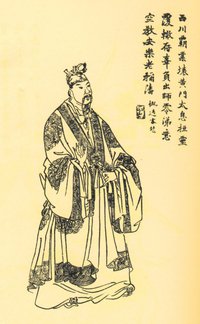
Liu Shan (ⓘ, 207–271), courtesy name Gongsi, was the second and last emperor of the state of Shu Han during the Three Kingdoms period. As he ascended the throne at the age of 16, Liu Shan was entrusted to the care of the Chancellor Zhuge Liang and Imperial Secretariat Li Yan. His reign of 40 years was the longest of all emperors in the Three Kingdoms era. During Liu Shan's reign, many campaigns were led against the rival state of Cao Wei, primarily by Zhuge Liang and his successor Jiang Wei, but to little avail, due to their drastic mismatch in terms of population and geographic extent. Liu Shan eventually surrendered to Wei in 263 after Deng Ai led a surprise attack on the Shu capital Chengdu. He was quickly relocated to the Wei capital at Luoyang, and enfeoffed as "Duke Anle". There he enjoyed his last years peacefully before dying in 271, most probably of natural causes.
Widely known to later generations by his infant name "Adou" (阿斗), Liu Shan was commonly perceived as an incapable ruler. He was also accused of indulging in pleasures while neglecting state affairs, allowing corrupt officials to take power. Some modern scholars have taken a more positive view towards Liu Shan's capability, as Liu Shan's long reign in Shu Han was free of bloody court coups unlike its rivals. Nevertheless, the name "Adou" is today still commonly used in Chinese as an epithet for someone so incompetent at a task that no amount of assistance will help them succeed.
The main source of historical information about Liu Shan and his contemporaries is Records of the Three Kingdoms. Its author Chen Shou noted in his postface that Zhuge Liang did not employ scribes at Liu Shan's court, contrary to tradition. This custom would never be established in Shu Han, so details of Liu Shan's rule are hazy in comparison to the richness of information available for Shu's rival states of Wei and Wu. Much of his reign is recorded in spare, terse synopsis.
Liu Shan was the eldest son of the warlord Liu Bei and was born to Liu Bei's concubine Lady Gan. In 208, Liu Bei's rival Cao Cao, who had by then occupied most of northern China, launched a campaign on Jing Province. During his retreat south, Liu Bei was caught up by an elite cavalry force led by Cao Cao at the Battle of Changban, and forced to leave behind Lady Gan and Liu Shan to resume his escape. Liu Bei's general Zhao Yun stayed behind to protect the family members of Liu Bei. Holding the infant Liu Shan in his arms, Zhao Yun led the mother and child to safety.
An alternative story of Liu Shan's early life was given in Yu Huan's Weilüe. It was said that Liu Shan, then already several years old, was separated from Liu Bei when the latter was attacked by Cao Cao in Xiaopei in 200. He somehow landed in Hanzhong and was sold by slave traders. Only when Liu Bei declared himself emperor in 221 was Liu Shan reunited with his father. Pei Songzhi included this account in his Annotated Records of the Three Kingdoms but refused to give it any credence.
After Liu Bei declared himself emperor of Shu Han in 221, Liu Shan was formally made the crown prince. In the following year, Liu Bei left the capital Chengdu on a campaign against Sun Quan, who had sent his general Lü Meng to invade and seize Jing Province from Liu Bei in 219. Liu Bei was defeated at the Battle of Xiaoting and, having retreated to the city of Baidicheng, eventually died in 223. Before his death, Liu Bei entrusted the young Liu Shan to the care of his chancellor Zhuge Liang. Liu Bei made an ambiguous deathbed statement to Zhuge Liang about the possibility of Liu Shan's fitness to rule. The statement meant at minimum that Zhuge Liang was empowered to replace Liu Shan if the crown prince proved incapable, and may have indicated permission for Zhuge Liang to take the throne himself.
While Zhuge Liang was alive, Liu Shan treated him as a father figure, allowing Zhuge to handle all state affairs. Zhuge Liang recommended many trusted officials, including Fei Yi, Dong Yun, Guo Youzhi and Xiang Chong into key positions. Under Zhuge Liang's advice, Liu Shan entered into an alliance with the state of Eastern Wu, helping both states to survive against the much larger state of Cao Wei. During Zhuge Liang's regency, the government was largely efficient and not corrupt, allowing the relatively small state of Shu to prepare itself for military campaigns.
In 223, Liu Shan married Zhang Fei's daughter, Empress Zhang.
Hub AI
Liu Shan AI simulator
(@Liu Shan_simulator)
Liu Shan
Liu Shan (ⓘ, 207–271), courtesy name Gongsi, was the second and last emperor of the state of Shu Han during the Three Kingdoms period. As he ascended the throne at the age of 16, Liu Shan was entrusted to the care of the Chancellor Zhuge Liang and Imperial Secretariat Li Yan. His reign of 40 years was the longest of all emperors in the Three Kingdoms era. During Liu Shan's reign, many campaigns were led against the rival state of Cao Wei, primarily by Zhuge Liang and his successor Jiang Wei, but to little avail, due to their drastic mismatch in terms of population and geographic extent. Liu Shan eventually surrendered to Wei in 263 after Deng Ai led a surprise attack on the Shu capital Chengdu. He was quickly relocated to the Wei capital at Luoyang, and enfeoffed as "Duke Anle". There he enjoyed his last years peacefully before dying in 271, most probably of natural causes.
Widely known to later generations by his infant name "Adou" (阿斗), Liu Shan was commonly perceived as an incapable ruler. He was also accused of indulging in pleasures while neglecting state affairs, allowing corrupt officials to take power. Some modern scholars have taken a more positive view towards Liu Shan's capability, as Liu Shan's long reign in Shu Han was free of bloody court coups unlike its rivals. Nevertheless, the name "Adou" is today still commonly used in Chinese as an epithet for someone so incompetent at a task that no amount of assistance will help them succeed.
The main source of historical information about Liu Shan and his contemporaries is Records of the Three Kingdoms. Its author Chen Shou noted in his postface that Zhuge Liang did not employ scribes at Liu Shan's court, contrary to tradition. This custom would never be established in Shu Han, so details of Liu Shan's rule are hazy in comparison to the richness of information available for Shu's rival states of Wei and Wu. Much of his reign is recorded in spare, terse synopsis.
Liu Shan was the eldest son of the warlord Liu Bei and was born to Liu Bei's concubine Lady Gan. In 208, Liu Bei's rival Cao Cao, who had by then occupied most of northern China, launched a campaign on Jing Province. During his retreat south, Liu Bei was caught up by an elite cavalry force led by Cao Cao at the Battle of Changban, and forced to leave behind Lady Gan and Liu Shan to resume his escape. Liu Bei's general Zhao Yun stayed behind to protect the family members of Liu Bei. Holding the infant Liu Shan in his arms, Zhao Yun led the mother and child to safety.
An alternative story of Liu Shan's early life was given in Yu Huan's Weilüe. It was said that Liu Shan, then already several years old, was separated from Liu Bei when the latter was attacked by Cao Cao in Xiaopei in 200. He somehow landed in Hanzhong and was sold by slave traders. Only when Liu Bei declared himself emperor in 221 was Liu Shan reunited with his father. Pei Songzhi included this account in his Annotated Records of the Three Kingdoms but refused to give it any credence.
After Liu Bei declared himself emperor of Shu Han in 221, Liu Shan was formally made the crown prince. In the following year, Liu Bei left the capital Chengdu on a campaign against Sun Quan, who had sent his general Lü Meng to invade and seize Jing Province from Liu Bei in 219. Liu Bei was defeated at the Battle of Xiaoting and, having retreated to the city of Baidicheng, eventually died in 223. Before his death, Liu Bei entrusted the young Liu Shan to the care of his chancellor Zhuge Liang. Liu Bei made an ambiguous deathbed statement to Zhuge Liang about the possibility of Liu Shan's fitness to rule. The statement meant at minimum that Zhuge Liang was empowered to replace Liu Shan if the crown prince proved incapable, and may have indicated permission for Zhuge Liang to take the throne himself.
While Zhuge Liang was alive, Liu Shan treated him as a father figure, allowing Zhuge to handle all state affairs. Zhuge Liang recommended many trusted officials, including Fei Yi, Dong Yun, Guo Youzhi and Xiang Chong into key positions. Under Zhuge Liang's advice, Liu Shan entered into an alliance with the state of Eastern Wu, helping both states to survive against the much larger state of Cao Wei. During Zhuge Liang's regency, the government was largely efficient and not corrupt, allowing the relatively small state of Shu to prepare itself for military campaigns.
In 223, Liu Shan married Zhang Fei's daughter, Empress Zhang.