Hubbry Logo
Viet CongViet CongMain
Open search
Viet Cong
Community hub
Viet Cong
logo
8 pages, 0 posts
0 subscribers
Be the first to start a discussion here.
Contribute something
Viet Cong
Viet Cong
from Wikipedia

Key Information

The Viet Cong[nb 1] (VC) was an epithet and umbrella term to refer to the communist-driven armed movement and united front organization in South Vietnam. It was formally organized as and led by the National Liberation Front of South Vietnam,[nb 2] and conducted military operations under the name of the Liberation Army of South Vietnam (LASV). The movement fought under the direction of North Vietnam against the South Vietnamese and United States governments during the Vietnam War. The organization had both guerrilla and regular army units, as well as a network of cadres who organized and mobilized peasants in the territory the VC controlled. During the war, communist fighters and some anti-war activists claimed that the VC was an insurgency indigenous to the South that represented the legitimate rights of people in South Vietnam, while the U.S. and South Vietnamese governments portrayed the group as a tool of North Vietnam. It was later conceded by the modern Vietnamese communist leadership that the movement was actually under the North Vietnamese political and military leadership, aiming to unify Vietnam under a single banner.

North Vietnam established the National Liberation Front (NLF) on December 20, 1960, at Tân Lập village in Tây Ninh Province to foment insurgency in the South. Many of the VC's core members were volunteer "regroupees", southern Viet Minh who had resettled in the North after the Geneva Accord (1954). Hanoi gave the regroupees military training and sent them back to the South along the Ho Chi Minh trail in the late 1950s and early 1960s. The VC called for the unification of Vietnam and the overthrow of the American-backed South Vietnamese government. The VC's best-known action was the Tet Offensive, an assault on more than 100 South Vietnamese urban centers in 1968, including an attack on the U.S. embassy in Saigon. The offensive riveted the attention of the world's media for weeks, but also overextended the VC. Later communist offensives were conducted predominantly by the North Vietnamese. The organization officially merged with the Fatherland Front of Vietnam on February 4, 1977, after North and South Vietnam were officially unified under a communist government.

Names

[edit]

Việt Cộng is a contraction of Việt Nam cộng sản ('Vietnamese communist').[10] By the late 1940s, Vietnamese anti-communist nationalist groups had begun employing the term Việt Cộng in their publications.[11] Since the early 1950s, the State of Vietnam used the term to depict Vietnamese communists, hiding behind the mask of the Viet Minh front, as false patriots serving the foreign communist powers.[12]: 695–696  The earliest citation for Viet Cong in English is from 1957.[13] American soldiers referred to the Viet Cong as Victor Charlie or VC. "Victor" and "Charlie" are both letters in the NATO phonetic alphabet. "Charlie" referred to communist forces in general, both South Vietnamese 'Liberation Front' and North Vietnamese People's Army of Vietnam (PAVN).

The official Vietnamese history gives the Southern group's name as the National Liberation Front of South Vietnam (NLFSV; Mặt trận Dân tộc Giải phóng miền Nam Việt Nam).[14][nb 3] Many writers shorten this to National Liberation Front (NLF).[nb 4] In 1969, the NLF created the "Provisional Revolutionary Government of the Republic of South Vietnam" (Chính phủ Cách mạng Lâm thời Cộng hòa Miền Nam Việt Nam), abbreviated PRG.[nb 5] Although the NLF was not officially abolished until 1977, the NLF no longer used the name after the PRG was created. Members generally referred to the NLF as "the Front" (Mặt trận).[10] Their armed wing was the "Liberation Army of South Vietnam" (Quân Giải phóng Miền Nam Việt Nam).[15]

History

[edit]

Origin

[edit]
Soldiers and civilians took supplies south on the Ho Chi Minh trail (1959)

By the terms of the Geneva Accord (1954), which ended the Indochina War, France and the Viet Minh agreed to a truce and to a separation of forces. The Viet Minh had become the government of North Vietnam, and military forces of the communists regrouped there. Military forces of the non-communists regrouped in South Vietnam, which became a separate state. Elections on reunification were scheduled for July 1956. A divided Vietnam angered Vietnamese nationalists, but it made the country less of a threat to China. Chinese Premier Zhou Enlai negotiated the terms of the ceasefire with France and then imposed them on the Viet Minh.

About 90,000 Viet Minh were evacuated to the North while 5,000 to 10,000 cadre remained in the South, most of them with orders to refocus on political activity and agitation.[10] The Saigon-Cholon Peace Committee, the first VC front, was founded in 1954 to provide leadership for this group.[10] Other front names used by the VC in the 1950s implied that members were fighting for religious causes, for example, "Executive Committee of the Fatherland Front", which suggested affiliation with the Hòa Hảo sect, or "Vietnam-Cambodia Buddhist Association".[10] Front groups were favored by the VC to such an extent that its real leadership remained shadowy until long after the war was over, prompting the expression "the faceless Viet Cong".[10]

US Military map of Communist forces in South Vietnam in early 1964

Led by Ngô Đình Diệm, South Vietnam refused to sign the Geneva Accord. Arguing that a free election was impossible under the conditions that existed in communist-held territory, Diệm announced in July 1955 that the scheduled election on reunification would not be held. After subduing the Bình Xuyên organized crime gang in the Battle for Saigon in 1955, and the Hòa Hảo and other militant religious sects in early 1956, Diệm turned his attention to the VC.[16] Within a few months, the Viet Cong had been driven into remote swamps.[17] The success of this campaign inspired U.S. President Dwight Eisenhower to dub Diệm the "miracle man" when he visited the U.S. in May 1957.[17] France withdrew its last soldiers from Vietnam in April 1956.[18]

In March 1956, southern communist leader Lê Duẩn presented a plan to revive the insurgency entitled "The Road to the South" to the other members of the Politburo in Hanoi.[19]: 16  He argued adamantly that war with the United States was necessary to achieve unification.[19]: 21  But as China and the Soviets both opposed confrontation at this time, Lê Duẩn's plan was rejected and communists in the South were ordered to limit themselves to economic struggle.[19]: 16  Leadership divided into a "North first", or pro-Beijing, faction led by Trường Chinh, and a "South first" faction led by Lê Duẩn.

As the Sino-Soviet split widened in the following months, Hanoi began to play the two communist giants off against each other. The North Vietnamese leadership approved tentative measures to revive the southern insurgency in December 1956.[20] Lê Duẩn's blueprint for revolution in the South was approved in principle, but implementation was conditional on winning international support and on modernizing the army, which was expected to take at least until 1959.[19]: 19  President Ho Chi Minh stressed that violence was still a last resort.[21] Nguyễn Hữu Xuyên was assigned military command in the South,[19]: 20  replacing Lê Duẩn, who was appointed North Vietnam's acting party boss. This represented a loss of power for Hồ, who preferred the more moderate Võ Nguyên Giáp, who was defense minister.[19]: 21 

A photo from the U.S. Information Agency allegedly showing a 23-year-old Le Van Than, who had defected from the Communist forces and joined the South Vietnam Government side and was later recaptured by the Viet Cong and spent a month in a Viet Cong internment camp.[22]

An assassination campaign, referred to as "extermination of traitors" [23] or "armed propaganda" in communist literature, began in April 1957. Tales of sensational murder and mayhem soon crowded the headlines.[10] Seventeen civilians were killed by machine gun fire at a bar in Châu Đốc in July and in September a district chief was killed with his entire family on a main highway in broad daylight.[10] In October 1957, a series of bombs exploded in Saigon and left 13 Americans wounded.[10]

In a speech given on September 2, 1957, Hồ reiterated the "North first" line of economic struggle.[19]: 23  The launch of Sputnik in October boosted Soviet confidence and led to a reassessment of policy regarding Indochina, long treated as a Chinese sphere of influence. In November, Hồ traveled to Moscow with Lê Duẩn and gained approval for a more militant line.[19]: 24–5  In early 1958, Lê Duẩn met with the leaders of "Inter-zone V" (northern South Vietnam) and ordered the establishment of patrols and safe areas to provide logistical support for activity in the Mekong Delta and in urban areas.[19]: 24  In June 1958, the VC created a command structure for the eastern Mekong Delta.[24] French scholar Bernard Fall published an influential article in July 1958 which analyzed the pattern of rising violence and concluded that a new war had begun.[10]

Launches armed struggle

[edit]

The Communist Party of Vietnam approved a "people's war" on the South at a session in January 1959 and this decision was confirmed by the Politburo in March.[18] In May 1959, Group 559 was established to maintain and upgrade the Ho Chi Minh trail, at this time a six-month mountain trek through Laos. About 500 of the "regroupees" of 1954 were sent south on the trail during its first year of operation.[25] The first arms delivery via the trail, a few dozen rifles, was completed in August 1959.[26]

Two regional command centers were merged to create the Central Office for South Vietnam (Trung ương Cục miền Nam), a unified communist party headquarters for the South.[18] COSVN was initially located in Tây Ninh Province near the Cambodian border. On July 8, the VC killed two U.S. military advisors at Biên Hòa, the first American dead of the Vietnam War.[nb 6] The "2d Liberation Battalion" ambushed two companies of South Vietnamese soldiers in September 1959, the first large unit military action of the war.[10] This was considered the beginning of the "armed struggle" in communist accounts.[10] A series of uprisings beginning in the Mekong Delta province of Bến Tre in January 1960 created "liberated zones", models of VC-style government. Propagandists celebrated their creation of battalions of "long-hair troops" (women).[27] The fiery declarations of 1959 were followed by a lull while Hanoi focused on events in Laos (1960–61).[19]: 7  Moscow favored reducing international tensions in 1960, as it was election year for the U.S. presidency.[nb 7] Despite this, 1960 was a year of unrest in South Vietnam, with pro-democracy demonstrations inspired by the South Korean student uprising that year and a failed military coup in November.[10]

Brinks Hotel, Saigon, following a Viet Cong bombing on December 24, 1964. Two American officers were killed.

To counter the accusation that North Vietnam was violating the Geneva Accord, the independence of the VC was stressed in communist propaganda. The VC created the National Liberation Front of South Vietnam in December 1960 at Tân Lập village in Tây Ninh as a "united front", or political branch intended to encourage the participation of non-communists.[19]: 58  The group's formation was announced by Radio Hanoi and its ten-point manifesto called for, "overthrow the disguised colonial regime of the imperialists and the dictatorial administration, and to form a national and democratic coalition administration."[10] Thọ, a lawyer and the VC's "neutralist" chairman, was an isolated figure among cadres and soldiers. South Vietnam's Law 10/59, approved in May 1959, authorized the death penalty for crimes "against the security of the state" and featured prominently in VC propaganda.[28] Violence between the VC and government forces soon increased drastically from 180 clashes in January 1960 to 545 clashes in September.[29][30]

By 1960, the Sino-Soviet split was a public rivalry, making China more supportive of Hanoi's war effort.[31] For Chinese leader Mao Zedong, aid to North Vietnam was a way to enhance his "anti-imperialist" credentials for both domestic and international audiences.[32] About 40,000 communist soldiers infiltrated the South in 1961–63.[19]: 76  The VC grew rapidly; an estimated 300,000 members were enrolled in "liberation associations" (affiliated groups) by early 1962.[10] The ratio of VC to government soldiers jumped from 1:10 in 1961 to 1:5 a year later.[33]

A Viet Cong prisoner captured in 1967 by the U.S. Army awaits interrogation.

The level of violence in the South jumped dramatically in the fall of 1961, from 50 guerrilla attacks in September to 150 in October.[19]: 113  U.S. President John F. Kennedy decided in November 1961 to substantially increase American military aid to South Vietnam.[34] The USS Core arrived in Saigon with 35 helicopters in December 1961. By mid-1962, there were 12,000 U.S. military advisors in Vietnam.[35] The "special war" and "strategic hamlets" policies allowed Saigon to push back in 1962, but in 1963 the VC regained the military initiative.[33] The VC won its first military victory against South Vietnamese forces at Ấp Bắc in January 1963.

A landmark party meeting was held in December 1963, shortly after a military coup in Saigon in which Diệm was assassinated. North Vietnamese leaders debated the issue of "quick victory" vs "protracted war" (guerrilla warfare).[19]: 74–5  After this meeting, the communist side geared up for a maximum military effort and the troop strength of the PAVN increased from 174,000 at the end of 1963 to 300,000 in 1964.[19]: 74–5  The Soviets cut aid in 1964 as an expression of annoyance with Hanoi's ties to China.[36][nb 8] Even as Hanoi embraced China's international line, it continued to follow the Soviet model of reliance on technical specialists and bureaucratic management, as opposed to mass mobilization.[36] The winter of 1964–1965 was a high-water mark for the VC, with the Saigon government on the verge of collapse.[37] Soviet aid soared following a visit to Hanoi by Soviet Premier Alexei Kosygin in February 1965.[38] Hanoi was soon receiving up-to-date surface-to-air missiles.[38] The U.S. would have 200,000 soldiers in South Vietnam by the end of the year.[39]

A U.S. Air Force Douglas Skyraider drops a white phosphorus bomb on a Viet Cong position in South Vietnam in 1966.

In January 1966, Australian troops uncovered a tunnel complex that had been used by COSVN.[40] Six thousand documents were captured, revealing the inner workings of the VC. COSVN retreated to Mimot in Cambodia. As a result of an agreement with the Cambodian government made in 1966, weapons for the Viet Cong were shipped to the Cambodian port of Sihanoukville and then trucked to VC bases near the border along the "Sihanouk Trail", which replaced the Ho Chi Minh Trail.

Many VC units operated at night,[41] and employed terror as a standard tactic.[42] Rice procured at gunpoint sustained the Viet Cong.[43] Squads were assigned monthly assassination quotas.[44] Government employees, especially village and district heads, were the most common targets. But there were a wide variety of targets, including clinics and medical personnel.[44] Notable VC atrocities include the massacre of over 3,000 unarmed civilians at Huế, 48 killed in the bombing of My Canh floating restaurant in Saigon in June 1965[45] and a massacre of 252 Montagnards in the village of Đắk Sơn in December 1967 using flamethrowers.[46] VC death squads assassinated at least 37,000 civilians in South Vietnam; the real figure was far higher since the data mostly cover 1967–72. They also waged a mass murder campaign against civilian hamlets and refugee camps; in the peak war years, nearly a third of all civilian deaths were the result of VC atrocities.[47] Ami Pedahzur has written that "the overall volume and lethality of Vietcong terrorism rivals or exceeds all but a handful of terrorist campaigns waged over the last third of the twentieth century".[48]

Viet Cong soldiers captured by US Marines outside of Dong Ha, RVN 1968

Logistics and equipment

[edit]
Looking from the waist up, a man wearing a hat and holding an assault rifle with one hand holding the magazine and the other on the pistol grip
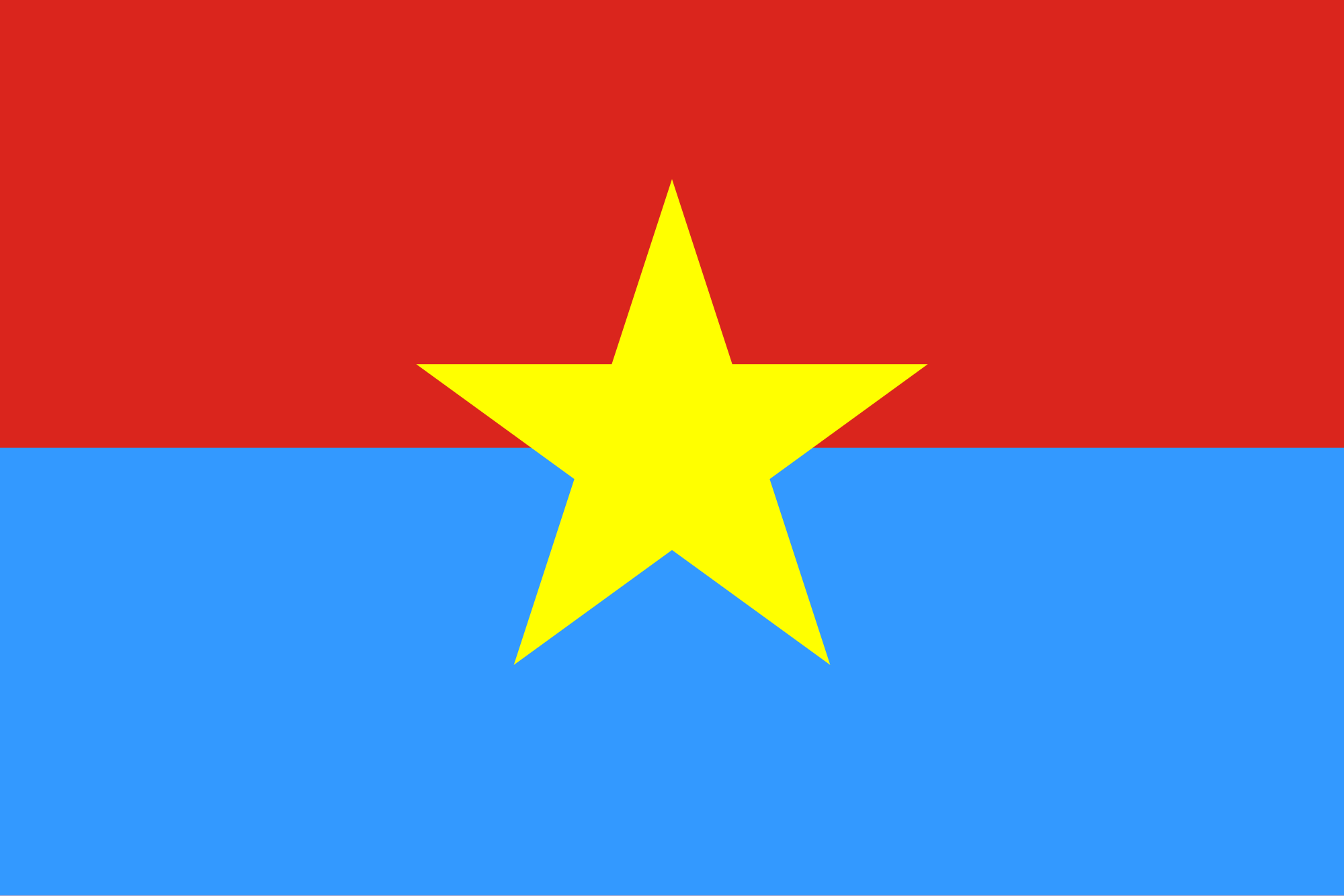
Viet Cong soldier stands beneath a Viet Cong flag with an AK-47 rifle.

Tet Offensive

[edit]

Major reversals in 1966 and 1967, as well as the growing American presence in Vietnam, inspired Hanoi to consult its allies and reassess strategy in April 1967. While Beijing urged a fight to the finish, Moscow suggested a negotiated settlement.[19]: 115  Convinced that 1968 could be the last chance for decisive victory, General Nguyễn Chí Thanh, suggested an all-out offensive against urban centers.[19]: 116–7 [nb 9] He submitted a plan to Hanoi in May 1967.[19]: 116–7  After Thanh's death in July, Giáp was assigned to implement this plan, now known as the Tet Offensive. The Parrot's Beak, an area in Cambodia only 30 miles (48 km) from Saigon, was prepared as a base of operations.[49] Funeral processions were used to smuggle weapons into Saigon.[49] VC entered the cities concealed among civilians returning home for Tết.[49] The U.S. and South Vietnamese expected that an announced seven-day truce would be observed during Vietnam's main holiday.

A U.S. propaganda leaflet urges Viet Cong to defect using the Chiêu Hồi Program.

At this point, there were about 500,000 U.S. troops in Vietnam,[39] as well as 900,000 allied forces.[49] General William Westmoreland, the U.S. commander, received reports of heavy troop movements and understood that an offensive was being planned, but his attention was focused on Khe Sanh, a remote U.S. base near the DMZ.[50] In January and February 1968, some 80,000 VC struck more than 100 towns with orders to "crack the sky" and "shake the Earth."[51] The offensive included a commando raid on the U.S. Embassy in Saigon and the massacre at Huế of about 3,500 residents.[52] House-to-house fighting between VC and South Vietnamese Rangers left much of Cholon, a section of Saigon, in ruins. The VC used any available tactic to demoralize and intimidate the population, including the assassination of South Vietnamese commanders.[53] A photo by Eddie Adams showing the summary execution of a VC in Saigon on February 1 became a symbol of the brutality of the war.[54] In an influential broadcast on February 27, newsman Walter Cronkite stated that the war was a "stalemate" and could be ended only by negotiation.[55]

The offensive was undertaken in the hope of triggering a general uprising, but urban Vietnamese did not respond as the VC anticipated. About 75,000 VC/PAVN soldiers were killed or wounded, according to Trần Văn Trà, commander of the "B-2" district, which consisted of southern South Vietnam.[56] "We did not base ourselves on scientific calculation or a careful weighing of all factors, but...on an illusion based on our subjective desires", Trà concluded.[57] Earle G. Wheeler, chairman of the Joint Chiefs of Staff, estimated that Tet resulted in 40,000 communist dead[58] (compared to about 10,600 U.S. and South Vietnamese dead). "It is a major irony of the Vietnam War that our propaganda transformed this debacle into a brilliant victory. The truth was that Tet cost us half our forces. Our losses were so immense that we were unable to replace them with new recruits", said PRG Justice Minister Trương Như Tảng.[58] Tet had a profound psychological impact because South Vietnamese cities were otherwise safe areas during the war.[59] U.S. President Lyndon Johnson and Westmoreland argued that panicky news coverage gave the public the unfair perception that America had been defeated.[60]

Aside from some districts in the Mekong Delta, the VC failed to create a governing apparatus in South Vietnam following Tet, according to an assessment of captured documents by the U.S. CIA.[61] The breakup of larger VC units increased the effectiveness of the CIA's Phoenix Program (1968–72), which targeted individual leaders, as well as the Chiêu Hồi Program, which encouraged defections. By the end of 1969, there was little communist-held territory, or "liberated zones", in the rural lowlands of Cochin China, according to the official communist military history.[62] The US military believed that 70 percent of communist main-force combat troops in the South were northerners,[63] but most communist military personnel were not main-force combat troops. Even in early 1970, MACV estimated that northerners made up no more than 45 percent of communist military forces overall in South Vietnam.[64]

The VC created an urban front in 1968 called the Alliance of National, Democratic, and Peace Forces (ANDPF). in other to mobilize and attract support from non-communist opposition groups in the then-South Vietnamese politics.[65] The group's manifesto called for an independent, neutralist, non-aligned South Vietnam and stated that "national reunification cannot be achieved overnight."[65] In June 1969, the alliance merged with the VC to form a "Provisional Revolutionary Government" (PRG). Both the NLF and ANDPF were subsequently merged into the contemporary Vietnam Fatherland Front after 1975.

Vietnamization

[edit]

The Tet Offensive increased American public discontent with participation in the Vietnam War and led the U.S. to gradually withdraw combat forces and to shift responsibility to the South Vietnamese, a process called Vietnamization. Pushed into Cambodia, the VC could no longer draw South Vietnamese recruits.[63] In May 1968, Trường Chinh urged "protracted war" in a speech that was published prominently in the official media, so the fortunes of his "North first" faction may have revived at this time.[19]: 138  COSVN rejected this view as "lacking resolution and absolute determination."[19]: 139  The Soviet invasion of Czechoslovakia in August 1968 led to intense Sino-Soviet tension and to the withdrawal of Chinese forces from North Vietnam. Beginning in February 1970, Lê Duẩn's prominence in the official media increased, suggesting that he was again top leader and had regained the upper hand in his longstanding rivalry with Trường Chinh.[19]: 53  After the overthrow of Prince Sihanouk in March 1970, the VC faced a hostile Cambodian government which authorized a U.S. offensive against its bases in April. However, the capture of the Plain of Jars and other territory in Laos, as well as five provinces in northeastern Cambodia, allowed the North Vietnamese to reopen the Ho Chi Minh trail.[19]: 52  Although 1970 was a much better year for the VC than 1969,[19]: 52  it would never again be more than an adjunct to the PAVN. The 1972 Easter Offensive was a direct North Vietnamese attack across the DMZ.[66] Despite the Paris Peace Accords, signed by all parties in January 1973, fighting continued. In March, Trà was recalled to Hanoi for a series of meetings to hammer out a plan for an enormous offensive against Saigon.[67]

Viet Cong soldiers carry an injured American POW to a prisoner swap in 1973. The VC uniform was a floppy jungle hat, rubber sandals, and green fatigues without rank or insignia.[68]

Fall of Saigon

[edit]

In response to the anti-war movement, the U.S. Congress passed the Case–Church Amendment to prohibit further U.S. military intervention in Vietnam in June 1973 and reduced aid to South Vietnam in August 1974.[69] With U.S. bombing ended, communist logistical preparations could be accelerated. An oil pipeline was built from North Vietnam to VC headquarters in Lộc Ninh, about 75 miles (121 km) northwest of Saigon. (COSVN was moved back to South Vietnam following the Easter Offensive.) The Ho Chi Minh Trail, beginning as a series of treacherous mountain tracks at the start of the war, was upgraded throughout the war, first into a road network driveable by trucks in the dry season, and finally, into paved, all-weather roads that could be used year-round, even during the monsoon.[70] Between the beginning of 1974 and April 1975, with now-excellent roads and no fear of air interdiction, the North delivered nearly 365,000 tons of war matériel to battlefields, 2.6 times the total for the previous 13 years.[71]

The success of the 1973–74 dry season offensive convinced Hanoi to accelerate its timetable. When there was no U.S. response to a successful PAVN attack on Phước Bình in January 1975, South Vietnamese morale collapsed. The next major battle, at Buôn Ma Thuột in March, was a walkover. After the fall of Saigon on April 30, 1975, the PRG moved into government offices there. At the victory parade, Tạng noticed that the units formerly dominated by southerners were missing, replaced by northerners years earlier.[63] The bureaucracy of the Republic of Vietnam was uprooted and authority over the South was assigned to the PAVN. People considered tainted by association with the former South Vietnamese government were sent to re-education camps, despite the protests of the non-communist PRG members including Tạng.[72] Without consulting the PRG, North Vietnamese leaders decided to rapidly dissolve the PRG at a party meeting in August 1975.[73] North and South were merged as the Socialist Republic of Vietnam in July 1976 and the PRG was dissolved. The VC was merged with the Vietnamese Fatherland Front on February 4, 1977.[72]

Relationship with North Vietnam

[edit]

Activists opposing American involvement in Vietnam said that the VC was a nationalist insurgency indigenous to the South.[74] They said that the VC was composed of several parties—the People's Revolutionary Party, the Democratic Party and the Radical Socialist Party[4]—and that VC chairman Nguyễn Hữu Thọ was not a communist.[75]

Anti-communists countered that the VC was merely a front for Hanoi.[74] They said some statements issued by communist leaders in the 1980s and 1990s suggested that southern communist forces were influenced by Hanoi.[74] According to the memoirs of Trà, the VC's top commander and PRG defense minister, he followed orders issued by the "Military Commission of the Party Central Committee" in Hanoi, which in turn implemented resolutions of the Politburo.[nb 10] Trà himself was deputy chief of staff for the PAVN before being assigned to the South.[76] The official Vietnamese history of the war states that "The Liberation Army of South Vietnam [Viet Cong] is a part of the People's Army of Vietnam".[14]

See also

[edit]

Notes

[edit]

References

[edit]

Further reading

[edit]
[edit]
Revisions and contributorsEdit on WikipediaRead on Wikipedia
from Grokipedia
The Viet Cong, a contraction of "Viet Nam Cong San" meaning Vietnamese Communists, denoted the communist insurgents operating primarily in as the military component of the National Front for the Liberation of South Vietnam (Mặt trận Dân tộc Giải phóng miền Nam Việt Nam), a political organization formed on December 20, 1960, under the direction of the North Vietnamese Lao Dong (Workers') Party to overthrow the Republic of Vietnam government through protracted , , and aimed at establishing communist control and eventual unification with . Directed from via the , Viet Cong forces, blending main force units with local guerrillas and militias, numbered up to 250,000 combatants by the mid-1960s and relied on asymmetric tactics including ambushes, booby traps, extensive underground tunnel complexes, and selective targeting South Vietnamese officials, village leaders, and civilians to disrupt governance, extract resources through taxation and , and cultivate an image of inevitable victory. These methods, rooted in Maoist adapted to southern , inflicted significant casualties on U.S. and allied forces while prioritizing political erosion over conventional battles, though they exacted a heavy toll through documented atrocities such as assassinations exceeding 36,000 civilian officials by 1969 and mass executions in contested areas to enforce compliance and eliminate opposition. The Viet Cong's most notable operation, the 1968 Tet Offensive, involved coordinated assaults on over 100 targets across , penetrating urban centers like Saigon and Hue, but resulted in catastrophic losses—estimated at 45,000-58,000 killed—effectively shattering their main force structure and necessitating greater reliance on North Vietnamese regulars thereafter. Despite this tactical defeat, the offensive's scale and media coverage amplified perceptions of U.S. vulnerability, contributing causally to domestic opposition and policy shifts toward and withdrawal. Following the 1973 Paris Accords and 's collapse in 1975, surviving Viet Cong elements were absorbed into the People's Army, with the Provisional Revolutionary Government transitioning into the unified 's institutions.

Names and Designations

Official Titles and Acronyms

The primary official title for the communist insurgent organization in South Vietnam was the National Liberation Front of South Vietnam, rendered in Vietnamese as Mặt trận Dân tộc Giải phóng miền Nam Việt Nam and abbreviated as NLF. This front served as the political umbrella uniting various insurgent elements under communist direction. The military arm of the NLF was formally known as the People's Liberation Armed Forces of South Vietnam, PLAF, encompassing both regular main force battalions and irregular guerrilla units operating in rural areas. PLAF forces were structured to conduct protracted , with designations reflecting their claimed role in "liberating" from the Republic of Vietnam government. In contrast, ""—a contraction of Việt Nam Cộng sản (Vietnamese communists)—was not an official title but a term originating in South Vietnamese media around 1956 and adopted by U.S. forces to denote PLAF fighters and NLF , often shortened to VC. Official NLF and PLAF documents avoided this label, emphasizing nationalist liberation rhetoric instead.

Common and Derogatory Terms

The insurgents officially identified as members of the National Front for the Liberation of (Mặt trận Dân tộc Giải phóng miền Nam Việt Nam, or NLF), a established on December 20, 1960, to unify communist-led guerrilla forces under a nationalist banner masking their alignment with North Vietnam's communist regime. This self-designation emphasized anti-imperialist struggle against and its allies, downplaying overt Marxist-Leninist ties directed from . South Vietnamese authorities coined "Việt Cộng" (Viet Cong), a of "Việt Nam Cộng sản" (Vietnamese Communists), as early as the mid-1950s to denote southern communists loyal to the of in the north, predating major U.S. military escalation. The term explicitly underscored the fighters' ideological allegiance to , serving to delegitimize them as traitorous agents of foreign-directed rather than indigenous patriots. Widely adopted by U.S. forces after 1965, "Viet Cong" or its abbreviation "VC" became the standard English reference, reflecting the group's operational reality as a proxy for Hanoi's expansionist aims despite NLF . U.S. troops commonly rendered "VC" via as "Victor Charles," yielding slang like "Charlie," "Victor Charlie," or "Chuck" for the enemy in radio communications and combat from the early onward. These terms, while utilitarian for brevity in firefights—such as calling out "Charlie inbound" during ambushes—acquired derogatory connotations, portraying the guerrillas as elusive, fanatical irregulars employing terror tactics against civilians and soldiers alike. Less frequently, broader slurs like "gooks" encompassed Vietnamese adversaries including Viet Cong, but "Charlie" specifically targeted the communist insurgents, reinforcing perceptions of them as ideologically driven saboteurs embedded in southern society.

Origins and Formation

Pre-1960 Roots in Communist Networks

Following the 1954 Geneva Accords, which temporarily divided Vietnam at the 17th parallel and stipulated a 300-day period for civilian and military migrations, approximately 5,000 hard-core communist cadres from the Viet Minh remained in South Vietnam instead of regrouping to the North, deliberately concealing themselves to sustain revolutionary activities. These cadres, largely consisting of indoctrinated political officers, military veterans, and regional organizers, formed the foundational layer of clandestine networks directed by the Vietnam Workers' Party (Đảng Lao động Việt Nam) in Hanoi, operating through encrypted communications and couriers to evade detection. The networks emphasized cellular structures—small, compartmentalized groups of 3 to 5 members—to minimize risks from arrests, with higher echelons coordinating via inter-regional committees focused on propaganda, recruitment, and resource accumulation among rural populations sympathetic to land reform promises. Under President Ngo Dinh Diem's regime, which enacted Decree 10/55 in July 1955 to dismantle communist elements through mass denunciations, arrests, and executions—resulting in over 65,000 suspected communists detained and thousands killed by —these networks endured by going deeper underground, relocating to remote areas, and prioritizing survival over overt action. initially restrained southern cadres from armed insurgency, favoring political to exploit Diem's unpopularity and anticipated elections, but frustrations grew as the regime consolidated power and suppressed opposition. In 1956, southern communist leader Le Duan circulated "The Path of Revolution in the South," a strategic document urging intensified "political struggle" through , of government programs, and preparation for eventual violence, which circulated among party branches to realign efforts toward undermining Saigon from within. By the late 1950s, these networks began transitioning to low-level violence, with documented assassinations of over 200 South Vietnamese officials in 1957 alone, marking the onset of systematic to intimidate administrators and erode rural governance. 's , responding to cadre reports of regime entrenchment, approved escalated infiltration; between 1959 and 1960, roughly 4,000 additional northern cadres crossed into the South via trails through , bolstering command structures. In May 1959, formalized oversight by establishing the (Cụm đầu não miền Nam, or COSVN), a mobile headquarters in the border regions to centralize military-political operations, integrating party cells with emerging armed units drawn from local recruits and returning veterans. This pre-1960 infrastructure, rooted in Marxist-Leninist discipline and sustained by 's logistical directives, provided the resilient framework for the later National Liberation Front, prioritizing cadre loyalty and peasant coercion over broad alliances.

Establishment of the National Liberation Front

The National Front for the Liberation of South Vietnam (Mặt trận Dân tộc Giải phóng miền Nam Việt Nam), commonly known as the National Liberation Front (NLF), was formally established on December 20, 1960, during a clandestine congress held in Tân Lập village, Tây Ninh Province, . The formation was announced by as a unified resistance organization against the government of President , which had intensified anti-communist campaigns following the 1954 Geneva Accords and the suppression of southern communist networks. Although the NLF's founding congress included representatives from over a dozen political, religious, and social groups ostensibly opposed to Diem's authoritarian rule, the organization was directed by the (Lao Dong Party) of , which provided strategic guidance, cadre infiltration, and operational control to mask Hanoi's direct involvement in the southern insurgency. North Vietnamese leaders, including Le Duan, played a key role in orchestrating the front's creation to present it as an indigenous southern rather than an extension of northern , thereby seeking to undermine U.S. support for Saigon by portraying the conflict as a . The NLF's inaugural manifesto demanded the withdrawal of U.S. advisors, the cessation of foreign interference, and of a national democratic government through negotiations, while its military arm—the People's Liberation Armed Forces—coordinated guerrilla operations under unified command. positions were assigned to non-communist figureheads, such as lawyer Nguyen Huu Tho as president, to maintain the facade of broad representation, though real authority resided with communist operatives loyal to . This structure enabled the NLF to expand and consolidate disparate insurgent elements, setting the stage for escalated violence against South Vietnamese security forces and civilians perceived as collaborators.

Ideology and Objectives

Marxist-Leninist Core Principles

The National Liberation Front (NLF), the political organization encompassing the Viet Cong, grounded its revolutionary ideology in Marxist-Leninist doctrine, which posited class struggle as the engine of historical progress and emphasized the communist party's role in guiding the and peasantry to overthrow bourgeois and imperialist forces. This framework, adapted through Ho Chi Minh's thought, framed the conflict in as a combined national liberation struggle against American imperialism and a domestic class against landlords and elites allied with the Saigon regime. The NLF's adherence to these principles manifested in internal party structures enforcing , strict cadre discipline, and , whereby the southern insurgency was integrated into the broader socialist camp led by and supported by the and . A key application of Marxist-Leninist principles was the emphasis on agrarian revolution to rally the rural masses, who comprised over 80% of South Vietnam's in the 1960s. The NLF's 1962 program demanded radical , including rent reduction by 25-50% and confiscation of estates over 100 hectares for redistribution to tillers without compensation to absentee owners, directly targeting the feudal landlord class as exploiters in line with Lenin's theories on alliances in colonial settings. In liberated zones, Viet Cong cadres implemented these policies through village committees, liquidating landlords via show trials and executions—estimated at tens of thousands between 1960 and 1965—to eliminate class enemies and consolidate loyalty, mirroring Bolshevik tactics in and Maoist reforms in . While public platforms like the NLF's ten-point manifesto invoked broad nationalist appeals for , , and eventual reunification to attract non-communist allies in a strategy—a Leninist tactic for isolating enemies—these masked the core commitment to establishing a "people's democratic" regime as a transitional leading to full . (Lao Dong) cadres dominated NLF leadership from inception, with Hanoi's 1956-1960 directives explicitly ordering the formation of southern networks under Marxist-Leninist guidance to export southward. This control was evident in the subordination of NLF military commands to North Vietnamese strategy, culminating in the 1976 merger into a unified where class-based purges and collectivization confirmed the ideological endpoint.

Propaganda of Nationalism vs. Expansionist Reality

The National Liberation Front (NLF), the political umbrella for the Viet Cong, propagated an image of itself as a coalition of South Vietnamese nationalists dedicated to expelling foreign imperialists—primarily the —and establishing an independent, unified free from the Diem regime's alleged corruption and puppet status. This narrative emphasized anti-colonial themes, portraying the struggle as a continuation of Vietnam's historic resistance against external domination rather than ideological conquest, with leaflets and broadcasts urging unity among peasants, intellectuals, and religious groups against "American aggressors" and their local allies. Such messaging downplayed communist affiliations, recruiting non-communist sympathizers by framing objectives as national , including promises of and neutralist governance post-victory. In reality, the NLF's formation on December 20, 1960, and subsequent operations were orchestrated by the Democratic Republic of Vietnam (DRV) in as part of a deliberate expansionist strategy to extend communist control southward, bypassing the 1954 Geneva Accords' unification provisions. 's Politburo Resolution 15, adopted in May 1959, marked a pivotal shift, authorizing the infiltration of armed cadres and the use of force to overthrow the Republic of Vietnam government, transforming sporadic insurgency into a coordinated campaign for territorial conquest under DRV hegemony. This resolution directed the Lao Dong Party—Hanoi's ruling communist entity—to build southern forces with northern-supplied weapons, munitions, and leadership, rejecting peaceful reunification in favor of revolutionary violence to install a proletarian dictatorship across . Captured Viet Cong documents, including those seized during the 1968 , revealed Hanoi's direct command over strategy, with orders from the (COSVN) explicitly implementing directives on offensives, logistics, and cadre assignments rather than autonomous southern initiatives. Northern cadre like Phạm Hùng, dispatched from , oversaw COSVN operations from the early , coordinating , supply lines via the , and the Tet attacks as extensions of DRV expansionism, not indigenous nationalism. By 1964, Hanoi had infiltrated entire regiments—totaling over 40,000 troops—equipping Viet Cong units with modern arms unavailable locally, underscoring total dependency and the facade of southern self-reliance. This structure prioritized Marxist-Leninist unification under Hanoi's one-party rule, evident in post-1975 purges of non-communist NLF elements and the abolition of promised coalition governance.

Organizational Structure

Leadership and Command Chain

The National Liberation Front (NLF), commonly known as the Viet Cong, operated under a hierarchical command structure ultimately directed by the Communist Party of (Lao Dong Party) in , with the (COSVN) serving as the primary intermediary body for policy implementation and coordination in the South. COSVN, established around 1961 in Tay Ninh Province, functioned as the supreme organ of the Lao Dong Party south of the 17th parallel, receiving directives from Hanoi's Central Executive Committee and reporting back on operational conditions, thereby ensuring alignment with northern strategic objectives rather than autonomous southern decision-making. This setup reflected Hanoi's centralized control, as COSVN lacked independent authority and depended on northern approvals for major initiatives, including and campaign planning. At the political level, the NLF's provided a nominal leadership facade, chaired by Nguyen Huu Tho from 1962 onward, who served as a non-communist to project a broad nationalist alliance, though real authority resided with embedded communist cadres loyal to . Beneath this, COSVN's Standing Committee, headed by figures such as Pham Hung (party secretary and overall director by the mid-1960s) and deputies like Muoi Cuc, oversaw subdivided bureaus for , political, , and propaganda affairs, integrating southern insurgents with infiltrators from the (PAVN). Military command fell under COSVN's for National Liberation Command, led by generals including Tran Van Tra, who directed operations through five regional divisions encompassing provinces, with further delegation to provincial committees, district teams, and village guerrilla units for tactical execution. This chain emphasized dual political-military integration, where party commissars paralleled military officers to enforce ideological discipline and prevent deviations, as evidenced by Hanoi's purges of southern cadres suspected of insufficient loyalty during the 1960s. Provincial and local levels maintained self-defense forces and main force battalions reporting upward via encrypted couriers and radio, but all significant offensives, such as those in 1968, required COSVN ratification tied to Hanoi's Politburo guidance, underscoring the insurgency's role as an extension of northern expansionism rather than indigenous rebellion.

Military Units and Cadre Networks

The Viet Cong forces operated through a tiered structure comprising main force units, regional forces, and local guerrilla militias, enabling flexible guerrilla operations across . Main force units formed the offensive spearhead, organized into s and regiments capable of sustained combat and mobility for larger engagements; for instance, the average Viet Cong strength in summer 1965 numbered approximately 425 personnel, though some, like one involved in the Ia Drang campaign, reached 600. Regional forces, typically operating at company level, focused on area defense, ambushes, and raids within specific districts, often dispersing into platoons or squads for tactical flexibility. Local forces consisted of part-time village and hamlet guerrillas, who functioned primarily as farmers by day while conducting , gathering, and small-scale attacks at night, usually in squads of about 12 men. Cadre networks underpinned this military hierarchy, integrating Communist Party political control with operational command in a manner modeled after Chinese Communist structures. Cadres, selected for loyalty and ideological commitment, served as political officers, administrators, and recruiters embedded within units at all levels—from main force regiments to local s—ensuring discipline, motivation through indoctrination, and coordination with directives. cadres originated from across the force spectrum, with main force cadres handling higher command and training, while regional and militia cadres managed local security and . These networks extended into government-controlled areas via "legal" cadres posing as civilians, facilitating infiltration, communication through couriers and cells, and expansion of influence in villages. Provincial Communist authorities assigned specific tasks to units under their oversight, harmonizing armed actions with political objectives. This cadre system emphasized dual military-political roles, fostering unit cohesion but also enabling Hanoi's centralized oversight despite the decentralized appearance of southern operations.

Tactics and Methods

Guerrilla Warfare and Ambush Strategies

The Viet Cong employed guerrilla warfare characterized by small-unit mobility, surprise attacks, and rapid evasion to avoid decisive engagements with superior U.S. and South Vietnamese conventional forces. This approach, influenced by Maoist doctrines, prioritized attrition through hit-and-run operations, leveraging intimate knowledge of local terrain such as jungles, rice paddies, and villages to inflict casualties while minimizing exposure to airpower and artillery. Units typically operated in squads or platoons of 10-50 fighters, armed with captured weapons, AK-47 rifles, and RPG-7 launchers effective against vehicles and helicopters. Ambush strategies formed the core of Viet Cong offensive tactics, often utilizing L-shaped formations along trails or roads to channel enemy movement into kill zones. In this setup, the long arm of the "L" engaged the target's lead elements to halt advance, while the short arm provided enfilading fire and blocked retreat, incorporating natural cover for concealment and mutual support. Booby traps integrated into ambushes, such as punji stakes—sharpened coated in and hidden in pits—inflicted wounds on advancing troops, sowing delay and psychological disruption before main forces withdrew. These tactics proved effective in early phases, with ambushes accounting for significant U.S. casualties; for instance, in 1965 alone, non-battle injuries from traps like punji stakes and grenade tripwires contributed to operational attrition. Tunnels and extensive trail networks facilitated post- evasion, allowing fighters to disappear underground or disperse into civilian areas, complicating pursuit. While these methods yielded tactical successes—such as the 1966 Srok Dong where an L-shaped Viet Cong position initially disrupted a U.S. advance—they incurred high insurgent losses over time due to firepower disparities, with kill ratios often exceeding 10:1 against guerrillas in countered engagements. Dependence on such underscored the Viet Cong's inability to sustain conventional battles, relying instead on prolonged harassment to erode enemy morale and logistics.

Terrorism, Intimidation, and Civilian Coercion

The Viet Cong systematically utilized to suppress opposition and enforce compliance among South Vietnamese civilians, targeting officials, suspected collaborators, and neutral populations through assassinations, abductions, and bombings. These acts aimed to dismantle local administration, instill fear, and compel , taxation, and logistical support in rural areas under their influence. Between 1960 and 1966, documented assassinations of officials numbered in the thousands, with 1,118 reported in alone, alongside an equal number of kidnappings. By 1965, abductions reached 1,730, often involving or execution following improvised " tribunals" to label victims as traitors. Bombings targeted civilian gatherings to maximize psychological impact and disrupt American and South Vietnamese presence. On February 20, 1962, near Can Tho, grenades thrown into a theater killed 24 women and children among 108 casualties. The June 25, 1965, dynamiting of Saigon's My Canh restaurant resulted in 27 Vietnamese and 12 American deaths. Similarly, the February 16, 1964, Kinh Do Theater bombing in Saigon killed three U.S. servicemen and injured 35 others, including civilians. Such indiscriminate attacks extended to , like the January 17, 1966, mining of a bus in Kien Tuong province, which killed 26 civilians, including seven children. Intimidation extended to forced labor and , where cadres coerced villagers into providing rice, , or guerrilla service under threat of death or village-wide reprisals. In the Central Highlands during summer 1962, terror tactics against Montagnards, including food confiscation and killings, displaced up to 300,000 as refugees. The December 5, 1967, Dak Son attack exemplified punitive coercion: approximately 600 Viet Cong, using flamethrowers and rifles, massacred over 100 Montagnard villagers—many burned alive—for aligning with South Vietnamese forces, destroying the hamlet to deter defection. During the 1968 in Hue, Viet Cong and North Vietnamese forces executed around 2,800 civilians identified as opponents via lists, burying many in mass graves. These methods reflected a prioritizing over military , with cadres in villages to enforce quotas through selective , often at night to amplify dread. While some analyses suggest terror was less pervasive in fully controlled zones than perceived, empirical incident logs indicate it as a core operational tool, eroding civilian trust in the South Vietnamese government and sustaining Viet Cong infrastructure despite heavy losses.

Logistics and Supply Dependencies

The Viet Cong's logistical operations were critically dependent on external supply lines originating from , primarily through the , a network of paths extending over 12,000 miles through and that facilitated the infiltration of personnel, weapons, and materiel into starting in 1959. This route, managed by 's Group 559 logistics command, delivered essential munitions such as rifles, mortars, and rockets, with estimates indicating that during peak periods in the mid-1960s, up to 20,000 personnel traversed it monthly to sustain southern operations. Without this conduit, Viet Cong main force units—numbering around 50,000 by 1965—lacked the capacity for sustained combat, as local production in was negligible for advanced weaponry. Local force elements, comprising approximately 17,000 fighters in dispersed rural areas, required about 20.5 tons of daily logistic support, much of which was extracted from South Vietnamese villages through mandatory rice levies, livestock requisitions, and cash taxes enforced by cadre networks. These procurements often involved intimidation and violence against non-compliant civilians, including executions of suspected government sympathizers, to ensure compliance and prevent hoarding or diversion to South Vietnamese forces. Food supply systems emphasized self-sufficiency in rice and basic staples, but shortfalls were common during dry seasons or after U.S. aerial interdiction campaigns like , which disrupted trail traffic and forced reliance on stockpiles vulnerable to spoilage in jungle conditions. Weapons and ammunition formed the core of imported dependencies, with early-war arsenals shifting from captured U.S. and French arms to predominantly Soviet and Chinese-origin equipment funneled via ; by 1965, Chinese supplies accounted for nearly 80% of Viet Cong infantry weapons, including rifles and 82mm mortars, while Soviet aid provided heavier ordnance like anti-aircraft guns. This external , peaking at thousands of tons annually by 1967, underscored the Viet Cong's integration into North Vietnam's , as domestic South Vietnamese could not produce beyond rudimentary grenades or small arms repairs. Disruptions from U.S. bombing—destroying an estimated 40% of infrastructure in 1965 alone—temporarily halved infiltration rates, compelling tactical shifts toward conserving munitions and intensifying local coercion for porters and draft animals. Overall, these dependencies rendered Viet Cong sustainability contingent on Hanoi's strategic priorities and communist bloc patronage, with Soviet and Chinese shipments to —totaling over $2 billion in by 1968—serving as the upstream enablers that compensated for the insurgents' limited indigenous resource base. Local efforts, while adaptive, proved insufficient against attrition from superior U.S. firepower, highlighting the causal primacy of cross-border in prolonging the conflict.

Relationship with North Vietnam

Hanoi's Directive Control

The government of the Democratic Republic of Vietnam in Hanoi directed the Viet Cong insurgency as an extension of its strategy to conquer South Vietnam, utilizing the National Liberation Front (NLF) as a proxy organization under direct Communist Party control. The NLF, formed on December 20, 1960, purported to represent southern nationalists but operated as a front for Hanoi's Lao Dong Party, with its leadership and policies dictated from the North to mask external aggression. Hanoi established the Central Office for South Vietnam (COSVN) in late 1961 to serve as the operational hub for the southern insurgency, tasked with executing directives on military campaigns, political mobilization, and resource allocation while maintaining strict reporting lines to northern command. COSVN, headed by figures such as Nguyen Van Vinh until 1964 and later Tran Van Tra, implemented Hanoi's strategic resolutions, including the 1959 shift to armed struggle via Resolution 15, which authorized violence to overthrow the South Vietnamese regime. Northern leader Le Duan, from his Hanoi base, exerted personal oversight over COSVN, revising strategies in response to battlefield conditions, as seen in COSVN Resolution 9 following U.S. escalation, which adapted but adhered to Hanoi's protracted war doctrine. Key offensives, including the 1968 Tet attacks, originated from Hanoi's decisions, with COSVN coordinating execution despite heavy losses that exceeded 45,000 communist fighters. Captured documents and defector testimonies confirmed this chain of command, revealing Viet Cong units' integration into the People's Army of Vietnam framework and obedience to northern orders, contradicting claims of autonomous southern initiative. Hanoi's control extended to logistics, with supplies funneled via the Ho Chi Minh Trail under northern military oversight, ensuring the insurgency's dependence on DRV resources and objectives. While COSVN permitted tactical adaptations to local terrain, strategic aims—unification under Hanoi’s Marxist-Leninist rule—remained non-negotiable, prioritizing northern expansion over genuine southern self-determination.

Coordination with People's Army of Vietnam

The coordination between the Viet Cong (VC) and the (PAVN) was facilitated through Hanoi's centralized command, with the (COSVN)—established in 1961—serving as the primary operational hub directing both VC irregular forces and infiltrated PAVN regulars in southern operations. , functioning as the highest organ in the South, integrated PAVN reinforcements into VC regional structures, overseeing military actions across designated zones while maintaining direct links to the in for strategic alignment. PAVN infiltration via the provided essential logistical and manpower support to VC units, with regular PAVN regiments and replacement cadres funneled southward to bolster VC main force battalions depleted by attrition. By mid-1965, this included the deployment of full PAVN divisions, such as elements of the 325th Division, which conducted joint maneuvers with VC formations in border sanctuaries, enabling combined guerrilla-conventional tactics against South Vietnamese and U.S. forces. Officers and supplies from PAVN units were routinely integrated into VC operations, allowing for frequent collaborative engagements, particularly in highland and coastal regions where VC relied on PAVN firepower for escalated assaults. This partnership peaked in synchronized offensives, exemplified by the Tet attacks launched on January 30-31, 1968, where VC provincial and urban guerrilla elements struck over 100 targets simultaneously with PAVN conventional pushes, such as the siege at , under unified planning to overload allied defenses. Post-Tet, as VC main forces suffered heavy casualties—estimated at over 50,000 killed—PAVN assumed greater prominence in southern campaigns, with VC relegated to auxiliary roles in logistics and local harassment, though joint command persisted under COSVN until the 1975 offensive.

Key Military Engagements

Early Insurgency Phase (1960-1967)

The National Liberation Front (NLF), with its military component known as the Viet Cong, was established on December 20, 1960, in as a communist-led aimed at overthrowing the South Vietnamese government of . This marked the formal start of organized insurgency, building on residual networks that had numbered around 3,000 operatives in 20 cells by 1959 and engaged in assassinations exceeding 150 in 1957 alone. Early operations emphasized guerrilla tactics, including ambushes, sabotage, and over 150 bombings or attacks by October 1961, allowing the Viet Cong to expand influence in rural areas while avoiding direct confrontation with superior Army of the Republic of Vietnam (ARVN) forces. A pivotal early engagement occurred at the Battle of Ấp Bắc on January 2, 1963, in Dinh Tuong Province, where approximately 300-400 Viet Cong fighters from the 261st Battalion repelled an ARVN force of over 1,500 troops supported by U.S. advisors and armored units. The Viet Cong inflicted 63 ARVN killed and 100 wounded, with three U.S. advisors among the dead, while suffering only 18 confirmed fatalities; their effective use of defensive positions, anti-tank weapons, and small-unit maneuvers exposed ARVN tactical deficiencies and boosted insurgent morale. By mid-1963, U.S. estimates placed Viet Cong regular strength at 22,000-24,000, up from prior years, reflecting recruitment gains amid political instability following Diem's overthrow. The insurgency escalated in late 1964 with the Battle of Bình Giã, beginning December 28, 1964, in Phuoc Tuy Province, where elements of the Viet Cong 9th Division—comprising three regiments—overran village militias and ambushed ARVN ranger and marine battalions over four days. The Viet Cong decimated one marine battalion and two ranger companies before withdrawing on January 1, 1965, demonstrating capability for sustained, multi- operations and prompting U.S. reassessment of ground commitments. This pattern continued into 1965, with attacks like the May assault on Song Be (2,500 Viet Cong vs. ARVN rangers, yielding 279 enemy bodies after air intervention) and the June 10-13 siege of Đồng Xoài camp, where thousands of Viet Cong overran defenses until repelled by 644 U.S. air sorties. By 1966-1967, Viet Cong forces, estimated at 80,000-120,000 irregulars plus regulars, shifted toward larger formations, including hybrid operations with North Vietnamese regulars, as seen in ambushes near and the , where the 9th Division nearly annihilated an ARVN regiment in late 1965. These engagements, often in War Zones C and D, relied on terrain advantages and logistics from and , inflicting disproportionate casualties on ARVN units despite growing U.S. advisory and air support; however, they also incurred heavy losses from airstrikes, foreshadowing attrition limits before the 1968 . The phase highlighted Viet Cong resilience through coerced recruitment and intimidation but underscored dependence on for direction and supplies.

Tet Offensive and Its Strategic Failure

The Tet Offensive commenced on the evening of January 30, 1968, when approximately 80,000 Viet Cong and (PAVN) troops launched coordinated surprise attacks on more than 100 targets across , including major cities like Saigon and Hue, during the Tet holiday ceasefire. Planned by under the direction of General Vo Nguyen Giap—though later disavowed by him—the operation aimed to seize urban centers, destroy allied forces, and provoke a general uprising among the South Vietnamese populace to overthrow the government in Saigon. Viet Cong forces, including local guerrillas and main force units, played a primary role in the initial assaults, infiltrating cities via extensive tunnel networks and teams to strike symbols of authority such as the U.S. Embassy in Saigon and provincial capitals. Allied forces, comprising U.S. troops and the Army of the Republic of Vietnam (ARVN), recovered rapidly from the initial shock, mounting effective counterattacks that repelled the invaders from most positions within days. The communists suffered catastrophic losses, with estimates of 45,000 to 58,000 killed, including heavy attrition among Viet Cong main force regiments and local cadres, compared to around 4,000 U.S. and 2,500 ARVN fatalities during the offensive's phases through March. In prolonged engagements like the Battle of Hue, where communists held parts of the city for nearly a month, Viet Cong and PAVN units executed thousands of civilians suspected of collaboration but ultimately surrendered or were annihilated due to superior firepower and urban combat experience of allied marines and paratroopers. Critically, the offensive failed to ignite the anticipated general uprising, as South Vietnamese civilians provided minimal support to the attackers and often aided allied recoveries, underscoring Hanoi's miscalculation of popular sentiment and the resilience of government control outside rural strongholds. No widespread defections occurred among ARVN units, which performed effectively in defending key areas, contrary to communist expectations of collapse. The exposure of lightly armed Viet Cong guerrillas to conventional urban fighting against mechanized forces resulted in the destruction of exposed supply lines and command structures, preventing any sustained territorial gains. Strategically, the Tet Offensive proved disastrous for the Viet Cong, whose participation decimated their operational capacity and political infrastructure, forcing a permanent shift in the insurgency's burden to PAVN regulars infiltrating from the North. Main force Viet Cong battalions were shattered, with cadre losses eroding recruitment and control in rural areas, as acknowledged the need to rebuild the southern insurgency from remnants over subsequent years. This conventional gamble, premised on flawed about allied and South Vietnamese , marked the effective end of Viet Cong offensive initiatives, transitioning the war toward protracted attrition dominated by northern expeditionary forces rather than indigenous guerrilla momentum.

Late-War Operations and Attrition

Following the of January–February 1968, which inflicted approximately 50,000 casualties on communist forces including a disproportionate share on Viet Cong main force units, the Viet Cong's capacity for large-scale operations was severely curtailed, with many guerrilla formations shattered and leadership decimated. Viet Cong remnants shifted toward sporadic small-unit ambushes and infrastructure attacks in rural areas, but these efforts yielded limited strategic gains amid intensified U.S. and of the Republic of Vietnam (ARVN) measures, including accelerated pacification programs that expanded government control over population centers and supply routes. By mid-1968, increasingly relied on (PAVN) regulars to compensate for Viet Cong weaknesses, as evidenced by the May 1968 "Mini-Tet" or , where Viet Cong elements targeted Saigon but were repelled after suffering heavy losses in urban fighting, failing to incite widespread uprisings or defections among South Vietnamese forces. In subsequent years, Viet Cong participation in major engagements diminished, with groups functioning primarily as auxiliaries to PAVN-led incursions, such as the 1972 , where irregular Viet Cong units provided local support but contributed minimally to the conventional assaults that were ultimately blunted by ARVN defenses bolstered by U.S. airpower. , emphasizing sustained pressure through search-and-destroy missions, aerial interdiction, and the targeting Viet Cong infrastructure, eroded insurgent ranks; U.S. estimates indicated Viet Cong strength dropped from over 100,000 combatants pre-Tet to fewer than 50,000 by 1970, compounded by defections via the program, which induced over 100,000 surrenders by 1972, many from demoralized Viet Cong units facing relentless casualties and logistical isolation. These losses reflected the insurgents' vulnerability to superior firepower and intelligence, as rural base areas were dismantled and recruitment stalled amid growing civilian reluctance to support forces associated with and . By 1973–1975, as U.S. withdrawal under empowered ARVN to conduct independent operations, Viet Cong forces were largely absorbed into PAVN structures for the final offensive, operating as scattered militias rather than an autonomous guerrilla army capable of independent attrition on South Vietnamese defenses. Cumulative attrition—totaling hundreds of thousands of communist dead from 1968 onward, with Viet Cong bearing the brunt in early phases—prevented replenishment, as Hanoi's strategy prioritized conventional PAVN advances over rebuilding southern irregulars, underscoring the insurgents' transition from primary threat to marginal actor in the war's endgame.

Atrocities and Human Rights Violations

Mass Executions and Purges

The Viet Cong systematically employed mass executions and purges as instruments of control in territories under their influence, targeting government officials, military personnel, landlords, intellectuals, and suspected collaborators to dismantle South Vietnamese administration and enforce ideological conformity. These actions were orchestrated through the Viet Cong Security Service, which maintained detailed blacklists at provincial and village levels to identify and eliminate opponents via assassinations, public trials in "People's Courts," and summary killings. Methods included , beheading, burying alive, and grenade attacks, often following interrogations or quotas assigned to local units, with directives from the (COSVN) urging intensified efforts during major offensives. From 1958 to 1965, the Viet Cong conducted approximately 46,500 assassinations and abductions across , escalating to 43,938 incidents between January 1966 and December 1969, including 18,031 assassinations. Broader estimates from captured documents and defector testimonies indicate 8,000 to 50,000 officials and 15,000 to 65,000 civilians executed or assassinated between 1957 and 1972, with annual executions in Viet Cong-held areas numbering several thousand. These figures, derived from Guenter Lewy's of wartime records, reflect a policy of terror to polarize populations and suppress , often justified in internal directives as necessary to counter "reactionaries" and achieve revolutionary goals. A prominent instance occurred during the in Hue, where Viet Cong and North Vietnamese forces occupied the city from to , 1968, resulting in the execution of approximately 3,000 civilians, with over 2,300 bodies recovered from mass graves by September 1969. Victims included 145 members of political parties such as VNQDD and Dai Viet, selected from blacklists for their anti-communist affiliations, with killings concentrated on officials, educators, and religious figures perceived as threats. Purges extended to internal Viet Cong cadres suspected of ideological deviation or , as well as civilians during campaigns modeled on North Vietnam's 1953–1956 program, which emphasized class struggle and the elimination of "tyrants" through confiscations and executions. COSVN resolutions, such as those from November 1966 and February 1968, mandated investigations and eliminations of unreliable elements, with quotas like 10–20 government personnel per village and public denunciations leading to thousands of additional deaths annually in controlled zones. These measures, enforced via thought-reform camps and security agents embedded in communities, aimed to consolidate but contributed to widespread and attrition within the insurgency's ranks.

Forced Recruitment and Labor Exploitation

The Viet Cong employed forced recruitment methods, particularly after 1963, as voluntary enlistments declined amid escalating casualties and manpower shortages. A analysis of interviews with 261 former Viet Cong members and defectors, conducted between July 1964 and November 1966, documented a shift from selective —relying on nationalist appeals and personal incentives—to coercive , including abductions of draft-age youths (typically 17-40 years old) by armed cadres. These operations often involved nighttime raids on villages, where groups of 10 to 70 individuals were seized, blindfolded, and subjected to indoctrination sessions designed to elicit coerced "volunteering" under threats of execution or harm to relatives. The practice expanded to include women and younger recruits, with family pressure amplifying compliance; refusal frequently resulted in reprisals against non-combatants. By 1966, declassified estimates confirmed that mounting losses compelled the Viet Cong to institutionalize forced , supplementing infiltration from and returnee programs. This approach, while yielding short-term gains, eroded local support, as evidenced by interviewee accounts of low morale among impressments and higher rates compared to early volunteers. U.S. reports from captured documents and interrogations corroborated the prevalence of such tactics in rural provinces, where quotas imposed by exacerbated the reliance on terror to fill ranks. In parallel, the Viet Cong exploited civilian labor through , mandating unpaid work from villagers for and support. Declassified military analyses indicate that in controlled areas, able-bodied populations—often entire villages—were compelled to provide 3-5 days of labor per month on tasks such as digging tunnels, building roads, or portering supplies, with non-compliance enforced via beatings or abduction. summaries from Tay Ninh Province in December 1967 detailed temporary seizures of carts, oxen, and personnel for , alongside demands for labor that strained production and fueled resentment. Such exploitation, rooted in directives from the National Liberation Front's economic committees, prioritized military needs over civilian welfare, alienating through resource extraction equivalent to quasi-serfdom and contributing to the insurgency's strategic vulnerabilities. Reports from defector interviews in morale studies further highlighted how these burdens, combined with taxation , undermined Viet Cong claims of peasant liberation.

Systematic Terror Against Civilians

The Viet Cong (VC) systematically employed terror as a core tactic to undermine the South Vietnamese government, eliminate perceived collaborators, and coerce civilian compliance in controlled areas, viewing it as essential for maintaining momentum and administrative control. This approach was codified in VC directives, such as those emphasizing the neutralization of "reactionary" elements through violence to prevent and ensure population support. Tactics included selective assassinations of village officials, teachers, and landlords; kidnappings for or execution; public mutilations to instill fear; and indiscriminate bombings in urban settings to disrupt daily life and morale. Organizationally, terror operations were integrated into the VC via specialized cells under provincial commands, with manuals outlining phases from to elimination of targets. Assassination campaigns formed the backbone of VC terror, with documented figures revealing a peak in the early before declining amid efforts: approximately 1,700 officials killed from 1957 to 1960, 1,118 in 1962, 827 in 1963, 516 in 1964, and 305 in . Estimates accounting for unreported targets, such as natural leaders and non-officials, suggest totals up to five times higher annually during this period, contributing to tens of thousands of deaths overall. Kidnappings complemented these, targeting thousands for forced labor, re-education, or execution; recorded official abductions numbered 1,118 in 1962, rising to 1,730 in , with broader totals exceeding 10,000 yearly by mid-decade. These acts were not sporadic but policy-driven, aimed at decapitating local governance—e.g., over 80% of village chiefs in some provinces were assassinated or abducted by 1964—to create power vacuums filled by VC cadres. Urban and indiscriminate terror escalated post-1964, including grenade attacks and bombings that killed non-combatants, such as the February 16, 1964, Kinh Do Theater explosion in Saigon, which claimed three American lives and injured dozens more in a crowd of about 500. In rural areas, VC units conducted raids with beheadings and mass punishments, as in the September 1961 Phuoc Thanh attack where administrative staff were executed publicly. The 1968 exemplified peak systematic terror, with VC forces in Hue executing 2,800 to 6,000 over three weeks, targeting officials, intellectuals, and religious figures based on pre-compiled lists, burying victims in mass graves to conceal the scale. Such operations, justified internally as countering "enemy terrorism," relied on infiltrated agents and defectors' for precision, fostering widespread civilian displacement—up to 300,000 Montagnards fled due to food seizures and reprisals. This terror apparatus extended to forced and labor, where non-compliant villagers faced abduction to "liberated zones" for exploitation, with survivors often released after but under threat of . Independent analyses, drawing from captured documents and interrogations, estimate VC-inflicted civilian deaths from terror at around 40,000 assassinated South Vietnamese, underscoring the campaign's role in eroding government legitimacy through fear rather than popular appeal. While VC framed these as defensive measures against "imperialist ," the pattern—escalating with territorial gains and integrated with —reveals a deliberate strategy of , distinct from battlefield casualties.

External Support and Influences

Soviet and Chinese Material Aid

The Soviet Union ramped up military aid to North Vietnam following the Gulf of Tonkin incident in August 1964 and U.S. bombing campaigns starting in 1965, supplying advanced weaponry that bolstered North Vietnamese capabilities and indirectly sustained Viet Cong operations through shared logistics and infiltration routes. Soviet deliveries emphasized air defense and mechanized warfare, including surface-to-air missiles (SAMs) such as the S-75 Dvina systems, MiG-21 fighters, and T-54/55 tanks, with cumulative totals reaching about 2,000 tanks, 7,000 artillery guns, over 5,000 anti-aircraft guns, and 158 SAM launchers by the war's later phases. This aid, often transported via rail from the USSR through China despite tensions, enabled North Vietnam to protect supply lines to the South, where Viet Cong units received portions of ammunition, mortars, and recoilless rifles derived from Soviet stocks. Captured Viet Cong armaments revealed limited direct Soviet infiltration of high-end equipment to guerrilla forces, which primarily relied on lighter Soviet-origin like rifles funneled southward, but main force Viet Cong battalions integrated Soviet-supplied heavy machine guns and artillery in conventional engagements after 1965. Annual Soviet military aid volumes to surged from modest pre-1965 levels—initially World War II-era surplus—to billions of rubles equivalent by 1968, prioritizing anti-aircraft munitions and to counter U.S. Rolling Thunder operations, thereby preserving the flow of to Viet Cong-held areas. China's material contributions to , commencing in earnest after 1964, focused on mass-produced arms and sustainment goods, forming the backbone of Viet Cong weaponry as evidenced by battlefield captures showing Chinese-origin items predominant among Communist and grenades. Between and 1975, delivered approximately 1.6 million tons of military aid, encompassing Type 56 rifles ( variants), RPD light machine guns, 107mm and 120mm mortars, 75mm recoilless rifles, and vast ammunition stockpiles, with peak shipments in the mid-1960s coinciding with U.S. ground troop deployments. Chinese aid extended to non-combat , including over 300,000 engineering troops and anti-aircraft personnel rotated into from 1965 to 1969 for rail repair and defense, indirectly safeguarding convoys that provisioned Viet Cong insurgents. The from 1960 onward fueled competitive aid dynamics, with leveraging both patrons to diversify supplies and avoid alignment; Soviet advanced systems complemented Chinese volume production, but Hanoi's balancing act ensured Viet Cong forces accessed a hybrid arsenal without full dependence on either, as Chinese infantry weapons dominated guerrilla caches while Soviet heavies supported escalation to larger-scale assaults. This external materiel influx, estimated at over 80% of North Vietnamese and Viet Cong combat equipment by 1968, sustained protracted warfare despite U.S. interdiction efforts.

Ideological and Strategic Guidance from Allies

The Viet Cong's ideological framework was rooted in Marxism-Leninism, adapted through North Vietnamese directives emphasizing national liberation and class struggle, with Hanoi's leadership providing operational control via the (COSVN). Le Duan, as First Secretary of the Lao Dong Party from 1960, shaped this guidance by prioritizing immediate revolutionary war in the South to achieve unification, overriding more cautious approaches and directing Viet Cong forces to integrate political agitation with armed starting in the late . This involved building rural base areas, recruiting locals through promises, and escalating from to main-force engagements by 1964, as evidenced by Le Duan's resolutions urging intensified attacks on U.S. and South Vietnamese targets. Chinese communist ideology, particularly Mao Zedong's doctrine of protracted , profoundly influenced Viet Cong tactics, promoting guerrilla operations that prioritized political mobilization of the populace over conventional battles to wear down superior forces. Vietnamese leaders like Truong Chinh explicitly drew from Mao's model of three-phase warfare—strategic defense, stalemate, and counteroffensive—adapting it for southern terrain by emphasizing ambushes, hit-and-run raids, and village-level cadre networks to erode enemy morale and logistics from 1960 onward. This Maoist approach was disseminated through training and propaganda, with Viet Cong units applying it in operations like the Binh Gia campaign, where small forces inflicted disproportionate casualties before withdrawing. Soviet guidance focused more on reinforcing Marxist-Leninist and supporting Hanoi's shift toward integrated conventional-conventional warfare, providing doctrinal backing for large-scale offensives while advising on command structures to sustain the . Moscow's influence encouraged Viet Cong coordination with North Vietnamese Army (PAVN) regulars, as seen in joint planning for escalated operations post-1965, though direct tactical input was limited compared to material aid. The complicated this dynamic, forcing to navigate rival ideological lines—China's emphasis on rural guerrilla purity versus Soviet advocacy for urban-industrial support and big-unit maneuvers—leading Viet Cong strategy to pragmatically blend both, with Le Duan tilting toward Soviet-backed escalation to exploit U.S. political divisions by 1968.

Decline and Defeat

Counterinsurgency Pressures and Losses

The , initiated in 1967 and expanded after the 1968 , coordinated U.S., Army of the Republic of Vietnam (ARVN), and South Vietnamese efforts to dismantle the Viet Cong infrastructure (VCI) through intelligence-driven operations targeting cadres via capture, defection inducement, and neutralization. By 1972, the program had neutralized approximately 81,740 suspected VCI members, including over 26,000 killed in operations and 17,000 who defected, severely disrupting the Viet Cong's political and administrative networks in rural areas. North Vietnamese accounts later acknowledged that these efforts inflicted devastating attrition on Viet Cong ranks, eroding their ability to maintain shadow governance and forcing greater reliance on (PAVN) regulars. Complementing Phoenix, the Chieu Hoi ("Open Arms") amnesty initiative, active from 1963 but peaking post-Tet, encouraged defections by offering leniency and reintegration to Viet Cong fighters and supporters, resulting in over 100,000 documented ralliers by war's end, with monthly peaks exceeding 4,000 in 1969 alone. These defections provided actionable intelligence on VCI locations, amplifying counterinsurgency gains and draining manpower; estimates suggest up to 194,000 enemy personnel were removed through the program, though some analyses question 25% of claims due to potential fabrications or non-combatants. The Civil Operations and Revolutionary Development Support (CORDS) pacification framework further intensified pressures by securing hamlets, expanding government control from 1969 to 1972, and correlating increased ARVN sweeps with higher defection rates, which reduced Viet Cong influence in contested regions. These combined measures imposed unsustainable losses on the Viet Cong, with cadre attrition rates outpacing after 1968; by 1970, U.S. and ARVN of conventional operations with targeted attacks had weakened the insurgency's rural base, as evidenced by declining Viet Cong-initiated incidents and territorial control. assessments noted systematic demoralization, with defections reflecting not only but also disillusionment from failed offensives and exposure to South Vietnamese alternatives. While exaggerated body counts and civilian drew , the programs' focus on VCI causation—disrupting command, , and —contributed to the Viet Cong's operational decline, shifting their role toward auxiliary support for PAVN invasions by the early 1970s.

Role in 1975 Collapse of South Vietnam

By early 1975, the Viet Cong's main force units had suffered irrecoverable losses from U.S. and Army of the Republic of Vietnam (ARVN) operations, particularly after the 1968 , which eliminated much of their conventional combat capability and forced reliance on North Vietnamese regulars for major initiatives. Their estimated strength had dwindled to scattered guerrilla bands and regional cadres, numbering in the low tens of thousands at best, incapable of sustaining the armored, divisional-scale assaults that characterized the campaign. The Ho Chi Minh Campaign, launched on March 10, 1975, with the (PAVN) 320th Division's seizure of , relied predominantly on northern conventional forces—approximately 300,000 troops organized into five corps—for the rapid territorial gains that precipitated South Vietnam's collapse. Viet Cong elements, operating under the National Liberation Front (NLF) banner, contributed auxiliary roles such as intelligence gathering, ambushes on ARVN supply lines, and localized uprisings in rural strongholds like the , but lacked the manpower or heavy equipment to influence frontline breakthroughs. These actions aimed to disrupt ARVN cohesion and encourage defections, exploiting the South's fuel shortages and leadership fractures amid U.S. aid cuts, yet they were subordinate to PAVN directives from . In the campaign's climax, from April 29 to 30, 1975, PAVN armored columns—led by the 203rd Tank Regiment—advanced on Saigon, breaching key defenses like the Tan Son Nhut Air Base and Independence Palace, while Viet Cong urban cells conducted sabotage and signaled NLF political legitimacy to frame the conquest as a "southern revolution." However, ARVN collapse stemmed causally from PAVN's overwhelming conventional superiority—tanks, artillery barrages, and encirclements that routed five ARVN divisions in 55 days—rather than Viet Cong insurgency, which had transitioned to political agitation by this phase. Post-victory integration of surviving Viet Cong cadres into the Vietnam People's Army underscored their diminished autonomy, with Hanoi assuming full control over the unified state.

Casualties and Broader Impact

Viet Cong Military and Cadre Losses

U.S. and South Vietnamese military operations inflicted severe attrition on Viet Cong combatants, with body count metrics—though criticized for potential inflation and occasional misclassification of civilians—providing the primary quantitative basis for estimates. From 1962 to early 1965, Viet Cong forces sustained approximately 30,000 killed and captured, reflecting escalating counterinsurgency efforts amid growing U.S. advisory involvement. By 1968, allied forces reported 72,455 communist killed in action for the year, a substantial portion attributable to Viet Cong units exposed during urban and provincial assaults. The Tet Offensive (January–March 1968) exemplified this toll, as U.S. estimates placed Viet Cong and North Vietnamese fatalities at 45,000–50,000, with Viet Cong local and main force elements bearing the brunt in southern theaters due to their role in spearheading attacks on population centers. These military losses compounded challenges for Viet Cong sustainability, as —often coercive—struggled to replace skilled fighters amid rising desertions and defections. Pre-escalation strength hovered around 20,000–25,000 regulars despite prior , indicating effective infiltration and local , but post-1968 depletion shifted operational reliance to North Vietnamese Army regulars. Cumulative Viet Cong combat deaths likely exceeded 200,000 by war's end, based on declassified assessments parsing body counts from combined enemy totals nearing 1 million, though precise delineation remains contested due to blurred lines between southern insurgents and northern infiltrators. Cadre losses proved particularly debilitating, eroding the political-administrative backbone essential for mobilization and governance in contested areas. The Phoenix/Phung Hoang program (1967–1972), a coordinated intelligence-driven effort, neutralized elements of the estimated 68,000-strong Viet Cong infrastructure (VCI), focusing on provincial and district-level leaders. In 1968 alone, 15,776 VCI were neutralized, with 87 percent comprising replaceable lower functionaries but still straining command structures amid Tet's exposure of cadre in overt roles. Subsequent operations amplified this, as irreplaceable mid- and high-level cadre—vital for ideological control and logistics—faced targeted captures, defections (13 percent of neutralizations), and killings, contributing to documented manpower crises and reduced insurgent cohesion by 1970. Post-Tet cadre depletion forced greater dependence on less motivated northern replacements, undermining local legitimacy and accelerating the Viet Cong's marginalization in conventional phases.

Civilian and Allied Casualties from VC Actions

The Viet Cong systematically employed terror tactics, including assassinations, kidnappings, and mass executions, to intimidate and control the South Vietnamese population, targeting civilians perceived as collaborators as well as officials, police, and allied with the Republic of Vietnam. These actions formed a core element of their strategy, as documented in U.S. analyses of captured Viet Cong documents and defector accounts, which revealed directives for "draconic measures" against dissenters to enforce compliance in rural areas. Estimates indicate that Viet Cong forces assassinated over 36,000 South Vietnamese officials, civil servants, police, and associated civilians between 1957 and 1973, often through targeted killings or public executions to deter opposition. Major massacres exemplified the scale of civilian targeting. During the in January-February 1968, Viet Cong and North Vietnamese forces occupying the city of executed an estimated 5,700 civilians, as determined from mass graves containing bound victims, including teachers, priests, and officials; some assessments place the figure at 6,000, reflecting deliberate purges of perceived enemies. On December 5, 1967, two Viet Cong battalions attacked the Montagnard village of Đắk Sơn, using mortars, grenades, and flamethrowers to kill 252 civilians—primarily women and children—after overrunning local defenders, in an operation aimed at punishing villagers for aligning with South Vietnamese authorities. Allied military casualties from Viet Cong guerrilla actions were substantial, with ambushes, sapper attacks, and booby traps inflicting heavy losses on of the Republic of Vietnam (ARVN) forces and their partners. Viet Cong records and U.S. intelligence tallied thousands of such incidents annually, contributing to the ARVN's overall 254,256 combat deaths, many attributable to rather than conventional North Vietnamese engagements. Historian Guenter Lewy calculated that Viet Cong terror and combat operations accounted for roughly one-third of total South Vietnamese deaths—estimated at over 400,000—while also eroding allied morale through relentless attrition on non-combatants and personnel.

Legacy and Controversial Assessments

Post-War Role in Unified Vietnam

Following the capture of Saigon on April 30, 1975, the Viet Cong's armed units were disbanded, with remaining fighters demobilized and directed to resume civilian occupations, primarily , rather than assuming administrative or military command roles in the south. This integration reflected Hanoi's strategic prioritization of northern-led (PAVN) structures for security and governance, as southern insurgents—exposed to capitalist influences—were viewed with suspicion by northern cadres despite shared ideology. The Provisional Revolutionary Government (PRG), formed in 1969 under National Liberation Front (NLF) auspices and led by figures like as prime minister, briefly administered liberated southern areas post-victory. However, upon formal unification on July 2, 1976, the PRG and NLF were dissolved, their functions subsumed into the Socialist Republic of Vietnam's centralized apparatus under the (CPV), headquartered in . Phát transitioned to in the unified government but held limited influence, emblematic of broader northern consolidation that sidelined southern communist elements advocating milder reunification paths. In the ensuing years, Viet Cong veterans received no preferential status comparable to PAVN officers, who dominated provincial and security postings; many former insurgents faced economic hardships amid collectivization policies and contributed minimally to policy-making. This marginalization stemmed from ideological purges and , as northern CPV enforced uniformity, dissolving autonomous southern networks to prevent factionalism. By the late 1970s, the Viet Cong's organizational legacy had effectively vanished, its cadre absorbed into the CPV's rank-and-file without distinct agency.

Historical Debates on Effectiveness and Brutality

Historians have debated the Viet Cong's military effectiveness, particularly whether their guerrilla tactics constituted a sustainable path to victory or merely a supplementary effort reliant on North Vietnamese Army (NVA) conventional forces. Early in the conflict, from 1960 to 1965, the Viet Cong demonstrated proficiency in hit-and-run ambushes and infrastructure , controlling rural areas through infiltration and small-unit actions that strained South Vietnamese and U.S. resources. However, assessments by military analysts indicate that these tactics yielded limited territorial gains and high attrition rates, with U.S. and of the Republic of Vietnam (ARVN) operations like those in the Iron Triangle disrupting Viet Cong base areas and preventing consolidation. The 1968 marked a , where Viet Cong forces suffered catastrophic losses—estimated at over 45,000 killed—effectively shattering their main force units and shifting the insurgency's burden to NVA regulars. Revisionist historians such as Mark Moyar argue that the Viet Cong's apparent successes stemmed more from coercion than genuine popular support, as documented by defector interrogations revealing limited ideological commitment among rank-and-file fighters. The broader question of the Viet Cong's role in South Vietnam's collapse remains contested, with orthodox narratives crediting their for eroding U.S. will, while others emphasize NVA invasions as decisive. Douglas Pike's analysis of captured documents portrays the Viet Cong as a Leninist organization effective in organizational infiltration but ultimately dependent on for manpower and , lacking the to achieve independently. Post-Tet, the Viet Cong infrastructure was decimated, with southern communist cadres reduced by up to 80% in some estimates, forcing a strategic pivot to NVA-led offensives in 1972 and 1975 that exploited ARVN weaknesses rather than indigenous guerrilla momentum. Empirical data from body counts and order-of-battle assessments suggest the Viet Cong contributed to attrition but failed to deliver battlefield dominance, as U.S. firepower and pacification programs like Phoenix neutralized thousands of cadres annually. Critics of exaggerated Viet Cong efficacy, including Pike, contend that Hanoi-directed escalations, not southern alone, overwhelmed , underscoring causal reliance on external conventional power over protracted . Debates on Viet Cong brutality center on their systematic use of terror as a control mechanism, including targeted assassinations, , and killings against civilians perceived as collaborators. From 1960 to 1972, Viet Cong units conducted an estimated 36,000 to 50,000 assassinations of South Vietnamese officials, village leaders, and suspected informants, employing methods like beheading and booby-trap ambushes to instill and deter . Douglas Pike's examination of Viet Cong directives reveals a deliberate "strategy of terror" codified in party documents, where intimidation supplemented political mobilization, often prioritizing coercion over persuasion in rural hamlets. Guenter Lewy documents instances of routine executions and kidnappings, noting that such tactics alienated potential supporters and provoked counter-responses, yet were rationalized internally as necessary for maintaining discipline in contested areas. While some accounts frame these actions as wartime necessities, evidence from defector testimonies and exhumations indicates indiscriminate brutality, including the slaughter of non-combatants during urban assaults, contributing to an estimated 200 monthly terror-related deaths in uncontrolled regions. Historians like attribute this pattern to ideological rigidity, where failure to achieve voluntary compliance led to escalatory violence, undermining claims of a purely "." These intertwined debates highlight tensions between tactical adaptability and moral costs: proponents of Viet Cong effectiveness often downplay brutality as contextual, yet suggests terror sustained short-term control at the expense of long-term legitimacy, as quantified by rising defection rates under programs like , which yielded over 250,000 surrenders by 1975. Mainstream academic sources, potentially influenced by post-war narratives sympathetic to communist victors, may underemphasize these elements, but primary data from military archives affirm that Viet Cong reliance on limited their insurgent model's scalability against industrialized .

References

Add your contribution
Related Hubs
Contribute something
User Avatar
No comments yet.