



Community hub
Recent from talks
Knowledge base stats:
Talk channels stats:
Members stats:
Werewolf
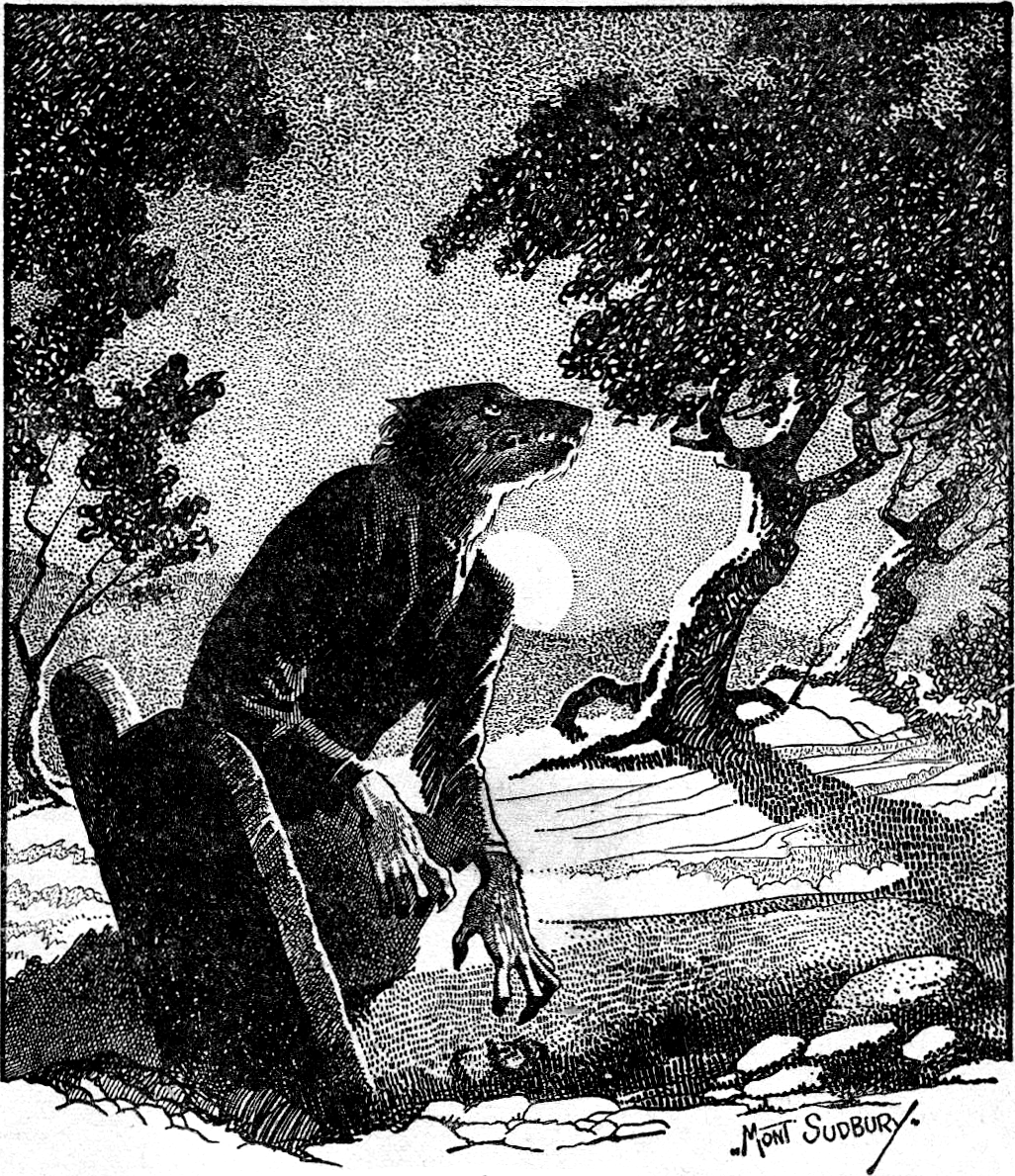
In folklore, a werewolf (from Old English werwulf 'man-wolf'), or occasionally lycanthrope (from Ancient Greek λυκάνθρωπος 'wolf-human'), is an individual who can shapeshift into a wolf or therianthropic hybrid wolf–humanlike creature, either voluntarily or involuntarily due to a curse or other affliction. In modern fiction, especially film, transformations are often depicted as triggered by the full moon and transmitted by a bite or scratch from another werewolf. Early sources for belief in this ability or affliction, called lycanthropy, are Petronius (27–66) and Gervase of Tilbury (1150–1228).
The werewolf is a widespread concept in European folklore, existing in many variants, which are related by a common development of a Christian interpretation of underlying European folklore developed during the Middle Ages. From the early modern period, werewolf beliefs spread to the Western Hemisphere with colonialism. Belief in werewolves developed in parallel to the belief in witches during the late Middle Ages and the early modern period. Like the witchcraft trials as a whole, the trial of supposed werewolves emerged in what is now Switzerland, especially the Valais and Vaud, in the early 15th century and spread throughout Europe in the 16th, peaking in the 17th and subsiding by the 18th century.
The persecution of werewolves and the associated folklore is an integral part of the "witch-hunt" phenomenon, albeit a marginal one, with accusations of lycanthropy being involved in only a small fraction of witchcraft trials. During the early period, accusations of lycanthropy (transformation into a wolf) were mixed with accusations of wolf-riding or wolf-charming. The case of Peter Stumpp (1589) led to a significant peak in both interest in and persecution of supposed werewolves, primarily in French-speaking and German-speaking Europe. The phenomenon persisted longest in Bavaria and Austria, with the persecution of wolf-charmers recorded until well after 1650, the final cases taking place in the early 18th century in Carinthia and Styria.
After the end of the witch trials, the werewolf became of interest in folklore studies and in the emerging Gothic horror genre. Werewolf fiction as a genre has premodern precedents in medieval romances (e.g., Bisclavret and Guillaume de Palerme) and developed in the 18th century out of the "semi-fictional" chapbook tradition. The trappings of horror literature in the 20th century became part of the horror and fantasy genre of modern popular culture.
The Modern English werewolf descends from the Old English wer(e)wulf, which is a cognate of Middle Dutch weerwolf, Middle Low German warwulf, werwulf, Middle High German werwolf, and West Frisian waer-ûl(e). These terms are generally derived from a Proto-Germanic form reconstructed as *wira-wulfaz ('man-wolf'), itself from an earlier Pre-Germanic form *wiro-wulpos. An alternative reconstruction, *wazi-wulfaz ('wolf-clothed'), would bring the Germanic compound closer to the Slavic meaning, with other semantic parallels in Old Norse úlfheðnar ('wolf-skinned') and úlfheðinn ('wolf-coat'), Old Irish luchthonn ('wolf-skin'), and Sanskrit Vṛkājina ('Wolf-skin').
The Norse branch underwent taboo modifications, with Old Norse vargúlfr (only attested as a translation of Old French garwaf ~ garwal(f) from Marie's lay of Bisclavret) replacing *wiraz ('man') with vargr ('wolf, outlaw'), perhaps under the influence of the Old French expression leus warous ~ lous garous (modern loup-garou), which literally means 'wolf-werewolf'. The modern Norse form varulv (Danish, Norwegian and Swedish) was either borrowed from Middle Low German werwulf, or else derived from an unattested Old Norse *varulfr, posited as the regular descendant of Proto-Germanic *wira-wulfaz. An Old Frankish form *werwolf is inferred from the Middle Low German variant and was most likely borrowed into Old Norman garwa(l)f ~ garo(u)l, with regular Germanic–Romance correspondence w- / g- (cf. William / Guillaume, Wales / Galles, etc.).
The Proto-Slavic noun *vьlko-dlakь, meaning "wolf-haired" (cf. *dlaka, "animal hair", "fur"), can be reconstructed from Serbian vukòdlak, Slovenian vołkodlȃk, and Czech vlkodlak, although formal variations in Slavic languages (*vьrdl(j)ak, *vьlkdolk, *vьlklak) and the late attestation of some forms pose difficulties in tracing the origin of the term. The Greek Vrykolakas and Romanian Vîrcolac, designating vampire-like creatures in Balkan folklores, were borrowed from Slavic languages.
The same form is found in other non-Slavic languages of the region, such as Albanian vurvolak and Turkish vurkolak. Bulgarian vьrkolak and Church Slavonic vurkolak may be interpreted as back-borrowings from Greek. The name vurdalak (вурдалак; 'ghoul, revenant') first appeared in Russian poet Alexander Pushkin's work Pesni, published in 1835. The source of Pushkin's distinctive form remains debated in scholarship.
Hub AI
Werewolf AI simulator
(@Werewolf_simulator)
Werewolf
In folklore, a werewolf (from Old English werwulf 'man-wolf'), or occasionally lycanthrope (from Ancient Greek λυκάνθρωπος 'wolf-human'), is an individual who can shapeshift into a wolf or therianthropic hybrid wolf–humanlike creature, either voluntarily or involuntarily due to a curse or other affliction. In modern fiction, especially film, transformations are often depicted as triggered by the full moon and transmitted by a bite or scratch from another werewolf. Early sources for belief in this ability or affliction, called lycanthropy, are Petronius (27–66) and Gervase of Tilbury (1150–1228).
The werewolf is a widespread concept in European folklore, existing in many variants, which are related by a common development of a Christian interpretation of underlying European folklore developed during the Middle Ages. From the early modern period, werewolf beliefs spread to the Western Hemisphere with colonialism. Belief in werewolves developed in parallel to the belief in witches during the late Middle Ages and the early modern period. Like the witchcraft trials as a whole, the trial of supposed werewolves emerged in what is now Switzerland, especially the Valais and Vaud, in the early 15th century and spread throughout Europe in the 16th, peaking in the 17th and subsiding by the 18th century.
The persecution of werewolves and the associated folklore is an integral part of the "witch-hunt" phenomenon, albeit a marginal one, with accusations of lycanthropy being involved in only a small fraction of witchcraft trials. During the early period, accusations of lycanthropy (transformation into a wolf) were mixed with accusations of wolf-riding or wolf-charming. The case of Peter Stumpp (1589) led to a significant peak in both interest in and persecution of supposed werewolves, primarily in French-speaking and German-speaking Europe. The phenomenon persisted longest in Bavaria and Austria, with the persecution of wolf-charmers recorded until well after 1650, the final cases taking place in the early 18th century in Carinthia and Styria.
After the end of the witch trials, the werewolf became of interest in folklore studies and in the emerging Gothic horror genre. Werewolf fiction as a genre has premodern precedents in medieval romances (e.g., Bisclavret and Guillaume de Palerme) and developed in the 18th century out of the "semi-fictional" chapbook tradition. The trappings of horror literature in the 20th century became part of the horror and fantasy genre of modern popular culture.
The Modern English werewolf descends from the Old English wer(e)wulf, which is a cognate of Middle Dutch weerwolf, Middle Low German warwulf, werwulf, Middle High German werwolf, and West Frisian waer-ûl(e). These terms are generally derived from a Proto-Germanic form reconstructed as *wira-wulfaz ('man-wolf'), itself from an earlier Pre-Germanic form *wiro-wulpos. An alternative reconstruction, *wazi-wulfaz ('wolf-clothed'), would bring the Germanic compound closer to the Slavic meaning, with other semantic parallels in Old Norse úlfheðnar ('wolf-skinned') and úlfheðinn ('wolf-coat'), Old Irish luchthonn ('wolf-skin'), and Sanskrit Vṛkājina ('Wolf-skin').
The Norse branch underwent taboo modifications, with Old Norse vargúlfr (only attested as a translation of Old French garwaf ~ garwal(f) from Marie's lay of Bisclavret) replacing *wiraz ('man') with vargr ('wolf, outlaw'), perhaps under the influence of the Old French expression leus warous ~ lous garous (modern loup-garou), which literally means 'wolf-werewolf'. The modern Norse form varulv (Danish, Norwegian and Swedish) was either borrowed from Middle Low German werwulf, or else derived from an unattested Old Norse *varulfr, posited as the regular descendant of Proto-Germanic *wira-wulfaz. An Old Frankish form *werwolf is inferred from the Middle Low German variant and was most likely borrowed into Old Norman garwa(l)f ~ garo(u)l, with regular Germanic–Romance correspondence w- / g- (cf. William / Guillaume, Wales / Galles, etc.).
The Proto-Slavic noun *vьlko-dlakь, meaning "wolf-haired" (cf. *dlaka, "animal hair", "fur"), can be reconstructed from Serbian vukòdlak, Slovenian vołkodlȃk, and Czech vlkodlak, although formal variations in Slavic languages (*vьrdl(j)ak, *vьlkdolk, *vьlklak) and the late attestation of some forms pose difficulties in tracing the origin of the term. The Greek Vrykolakas and Romanian Vîrcolac, designating vampire-like creatures in Balkan folklores, were borrowed from Slavic languages.
The same form is found in other non-Slavic languages of the region, such as Albanian vurvolak and Turkish vurkolak. Bulgarian vьrkolak and Church Slavonic vurkolak may be interpreted as back-borrowings from Greek. The name vurdalak (вурдалак; 'ghoul, revenant') first appeared in Russian poet Alexander Pushkin's work Pesni, published in 1835. The source of Pushkin's distinctive form remains debated in scholarship.