Hubbry Logo
Magyarab peopleMagyarab peopleMain
Open search
Magyarab people
Community hub
Magyarab people
logo
7 pages, 0 posts
0 subscribers
Be the first to start a discussion here.
Magyarab people
Magyarab people
from Wikipedia

The Magyarabs[1][2] are a small community living within Nubia, along the Nile in Egypt and Sudan. They descend from Hungarians (Magyars) who intermarried with locals,[3] and are believed to date back to the late 16th century,[citation needed] when Hungary and Egypt were part of the Ottoman Empire.

Key Information

Name

[edit]

The name "Magyarab" is not a portmanteau of the words "Magyar" and "Arab", as is commonly assumed. Rather, it is a concatenation of "Magyar" (Hungarian) and "Ab", which in Nubian means simply "tribe". Magyarab combined thus translates to "Tribe of the Magyars".[4] In fact, to the Magyarab people, their Hungarian identity specifically sets them apart from the surrounding Egyptians.[citation needed]

History

[edit]

According to legend, Christian Hungarians who had only recently been brought under the control of the Ottoman Empire formed a part of the Ottoman army that was fighting in southern Egypt. Supposedly, a portion or the entirety of the fighting unit remained there and intermarried with the local Nubian women.

According to local Magyarabs, their ancestor was Ibrahim el-Magyar, a general who came from Buda (present-day Budapest) in 1517, he married with a local Nubian woman, they had a son called Ali. Ali had five sons (Selami, Mustafa, Djelal Eddin, Musa and Iksa), and Ali's five sons were the ancestor of all Magyarabs. Magyarabs have been members of the World Federation of Hungarians (Magyarok Világszövetsége) since 1992 and still consider themselves as Hungarians.

They were not discovered by Europeans until 1935, when László Almásy, who was himself Hungarian, and his co-worker, the German engineer and explorer Hansjoachim von der Esch, happened upon the tribe in the region of Nubia. Representatives of the tribes later attempted to make contact with Hungarian officials but failed to do so because of the outbreak of World War II.

These people now have a mixed-race appearance because the intermarriage with the local Nubian population, and they do not speak Hungarian. Around 1934, however, Esch, who spent several weeks with the population of the Magyarab island at Wadi Halfa, put together a list of non-Arabic words that were used only on that island and, according to him, were recognized by Almásy as similar to Hungarian words. His notes showed that all Magyarab in Wadi Halfa were convinced that their ancestors came from "Nemsa" (the Arabic word for Austria), which might refer to any region of Austria-Hungary. He was told by the leader of the Magyarab island village that their ancestors had arrived in Egypt/Sudan as a group of "Austrian" soldiers, led by a man called Shenghal Sendjer, which Esch assumed to have been originally General Sendjer or Senger.[3]

Magyarab communities

[edit]

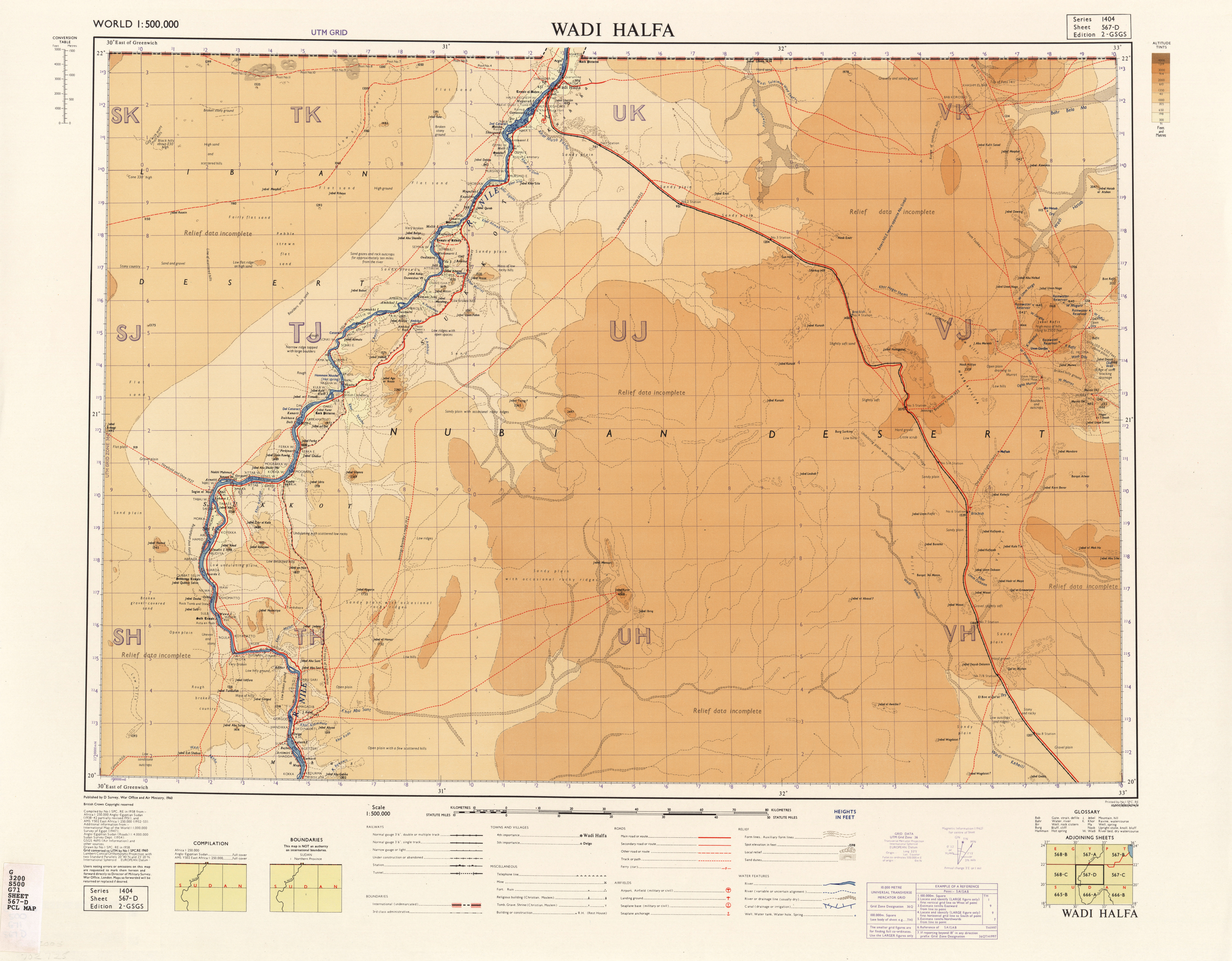
Magyarabs live along the Nile, in Sudan around Wadi Halfa, in Egypt around Aswan in the villages of Magyarab-irki, Magyararti, Magyariyya, Magyar-nirki, Hillit el-Magyarab[citation needed] and about 400 Magyarabs live in Cairo.

References

[edit]

Sources

[edit]

Detailed report about a Hungarian expedition:

Other references:

[edit]
Revisions and contributorsEdit on WikipediaRead on Wikipedia
from Grokipedia
The Magyarab people are an ethnic community of Hungarian descent living primarily along the in the Nubian regions of southern and northern , with estimates ranging from 7,000 to 15,000 individuals as of the 2020s. They trace their origins to the , when Hungarian prisoners of war or soldiers captured during Ottoman campaigns—possibly under Sultan —were relocated to the area as border guards against local Nubian groups, settling on an island known as Magyarab near . Over generations, they intermarried with local Nubian, Berber, and populations, leading to while retaining a distinct ethnic identity marked by oral traditions, lighter skin tones, and occasional Hungarian loanwords in their dialect. The community's history remained largely unknown to the outside world until , when Hungarian explorer encountered them during expeditions in the , noting their claims of Hungarian ancestry and physical resemblances such as eagle-like noses and fairer complexions. Further scholarly attention came in 1965 from Hungarian orientalist István Fodor, who documented their folklore, proverbs (such as "Rá’sz el-mágyár zejj el-hágyár," meaning "Hungarians’ heads are as hard as stone"), and estimated their population at around 7,000, divided between Nubian-speaking farmers and Arabic-speaking merchants. A pivotal event in their modern history was the construction of the Aswan High Dam in the 1960s, which submerged many traditional settlements near and , forcing relocation and further integration into broader Egyptian and Sudanese societies. Today, the Magyarab are Sunni Muslims who speak and identify strongly with their Hungarian roots, a connection formally recognized by their inclusion in the World Federation of since 1992. Their name derives from "Magyar" (Hungarian) combined with the Nubian "ab" (tribe), reflecting this hybrid heritage. Oral histories often center on a foundational figure, Ibrahim el-Magyar (or Ibrahim Magar), a 16th-century Hungarian military leader from who allegedly led the initial settlers and whose descendants form the core of the community. Despite linguistic and cultural shifts, they maintain a collective memory of through stories of migration and resilience, distinguishing them from neighboring Nubian and groups.

Identity and Terminology

Name and Etymology

The term "Magyarab" derives from the Hungarian word Magyar, which refers to ethnic , combined with Ab, a Nubian word meaning "tribe," collectively translating to "Hungarian tribe" or "tribe of the Magyars." Although the name superficially resembles a fusion of Magyar and Arab, suggesting a mixed Hungarian- heritage, this is a common misinterpretation; the community's primary integration has occurred with local Nubian populations through intermarriage over centuries. The earliest documented European awareness of the term stems from 20th-century explorations, particularly Hungarian adventurer László Almásy's 1935 expedition to , where locals identified themselves using variations of the name during interactions with his team. Prior to this, the designation likely evolved from indigenous and Nubian labels for the group in Ottoman-era , though specific pre-20th-century records using "Magyarab" are scarce and tied more to oral traditions than written Ottoman archives. Spelling and pronunciation vary across sources and contexts: "Magyarab" predominates in English and Hungarian scholarship, while "Magyaran" appears in some ethnographic accounts, and local dialects may render it closer to "Mahgarib," reflecting phonetic adaptations in Nubian-Arabic speech patterns.

Self-Identification

The Magyarab people maintain a strong sense of ethnic identity rooted in oral traditions that trace their origins to Hungarian forebears who arrived in during the as Ottoman soldiers. These narratives emphasize descent from a group of Hungarian mercenaries or captives who settled along the and intermarried with local Nubian women, forming the foundational lineages of the community. A prominent legend centers on Ibrahim al-Magyari, a Hungarian soldier from who purportedly led a contingent in and whose descendants, through his son Ali and five grandsons, are said to populate the Magyarab clans today. This self-perception fosters a distinctiveness from surrounding and Nubian populations, preserved through family genealogies and communal storytelling that highlight Hungarian ancestry despite extensive , including the adoption of language and . Community elders recount tales of their ancestors' resilience as border guards under Sultan , reinforcing a of Hungarian heritage that sets them apart, often illustrated by proverbs such as “Rá’sz el-mágyár zejj el-hágyár” (The heads of the are as hard as stone). These genealogies and stories serve as living documents of identity, transmitted across generations to affirm their unique hybrid origins amid integration into local societies. In the , anthropological studies further illuminated and bolstered these assertions of Hungarian identity. Explorers like encountered the Magyarab in , documenting their oral claims of descent from Hungarian soldiers, while István Fodor's 1965 expedition elicited detailed accounts from community members linking their forebears to the era when and were unified. Modern expressions include active participation in cultural exchanges with , such as delegations documenting their history, and formal recognition as part of the through membership in the World Federation of Hungarians since 1992, where they continue to proclaim their ties to Hungarian "brothers."

Historical Origins

Migration from Europe

The migration of to the regions of modern and occurred primarily during the 16th and 17th centuries amid the protracted Habsburg-Ottoman wars in , where many were captured as prisoners of war or enlisted as mercenaries in the Ottoman military. Following the Ottoman victory at the in 1526, some Hungarian prisoners entered Ottoman service and were possibly relocated to . This pattern continued through the late 16th and early 17th centuries, with additional individuals arriving in , often fleeing the conflicts or seeking employment in the empire's expansive army. Travel routes likely involved overland journeys through the to , followed by sea voyages across the Mediterranean to , though details remain speculative based on general Ottoman military movements. Motivations for these migrations included compulsory for captives, voluntary enlistment as mercenaries offering pay and adventure, and from Habsburg-controlled territories, where Ottoman allegiance could mean . The term "Macar" — the Turkish term for — appears in Ottoman records generally, though specific documentation of these settlers' roles in Egyptian garrisons or frontier defense is lacking. Trade opportunities along Ottoman trade routes also drew a smaller number of Hungarian merchants and artisans southward, though military factors predominated. These early arrivals, whose historical origins are primarily derived from community oral histories documented in the 20th century, laid the groundwork for later intermarriages with local Nubian populations, contributing to the formation of distinct communities.

Settlement in North Africa

Following their arrival in North Africa as part of Ottoman military contingents in the early 16th century, the Magyarab ancestors—primarily Hungarian soldiers—began establishing permanent settlements along the Nile River in Nubian territories, particularly in the regions of Aswan in southern Egypt and Wadi Halfa in northern Sudan. These groups were relocated around 1517 during Sultan Selim I's conquest of Egypt to serve as border guards and troops, transitioning from transient military outposts to fixed communities through intermarriage with local Nubian populations. This union, notably exemplified by the legendary leader Ibrahim el-Magyar, who married a Nubian woman and settled near the Nile, fostered the emergence of a distinct Magyarab lineage by the 18th century, blending Hungarian paternal heritage with Nubian maternal lines while preserving elements of ethnic identity amid broader assimilation. Over subsequent generations, the Magyarab adapted to the agrarian and fluvial economy of the Valley, shifting from their original military duties to farming and Nile-based trade in the and areas. They cultivated staple crops such as and dates, leveraging the fertile floodplains for sustenance, and participated in regional commerce involving goods transported along the river, which facilitated economic integration into Nubian society without fully erasing their distinct cultural markers, such as Hungarian-influenced physical traits like lighter skin or reddish hair observed in some community members. This adaptation was gradual, occurring under the ongoing Ottoman administration, where the community formed isolated villages that maintained a degree of autonomy while adopting as their primary language and as their faith. The early settlement phase was marked by significant challenges, including assimilation pressures from Ottoman governance that encouraged for military and social integration, compelling many to blend further into local populations. Under subsequent Egyptian rule in the , these pressures intensified as centralized authority sought to homogenize border communities, leading to cultural erosion in some isolated Hungarian-descended villages along the . Historical of these villages and their resilience, based largely on oral traditions, comes from explorer accounts, such as those by Hungarian adventurer László Almásy in the 1930s, who documented Magyarab settlements near and noted their claims of Hungarian origins amid Nubian integration.

Cultural and Social Life

Language and Dialects

The Magyarab people speak both Nubian and varieties of Arabic. Historical studies identify two main linguistic subgroups: Nubian-speaking communities, such as farmers near Wadi Halfa and Kom Ombo, and Arabic-speaking communities, such as merchants in Aswan. Their Arabic dialects incorporate Nubian substrates reflecting the region's indigenous linguistic influences, such as the Nubian element "ab" meaning "tribe" in their ethnonym. These dialects blend with broader Egyptian and Sudanese Arabic features, including shared phonological patterns like emphatic consonants and vowel shifts typical of Nile Valley Arabic varieties. Despite centuries of assimilation, the Magyarab retain a limited number of Hungarian loanwords, particularly in terms and , where words for roles and traditional expressions preserve faint echoes of their ancestral language. For instance, linguistic analyses have identified unique vocabulary in their speech with no , traced to Hungarian origins, and documented proverbs like "Rá’sz el-mágyár zejj el-hágyár" ("’ heads are as hard as stone") and "Ál-Mágyárí lá jiszálli fíl-meszgyid" (" do not pray in mosques"), which exhibit structural and lexical similarities to Hungarian expressions. Historical linguistic surveys from , conducted during expeditions in the region, confirm that the community had largely shifted from any original Hungarian or Magyar speech to over centuries of assimilation, with only isolated remnants surviving in oral traditions by the time of 20th-century documentation. This transition aligned with broader into Nubian and Arab societies, where Hungarian elements became substrates in an Arabic-dominant framework. Contemporary Magyarab exhibit bilingualism in modern Egyptian Arabic and Sudanese Arabic variants, facilitating communication across their cross-border communities, though these features distinguish their idiolect within the Nubian Arabic continuum, underscoring a layered linguistic heritage.

Traditions and Heritage

The Magyarab people preserve elements of their Hungarian heritage through oral folklore that emphasizes their European origins, despite centuries of assimilation into Nubian and Arab societies. Central to their traditions is the legend of Ibrahim el-Magyar, a 16th-century Hungarian soldier from Buda who reportedly settled along the Nile, married a local Nubian woman, and had a son, Ali, who fathered five sons whose descendants form the core of the community; this narrative is passed down generationally to reinforce collective identity. These tales blend with local Nubian storytelling practices, maintaining a sense of distinct ancestry amid broader Islamic cultural integration. Family structures among the Magyarab highlight patrilineal descent from these purported Hungarian forebears, fostering tight-knit communities centered on kinship ties and endogamous intermarriage within the group, though unions with and are also common. This emphasis on ancestral lineage influences social organization, with extended families often residing in clustered villages and prioritizing communal support in farming, herding, and trade activities. Naming conventions reflect this hybrid heritage, as the "Magyarab" derives from the Hungarian "Magyar" combined with the Nubian term "ab" meaning , symbolizing their fused identity. Certain customs hint at residual pre-Islamic influences, including the made on square loaves of freshly baked bread and over newborns, practices that echo early Christian Hungarian roots even as the community adheres to . Ethnographic observations note these as markers of cultural persistence, alongside proverbs and rituals documented in mid-20th-century studies that show faint Hungarian stylistic echoes in daily life. Overall, Magyarab heritage manifests in adaptive social practices that honor historical migration narratives while embedding them within Nile Valley norms.

Demographics and Geography

Population Estimates

The Magyarab population was estimated at 10,000 to 15,000 individuals as of 2023, distributed primarily between southern and northern along the .[](https://www.hungarianconservative.com/articles/culture_society/magyarab s_descendants_of_hungarians_africa_egypt_sudan_hungarian_identity_collective_memory/) This figure derives from mid-20th-century anthropological expeditions and more recent ethnographic accounts, reflecting a community that has expanded from a modest founding group of Hungarian soldiers and settlers integrated into local Nubian societies during the under Ottoman administration.[](https://www.hungarianconservative.com/articles/culture_society/magyarab s_descendants_of_hungarians_africa_egypt_sudan_hungarian_identity_collective_memory/) Historical population dynamics have been shaped by environmental and infrastructural changes. A major fluctuation occurred during the 1960s construction of the Aswan High Dam, which flooded ancestral lands around and Ibrim, displacing thousands of Magyarab and scattering communities to new resettlements in and .[](https://www.hungarianconservative.com/articles/culture_society/magyarab s_descendants_of_hungarians_africa_egypt_sudan_hungarian_identity_collective_memory/) These events reduced localized densities but contributed to gradual recovery through natural growth and internal mobility over subsequent decades. Demographic profiles indicate a with significant Nubian admixture, as evidenced by 21st-century genetic studies sampling small cohorts for HLA haplotypes, which show affinities to regional Sudanese groups while preserving traces of Eurasian ancestry. Anthropological observations from the 1960s noted physical variations such as lighter skin tones and in some individuals, suggesting ongoing genetic continuity from European origins amid high intermarriage rates.[](https://www.hungarianconservative.com/articles/culture_society/magyarab s_descendants_of_hungarians_africa_egypt_sudan_hungarian_identity_collective_memory/)

Key Communities

The Magyarab people primarily inhabit rural settlements along the River in southern and northern , shaped by historical migrations and environmental constraints. In 's , their communities are concentrated in villages near the High Dam, including historical hamlets such as Ibrim, Qatta, Tuska, and Aneba, many of which were submerged following the dam's construction in the 1960s.[](https://www.hungarianconservative.com/articles/culture_society/magyarab s_descendants_of_hungarians_africa_egypt_sudan_hungarian_identity_collective_memory/) These areas, part of the broader Nubian region, supported small-scale farming until displacement forced relocations to higher ground around . In Sudan's Northern State, key communities center around and the former Magyararti Island, where early Ottoman-era Hungarian settlers established roots through intermarriage with local .[](https://www.hungarianconservative.com/articles/culture_society/magyarab s_descendants_of_hungarians_africa_egypt_sudan_hungarian_identity_collective_memory/) These Nile-side hamlets, documented in early 20th-century European explorations, were similarly inundated by , leading to resettlement near the Sudanese-Ethiopian border. Magyarab social organization revolves around clans, which form the core of community decision-making and resource sharing, supplemented by informal village councils that address local disputes and agricultural coordination. These structures, preserved through oral traditions, emphasize tied to Hungarian ancestry, as observed in mid-20th-century studies of resettled groups in and .[](https://www.hungarianconservative.com/articles/culture_society/magyarab s_descendants_of_hungarians_africa_egypt_sudan_hungarian_identity_collective_memory/) Settlement patterns are heavily influenced by the Nile's fertility, with communities historically dependent on riverine using traditional like saqia water wheels to cultivate crops such as , date palms, and . This reliance has made them vulnerable to regional conflicts and infrastructure projects, notably the Aswan High Dam, which flooded ancestral lands and displaced thousands, altering traditional farming practices and exposing groups to ongoing border tensions between and .[](https://www.hungarianconservative.com/articles/culture_society/magyarab s_descendants_of_hungarians_africa_egypt_sudan_hungarian_identity_collective_memory/)

Contemporary Status

Modern Challenges

The construction of the in the 1960s flooded vast areas of traditional Nubian lands, including villages inhabited by the Magyarab, such as those near , displacing thousands and eroding access to ancestral territories central to their livelihood and cultural continuity. Resettled primarily in schemes like Khashm el-Qirbah in eastern , these communities faced immediate challenges in adapting to new environments, with loss of fertile Nile Valley soils contributing to long-term economic vulnerabilities and social fragmentation. In recent decades, urbanization has drawn many Magyarab from rural settlements to cities like and , where poverty rates among Nubian minorities are high, intensifying economic pressures and limiting intergenerational transmission of heritage. Intermarriage with surrounding Nubian and populations, a pattern rooted in historical integration but accelerating in urban contexts, has further promoted assimilation, with younger generations increasingly identifying more with broader regional identities than distinct Hungarian-Nubian roots. The , which erupted in April 2023 and continues as of November , has compounded these issues for Magyarab communities in northern and eastern , disrupting social cohesion through widespread displacement—over 12 million people affected nationwide as of late —and severely curtailing access to and services amid infrastructure destruction and famine risks. Humanitarian reports highlight how such instability exacerbates vulnerabilities for minority groups in conflict zones, including Nubian-inhabited areas, with over 700,000 children expected to suffer from severe acute in 2024 and rates rising further into .

Connections to Hungary

The rediscovery of the Magyarab people by Hungarian explorers in the 1930s initiated the primary modern connections to Hungary. László Almásy, a prominent Hungarian aristocrat, aviator, and desert researcher, first encountered the community during an expedition in February 1935 near Wadi Halfa on the Nile River in Sudan. Accompanied by colleague Hansjoachim von der Esch, Almásy documented the Magyarab's oral accounts of their Hungarian origins, including references to an ancestor named Ibrahim el-Magyar, which he reported upon his return, generating widespread media interest and academic curiosity in Hungary about this isolated group claiming ties to the Magyar nation. Following the political transformations in after , diplomatic and cultural exchanges with the Magyarab intensified as part of broader efforts to reconnect with the global . In the early , Hungarian researchers and anthropologists visited Magyarab villages in southern to record their dialects, , and self-identification, confirming cultural affinities such as loanwords from Hungarian in their . These interactions led to the formal acknowledgment of the Magyarab as an ethnic Hungarian community by Hungarian state institutions, with the group joining the World Federation of Hungarians in 1992 to advocate for their recognition and support. Hungarian government delegations have since conducted periodic visits to the region, promoting bilateral ties between and .
Add your contribution
Related Hubs
User Avatar
No comments yet.