Recent from talks
Nothing was collected or created yet.
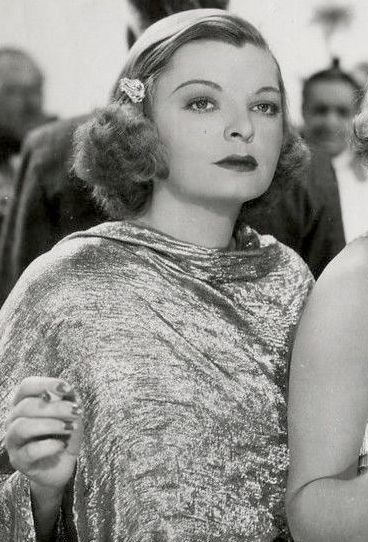
Mayo Methot
View on Wikipedia
Mayo Jane Methot (March 3, 1904 – June 9, 1951) was an American film and stage actress. She appeared in over 30 films, as well as in various Broadway productions, and attracted significant media attention for her tempestuous marriage to actor Humphrey Bogart.
Key Information
Methot appeared in numerous Broadway musicals and plays, including the Vincent Youmans musical Great Day (1929). She then appeared in various supporting roles for Warner Brothers, often portraying hard-edged women. Her film credits include the mystery film The Night Club Lady (1932), the comedy Jimmy the Gent (1934), and the crime drama Marked Woman (1937).
Methot met Bogart on the set of Marked Woman and the two became romantically involved, marrying in 1938. Methot struggled with severe alcoholism, and was diagnosed with paranoid schizophrenia following a suicide attempt in 1943. She divorced Bogart in 1945 after numerous reconciliations. Unable to gain traction in her film career, she returned to her childhood home of Portland, and her alcoholism and depression worsened. She died of complications stemming from alcoholism in 1951, aged 47.
Life and career
[edit]1904–1922: Early life and career beginnings
[edit]
Mayo Jane Methot[1] was born March 3, 1904, in Chicago, Illinois,[a] the only child of Beryl Evelyn (née Wood) and John Dillon "Jack" Methot, a ship captain.[7][8] She was a direct descendant of Zachary Taylor, the 12th President of the United States.[9] Shortly after her birth, the family relocated to Portland, Oregon, where Methot was raised.[5] She showed a proclivity for literature and acting as a young child, memorizing passages from Romeo and Juliet.[10] She began performing on stage professionally at the age of five, appearing as Josef in a Portland production of Sapho, opposite Florence Roberts.[10]
In 1912, Methot starred as David, a young boy, in a production of The Awakening of Helena Richie, at the Grand Opera House in Salem, Oregon.[10] In an article detailing the play, it was noted: "Her grasp of what is required of her during rehearsals of plays is held to be most unusual, while those who have seen her as David in The Awakening of Helena Richie, are warm in their praise of her dramatic ability."[10] In press promoting the production, the then-eight-year-old Methot stated that she was inspired by French actress Sarah Bernhardt.[10] Around this time, she told reporter Fay King of The Spectator: "I'm going to be a fine actress, if I can."[11]

Methot was subsequently chosen to travel with selected Portland delegates to Washington, D.C., where she presented President Woodrow Wilson with a bouquet of flowers.[12] Methot began performing with the Portland-based Baker Stock Company at age nine,[7] and her frequent appearances in local theater productions earned Methot the nickname "The Portland Rosebud."[13] In 1914, she made her film debut alongside several Baker Stock Company players in a serial short titled Forgotten Songs, produced by the Portland-based American Lifeograph Studios.[14] In January 1916, she starred as the lead in a Baker Stock Company production of The Littlest Rebel.[15]
After Methot graduated from Miss Catlin's School[16] in 1919, she pursued a full-time career with the Baker Stock Company, appearing in an August 1919 production of Come Out of the Kitchen opposite Verna Felton.[16] This was followed by lead roles in the company's Dawn o' the Mountains (staged in May 1920), in which she portrayed a teenage boy;[17] as a bride's sister seeking a lover in Parlor, Bedroom and Bath (October 1920);[18] and in the comedy That Girl Patsy, in May 1921.[19]
While appearing in locally produced serial short films for filmmaker Robert C. Bruce (among them the 1922-released And Women Must Weep),[20] Methot met cameraman Jack Lamond, a war veteran, and the two began a whirlwind romance in the summer of 1921.[21] On September 21 of that year, they married at Saint Luke's Episcopal Church in Vancouver, Washington.[22] Methot continued to perform in local productions with the Baker Stock Company, including Linger Longer Letty in November 1921,[23] and in a revival of Parlor, Bedroom and Bath in March 1922.[24] In November 1922,[25] Methot and Lamond relocated to New York City, where Lamond was employed at Cosmopolitan Productions.[7]
1923–1929: Broadway career
[edit]Shortly after her arrival in New York, Methot began appearing on Broadway, her first production being director William Brady's The Mad Honeymoon in the summer of 1923.[7] Though the play received unfavorable reviews from critics, Mayo was the lone member of the cast to not receive criticism for her performance.[7]
Based on her performance in The Mad Honeymoon, Methot was cast as the female lead of Leola Lane in George M. Cohan's production of The Song and Dance Man,[7][26] which opened on New Year's Eve 1923.[27] In 1924, she appeared as The Bride in a Philadelphia production of Owen Davis's The Haunted House.[28] The following year, she returned to Broadway as Phyllis Halladay in Alias the Deacon, opposite Berton Churchill.[29] This was followed by a 1927 production of The Medicine Man, staged by Sam H. Harris at the New Cort Theatre in Queens, New York City.[30] On December 30, 1927, Methot and Lamond divorced, after she asserted that he had deserted her in 1925.[22]
Methot's performance as Florence Wendell in a winter 1929 Broadway production of All the King's Men garnered her praise from Donald Mulhern of the Brooklyn Standard Union, who wrote that she "handles her emotional scenes with both art and warmth and makes the woman very real."[31] She subsequently originated a role in the Vincent Youmans/Billy Rose musical Great Day (1929), introducing the standard "More Than You Know" and several others.[32] Her subsequent performance in Half Gods (also 1929) at the Plymouth Theatre earned critical praise, with Alvin Kayton of The Brooklyn Citizen writing: "As Hope Ferrier, Mayo Methot, recently in Youmans' Great Day, was extraordinarily capable, expressing her part with an emotion and understanding which made Hope seem almost lifelike. We doubt if the role could have been bettered."[33]
1930–1937: Move to Hollywood
[edit]
Methot moved to Hollywood in 1930, hoping to transition from stage to a career in film. She had her first major speaking role in United Artists's gangster film Corsair (1931).[34] On November 28, 1931,[35] Methot married Percy T. Morgan,[36][37][38][39][15] an oil tycoon and the co-owner with John "Jack" Morgan, of the Cock n' Bull[40] restaurant on Hollywood's Sunset Boulevard, birthplace of the Moscow Mule.[41][42][43][44][45]
In 1932, after signing a contract with Warner Bros., Methot starred as the female lead in The Night Club Lady, a murder mystery co-starring Adolphe Menjou.[46] What followed was a long line of roles as unsympathetic second leads and tough-talking "dames" in many of Warner's contemporary crime melodramas, such as The Mind Reader and William Wyler's Counsellor at Law (both 1933), as well as Jimmy the Gent (1934) opposite Jimmy Cagney and Bette Davis.[34] In 1934, she had roles in three First National Pictures features: first as a nurse in the drama Registered Nurse, followed by supporting parts in Side Streets and Mills of the Gods.[34]
Methot followed this with minor parts in the Perry Mason mystery film The Case of the Curious Bride, and as a gangster's moll in the crime film Dr. Socrates (both released in 1935).[34] She was subsequently cast in the crime drama Marked Woman (1937), again starring opposite Davis and Humphrey Bogart.[47] Methot divorced her husband, Percy Morgan, in February 1937, claiming that he would not allow her to accept an acting role in New York City.[48]
1938–1944: Marriage to Humphrey Bogart
[edit]
Methot became romantically involved with Humphrey Bogart after co-starring with him in Marked Woman.[49] The couple were married on August 28, 1938, in Beverly Hills.[50] Bogart had been married to actresses Helen Menken and Mary Philips before marrying Methot, and blamed his previous divorces on his wives' careers and their long separations. Two years after Methot and Bogart were married, Methot gave up acting.[51] The two became a high-profile Hollywood couple, but it was not a smooth marriage. Both drank heavily, and Methot gained a reputation for her violent excesses when under the influence.[52] They became known in the press as "The Battling Bogarts",[53] with Methot known, due to her combativeness, as "Sluggy".[52] Bogart later named his motor yacht Sluggy in her honor.[51] After Methot attempted suicide in 1943, Bogart urged her to visit a psychiatrist, and upon doing so, she was diagnosed with paranoid schizophrenia.[54][55]
During World War II, the Bogarts traveled Europe entertaining the troops. At one point in their travels during the war, the Bogarts met with director John Huston in Italy. During a night of heavy drinking, Methot insisted that everyone listen to her perform a song. Though they tried to persuade her to desist, she sang anyway. The performance was so bad and embarrassing that Huston and Bogart remembered it several years later and based a scene in Key Largo (1948) on the incident, having the alcoholic girlfriend (played by Claire Trevor) of the mobster (played by Edward G. Robinson) struggle through "Moanin' Low" off key in hopes of winning a drink in exchange for her singing. Trevor won an Oscar for her performance in the film.

Numerous battles took place at the Hollywood residence of the famous couple, nicknamed Sluggy Hollow,[56] including one in which Methot stabbed Bogart in the shoulder, and another in which the two hit one another in the head with whiskey bottles.[52] Actress Gloria Stuart—a friend of Bogart and Methot—recalled, in her later years, attending a dinner party at which Methot drunkenly brandished a pistol and threatened to shoot Bogart.[57] Stuart also recalled seeing Methot with bruises on her face on several occasions, and witnessing physical fights between the couple, including one in which Bogart tore Methot's dress off of her.[58] The couple separated and reconciled several times over the course of their marriage.[59]
While filming To Have and Have Not in 1943, Bogart fell in love with his 19-year-old co-star Lauren Bacall and the couple began an affair.[47] Methot caught wind of it and visited the set often.[60] Bogart attempted to save the marriage, but Methot's alcoholism intensified, as did their fighting.[61] Bogart announced that he had moved out of the couple's home on October 19, 1944.[51] On October 30, Bogart announced that he had reconciled with Methot and that he was "going home. [...] In other words, we'll return to our normal battles."[62] The reconciliation proved short-lived; Methot announced that Bogart had moved out of their home yet again on December 3, 1944.[63]
1945–1951: Career decline and return to Oregon
[edit]Methot filed for divorce on May 10, 1945, in a Las Vegas court,[47] which was granted one hour after she filed for the decree.[50][64] Bogart married Lauren Bacall on May 21, 1945.[61] After the divorce, Methot retreated from the public eye for several months, and spent a period at the Malabar Farm State Park[65] (the location of Bogart and Bacall's wedding).[66]
In August 1945, Methot attempted to resume a stage career in New York.[65] However, she was unsuccessful, and became locked into a pattern of alcoholism and depression. In the late 1940s, she moved back to Oregon, where her mother helped take care of her.
Death
[edit]Methot died on June 9, 1951, at Holladay Park Hospital in Portland.[67][68] Although it was reported in the press at the time that Methot died of complications from an unspecified surgery,[67] her actual cause of death was attributed to acute alcoholism.[69] Methot left her estate, totaling $50,000 ($620,192 in 2025) to her mother Evelyn.[70] Additionally, she bestowed her personal library of classic books to the Catlin Gabel School, her alma mater, as well as a scholarship fund for the institution.[71]
Methot's remains are interred at the Portland Memorial Mausoleum in the Sellwood neighborhood of Portland, Oregon, alongside her parents.[72] Bogart continued to send flowers to Methot's crypt until his death in 1957.[73]
Filmography
[edit]| Year | Title | Role | Notes | Ref. |
|---|---|---|---|---|
| 1916 | Forgotten Songs | Serial short | [14] | |
| 1922 | And Women Must Weep | Serial short | [20] | |
| 1923 | Unseeing Eyes | Extra | Uncredited | [74] |
| 1930 | Taxi Talks | Short film | [75] | |
| 1931 | Corsair | Sophie | [34] | |
| 1932 | The Night Club Lady | Lola Carewe | [34] | |
| 1932 | Vanity Street | Fern | [34] | |
| 1932 | Virtue | Lil Blair | [34] | |
| 1932 | Afraid to Talk | Marge Winters | Alternative title: Merry-Go-Round | [34] |
| 1933 | The Mind Reader | Jenny | [34] | |
| 1933 | Lilly Turner | Mrs. Durkee | Uncredited | [34] |
| 1933 | Goodbye Love | Sandra Hamilton | [34] | |
| 1933 | Counsellor at Law | Zedorah Chapman | [34] | |
| 1934 | Jimmy the Gent | Gladys Farrell | [34] | |
| 1934 | Harold Teen | Sally LaSalle | Alternative title: Dancing Fool | [34] |
| 1934 | Registered Nurse | Nurse Gloria Hammond | [34] | |
| 1934 | Side Streets | Maizie Roach | Alternative title: A Woman in Her Thirties | [34] |
| 1934 | Mills of the Gods | Sarah | [34] | |
| 1935 | The Case of the Curious Bride | Mrs. Florabelle Lawson | [34] | |
| 1935 | We're in the Money | Minor Role | (scenes deleted) | [34] |
| 1935 | Dr. Socrates | Muggsy, Red's Moll | [34] | |
| 1936 | Mr. Deeds Goes to Town | Mrs. Semple | Uncredited | [34] |
| 1936 | The Case Against Mrs. Ames | Cora Lamont | [34] | |
| 1937 | Marked Woman | Estelle Porter | [34] | |
| 1938 | Women in Prison | Daisy Saunders | [34] | |
| 1938 | Numbered Woman | Vicki | Alternative title: Private Nurse | [34] |
| 1938 | The Sisters | Blonde | [34] | |
| 1939 | Should a Girl Marry? | Betty Gilbert | [34] | |
| 1939 | Unexpected Father | Ethel Stone | Alternative title: Sandy Takes a Bow | [34] |
| 1939 | A Woman Is the Judge | Gertie | [34] | |
| 1940 | Brother Rat and a Baby | Girl in Bus | Alternative title: Baby Be Good, (final film role) | [34] |
Select stage credits
[edit]| Year | Title | Role | Notes | Ref. |
|---|---|---|---|---|
| 1909 | Sapho | Josef | [10] | |
| 1912 | The Awakening of Helena Richie | David | Grand Opera House, Salem, Oregon | [10] |
| 1913 | Salvation Nell | Baker Stock Company, Portland, Oregon | [14] | |
| 1913 | The Builders | Baker Stock Company, Portland, Oregon | [14] | |
| 1913 | Mary Jane's Pa | Baker Stock Company, Portland, Oregon | [14] | |
| 1914 | As a Man Thinks | Baker Stock Company, Portland, Oregon | [76] | |
| 1914 | A Fool There Was | Baker Stock Company, Portland, Oregon | [76] | |
| 1914 | The Littlest Rebel | Virgie Cary | Baker Stock Company, Portland, Oregon | [76] |
| 1916 | On Trial | Baker Stock Company, Portland, Oregon | [76] | |
| 1916 | The Littlest Rebel | Virgie Cary | Baker Stock Company, Portland, Oregon | [76] |
| 1919 | The Littlest Rebel | Virgie Cary | Baker Stock Company, Portland, Oregon | [77] |
| 1919 | Come Out of the Kitchen | Claudia Daingerfield | Baker Stock Company, Portland, Oregon | [16] |
| 1920 | Dawn o' the Mountains | Bub McNair | Baker Stock Company, Portland, Oregon | [78] |
| 1920 | Parlor, Bedroom and Bath | Angelica Irving | Baker Stock Company, Portland, Oregon | [18] |
| 1921 | That Girl Patsy | Patricia Davis | Baker Stock Company, Portland, Oregon | [19] |
| 1921 | Linger Longer Letty | Nancy | Baker Stock Company, Portland, Oregon | [79] |
| 1922 | Parlor, Bedroom and Bath | Angelica Irving | Baker Stock Company, Portland, Oregon | [24] |
| 1923 | The Mad Honeymoon | Marie Wilson | Playhouse Theatre | [27] |
| 1923 | The Song and Dance Man | Leola Lane | Hudson Theatre | [27] |
| 1924 | The Haunted House | The Bride | Broad Street Theatre, Philadelphia | [28] |
| 1925 | Alias the Deacon | Phyllis Halliday | Sam H. Harris Theatre | [27] |
| 1927 | The Medicine Man | New Cort Theatre, Jamaica, Queens | [30] | |
| 1927 | What Ann Brought Home | Ann | Wallack's Theatre | [27] |
| 1928 | The Song Writer | Patricia Thayer | 48th Street Theatre | [27] |
| 1929 | All the King's Men | Florence Wendell | Fulton Theatre | [27] |
| 1929 | Now-A-Days | Paula Newhall | Forrest Theatre, Philadelphia | [27] |
| 1929 | Great Day | Emma Lou Randolph | Cosmopolitan Theatre | [27] |
| 1929 | Half Gods | Hope Ferrier | Plymouth Theatre | [27] |
| 1930 | Torch Song | Ivy Stevens | Plymouth Theatre | [27] |
| 1931 | Torch Song | El Capitan Theatre, Hollywood | [26] | |
| 1935 | Strip Girl | Dixie Potter | Longacre Theatre | [80] |
Notes and references
[edit]Notes
[edit]- ^ Many sources erroneously refer to Methot's birthplace as Portland,[2][3][4] but her July 1951 obituary in The Oregonian contradicts this, stating that she was in fact born in Chicago;[5] this coincides with 1920 United States census reports from Portland, which list the then-16-year-old Mayo's birthplace as Illinois, and her employment as "stock company theater."[6] A clipping of the original July 1951 obituary that displays Chicago as her birthplace is visible in a 2012 article published by The NW Examiner (see page 15 of issue).
References
[edit]- ^ "Marriage License #11653: Humphrey Bogart and Mayo Jane Methot". California County Marriages, 1850–1952. State of California Vital Records and Statistics – via FamilySearch. (registration required). Archive scan of certificate.
- ^ "Mayo Methot Bogart Biography". University of Oregon. Retrieved May 10, 2019.
{{cite web}}: CS1 maint: deprecated archival service (link) - ^ "Humphrey Bogart's Ex-Wife Claimed". The Daily Times. New Philadelphia, Ohio. June 11, 1951. p. 9 – via Newspapers.com.
- ^ Fisher & Londré 2017, p. 452.
- ^ a b "Mayo Methot Bogart Dies In Portland After Illness". The Oregonian. Portland, Oregon. p. 25 – via Newspapers.com.
- ^ "Mayo J. Methot in household of John D. Methot", United States census, 1920; Portland, Multnomah County, Oregon; roll 1499, line 11, enumeration district 34, Family History film 1821499.
- ^ a b c d e f "Mayo Methot's Success". The Standard Union. Brooklyn, New York City. February 17, 1924. p. 15 – via Newspapers.com.
- ^ Wagner 2020, p. 108.
- ^ Wagner 2020, p. 107.
- ^ a b c d e f g "Descendent Of Long Line Of Play Folk". The Capital Journal. Salem, Oregon. September 18, 1912. p. 3 – via Newspapers.com.
- ^ Schilling 1961, p. 364.
- ^ "East Knows Rose City Has A Place Upon The Big Map". The Oregon Daily Journal. Portland, Oregon. June 29, 1913. p. 8 – via Newspapers.com.
- ^ "Mayo Methot, "Rosebud Of North," Captures High Officials' Hearts". The Pittsburgh Press. Pittsburgh, Pennsylvania. March 25, 1914. p. 6.
- ^ a b c d e Wagner 2020, p. 109.
- ^ a b Duchovnay 1999, p. 15.
- ^ a b c "Verna Felton to Play Leads at Baker". The Oregon Daily Journal. Portland, Oregon. August 28, 1919. p. 12 – via Newspapers.com.
- ^ A. S. J. (May 11, 1920). "Love Theme Is Strong at Baker". The Oregon Daily Journal. Portland, Oregon. p. 13 – via Newspapers.com.
- ^ a b A. S. J. (October 19, 1920). "Baker Players Do Well in Light Farce". The Oregon Daily Journal. p. 14 – via Newspapers.com.
- ^ a b L. H. (May 9, 1921). "Mayo Methot Is In Star Role At Baker". The Oregon Daily Journal. p. 8 – via Newspapers.com.
- ^ a b "Drama Featured In These Films". Missoulian. Missoula, Montana. March 12, 1922. p. 12 – via Newspapers.com.
- ^ "Mayo Methot's Wedding a Surprise". The Oregon Daily Journal. Portland, Oregon. September 29, 1921. p. 12 – via Newspapers.com.
- ^ a b "Actress Wins Divorce". Times-Union. Brooklyn, New York City. December 30, 1927. p. 4 – via Newspapers.com.
- ^ C. T. H. (November 14, 1921). "Baker Players Shine in Old Comedy". The Oregon Daily Journal. p. 10 – via Newspapers.com.
- ^ a b C. T. H. (March 20, 1922). "Jane Gilroy Is Hailed as Real Comedienne". The Oregon Daily Journal. Portland, Oregon. p. 8 – via Newspapers.com.
- ^ "Choice Bits of Rialto News; Record Price Paid For Film". The Oregon Daily Journal. Portland, Oregon. November 26, 1922. pp. 1, 4 – via Newspapers.com.
- ^ a b ""Torch Song" Defined". Los Angeles Times. Los Angeles, California. February 8, 1931. p. 37 – via Newspapers.com.
- ^ a b c d e f g h i j k "Mayo Methot Vault". Playbill. Retrieved July 22, 2019.
{{cite web}}: CS1 maint: deprecated archival service (link) - ^ a b "The Haunted House Is Full Of Laughs". The Philadelphia Inquirer. Philadelphia, Pennsylvania. December 2, 1924. p. 20 – via Newspapers.com.
- ^ "A Little Love, A Little Kiss, $200 Saved". New York Daily News. New York City. p. 44 – via Newspapers.com.
- ^ a b "Mayo Methot". Times-Union. Brooklyn, New York City. October 25, 1927. p. 70 – via Newspapers.com.
- ^ Mulhern, Donald (February 5, 1929). "The New Play". Brooklyn Standard Union. Brooklyn, New York City. p. 15 – via Newspapers.com.
- ^ Paymer & Post 1999, p. 159.
- ^ "The Stage". The Brooklyn Citizen. Brooklyn, New York City. December 23, 1929. p. 16 – via Newspapers.com.
- ^ a b c d e f g h i j k l m n o p q r s t u v w x y z aa ab ac ad ae "Mayo Methot filmography". AFI Catalog of Feature Films. American Film Institute. Archived from the original on July 22, 2019.
- ^ "Weds Again". Oakland Tribune. Oakland, California. November 29, 1931. p. 1 – via Newspapers.com.
- ^ "Life of Percy Tredegar Morgan". Los Altos Hills Historical Society. Retrieved March 20, 2022.
- ^ "Price Vs. Patience". The Steeple Times. September 23, 2013. Retrieved March 20, 2022.
He died instantly and though his widow remained there until the late 1920s, she eventually sold up and relocated to Southern California where her sons opened Hollywood's Cock 'n Bull "British style pub" and created the now famous Moscow Mule cocktail.
- ^ Princeton Alumni Weekly. Princeton University Press. 1954.
... lives near Percy Morgan's Cock ' N ' Bull Restaurant but hasn't seen Percy since the day of the Yale game last fall ...
- ^ "Bogart Hired by Warner Brothers, Moves from New York to West Hollywood". West Hollywood History Center. December 5, 2020. Retrieved March 20, 2022.
- ^ Bare, Richard L. (2001). Confessions of a Hollywood Director. Scarecrow Press. p. 23. ISBN 978-0-8108-4032-4.
- ^ Parsons, Louella O. (August 12, 1947). "Hepburn's Screen Career Unaffected By Frankness". St. Petersburg Times. St. Petersburg, Florida. p. 8.
- ^ "Cock'n Bull Story Has a Sad Ending : Famous Sunset Strip Restaurant to Close Its Doors After 50 Years". Los Angeles Times. August 21, 1987. Retrieved March 20, 2022.
- ^ "HISTORY". Cock'n Bull Premium Sodas. Retrieved March 20, 2022.
The Ginger Beer Choice for the Moscow Mule!Cock'n Bull Premium Sodas
- ^ "The Moscow Mule: A Los Angeles Original". Journal Hotels. November 27, 2017. Retrieved March 20, 2022.
- ^ Martino, Alison. "The Cock 'n Bull on Sunset Strip". Vintage Los Angeles. Retrieved March 20, 2022.
- ^ "Menjou, New Leading Lady". News-Journal. Mansfield, Ohio. November 1, 1932. p. 8 – via Newspapers.com.
- ^ a b c Roman 2015, p. 164.
- ^ "Marriage Vs. Career; Latter Wins Actress". The Pittsburgh Press. Pittsburgh, Pennsylvania. February 6, 1937. p. 8.
- ^ Sickels 2013, p. 69.
- ^ a b "Humphrey Bogart Free to Re-Wed". The Evening Independent. St. Petersburg, Florida. May 11, 1945. p. 8.
- ^ a b c "Fighting Bogarts Finally Separate". St. Petersburg Times. St. Petersburg, Florida. October 20, 1944. p. 16.
- ^ a b c Thomas 1990, p. 110.
- ^ Roman 2015, p. 162.
- ^ Frank 1982, p. 34.
- ^ Thorburn 2000, p. 134.
- ^ Harmetz, Aljean (2002). The Making of Casablanca. Hyperion. p. 313. ISBN 0-7868-8814-8.
- ^ Stuart & Thompson 1999, pp. 78–81.
- ^ Stuart & Thompson 1999, p. 79.
- ^ "Humphrey Bogart Leaves Home Again". The Evening Independent. St. Petersburg, Florida. December 5, 1944. p. 11.
- ^ Duchovnay 1999, p. 24.
- ^ a b Sickels 2013, p. 71.
- ^ "Bogart and Wife Make Up". San Jose News. San Jose, California. October 30, 1944. p. 5.
- ^ "Bogarts Again Having Parted". Deseret News. Salt Lake City, Utah. December 4, 1944. p. 5.
- ^ "Bogart Divorced; Will Marry 'Baby'". San Jose News. San Jose, California. May 10, 1945. p. 1.
- ^ a b McCarthy, Julia (August 25, 1945). "Mayo Hunts Stage Role, Wishes Bliss for Bogey". New York Daily News. p. 212 – via Newspapers.com.
- ^ "Bacall-Bogart Wedding Simple". The Gazette. Cedar Rapids, Iowa. May 22, 1945. p. 7 – via Newspapers.com.
- ^ a b "Obituary: Mayo Methot". New York Daily News. New York City, New York. June 10, 1951. p. 304 – via Newspapers.com.
- ^ "Ex-Mrs. Bogart Dies". The Milwaukee Sentinel. Milwaukee, Wisconsin. June 10, 1951. p. A-6. Retrieved March 15, 2014.[dead link]
- ^ Donnelley 2003, p. 110.
- ^ "Bogart Ex Leaves Estate". Press & Sun-Bulletin. Binghamton, New York. August 2, 1951. p. 18 – via Newspapers.com.
- ^ Wells, Carol (January 2012). "Troubled film stars got their start at 23rd avenue school" (PDF). The NW Examiner. Portland, Oregon. pp. 1, 15. Archived from the original (PDF) on March 8, 2019.
- ^ Barnes 2004, p. 44.
- ^ Libby, Brian (October 14, 2011). "Long Gone Blonde". Portland Monthly. Archived from the original on September 10, 2015.
- ^ Finnie, Moira (January 16, 2008). "A small toast to Mayo Methot (1904–1951)". FilmStruck. Turner Classic Movies. Retrieved July 22, 2019.
{{cite web}}: CS1 maint: deprecated archival service (link) - ^ Bradley 2015, p. 408.
- ^ a b c d e Wagner 2020, p. 110.
- ^ "Calendar of This Week's Attractions". The Oregon Daily Journal. Portland, Oregon. January 2, 1916. p. 32 – via Newspapers.com.
- ^ "Mayo Methot of the Baker Players, cast this week as a tomboy". The Oregon Daily Journal. Portland, Oregon. May 14, 1920. p. 11 – via Newspapers.com.
- ^ "New Bills At Theaters" (PDF). The Morning Oregonian. Portland, Oregon. November 14, 1921. p. 20. Archived from the original (PDF) on July 22, 2019.
- ^ Dietz 2018, p. 392.
Sources
[edit]- Barnes, Christine (2004). Only in Oregon: Natural and Manmade Landmarks and Oddities. Helena, Montana: Farcountry Press. ISBN 1-560-37292-3.
- Bradley, Edwin M. (2015). The First Hollywood Sound Shorts, 1926-1931. Jefferson, North Carolina: McFarland. ISBN 978-1-476-60684-2.
- Dietz, Dan (2018). The Complete Book of 1930s Broadway Musicals. Lanham, Maryland: Rowman & Littlefield. ISBN 978-1-538-10277-0.
- Donnelley, Paul (2003). Fade to Black: A Book of Movie Obituaries. New York: Omnibus Press. ISBN 0-711-99512-5.
- Duchovnay, Gerald (1999). Humphrey Bogart: A Bio-Bibliography. Westport, Connecticut: Greenwood Press. ISBN 978-0-313-22338-9.
- Fisher, James; Londré, Felicia Hardison (2017). Historical Dictionary of American Theater: Modernism (2nd ed.). Lanham, Maryland: Rowman & Littlefield. ISBN 978-1-538-10786-7.
- Frank, Alan (1982). Humphrey Bogart. New York: Exeter Books. ISBN 978-0-896-73134-9.
- Paymer, Martin E.; Post, Don E. (1999). Sentimental Journey: Intimate Portraits of America's Great Popular Songs, 1920-1945. Darien, Connecticut: Two Bytes Publications. ISBN 978-1-881-90709-1.
- Roman, James (2015). Chronicles of Old Los Angeles: Exploring the Devilish History of the City of the Angels. Chicago, Illinois: Museyon. ISBN 978-1-938-45076-1.
- Schilling, Lester Lorenzo (1961). The History of the Theatre in Portland, Oregon, 1846-1949 (Thesis). Vol. 2. Madison, Wisconsin: University of Wisconsin-Madison. OCLC 45408028.
- Sickels, Robert C., ed. (August 8, 2013). 100 Entertainers Who Changed America: An Encyclopedia of Pop Culture Luminaries. Santa Barbara, California: ABC-CLIO (published 2013). ISBN 978-1-598-84831-1.
- Stuart, Gloria; Thompson, Sylvia (1999). Gloria Stuart: I Just Kept Hoping. Boston: Little, Brown, and Company. ISBN 0-316-81571-3.
- Thomas, Bob (1990). Clown Prince of Hollywood: The Antic Life and Time of Jack L. Warner. New York: McGraw-Hill. ISBN 978-0-070-64259-1.
- Thorburn, Doug (2000). Drunks, Drugs & Debits: How to Recognize Addicts and Avoid Financial Abuse. Northridge, California: Galt Publishing. ISBN 978-0-967-57883-5.
- Wagner, Laura (2020). Hollywood's Hard-Luck Ladies: 23 Actresses Who Suffered Early Deaths, Accidents, Missteps, Illnesses and Tragedies. Jefferson, North Carolina: McFarland. ISBN 978-1-476-63833-1.
External links
[edit]Mayo Methot
View on GrokipediaEarly life and education
Birth and family background
Mayo Jane Methot was born on March 3, 1904, in Chicago, Illinois, as the only child of John Dillon "Jack" Methot, a ship captain, and his wife Beryl Evelyn (née Wood).[6] The family relocated to Portland, Oregon, sometime after 1910 but before 1919, during her childhood, where her father's maritime career brought them to settle in the Pacific Northwest city. By the 1920 U.S. Census, they were residing in Portland.[7] There, the Methots lived a comfortable middle-class life, though details of their specific neighborhood remain sparse in historical records.[8] Methot's early years in Portland were shaped by her parents' influences, with her mother encouraging her budding interest in the arts and literature from a young age.[9] As the daughter of a seafaring father, she grew up hearing tales of the sea, which later informed her affinity for dramatic storytelling. The family's support fostered her exposure to Portland's vibrant local theater and vaudeville scene, igniting her childhood ambition toward performance.[8] This foundation sparked her early forays into acting, setting the stage for her professional pursuits.Entry into performing arts
Methot's entry into the performing arts was encouraged by her supportive family during her Portland upbringing. At the age of five, she made her first stage appearance in a local production.[2] By age eight in 1912, she had earned acclaim as the "youngest leading lady in the world" for a role in a Portland production, marking her transition to more prominent local roles.[8] Her professional debut occurred around 1916 with the Baker Stock Company in Portland, where she performed as a juvenile actress and earned the nickname "Portland's Rosebud," continuing there until 1922.[10] After graduating from Miss Catlin's School in 1919, Methot relocated to New York City around 1920–1922 to advance her career.[7] In New York, she began her career with minor roles in stage productions before achieving success on Broadway.Stage career
Vaudeville and early theater
Methot's early professional experience in vaudeville and regional stock theater honed her performance skills following her initial training in Portland.[3] In 1921, she made her vaudeville debut, touring circuits across the U.S. Midwest and West Coast, exposing her to diverse audiences and refining her stage presence.[11] By 1922, Methot had transitioned to roles in regional stock companies, notably at the Alcazar Theatre in San Francisco, where she appeared in a variety of melodramas and musicals that showcased her versatility as a young actress. These engagements allowed her to develop her singing voice and dramatic abilities, earning her $50 to $100 per week—substantial income that enabled financial independence in her early twenties.[11] Through these performances, Methot networked with theatrical agents who recognized her potential, paving the way for opportunities in New York; her vaudeville phase concluded by 1923 as the format's popularity waned amid the rise of talking films and changing entertainment trends.[11]Broadway prominence
Methot made her Broadway debut in the comedy The Mad Honeymoon on August 7, 1923, at the Playhouse Theatre, playing the role of Marie Wilson in a production that ran for only 24 performances despite receiving mixed reviews overall. Her performance stood out positively amid the play's shortcomings, marking an early indication of her potential as a stage actress. Building on skills honed in vaudeville, she quickly followed with roles in several more productions, appearing in approximately 10 Broadway shows through 1929.[12] Among her notable early appearances was The Song and Dance Man (December 31, 1923–March 1924), a comedy-drama where she portrayed Leola Lane, contributing to its 96-performance run at the Longacre Theatre.[13] Methot continued with supporting and leading parts in comedies such as Alias the Deacon (September 10–November 1925, 160 performances) and the lead role of Ann in What Ann Brought Home (February 21–May 30, 1927, 103 performances) at Wallack's Theatre.[14] In 1928, she took on Patricia Thayer in The Song Writer (August 13–September 29, 56 performances) at the 48th Street Theatre.[15] Critics often highlighted her vivacious onstage presence and strong singing voice, particularly in musical elements of these works.[12] By 1929, Methot's prominence grew with roles in All the King's Men (February 4–March 4, 32 performances), where her portrayal of Florence Wendell earned specific praise from reviewers like Donald Mulhern of the Brooklyn Daily Eagle for her spirited delivery.[16] That same year, she appeared as Emma Lou Randolph in the Vincent Youmans musical Great Day (October 17–November 16, 36 performances) at the Cosmopolitan Theatre, introducing the standard "More Than You Know" with lyrics by Billy Rose and Edward Eliscu, showcasing her vocal talents to wide acclaim.[17][18] She closed the decade with Hope Ferrier in the drama Half Gods (December 21, 1929–January 4, 1930, 20 performances).[19] Across these engagements, Methot accumulated over 500 performances, establishing herself as a versatile performer in both straight plays and musicals under producers including George M. Cohan, who had discovered her early in her career.[20] The rise of talking pictures in the late 1920s prompted Methot's shift from the stage, as she relocated to Hollywood in 1930 to pursue film opportunities, citing the demanding pace of theater as a factor in her fatigue after years of intensive work.[12]Film career
Transition to Hollywood
Following her successful Broadway career, Mayo Methot relocated to Hollywood in 1930, seeking opportunities in the burgeoning film industry. Leveraging her established stage reputation, she quickly signed a contract with Warner Bros. as a contract player, debuting on screen in the Vitaphone short "Taxi Talks," a 14-minute anthology film directed by Roy Mack that featured vignettes of urban life.[21][22] Methot's first feature film came in 1932 with "The Night Club Lady," a pre-Code mystery directed by Irving Cummings, in which she starred as Lola Carewe, a nightclub owner entangled in a murder investigation alongside Adolphe Menjou. The shift from stage to cinema posed adaptation challenges for Methot, as with many theater veterans during the transition to sound films, including rigorous voice tests to assess suitability for the talkies' technical demands; her clear diction and commanding delivery, honed on Broadway, ultimately secured her roles. In her initial years, she appeared in approximately a dozen B-movies, frequently cast as hard-edged, streetwise women in low-budget crime dramas and comedies produced by Warner Bros.[23][2] Notable early appearances included "Virtue" (1932), where she played the tough prostitute Lil Blair opposite Carole Lombard, "The Mind Reader" (1933), portraying the sharp-tongued Jenny Bailey in a con-artist tale with Warren William, and "Registered Nurse" (1934), in which she appeared as Nurse Gloria Hammond in a hospital drama. These roles solidified Methot's screen persona as a brassy, no-nonsense dame, characterized by her bold mannerisms and rapid-fire dialogue that echoed her theatrical roots but suited the gritty Warner Bros. aesthetic of the early 1930s.[7][24]Notable film roles
Methot achieved a breakthrough in her film career with the role of Gladys Farrell in the 1934 pre-Code comedy Jimmy the Gent, directed by Michael Curtiz, where she portrayed the sharp-witted partner to James Cagney's fast-talking con artist Jimmy Kirkland. Her lively performance complemented Cagney's high-energy style, helping to drive the film's brisk pace and humorous take on insurance scams and romantic entanglements.[25][26] She continued to secure key supporting roles in Warner Bros. productions, often in crime dramas that showcased her ability to embody tough, world-weary women. In Lloyd Bacon's 1937 film Marked Woman, Methot played Estelle Porter, one of the nightclub hostesses entangled in a mobster's web alongside Bette Davis and Humphrey Bogart; her portrayal of the jaded, aging entertainer added emotional depth and realism to the ensemble, earning praise for conveying the character's underlying fatigue and resilience. This appearance marked a pre-marriage collaboration with Bogart, whom she would wed the following year. Methot also took on supporting parts in 1938 releases such as Women in Prison for Columbia Pictures, and other modest features that highlighted her versatility in genre fare.[27][28] Over her decade in Hollywood, Methot appeared in more than 30 films, predominantly Warner Bros. efforts in crime dramas and comedies, frequently typecast as gangsters' molls or cynical sidekicks that infused scenes with street-smart grit. Her final major role came as Gertie in the 1939 Columbia drama A Woman Is the Judge, after which appearances dwindled; by 1940, opportunities declined sharply due to persistent typecasting in hard-edged characters and mounting personal challenges, including alcoholism, limiting her to minor or uncredited work.[29][20]Personal life
Marriages prior to Bogart
Methot's first marriage occurred on September 28, 1921, when she wed John M. La Mond, a cameraman working for Cosmopolitan Productions, in Vancouver, Washington.[30] La Mond, from an established New York family,[31] The union was brief and challenging, strained by Methot's demanding vaudeville and theater touring schedule, which often kept the couple apart as she pursued opportunities in New York.[2] They divorced in 1927, with Methot filing the suit in Portland, Oregon.[31] Following her move to Hollywood in 1930, Methot entered her second marriage on November 27, 1931, to Percy Tredegar Morgan Jr., a California businessman and oil executive who later co-founded the iconic Cock 'n' Bull restaurant on Sunset Boulevard.[32] The couple wed at the Mission Inn in Riverside, California, amid Methot's rising film roles, and their relationship reflected her integration into Hollywood's social circles.[33] This marriage also ended in divorce, finalized in 1937, after six years marked by Methot's professional commitments and the couple's differing lifestyles.[2] Both unions followed a pattern of romantic partnerships with men tied to the performing arts or entertainment industry—Lamond through film production and Morgan via Hollywood business ventures—yet neither produced children.[32] These early marriages, set against the vibrant New York theater scene and nascent Hollywood social life, underscored Methot's resilient and self-reliant character, as she balanced personal relationships with an independent career trajectory.[2]Marriage to Humphrey Bogart
Mayo Methot first met Humphrey Bogart on the set of the 1937 Warner Bros. film Marked Woman, in which both appeared in supporting roles alongside Bette Davis. Their on-set chemistry sparked a whirlwind romance, culminating in marriage on August 21, 1938, at a private ceremony held at the Beverly Hills home of screenwriter Melville Baker.[34][35] The union was notoriously volatile, fueled by the couple's shared struggles with alcoholism and intense jealousy, which often erupted into heated public arguments that captivated Hollywood gossip columns. Dubbed the "Battling Bogarts" by the media, their fights became legendary, including reports of Methot stabbing Bogart in the shoulder during a domestic dispute. Settling into a shared residence in the Hollywood Hills, the couple navigated Bogart's rapid professional ascent—highlighted by his breakout performance in Casablanca (1942)—while Methot increasingly assumed a domestic role, appearing less frequently in films and focusing on their life together.[36] Despite repeated efforts at reconciliation amid the turmoil, the marriage produced no children, though the Bogarts were frequently photographed with their beloved pet dogs, including a black Newfoundland named Cappy.[36][37]Life after divorce
Following the turbulent marriage marked by frequent public disputes that earned them the nickname "the Battling Bogarts," Mayo Methot's divorce from Humphrey Bogart was finalized on May 10, 1945, in a Las Vegas court, where the decree was granted just one hour after filing.[36] The proceedings drew significant media scrutiny, amplifying the scandal surrounding their high-profile separation.[36] In the immediate aftermath, Methot struggled to reestablish herself in Hollywood, facing rejections for film roles attributed to her age and the tarnished reputation from the marriage's volatility.[36] Unable to secure substantial work, she made a failed attempt to revive her acting career in New York before relocating to her native Portland, Oregon, to live with her mother.[38] This period brought social isolation and financial challenges, as her prior success in theater and film waned without new opportunities.[36]Later years and death
Professional and personal decline
Following her divorce from Humphrey Bogart in 1945, Mayo Methot's acting career stalled completely, as she was unable to secure any new acting roles in Hollywood after her final substantial appearance—a minor part as a girl on the bus in Brother Rat and a Baby (1940), though she had a brief uncredited appearance as herself in the 1944 short Report from the Front.[36][39][40] Unable to revive her professional prospects amid the industry's shift away from her type of roles and her advancing age in her mid-40s, Methot returned to her childhood home in Portland, Oregon, in the late 1940s to be near her mother and seek a quieter life away from media scrutiny.[36] Her longstanding battle with alcoholism intensified during this period, exacerbating her personal challenges and leading to increasing social withdrawal from former Hollywood circles and industry contacts.[36][12] By 1950, Methot's financial resources had dwindled, leaving her to live a reclusive existence in Portland.[8]Illness and death
In early June 1951, Methot underwent surgery at Holladay Park Hospital in Portland, Oregon, for an unspecified illness. Two days later, on June 9, 1951, she died at the age of 47 from postoperative complications, including peritonitis and post-operative shock.[38][41] Her death occurred while under medical care in the hospital, contrary to sensationalized tabloid accounts claiming she was found deceased in a rundown hotel room days after expiring from acute alcoholism.[42] The long-term toll of her alcoholism had undoubtedly weakened Methot's overall health, exacerbating her vulnerability during this period. Her funeral was a private affair attended by family members, with ex-husband Humphrey Bogart contributing flowers in tribute. He continued sending floral arrangements to her gravesite annually until his own death in 1957.[8] Methot was interred at the Portland Memorial Mausoleum in Portland's Sellwood neighborhood, alongside her parents. Her estate, totaling $50,000 (equivalent to approximately $605,000 in 2024 dollars), was bequeathed to her mother, Evelyn Methot.[1]Legacy
Posthumous recognition
Following her death in 1951, Mayo Methot remained largely obscure, her legacy eclipsed by the towering fame of her ex-husband Humphrey Bogart, with only brief, often unsympathetic mentions in early accounts of his life. For instance, A.M. Sperber's comprehensive 1997 biography Bogart references Methot primarily in the context of their tumultuous marriage during his pre-stardom years, portraying her as a footnote to his rise rather than a figure of independent significance.[43] This pattern shifted in the early 21st century with increased scholarly and biographical interest in Methot's own career. Roy Widing's 2020 biography Sluggy: Bogie's Other Baby represents a pivotal reevaluation, utilizing previously untapped archives—including personal letters, theater records, and medical documents—to illuminate her accomplishments as a versatile stage and film actress in the 1920s and 1930s. The book corrects persistent myths, such as exaggerated tales of her alcoholism-fueled decline, and clarifies the true circumstances of her death at Holladay Park Hospital in Portland from complications following surgery, as reported contemporaneously by The New York Times, rather than sensationalized stories of her body being discovered days later in a rundown hotel.[11][42] Methot's inclusion in broader histories of women in early Hollywood has further contributed to this reassessment, positioning her alongside contemporaries as a product of the flapper era's bold theatrical traditions. Recent profiles, such as a 2025 Chiseler article, emphasize her trailblazing roles in Broadway productions like The Harbor Light (1926), where she embodied vivacious, independent female characters, fostering a growing appreciation for her pre-Bogart achievements independent of her personal scandals.[44]Cultural depictions
Mayo Methot has been depicted in various biographical works focused on Humphrey Bogart, often portrayed as the fiery and alcoholic counterpart in their tumultuous marriage known as the "Battling Bogarts." In the 1995 memoir Bogart: In Search of My Father by Stephen Humphrey Bogart, Methot is briefly characterized as a "raging alcoholic" whose temper and volatility marked the period, drawing from family anecdotes and contemporary accounts of their explosive relationship.[45] The 2024 documentary Bogart: Life Comes In Flashes, directed by Kathryn Ferguson, includes archival footage of Methot and Bogart together, highlighting her role in his pre-stardom years and the domestic strife that defined their union, as noted in promotional materials and reviews.[46] Methot's story has appeared in television programming on classic Hollywood, where her marriage to Bogart serves as a dramatic vignette of Old Hollywood excess. Turner Classic Movies (TCM) references her in contextual notes for Bogart-related films, such as during the airing of The African Queen (1951), noting her death amid Bogart's rising fame and the contrasts in their lives.[47] Post-2020 podcasts have revisited the "Battling Bogarts" lore, fictionalizing elements of her personal struggles for narrative effect; for instance, the True Stories of Tinseltown episode "Sluggy: Bogie's Other Baby" (2020) dramatizes her as a supportive yet tragic figure overshadowed by Bogart's career, blending biography with anecdotal embellishments from interviews.[48] In popular culture, Methot is frequently invoked in lists and discussions of "forgotten starlets" of the pre-Code era, emphasizing her transition from Broadway success to Hollywood obscurity. Articles portray her as an underrecognized talent whose legacy was eclipsed by her association with Bogart, appearing in compilations of overlooked actresses from the 1930s.[44] Her archetype of the hard-drinking, passionate performer has subtly influenced modern depictions of alcoholic actresses in ensemble dramas like the FX series Feud (2017–present), where volatile personal lives mirror the era's scandals, though not directly based on her.[36]Credits
Filmography
Mayo Methot appeared in over 30 films between 1930 and 1947, often in supporting or uncredited roles. The following table lists her known film credits in chronological order, compiled from authoritative catalogs. Roles are described briefly where specified in sources; uncredited appearances are noted. Additional films include Lilly Turner (1933, Madeleine, supporting), Side Streets (1934, Bertha, supporting), Harold Teen (1934, Waitress, uncredited), and We're in the Money (1935, Dudley Fisher's Secretary, uncredited).[49]| Year | Title | Role | Notes |
|---|---|---|---|
| 1931 | Corsair | Sophie | Supporting role; directed by Roland West.[50] |
| 1932 | Afraid to Talk | Marge Winters | Supporting role, credited. |
| 1932 | The Night Club Lady | Lola Carewe | Lead role as a nightclub owner suspected of murder; directed by Irving Cummings.[51] |
| 1932 | Virtue | Lil Blaine | Supporting role as a streetwalker; directed by Edward Buzzell.[52] |
| 1933 | Goodbye Love | Sandra Hamilton | Supporting role in comedy; directed by H. Bruce Humberstone. |
| 1933 | The Mind Reader | Jenny | Supporting role, credited. |
| 1933 | Counsellor at Law | Zedorah Chapman | Supporting role; directed by William Wyler.[53] |
| 1934 | Jimmy the Gent | Gladys Farrell | Supporting role as a con artist's assistant; directed by Michael Curtiz.[54] |
| 1934 | Registered Nurse | Nurse Gloria Hammond | Supporting role; co-star with Bebe Daniels; directed by Robert Florey.[24] |
| 1934 | Mills of the Gods | Sarah | Supporting role; directed by Roy William Neill. |
| 1935 | The Case of the Curious Bride | Mrs. Florabelle Lawson | Supporting role in Perry Mason mystery; directed by Michael Curtiz. |
| 1935 | Dr. Socrates | Muggsy | Supporting role, credited. |
| 1936 | Mr. Deeds Goes to Town | Mrs. Semple | Uncredited bit part; directed by Frank Capra. |
| 1937 | Marked Woman | Estelle Porter | Supporting role as a hostess; co-star Humphrey Bogart; directed by Lloyd Bacon.[55] |
| 1938 | The Sisters | Blonde | Uncredited. |
| 1938 | Women in Prison | Daisy Saunders | Supporting role; directed by John H. Auer. |
| 1939 | Should a Girl Marry? | Betty Gilbert | Supporting role; directed by Alexander Hall. |
| 1940 | Brother Rat and a Baby | Girl in Bus | Uncredited bit part. |
| 1944 | Report from the Front | Herself | Uncredited appearance in short documentary. |
Stage credits
Methot's stage career began in vaudeville as a child performer in Portland, Oregon, where she appeared in local productions with the Baker Stock Company. She transitioned to Broadway in the 1920s, appearing in numerous comedies and dramas, often portraying spirited or romantic leads and supporting characters. Her Broadway run lasted until 1935, after which she focused primarily on film, though she returned to local stages in Portland in the mid-1940s, including stock theater productions.[56] The following table lists Methot's major Broadway credits in chronological order, highlighting key productions from her theater career.| Production | Opening Date | Closing Date | Role | Type |
|---|---|---|---|---|
| The Mad Honeymoon | August 7, 1923 | August 1923 | Marie Wilson | Comedy |
| The Song and Dance Man | December 31, 1923 | March 1924 | Leola Lane | Comedy/Drama |
| Alias the Deacon | November 24, 1925 | July 17, 1926 | Phyllis Halliday | Comedy |
| What Ann Brought Home | February 21, 1927 | May 1927 | Ann | Comedy |
| The Song Writer | August 13, 1928 | September 29, 1928 | Patricia Thayer | Play with music |
| All the King's Men | February 4, 1929 | March 4, 1929 | Florence Wendell | Comedy/Drama |
| Now-a-Days | August 5, 1929 | August 1929 | Paula Newhall | Drama |
| Great Day | October 17, 1929 | November 16, 1929 | Emma Lou Randolph | Musical |
| Half Gods | December 21, 1929 | January 1930 | Hope Ferrier | Drama |
| Torch Song | August 27, 1930 | November 1930 | Ivy Stevens | Drama |
| Strip Girl | October 19, 1935 | November 1935 | Dixie Potter | Play |
