



Recent from talks
Contribute something
Nothing was collected or created yet.
Faithless electors in the 2016 United States presidential election
View on Wikipedia
 2016 U.S. presidential election 2016 U.S. presidential election | |
|---|---|
| Republican Party | |
| Democratic Party | |
| Third parties | |
| Related races | |
| |

In the 2016 United States presidential election, ten members of the Electoral College voted or attempted to vote for a candidate different from the ones to whom they were pledged.[1] Three of these votes were invalidated under the faithless elector laws of their respective states, and the elector either subsequently voted for the pledged candidate or was replaced by someone who did.[2][3][4] Although there had been a combined total of 155 instances of individual electors voting faithlessly prior to 2016 in over two centuries of previous US presidential elections, 2016 was the first election in over a hundred years in which multiple electors worked to alter the result of the election.[1]
As a result of the seven successfully cast faithless votes, the Democratic Party nominee, Hillary Clinton, lost five of her pledged electors while the Republican Party nominee and then president-elect, Donald Trump, lost two. Three of the faithless electors voted for Colin Powell while John Kasich, Ron Paul, Bernie Sanders, and Faith Spotted Eagle each received one vote. The defections fell well short of the number needed to change the result of the election; only two of the seven defected from the winner, whereas 37 were needed to defect in order to force a contingent election in Congress (a tally of less than 270).[5]
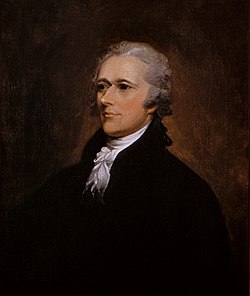
The faithless electors who opposed Donald Trump were part of a movement dubbed the "Hamilton Electors" co-founded by Micheal Baca of Colorado and Bret Chiafalo of Washington. The movement attempted to find 37 Republican electors willing to vote for a different Republican in an effort to deny Donald Trump a majority in the Electoral College and force a contingent election in the House of Representatives. The electors advocated for voting their conscience to prevent the election of someone they viewed as unfit for the presidency as prescribed by Alexander Hamilton in No. 68 of The Federalist Papers.[6][7] Despite their stated intentions to defeat Donald Trump, these electors cast their votes for persons other than the candidate to whom they were pledged, Trump's opponent Hillary Clinton.[8] By the time they switched their votes away from Trump's opponent, it was numerically impossible to achieve their stated goal as all but 30 of the Trump-pledged electoral votes had already been cast (in different states in the same or later time zones), with 37 votes needed to switch to deny Trump an outright victory in the Electoral College. Electors were subjected to public pressure, including threats of death if they remained faithful to voting for Trump.[9] The Washington elector who voted for Spotted Eagle did so in protest of Clinton's support for the Dakota Access Pipeline; the vote made Spotted Eagle the first Native American to ever receive an Electoral College vote for president, as well as one of the first of three women, along with Clinton and Tonie Nathan in 1972, to receive one.[10]
The seven validated faithless votes for president were the most to defect from presidential candidates who were still alive in electoral college history, surpassing the six electors who defected from James Madison in the 1808 election.[11] This number of defections has been exceeded only once: in 1872, a record 63 of 66 electors who were originally pledged to losing candidate Horace Greeley cast their votes for someone else (Greeley had died between election day and the meeting of the Electoral College). The six faithless vice-presidential votes in 2016 are short of the record for that office, without considering whether the vice-presidential candidates were still living, as multiple previous elections have had more than six faithless vice-presidential votes; in 1836, faithless electors moved the vice-presidential decision to the US Senate, though this did not affect the outcome.[12]
Background
[edit]

In the unique system of presidential elections of the United States, the president is not determined directly by the popular vote of the national electorate, but indirectly through the mechanism of the Electoral College determined by cumulative wins of the popular votes of state electorates. In this system of representative democracy, a presidential candidate is deemed to have won a presidential race if that candidate wins a simple majority of the electoral college vote.
Electors are selected on a state-by-state basis: in 48 states all electors are pledged to the winner of the statewide popular vote; in Maine and Nebraska the winner of each congressional district receives one elector and the statewide winner receives two. The electors, once selected, are free under federal law to vote for a candidate other than the one for whom they were pledged. However, at the time of the election, thirty-one states and the District of Columbia had laws requiring their electors to vote for their pledged candidate,[15] and courts had issued conflicting opinions regarding the constitutionality of those laws. The supremacy clause established by the Constitution of the United States provides that state courts are bound by federal law and the Constitution in the event that state law were to contradict them.
Only four times in American history (1876, 1888, 2000, and 2016) has a presidential candidate lost the popular vote but achieved the Electoral College majority, thereby assuming the presidency; in the last three such cases, no candidate polled an absolute majority of the popular vote.
In the event that no one receives a majority of the Electoral College vote, the selection of the president is made by the House of Representatives under certain constitutional guidelines. In 1824 the candidate with the highest popular vote (Andrew Jackson) also had the most electoral votes but, crucially, did not have a majority in the Electoral College. Despite John Quincy Adams having lost the popular vote and having received fewer electoral votes than Andrew Jackson, the House of Representatives chose Adams to become President.
Number of intended faithless electors
[edit]In the 2016 election cycle, the threshold of 270 electoral votes to win the presidency and vice presidency outright could have been thwarted by garnering a minimum of at least 12 percent of all Republican electors to become faithless, that is, 37 of 306 Republican electors. However, garnering the requisite number of faithless electors was thought to be extremely unlikely,[16][17] as electors tend to be dignitaries with long histories in their respective party, and have historically voted for their pledged candidate over 99% of the time.[18]
On November 16, 2016, journalist Bill Lichtenstein published an article in the Huffington Post, detailing the plans by presidential elector Micheal Baca to seek to derail Trump's ascent to the presidency by convincing Democratic and Republican presidential electors to vote for a more moderate candidate on December 19, 2016, when the Electoral College voted.[19] Lichtenstein's article soon went viral, and on December 5, 2016, several members of the electoral college, seven from the Democratic Party[20] and one from the Republican Party,[21] publicly stated their intention to vote for a candidate other than the pledged nominees at the Electoral College vote on December 19, 2016.
Texas Republican elector Christopher Suprun publicly pledged to not cast his vote for Donald Trump as allowed by Texas state law.[22] Suprun indicated that he had also been in confidential contact with several Republican electors who planned to vote faithlessly, stating that they would be "discussing names specifically and see who meets the [fitness for president] test that we could all get behind."[23] By December 5, 2016, two Republican electoral college members who publicly stated their intention to not vote for Trump had resigned. Texas Republican elector Art Sisneros willingly resigned in November rather than vote for Trump.[24][25] Georgia Republican elector Baoky Vu resigned in August in the face of reaction to his public statement that he would not vote for Trump.[26] Both Sisneros and Vu served in states that lacked any laws preventing electors from faithlessness.[27]
Although it is difficult to ascertain how many more electors, especially Republican electors, considered becoming faithless and voting for a Republican other than Trump, it was reported that at least an additional 20 Republican electors had already accepted free-of-charge anonymous legal counsel and support provided for Republican faithless electors to assist them in voting against Trump.[28][29][30][31][32][33]
The Republican National Committee mounted an expansive whip operation to ensure that all those electors selected to vote for the Republican nominee indeed did so.[34] On December 14, multiple Republican members of the electoral college stated under condition of anonymity that they were being coerced with "threats of political reprisal," adding "that the Donald Trump campaign is putting pressure on Republican electors to vote for him based on ... future political outcomes based on whether they vote for Donald Trump or not."[35][36]
Public outreach to electors
[edit]On December 14, the Unite For America campaign released a video[37] published on YouTube and other media addressed directly to Republican electors urging that each of them individually, plus 36 of their colleagues (at least 37 Republican electors in total), vote for a Republican other than Donald Trump for president. The video featured numerous public figures,[38] including Debra Messing, Martin Sheen, and Bob Odenkirk, urging Republican electors to prevent a Trump presidency, expressing several times the message: "I'm not asking you to vote for Hillary Clinton". In electing an alternative Republican, the featured speakers ask the elector to become an "American hero" by using the elector's constitutional "authority" to give "service and patriotism to the American people" through a vote of "conscience."[37]
Daniel Brezenoff's anti-Trump Change.org petition became the largest in that organization's history with nearly five million signatures, and on December 14, full-page ads funded by Brezenoff's related GoFundMe campaign ran in The Washington Post, The Philadelphia Inquirer, the Austin American-Statesman, The Salt Lake Tribune, and the Tampa Bay Times. Full-page ads ran the next day, December 15, in The Atlanta Journal-Constitution and the Wisconsin State Journal.[39]
On December 11, Democratic US Representative Jim Himes of Connecticut wrote on Twitter that Trump is "completely unhinged" and "the Electoral College must do what it was designed for."[40] Himes said he made the plea to the Electoral College because Trump refused to say that the Russians hacked Democrats during the election.[41]
Legal counsel and advocacy
[edit].png)
On December 6, 2016, the Hamilton Electors' website was established to advocate the election of an alternative Republican as the next president of the United States. Lawrence Lessig, a prominent Harvard University law professor (and former candidate for the Democratic presidential nomination himself), announced that he was "teaming with a California-based law firm to offer legal support for any members of the Electoral College seeking to oppose President-elect Donald Trump." Lessig said the counsel and support (namely Laurence Tribe, who has argued before the Supreme Court 36 times)[42] would be provided anonymously.[43] Litigation is a component of Lessig's Equal Citizens movement.
Lessig and Boston attorney R. J. Lyman created a nonprofit organization called Electors Trust to provide potential faithless electors with pro bono legal assistance.[44][29][45]
Litigation prior to the vote
[edit]In states with laws against faithlessness, depending on the particular state voting faithlessly despite the laws may incur anything from no prescribed punishment, to simple removal and replacement of the intended faithless elector, to fines and the potential imprisonment of the elector. Democratic electors filed lawsuits in Colorado, Washington, and California, but federal judges declined to issue injunctions blocking these laws, and there was insufficient time to appeal to the Supreme Court before the electoral college vote.[46] However, in Baca v. Hickenlooper a three-judge panel of the United States Court of Appeals for the Tenth Circuit declared in a footnote that any attempt to remove electors "after voting has begun" would be "unlikely in light of the text of the Twelfth Amendment."[47]
While at the time of the election the constitutionality of faithless electors had not yet been addressed by the Supreme Court, in Ray v. Blair, 343 U.S. 214 (1952) the court had ruled in favor of state laws requiring electors to pledge to vote for the winning candidate in order to be certified as electors, as well as removing electors who refuse to pledge. Nevertheless, the court had also written:[48]
However, even if such promises of candidates for the electoral college are legally unenforceable because violative of an assumed constitutional freedom of the elector under the Constitution, Art. II, § 1, to vote as he may choose [emphasis added] in the electoral college, it would not follow that the requirement of a pledge in the primary is unconstitutional.
In his dissent, Justice Robert H. Jackson, joined by Justice William O. Douglas, wrote:
No one faithful to our history can deny that the plan originally contemplated what is implicit in its text – that electors would be free agents, to exercise an independent and nonpartisan judgment as to the men best qualified for the Nation's highest offices.
Recorded faithless electors
[edit]Validated
[edit]| State | Party | Pledged to | Presidential vote | Vice presidential vote | Name of Elector | References |
|---|---|---|---|---|---|---|
| Hawaii | Clinton/Kaine | Bernie Sanders (I-VT) | Elizabeth Warren (D-MA) | David Mulinix | [49] | |
| Texas | Trump/Pence | John Kasich (R-OH) | Carly Fiorina (R-VA) | Christopher Suprun | [50][51][52] | |
| Trump/Pence | Ron Paul (L-TX)[53] | Mike Pence (R-IN) | Bill Greene | |||
| Washington | Clinton/Kaine | Colin Powell (R-VA)[a] | Maria Cantwell (D-WA) | Levi Guerra | [57][48][58][59] | |
| Clinton/Kaine | Colin Powell (R-VA) | Susan Collins (R-ME) | Esther John | |||
| Clinton/Kaine | Colin Powell (R-VA) | Elizabeth Warren (D-MA) | Peter Bret Chiafalo | |||
| Clinton/Kaine | Faith Spotted Eagle (D-SD) | Winona LaDuke (G-MN) | Robert Satiacum Jr. |
Invalidated
[edit]| State | Party | Pledged to | Presidential vote | Vice presidential vote | Name of Elector | Outcome | References |
|---|---|---|---|---|---|---|---|
| Maine | Clinton/Kaine | Bernie Sanders (I-VT) | Tim Kaine (D-VA) | David Bright | Changed vote to Clinton | [60] | |
| Minnesota | Clinton/Kaine | Bernie Sanders (I-VT) | Tulsi Gabbard (D-HI) | Muhammad Abdurrahman | Replaced by alternate elector | [60][61] | |
| Colorado | Clinton/Kaine | John Kasich (R-OH) | barred from voting | Micheal Baca | Replaced by alternate elector | [62][63] |
Recipients of votes
[edit]- President
-
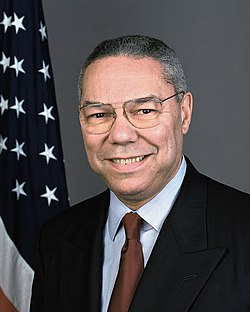 Former Secretary of State Colin Powell, 3 votes
 -
 Senator Bernie Sanders, 1 vote (plus 2 invalidated)
 -
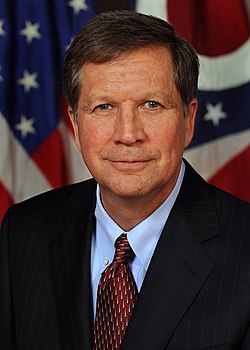 Governor John Kasich, 1 vote (plus 1 invalidated)
 -
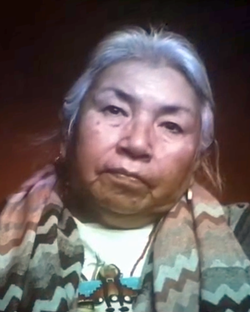 Activist Faith Spotted Eagle, 1 vote
 -
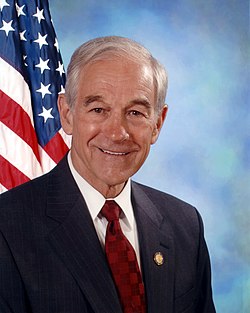 Former representative Ron Paul, 1 vote


.png)

- Vice President
-
 Senator Elizabeth Warren, 2 votes
 -
 Senator Maria Cantwell, 1 vote
 -
 Senator Susan Collins, 1 vote
 -
 Business executive Carly Fiorina, 1 vote
 -
 Economist Winona LaDuke, 1 vote
 -
 Representative Tulsi Gabbard (1 invalidated vote)


.jpg)
Legal challenges
[edit]The four faithless electors from Washington were each fined $1,000 for breaking their pledge.[64] Three of the electors appealed the fines, which were upheld by the Washington Supreme Court in May 2019 by an 8–1 vote.[65][66] On October 7, 2019, the electors unsuccessfully appealed their case, Chiafalo v. Washington, to the U.S. Supreme Court.[67][68]
In Colorado, three of the electors filed suit in the United States District Court for the District of Colorado. The case, Baca v. Colorado Department of State, was dismissed by Judge Wiley Young Daniel on April 10, 2018. The electors filed an appeal with the 10th Circuit and oral arguments were held on January 24, 2019.[69] On August 20, 2019, a three-judge panel ruled 2–1 in favor of the electors.[63][69][70] On October 16, 2019, Colorado appealed the 10th Circuit's decision to the Supreme Court.[71][72]
The Supreme Court granted certiorari in both the Washington and Colorado cases in January 2020; while initially consolidated, Justice Sotomayor's recusal in the Colorado case due to a prior relationship with one of the respondents kept the cases separate.[73][74] Oral arguments in both cases had been scheduled for April, but were subsequently postponed due to the COVID-19 pandemic. It was then announced that oral arguments would be held via phone, which occurred on May 13, 2020. On July 6, 2020, the Supreme Court ruled unanimously that states may require an elector to vote for the candidate to whom they had pledged, and a fine imposed for an elector for breaching a pledge is not unlawful.[75]
See also
[edit]

- Election Assistance Commission
- List of 2016 United States presidential electors, the people chosen at state-by-state political party conventions during the Republican and Democratic primaries to be electors in this election cycle
- Unpledged elector
Notes
[edit]References
[edit]- ^ a b "Faithless Electors". FairVote. Archived from the original on February 9, 2021. Retrieved March 19, 2020.
- ^ "Electoral College Faithless Elector Foiled Trying To Vote For Bernie Sanders". The Huffington Post. December 19, 2016. Retrieved September 26, 2018.
- ^ "'Faithless elector' dismissed, Minnesota's 10 votes go to Clinton". MPR News. February 15, 2016. Retrieved September 26, 2018.
- ^ Eason, Brian. "Colorado's electoral votes go to Hillary Clinton after one is replaced". The Denver Post. Retrieved September 26, 2018.
- ^ Julia Boccagno (December 21, 2016). "Which candidates did the seven "faithless" electors support?". CBS News.
- ^ O'Donnell, Lilly (November 21, 2016). "Meet the 'Hamilton Electors' Campaigning for an Electoral College Revolt". The Atlantic.
- ^ "Hamilton Electors". Hamilton Electors. Archived from the original on November 22, 2016. Retrieved November 23, 2016.
- ^ Supreme Court unanimously sides with Colorado-Washington in faithless electors case, Colorado Public Radio, July 6, 2020. Retrieved November 22, 2020
- ^ Sherlock, Ruth (December 18, 2016). "Thousands Send Letters, Death Threats, to Pressure Electoral College to Avert Outcome of Presidential Election". The Daily Telegraph.
- ^ Pearce, Matt (December 20, 2016). "How Faith Spotted Eagle became the first Native American to win an electoral vote for president". Los Angeles Times. Retrieved September 30, 2024.
- ^ "Electoral College sees record-breaking defections". POLITICO. Retrieved December 20, 2016.
- ^
Sabato, Larry J.; Ernst, Howard R. (May 14, 2014). Encyclopedia of American Political Parties and Elections. Infobase Publishing. p. 133. ISBN 978-1-4381-0994-7. Retrieved November 15, 2016.
in 1836...the Virginia electors abstained rather than vote for Democratic vice presidential nominee Richard Johnson
- ^ "2004 Electors for President and Vice President of the United States". TheGreenPapers.com. 2004.
- ^ "THE ELECTORAL COLLEGE". National Conference of State Legislatures.
- ^ "Laws Binding Electors". Retrieved March 4, 2020.
- ^ "No, the Electoral College won't make Clinton president instead of Trump". Vox.
- ^ "Will There Be Faithless Electors in 2016? It's Unlikely They'll Change the Election's Outcome". Bustle.
- ^ Bromwich, Jonah Engel (November 8, 2016). "How Does the Electoral College Work?". The New York Times.
- ^ "The Way Out of Trumpland: Hail Mary Pass to Save the Nation". Huffington Post.
- ^ Pilkington, Ed (November 30, 2016). "Teen becomes seventh 'faithless elector' to protest Trump as president-elect". The Guardian.
- ^ Pilkington, Ed (December 5, 2016). "First Republican 'faithless elector' announces intent to vote against Trump". The Guardian.
- ^ Suprun, Christopher (December 5, 2016). "Why I Will Not Cast My Electoral Vote for Donald Trump". The New York Times.
- ^ Gradison, Robin (December 9, 2016). "'Rogue' GOP Elector Says Others Will Join in Opposing Trump". ABC News.
- ^ Zimmerman, Neetzan (November 28, 2016). "Republican elector chooses to resign rather than vote for Trump". The Hill.
- ^ Steve Inskeep, host (December 7, 2016). "Texas Elector Resigns, Saying He Can't Vote For Trump In Electoral College". NPR. Retrieved December 29, 2016.
- ^ Galloway, Jim (August 3, 2016). "An Electoral College revolt against Donald Trump is quickly quashed in Georgia". Atlanta Journal-Constitution. Archived from the original on February 28, 2017. Retrieved December 13, 2016.
- ^ "How 'faithless electors' are messing with our electoral maps, explained". The Washington Post.
- ^ Cheney, Kyle (December 5, 2016). "Lessig, lawyers to offer support to anti-Trump electors". Politico.
- ^ a b "Lessig: 20 Trump electors could flip". POLITICO. Retrieved December 18, 2016.
- ^ Rozsa, Matthew (December 16, 2016). "The Hamilton Electors don't have enough Republicans to stop Trump — but they're getting there". Salon. Retrieved December 18, 2016.
- ^ Richardson, Valerie (December 14, 2016). "Harvard prof advising electors says 20+ Republicans may vote against Trump". The Washington Times.
- ^ "Harvard law professor says Republican electors close to blocking Trump win". The Independent. December 14, 2016. Retrieved December 18, 2016.
- ^ "Why an electoral college coup to stop Donald Trump isn't at all likely, Part 59". The Washington Post. Retrieved December 18, 2016.
- ^ Cheney, Kyle (December 13, 2016). "RNC keeps close tabs on Electoral College vote: GOP effort makes sure Republican electors don't go wobbly on Trump". Politico.
- ^ Rozsa, Matthew (December 14, 2016). "Source: Donald Trump's campaign is threatening "political reprisal" for defecting Republican electors". Salon.
- ^ Broomfield, Matt (December 14, 2016). "Donald Trump is "threatening" rebel Republican politicians". The Independent.
- ^ a b Unite For America (December 14, 2016). A Message for Electors to Unite For America. YouTube.
- ^ "Watch Debra Messing, Martin Sheen and Other Stars Urge Electors to Prevent a Trump Presidency". December 15, 2016.
- ^ Cheney, Kyle (December 14, 2016). "Full-page ads turn up the heat on Trump electors A pro-Clinton activist is running newspaper ads in Philadelphia, Austin, Salt Lake City and Tampa Bay". Politico.
- ^ Himes, James (December 11, 2016). "Jim Himes Status/808116879558660098". Twitter.
We're 5 wks from Inauguration & the President Elect is completely unhinged. The electoral college must do what it was designed for.
- ^ Halper, Daniel (December 12, 2016). "Congressman begs Electoral College voters to block Trump". New York Post.
- ^ Cheney, Kyle (December 5, 2016). "Lessig, lawyers to offer support to anti-Trump electors". Politico.
- ^ Cheney, Kyle (December 13, 2016). "Lessig: 20 Trump electors could flip". Politico.
- ^ "Inside the Psychology of the Rebel Electors Who Seek to Overturn Trump's Election". Fast Company. December 15, 2016. Retrieved December 18, 2016.
- ^ "Lawrence Lessig Offers Free Legal Aid To Anti-Trump Electors". NPR.org. Retrieved December 18, 2016.
- ^ Cheney, Kyle (December 16, 2016). "Judge deals critical blow to anti-Trump Electoral College fight". Politico.
- ^ Cheney, Kyle (December 17, 2016). "Court: Removing 'faithless' electors may be unconstitutional". Politico.
- ^ a b Brunner, Jim (December 19, 2016). "Four Washington state electors break ranks and don't vote for Clinton". The Seattle Times. Retrieved December 20, 2016.
- ^ Hellmann, Jessie (December 19, 2016). "Democratic elector in Hawaii votes for Sanders". Retrieved December 20, 2016.
- ^ Walsh, Sean Collins (December 19, 2016). "All but 2 Texas members of the Electoral College choose Donald Trump". Statesman. Archived from the original on September 27, 2018. Retrieved December 24, 2016.
- ^ Texas electors cast 36 votes for Trump, 1 for Kasich, 1 for Ron Paul. Texas Tribune (December 19, 2016). Retrieved December 19, 2016.
- ^ Which candidates did the seven "faithless" electors support? CBS News (December 21, 2016). Retrieved December 21, 2016.
- ^ Lau, Ryan (February 3, 2018). "Ron Paul Attacks Libertarian Leadership in Response to Controversy". 71Republic. Archived from the original on February 4, 2018. Retrieved February 3, 2018.
I paid my lifetime membership, in 1987, with a gold coin, to make a point.
- ^ "Gen. Colin Powell Sells His $2.8M Upper West Side Condo". May 24, 2016.
- ^ "Emails detail Colin Powell's substantial role at City College". Politico. Archived from the original on February 26, 2021. Retrieved March 8, 2021.
- ^ "General Colin L. Powell - Informatio". Facebook. December 20, 2016. Archived from the original on December 20, 2016.
{{cite web}}: CS1 maint: bot: original URL status unknown (link) - ^ (King5), Liza Javier. "VicePresidentBallots". www.documentcloud.org.
{{cite web}}: CS1 maint: numeric names: authors list (link) - ^ La Corte, Rachel (December 19, 2016). "4 Washington State electors pick candidates other than Clinton". Associated Press. Archived from the original on December 21, 2016. Retrieved December 20, 2016 – via The Olympian.
- ^ "Meet Faith Spotted Eagle, who received one Washington state elector's presidential vote". December 19, 2016.
- ^ a b Electoral College Faithless Elector Foiled Trying To Vote For Bernie Sanders. The Huffington Post (December 19, 2016). Retrieved December 19, 2016.
- ^ Bakst, Brian (December 19, 2016). 'Faithless elector' dismissed, Minnesota's 10 votes go to Clinton. Minnesota Public Radio. Retrieved December 19, 2016.
- ^ "Colorado's electoral votes go to Hillary Clinton after one is replaced". The Denver Post. Retrieved December 20, 2016.
- ^ a b Flynn, Meagan (August 22, 2019). "He tried to stop Trump in the electoral college. A court says his 'faithless' ballot was legal". The Washington Post. Retrieved October 29, 2019.
- ^ La Corte, Rachel (December 23, 2016). "Four state electors to be fined $1,000 for vote". Kitsap Sun. Retrieved December 25, 2016.
- ^ Lane, Charles (October 28, 2019). "A nightmare scenario for 2020: A tie that can't be broken. It's conceivable". The Washington Post. Retrieved October 29, 2019.
- ^ Cornfield, Jerry (May 24, 2019). "State high court upholds $1,000 fines on 'faithless electors'". Seattle Weekly. Retrieved October 29, 2019.
- ^ "Supreme Court asked to decide whether electors must vote for state popular vote winner". Jurist. October 8, 2019. Retrieved October 18, 2019.
- ^ "Petition for writ of certiorari" (PDF). Equal Citizens. Retrieved October 18, 2019.
- ^ a b Paul, Jesse (August 21, 2019). "Colorado's presidential electors don't have to vote for candidate who wins the state, federal appeals court rules". The Colorado Sun. Archived from the original on August 22, 2019. Retrieved August 28, 2019.
The decision in the "faithless electors" case could have major ramifications for future presidential elections in the U.S. and could ultimately go to the U.S. Supreme Court for review
- ^ Gabriel, Trip (August 22, 2019). "Electoral College Members Can Defy Voters' Wishes, Court Rules". The New York Times. ISSN 0362-4331. Retrieved October 29, 2019.
- ^ "Colorado asks U.S. Supreme Court to overturn decision allowing presidential electors to vote for whomever they want". The Colorado Sun.
On October 16, 2019, the Colorado appealed
- ^ "Petition for writ of certiorari" (PDF). Colorado Attorney General. Retrieved October 18, 2019.
- ^ Williams, Pete (January 17, 2020). "'Faithless elector': Supreme Court will hear case that could change how presidents are chosen". NBC News. Retrieved January 17, 2020.
- ^ Miller, Blair (March 10, 2020). "Justice Sotomayor recuses from Colorado 'faithless electors' Supreme Court case". KMGH-TV. Retrieved March 10, 2020.
- ^ Chiafalo et al. v. Washington, Text.
External links
[edit]Faithless electors in the 2016 United States presidential election
View on GrokipediaConstitutional and Historical Foundations
Electoral College Framework and Elector Obligations
Article II, Section 1, Clause 2 of the U.S. Constitution establishes the Electoral College by directing that "ach State shall appoint, in such Manner as the Legislature thereof may direct, a Number of Electors, equal to the whole Number of Senators and Representatives to which the State may be entitled in the Congress."[5] This provision vests state legislatures with plenary authority over the appointment of electors, without specifying qualifications or voting instructions, thereby embedding federalist principles that prioritize state sovereignty in mediating national elections.[6] The Twelfth Amendment, ratified in 1804, refines the process by requiring electors to cast separate ballots for president and vice president while meeting in their respective states, but imposes no federal obligation on how electors must align their votes with state outcomes.[7] Consequently, the Constitution leaves elector fidelity to state determination, absent any national mandate for strict adherence to party pledges or popular vote results. The framers intended electors to serve as a deliberative buffer against direct popular pressures or external influences, as articulated by Alexander Hamilton in Federalist No. 68, which portrays the Electoral College as an "intermediate body of electors" selected for their discernment to prevent "tumult and disorder" from cabals, foreign powers, or momentary passions.[8] This design aimed to balance republican representation with safeguards against unqualified candidates, allowing electors temporary authority to exercise independent judgment within their state's allocation. Over subsequent centuries, however, political norms evolved to emphasize alignment with state popular mandates, with state legislatures in a majority of jurisdictions—33 by 2016—enacting statutes or requiring pledges that obligate electors to vote for the candidate prevailing in the state's popular vote, often backed by fines or replacement provisions.[9] These state-level mechanisms reflect a practical deference to voter intent at the state level, though they remain unenforceable under federal constitutional constraints until affirmed by later judicial rulings. Empirical evidence highlights the rarity of deviations from these expectations: prior to 2016, fewer than 100 electors out of more than 23,000 total votes cast since 1789 had acted faithlessly—voting contrary to their pledge or abstaining—and none such instance has ever altered a presidential election's outcome.[10][11] This track record underscores the robustness of normative and statutory pressures enforcing elector adherence, with faithless actions typically marginal and inconsequential to the federalist structure's operation.[12]Historical Precedents of Faithless Electors
Faithless electors have appeared infrequently in U.S. presidential elections since 1789, with records documenting 167 such instances out of more than 20,000 total electoral votes cast, a rate below 1 percent. These defections have never changed the presidential winner, though one case affected the vice presidential outcome. Empirical data from official election records show that faithless votes typically stem from intra-party disputes or protests within slates aligned with losing candidates, rather than coordinated efforts by winning-side electors to subvert certified results.[11][13] In the early republic, examples included the 1808 election, where six of New York's 19 electors, pledged to James Madison, voted instead for George Clinton amid Democratic-Republican factionalism favoring Clinton's gubernatorial influence. The 1836 election saw 23 Virginia electors back Martin Van Buren for president but withhold votes from vice presidential nominee Richard Mentor Johnson due to objections over Johnson's personal conduct, such as his involvement in a duel; this denied Johnson an Electoral College majority, forcing a contingent Senate election where he prevailed. These cases arose from minority dissent within prevailing party coalitions, not challenges to the popular mandate.[14][15] Twentieth-century faithless electors remained rare and inconsequential, with single instances in elections like 1948, when a Tennessee elector pledged to Thomas E. Dewey voted for Strom Thurmond of the Dixiecrat ticket, and 1960, when an Oklahoma elector for Richard Nixon abstained entirely. In both, the states' electoral votes aligned with losing presidential candidates, reflecting post-election dissatisfaction rather than defection from a victor. Verifiable patterns across elections confirm that over 90 percent of faithless votes originate from defeated slates, as corroborated by archival tallies, underscoring the system's resilience to isolated deviations without systemic incentives for winner-side betrayal.[15][11]2016 Election Context
Popular Vote and Electoral College Results
In the 2016 United States presidential election held on November 8, Donald Trump and his running mate Mike Pence received 304 electoral votes, securing victory over Hillary Clinton and Tim Kaine, who received 227 electoral votes, out of a total of 538 electors required to reach a majority of 270.[2] This outcome followed Trump's wins in 30 states, including narrow margins in the Rust Belt swing states of Michigan (by 10,704 votes), Pennsylvania (by 44,292 votes), and Wisconsin (by 22,748 votes), which had supported Democratic candidates in the prior six presidential elections.[16] These victories provided the electoral margin, as Trump prevailed in states totaling 306 pledged electors before adjustments for faithless voting.[2] Clinton, however, won the national popular vote with 65,853,514 votes (48.2 percent) compared to Trump's 62,984,828 votes (46.1 percent), a margin of approximately 2.87 million votes, while other candidates garnered the remaining 7.0 percent.[16] The certified popular vote totals, finalized by the Federal Election Commission, underscored the divergence between the popular and electoral outcomes inherent to the constitutional framework.[16] State officials certified their election results and slates of electors by the federal safe harbor deadline of December 13, 2016, ensuring conclusive determination of pledged electors six days prior to the Electoral College meetings on December 19.[17] This certification process established the official baseline for elector obligations, against which subsequent deviations by faithless electors were measured.[2]State Laws on Elector Pledges and Penalties
As of the 2016 presidential election, 33 states and the District of Columbia had enacted statutes requiring presidential electors to vote consistent with their state's popular vote outcome, with enforcement mechanisms including civil fines, criminal penalties such as misdemeanors, or provisions for vote invalidation or elector replacement.[4] These laws typically mandated a pledge of fidelity from electors upon selection, rooted in state efforts to align Electoral College votes with voter intent and deter deviations that could undermine election stability.[18] The remaining 17 states lacked such binding requirements, relying instead on party pledges or informal norms, though historical data showed near-universal compliance even there due to partisan loyalty and the low incidence of faithless voting overall.[12] Empirical evidence prior to 2016 indicated high effectiveness of these mechanisms in maintaining elector fidelity: across more than 20,000 electors appointed since the Electoral College's inception, only about 157 had voted faithlessly, with none altering a presidential election outcome, suggesting that legal deterrents—combined with political pressures—successfully minimized disruptions despite the Constitution's silence on binding electors.[19] Many such laws emerged or were strengthened in the mid- to late 20th century, often following closely contested elections like those in 1960 and 1968, as states sought to codify practices ensuring electors functioned as delegates rather than independent actors.[20] Enforcement varied by state. Washington's statute imposed a $1,000 fine and classified faithless voting as a misdemeanor, directly penalizing deviations from the pledged candidate.[4] Colorado's law authorized the replacement of any elector who refused to affirm their pledge or attempted a faithless vote, allowing swift substitution to preserve the intended ballot.[21] In contrast, states like Minnesota had no statutory penalties, depending on non-binding pledges and party discipline, which historically yielded compliance but permitted rare exceptions without legal recourse.[22] Other jurisdictions employed hybrid approaches, such as North Carolina's provision for vote nullification alongside fines up to $500 and felony charges, reflecting a spectrum of deterrence strategies calibrated to state priorities for electoral predictability.[18]Recruitment and Advocacy Efforts
Public Campaigns Against Trump
The Hamilton Electors, a group of Electoral College members and advocates, launched an initiative in mid-November 2016 to persuade at least 37 Republican electors to defect from Donald Trump, aiming to deny him the 270 electoral votes needed for victory and trigger a contingent election in the House of Representatives.[23][24] The effort invoked Alexander Hamilton's Federalist No. 68, arguing that electors should act as a check against an unqualified candidate, citing concerns over Trump's temperament and unverified claims of Russian election interference as reported by U.S. intelligence agencies, though the direct causal impact on the vote outcome remained contested and unproven at the time.[25][24] Public advocacy intensified in December 2016 through celebrity-led appeals, including a widely circulated video released on December 14 featuring actors Martin Sheen, Debra Messing, and musician Moby, among others, directly imploring Republican electors to "vote your conscience" and reject Trump in favor of alternatives like Ohio Governor John Kasich.[26][27] The video, produced by anti-Trump activists, garnered millions of views and was part of broader media pressure framing Trump's election as illegitimate due to popular vote disparities and foreign meddling allegations.[26] Organizers ran targeted advertising campaigns, including a $500,000 ad buy announced on December 17 by a coalition of outside groups, focusing on Republican electors in key states to amplify calls for defection.[28] Full-page newspaper ads appeared in cities such as Philadelphia, Austin, Salt Lake City, and Tampa Bay starting December 14, urging electors to prioritize national interest over party loyalty.[29] Online petitions circulated widely, with one launched in late November amassing signatures imploring electors to withhold votes from Trump, contributing to an estimated flood of over 10,000 direct contacts to electors via calls, emails, and letters, as reported by campaign participants amid the heightened scrutiny.[30][31] These campaigns primarily targeted Republican electors in states Trump narrowly carried, emphasizing constitutional duty over pledged votes, though they elicited counter-pressure including pro-Trump inundations and threats against potential defectors, underscoring the polarized response without altering the Electoral College outcome.[31]Targeting of Democratic Electors
The Hamilton Electors, a group formed by Democratic electors pledged to Hillary Clinton, coordinated efforts to recruit faithless votes primarily from fellow Clinton-pledged electors in states such as Colorado and Washington, with the explicit goal of denying Donald Trump an Electoral College majority by promoting alternative Republican candidates like Ohio Governor John Kasich or independent Evan McMullin.[32] Organizers, including Colorado elector Micheal Baca and Washington elector P. Bret Chiafalo—both Democrats—claimed a "moral duty" to reject the certified results of their states' popular votes for Clinton, arguing that electors should exercise independent judgment to avert perceived threats from Trump's candidacy, despite empirical evidence of his victories in key battleground states under established electoral rules.[33] This approach reflected partisan motivations rooted in opposition to Trump, as the group's core members—many former supporters of Bernie Sanders—sought to undermine the Electoral College system that had delivered Trump 306 votes to Clinton's 232, even as Clinton held a national popular vote margin of approximately 2.87 million.[32][2] At least nine Democratic electors participated in the Hamilton Electors initiative, with recruitment focusing on Clinton slates where state laws permitted or lacked penalties for defections, leading to planned faithless actions comprising over 80% of documented intended deviations—such as four Washington electors initially set to vote for Colin Powell and three in Colorado for Kasich—compared to minimal organized outreach to Trump-pledged electors.[33][34] In contrast, efforts to sway Republican electors yielded only one public commitment to defect (from Texas elector Chris Suprun), with two others opting for resignation rather than faithless voting, underscoring the asymmetrical targeting driven by Democratic-led advocacy rather than balanced bipartisan recruitment.[33] Organizers acknowledged approaching a small cadre of Democratic peers, including five in Colorado per one participant's account, but public records indicate no comparable scale of contacts to the 306 Trump electors, highlighting a strategic emphasis on subverting loser slates to force a contingent election in the House of Representatives.[32] This focus on Democratic electors, despite the constitutional expectation of fidelity to state outcomes, was justified by proponents as fulfilling Alexander Hamilton's vision in Federalist No. 68 of electors as safeguards against unfit leaders, though critics noted the selective application ignored Trump's certified state wins and risked eroding electoral legitimacy without altering the popular mandate in affected blue states.[33] The partisan tilt was evident in the absence of reciprocal Republican-led campaigns against Clinton, with Democratic organizers admitting long-term aims to discredit and reform the Electoral College, a system that had favored GOP outcomes in prior cycles.[33][24]Legal and Organizational Support
 |
|---|---|---|
| Washington | 3 | Colin Powell |
| Washington | 1 | Faith Spotted Eagle |
| Hawaii | 1 | Bernie Sanders |
| Texas | 1 | John Kasich |
| Texas | 1 | Ron Paul |
Immediate Processing and State Interventions
Vote Validation in Affected States
In Washington, electors convened in Olympia on December 19, 2016, as required by state law, casting ballots amid protests outside the capitol. The Secretary of State tallied the votes as submitted: eight for Hillary Clinton, three for Colin Powell, and one for Faith Spotted Eagle, certifying this result for transmission to Congress despite deviations from the popular vote winner.[38][39] In Hawaii, the four Democratic electors met at the state capitol in Honolulu on the same date, with one, David Mulinix, submitting a ballot for Bernie Sanders for president instead of Clinton. State officials initially recorded and certified the tally—three votes for Clinton and one for Sanders—consistent with the ballots cast, forwarding the certificate to federal authorities.[40][41] In Minnesota, electors gathered in St. Paul, where one initially cast a vote for Sanders, but the canvassing board, citing violation of the elector's pledge, promptly dismissed the elector and seated an alternate, who voted for Clinton, resulting in all ten votes certified for her without the deviant ballot included.[42][43]Invalidation and Replacements
In Colorado, three Democratic electors cast ballots on December 19, 2016, for Colin Powell (two votes) and John Kasich (one vote) instead of the pledged candidates Hillary Clinton and Tim Kaine. Colorado Secretary of State Wayne Williams immediately rejected these faithless ballots under state law requiring electors to vote consistent with the popular vote winner, appointing three alternate electors who then cast votes for Clinton and Kaine. The Colorado Supreme Court upheld this invalidation and replacement on December 21, 2016, in a 5-2 decision, ruling that the state could disregard nonconforming votes and substitute the alternates' ballots to enforce the pledge. This action preserved Colorado's full nine electoral votes for the Clinton-Kaine slate, preventing any deviation in the state's certification sent to Congress. In Hawaii, three Democratic electors initially prepared to vote for Bernie Sanders on December 19, 2016, but state officials and party leaders intervened, leading two to recast their ballots for Clinton before finalization; only one Sanders vote was ultimately cast and counted.[41] Although Hawaii lacked a binding law at the time, this intervention effectively nullified two intended faithless votes, restoring the pledged slate for five of the state's six electors. In Washington, four Democratic electors cast faithless votes on December 19, 2016—three for Powell and one for Faith Spotted Eagle—which were initially accepted and certified, reducing Clinton's tally from that state. However, state law imposed $1,000 fines on each, which were upheld by Washington courts and later affirmed by the U.S. Supreme Court in 2020, demonstrating enforcement mechanisms to deter future deviations even when votes are not pre-emptively replaced.[4][44] These state interventions limited the impact of faithless actions, with Colorado's replacements and Washington's penalties exemplifying legal safeguards that enforced compliance. The net effect on the Electoral College tally left Donald Trump with 304 votes, as the five counted Democratic faithless votes nullified equivalent Clinton votes without shifting any to Trump, while the two Republican faithless votes similarly reduced Trump's total but did not alter the outcome.Recipients of Deviated Votes
The deviated presidential votes cast by faithless electors on December 19, 2016, went to five non-nominee individuals, each receiving at most three votes, with no impact on the final electoral tally of 304 for Donald Trump and 227 for Hillary Clinton.[2][3] Colin Powell, former U.S. Secretary of State, received the most deviated votes with three from Washington state electors originally pledged to Clinton.[2] Bernie Sanders, U.S. Senator from Vermont, received one vote from a Hawaii elector pledged to Clinton.[2][3] Faith Spotted Eagle, a Native American activist opposed to the Dakota Access Pipeline, received one vote from a Washington elector pledged to Clinton.[2][3] On the Republican side, former Ohio Governor John Kasich received one vote from a Texas elector pledged to Trump, as did former U.S. Representative Ron Paul from another Texas elector pledged to Trump.[2][3] These votes, documented in official state certificates transmitted to the National Archives, represented symbolic deviations without altering state outcomes or national certification, as verified by congressional counting on January 6, 2017.[2]| Recipient | Votes Received | State(s) | Pledged To |
|---|---|---|---|
| Colin Powell | 3 | Washington | Hillary Clinton |
| Bernie Sanders | 1 | Hawaii | Hillary Clinton |
| Faith Spotted Eagle | 1 | Washington | Hillary Clinton |
| John Kasich | 1 | Texas | Donald Trump |
| Ron Paul | 1 | Texas | Donald Trump |