Hubbry Logo
MikeQMikeQMain
Open search
MikeQ
Community hub
MikeQ
logo
8 pages, 0 posts
0 subscribers
Be the first to start a discussion here.
MikeQ
MikeQ
from Wikipedia
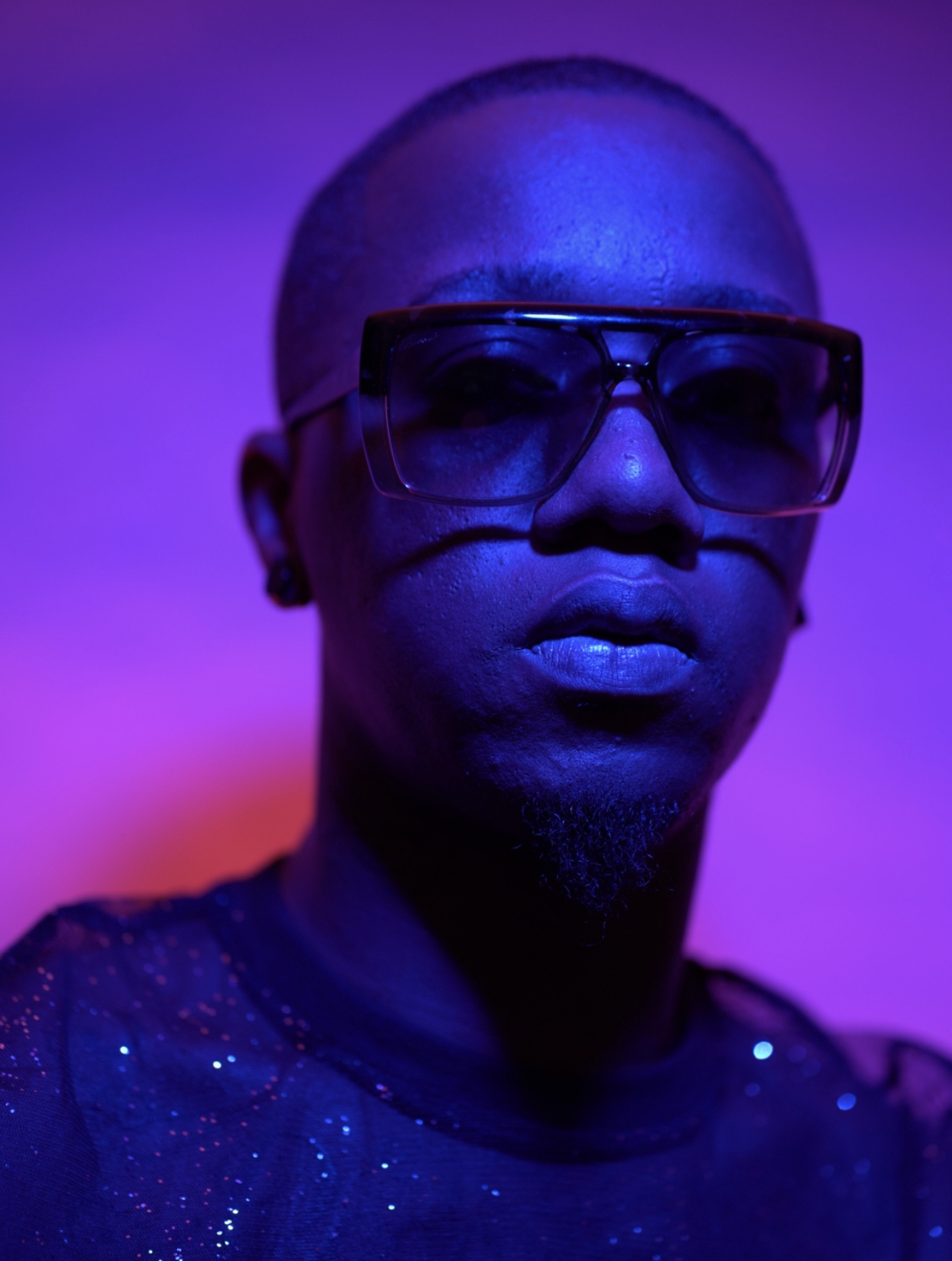
MikeQ Headshot, 2020

Michael Cox, known by the stage name MikeQ, is an American DJ, musician, music producer, and prominent figure in the ballroom community. He is the founder of the record label Qween Beat. In 2020 MikeQ was the DJ for HBO's Legendary.[1]

Early life

[edit]

Michael Cox was born in Hackensack, New Jersey and grew up in Newark.[2] He was first exposed to the ballroom scene in 2003, when the 17-year-old Cox attended an LGBT+ party at The Globe, a now defunct venue in Newark.[2] In 2004 he began to release music and joined the House of LaBeija. In September 2005, he DJ'ed his first gig at The Globe.

DJing and music production

[edit]

MikeQ's style has been described by The New York Times as "ecstatic ballroom house", and by Resident Advisor and Fact as "Spine Snapping".[3] [4] He has DJ'ed numerous parties, balls, and events primarily in New York City and New Jersey, but also London,[5][6] Los Angeles, Tokyo, Moscow, Paris, Mexico, Australia, and Seoul, including events with MoMa PS1, Unsound Festival, Opening Ceremony, Turrbotax, Icee Hot, Ghetto Gothic, Fade To Mind & Night Slugs party nights, and Boiler Room.[7][8] MikeQ released his debut EP in 2011, "Let At All Out", on Fade to Mind. The EP includes "The Ha Dub Rewerk'd", an interpretation of the ballroom staple by Vjuan Allure, "The Ha Allure" (1999).[9][10]

In 2017 he co-founded the "House of Vouge" party in New York City.[11] He is the resident DJ on the TV show Legendary.

He produced the music for the 2016 film Kiki, directed by Sara Jordenö, which documents ball culture.[12][13]

MikeQ has released music with Fade To Mind, Qween Beat, Mad Decent and Night Slugs. He has also done production for Kelela, Future Brown, and Brodinski, among others.[3]

MikeQ’s “Feel’s Like” Featuring ballroom commentator Kevin Jz Prodigy was sampled in 2022 on the Beyoncé “Renaissance” Album on the track “Pure/Honey”.[14]

Qween Beat

[edit]

Qween Beat is a record label founded by MikeQ in 2012. It focuses on vogue and ballroom tracks, re-edits, and remixes. Qween Beat has put out releases with numerous artists including Divoli S'vere, Zebra Katz, Ash B., Jay R Neutron, and Koppi Mizrahi.[15]

Ambassador for ballroom

[edit]

MikeQ has been an advocate for ballroom, often acting as an ambassador and steward for taking ballroom culture into the mainstream. He has also been a critic of its appropriation by corporations that do not understand or give proper credit to the ballroom community.[16][17][18][2][19]

References

[edit]
Revisions and contributorsEdit on WikipediaRead on Wikipedia
from Grokipedia
MikeQ, born Michael Cox, is an American and recognized as a leading figure in the and vogue-house music scenes. Based in , he has been active as a DJ since the early 2000s, specializing in music that supports voguing and competitions. In 2005, MikeQ founded Qween Beat, the first dedicated to music, which has released tracks blending , hip-hop, and electronic elements tailored for the genre's dance battles. MikeQ's contributions extend to producing remixes and original compositions that energize events, including high-profile appearances as the resident DJ for HBO's Legendary competition series in 2020, where he provided the theme music and live sets. His work has helped sustain and evolve the underground subculture, originating from New York City's house-based social structures in the late 20th century, by bridging it with broader electronic music audiences through affiliations with labels like Fade to Mind and . Through Qween Beat, he has championed artists and producers within the scene, fostering a dedicated output of vogue-house tracks that emphasize rhythmic precision for performative categories like vogue femme and dramatics.

Early Life

Childhood and Family Background

Michael Cox, professionally known as MikeQ, was born in , and relocated to East Orange at the age of four. His family maintained close proximity, with his father residing approximately fifteen minutes away in the region. Raised in New Jersey's urban environment, Cox's early years were shaped by the local cultural landscape, though specific details on his parents' occupations or extended family remain undocumented in public records. Limited biographical accounts emphasize his roots without elaborating on formative family dynamics or socioeconomic influences prior to his teenage immersion in music and scenes.

Introduction to Ballroom Culture

Michael Cox, professionally known as MikeQ, encountered ballroom culture for the first time in October 2003 at age 17 during his initial outing to a club in , where he observed voguing performances and the distinctive music that accompanies them. This exposure occurred at The Globe, a venue known for hosting LGBTQ+ parties and rental halls for balls, marking his entry into an underground subculture rooted in competitive events where participants, often from and Latino queer communities, perform dances like voguing, lip-sync, and runway walks in themed categories. Ballroom, which evolved from 19th-century drag spectacles into formalized "houses" and balls by the 1970s in , provided Cox with a space for self-expression amid marginalization, drawing him to attend his first official ball at The Globe later that year. He subsequently joined the , immersing himself in the scene's music—characterized by high-energy house tracks tailored for voguing—and social structures that emphasize chosen families over biological ones. This period laid the foundation for his transition from spectator to active participant, as the culture's emphasis on performance and rhythm directly influenced his budding interest in DJing and production. By September 2005, Cox had secured his debut DJ gig at The Globe, earning $70 for a six-hour set, where he cautiously selected tracks to align with ballroom's demands for precision in beat-matching to support dancers' routines. This early involvement highlighted ballroom's reliance on the interplay between DJs, MCs, and performers, a dynamic Cox would later champion as essential to preserving the subculture's authenticity against mainstream dilution.

Music Career

Entry into DJing and Production

Michael Cox, professionally known as MikeQ, entered music production after discovering New York City's ballroom scene in the early at age 17, while living in . An immediate affinity for voguing prompted him to study existing tracks at home before creating his own using digital audio workstations such as Fruity Loops and . This self-taught production work began approximately one year after his initial exposure to the culture, around 2004, focusing on beats tailored to 's high-energy, percussive demands. Transitioning to DJing followed soon after, with Cox securing his debut performance in 2005 at The Globe, a venue in New York where he had previously attended events. The six-hour set paid $70, and Cox, then 18 or 19, approached it cautiously by adhering closely to familiar selections to avoid errors. Less than two years after his first experience, these early gigs at spots like The Globe marked his practical entry as a DJ, blending his nascent production skills with live mixing for scene participants. By this point, his sets emphasized the "holy trinity" of DJ, MC, and dancer interaction central to events.

Key Tracks and Edits

MikeQ's early production work includes the Let It All Out EP, released on November 22, 2011, via his Qween Beat imprint, featuring tracks such as "The Master Blaster," a high-energy vogue cut; "The Ha Dub ReWork'd," an edit reinterpreting Masters at Work's "The Ha"; "Feels Like," incorporating vocals from Kevin JZ Prodigy; and "Let It All Out 2012." These selections emphasize percussive beats and ballroom-ready drops tailored for voguing competitions. Subsequent releases highlight MikeQ's evolution toward mainstream crossover while preserving ballroom roots, notably "Elevate," a 2019 single issued as a four-track file package on Qween Beat, blending synth-driven with emphatic rhythms. His most prominent track, "Legendary" featuring Ash B., served as the theme for HBO Max's 2020 ballroom competition series Legendary, with production contributions from James Blake on keys; the single, released June 1, 2020, clocks in at 130 BPM in and exemplifies MikeQ's fusion of percussion and cultural anthems. MikeQ's edits and remixes often rework contemporary pop for contexts, including unofficial vogue remixes of Beyoncé's "Cozy," "Pure/Honey," and "" shared via , which amplify dipping and dropping elements through layered snares and pitched vocals. He has also contributed official remixes, such as the MikeQ Remix of "," featured in ballroom house playlists for its extended breakdowns suited to performance runs. These edits underscore his role in adapting tracks for live voguing, prioritizing functional grooves over commercial polish.

Establishment of Qween Beat Label

In 2005, MikeQ founded Qween Beat as a platform dedicated to and vogue , initially serving as an outlet for his own productions amid frustration with mainstream appropriation of the genre's elements without proper representation. The label's name, suggested by MikeQ's then-boyfriend, evoked "beats for the " to capture the essence of culture's performative and energy. Headquartered in , Qween Beat emerged as the first record label explicitly focused on the underground New York scene, prioritizing original tracks, re-edits, and remixes over diluted commercial versions. Over the ensuing years, Qween Beat expanded from MikeQ's solo endeavors into a imprint featuring nearly 20 affiliated DJs, producers, MCs, and performers by the mid-2010s, fostering a roster drawn from ballroom's core participants. Early releases emphasized high-energy vogue anthems and house edits tailored for balls, with the label's presence helping to disseminate tracks to global audiences while maintaining ties to live scene events. In 2016, Qween Beat issued its inaugural compilation, Qweendom, compiling works from label affiliates to showcase the genre's diversity and sonic innovations. The label's branding evolved concurrently, adopting a bold isometric in 2013—designed in collaboration with producer Sinjin Hawke—to project a fierce, neutral identity amid growing international recognition.

Contributions to Ballroom

DJ Performances and Scene Involvement

MikeQ began performing as a DJ in the scene shortly after his introduction to it in October 2003 at The Globe in , where he started DJing in 2005 using pre-mixed CDs before transitioning to live mixing. His early sets focused on Thursday nights at The Clubhouse in , blending influences with ballroom-specific edits shared via online forums like walkwithmewednesdays.com. As a at Vogue Knights in for six years, with the final venue at Copacabana in ending on Thanksgiving night, MikeQ helped define the event's sound through repetitive, dramatic beats tailored to voguing categories. He expanded internationally, performing at GHE20GOTH1K parties since 2011 in locations including and , and headlining a in in 2011 organized by Koppi Mizrahi. His sets have since reached nearly 40 countries, emphasizing "ecstatic ballroom house" with pumping beats, isolated vocals, and heavy crashes to sync with dancers' movements. MikeQ's involvement deepened with the launch of House of Vogue in 2017, a monthly Brooklyn event series co-hosted with Qween Beat to counter the perceived decline of New York City's scene by reviving voguing battles and category walks. He has DJed at events like the Posh Ball on July 10, 2025, in , and contributed live remixes for Max's Legendary competition series starting in 2020, including adaptations of tracks like Megan Thee Stallion's "Savage" during battles. His performances uphold the "vogue trinity" of DJ, MC, and dancer interaction, using category-specific tracks sampling classics like "Ha Dance" alongside and influences to drive competitive energy.

Role as Cultural Ambassador

MikeQ has positioned himself as a steward of ballroom culture, advocating for its authentic representation and controlled mainstream integration to prevent dilution or exploitation. He has emphasized the importance of respectful engagement, advising that outsiders inform themselves through direct participation in balls and involve U.S. ballroom community members, such as judges or advisors, in external adaptations of the culture. In a 2016 , he stated that "ballroom culture needs to be protected and managed in the right way," highlighting risks of misrepresentation when focusing narrowly on elements like music without broader context. His ambassadorship extends through international tours, where he has performed in nearly 40 countries since 2003, fostering emerging scenes in locations including (2011), , , , and to export vogue house rhythms and practices. Through Qween Beat, established in 2005 as the first label dedicated to ballroom music, MikeQ has curated releases like the 2012 Let It All Out EP on Fade to Mind and an 11-track compilation in August 2016, crediting pioneers such as Vjuan Allure to preserve historical lineage amid growing visibility. MikeQ's efforts have bridged to mainstream platforms, including scoring the 2016 documentary Kiki, providing commentary for Max's (2020), appearing in FX's Pose, and opening for Beyoncé's , thereby elevating the genre's global profile while maintaining its community roots. He has also DJed regularly at Vogue Knights, a New York practice space for dancers operational for over a decade, to nurture ongoing participation.

Collaborations and Mainstream Exposure

MikeQ has engaged in several musical collaborations that blend ballroom vogue house with broader electronic and pop influences. In August 2016, he released "Get Sum," a track originating from sessions with the late house producer and vocalist , completed posthumously and included on the QWEENDOM compilation via his Qween Beat label. The collaboration highlights MikeQ's role in preserving and evolving house traditions through archival production. Other notable partnerships include the 2011 track "" featuring vocalist Jay Karan, and "Feels Like" (2011) with Kevin JZ Prodigy, which sampled elements later reworked in his productions. His remix work has extended to mainstream pop artists, providing vogue-infused interpretations of high-profile tracks. MikeQ produced vogue remixes of Beyoncé's "Cozy," "Pure/Honey," and a joint edit with DJ Fade of "Alien Superstar," all from her 2022 album Renaissance, emphasizing ballroom beats and house rhythms tailored for voguing performances. In October 2021, he collaborated with rapper Tierra Whack on the "DJ Mike Q Runway Mix" of "Walk The Beat," created alongside the Haus of ALPHAOMEGA for a digital content series promoting fashion and ballroom aesthetics. Additional releases include the 2014 single "Mind to Mind" with DJ Sliink and remixes on the 2024 album Legendary (The Remixes) with Ash B., underscoring his ongoing ties to vogue house producers. MikeQ's mainstream exposure has primarily come through television and film, positioning him as a key figure bridging to wider audiences. He has served as the resident DJ for the Max ballroom competition series Legendary, which debuted on May 27, 2020, featuring voguing battles among houses and judged by panels including and . The show's format has amplified elements like categories and dips to streaming viewers, with MikeQ providing live DJ sets that incorporate his Qween Beat sound. He also scored the 2016 documentary Kiki, directed by Sara Jordenö, which chronicles contemporary in the United States and through participant stories and performances. Additional television contributions include music for Viceland's My series, examining New York scenes, further embedding his productions in narrative explorations of the culture. These projects have facilitated 's visibility in popular media while maintaining its underground roots.

Impact and Reception

Influence on Genres and Artists

MikeQ's productions have significantly shaped the vogue-house genre, characterized by accelerated tempos around 130 BPM, repetitive "ha" chants, percussive crashes, and sampled breaks adapted from to synchronize with voguing performances. His early tracks, such as "AOL Ha" released in 2005, exemplify this evolution by incorporating elements like the "Ha Dance" break from , prioritizing rhythmic propulsion over traditional song structures to support ballroom categories like and vogue femme. Through Qween Beat, founded in 2005 as the first label dedicated to music, MikeQ formalized a distinct sonic identity emphasizing chaos and interplay between high-pitched vocals, absences, and presences, distinguishing it from mainstream while building on pioneers like and Vjuan Allure. This influence extends to the integration of elements into broader electronic and club music, as seen in MikeQ's remixes incorporating influences and hip-hop samples, which have informed hybrid styles in underground scenes. His DJ sets and productions maintain the "vogue trinity" of DJ, MC, and dancer, influencing global adoption, including early 2010s bookings in and contributions to parties like GHE20GOTH1K. Qween Beat's 2016 soundtrack for the documentary Kiki further disseminated these beats internationally, blending them with narrative elements from the kiki subculture. MikeQ has mentored and collaborated with numerous artists, fostering a new generation through Qween Beat's collective of over 20 members, including rappers like Ash B. and . Key partnerships include the 2009 track "Feels Like" with Kevin JZ Prodigy, sampled by on "PURE/HONEY" from her 2022 album , marking a mainstream validation of ballroom's vocal and rhythmic hallmarks. Other works feature posthumous completion of Romanthony's "Get Sum" (2016), a of Zebra Katz's "Ima Read" (2012), and the Legendary theme song (2020) with Ash B. and James Blake, which underscores competitive voguing dynamics. These efforts, alongside unreleased contributions for Missy Elliott's camp and events with , have inspired emerging producers in house and electronic music to engage with ballroom's expressive chaos.

Critical and Public Reception

MikeQ's musical output has garnered positive reception within electronic and club music circles, particularly for bridging traditional elements with contemporary production techniques. His 2011 EP , released on Fade to Mind, was lauded for its refined polish, eschewing overt samples in favor of versatile tracks suited to diverse club environments, from basements to balls. Critics highlighted the EP's growth in artistry, with "The Master Blaster" singled out as MikeQ's most sophisticated work to date, featuring sleek synths and big-room dynamics alongside ballroom's characteristic "ha" drops. Aggregate scores reflect this approval, assigning the EP a critic rating of 90 out of 100 based on available reviews. Features in outlets like have positioned MikeQ as a pivotal innovator in East Coast , crediting his fusion of repetitive "ha" rhythms with hip-hop, Jersey , and for expanding the genre's appeal beyond niche audiences. His bootleg remixes and label output under Qween Beat are noted for injecting melody and humor into hard-edged club tracks, contributing to a younger generation's revitalization of the scene. While user ratings on platforms like average 3.5 out of 5 for the EP, indicating solid but not universal enthusiasm, his role as a producer-DJ hybrid has been praised for educating broader electronic music listeners on 's cultural specificity. Public reception within the community views MikeQ as a foundational ambassador, with Qween Beat—established in 2005 as the first label dedicated to the genre—recognized for fostering producers, DJs, and dancers who sustain voguing's sonic ecosystem. His DJ sets at events like Vogue Knights and the monthly House of Vogue series (launched 2017) have drawn diverse crowds, blending the traditional DJ-MC-dancer trinity to preserve competitive essence amid mainstream incursions. Contributions to media, including soundtracking the 2016 documentary Kiki and serving as DJ for Max's Legendary (where he remixed tracks like Megan Thee Stallion's "Savage" for its finale), have amplified visibility, earning him icon status for adapting beats to television formats. Debates persist over commercialization's impact, with MikeQ himself voicing concerns in 2015 that voguing's globalization—fueled by films like Paris Is Burning—risks diluting authenticity as non-insiders adopt elements without historical context. Incidents like the 2016 Apple promotional video sampling HA house (a precursor) without attribution sparked broader appropriation discussions, to which MikeQ responded pragmatically, acknowledging inspiration's inevitability while emphasizing 's generative roots. These tensions underscore a reception tempered by gatekeeping instincts in underground scenes wary of dilution, though MikeQ's efforts are generally credited with sustaining rather than eroding the culture's core.

Challenges and Debates in Ballroom Promotion

A primary challenge in promoting culture involves the erosion of its epicenter in , where DJ MikeQ described the scene as slowly dying out as of August 2017, attributing this to factors such as venue closures, pressures, and a shift toward fragmented or virtual gatherings rather than traditional balls. This decline complicates efforts to sustain live performances and community cohesion, as historical hubs like Escuelita have vanished, forcing promoters to seek alternatives in cities like or through digital platforms. Debates intensify around mainstream integration, with MikeQ's initiatives—such as his DJ role on Max's Legendary in 2020 and founding Qween Beat Records in 2005 amid frustration over white artists' appropriation of elements, exemplified by Madonna's 1990 track "Vogue"—sparking contention over authenticity versus accessibility. Proponents of exposure, including MikeQ, argue it provides visibility and economic opportunities long denied to the , Latino, and origins of , yet detractors highlight risks of dilution, as seen in controversies over Legendary's judging panel and broader media portrayals that prioritize spectacle over communal benefits. MikeQ counters by advocating protective measures, urging promoters to engage respectfully by attending balls and consulting U.S.-based experts to avoid superficial "ballroom-inspired" trends that ignore the intertwined roles of DJs, MCs, and dancers. Financial and recognition barriers further hinder promotion, as DJs like MikeQ receive minimal compensation—around $200 per night—for community events versus higher commercial rates, often going uncredited on flyers despite driving the scene's energy. These inequities underscore causal tensions between loyalty and scalable outreach, where underpayment discourages investment in training new participants and archiving traditions, perpetuating cycles of underappreciation in an industry favoring broader genres.

Recent Activities

Performances and Projects Post-2020

In the years following , MikeQ focused on producing remixes and original tracks that fused aesthetics with contemporary pop and , primarily through his Qween Beat label. Notable releases included remixes of Beyoncé's album tracks, such as "Cozy (MikeQ Vogue Remix)" and "Alien Superstar (MikeQ X Dj Fade Remix)," which emphasized vogue-house rhythms and were distributed via platforms like and . Additional projects encompassed "Wanna Talk Ft. Moi Renee" and the "LSS Remix" of Fast Eddie's "Let's Go, Let's Go," maintaining the label's output of high-energy, dancefloor-oriented material. MikeQ also engaged in curatorial work, compiling a "Playlist of the Week" for Beatportal in October 2023, spotlighting vogue-house tracks to highlight the genre's evolution. His contributions extended to visual and cultural exhibitions, including soundtracking the "Elements of Vogue" installation in , the first major show dedicated to ballroom's history and voguing's emergence as a performance art form. Live performances resumed with appearances at and electronic music events, underscoring his role in global dissemination. In 2025, he headlined the Warm Up series at on July 18, sharing the bill with DJ Empress, Alex Zhang Hungtai & Tashi Dorji, and LYDO. He performed at BAILE , featuring collaborations with choreographer and a back-to-back set from Anna Morgan and Bianca Oblivion. Further sets included the closing of at the Pérez Art Museum Miami's Thursdays series on June 26. These engagements, alongside scheduled shows like the November 15 event at Paragon in , demonstrated sustained demand for his DJ sets blending Jersey club influences with traditions.

Ongoing Label and Cultural Work

MikeQ serves as the founder and head of Qween Beat, a and collective established in the early dedicated to producing and promoting , vogue-house, and related electronic music genres rooted in and Latino . The label has issued releases such as MikeQ's Elevate EP in April 2020, featuring tracks like "Wanna Talk" with Moi Renee and remixes emphasizing high-energy beats and category calls. Qween Beat also supports affiliated artists, including Koppi Mizrahi's "Bring It Back to the Oldway" and Ash B.'s "Hatin'," blending traditional vogue elements with contemporary club production to amplify voices from the community. Beyond music releases, Qween Beat operates as a publisher and events curator, facilitating the distribution of ballroom-influenced tracks via platforms like Bandcamp and Traxsource while organizing live showcases to foster scene growth. MikeQ extends this cultural preservation through the House of Vogue party series, launched around 2017 in collaboration with Meanred Productions to counteract the perceived decline in New York City ballroom attendance by hosting voguing battles, DJ sets, and performances that revive core traditions like categories and house rivalries. These initiatives emphasize authentic ballroom aesthetics over mainstream appropriations, with MikeQ advocating for managed protection of the culture's origins amid commercialization pressures. As of 2025, Qween Beat remains active in curating such events and music, contributing to the renewal of East Coast ballroom by bridging underground artists with broader audiences through selective remixes and venue bookings.

References

Add your contribution
Related Hubs
User Avatar
No comments yet.