
Recent from talks
Mining in Australia
Knowledge base stats:
Talk channels stats:
Members stats:
Mining in Australia
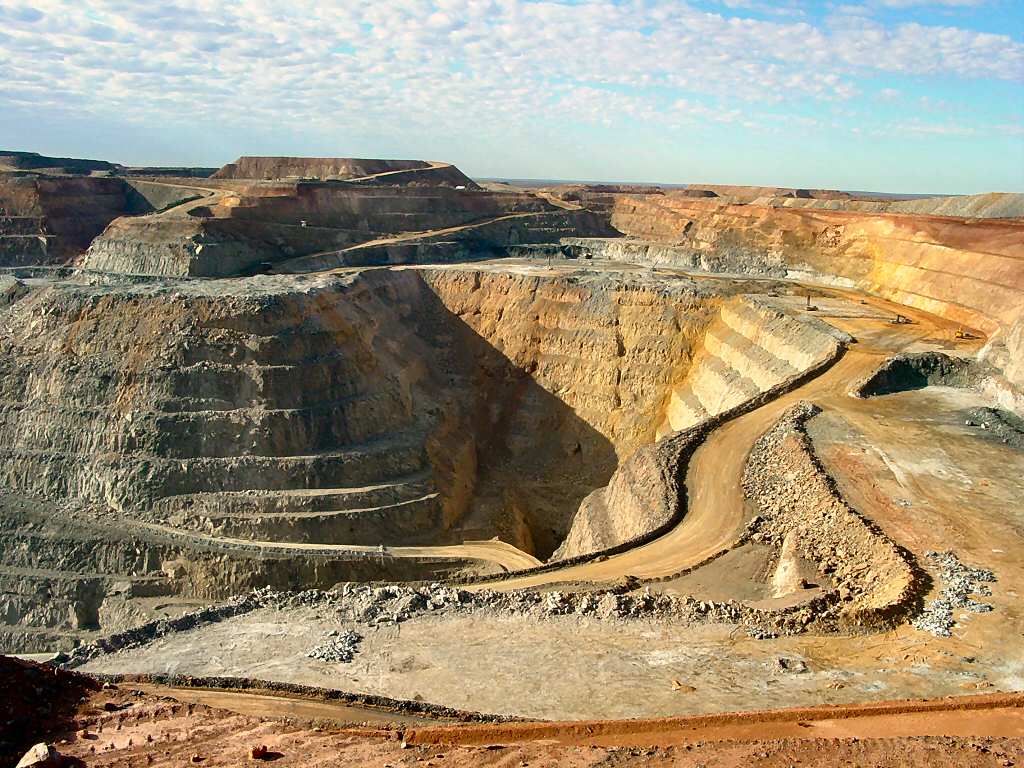
Mining in Australia has long been a significant primary sector industry and contributor to the Australian economy by providing export income, royalty payments and employment. Historically, mining booms have also encouraged population growth via immigration to Australia, particularly the gold rushes of the 1850s. Many different ores, gems and minerals have been mined in the past and a wide variety are still mined throughout the country.
In 2019, Australia was the world's largest producer of iron ore and bauxite; the second largest of gold, manganese, and lead; the third largest of zinc, cobalt, and uranium; the fifth largest of salt; the sixth largest of copper and nickel; the eighth largest producer of silver and tin; the fourteenth largest of phosphate; and the fifteenth largest of sulfur. The country is also a major producer of precious stones, being the world's largest producer of opal and is also one of the largest producers of diamond, ruby, sapphire and jade.
In non-renewable energies, in 2020, the country was the 30th largest producer of oil in the world, extracting 351.1 thousand barrels/day. In 2019, the country consumed 1 million barrels/day (the 20th largest consumer in the world). The country was the 20th largest oil importer in the world in 2018 (461.9 thousand barrels/day).[relevant?] In 2015, Australia was the 12th largest world producer of natural gas, 67.2 billion m3 per year. In 2019, the country was the 22nd largest gas consumer (41.9 billion m3 per year) and was the 10th largest gas exporter in the world in 2015: 34.0 billion m3 per year. In the production of coal, the country was the 4th largest in the world in 2018: 481.3 million tons. Australia is the 2nd largest coal exporter in the world (387 million tons in 2018)
Mining was an important early source of export income in Australian colonies and helped to pay for the imports needed for the growing colonial economies. Silver and later copper were discovered in South Australia in the 1840s, leading to the export of ore and the immigration of skilled miners and smelters. Coal was first exported to India in 1799. By 1901 Australia was exporting several million tonnes of coal each year. After World War II the Bowen Basin was opened up fueling exports to Japan for its growing steel industry.
An iron ore export ban was in place from 1938 to 24 November 1960. In 1965, the first iron ore mine was operated at Goldsworthy in Western Australia. Exports of iron ore began in the 1960s. Iron ore production reached 100 million tonnes by the mid-1970s. This figure doubled to 200 million tonnes in 2003, and tripled by 2013. Western Australia became the largest iron ore producer in the world in 2014. Iron ore reached $100 billion in annual export value in 2020, the first commodity to do so.
The first economic minerals in Australia were silver and lead in February 1841 at Glen Osmond, now a suburb of Adelaide in South Australia. Mines including Wheal Gawler and Wheal Watkins opened soon after. The value of these mines was soon overshadowed by the discovery of copper at Kapunda (1842), Burra (1845) and in the Copper Triangle (Moonta, Kadina and Wallaroo) area at the top of Yorke Peninsula (1861).
A small amount of uranium ore was mined in 1906 from Radium Hill. Uranium deposits at Rum Jungle were developed in the 1950s. The Ranger Uranium Mine was opened in June 1979 and the Olympic Dam mine opened in 1988. The Ranger Uranium Mine was controversial, leading to the Ranger Uranium Environmental Inquiry. Indigenous people of the region were opposed to the mine. Indigenous opposition to the Ranger Uranium Mine influenced environmental assessments and policies.
In 1851, gold was found near Ophir, New South Wales. Weeks later, gold was found in the newly established colony of Victoria. Australian gold rushes, in particular the Victorian gold rush, had a major lasting impact on Victoria, and on Australia as a whole. The influx of wealth that gold brought soon made Victoria Australia's richest colony by far, and Melbourne the continent's largest city. By the middle of the 1850s, 40% of the world's gold was produced in Australia.
Hub AI
Mining in Australia AI simulator
(@Mining in Australia_simulator)
Mining in Australia
Mining in Australia has long been a significant primary sector industry and contributor to the Australian economy by providing export income, royalty payments and employment. Historically, mining booms have also encouraged population growth via immigration to Australia, particularly the gold rushes of the 1850s. Many different ores, gems and minerals have been mined in the past and a wide variety are still mined throughout the country.
In 2019, Australia was the world's largest producer of iron ore and bauxite; the second largest of gold, manganese, and lead; the third largest of zinc, cobalt, and uranium; the fifth largest of salt; the sixth largest of copper and nickel; the eighth largest producer of silver and tin; the fourteenth largest of phosphate; and the fifteenth largest of sulfur. The country is also a major producer of precious stones, being the world's largest producer of opal and is also one of the largest producers of diamond, ruby, sapphire and jade.
In non-renewable energies, in 2020, the country was the 30th largest producer of oil in the world, extracting 351.1 thousand barrels/day. In 2019, the country consumed 1 million barrels/day (the 20th largest consumer in the world). The country was the 20th largest oil importer in the world in 2018 (461.9 thousand barrels/day).[relevant?] In 2015, Australia was the 12th largest world producer of natural gas, 67.2 billion m3 per year. In 2019, the country was the 22nd largest gas consumer (41.9 billion m3 per year) and was the 10th largest gas exporter in the world in 2015: 34.0 billion m3 per year. In the production of coal, the country was the 4th largest in the world in 2018: 481.3 million tons. Australia is the 2nd largest coal exporter in the world (387 million tons in 2018)
Mining was an important early source of export income in Australian colonies and helped to pay for the imports needed for the growing colonial economies. Silver and later copper were discovered in South Australia in the 1840s, leading to the export of ore and the immigration of skilled miners and smelters. Coal was first exported to India in 1799. By 1901 Australia was exporting several million tonnes of coal each year. After World War II the Bowen Basin was opened up fueling exports to Japan for its growing steel industry.
An iron ore export ban was in place from 1938 to 24 November 1960. In 1965, the first iron ore mine was operated at Goldsworthy in Western Australia. Exports of iron ore began in the 1960s. Iron ore production reached 100 million tonnes by the mid-1970s. This figure doubled to 200 million tonnes in 2003, and tripled by 2013. Western Australia became the largest iron ore producer in the world in 2014. Iron ore reached $100 billion in annual export value in 2020, the first commodity to do so.
The first economic minerals in Australia were silver and lead in February 1841 at Glen Osmond, now a suburb of Adelaide in South Australia. Mines including Wheal Gawler and Wheal Watkins opened soon after. The value of these mines was soon overshadowed by the discovery of copper at Kapunda (1842), Burra (1845) and in the Copper Triangle (Moonta, Kadina and Wallaroo) area at the top of Yorke Peninsula (1861).
A small amount of uranium ore was mined in 1906 from Radium Hill. Uranium deposits at Rum Jungle were developed in the 1950s. The Ranger Uranium Mine was opened in June 1979 and the Olympic Dam mine opened in 1988. The Ranger Uranium Mine was controversial, leading to the Ranger Uranium Environmental Inquiry. Indigenous people of the region were opposed to the mine. Indigenous opposition to the Ranger Uranium Mine influenced environmental assessments and policies.
In 1851, gold was found near Ophir, New South Wales. Weeks later, gold was found in the newly established colony of Victoria. Australian gold rushes, in particular the Victorian gold rush, had a major lasting impact on Victoria, and on Australia as a whole. The influx of wealth that gold brought soon made Victoria Australia's richest colony by far, and Melbourne the continent's largest city. By the middle of the 1850s, 40% of the world's gold was produced in Australia.
Recent media