


Community hub
Recent from talks
Contribute something
Nothing was collected or created yet.
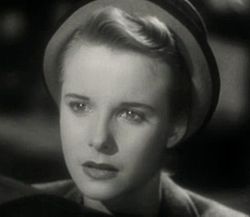
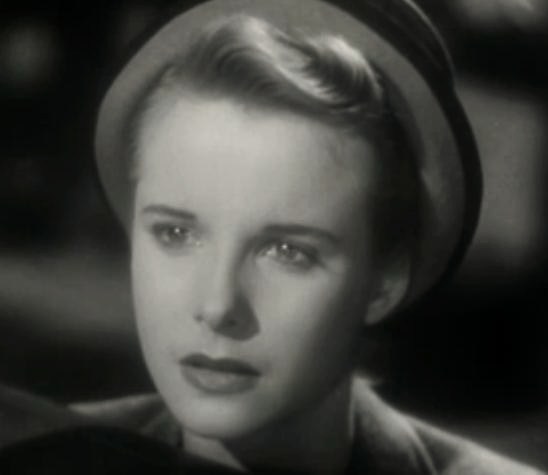
Mona Freeman
View on Wikipedia

Key Information


Monica Elizabeth "Mona" Freeman (June 9, 1926 – May 23, 2014) was an American actress and painter.[1]
Early years
[edit]Freeman was born in Baltimore, Maryland, and grew up in Pelham, New York.[2] A lumberman's daughter,[3] she was a model while in high school, and was selected the first "Miss Subways" of the New York City transit system in 1940.[4][5]
Career
[edit]Paramount Pictures signed Freeman to a contract after she moved to Hollywood.[4] She eventually signed a movie contract with Howard Hughes.[6]
Her contract was later sold to Paramount Pictures. Her first film appearance was in the 1944 film Till We Meet Again.[2] She became a popular teenage movie star. After a series of roles as a pretty, naive teenager, she complained of being typecast.[2]
As an adult, Freeman's career slowed and she appeared in mostly B-movies, though an exception was her role in the film noir Angel Face (1952). She also co-starred in the hit film Jumping Jacks with the comedy team of Dean Martin and Jerry Lewis.

Freeman's appearances in films ended in the 1950s, but she continued to work in television. Among her appearances were seven guest roles on The United States Steel Hour from 1960 to 1962 and three on Perry Mason, all of them roles as Mason's client: Jane Wardman in "The Case of the Lurid Letter" (1962), Rosanne Ambrose in "The Case of the Illicit Illusion" (1964), and Ellen Payne in "The Case of the 12th Wildcat" (1965). She appeared in two episodes of Wanted: Dead or Alive starring Steve McQueen titled "The Fourth Headstone" (Season One, Episode 9, air date 11/1/1958) and "Breakout" (Season 2 Episode 4, aired 9/26/1959), and two episodes of Maverick titled "The Cats of Paradise" (1959) and "Cruise of the Cynthia B." (1960), both starring James Garner, in which she played a recurring role as crazy-eyed swindler Modesty Blaine. She also appeared in an episode of Riverboat titled "The Boy from Pittsburgh" (1959) starring Darren McGavin and Burt Reynolds, an episode of Checkmate titled "Don't Believe a Word She Says" (1961) starring Doug McClure and Sebastian Cabot, and an episode of The Tall Man titled "Petticoat Crusade" (1961) starring Barry Sullivan as Pat Garrett and Clu Gulager as Billy the Kid, along with numerous other leading lady roles in various television series, including anthologies.
Freeman was a portrait painter and concentrated on painting after 1961. Her best-known portrait is that of businesswoman Mary See, founder of See's Candies.[2]
Personal life and death
[edit]Freeman married Pat Nerney, a car dealer, in Los Angeles in 1945.[2][7] The couple had one daughter, Mona.[2] They divorced in 1952.[7] In 1961, she married H. Jack Ellis,[2] a businessman from Los Angeles.[4]
Freeman died on May 23, 2014, at the age of 87 after a long illness, at her Beverly Hills home.
Partial filmography
[edit]
_still_1.jpg)

- Till We Meet Again (1944) - Elise
- National Velvet (1944) - Schoolgirl (uncredited)
- Here Come the Waves (1944) - Fainting Girl (uncredited)
- Together Again (1944) - Diana Crandall
- Roughly Speaking (1945) - Barbara, ages 15–20
- Junior Miss (1945) - Lois Graves
- Danger Signal (1945) - Anne Fenchurch
- Our Hearts Were Growing Up (1946) - Girl (uncredited)
- Black Beauty (1946) - Anne Wendon
- That Brennan Girl (1946) - Ziggy Brennan
- Dear Ruth (1947) - Miriam Wilkins
- Mother Wore Tights (1947) - Iris
- Variety Girl (1947) - Mona Freeman
- Isn't It Romantic (1948) - Susie Cameron
- Streets of Laredo (1949) - Rannie Carter
- The Heiress (1949) - Marian Almond
- Dear Wife (1949) - Miriam Wilkins
- I Was a Shoplifter (1950) - Faye Burton
- Copper Canyon (1950) - Caroline Desmond
- Branded (1950) - Ruth Lavery
- Dear Brat (1951) - Miriam Wilkins
- Darling, How Could You! (1951) - Amy
- The Greatest Show on Earth (1952) - Spectator (uncredited)
- Flesh and Fury (1952) - Ann Hollis
- Jumping Jacks (1952) - Betsy Carter
- Thunderbirds (1952) - Lt. Ellen Henderson
- Angel Face (1953) - Mary Wilton
- Battle Cry (1955) - Kathy - later Mrs. Danny Forrester
- Before I Wake (1955) - April Haddon (U.S. title, Shadow of Fear)
- The Road to Denver (1955) - Elizabeth Sutton
- Dial 999 (1955) - Terry Moffat Carradine
- Huk! (1956) - Cindy Rogers
- Hold Back the Night (1956) - Anne Franklin McKenzie
- Dragoon Wells Massacre (1957) - Ann Bradley
- The World Was His Jury (1958) - Robin Carson
Partial television credits
[edit]- Wanted: Dead or Alive (2 episodes)
- "The Fourth Headstone" (1958) - Jackie Harris
- "Breakout" (1959) - Margaret Dunn
- Wagon Train
- "The Monty Britton Story" (1958) - Betty Britton
- The Red Skelton Hour (2 episodes)
- "San Fernando's Singing Sensation" (1958) - Guest
- "Freddie Gets a Job" (1959) - Kathy
- Pursuit
- "Calculated Risk" (1958) - Nina Hodges
- Playhouse 90 (3 episodes)
- "Sizeman and Son" (1956) - Marie Sizeman
- "Three Men on a Horse" (1957) - Audrey Trowbridge
- "The Long March" (1958) - Betsy
- The DuPont Show with June Allyson
- "The Pledge" (1959) - Sandra McAllen
- Maverick (2 episodes)
- "The Cats Of Paradise" (1959) - Modesty Blaine
- "The Cruise of the Cynthia B" (1960) - Modesty Blaine
- Johnny Ringo
- "Mrs. Ringo" (1960) - Marilyn Barber
- United States Steel Hour
- "The Two Worlds of Charlie Gordon" (1961)
- Perry Mason (3 episodes)
- "The Case of the Lurid Letter" (1962) - Jane Wardman
- "The Case of the Illicit Illusion" (1964) - Rosanne Ambrose
- "The Case of the 12th Wildcat" (1965) - Ellen Payne
References
[edit]- ^ Lamparski, Richard (July 1, 1982). Whatever became of-- ?: eighth series: the best (updated) and newest of the famous Lamparski profiles of personalities of yesteryear. Crown Publishers. p. 110. ISBN 9780517548554. Retrieved August 24, 2011.
- ^ a b c d e f g Chawkins, Steve (June 6, 2014). "Film star Mona Freeman, typecast as teen in '40s and '50s, dies at 87". Los Angeles Times. Retrieved June 7, 2014.
- ^ "Greetings". Mexico Ledger. Missouri, Mexico. June 8, 1951. p. 6. Retrieved July 28, 2017 – via Newspapers.com.

- ^ a b c Lentz, Harris M. III (2015). Obituaries in the Performing Arts, 2014. McFarland. ISBN 9780786476664. Retrieved July 29, 2017.
- ^ Frost, Natasha (October 4, 2017). "The Miss Subways Pageant Charted the Highs and Lows of 20th-Century Feminism in New York:From a 1940s beauty queen to a 2017 performance artist". Retrieved October 10, 2017.
- ^ Ilnytzky, Ula (October 12, 2012). "Decades of Miss Subways smiled on NYC straphangers". Associated Press. Archived from the original on September 24, 2015. Retrieved June 10, 2014.
- ^ a b "Mona Freeman". Dictionary of Women Worldwide: 25,000 Women Through the Ages. Gale. 2007. Archived from the original on July 14, 2014. Retrieved June 10, 2014.

External links
[edit]

Mona Freeman
View on GrokipediaEarly life
Family and childhood
Monica Elizabeth Freeman was born on June 9, 1926, in Baltimore, Maryland.[1][2] She was the daughter of Stuart F. Freeman, a contractor, and Monica Worthington Sharretts.[3][4] As a young girl, Freeman relocated with her family to Pelham, New York, a suburb in Westchester County, where she spent much of her childhood.[1][2][3] The family resided at addresses including 142 Third Avenue in North Pelham and later 220 Carol Avenue in Pelham Manor, reflecting a stable, suburban environment.[3] She had an older brother, for whose Yale education she later sought to contribute through her early modeling efforts.[1][2][3] During her formative years, Freeman attended local schools, including Colonial Elementary School and Pelham Memorial High School.[3] She showed an early interest in creative pursuits, writing for her school newspaper and aspiring to become a magazine illustrator.[1] Freeman also participated in school theatrical productions, taking on roles such as the Good Queen in a production of Snow White and Eva in Uncle Tom's Cabin, which hinted at her emerging affinity for performance.[3] These activities occurred within the context of her high school years, during which she began modeling at age 14.[1][2]Modeling beginnings and Miss Subways
Freeman began her professional modeling career at the age of 14 through the John Robert Powers modeling agency while attending high school in Pelham, New York, where she had moved with her family from Baltimore as a child.[5] To help support her family, including putting her brother through school, she took on modeling assignments that quickly gained her local recognition.[2] In May 1941, at age 14, Freeman was selected as the inaugural "Miss Subways" through a contest sponsored by the New York Subways Advertising Company in partnership with the John Robert Powers modeling agency, with posters displayed throughout the New York City subway system.[1] The contest, which ran from 1941 to 1976, featured everyday women whose photographs and brief profiles were displayed on posters throughout the subway system, selected initially by an advertising agency from submissions to highlight relatable female commuters.[6] Culturally, Miss Subways captured the aspirations of working-class women during the World War II era, promoting diversity and morale among straphangers by showcasing ordinary individuals rather than glamorous ideals, and it evolved to reflect broader social changes like feminism and urban life.[6] Freeman's win, featuring her fresh-faced image on subway posters, marked her as the first in this tradition and amplified her visibility in New York.[7] Her modeling success, particularly from the Miss Subways exposure, led to her discovery by talent scouts; a photograph of her on a magazine cover caught the attention of Howard Hughes, who signed her to a personal two-year contract in the early 1940s.[7] Hughes later sold the contract to Paramount Pictures, facilitating her move to Hollywood and transition into acting.[1] This early modeling phase established Freeman's public image as an approachable, all-American teenager, paving the way for her opportunities in the film industry.[8]Acting career
Film roles
Freeman entered the film industry through her modeling background, signing a contract with Howard Hughes that was soon sold to Paramount Pictures. Her first screen appearance was an uncredited role as a schoolgirl in the 1944 film National Velvet, followed by her credited debut as Elise, a French orphan, in the 1944 drama Till We Meet Again.[9][10][7] In her early years under contract, Freeman specialized in child and teenage roles that showcased her youthful appeal. Notable among these were her performance as a high school girl in the 1945 comedy Junior Miss, adapted from the Broadway hit, her leading role as Anne Wendon in the 1946 family film Black Beauty, and her leading turn as a troubled young woman in the 1946 melodrama That Brennan Girl, directed by Alfred Santell. These films established her as a versatile juvenile actress capable of handling both lighthearted and dramatic material.[11][12][1] Freeman reached the height of her film career in the late 1940s and 1950s as a leading lady in a mix of Westerns, film noirs, and comedies. She starred in the comedy trilogy Dear Ruth (1947), Dear Wife (1949), and Dear Brat (1951); portrayed the love interest Rannie Carter opposite William Holden and Macdonald Carey in the 1949 Western Streets of Laredo; played Marian Almond in William Wyler's 1949 drama The Heiress; and appeared as the romantic interest in Grounds for Marriage (1951). In Otto Preminger's 1953 film noir Angel Face, she played Mary Wilton, the stepsister entangled in a deadly plot alongside stars Jean Simmons and Robert Mitchum. That same year, Freeman brought charm to the comedy Jumping Jacks, co-starring with the duo of Dean Martin and Jerry Lewis as the romantic foil Betsy Carter in their military farce, and later in the 1955 war drama Battle Cry. These roles highlighted her range across genres and her ability to hold her own with major talents.[7][1][2] Despite her success, Freeman became increasingly typecast in "bobbysoxer" roles—portraying perky, naive teenagers—even as she entered her late twenties, which limited her opportunities for more mature characters. By the early 1960s, frustration with this pigeonholing and a growing boredom with acting led her to scale back her film work. Over two decades, she appeared in approximately 25 films, emphasizing dramatic narratives and comedic ensembles that defined her Hollywood persona.[9][4]Television roles
Following a successful but typecasting-prone film career where she was often confined to youthful ingenue roles well into adulthood, Mona Freeman shifted her focus to television in the mid-1950s, seeking greater variety in character types and steadier work opportunities unavailable in features.[13][9] This transition allowed her to leverage her dramatic skills in the burgeoning medium of live and taped anthology series, where she portrayed more mature women in suspenseful and emotional narratives.[1] Freeman's television work primarily consisted of guest spots in drama and mystery programs, beginning with appearances in prominent anthology shows. She debuted notably in Climax!, starring as the supportive wife Mary in the 1955 episode "Fear Strikes Out," a biographical drama about baseball player Jim Piersall.[14] She also featured in Playhouse 90 and made multiple appearances on The United States Steel Hour, an acclaimed live drama series that showcased her in varied supporting roles across seven episodes from 1960 to 1962.[1] These anthology formats provided episodic depth without the constraints of ongoing series commitments, aligning with her preference for concise, character-driven performances. One of her most frequent recurring venues was Perry Mason, where she guest-starred in three episodes between 1962 and 1965, each time as a distinct client entangled in legal intrigue: Jane Wardman in "The Case of the Lurid Letter" (1962), Rosanne Ambrose in "The Case of the Illicit Illusion" (1964), and Ellen Payne in "The Case of the 12th Wildcat" (1965).[13][15][16] She also guest-starred on popular series such as Maverick and Wagon Train. Over the course of the decade, Freeman amassed approximately two dozen such guest appearances, predominantly in mystery and dramatic genres that highlighted her expressive range in secondary but pivotal parts.[17] However, the repetitive nature of these roles contributed to her growing boredom with acting by the early 1960s, ultimately prompting her departure from the industry.[9]Later pursuits
Portrait painting
After retiring from acting in the early 1970s due to boredom with typecasting and a lack of financial necessity, Mona Freeman transitioned to a career in portrait painting, which she pursued as a creative outlet for the remainder of her life.[2][9] She established an art studio in her home and owned a gallery in Los Angeles, focusing primarily on commissioned portraits rather than pursuing a commercial art market.[2] Freeman specialized in portraiture, creating works that captured the likenesses of notable figures, friends, and family members. Her most renowned commission was a portrait of Mary See, the founder of See's Candies, which highlighted her skill in rendering expressive and detailed subjects.[4][2] Largely self-directed in her artistic development, she emphasized personal fulfillment through private sales and exhibitions in her gallery, avoiding the broader commercial art scene. This phase of Freeman's career provided a stark contrast to her earlier performative work in film and television, allowing her to channel her longstanding interest in art into a sustained, introspective practice that lasted into her later years.[9]Personal life and death
Freeman married auto dealer Pat Nerney in Los Angeles in 1945, at the age of 19.[2][7] The couple had one daughter, Mona, known as Monie, born in 1947.[7] They divorced in 1952.[7] In 1961, Freeman married businessman H. Jack Ellis of Los Angeles.[1][7] Ellis adopted her daughter, and the marriage endured until his death in 1992.[7] Freeman raised her daughter in Hollywood, where Monie later pursued a career in acting, though details about the family's private relationships or challenges remain scarce in public records.[9][2] In her later years, Freeman endured a lengthy illness.[9][2] She died on May 23, 2014, at her home in Beverly Hills, California, at the age of 87.[1][9][2]Filmography
Selected films
- Till We Meet Again (1944): Directed by Frank Borzage, co-starring Ray Milland and Barbara Britton, Freeman debuted in a supporting role as Elise, a young girl in this drama.
- Junior Miss (1945): Directed by George Seaton, co-starring George Brent and Fay Bainter, she portrayed Lois Graves, the teenage protagonist in this comedy-drama adaptation.
- Danger Signal (1945): Directed by Robert Florey, co-starring Faye Emerson and Zachary Scott, Freeman played Anne Fenchurch, the innocent younger sister in this film noir thriller.[18]
- Dear Ruth (1947): Directed by William D. Russell, co-starring William Holden and Joan Caulfield, she starred as Miriam Wilkins, a mischievous teenager in this romantic comedy.[19]
- The Heiress (1949): Directed by William Wyler, co-starring Olivia de Havilland and Montgomery Clift, Freeman appeared in a supporting role as Marian Almond in this acclaimed period drama.[20]
- Streets of Laredo (1949): Directed by Leslie Fenton, co-starring William Holden and Macdonald Carey, she played Rannie Carter, the love interest in this Western.[21]
- Branded (1950): Directed by Rudolph Maté, co-starring Alan Ladd and Charles Bickford, Freeman took the supporting role of Ruth Lavery in this Western.[22]
- I Was a Shoplifter (1950): Directed by Charles Lamont, co-starring Scott Brady and Andrea King, she led as Faye Burton, a department store employee in this crime drama.
- Jumping Jacks (1952): Directed by Norman Taurog, co-starring Dean Martin and Jerry Lewis, Freeman played Betsy Carter, the romantic lead in this military comedy.
- Angel Face (1953): Directed by Otto Preminger, co-starring Robert Mitchum and Jean Simmons, she portrayed Mary Wilton in a supporting capacity in this film noir.[23]
- The Road to Denver (1955): Directed by Joseph Kane, co-starring John Payne and Lee J. Cobb, Freeman acted as Elizabeth Sutton in this Western.
- Battle Cry (1955): Directed by Raoul Walsh, co-starring Van Heflin and Aldo Ray, she played Kathy, a key female role in this war drama.[24]
Selected television appearances
Freeman frequently appeared in guest roles on anthology dramas and mystery series during the 1950s and 1960s, often portraying complex female characters entangled in suspenseful plots.[25]- 1958: Pursuit – "Calculated Risk" – as Nina Hodges, a woman drawn into a high-stakes detective investigation involving an armored car robbery.[26]
- 1958: Wagon Train – "The Monty Britton Story" – as Betty Britton, the sister of a wagon train member facing family secrets on the trail.
- 1958: Wanted: Dead or Alive – "The Fourth Headstone" – as Jackie Harris, a beautiful woman escorted to trial for murdering three men, adding tension to bounty hunter Josh Randall's mission.[27]
- 1958: The Red Skelton Hour – "San Fernando's Singing Sensation" – as guest vocalist, performing musical numbers in a variety format sketch.[28]
- 1959: Wanted: Dead or Alive – "Breakout" – as Mrs. Dunn, the wife of a rancher aiding in a perilous journey to rescue a prisoner from jail.[29]
- 1959: The Red Skelton Hour – "Freddie Gets a Job" – as Kathy, supporting character in a comedic employment-themed sketch.[30]
- 1960: Thriller – "The Mark of the Hand" – as Sylvia Walsh, the scheming fiancée involved in a murder cover-up surrounding a young girl accused of shooting her father.
- 1960: The United States Steel Hour – "Revolt in Hadley" – as love interest to the lead in a two-part drama exploring class differences and romance in a divided community.[31]
- 1961: The United States Steel Hour – "The Two Worlds of Charlie Gordon" – as Alice Kinnian, the compassionate teacher guiding a mentally challenged man's experimental intelligence enhancement.[32]
- 1962: Perry Mason – "The Case of the Lurid Letter" – as Jane Wardman, a high school teacher and widow falsely accused of an affair with students, serving as Mason's client.[15]
- 1964: Perry Mason – "The Case of the Illicit Illusion" – as Rosanne Ambrose, a woman suffering blackouts and suspected in a crime, defended by Mason.[16]
- 1965: Perry Mason – "The Case of the 12th Wildcat" – as Ellen Payne, co-owner of a football team entangled in a murder mystery, acting as Mason's client.[33]