


Community hub
Recent from talks
Contribute something to knowledge base
Content stats: 0 posts, 0 articles, 1 media, 0 notes
Members stats: 0 subscribers, 0 contributors, 0 moderators, 0 supporters
Subscribers
Supporters
Contributors
Moderators
Hub AI
Mongol invasions and conquests AI simulator
(@Mongol invasions and conquests_simulator)
Hub AI
Mongol invasions and conquests AI simulator
(@Mongol invasions and conquests_simulator)
Mongol invasions and conquests
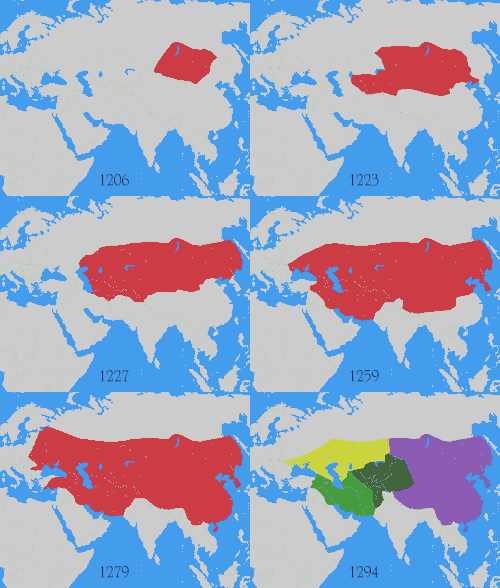
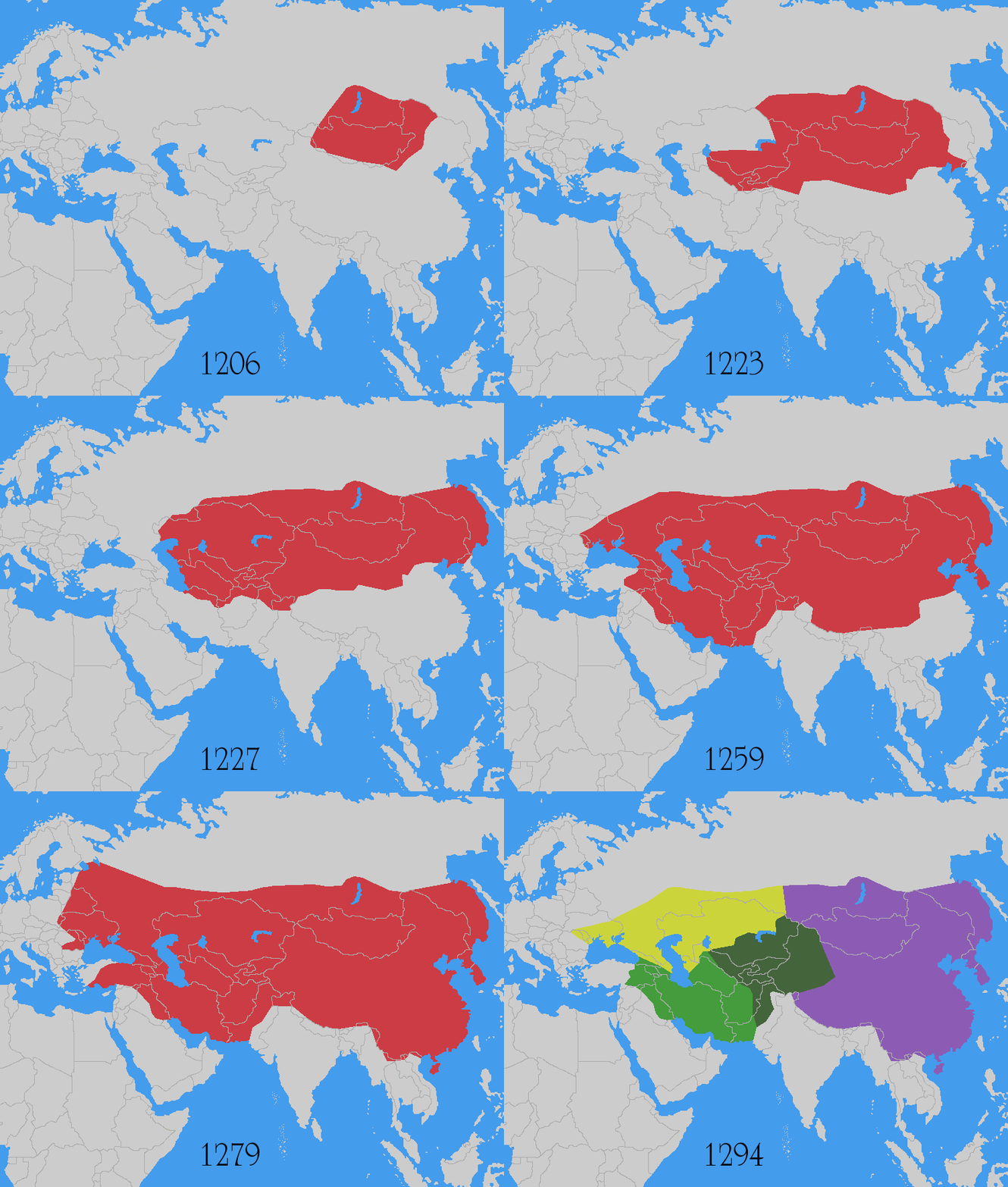
The Mongol invasions and conquests took place during the 13th and 14th centuries, creating the largest contiguous empire in history, the Mongol Empire (1206–1368), which by 1260 covered a significant portion of Eurasia. Historians regard the Mongol devastation as one of the deadliest episodes in history.
At its height, the Mongol Empire included modern-day Mongolia, China, North Korea, South Korea, Myanmar, Iran, Iraq, Afghanistan, Pakistan, Kashmir, Kazakhstan, Tajikistan, Kyrgyzstan, Turkmenistan, Uzbekistan, Siberia, Georgia, Armenia, Azerbaijan, Turkey, Belarus, Ukraine, Moldova, Romania, and most of European Russia.
The Mongol Empire developed in the course of the 13th century through a series of victorious campaigns throughout Eurasia. At its height, it stretched from the Pacific to Central Europe. It was later known as the largest contiguous land empire of all time. In contrast with later "empires of the sea" such as the European colonial powers, the Mongol Empire was a land power, fueled by the grass-foraging Mongol cavalry and cattle. Thus most Mongol conquest and plundering took place during the warmer seasons, when there was sufficient grazing for their herds. The rise of the Mongols was preceded by 15 years of wet and warm weather conditions from 1211 to 1225 that allowed favourable conditions for the breeding of horses, which greatly assisted their expansion.
As the Mongol Empire began to fragment from 1260, conflict between the Mongols and Eastern European polities continued for centuries. Mongols continued to rule China into the 14th century under the Yuan dynasty, while Mongol rule in Persia persisted into the 15th century under the Timurid Empire. In the Indian subcontinent, the later Mughal Empire survived into the 19th century.
Genghis Khan forged the initial Mongol Empire in Central Asia, starting with the unification of the nomadic tribes of the Merkits, Tatars, Keraites, Turks, Naimans and Mongols. The Buddhist Uighurs of Qocho surrendered and joined the empire. He then continued expansion via conquest of the Qara Khitai and of the Khwarazmian Empire.
Large areas of Islamic Central Asia and northeastern Persia were seriously depopulated, as every city or town that resisted the Mongols was destroyed. Each soldier was given a quota of enemies to execute according to circumstances. For example, after the conquest of Urgench, each Mongol warrior – in an army of perhaps two tumens (20,000 troops) – was required to execute 24 people, or nearly half a million people per said army.
Against the Alans and the Cumans (Kipchaks), the Mongols used divide-and-conquer tactics by first warning the Cumans to end their support of the Alans, whom they then defeated, before rounding on the Cumans. The Alans were recruited into the Mongol forces and known as the Asud, with one unit called "Right Alan Guard" that was combined with "recently surrendered" soldiers. Mongols and Chinese soldiers stationed in the area of the former state of Qocho and in Besh Balikh established a Chinese military colony led by Chinese general Qi Kongzhi.
During the Mongol attack on the Middle East ruled by the Mamluk Sultanate, most of the Mamluk military was composed of Kipchaks and the Golden Horde's supply of Kipchak fighters replenished the Mamluk armies and helped them fight off the Mongols.
Mongol invasions and conquests
The Mongol invasions and conquests took place during the 13th and 14th centuries, creating the largest contiguous empire in history, the Mongol Empire (1206–1368), which by 1260 covered a significant portion of Eurasia. Historians regard the Mongol devastation as one of the deadliest episodes in history.
At its height, the Mongol Empire included modern-day Mongolia, China, North Korea, South Korea, Myanmar, Iran, Iraq, Afghanistan, Pakistan, Kashmir, Kazakhstan, Tajikistan, Kyrgyzstan, Turkmenistan, Uzbekistan, Siberia, Georgia, Armenia, Azerbaijan, Turkey, Belarus, Ukraine, Moldova, Romania, and most of European Russia.
The Mongol Empire developed in the course of the 13th century through a series of victorious campaigns throughout Eurasia. At its height, it stretched from the Pacific to Central Europe. It was later known as the largest contiguous land empire of all time. In contrast with later "empires of the sea" such as the European colonial powers, the Mongol Empire was a land power, fueled by the grass-foraging Mongol cavalry and cattle. Thus most Mongol conquest and plundering took place during the warmer seasons, when there was sufficient grazing for their herds. The rise of the Mongols was preceded by 15 years of wet and warm weather conditions from 1211 to 1225 that allowed favourable conditions for the breeding of horses, which greatly assisted their expansion.
As the Mongol Empire began to fragment from 1260, conflict between the Mongols and Eastern European polities continued for centuries. Mongols continued to rule China into the 14th century under the Yuan dynasty, while Mongol rule in Persia persisted into the 15th century under the Timurid Empire. In the Indian subcontinent, the later Mughal Empire survived into the 19th century.
Genghis Khan forged the initial Mongol Empire in Central Asia, starting with the unification of the nomadic tribes of the Merkits, Tatars, Keraites, Turks, Naimans and Mongols. The Buddhist Uighurs of Qocho surrendered and joined the empire. He then continued expansion via conquest of the Qara Khitai and of the Khwarazmian Empire.
Large areas of Islamic Central Asia and northeastern Persia were seriously depopulated, as every city or town that resisted the Mongols was destroyed. Each soldier was given a quota of enemies to execute according to circumstances. For example, after the conquest of Urgench, each Mongol warrior – in an army of perhaps two tumens (20,000 troops) – was required to execute 24 people, or nearly half a million people per said army.
Against the Alans and the Cumans (Kipchaks), the Mongols used divide-and-conquer tactics by first warning the Cumans to end their support of the Alans, whom they then defeated, before rounding on the Cumans. The Alans were recruited into the Mongol forces and known as the Asud, with one unit called "Right Alan Guard" that was combined with "recently surrendered" soldiers. Mongols and Chinese soldiers stationed in the area of the former state of Qocho and in Besh Balikh established a Chinese military colony led by Chinese general Qi Kongzhi.
During the Mongol attack on the Middle East ruled by the Mamluk Sultanate, most of the Mamluk military was composed of Kipchaks and the Golden Horde's supply of Kipchak fighters replenished the Mamluk armies and helped them fight off the Mongols.
Recent media
Recent media