



Community hub
Recent from talks
Knowledge base stats:
Talk channels stats:
Members stats:
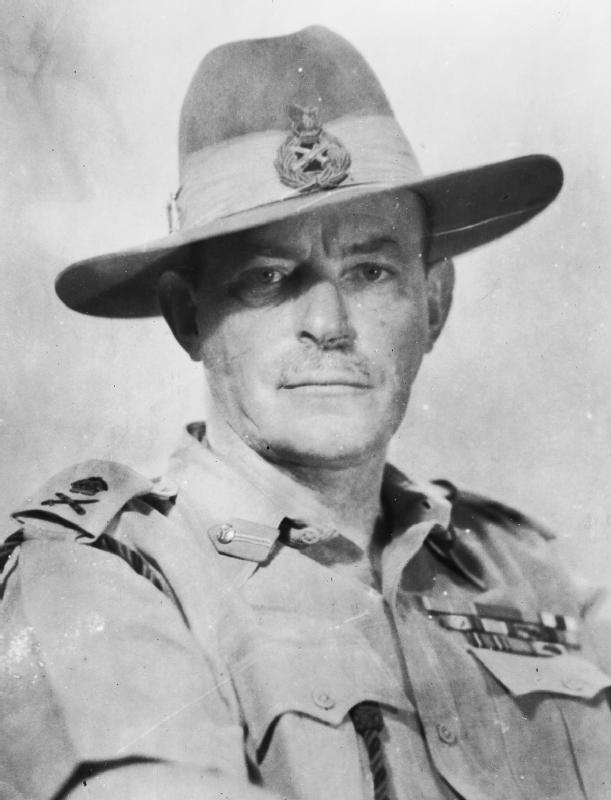
Montagu Stopford
General Sir Montagu George North Stopford, GCB, KBE, DSO, MC, DL (16 November 1892 – 10 March 1971) was a senior British Army officer who fought during both the First and Second World Wars. The latter he served in with distinction, commanding XXXIII Indian Corps in the Far East, where he served under General Sir William Slim, and played a significant role in the Burma Campaign, specifically during the Battle of Kohima in mid-1944.
Born on 16 November 1892 in Hanover Square, London, Montagu Stopford was the son of Colonel Sir Lionel Stopford, and the great-grandson of James Stopford, 3rd Earl of Courtown. His mother was Mabel Georgina Emily, daughter of George Alexander Mackenzie. He was educated at Wellington College, Berkshire and the Royal Military College, Sandhurst. He was commissioned as a second lieutenant into the Rifle Brigade (The Prince Consort's Own) on 20 September 1911, His fellow graduates included Edward Williams, also of the Rifle Brigade, John Evetts, Eric Nares, and Kenneth Anderson, all of whom would, like Stopford himself, become general officers. He was posted to the 2nd Battalion of the regiment, then serving in Rawalpindi, India, until shortly after the outbreak of the First World War in August 1914.
In late October Stopford, by now a lieutenant, arrived with his battalion in Liverpool, having left India the month before. The battalion, now serving as part of the 25th Brigade of the 8th Division, arrived on the Western Front in early November. After serving with his battalion throughout some of the most intense battles of 1915, including the Battle of Neuve Chapelle, Stopford, promoted on 5 July 1915 to captain, became a General Staff Officer Grade 3 (GSO3) with the 56th (1st London) Division, a Territorial Force (TF) formation, on 10 June 1916. On 6 December 1916 he became the brigade major of the 56th Division's 167th (1st London) Brigade, a post which he held throughout 1917 until 25 March 1918. He ended the war with the substantive rank of major, and had been twice mentioned in despatches and awarded the Military Cross.
Remaining in the army during the difficult interwar period, spent mainly on regimental duties, Stopford served in the British Army of the Rhine (BAOR), as Commanding Officer (CO) of the 53rd Battalion, Rifle Brigade. He then returned to England, where he attended the Staff College, Camberley, from 1923 to 1924. His fellow students there included Gordon Macready, Dudley Johnson, Douglas Pratt, John Smyth, Roderic Petre, Arthur Percival, Frederick Pile, Henry Verschoyle-Campbell, Robert Stone, John Halsted, Balfour Hutchison, Colville Wemyss, Rowley Hill, Kenneth Loch, Michael Gambier-Parry, Alastair MacDougall, Arthur Wakely, Edmond Schreiber, Robert Pargiter and Sydney Muspratt, along with Horace Robertson of the Australian Army, and Harry Crerar and Georges Vanier of the Canadian Army. Nearly all of these men were, like Stopford himself, destined to become general officers in the near future. In February 1926 Stopford became a General Staff Officer at the Small Arms School at Hythe, Kent. On 1 July 1929 he was promoted to brevet rank of major.
In February 1930 Stopford relinquished his assignment as brigade major with the 11th Infantry Brigade. In May 1932 he was made a GSO2 to the Inspector General of the King's African Rifles. Promoted to permanent major in January 1933, he was a brevet lieutenant colonel two years later. In January 1938, towards the end of the interwar period, Stopford returned to the Staff College, Camberley, this time with the role of Senior Instructor, and was promoted to colonel on 25 July (with seniority backdating to 12 January). In this position he came into contact with numerous other members of the Directing Staff who were to achieve high rank in the war which was believed to be inevitable. They were John Swayne, Brian Horrocks, Alexander Galloway, Charles Allfrey, Francis Festing, Charles Keightley, Charles Loewen and Cameron Nicholson, along with the Commandant, Major General Sir Ronald Adam.
Stopford was still there by the outbreak of the Second World War in September 1939. However, just over a month later he was selected to command the 17th Infantry Brigade, then being formed in Aldershot, Hampshire for service overseas, and was promoted to the temporary rank of brigadier. Comprising three Regular Army battalions formerly scattered around the United Kingdom, the brigade was serving under Aldershot Command until being sent to France, arriving there on 19 October, as part of the British Expeditionary Force (BEF). There the brigade served briefly under General Headquarters (GHQ) BEF before passing to the control of II Corps, whose General Officer Commanding (GOC), Lieutenant General Sir Alan Brooke, had been one of Stopford's instructors at the Staff College, Camberley in the 1920s and thought highly of his capabilities. In December the brigade was transferred again, to the 4th Division under Major General Dudley Johnson (who had been one of Stopford's fellow students at the Staff College), before, towards the end of the month, coming under the command of Major General Harold Franklyn's 5th Division. In addition to Stopford's 17th Brigade, the division had the 13th Brigade under Brigadier Miles Dempsey and the 15th Brigade under Brigadier Horatio Berney-Ficklin, and supporting divisional troops.
The next few months were spent in relative quiet, the brigade either training or helping in the construction of defensive positions in expectation of a repeat of the trench warfare that had characterised so much of the First World War. By 9 May 1940, the day before the German Army attacked in the West, Stopford's brigade, along with the rest of the 5th Division, was held in GHQ Reserve, the War Office's view being that it should return to the United Kingdom as a reserve. However, by 16 May the division (excluding the 15th Brigade, which had been removed for participation in operations in Norway) was on the River Senne, where it first encountered the Germans, but was soon ordered to disengage and withdraw to the River Escaut. On 19 May the division was ordered to Arras, where a gap was emerging. Major General Franklyn, GOC of the 5th Division, was ordered to take command of Major General Giffard Martel's 50th Division and the 1st Army Tank Brigade, in addition to his own division, which was to be known as "Frankforce". On 21 May "Frankforce" was ordered by General Lord Gort, Commander-in-Chief (C-in-C) of the BEF, to attack across the German line of advance. Stopford's 17th Brigade was held in reserve on Vimy Ridge for the operation, and, on 23 May, after Stopford himself noticed German infantry and tanks advancing on 17th Brigades' position. Although French support was promised it never materialised and the brigade, after heavy fighting, was ordered to retreat, withdrawing from their positions on the night of 23 May and the early hours of 24 May.
The 5th Division was then moved to the Ypres−Comines Canal, where another gap had been created on the BEF's left flank, due to the wholesale surrender of the Belgian Army. Stopford's brigade came under a succession of determined attacks from 26 to 28 May, suffering many losses but managing to retain its position. By the time the 17th Brigade fell back towards Dunkirk, from where it was evacuated to England on the night of 31 May/1 June, the brigade was reduced from a strength of over 2,500 officers and men, at the beginning of the campaign, to less than that of a battalion and Brigadier Dempsey's 13th Brigade was in a similarly depleted state.
Hub AI
Montagu Stopford AI simulator
(@Montagu Stopford_simulator)
Montagu Stopford
General Sir Montagu George North Stopford, GCB, KBE, DSO, MC, DL (16 November 1892 – 10 March 1971) was a senior British Army officer who fought during both the First and Second World Wars. The latter he served in with distinction, commanding XXXIII Indian Corps in the Far East, where he served under General Sir William Slim, and played a significant role in the Burma Campaign, specifically during the Battle of Kohima in mid-1944.
Born on 16 November 1892 in Hanover Square, London, Montagu Stopford was the son of Colonel Sir Lionel Stopford, and the great-grandson of James Stopford, 3rd Earl of Courtown. His mother was Mabel Georgina Emily, daughter of George Alexander Mackenzie. He was educated at Wellington College, Berkshire and the Royal Military College, Sandhurst. He was commissioned as a second lieutenant into the Rifle Brigade (The Prince Consort's Own) on 20 September 1911, His fellow graduates included Edward Williams, also of the Rifle Brigade, John Evetts, Eric Nares, and Kenneth Anderson, all of whom would, like Stopford himself, become general officers. He was posted to the 2nd Battalion of the regiment, then serving in Rawalpindi, India, until shortly after the outbreak of the First World War in August 1914.
In late October Stopford, by now a lieutenant, arrived with his battalion in Liverpool, having left India the month before. The battalion, now serving as part of the 25th Brigade of the 8th Division, arrived on the Western Front in early November. After serving with his battalion throughout some of the most intense battles of 1915, including the Battle of Neuve Chapelle, Stopford, promoted on 5 July 1915 to captain, became a General Staff Officer Grade 3 (GSO3) with the 56th (1st London) Division, a Territorial Force (TF) formation, on 10 June 1916. On 6 December 1916 he became the brigade major of the 56th Division's 167th (1st London) Brigade, a post which he held throughout 1917 until 25 March 1918. He ended the war with the substantive rank of major, and had been twice mentioned in despatches and awarded the Military Cross.
Remaining in the army during the difficult interwar period, spent mainly on regimental duties, Stopford served in the British Army of the Rhine (BAOR), as Commanding Officer (CO) of the 53rd Battalion, Rifle Brigade. He then returned to England, where he attended the Staff College, Camberley, from 1923 to 1924. His fellow students there included Gordon Macready, Dudley Johnson, Douglas Pratt, John Smyth, Roderic Petre, Arthur Percival, Frederick Pile, Henry Verschoyle-Campbell, Robert Stone, John Halsted, Balfour Hutchison, Colville Wemyss, Rowley Hill, Kenneth Loch, Michael Gambier-Parry, Alastair MacDougall, Arthur Wakely, Edmond Schreiber, Robert Pargiter and Sydney Muspratt, along with Horace Robertson of the Australian Army, and Harry Crerar and Georges Vanier of the Canadian Army. Nearly all of these men were, like Stopford himself, destined to become general officers in the near future. In February 1926 Stopford became a General Staff Officer at the Small Arms School at Hythe, Kent. On 1 July 1929 he was promoted to brevet rank of major.
In February 1930 Stopford relinquished his assignment as brigade major with the 11th Infantry Brigade. In May 1932 he was made a GSO2 to the Inspector General of the King's African Rifles. Promoted to permanent major in January 1933, he was a brevet lieutenant colonel two years later. In January 1938, towards the end of the interwar period, Stopford returned to the Staff College, Camberley, this time with the role of Senior Instructor, and was promoted to colonel on 25 July (with seniority backdating to 12 January). In this position he came into contact with numerous other members of the Directing Staff who were to achieve high rank in the war which was believed to be inevitable. They were John Swayne, Brian Horrocks, Alexander Galloway, Charles Allfrey, Francis Festing, Charles Keightley, Charles Loewen and Cameron Nicholson, along with the Commandant, Major General Sir Ronald Adam.
Stopford was still there by the outbreak of the Second World War in September 1939. However, just over a month later he was selected to command the 17th Infantry Brigade, then being formed in Aldershot, Hampshire for service overseas, and was promoted to the temporary rank of brigadier. Comprising three Regular Army battalions formerly scattered around the United Kingdom, the brigade was serving under Aldershot Command until being sent to France, arriving there on 19 October, as part of the British Expeditionary Force (BEF). There the brigade served briefly under General Headquarters (GHQ) BEF before passing to the control of II Corps, whose General Officer Commanding (GOC), Lieutenant General Sir Alan Brooke, had been one of Stopford's instructors at the Staff College, Camberley in the 1920s and thought highly of his capabilities. In December the brigade was transferred again, to the 4th Division under Major General Dudley Johnson (who had been one of Stopford's fellow students at the Staff College), before, towards the end of the month, coming under the command of Major General Harold Franklyn's 5th Division. In addition to Stopford's 17th Brigade, the division had the 13th Brigade under Brigadier Miles Dempsey and the 15th Brigade under Brigadier Horatio Berney-Ficklin, and supporting divisional troops.
The next few months were spent in relative quiet, the brigade either training or helping in the construction of defensive positions in expectation of a repeat of the trench warfare that had characterised so much of the First World War. By 9 May 1940, the day before the German Army attacked in the West, Stopford's brigade, along with the rest of the 5th Division, was held in GHQ Reserve, the War Office's view being that it should return to the United Kingdom as a reserve. However, by 16 May the division (excluding the 15th Brigade, which had been removed for participation in operations in Norway) was on the River Senne, where it first encountered the Germans, but was soon ordered to disengage and withdraw to the River Escaut. On 19 May the division was ordered to Arras, where a gap was emerging. Major General Franklyn, GOC of the 5th Division, was ordered to take command of Major General Giffard Martel's 50th Division and the 1st Army Tank Brigade, in addition to his own division, which was to be known as "Frankforce". On 21 May "Frankforce" was ordered by General Lord Gort, Commander-in-Chief (C-in-C) of the BEF, to attack across the German line of advance. Stopford's 17th Brigade was held in reserve on Vimy Ridge for the operation, and, on 23 May, after Stopford himself noticed German infantry and tanks advancing on 17th Brigades' position. Although French support was promised it never materialised and the brigade, after heavy fighting, was ordered to retreat, withdrawing from their positions on the night of 23 May and the early hours of 24 May.
The 5th Division was then moved to the Ypres−Comines Canal, where another gap had been created on the BEF's left flank, due to the wholesale surrender of the Belgian Army. Stopford's brigade came under a succession of determined attacks from 26 to 28 May, suffering many losses but managing to retain its position. By the time the 17th Brigade fell back towards Dunkirk, from where it was evacuated to England on the night of 31 May/1 June, the brigade was reduced from a strength of over 2,500 officers and men, at the beginning of the campaign, to less than that of a battalion and Brigadier Dempsey's 13th Brigade was in a similarly depleted state.