



Community hub
Recent from talks
Knowledge base stats:
Talk channels stats:
Members stats:
Morocco in World War II
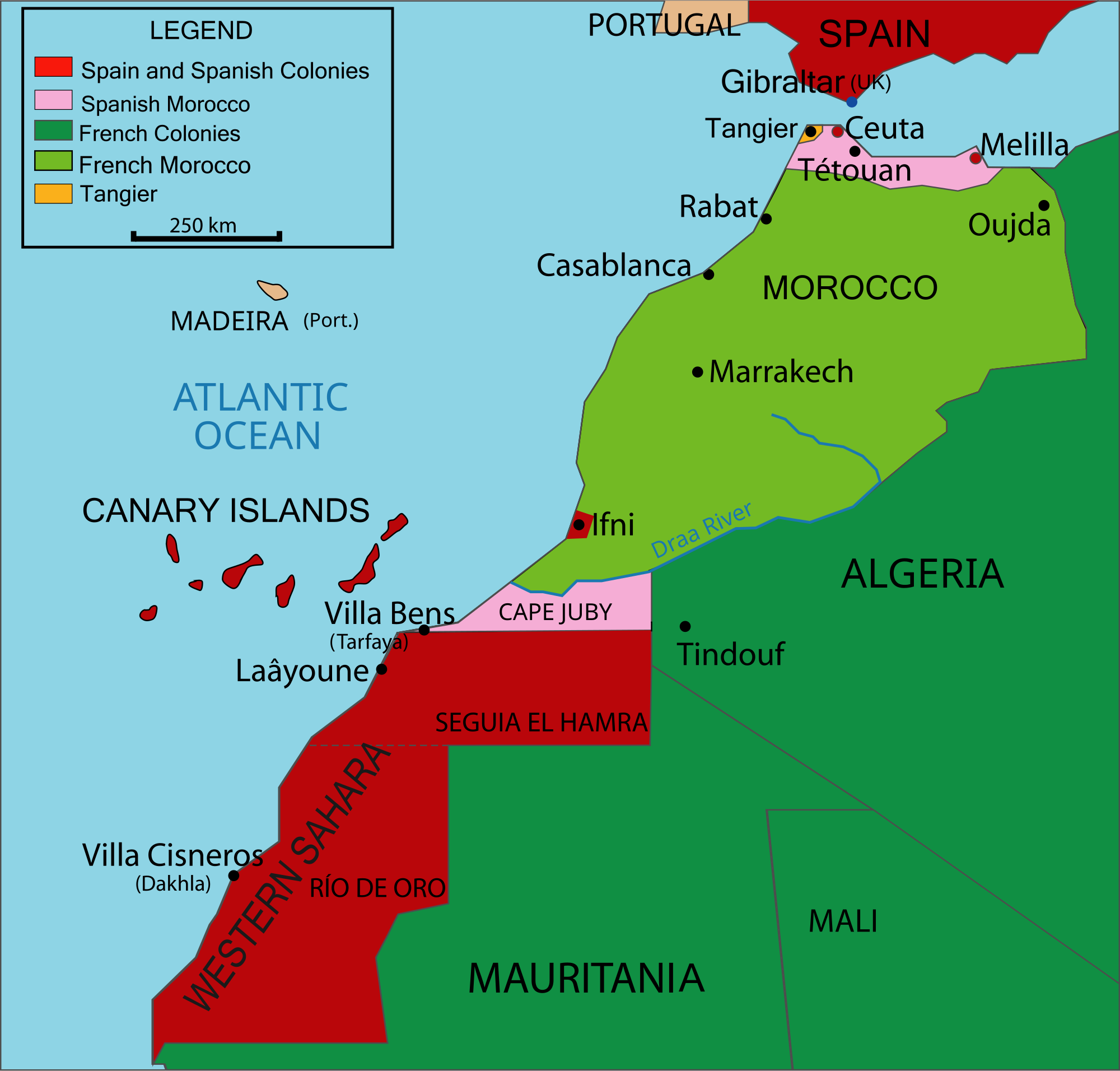
During World War II, Morocco was controlled by Vichy France. However, after the North African campaign (June 1940 – May 1943), Morocco was liberated by the Allies and was thus active in Allied operations until the end of the war.
During this period, Northern Morocco was controlled by Spain through a nominally independent puppet regime headed by a viceroy. While it participated in the Spanish Civil War, like Spain itself, Northern Morocco was officially neutral during World War II.
In 1940, France surrendered to Nazi Germany and was divided into two regions, with northern and western France occupied, by German forces headquartered in Paris. In southern and central France, a nominally independent "free zone" was known as Vichy France, after its capital city (Vichy). Around the world, the various French colonial administrations and overseas departments gave their allegiance to either Vichy or the rival Free French and government in exile (located in London) that had remained part of the Allied powers.
In southern Morocco, the colonial administration was initially loyal to the Vichy regime. In 1940–42, Moroccan Jews faced significant restrictions, due to the introduction of Vichy anti-Jewish legislation.
Following Allied landings in November 1942, the colonial administration in southern Morocco remained in place, although it switched its affiliation from Vichy to Free France. In January 1943, Allied control also made southern Morocco an ideal location for the Casablanca Conference, where Winston Churchill and Franklin D. Roosevelt met to discuss wartime operations. On the home front in southern Morocco, daily life changed little, although the nationalist movement attempted to gain momentum, despite facing opposition from French forces. During this period, many indigenous Moroccan soldiers were recruited by Free French forces to fight with the Allies.
Slavery existed in Morocco before and during the establishment of the French protectorate, with many wealthy Moroccans owning slaves, including the Moroccan royal family. Shanty towns arose near Moroccan cities in the 1930s which continued to grow during the war. European refugees fleeing to Morocco experienced poverty on their arrival, and many of those in Casablanca slept in converted dance halls with poor conditions. Separate educational institutions were set up for the Muslim and the French population. Access to the baccalaureate was provided to the Moroccan Muslim population in 1930, but access to elite French schools (lycees) was not provided to the Muslim population until after the end of the war. Around ninety percent of the Muslim population of Morocco was illiterate during World War II.
Before World War II, a large portion of Jews in Morocco, much like the majority of the Muslim population, lived in poverty. The bulk of the Jewish population lived in crowded Jewish quarters named mellahs. Resident General Charles Noguès did not allow Jews who enlisted in 1939 and 1940 to fight, but only to work on the industrial side of the war effort. In 1940, laws were put in place by the Vichy administration which disallowed the majority of Jews from working as doctors, lawyers or teachers. All Jews living in other neighbourhoods of Morocco were required to leave their houses and re-inhabit the mellahs. Vichy anti-semitic propaganda was distributed throughout Morocco to encourage the boycotting of Jews. Pamphlets were pinned on the frontages of Jewish shops. Around 7,700 Jews who attempted to flee Morocco in favour of America or Palestine were moved to detention centres. Some refugees considered a threat to the Vichy regime were sent to labour camps. The American landings in 1942 created hope that the Vichy laws would discontinue, but General Noguès persuaded the Allies to allow the continuation of French rule and Vichy laws.
Moroccan anti-occupation nationalist movements gained momentum in Morocco during World War II against the French and Spanish occupation of Morocco. Nationalists in Spanish Morocco created the 'National Reform Party' and the 'Moroccan Unity Movement', which united during the war and were common vehicles for Fascist propaganda. The 1942 landings were encouraged by the nationalists in French Morocco, who hoped the Allies would assist in the fight for Moroccan independence. After Moroccan nationalists in French Morocco then found to have received letters from Ibrahim al-Wazzani, a nationalist in Spanish Morocco who was involved in aiding the Axis powers, the Allies rejected independence and upheld the Vichy laws. On 11 January 1944, a group of Moroccan nationalists, in French Morocco, created a declaration of Moroccan Independence which they proceeded to display to the French Resident General. By 18 January 1944, the Moroccan sultan and other influential figures had demonstrated their approval for the nationalists. French authorities arrested influential nationalists linked to this document and took many to prison camps. However, for many Moroccans, this only worked to increase support for the movement. The British secretly funded many Moroccan nationalist activities in Southern and Northern Morocco, in an attempt to prevent German control of the country.
Hub AI
Morocco in World War II AI simulator
(@Morocco in World War II_simulator)
Morocco in World War II
During World War II, Morocco was controlled by Vichy France. However, after the North African campaign (June 1940 – May 1943), Morocco was liberated by the Allies and was thus active in Allied operations until the end of the war.
During this period, Northern Morocco was controlled by Spain through a nominally independent puppet regime headed by a viceroy. While it participated in the Spanish Civil War, like Spain itself, Northern Morocco was officially neutral during World War II.
In 1940, France surrendered to Nazi Germany and was divided into two regions, with northern and western France occupied, by German forces headquartered in Paris. In southern and central France, a nominally independent "free zone" was known as Vichy France, after its capital city (Vichy). Around the world, the various French colonial administrations and overseas departments gave their allegiance to either Vichy or the rival Free French and government in exile (located in London) that had remained part of the Allied powers.
In southern Morocco, the colonial administration was initially loyal to the Vichy regime. In 1940–42, Moroccan Jews faced significant restrictions, due to the introduction of Vichy anti-Jewish legislation.
Following Allied landings in November 1942, the colonial administration in southern Morocco remained in place, although it switched its affiliation from Vichy to Free France. In January 1943, Allied control also made southern Morocco an ideal location for the Casablanca Conference, where Winston Churchill and Franklin D. Roosevelt met to discuss wartime operations. On the home front in southern Morocco, daily life changed little, although the nationalist movement attempted to gain momentum, despite facing opposition from French forces. During this period, many indigenous Moroccan soldiers were recruited by Free French forces to fight with the Allies.
Slavery existed in Morocco before and during the establishment of the French protectorate, with many wealthy Moroccans owning slaves, including the Moroccan royal family. Shanty towns arose near Moroccan cities in the 1930s which continued to grow during the war. European refugees fleeing to Morocco experienced poverty on their arrival, and many of those in Casablanca slept in converted dance halls with poor conditions. Separate educational institutions were set up for the Muslim and the French population. Access to the baccalaureate was provided to the Moroccan Muslim population in 1930, but access to elite French schools (lycees) was not provided to the Muslim population until after the end of the war. Around ninety percent of the Muslim population of Morocco was illiterate during World War II.
Before World War II, a large portion of Jews in Morocco, much like the majority of the Muslim population, lived in poverty. The bulk of the Jewish population lived in crowded Jewish quarters named mellahs. Resident General Charles Noguès did not allow Jews who enlisted in 1939 and 1940 to fight, but only to work on the industrial side of the war effort. In 1940, laws were put in place by the Vichy administration which disallowed the majority of Jews from working as doctors, lawyers or teachers. All Jews living in other neighbourhoods of Morocco were required to leave their houses and re-inhabit the mellahs. Vichy anti-semitic propaganda was distributed throughout Morocco to encourage the boycotting of Jews. Pamphlets were pinned on the frontages of Jewish shops. Around 7,700 Jews who attempted to flee Morocco in favour of America or Palestine were moved to detention centres. Some refugees considered a threat to the Vichy regime were sent to labour camps. The American landings in 1942 created hope that the Vichy laws would discontinue, but General Noguès persuaded the Allies to allow the continuation of French rule and Vichy laws.
Moroccan anti-occupation nationalist movements gained momentum in Morocco during World War II against the French and Spanish occupation of Morocco. Nationalists in Spanish Morocco created the 'National Reform Party' and the 'Moroccan Unity Movement', which united during the war and were common vehicles for Fascist propaganda. The 1942 landings were encouraged by the nationalists in French Morocco, who hoped the Allies would assist in the fight for Moroccan independence. After Moroccan nationalists in French Morocco then found to have received letters from Ibrahim al-Wazzani, a nationalist in Spanish Morocco who was involved in aiding the Axis powers, the Allies rejected independence and upheld the Vichy laws. On 11 January 1944, a group of Moroccan nationalists, in French Morocco, created a declaration of Moroccan Independence which they proceeded to display to the French Resident General. By 18 January 1944, the Moroccan sultan and other influential figures had demonstrated their approval for the nationalists. French authorities arrested influential nationalists linked to this document and took many to prison camps. However, for many Moroccans, this only worked to increase support for the movement. The British secretly funded many Moroccan nationalist activities in Southern and Northern Morocco, in an attempt to prevent German control of the country.