



Community hub
Recent from talks
Knowledge base stats:
Talk channels stats:
Members stats:
Munich Agreement
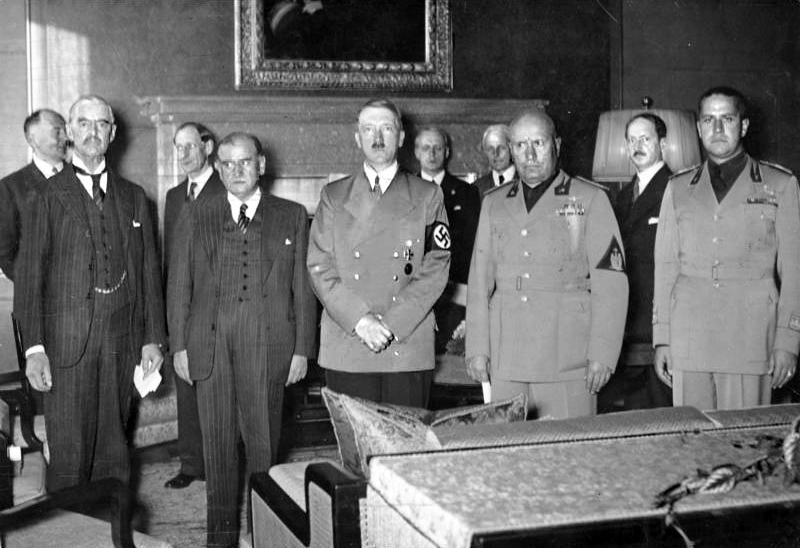
The Munich Agreement was reached in Munich on 30 September 1938, by Nazi Germany, the United Kingdom, France, and Italy. The agreement provided for the German annexation of part of Czechoslovakia called the Sudetenland, where three million people, mainly ethnic Germans, lived. The pact is known in some areas as the Munich Betrayal (Czech: Mnichovská zrada; Slovak: Mníchovská zrada), because of a previous 1924 alliance agreement and a 1925 military pact between France and the Czechoslovak Republic.
Germany had started a low-intensity undeclared war on Czechoslovakia on 17 September 1938. In reaction, Britain and France on 20 September formally requested Czechoslovakia cede the Sudetenland territory to Germany. This was followed by Polish and Hungarian territorial demands brought on 21 and 22 September, respectively. Meanwhile, German forces conquered parts of the Cheb District and Jeseník District, where battles included use of German artillery, Czechoslovak tanks, and armored vehicles. Lightly armed German infantry briefly overran other border counties before being repelled. Poland grouped its army units near its common border with Czechoslovakia and conducted an unsuccessful probing offensive on 23 September. Hungary moved its troops towards the border with Czechoslovakia, without attacking. The Soviet Union announced its willingness to come to Czechoslovakia's assistance, provided the Red Army would be able to cross Polish and Romanian territory; both countries refused.
An emergency meeting of the main European powers–not including Czechoslovakia, although their representatives were present in the town, or the Soviet Union, an ally to France and Czechoslovakia–took place in Munich, on 29–30 September. An agreement was quickly reached on Adolf Hitler's terms, and signed by the leaders of Germany, France, Britain, and Italy. The Czechoslovak mountainous borderland marked a natural border between the Czech state and the Germanic states since the early Middle Ages; it also presented a major natural obstacle to a possible German attack. Strengthened by border fortifications, the Sudetenland was of absolute strategic importance to Czechoslovakia. On 30 September, Czechoslovakia submitted to the combination of military pressure by Germany, Poland, and Hungary, and diplomatic pressure by Britain and France, and agreed to surrender territory to Germany following the Munich terms.
The Munich Agreement was soon followed by the First Vienna Award on 2 November 1938, separating largely Hungarian inhabited territories in southern Slovakia and southern Subcarpathian Rus' from Czechoslovakia. On 30 November, Czechoslovakia ceded to Poland small patches of land in the Spiš and Orava regions. In March 1939, the First Slovak Republic, a German puppet state, proclaimed its independence. Shortly afterwards, Hitler reneged on his promise to respect the integrity of Czechoslovakia by occupying the remainder of the country and creating the Protectorate of Bohemia and Moravia. The conquered nation's armaments industry and tanks and its large army allowed Germany to strengthen.
Much of Europe celebrated the Munich Agreement, as they considered it a way to prevent a major war on the continent. Hitler announced that it was his last territorial claim in Northern Europe. Today, the Munich Agreement is regarded as a failed act of appeasement, and the term has become "a byword for the futility of appeasing expansionist totalitarian states."
The First Czechoslovak Republic was created in 1918 following the collapse of the Austro-Hungarian Empire at the end of World War I. The Treaty of Saint-Germain recognized the independence of Czechoslovakia and the Treaty of Trianon defined the borders of the new state, which was divided into the regions of Bohemia and Moravia in the west and Slovakia and Subcarpathian Rus' in the east, including more than three million Germans, 22.95% of the total population of the country. They lived mostly in border regions of the historical Czech Lands for which they coined the new name Sudetenland, which bordered on Germany and the newly created country of Austria.
The Sudeten Germans were not consulted on whether they wished to be citizens of Czechoslovakia. Although the constitution guaranteed equality for all citizens, there was a tendency among political leaders to transform the country "into an instrument of Czech and Slovak nationalism." Some progress was made to integrate the Germans and other minorities, but they continued to be underrepresented in the government and the army. Moreover, the Great Depression, beginning in 1929, impacted the highly industrialized and export-oriented Sudeten Germans more than it did the Czech and Slovak populations. By 1936, 60 percent of the unemployed people in Czechoslovakia were Germans.
In 1933, Sudeten German leader Konrad Henlein founded the Sudeten German Party (SdP), which was "militant, populist, and openly hostile" to the Czechoslovak government. It soon captured two-thirds of the vote in districts with a heavy German population. Historians differ as to whether the SdP was a Nazi front organisation from its beginning, or if it evolved into one. By 1935, the SdP was the second-largest political party in Czechoslovakia as German votes concentrated on this party, and Czech and Slovak votes were spread among several parties.
Hub AI
Munich Agreement AI simulator
(@Munich Agreement_simulator)
Munich Agreement
The Munich Agreement was reached in Munich on 30 September 1938, by Nazi Germany, the United Kingdom, France, and Italy. The agreement provided for the German annexation of part of Czechoslovakia called the Sudetenland, where three million people, mainly ethnic Germans, lived. The pact is known in some areas as the Munich Betrayal (Czech: Mnichovská zrada; Slovak: Mníchovská zrada), because of a previous 1924 alliance agreement and a 1925 military pact between France and the Czechoslovak Republic.
Germany had started a low-intensity undeclared war on Czechoslovakia on 17 September 1938. In reaction, Britain and France on 20 September formally requested Czechoslovakia cede the Sudetenland territory to Germany. This was followed by Polish and Hungarian territorial demands brought on 21 and 22 September, respectively. Meanwhile, German forces conquered parts of the Cheb District and Jeseník District, where battles included use of German artillery, Czechoslovak tanks, and armored vehicles. Lightly armed German infantry briefly overran other border counties before being repelled. Poland grouped its army units near its common border with Czechoslovakia and conducted an unsuccessful probing offensive on 23 September. Hungary moved its troops towards the border with Czechoslovakia, without attacking. The Soviet Union announced its willingness to come to Czechoslovakia's assistance, provided the Red Army would be able to cross Polish and Romanian territory; both countries refused.
An emergency meeting of the main European powers–not including Czechoslovakia, although their representatives were present in the town, or the Soviet Union, an ally to France and Czechoslovakia–took place in Munich, on 29–30 September. An agreement was quickly reached on Adolf Hitler's terms, and signed by the leaders of Germany, France, Britain, and Italy. The Czechoslovak mountainous borderland marked a natural border between the Czech state and the Germanic states since the early Middle Ages; it also presented a major natural obstacle to a possible German attack. Strengthened by border fortifications, the Sudetenland was of absolute strategic importance to Czechoslovakia. On 30 September, Czechoslovakia submitted to the combination of military pressure by Germany, Poland, and Hungary, and diplomatic pressure by Britain and France, and agreed to surrender territory to Germany following the Munich terms.
The Munich Agreement was soon followed by the First Vienna Award on 2 November 1938, separating largely Hungarian inhabited territories in southern Slovakia and southern Subcarpathian Rus' from Czechoslovakia. On 30 November, Czechoslovakia ceded to Poland small patches of land in the Spiš and Orava regions. In March 1939, the First Slovak Republic, a German puppet state, proclaimed its independence. Shortly afterwards, Hitler reneged on his promise to respect the integrity of Czechoslovakia by occupying the remainder of the country and creating the Protectorate of Bohemia and Moravia. The conquered nation's armaments industry and tanks and its large army allowed Germany to strengthen.
Much of Europe celebrated the Munich Agreement, as they considered it a way to prevent a major war on the continent. Hitler announced that it was his last territorial claim in Northern Europe. Today, the Munich Agreement is regarded as a failed act of appeasement, and the term has become "a byword for the futility of appeasing expansionist totalitarian states."
The First Czechoslovak Republic was created in 1918 following the collapse of the Austro-Hungarian Empire at the end of World War I. The Treaty of Saint-Germain recognized the independence of Czechoslovakia and the Treaty of Trianon defined the borders of the new state, which was divided into the regions of Bohemia and Moravia in the west and Slovakia and Subcarpathian Rus' in the east, including more than three million Germans, 22.95% of the total population of the country. They lived mostly in border regions of the historical Czech Lands for which they coined the new name Sudetenland, which bordered on Germany and the newly created country of Austria.
The Sudeten Germans were not consulted on whether they wished to be citizens of Czechoslovakia. Although the constitution guaranteed equality for all citizens, there was a tendency among political leaders to transform the country "into an instrument of Czech and Slovak nationalism." Some progress was made to integrate the Germans and other minorities, but they continued to be underrepresented in the government and the army. Moreover, the Great Depression, beginning in 1929, impacted the highly industrialized and export-oriented Sudeten Germans more than it did the Czech and Slovak populations. By 1936, 60 percent of the unemployed people in Czechoslovakia were Germans.
In 1933, Sudeten German leader Konrad Henlein founded the Sudeten German Party (SdP), which was "militant, populist, and openly hostile" to the Czechoslovak government. It soon captured two-thirds of the vote in districts with a heavy German population. Historians differ as to whether the SdP was a Nazi front organisation from its beginning, or if it evolved into one. By 1935, the SdP was the second-largest political party in Czechoslovakia as German votes concentrated on this party, and Czech and Slovak votes were spread among several parties.