


Community hub
Recent from talks
Contribute something
Nothing was collected or created yet.
Mustafa Subhi
View on Wikipedia
 | You can help expand this article with text translated from the corresponding article in Turkish. (November 2020) Click [show] for important translation instructions.
|
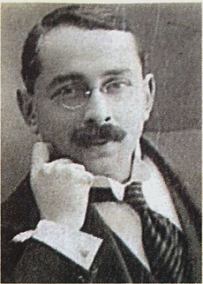
Mustafa Suphi or Mustafa Subhi (1883 – 28 January 1921) was a Turkish revolutionary and communist during the period of dissolution of the Ottoman Empire.
Key Information


Early life
[edit]Suphi was born in 1883 in Giresun Province, in the Ottoman Empire, now located in Turkey. He was educated in Jerusalem, Damascus and Erzurum before he attended Galatasaray High School. He studied political science in Paris, where he was also a correspondent of the Turkish newspaper Tanin. He returned to Turkey in 1910, where he edited the newspaper Ifham. He also gave lectures on law and economics. In 1913 he was accused of involvement in the assassination of Mahmud Şevket Pasha and sentenced to fifteen years of exile in Sinop. There, he contributed articles about western philosophy to the periodicals Ictiha and Hak. However, in 1914 he escaped from Sinop and fled to Russia, where, following the outbreak of the First World War, Russian authorities regarded him as a prisoner of war and sent him into exile in the Ural region.
Communist activism
[edit]
.jpg)
In 1915, he was in the Urals, where he joined the Bolshevik Party. In July 1918, he helped organise the Congress of the Turkish Left Socialists, held in Moscow, and in November, he became involved in Muskom. He was also elected to the Central Committee of the All Russia Muslim Workers section of Narkomnats. He acted as Mirsäyet Soltanğäliev's secretary.[1] In 1918 he founded Yeni Dünya (New World) in Moscow and used it to popularise the foundations of scientific socialism to Turkish prisoners-of-war.[2][3] He was chairperson of the Turkish Section of Eastern Publicity Bureau, and in 1919 attended the First Congress of the Third International as the delegate for Turkey.
At the First Congress of Communist Party of Turkey, held in Baku on 10 September 1920, Suphi was elected its chairman[4] and went to Anatolia. He was one of the 15 communists who went to Turkey to join the Turkish War of Independence. After encountering hostility in Erzurum, the communists tried to return to Baku. However, they were murdered by Sailor Yahya after they had set sail from Trabzon on the night of 28 January 1921. He was possibly murdered by a group of supporters of Enver Pasha from Trabzon, apparently because of the fear that Suphi might expose Enver Pasha's plans of political activities in Moscow and his ultimate intention of using the Bolsheviks to regain power in Turkey once the Turkish National Movement were defeated.[5]
- There is need to provide army service area in order to establish links between the partisan troops in various locations of Anatolia and there is need to establish Military-Revolution Committee so as to strengthen this movement. This organization is going to be independent; but our organization will guide it. All the mission of Military-Revolution Committee of Turkey will concentrate on the direction of progression and preservation of the movement of social revolution both in Soviet Russia and worldwide. It will prove useful for Anatolian movement against English – French occupiers, for the spread of this movement throughout the Caucasus and for the organization of Soviet power in those places. Military-Revolution Committee of Turkey taking control of all the duties in Anatolia by means of making use of the first opportunity, will build Socialist Turkey and run towards the aim of joining hands with neighbour Soviet Russia. (M. Suphi; Moscow, 28 October 1919)[6]
Death
[edit]Suphi was killed by Sailor Yahya together with his communist comrades while traveling to Batumi in the Black Sea on 28 January 1921. It is not entirely clear who arranged the killing, whether the emerging central government in Ankara or old Unionists (Enver Pasha supporters).
See also
[edit]Sources
[edit]References
[edit]- ^ Left Wing of the Turkish Communist Party by Enternasyonalist Komunist Sol, October 2008
- ^ Mirsaid Sultan-Galiev, "Mustafa Subkhi i ego rabota," Zhizn natsionalnostei, no. 14 (112), 16 August 1921.
- ^ Adeeb Khalid (Spring 2011). "Central Asia between the Ottoman and the Soviet Worlds". Kritika: Explorations in Russian and Eurasian History. 12 (2): 455–456. doi:10.1353/kri.2011.0028.
- ^ Özgür Mutlu Ulus (2011). The Army and the Radical Left in Turkey: Military Coups, Socialist Revolution and Kemalism. I.B.Tauris. p. 134. ISBN 9781848854840.
- ^ K Gajendra Singh, Occupation case studies: Algeria and Turkey Asia Times, 7 January 2004
- ^ "Mustafa Suphi and his comrades were massacred 86 years ago". SoL. Archived from the original on 28 September 2007. Retrieved 14 September 2020.
External links
[edit] Media related to Mustafa Suphi at Wikimedia Commons
- (in English) Mustafa Suphi and his comrades were massacred 86 years ago from soL the online newspaper.


Mustafa Subhi
View on GrokipediaEarly Life
Family Background and Upbringing
Mustafa Suphi was born in 1883 in Giresun, a province on the eastern Black Sea coast of the Ottoman Empire.[9][10] His father, Ali Rıza, served as an Ottoman civil servant and attained high administrative ranks, including the governorship of Konya in 1912.[9][8] Little is documented about his mother beyond her origins in a prominent local family, which connected the household to regional elite networks.[11] Suphi's upbringing occurred within the framework of Ottoman bureaucratic mobility, reflecting his father's career in provincial governance, though specific details on family relocations or early childhood experiences remain sparse in historical records. This environment likely exposed him to administrative practices and regional dynamics in Anatolia, fostering an initial orientation toward public affairs before his later radicalization.[9]Education and Initial Influences
Mustafa Suphi was born in 1883 in Giresun on the Black Sea coast, into the family of Ali Rıza, an Ottoman civil servant who rose to the position of governor of Konya Province by 1912.[8][11] His upbringing in a bureaucratic household exposed him to the administrative and reformist currents of the late Ottoman Empire, where state service emphasized modernization efforts amid declining imperial authority.[11] Suphi pursued secondary education at Galatasaray High School in Istanbul, a institution known for its French-influenced curriculum blending Ottoman and Western subjects, before enrolling in the Faculty of Law at Istanbul University (then Darülfünun).[1] He graduated around 1910 and subsequently worked as a high school teacher in provinces such as Erzurum and Van, roles that provided practical insight into regional disparities and ethnic tensions within the empire.[12] These experiences, combined with his legal training, oriented him toward intellectual pursuits, including journalism for outlets like Tanin, the organ of the Committee of Union and Progress (CUP).[13] His initial ideological influences derived from the 1908 Young Turk Revolution, which restored the Ottoman constitution and ignited debates on parliamentary reform, secularism, and anti-sultanate agitation; Suphi initially aligned with CUP's nationalist-progressive faction, penning articles advocating Turkist views.[13] Exposure to European socialist literature during his studies and teaching career gradually shifted his perspective toward materialism and class analysis, evident in his early, unfinished Turkish translation of Karl Marx's Communist Manifesto, reflecting budding Marxist sympathies amid Ottoman socialist circles that critiqued imperial decay.[14] This evolution marked a departure from pure nationalism toward internationalist labor organizing, though still rooted in Ottoman reformist pragmatism rather than full Bolshevik orthodoxy.[1]Pre-Revolutionary Activism
Involvement in Ottoman Socialism
Mustafa Suphi encountered socialist ideas during his studies in political science in Paris around the early 1900s, where he also served as a correspondent for the Ottoman newspaper Tanin, a publication aligned with the Committee of Union and Progress (CUP). Returning to Istanbul in 1908 amid the Young Turk Revolution, in which he participated and earned the moniker "Hero of Liberty" for his role in liberating political prisoners, Suphi transitioned from initial nationalist leanings to active socialist advocacy. As a teacher in Istanbul, he promoted socialist principles through intellectual and organizational efforts within nascent Ottoman socialist circles, which had emerged following the 1908 revolution's liberalization and included groups influenced by European Marxism and local reformist thought.[1][7][13] These activities aligned with the broader Ottoman socialist milieu, characterized by small, fragmented groups such as the Ottoman Socialist Party founded in 1910 by Hüseyin Hilmi Iştirak, which emphasized workers' rights and anti-imperialist reform but dissolved shortly thereafter due to government suppression. Suphi contributed to disseminating Marxist literature and ideas among Ottoman intellectuals and workers, reflecting a generation of socialists who sought to adapt European doctrines to the empire's multi-ethnic, agrarian context amid CUP authoritarianism. His efforts, however, provoked repression; in 1913, the CUP regime arrested him for subversive activities and exiled him to Sinop on the Black Sea, curtailing organized socialist work in the empire.[1][15] From Sinop, Suphi escaped to Romania and then Russia in 1913–1914, evading further Ottoman persecution as World War I escalated and socialist agitation faced intensified crackdowns. This exile effectively ended his direct engagement with Ottoman socialism, though his pre-war propagation of ideas like class struggle and economic equality laid groundwork for later Turkish communist formations. Unlike more doctrinaire European socialists, Suphi's Ottoman phase blended reformist nationalism with emerging Marxist critiques of imperial decay, prioritizing practical agitation over rigid ideology.[1][16]Exile and Exposure to Bolshevik Ideas
In 1913, following the assassination of Grand Vizier Mahmud Şevket Pasha on June 11, Mustafa Suphi was sentenced to exile in Sinop for articles published in his newspaper İfham, which authorities linked to incitement related to the killing.[10] On May 24, 1914, Suphi joined a mass escape from Sinop, crossing the Black Sea by boat to reach Crimea, then under Russian control.[11] This flight positioned him in Russian territory just months before the Ottoman Empire entered World War I against Russia on November 2, 1914. Upon the war's outbreak, tsarist authorities arrested Suphi as an Ottoman subject suspected of espionage, exiling him first to Siberia and later to Turkestan, where he remained under internal deportation until the February Revolution of 1917.[1] During this period in Russian exile, Suphi initially focused on Turkist-nationalist activities among Muslim populations and Ottoman prisoners of war, but by 1915 he began engaging with broader socialist-Marxist thought circulating in Russian intellectual circles.[10] The Bolshevik-led October Revolution later that year profoundly influenced him; freed from tsarist restrictions, Suphi aligned with the new Soviet regime, viewing its anti-imperialist stance and emphasis on class struggle as applicable to Ottoman dissolution and Muslim worker mobilization. In the revolutionary aftermath, Suphi relocated to Odessa and Crimea, where he organized among Turkish-speaking communities, including former Ottoman POWs who had encountered Bolshevik propaganda in Russian camps.[17] He actively propagated Bolshevik ideas, translating key texts such as an unfinished Turkish version of The Communist Manifesto to disseminate Marxist-Leninist principles among Turkic and Muslim groups. This exposure transformed Suphi from a reformist Ottoman socialist into a committed Bolshevik adherent, emphasizing proletarian internationalism over ethnic nationalism; by 1918, he collaborated with Soviet authorities in ideological outreach to Central Asian and Caucasian Muslims, laying groundwork for Comintern-aligned activities.[10] [17] ![Unfinished Turkish translation of the Communist Manifesto by Mustafa Suphi][center]Alignment with Soviet Communism
Activities in Russia and Central Asia
Mustafa Suphi, who had arrived in Russia as a civilian prisoner of war during World War I, aligned himself with the Bolsheviks following the 1917 Revolution and engaged in organizing efforts among Turkish and Ottoman exiles. In July 1918, he organized the Congress of the Turkish Left Socialists in Moscow, aiming to consolidate socialist elements from the region.[18] In November 1918, Suphi participated in Muskom, the Muslim committee of the Moscow Soviet, and was elected to the Central Committee of the All-Russia Muslim Workers' section under Narkomnats, the People's Commissariat for Nationalities.[18] From late 1918 to 1919, he served as secretary to Mirsaid Sultan-Galiev, a prominent Tatar Bolshevik, and chaired the Turkish Section of the Eastern Publicity Bureau, focusing on propaganda directed at Muslim and Turkic audiences.[18] In 1919, Suphi represented Turkey at the First Congress of the Communist International in Moscow and founded the newspaper Yeni Dünya ("New World") to promote scientific socialism among Turkish prisoners of war in Russia.[18] These efforts positioned him as a key figure in adapting Bolshevik ideology for Turkish socialists.[11] In 1919 and 1920, Suphi headed the propaganda bureau of the Third International in Turkistan, conducting outreach to propagate communism among the Turkic peoples of Central Asia amid the Bolshevik consolidation of Soviet power in the region.[19] His work there involved coordinating revolutionary agitation and building networks that extended Bolshevik influence eastward, though specific outcomes were limited by ongoing civil war conditions and local resistance.[20] By mid-1920, with the establishment of Soviet control in Azerbaijan, Suphi shifted his focus toward the Caucasus, preparing for broader organizational initiatives.[1]
Role in Comintern Propaganda
Mustafa Suphi served as the head of the propaganda bureau of the Third International (Comintern) in Turkistan from 1919 to 1920, where he coordinated efforts to disseminate communist ideology among Turkic and Muslim populations in Central Asia.[19] In this role, he focused on agitation and organizational work to build support for Bolshevik principles, leveraging his background as a Turkish socialist to bridge Ottoman dissident networks with Soviet revolutionary aims.[21] His activities included directing the Turkish section of the Eastern Publicity Bureau, which produced materials tailored for Eastern audiences to counter imperialist influences and promote proletarian internationalism.[22] A key contribution was Suphi's partial translation of The Communist Manifesto into Turkish in 1919, an unfinished but influential effort to adapt Marxist texts for Ottoman and Anatolian readers, facilitating underground distribution amid wartime restrictions.[23] Earlier, during World War I, he had engaged in propaganda among Turkish prisoners of war in Russia, studying Marxism and organizing study circles to radicalize captives against the Ottoman regime.[24] As a delegate representing Turkestan at the First Congress of the Comintern in March 1919, Suphi advocated for expanded revolutionary outreach to the Islamic world, emphasizing the compatibility of communism with anti-colonial struggles.[25] Suphi's propaganda work aligned with Comintern directives to foster communist parties in peripheral regions, though it faced challenges from factional disputes within Turkish socialist groups and resistance from nationalist elements.[14] His efforts laid groundwork for the founding of the Communist Party of Turkey in 1920, but prioritized ideological dissemination over immediate political control, reflecting Comintern's broader strategy of indirect influence through cultural and agitational means rather than direct military intervention.[26]Founding the Communist Party of Turkey
Organizational Efforts in the Caucasus
In early 1920, Mustafa Suphi, acting under the auspices of the Communist International (Comintern), initiated efforts to consolidate fragmented Turkish socialist and communist factions exiled in Russia and the Caucasus region, many of whom were former Ottoman prisoners of war, intellectuals, and activists displaced by World War I and the Russian Civil War.[3] These groups, numbering around 15 distinct organizations with ideological roots in Ottoman-era socialism, had been operating disjointedly in areas like Baku, Azerbaijan, where Suphi established a base for coordination.[27] His activities included recruitment drives among Turkish émigrés, dissemination of Bolshevik propaganda translated into Turkish, and restructuring informal networks into a centralized bureau, such as the reorganized Turkish Socialists-Communists group, to align them with Leninist principles of party discipline and proletarian internationalism.[28] This groundwork addressed the lack of unified leadership, as prior attempts at socialist unity in Istanbul had faltered amid Ottoman repression.[29] The culmination of these organizational endeavors occurred with the convening of the founding congress of the Communist Party of Turkey (TKP) in Baku on September 10, 1920, attended by approximately 75 delegates representing the amalgamated factions.[30][31] Suphi presided over the proceedings, which adopted a party program emphasizing anti-imperialist struggle, workers' soviets, and support for the Turkish National Movement against Allied occupation, while subordinating national efforts to global proletarian revolution as directed by Moscow.[32] He was elected as the party's first chairman (or secretary-general), with Ethem Nejat appointed as his deputy, forming a 15-member Central Committee tasked with expanding influence into Anatolia.[20] The congress, held amid the broader Congress of the Peoples of the East in Baku, leveraged the city's strategic position as a Soviet hub for Eastern revolutionary activities to legitimize the TKP's formation and secure Comintern funding and logistical support.[31] These Caucasus-based efforts marked a shift from ad hoc socialist agitation to a structured Bolshevik vanguard party, though they were constrained by Soviet priorities favoring tactical alliances with Turkish nationalists like Mustafa Kemal over immediate communist insurgency. Suphi's group produced manifestos and periodicals in Turkish, such as unfinished translations of Marxist texts, to ideologically prepare cadres for infiltration into Anatolia, but internal debates arose over the balance between national liberation and class war, reflecting tensions in Comintern strategy.[3] By late 1920, the party had formalized cells in Baku and surrounding areas, numbering several hundred members, setting the stage for their attempted relocation to Turkey despite emerging frictions with Ankara's emerging regime.[33]First Congress and Leadership
The first congress of the Communist Party of Turkey (TKP) convened in Baku on September 10, 1920, marking the formal founding of the party through the unification of various socialist and communist groups operating among Turkish exiles and in Soviet-controlled territories.[30][14] The gathering, held under the auspices of the Bolshevik government in Azerbaijan and aligned with the Third International (Comintern), involved representatives from approximately 15 factions and around 75 delegates, superseding earlier provisional organizations formed earlier that year.[27][1] At the congress, Mustafa Suphi was elected as the party's first chairman, with Ethem Nejat appointed general secretary, reflecting Suphi's prominent role in propagating Bolshevik ideas among Turkish intellectuals and workers during his time in Russia and Central Asia.[1][7] A central committee of seven members was also established to direct party activities, emphasizing centralized leadership modeled on Leninist principles.[1] The congress adopted a program advocating proletarian revolution in Turkey, anti-imperialist struggle against the Allied occupation, and alliance with Soviet Russia, though these positions were shaped by Comintern directives rather than independent Turkish conditions.[14] Suphi's leadership focused on organizing clandestine networks in Anatolia while maintaining close ties to Moscow, positioning the TKP as a tool for Soviet influence in the post-World War I Near East amid the Turkish War of Independence.[34] However, the party's reliance on external Soviet support limited its grassroots appeal in Turkey, where nationalist sentiments dominated, and internal divisions soon emerged between Suphi's faction and rival groups loyal to Ankara's government.[14]Attempted Return and Nationalist Confrontations
Entry into Anatolia Amid War of Independence
In late 1920, following the founding of the Communist Party of Turkey (TKP) in Baku on September 10, Mustafa Suphi led a delegation of approximately 15 party leaders and cadres in an attempt to relocate the organization's base to Anatolia, aiming to integrate communist activities with the ongoing Turkish War of Independence against Allied occupation forces.[14][7] The move was motivated by Suphi's belief that direct participation in the nationalist resistance could facilitate the spread of Bolshevik-inspired revolution, potentially leveraging Soviet support for the Ankara government while establishing TKP influence amid the conflict.[11] The delegation departed Baku toward the end of December 1920, crossing the Soviet-Turkish border and entering Anatolia via Kars on December 28.[35] From Kars, the group proceeded inland toward Erzurum before heading to the Black Sea port of Trabzon, intending to link up with nationalist forces under Mustafa Kemal Pasha and propagate communist organizing in the war-torn region.[7] This itinerary reflected strategic calculations to avoid direct confrontation with entrenched nationalist authorities in central Anatolia while exploiting the fluid eastern front, where Soviet influence was stronger due to prior Bolshevik advances into the Caucasus.[36] Upon reaching Trabzon in early January 1921, the delegation encountered immediate hostility from local nationalist elements aligned with the Ankara government, who viewed the communists as a potential subversive threat amid the war's precarious balance against Greek advances in western Anatolia.[7] Organized protests greeted their arrival, orchestrated by regional officials to signal rejection of Bolshevik-aligned ideologies, despite Suphi's overtures for collaboration in the independence struggle; the group was confined and preparations made to deport them back across the border, underscoring the nationalists' prioritization of unified command over ideological pluralism.[8] This reception highlighted underlying tensions, as Ankara accepted limited Soviet material aid but resisted internal communist agitation that could undermine the movement's broad-based appeal among conservative and religious Anatolian populations.[7]Ideological and Political Clashes
Upon arriving in Anatolia in late December 1920 with a Comintern-backed delegation of 15 communists, Mustafa Suphi sought to align the nascent Communist Party of Turkey (TKP) with the nationalist resistance led by Mustafa Kemal, framing it as a united front against imperialism while advancing Bolshevik organizational goals. In correspondence with Kemal, Suphi expressed intent to conduct communist activities legally within the nationalist framework, proposing the integration of TKP structures into the independence movement to propagate class-based mobilization alongside anti-Entente efforts.[37] However, this overture revealed core ideological divergences: Suphi's internationalist communism emphasized proletarian revolution and Soviet-style soviets, clashing with Kemal's pragmatic nationalism, which prioritized ethnic Turkish unity, bourgeois alliances, and suppression of internal divisions to sustain the war effort.[3] Initial tolerance from Ankara authorities allowed Suphi's group limited operations, including propaganda distribution and recruitment in regions like Trabzon and Ankara, but these efforts quickly provoked political friction as TKP cadres agitated for worker councils and criticized nationalist reliance on traditional elites and landowners.[14] Kemalist forces, viewing such activities as subversive to national cohesion amid existential threats from Greek advances and internal revolts, initiated crackdowns; by early 1921, communist cells faced arrests and dissolution orders, exemplified by the suppression of TKP branches in Anatolian cities where they competed with the nationalist Defense of Rights committees.[38] Suphi's insistence on Comintern directives, including calls for land redistribution and arming peasants independently of Kemal's command, exacerbated tensions, as nationalists perceived these as undermining centralized military authority and inviting Soviet interference beyond material aid.[39] The clashes extended to factional rivalries within leftist circles, where Suphi's pro-Bolshevik wing opposed pro-Kemalist socialists who advocated subordination to the nationalist agenda, leading to purges and realignments that weakened communist cohesion.[14] Even Soviet policy pragmatically favored bolstering Kemal's forces over Suphi's ideologically rigid TKP, recognizing the nationalists' greater efficacy against Western powers despite ideological misalignment, which further isolated Suphi's delegation and highlighted the causal primacy of geopolitical realism over doctrinal purity in early Soviet-Turkish interactions.[40] By mid-1921, as Kemalist victories solidified, overt communist agitation was reframed as a threat to the emerging republican order, culminating in the regime's systematic marginalization of Suphi's followers through surveillance, exile, and violence, underscoring the incompatibility of vanguard communism with the authoritarian nationalism that defined the Turkish independence struggle.[41]Death
Immediate Circumstances
On January 24, 1921, Mustafa Suphi, founder and central committee chairman of the Communist Party of Turkey (TKP), along with approximately 15 leading party members—including his wife Kaveh—arrived by caique in Trabzon from the Soviet-controlled port of Batum, intending to enter Anatolia and integrate their organization with the ongoing nationalist resistance against Allied occupation.[3] The group had departed Baku earlier that month, traveling overland through Georgia amid deteriorating relations between the Kemalist movement in Ankara and Soviet-backed communist initiatives, which were perceived as threats to national unity during the Turkish War of Independence.[14] Upon docking in Trabzon, a Black Sea port under the control of local defense committees aligned with the Ankara government, the communists encountered immediate hostility from provincial authorities and civilian militias, who viewed their Soviet affiliations and ideological agenda as subversive to the independence struggle.[3] Suphi's delegation sought permission to proceed inland to establish TKP branches and coordinate with Mustafa Kemal's forces, but Trabzon's governor, supported by nationalist enforcers, denied entry, citing risks of Bolshevik infiltration and prior telegraphic warnings from Ankara against admitting foreign radicals.[14] Tensions escalated with public demonstrations against the group, forcing them to remain under guard at a hotel while negotiations failed over several days. On January 28, 1921, under orders from local officials to avert further unrest, Suphi and his comrades—totaling 16 individuals—were compelled to re-embark on two small open boats provided by Trabzon authorities for the return voyage to Batum, approximately 150 kilometers along the coast.[3] The caiques departed in the evening amid reports of armed escorts shadowing them; within hours, the vessels vanished in the Black Sea, with no distress signals or wreckage initially reported, marking the abrupt end to the group's attempt to penetrate Anatolia.[14] Subsequent coastal searches yielded no confirmed recoveries, though unverified local accounts described debris washing ashore near Ünye days later.[7]Official Accounts Versus Eyewitness Reports
The Turkish nationalist authorities, including representatives of the Grand National Assembly, initially reported that Mustafa Suphi and his 14 comrades perished on January 28, 1921, when their caïque capsized in the Black Sea due to inclement weather during their attempted return from Trabzon to Batum.[35] This account portrayed the incident as a tragic maritime accident, emphasizing rough seas and the small vessel's instability, thereby avoiding implications of deliberate violence amid fragile Soviet-Turkish relations post the Treaty of Moscow in March 1921.[3] In contrast, contemporaneous eyewitness testimonies from Trabzon locals and participants described a premeditated assault: an armed caïque dispatched from the port, commanded by Nuri Dermenkurt under orders from Yahya Kahya—leader of the Trabzon branch of the Defense of Rights Society—overtook Suphi's boat, boarded it, and executed the communists through beatings and stabbings before dumping their bodies overboard to simulate a drowning.[7] Surviving accounts, including those from individuals involved in the operation who later confessed during regional inquiries, corroborated the absence of any storm severe enough to sink the vessel independently, with the murders motivated by fears of communist agitation against the nationalist War of Independence.[8] These discrepancies highlight tensions between state-sanctioned narratives, which prioritized diplomatic expediency and internal unity by denying culpability, and direct reports from perpetrators and observers, which revealed coordinated elimination of perceived threats; no bodies were recovered to resolve the claims empirically, but the eyewitness details align with patterns of localized vigilantism against Bolshevik-aligned figures in Anatolia during late 1920.[32] Soviet protests in February 1921 invoked these local testimonies to accuse Ankara of orchestration, though lacking forensic evidence, the official drowning version persisted in Turkish records until post-1923 archival revelations shifted historiographic consensus toward murder.[14]Controversies Surrounding Death
Nationalist Involvement Theories
Theories attributing Mustafa Suphi's death to involvement by Turkish nationalist forces center on the actions of local irregular fighters in Trabzon, who operated under the broader authority of the nationalist movement led by Mustafa Kemal during the Turkish War of Independence. On January 28, 1921, Suphi and 14 comrades, after arriving in Trabzon from Soviet-backed regions, were reportedly confronted by a gang led by Yahya Kaptan, a notorious bandit and self-proclaimed nationalist enforcer known for suppressing perceived threats to the independence struggle. According to accounts, the group was beaten, robbed, and forcibly loaded onto a motorboat before being thrown overboard into the Black Sea, with their bodies later washing ashore mutilated and showing signs of violence.[8][37] Proponents of nationalist involvement argue that Yahya Kaptan's group acted with tacit approval or implicit direction from higher nationalist commands, as Suphi's delegation had been rerouted to Trabzon rather than permitted to proceed to Ankara for direct engagement with Kemal's government. Historical analyses note that Eastern Front commander Kâzım Karabekir instructed Suphi to travel via Trabzon, a region rife with anti-communist sentiment amid fears that Soviet-influenced communists could undermine the nationalists' anti-imperialist unity by promoting class conflict over national solidarity. Kemal himself had refused an earlier invitation to meet Suphi, signaling wariness toward the Communist Party of Turkey's potential rivalry for influence in Anatolia.[42][41] These theories emphasize the strategic context: nationalists viewed Suphi's return—backed by Bolshevik resources—as a threat to consolidate power against Allied occupation, especially after the Turkish Grand National Assembly's suppression of leftist elements in late 1920. Eyewitness reports and subsequent lack of official investigation into the killings, despite bodies confirming homicide, bolster claims of complicity, with Yahya Kaptan evading immediate reprisal from nationalist authorities before his own death months later. However, direct evidence of orders from Kemal or central command remains circumstantial, relying on patterns of selective tolerance for vigilante actions against ideological opponents.[41][8]Soviet Complicity Hypotheses
Some hypotheses posit that the Soviet leadership bore indirect responsibility for the deaths of Mustafa Suphi and his comrades through deliberate inaction or strategic abandonment, prioritizing geopolitical alliances with the Turkish nationalist government in Ankara over support for Turkish communists. Proponents argue that Moscow, aware of the hostile reception awaiting Suphi's delegation upon their arrival in Anatolia from Baku in late December 1920, failed to provide adequate protection or contingency measures despite initial Comintern endorsement of the Turkish Communist Party (TKP) under Suphi's leadership. This perspective highlights the absence of any immediate diplomatic protest or condemnation from Soviet authorities following the January 28–29, 1921, killings off Trabzon, interpreting such silence as tacit acceptance to avoid jeopardizing emerging Soviet-Turkish relations.[9][8] Further supporting this view, Soviet newspapers did not report the murders until May 1921, over three months after the event, while on March 16, 1921, the Treaty of Moscow was signed between Soviet Russia and the Grand National Assembly government, establishing mutual recognition, border agreements, and Soviet material aid to Turkish forces—despite documented Kemalist orchestration of anti-communist hostility in Anatolia that preceded the assassination. Analysts critical of early Bolshevik foreign policy, including those examining the shift toward national-interest-driven diplomacy, contend this timeline reflects a calculated sacrifice of Suphi's faction, viewed as potentially disruptive to Soviet aims of countering Western imperialism through accommodation with Mustafa Kemal's regime. Suphi's emphasis on independent TKP activities in Anatolia, rather than subordination to nationalist priorities, may have positioned his group as expendable in Moscow's calculus, especially amid internal Comintern debates and the need to neutralize Enverist rivals without alienating Ankara.[14][43] These hypotheses, often advanced in leftist critiques of Soviet pragmatism and Turkish historical analyses, lack direct archival evidence of orders from Moscow but draw on the pattern of Soviet tolerance for Kemalist repression of communists post-1921, including the dissolution of TKP branches and exile of survivors. Counterarguments emphasize that Soviet support for Suphi originated from Baku, where he organized the TKP's founding congress in September 1920 under Leninist auspices, and attribute the inaction to intelligence gaps or logistical constraints rather than intent. Nonetheless, the episode underscores tensions between ideological internationalism and realpolitik, with Moscow's subsequent aid to Kemal—totaling gold and weapons shipments—solidifying the alliance at the expense of Turkish revolutionary elements.[9][14]Alternative Explanations and Lack of Evidence
Despite persistent theories attributing Mustafa Suphi's death on January 28-29, 1921, to orchestrated murder by nationalist forces, Enver Pasha's agents, or Soviet intrigue, alternative interpretations posit accidental circumstances amid the Black Sea's volatile weather. Initial reports from Trabzon officials claimed the communist delegation, after disembarking and facing local hostility, boarded a return vessel where a dispute with the captain escalated during a storm, leading to several members, including Suphi, falling overboard and drowning. [9] This account, echoed in some contemporary telegrams to Ankara, emphasized nautical mishap over premeditation, potentially exacerbated by the group's inexperience with regional seas and the era's frequent shipwrecks. [10] Such explanations, however, conflict with survivor and eyewitness testimonies describing deliberate violence, including beatings by local militia under Captain Yahya Kahya before submersion. No forensic corroboration exists, as bodies were either unrecovered or washed ashore unidentified, precluding autopsies amid wartime disarray. [8] The reliance on oral accounts—often from politically motivated locals or communist exiles—introduces credibility issues, with inconsistencies in details like the exact number of victims (reported as 15-17) and sequence of events. [7] Broader evidentiary gaps undermine conclusive attributions to central figures. No archival documents, such as explicit orders from Mustafa Kemal's government or Enver's network, have surfaced to prove orchestration beyond local execution; theories of Ankara's complicity rest on circumstantial inferences from subsequent anti-communist policies. Similarly, Soviet hypotheses lack primary evidence, drawing instead from post-facto diplomatic shifts favoring Kemalist-Turkish ties. [14] Historians highlight the Turkish National Movement's decentralized structure in early 1921, where provincial actors like Trabzon's anti-Bolshevik elites acted autonomously amid fears of communist subversion, rendering higher-level culpability speculative without material proof. [8] This evidentiary void, compounded by suppressed investigations and the era's documentation losses, sustains ambiguity over intent versus opportunistic tragedy.Legacy
Influence on Turkish Communism
Mustafa Suphi played a foundational role in establishing organized communism in Turkey by founding the Communist Party of Turkey (TKP) on September 10, 1920, in Baku, where he unified disparate socialist and communist groups among Turkish exiles and prisoners of war influenced by the Bolshevik Revolution.[44] As the party's first chairman, Suphi aligned the TKP with the Third International (Comintern), emphasizing proletarian internationalism while seeking to support anti-imperialist struggles, including the Turkish War of Independence led by Mustafa Kemal.[3] His leadership involved ideological training and propaganda efforts, such as agitating among Ottoman prisoners in Russia from 1915 onward and participating in the 1918 Turkestan Congress to propagate Marxist ideas.[18] These activities marked the first structured attempt to import Bolshevik organizational models into Turkish leftist circles, shifting from pre-war anarcho-syndicalist tendencies to a centralized, Leninist party structure.[3] Suphi's influence extended to practical mobilization, as he led a delegation of 15 TKP members from Baku to Anatolia in late December 1920, intending to integrate communist forces into the nationalist resistance against Allied occupation.[32] This initiative, backed by Soviet endorsement, aimed to position the TKP as a radical ally in the independence struggle, but it encountered immediate resistance from Kemalist authorities wary of Comintern interference.[26] Despite the failure—culminating in Suphi's death on January 28, 1921—his efforts established the TKP as the primary vehicle for communism in Turkey, prompting its rapid affiliation with the Comintern in 1921 and influencing the party's clandestine operations thereafter.[44] The suppression of Suphi's faction represented a pivotal rupture, forcing Turkish communism underground and curtailing early attempts at mass mobilization, yet his legacy endured as a symbol of Bolshevik-inspired radicalism.[3] Subsequent TKP leaders invoked Suphi's martyrdom to legitimize their persistence against state repression, with his unfinished Turkish translation of the Communist Manifesto underscoring his commitment to vernacular ideological dissemination.[18] This foundational work, combined with the party's survival in exile and illegality, shaped Turkish communism's orientation toward Soviet models, though it also highlighted tensions between internationalist ideology and nationalist priorities that persisted into the interwar period.[44]Broader Historical Assessments and Criticisms
Mustafa Suphi is historically assessed as the foundational leader of organized communism in Turkey, having established the Turkish Communist Party (TKP) on September 10, 1920, in Baku with Soviet backing, which represented the first structured attempt to propagate Marxist-Leninist ideology amid the Turkish War of Independence.[10] His initiatives included translating key texts like the Communist Manifesto into Turkish and forming alliances with Tatar and Anatolian socialist groups, aiming to integrate communist organizing into the anti-imperialist struggle against Allied occupation.[10] Scholars note that Suphi's return to Anatolia in December 1920 sought to subordinate TKP activities to Mustafa Kemal's nationalist forces, reflecting a tactical prioritization of national liberation over immediate proletarian revolution, though this alignment ultimately failed.[45] Criticisms of Suphi's legacy often highlight his early ideological inconsistencies and external dependencies, portraying him as insufficiently internationalist. Prior to his communist turn, Suphi contributed articles to the Unionist newspaper Tanin espousing Turkist-nationalist views, which later Marxist critics argued diluted class struggle by accommodating ethnic nationalism—a stance at odds with Bolshevik orthodoxy.[13] Turkish anti-communist historiography, dominant in official narratives, depicts Suphi as a Soviet puppet whose TKP activities, funded and directed from Moscow, aimed to subvert Kemalist sovereignty by promoting foreign-influenced upheaval, thereby justifying their elimination as a national security imperative.[46] Left-wing evaluations, conversely, fault Suphi for naively trusting Kemalist overtures, leading to the TKP's decapitation and a half-century of revisionist dormancy in Turkish communism, though these critiques acknowledge the repressive context over personal culpability.[7] Such polarized interpretations underscore systemic biases: academic and leftist sources emphasize Suphi's martyrdom as stifling indigenous radicalism, while state-aligned accounts, reflecting entrenched anti-communist sentiments, minimize his agency to amplify narratives of external threats.[47]References
- https://en.prolewiki.org/wiki/Communist_Party_of_Turkey_%28historical%29
- https://commons.wikimedia.org/wiki/File:Manifesto_of_the_Communist_Party%2C_translated_to_Turkish_language_by_Mustafa_Suphi_%28unfinished%29.jpg