


Community hub
NK Maribor
View on Wikipedia
Nogometni klub Maribor (English: Maribor Football Club) is a Slovenian professional football club based in Maribor, Slovenia. It competes in the Slovenian PrvaLiga, the top tier of the Slovenian football league system. Nicknamed "The Purples" (Vijoličasti), the club was founded on 12 December 1960. They are regarded as a symbol of Slovenian football, particularly in their home region of Styria in northeastern Slovenia.
Key Information


Maribor have won a record 16 Slovenian PrvaLiga titles, 9 Slovenian Cups and 4 Slovenian Supercups. The club won seven consecutive league titles between 1997 and 2003, and five consecutive titles between 2011 and 2015. Prior to Slovenia's independence in 1991, Maribor played in the Yugoslav football system. They won the Yugoslav second division in 1967 and were therefore promoted to the top-level Yugoslav First League, where they stayed until 1972. They are one of three Slovenian teams that participated in the Yugoslavia's highest division between the end of World War II in 1945 and the breakup of Yugoslavia in 1991.
Maribor is the only Slovenian club that reached the group stages of the UEFA Champions League and the UEFA Europa League. In addition, the club is one of the two founding members of the Slovenian PrvaLiga (along with Celje) which have never been relegated from the league since the inaugural 1991–92 season.
The club have a long-standing rivalry with Olimpija from the capital Ljubljana, with whom they contest the Eternal derby. Other rivalries include those with Celje, dubbed as the Styrian derby, and the Prekmurje–Styria derby, contested between Maribor and Mura. Maribor's home ground is the Ljudski vrt stadium, which has a capacity of 11,709 seats. The traditional colours of the club are purple, yellow and white.
History
[edit]Founding and early years (1960–1967)
[edit]Nogometni klub Maribor was founded on 12 December 1960 by officials and players of NK Branik Maribor, a club that folded a few months earlier.[2][3] Srečko Koren was appointed the first president of the club, and Andrija Pflander the first head coach.[2] The club played their first friendly match on 5 February 1961 against Kovinar, defeating them 2–1 with two goals by Stefan Tolič.[4][5] In their first season, Maribor won the Slovenian Republic League (third tier in Yugoslavia) and qualified for the 1961–62 Yugoslav Second League through the play-offs.[5] In 1961, the club also moved to a newly built Ljudski vrt stadium. After six seasons in the second division, Maribor won the league and was promoted to the top flight Yugoslav First League in the 1966–67 season.[6]

Yugoslav top division (1967–1972)
[edit]Maribor played their first match in the Yugoslav top tier against Vardar in Skopje; Maras scored the only goal for Maribor in a 1–1 draw.[7] Their first win came in August 1967, when Maribor defeated Proleter Zrenjanin 3–0 at home.[7] During the season, the first ever match in the Yugoslav top flight involving two clubs from Slovenia was held, when Maribor hosted a goalless match against their rivals Olimpija from Ljubljana in front of 13,000 spectators.[7][8] Each match between the two sides during this period attracted large crowds, with attendance sometimes as high as 20,000.[9] Maribor finished their inaugural top division season in 12th place out of 16 teams.[10]

In the 1969–70 season, Maribor finished 10th out of 18 clubs, their highest ever ranking in Yugoslav football.[11] Their last season in the top division was 1971–72, when the team finished dead last with just 20 points in 34 matches.[12] Mladen Kranjc was Maribor's top scorer in each of the five Yugoslav top division seasons, scoring a total of 54 league goals, which eventually led to his transfer to one of the top Yugoslav clubs, Dinamo Zagreb.[13] During their five-year stay in Yugoslav's top division, the club played a total of 166 league matches and achieved 40 wins, 57 draws and 69 defeats.[7]
Dark years and bribery scandal (1972–1991)
[edit]In the 1972–73 season, Maribor were competing in the second tier. They finished the season in second place, only behind Zagreb,[14] which meant that they qualified for the Yugoslav first division promotion play-offs.[15] In the first qualifying round against Montenegrin side Budućnost, Maribor won on penalties and qualified for the decisive round against Proleter.[15] The first leg was played at home on 8 July 1973, and is acknowledged as one of the most memorable matches in the history of Maribor, as it still holds the club's home attendance record.[15] There were 20,000 spectators, 15,000 of whom were already present in the stands almost three hours before the start, eventually helping Maribor to win the game 3–1.[16] However, the two-goal advantage proved to be insufficient as Proleter won the second leg 3–0 and was promoted.[15] When the score was 1–0 for Proleter, Josip Ražić equalised in the 23rd minute, but the goal was not awarded by the referee. Later, the television replay showed that the ball had actually crossed the goal line and that the goal should have stood.[15]
The period between 1973 and 1991 is one of the darkest in the club's history. In the following 1973–74 season, the club failed to stay near the top of the second division and finished the season in 13th place.[17] In the 1974–75 season, Maribor were relegated to the third-tier Slovenian Republic League for the first time in 14 years, but the club immediately returned to the second division by being 15 points clear at the top of the Republic League table at the end of the 1975–76 season.[18] The club nearly returned to the top tier in 1978–79 when they finished as runners-up of the second division, six points behind Bosnian side Čelik Zenica,[19] but failed to win the promotion play-offs.
At the end of the 1980–81 season, after Maribor managed to avoid relegation from the second Yugoslav division, a bribery scandal emerged and caused the club to be relegated by the decision of the Football Association of Yugoslavia disciplinary committee.[20][21] The club allegedly had a secret fund that served to bribe officials and opponents. The fund was abolished in 1968 after the club's promotion to the first division, but was later established again in 1976.[20] After the scandal and the subsequent relegation, Maribor spent the following years bouncing between the second and third Yugoslav divisions until Slovenia's independence in 1991.
Domestic domination after independence (1991–2004)
[edit]


Following Slovenia's independence in June 1991, Maribor were one of the founding members of the newly formed Slovenian First League for the inaugural 1991–92 season.[23] In the first few seasons, Maribor's rivals Olimpija from Ljubljana dominated the league.[24] Nevertheless, Maribor managed to win the first edition of the Slovenian Cup in 1992 after beating Olimpija 4–3 on penalties in the final.[25] In the next season, Maribor made their debut in international UEFA competitions, appearing in UEFA Cup Winners' Cup. They played their first international match on 19 August 1992, when they hosted Ħamrun Spartans of Malta and won 4–0.[26] Ante Šimundža scored the first European goal for the club.[23] Maribor were Slovenian League runners-up in 1991–92, 1992–93 and 1994–95, before finishing fourth in the 1995–96 season. During this period Maribor won another cup title in 1993–94, defeating Mura 3–2 on aggregate over two legs in the final.[27]
The 1996–97 season proved to be a turning point in the club's history, as Maribor won the league and became champions for the first time.[23] During the season, their average home attendance was 5,289, which is still a record today.[28] The final match of the season was played on 1 June 1997 against Beltinci in front of 14,000 spectators,[29] which is also a joint-record of the Slovenian top division.[30] In that season Maribor also won the 1996–97 Slovenian Cup, thus winning the domestic double, a feat they repeated in the 1998–99 season. After their first title in 1996–97, Maribor went on to win six more titles, bringing their total number to seven consecutive titles by 2003.[31] In the 1999–2000 season, the club, led by head coach Bojan Prašnikar, defeated Genk and Lyon in the qualifying rounds of the 1999–2000 UEFA Champions League and thus qualified for the group stage of the competition for the first time.[32] Maribor were drawn into the group with Dynamo Kyiv, Bayer Leverkusen, and Lazio. They finished in last place with four points out of six games.[33]
Financial difficulties (2004–2008)
[edit]The 2003–04 Slovenian Cup was the last trophy won by Maribor before the club declined for several years. Between 2004 and 2007, the club was plagued by major financial difficulties, and even came close to being disbanded at one point.[34] Due to their large debts, which at one point amounted to over €3 million, the club could not afford to buy new players.[34] As a result, the first team at the time consisted mostly of youth players mixed with a couple of foreign players brought to the club on free transfers. In the autumn of 2006, the leadership of the club changed, and it was not until January 2011 that the club announced that the debt had been paid in full.[35] During this period, Maribor never finished higher than third in the league, and were runners-up of the Slovenian Cup twice, in 2007 and 2008.[27] They were, however, one of the eleven winners of the 2006 UEFA Intertoto Cup, in which they defeated Spanish side Villarreal 3–2 on aggregate in the final round, only a couple of months after Villareal had played in the semi-final of the UEFA Champions League.[36]
Zlatko Zahovič's golden era (2008–2020)
[edit]
In July 2007, Maribor appointed former Slovenian international Zlatko Zahovič as the club's sporting director, which marked the beginning of the golden era of the club.[37][38]
In May 2008, Maribor played their first match at the renovated stadium in front of over 12,000 spectators.[39] In the same month, Darko Milanič, who later became the most successful manager in the club's history, was appointed as manager.[40] Under his leadership, Maribor won the league in the 2008–09 season, their first title in six years.[41] The following season, they failed to retain the league title, finishing second behind Koper.[42] However, they won the cup title after beating Domžale 3–2 in the final, as well as their first ever Slovenian Supercup title after beating Interblock.[43]
At the end of 2010, the club celebrated its 50th anniversary,[44] and also secured its ninth Slovenian league title during the course of the season.[45] In the following years, Maribor won four more consecutive titles, bringing the total championship tally to 13,[46] before finally losing the title in 2016 to their biggest rivals Olimpija Ljubljana.[47] In 2012, Maribor also obtained a record number of points (85).[48] Furthermore, Maribor also won two back-to-back doubles in this period, beating Celje on both occasions in the 2012 and 2013 Slovenian cup finals.[49][50]
In 2011, Maribor made a breakthrough in international competitions. They eliminated Rangers in the UEFA Europa League play-offs and qualified for the group stage, their first group stage appearance in European competitions in more than a decade.[51] They obtained one point in six matches, holding Braga to a 1–1 draw at home.[52] In the next season, they again qualified for the group stage, and managed to win four points after defeating Panathinaikos and drawing with Tottenham Hotspur, both at home.[53]
.jpg)
In their third consecutive appearance in the group stage, in 2013–14, Maribor advanced to the knockout phase of the 2013–14 UEFA Europa League for the first time.[54] In the round of 32, they were eliminated by the eventual winners of the competition, Sevilla, 4–3 on aggregate.[55] Their successful European run was upgraded in the 2014–15 season, when Maribor finally qualified for the UEFA Champions League group stage for the second time in their history, after eliminating Celtic in the play-offs.[56] They were drawn into Group G with Chelsea, Schalke 04, and Sporting CP. After a draw and a defeat against each team, Maribor won three points in six matches.[57]
In 2015–16, Maribor failed to win the league title for the first time in six years,[47] but reclaimed the throne the following season, winning their 14th national title.[58] As Slovenian champions, Maribor represented Slovenia in the 2017–18 UEFA Champions League, and for the third time in the club's history reached the group stage.[59] Maribor competed in Group E, along with Spartak Moscow, Sevilla, and Liverpool. The club again obtained three points in six matches, the same as in 2014, after drawing with Sevilla at home and twice against Spartak.[60] Their 7–0 defeat to Liverpool was the club's heaviest home defeat in European competitions, and their second highest European defeat overall.[61] In the same season, Maribor failed to win a trophy for the first time since 2007–08, losing the league title to Olimpija on head-to-head record after finishing with the same number of points.[62] Olimpija also eliminated Maribor in the quarter-finals of the national cup, and therefore Maribor failed to reach the semi-finals of the competition for the first time since 2002–03.[63]
In 2018–19, Maribor won its 15th national title under the guidance of Milanič, who won his sixth league title with the club and became the most successful manager in the Slovenian top division.[64][65] However, Milanič and Zahovič left the club in March 2020 after a series of poor results.[66] During Zahovič's era, Maribor won eight league titles and reached the UEFA Champions League group stages twice.[67]
Club identity
[edit]Colours, kits and nicknames
[edit]Throughout the entire history of NK Maribor, the main colour of the club has been purple.[68] For this reason, the team is nicknamed "The Purples" (Vijoličasti)[69][70] and "The Violets" (Vijolice).[71][72] The club is also referred to as the "Viole", predominantly in the region of the former Yugoslavia.[73][74]
When NK Maribor was established, some of the club officials were in favour of red and white colours, inspired by the coat of arms of the city of Maribor.[75][76] However, because many football teams in Yugoslavia already wore red and white jerseys, Maribor officials decided for a new and fresh combination.[76] They decided to follow the example of Fiorentina and their purple and white combination.[68] Oto Blaznik, the first captain of the club, was the one who suggested the combination after seeing the Italian team in La Gazzetta dello Sport.[68][76] Since it was almost impossible to get purple kits in Yugoslavia in 1961, the players painted them themselves.[76] The club's secondary colours are yellow and white.[77][78]
In March 1973, the name of the sponsor first appeared on Maribor kits.[79] Since Slovenia's independence in 1991, the main kit sponsors have been Pivovarna Laško, OTP banka (Nova KBM prior 2024) and Zavarovalnica Sava (Zavarovalnica Maribor prior 2016).[80]
   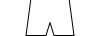  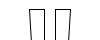 Maribor's first kit in the 1960s had white shorts. |
 1997 home kit variation with yellow sleeves, when Maribor won its first league title. |
In the first part of the 2000s, Maribor occasionally played its home matches in yellow kits. |
Current all-purple home kit, predominantly in use with only minor modifications.
|
Kit manufacturers
[edit]| Period | Kit manufacturer |
|---|---|
| –1995 | Erreà[81] |
| 1996–2006 | Nike[82] |
| 2007–2011 | Zeus Sport[83] |
| 2011–present | Adidas[84] |
Crest
[edit]The current crest of the club is based on the official coat of arms of the city of Maribor, which is in turn based on a 14th-century seal with minor differences.[85] The badge is formed in a shape of a shield, and shows the former Piramida Castle that used to stand on top of the Pyramid Hill before it was demolished at the end of the 18th century.[86] A violet blossom forms the backdrop.[86] Unlike the coat of arms of the city of Maribor, the club's current badge does not represent a white dove facing down towards the castle, but a minimalist portrayal of a person.[86] At the top of the shield the name of the club and the year of its foundation is inscribed.[86] The entire badge uses only two colours, purple and yellow.[86] Previous versions of the crest included white, one of the club's traditional colours, in the form of a white castle in the centre and a white ball that was on top of the shield. Since May 2012, the crest includes a yellow star at the top, indicating the first ten domestic titles won.[86][87]
-
 1960s–1970s
 -
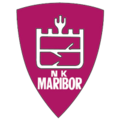 1970s–1980s
 -
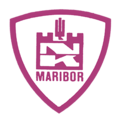 Late 1980s
 -
 Early 1990s
 -
 1990s–2000s


Anthem
[edit]Since 1992, the club's official anthem has been the song "Heja, hej Viole", which was written and composed by the band Čudežna polja.[88] 80 members of the Viole Maribor fan group also participated in the recording as backing vocalists.[88] The premiere performance of the song took place on 16 September 1992, at the European Cup Winners' Cup match between Maribor and Atlético Madrid.[88][89]
Stadium
[edit].jpg)
Maribor have played their home games at Ljudski vrt since June 1961.[90] Previously, the club played a very short period of its early history at Stadion ob Tržaški cesti.[90] Prior World War II, the ground consisted of just a pitch with a small stand, which was destroyed during the war.[91] The site has been used for football since at least the early 20th century; between 1910 and 1960, it was the home ground of many teams based in Maribor, including Marburger Sportvereinigung, SV Rapid Marburg, SK Hertha, SK Rote Elf, I. SSK Maribor and NK Branik Maribor.[92][93]
After the war, the ground was renovated and opened in 1952,[94] but the main grandstand was not built until the early 1960s.[95] On 25 June 1961, Maribor played its first match at the stadium, against Mladost Zabok, when the grandstand was still under construction.[90][95]
Ljudski vrt is the only stadium in Maribor that is located on the left bank of the river Drava. It is considered a natural, cultural, architectural and sports landmark of the city and is named after a public park previously located in the area.[96] A prominent feature of the grandstand is the 129.8 metres long and 18.4 m high concrete arch.[96] In 1994, floodlights were installed and the stadium hosted its first match at night.[96] Since then, the stadium went through several renovations.[97] The most notable was the one between 2006 and 2008, when three of the four stands (South, East and North) were demolished and completely rebuilt.[98] The West Stand was completely renovated in 2021,[99] bringing the stadium's current capacity to 11,709 seats.[100]
In addition to being the home ground of Maribor, the stadium also occasionally hosts matches of the Slovenia national football team.[101] The record attendance of the stadium is 20,000 spectators, achieved in 1973 when Maribor played against Proleter Zrenjanin in the Yugoslav Second League promotion play-offs, while the record for a Slovenian League match is 14,000 spectators, achieved in the last round of the 1996–97 Slovenian PrvaLiga season.[16][29]
Supporters and rivalries
[edit]Supporters
[edit]
NK Maribor is known for having a loyal and passionate supporters.[102][103] In addition to the city of Maribor and its surroundings, the club also has a large fan base in Styria and Carinthia, with smaller groups of supporters also present in other parts of Slovenia.[104][105] After its founding, Maribor was marked as a citizens' club, and their city rivals Železničar Maribor as a working class club.[106]
The club has an ultras group called Viole Maribor, established in 1989.[107] An apolitical group,[108][109] they are located on the South Stand of the stadium. The record for the most travelling fans in domestic competitions was in 2001, when 3,000 Maribor supporters gathered in Ljubljana,[110] while the most fans gathered abroad was in 2017 during the club's UEFA Champions League campaign, when over 2,400 supporters travelled to Liverpool.[111]
Since the establishment of the Slovenian First League in 1991, Maribor has had the highest average home attendance in 28 out of 34 seasons.[112] The highest average league attendance was in the 1996–97 season, when on average 5,289 people attended Maribor's home matches, which is a record in Slovenian club football.[28] In addition, Maribor is the first team to gather more than two million people at Slovenian First League matches.[112]
| Season | Avg. attendance | Five-year change |
|---|---|---|
| 1991–92 | 1,512[113] | — |
| 1996–97 | 5,289[114] | +249.85% 
|
| 2001–02 | 2,947[115] | –44.29% 
|
| 2006–07 | 1,944[116] | –34.05%
|
| 2011–12 | 3,800[117] | +95.45%
|
| 2016–17 | 4,222[118] | +11.11%
|
| 2021–22 | 3,053[119] | –27.68%
|
Rivalries
[edit]Maribor's biggest rivalry is with Olimpija from the capital Ljubljana, against whom they contest the Eternal derby (Večni derbi).[120] The rivalry dates back to the early 1960s, when both clubs used to play in the Yugoslav Second League.[121] The first official match between the two clubs was played on 2 September 1962 at the Bežigrad Stadium in Ljubljana, and was watched by around 10,000 spectators.[122]
In 2005, the old Olimpija was dissolved due to financial difficulties.[123] In the same year, a phoenix club was established under the name NK Bežigrad, and was later renamed as NK Olimpija Ljubljana.[124] The first derby between Maribor and the newly formed club was played on 24 October 2007 in the quarter-finals of the Slovenian Cup.[125] When Olimpija was promoted to the Slovenian First League in 2009, the rivalry came back to life.[126]
Maribor also developed a rivalry with another Styrian club, Celje, dubbed the Styrian derby (Štajerski derbi).[127] Maribor and Celje contested in three Slovenian Cup finals, all of which were won by Maribor,[27] and also competed for the national title in the 2002–03 season, when Maribor defeated Celje 2–1 in the decisive match with two late-game goals, clinching their seventh consecutive title.[128]
Another rival of Maribor is Mura from Prekmurje, with whom they contest the Prekmurje–Styria derby (Štajersko-prekmurski derbi).[129] In the 2020–21 season, Maribor and Mura contested the title-deciding match on the final day of the season. A draw was enough for Maribor, but Mura won 3–1 and clinched their first-ever title.[130]
Players
[edit]Current squad
[edit]- As of 7 September 2025[131]
Note: Flags indicate national team as defined under FIFA eligibility rules; some limited exceptions apply. Players may hold more than one non-FIFA nationality.
|
|


Out on loan
[edit]Note: Flags indicate national team as defined under FIFA eligibility rules; some limited exceptions apply. Players may hold more than one non-FIFA nationality.
|
|

Retired numbers
[edit]Since 2005, Maribor have not issued the squad number 19.[132] It was retired in honour of Stipe Balajić, who played for the club for eight seasons between 1997–98 and 2004–05.[133] He played his last game for the club on 7 July 2005, a friendly match against his former club Hajduk Split, where he was substituted after 19 minutes of play in a symbolic gesture.[134] In May 2021, the club retired another squad number, 33, in honour of goalkeeper Jasmin Handanović, who made over 350 appearances for Maribor between 2011 and 2021.[135] In May 2022, the number 9 was retired in honour of Marcos Tavares, a longtime captain and the club's all-time most capped player and top goalscorer.[136]
Maribor have also temporarily retired three squad numbers: 22, in honour of Martin Milec, 26, in honour of Aleksander Rajčević, and 28, in honour of Mitja Viler. The latter two were retired in 2020 and will remain unassigned until 2030,[137][138] while Milec's number was retired in 2025 and will remain unassigned until 2035.[139]
|
|

Youth Academy
[edit]The academy is responsible for the development of young players in the club. It is composed of ten youth selections, ranging from under-8 to under-19, with over 210 youth players in the system.[140] The club has also spread the activities of the football school to primary schools in the city of Maribor, where around 850 of the youngest footballers train as part of the Children's Football School (Otroška nogometna šola).[141]
Since the establishment of Maribor's youth system in its present form in 1990, the academy has been one of the most successful in the country in terms of titles won.[140] The under-19 team holds the national record for most titles, having won the under-19 league eight times.[142] The same team has also won five Youth Cups.[143] Other teams are equally successful as both the under-17 and under-15 teams holds the record for the most titles in their category.[144][145] In addition, Maribor's youth selections were the first in the country to win championship titles in the four highest youth classes (under-13, under-15, under-17 and under-19) during the same season.[140] In 2012, a record eight Maribor players were called to the Slovenian under-17 national team for the 2012 UEFA European Under-17 Football Championship.[146][147]
In 2016, the youth team of Maribor participated in the fourth edition of the international children's social programme Football for Friendship, the final events of which took place in Milan.[148] The team won the tournament by defeating Debreceni VSC 1–0 in the final.[149]
Purple Warrior
[edit].jpg)
The Purple Warrior (Vijol'čni bojevnik) is a trophy awarded to the most distinguished player of the year with the best attitude towards the fans and the club.[150] The winner of the trophy is decided by a vote on the club's official website and also on the club's official Facebook page.[150] To be eligible to participate in a poll, a player must appear for the club in at least 10 league matches.[150]
|
|


Management
[edit]
Organisation[edit]
|
Technical staff[edit]
|
Notable managers
[edit]The following managers have won at least one trophy when in charge of Maribor since Slovenia's independence in 1991:

Honours
[edit]With 16 Slovenian First League titles and 9 Slovenian Cup titles, Maribor is the most successful club in Slovenia in terms of trophies won,[159][160] and is the record holder for the most consecutive championship titles, with seven.[31] They have also achieved the Slovenian Championship and the Slovenian Cup double on four occasions. In addition, they are the only club which has won the Slovenian version of the treble, having won the league, cup and supercup during the 2012–13 season.[161] On their official website, UEFA states that Maribor have won one international cup, as the club were one of the eleven co-winners of the UEFA Intertoto Cup in 2006.[162] However, the trophy itself was awarded to Newcastle United.[163] Maribor have the best top-flight record in history, having finished below fourth place only once.[164] In 2008, they became the first team to win over 1,000 points in the Slovenian top flight.[165]
The club's most recent trophy came in May 2022, when they won their 16th Slovenian First League title.
Domestic
[edit]- League
- Slovenian First League
- Yugoslav Second League (second tier in Yugoslavia)
- Slovenian Republic League (third tier in Yugoslavia)
- Cup
- Slovenian Cup (since 1991)
- Slovenian Republic Cup (prior 1991)
- Winners (13): 1961, 1966, 1967, 1972–73, 1973–74, 1976–77, 1978–79, 1980–81, 1982–83, 1984–85, 1985–86, 1987–88, 1988–89
- Runners-up (8): 1963, 1968, 1969, 1970, 1971, 1972, 1983–84, 1986–87
- Slovenian Supercup
- MNZ Maribor Cup
International
[edit]- UEFA Intertoto Cup
- Winners (1): 2006 (joint winners)
Doubles
[edit]References
[edit]- ^ "Nogometni klub Maribor Branik". bizi.si (in Slovenian). Archived from the original on 8 December 2021. Retrieved 4 May 2022.
- ^ a b "NK Maribor slavi 60 let". Slovenski nogometni portal (in Slovenian). 12 December 2020. Archived from the original on 6 December 2021. Retrieved 6 December 2021.
- ^ Planinšič, Borut (9 December 2020). "60 let NK Maribor: Večerovo darilo bralcem in navijačem – vse najboljše, vijoličasti!". Večer (in Slovenian). Archived from the original on 6 December 2021. Retrieved 6 December 2021.
- ^ Plestenjak, Rok (12 December 2020). "Vse najboljše, slovenski velikan in evropski fenomen!" (in Slovenian). Siol. Archived from the original on 6 December 2021. Retrieved 6 December 2021.
- ^ a b "Zgodovina: 1961–1970" [History: 1961–1970] (in Slovenian). NK Maribor. Archived from the original on 19 December 2010. Retrieved 1 January 2011.
- ^ To. G. (11 December 2020). "NK Maribor v soboto praznuje 60 let" (in Slovenian). RTV Slovenija. Archived from the original on 6 December 2021. Retrieved 6 December 2021.
- ^ a b c d Vindiš, Tomaž (2008). "Slovenska nogometna kluba iz Maribora in Ljubljane v prvi jugoslovanski ligi med leti 1967–1972" (PDF). fsp.uni-lj.si (in Slovenian). University of Ljubljana. Archived (PDF) from the original on 27 August 2021. Retrieved 6 December 2021.
- ^ "Maribor – Olimpija 0:0" (in Slovenian). NK Maribor. Archived from the original on 12 June 2012. Retrieved 6 April 2011.
- ^ "Večni derbiji z Mariborom". nkolimpija.com (in Slovenian). Archived from the original on 27 November 2010. Retrieved 8 November 2010.
- ^ "Yugoslavia championship 1967/68". eu-football.info. Archived from the original on 6 December 2021. Retrieved 6 December 2021.
- ^ "Yugoslavia championship 1969/70". eu-football.info. Archived from the original on 6 December 2021. Retrieved 6 December 2021.
- ^ "Yugoslavia championship 1971/72". eu-football.info. Archived from the original on 6 December 2021. Retrieved 6 December 2021.
- ^ Gomzi, Zmago (22 October 2008). "Mariborski črni biser". Večer (in Slovenian). Archived from the original on 8 October 2011. Retrieved 4 April 2011.
- ^ "2. zvezna liga – Zahod – 1972/73" (in Slovenian). NK Maribor. Archived from the original on 6 December 2021. Retrieved 6 December 2021.
- ^ a b c d e "Zgodovina: 1971–1980" [History: 1971–1980] (in Slovenian). NK Maribor. Archived from the original on 19 December 2010. Retrieved 1 January 2011.
- ^ a b "Prva finalna kvalifikacijska tekma za vstop v 1. Ligo" (in Slovenian). NK Maribor. Archived from the original on 16 June 2011. Retrieved 20 December 2010.
- ^ "Yugoslavia 1973/74". RSSSF. Archived from the original on 25 June 2019. Retrieved 6 December 2021.
- ^ "Slovenska republiška liga – 1975/76" (in Slovenian). NK Maribor. Archived from the original on 6 December 2021. Retrieved 6 December 2021.
- ^ "Yugoslavia 1978/79". RSSSF. Archived from the original on 21 July 2019. Retrieved 6 December 2021.
- ^ a b Balantič, Robert (15 November 2012). "Maribor kot žrtveno jagnje". svet24.si (in Slovenian). Archived from the original on 24 April 2016. Retrieved 12 April 2016.
- ^ "Zgodovina: 1981–1990" [History: 1981–1990] (in Slovenian). NK Maribor. Archived from the original on 19 December 2010. Retrieved 20 December 2010.
- ^ "Dinamo Kiev – Maribor Teatanic 0:1 (Champions League 1999/2000, Preliminary Gr. A)". worldfootball.net. Archived from the original on 6 December 2021. Retrieved 6 December 2021.
- ^ a b c "Zgodovina: 1991–2000" [History: 1991–2000] (in Slovenian). NK Maribor. Archived from the original on 12 February 2021. Retrieved 1 January 2011.
- ^ "Slovenia – List of Champions". RSSSF. Archived from the original on 2 May 2019. Retrieved 6 December 2021.
- ^ "Slovenia 1991/92". RSSSF. Archived from the original on 14 May 2019. Retrieved 6 December 2021.
- ^ "European Competitions 1992–93". RSSSF. Archived from the original on 17 October 2017. Retrieved 6 December 2021.
- ^ a b c "Slovenia – List of Cup Finals". RSSSF. Archived from the original on 24 April 2019. Retrieved 6 December 2021.
- ^ a b Suhadolnik, Jernej (12 August 2016). "Po Mandariću in Jankoviću še naveza Eleke-Velikonja". Delo (in Slovenian). Archived from the original on 25 July 2021. Retrieved 21 May 2019.
- ^ a b "Maribor Branik 5–1 Potrošnik Beltinci" (in Slovenian). Slovenian PrvaLiga. 1 June 1997. Archived from the original on 2 August 2021. Retrieved 21 May 2019.
- ^ R. Š. (8 May 2016). "Stožice ujele Ljudski vrt". Slovenski nogometni portal (in Slovenian). Archived from the original on 6 December 2021. Retrieved 6 December 2021.
- ^ a b Plestenjak, Rok (22 May 2021). "Jubilejnih 30 let od prve krone Olimpije do prve krone Mure" (in Slovenian). Siol. Archived from the original on 27 January 2021. Retrieved 6 December 2021.
- ^ T. G.; M. R. (25 August 2019). "20 let od zadetkov Šimundže in Balajića za Mariborovo prvo Ligo prvakov" (in Slovenian). RTV Slovenija. Archived from the original on 6 December 2021. Retrieved 6 December 2021.
- ^ "Champions League 1999/2000 – Preliminary Gr. A". worldfootball.net. Archived from the original on 7 December 2021. Retrieved 6 December 2021.
- ^ a b M. J./STA (13 January 2011). "NK Maribor: Dolgovi so preteklost". 24ur.com (in Slovenian). Archived from the original on 15 January 2011. Retrieved 13 January 2011.
- ^ R. V. (13 January 2011). "V Mariboru se poštarjev ne bojijo več" (in Slovenian). Siol. Archived from the original on 6 December 2021. Retrieved 13 January 2011.
- ^ Pavčnik, Martin (25 July 2006). "Maribor hear echoes of glory years". UEFA. Archived from the original on 6 December 2021. Retrieved 6 December 2021.
- ^ "Zahovič dve leti v Mariboru". sta.si (in Slovenian). Slovenian Press Agency. 20 July 2007. Archived from the original on 7 December 2021. Retrieved 7 December 2021.
- ^ Plestenjak, Rok (29 May 2018). "Fenomen brez primere" (in Slovenian). Siol. Archived from the original on 7 December 2021. Retrieved 7 December 2021.
- ^ "Premiera pred 12.000 gledalci za čisto desetko" (in Slovenian). RTV Slovenija. 10 May 2008. Archived from the original on 11 October 2012. Retrieved 14 February 2011.
- ^ "Milanič novi trener Maribora" (in Slovenian). Siol. 29 May 2008. Archived from the original on 26 January 2021. Retrieved 13 April 2022.
- ^ "Foto: Volaš Mariboru prinesel osmi naslov" (in Slovenian). RTV Slovenija. 9 May 2009. Archived from the original on 28 October 2021. Retrieved 7 December 2021.
- ^ "Slovenia 2009/10". RSSSF. Archived from the original on 24 April 2019. Retrieved 7 December 2021.
- ^ M. R. (8 May 2010). "Bunderla po superpokalu v vitrino Maribora prinesel še en pokal" (in Slovenian). RTV Slovenija. Archived from the original on 7 December 2021. Retrieved 7 December 2021.
- ^ T. O. (13 December 2010). "Vijoličasta zgodba je stara 50 let" (in Slovenian). RTV Slovenija. Archived from the original on 7 December 2021. Retrieved 7 December 2021.
- ^ To. G. (21 May 2011). "Berič po preobratu v Ajdovščini zadel za deveti naslov Maribora" (in Slovenian). RTV Slovenija. Archived from the original on 20 June 2018. Retrieved 25 July 2016.
- ^ "VIDEO in FOTO: Maribor dva kroga pred koncem potrdil peti zaporedni naslov prvaka". 24ur.com (in Slovenian). 16 May 2015. Archived from the original on 13 April 2022. Retrieved 13 April 2022.
- ^ a b R. K. (14 May 2016). "Video/foto: Vse končano je! Olimpija prekinila vladavino Maribora" (in Slovenian). RTV Slovenija. Archived from the original on 20 July 2016. Retrieved 25 July 2016.
- ^ "Mariborčani rekordno sezono končali z remijem". 24ur.com (in Slovenian). 20 May 2012. Archived from the original on 7 December 2021. Retrieved 7 December 2021.
- ^ A. V. (23 May 2012). "Foto/video: Vijoličasti dobili loterijo za sedmo pokalno lovoriko" (in Slovenian). RTV Slovenija. Archived from the original on 25 June 2012. Retrieved 9 July 2012.
- ^ A. V. (29 May 2013). "Maribor na (kratke) počitnice z dvojno krono" (in Slovenian). RTV Slovenija. Archived from the original on 8 June 2013. Retrieved 30 May 2013.
- ^ T. O. (25 August 2011). "Video: Maribor junaško zdržal pritisk Ibrox Parka" (in Slovenian). RTV Slovenija. Archived from the original on 4 October 2013. Retrieved 9 July 2012.
- ^ "Europa League 2011/2012 – Group H". worldfootball.net. Archived from the original on 7 December 2021. Retrieved 7 December 2021.
- ^ "Europa League 2012/2013 – Group J". worldfootball.net. Archived from the original on 10 September 2022. Retrieved 7 December 2021.
- ^ "Europa League 2013/2014 – Group D". worldfootball.net. Archived from the original on 7 December 2021. Retrieved 7 December 2021.
- ^ "Europa League 2013/2014 – Round of 32". worldfootball.net. Archived from the original on 7 December 2021. Retrieved 7 December 2021.
- ^ "'Phenomenal feeling' for Šimundža and Maribor". UEFA. 26 August 2014. Archived from the original on 10 September 2022. Retrieved 27 August 2014.
- ^ "Champions League 2014/2015 – Group G". worldfootball.net. Archived from the original on 7 December 2021. Retrieved 7 December 2021.
- ^ Vozel, Aleš (6 May 2017). "Čas za "čago" v štajerski prestolnici: Maribor je spet prvak" (in Slovenian). RTV Slovenija. Archived from the original on 7 December 2021. Retrieved 7 December 2021.
- ^ Vozel, Aleš; Subotić, Dolores (22 August 2017). "Čaroben večer v Ljudskem vrtu: Maribor šampion v Ligi prvakov!" (in Slovenian). RTV Slovenija. Archived from the original on 24 August 2017. Retrieved 24 August 2017.
- ^ "Champions League 2017/2018 – Group E". worldfootball.net. Archived from the original on 7 December 2021. Retrieved 7 December 2021.
- ^ Plestenjak, Rok (18 October 2017). "Maribor tretji na večni evropski lestvici" (in Slovenian). Siol. Archived from the original on 18 October 2017. Retrieved 7 December 2017.
- ^ Uredništvo (28 May 2018). "Maribor prvič po letu 2008 brez lovorike" (in Slovenian). Nogomania. Archived from the original on 4 August 2021. Retrieved 6 June 2018.
- ^ Plestenjak, Rok (30 November 2017). "Dvojni udarec za Maribor" (in Slovenian). Siol. Archived from the original on 1 December 2017. Retrieved 6 June 2018.
- ^ To. G. (21 May 2019). "Vijol'čna sreda v Mariboru, kjer proslavljajo 15. državni naslov" (in Slovenian). Maribor: RTV Slovenija. Archived from the original on 27 July 2021. Retrieved 1 December 2019.
- ^ Uredništvo (16 May 2019). "Milanič: Tega nam nihče ne more vzeti" (in Slovenian). Nogomania. Archived from the original on 22 January 2021. Retrieved 1 December 2019.
- ^ M. P. (12 March 2020). "Maribor ne bo več, kar je bil: odhaja še Zahović" (in Slovenian). Siol. Archived from the original on 7 December 2021. Retrieved 7 December 2021.
- ^ Viškovič, Rok (28 June 2020). "Zapuščina Zlatka Zahovića, ki vas utegne presenetiti" (in Slovenian). Siol. Archived from the original on 7 December 2021. Retrieved 7 December 2021.
- ^ a b c "Barva in slogani" (in Slovenian). NK Maribor. Retrieved 28 November 2024.
- ^ Nogomania (16 July 2010). "Vijoličasti v elitni druščini" (in Slovenian). Nogomania. Archived from the original on 22 June 2020. Retrieved 6 April 2011.
- ^ Prebil, Andrej (17 March 2011). "Vijoličasti še drugič poraženi" [Second defeat for The Purples] (in Slovenian). RTS. Archived from the original on 22 March 2012. Retrieved 6 April 2011.
- ^ Pertoci, Tina (7 August 2010). "Nacional uspešnejši od "vijolic"" [Nacional more successful than "The Violets"] (in Slovenian). Siol. Archived from the original on 9 September 2017. Retrieved 9 September 2017.
- ^ T. O. (8 April 2010). "Vijolice bodo še bolj vzcvetele" [The Violets will blossom even more] (in Slovenian). RTV Slovenija. Archived from the original on 14 April 2010. Retrieved 6 April 2011.
- ^ Z. A. (20 February 2014). "Raketa sjetjela u Maribor: Najskuplji igrač Seville asistencijama pokvario povijesno proljeće Viola u Europi!". Index.hr (in Croatian). Archived from the original on 22 June 2020. Retrieved 6 November 2014.
- ^ Isanović, Edin (15 July 2014). "Drugo pretkolo Lige prvaka: Zrinjski spremno dočekuje favorizovani Maribor" [Champions League second qualifying round: Zrinjski is ready and awaits Maribor]. Klix.ba (in Bosnian). Archived from the original on 6 November 2014. Retrieved 6 November 2014.
- ^ Gomzi, Zmago (28 September 2020). "Zakaj je Maribor vijoličen? Odločilna je bila revija". Večer (in Slovenian). Archived from the original on 19 July 2021. Retrieved 19 July 2021.
- ^ a b c d Plestenjak, Rok (11 December 2020). "Zgodba o junaku, ki je pred 60 leti obarval Maribor v vijolično" (in Slovenian). Siol. Archived from the original on 19 July 2021. Retrieved 19 July 2021.
- ^ "FOTO: NK Maribor predstavil nove drese". maribor24.si (in Slovenian). 15 August 2020. Archived from the original on 19 July 2021. Retrieved 19 July 2021.
- ^ "Maribor povezan s tremi črtami" (in Slovenian). Nogomania. 16 July 2015. Archived from the original on 19 July 2021. Retrieved 19 July 2021.
- ^ Pungerčar, Sašo (2016). "Vzponi in padci NK Maribor do osamosvojitve Slovenije". dk.um.si (in Slovenian). University of Maribor. Archived from the original on 21 July 2021. Retrieved 21 July 2021.
- ^ "V prodaji koledarja članskega moštva in nogometne šole" (in Slovenian). NK Maribor. 14 December 2000. Archived from the original on 16 December 2021. Retrieved 16 December 2021.
- ^ "NK Maribor football shirt 1993–1995". oldfootballshirts.com. 30 January 2019. Archived from the original on 10 September 2022. Retrieved 23 November 2019.
- ^ "Nike pokrovitelj SCT Olimpije in Maribor Branika". sta.si (in Slovenian). Slovenian Press Agency. 14 January 1996. Archived from the original on 18 May 2021. Retrieved 23 November 2019.
- ^ "Zeus v Ljudskem vrtu". NK Maribor. 17 January 2007. Archived from the original on 10 September 2022. Retrieved 23 November 2019.
- ^ "Odslej v Adidasu". NK Maribor. 7 July 2011. Archived from the original on 27 November 2020. Retrieved 23 November 2019.
- ^ "Prenova simbolov Mestne občine Maribor". grboslovje.si (in Slovenian). 18 October 2020. Archived from the original on 15 January 2021. Retrieved 19 July 2021.
- ^ a b c d e f "Grb" [Crest] (in Slovenian). NK Maribor. Retrieved 28 November 2024.
- ^ "Za navijače, za praznik na tribunah" (in Slovenian). NK Maribor. Archived from the original on 31 July 2021. Retrieved 19 July 2021.
- ^ a b c Vogrin, Nina (5 May 2016). "Glasbenika, ki sta napisala klubski himni Olimpije in Maribora" (in Slovenian). Siol. Archived from the original on 20 July 2022. Retrieved 20 July 2022.
- ^ Elvič, Gorazd (28 September 2020). "Dan za spektakel: Maribor gostil Atletico in dobil svojo himno". Večer (in Slovenian). Archived from the original on 20 July 2022. Retrieved 20 July 2022.
- ^ a b c "Prva tekma v Ljudskem vrtu" (in Slovenian). NK Maribor. Retrieved 28 November 2024.
- ^ "Zgodovina: Predvojni stadioni in igrišča na Slovenskem". Slovenski nogometni portal (in Slovenian). 1 November 2016. Archived from the original on 10 December 2021. Retrieved 10 December 2021.
- ^ Mudražija, Tin (2016). "Pionirska vloga Nemcev pri organiziranem igranju nogometa v Mariboru in mariborsko-nemški nogometni klubi". dlib.si (in Slovenian). Archived from the original on 10 December 2021. Retrieved 10 December 2021.
- ^ "Prvi slovenski športni klub Maribor 1919–1941". zveza-msdbranik.si (in Slovenian). Archived from the original on 26 April 2012. Retrieved 10 December 2021.
- ^ Uredništvo (12 June 2018). "Legendarni Ljudski vrt je spregovoril" (in Slovenian). Nogomania. Archived from the original on 10 December 2021. Retrieved 10 December 2021.
- ^ a b "Stadion Ljudski vrt" (in Slovenian). Football Association of Slovenia. Archived from the original on 10 December 2021. Retrieved 10 December 2021.
- ^ a b c "Ljudski vrt: Zgodovina" [Ljudski vrt: History] (in Slovenian). NK Maribor. Retrieved 28 November 2024.
- ^ "Ljudski vrt, Maribor". Soccerway. Archived from the original on 9 February 2013. Retrieved 5 April 2011.
- ^ "Redko viden spektakel" (in Slovenian). NK Maribor. Archived from the original on 6 December 2021. Retrieved 10 December 2021.
- ^ To. G. (15 October 2021). "Ljudski vrt s prenovljenim zahodom dokončno prenovljen v celoti" (in Slovenian). RTV Slovenija. Archived from the original on 2 December 2021. Retrieved 2 December 2021.
- ^ "Ljudski vrt – Info" (in Slovenian). NK Maribor. Retrieved 28 November 2024.
- ^ "Stadion Ljudski Vrt, Maribor, football venue". eu-football.info. Archived from the original on 10 December 2021. Retrieved 10 December 2021.
- ^ "Sladek zadetek Liverpoola proti Haribo... oprostite Mariboru". 24ur.com (in Slovenian). 18 October 2017. Archived from the original on 15 November 2019. Retrieved 16 November 2019.
- ^ "FOTO in VIDEO: Viole z veličastno bakljado razsvetlite Maribor". maribor24.si (in Slovenian). 10 August 2019. Archived from the original on 15 November 2019. Retrieved 16 November 2019.
- ^ Jurišič, Uroš (2016). Trženje navijaških artiklov kot način utrjevanja športne blagovne znamke – primer NK Maribor (PDF) (Thesis). University of Ljubljana. Archived (PDF) from the original on 20 March 2020. Retrieved 22 May 2019.
- ^ "Zgodovina Viol" [History of Viole]. violemaribor.com. Archived from the original on 19 November 2017. Retrieved 16 May 2019.
- ^ T. D. L. (25 December 2014). "Nekoč so bili mestni derbiji (1. del)". Slovenski nogometni portal (in Slovenian). Archived from the original on 19 July 2019. Retrieved 26 August 2017.
- ^ "Viole praznovale 31 let". Slovenski nogometni portal (in Slovenian). 3 August 2020. Archived from the original on 15 December 2021. Retrieved 15 December 2021.
- ^ "Viole zanikajo domnevno odgovornost za izgrede v Mariboru". Dnevnik (in Slovenian). 27 November 2012. Archived from the original on 5 August 2017. Retrieved 15 August 2014.
- ^ "Viole Maribor: Nismo zanetili nasilja proti županu Kanglerju!" (in Slovenian). Siol. 28 November 2012. Archived from the original on 2 June 2016. Retrieved 15 August 2014.
- ^ "Zgodovina: 2001–2010" [History: 2001–2010] (in Slovenian). NK Maribor. Archived from the original on 19 December 2010. Retrieved 20 December 2010.
- ^ "Mariborčani na Otok z veliko zamudo". Dnevnik (in Slovenian). 31 October 2017. Archived from the original on 15 December 2021. Retrieved 15 December 2021.
- ^ a b "Statistika – Vse sezone" [Statistics – All seasons] (in Slovenian). Slovenian PrvaLiga. Archived from the original on 26 May 2019. Retrieved 16 May 2019.
- ^ "Statistika – 1. slovenska nogometna liga 91/92" (in Slovenian). Slovenian PrvaLiga. Retrieved 17 February 2025.
- ^ "Statistika – 1. slovenska nogometna liga 96/97" (in Slovenian). Slovenian PrvaLiga. Retrieved 17 February 2025.
- ^ "Statistika – Si.Mobil liga 01/02" (in Slovenian). Slovenian PrvaLiga. Retrieved 17 February 2025.
- ^ "Statistika – Prva liga Telekom Slovenije 06/07" (in Slovenian). Slovenian PrvaLiga. Retrieved 17 February 2025.
- ^ "Statistika – 1. slovenska nogometna liga 11/12" (in Slovenian). Slovenian PrvaLiga. Retrieved 17 February 2025.
- ^ "Statistika – Prva liga Telekom Slovenije 16/17" (in Slovenian). Slovenian PrvaLiga. Retrieved 17 February 2025.
- ^ "Statistika – Prva liga Telemach 21/22" (in Slovenian). Slovenian PrvaLiga. Retrieved 17 February 2025.
- ^ M. R. (16 September 2020). "Kako se je izoblikoval slovenski nogometni derbi?" (in Slovenian). RTV Slovenija. Archived from the original on 15 December 2021. Retrieved 15 December 2021.
- ^ Rijavec, Matej; Gruden, Toni; Jerič, Slavko (11 March 2011). "Statistični pregled derbijev med Olimpijo in Mariborom" (in Slovenian). RTV Slovenija. Archived from the original on 14 March 2011. Retrieved 14 March 2011.
- ^ "Olimpija – NK Maribor 1:1 (0:0)" (in Slovenian). NK Maribor. Archived from the original on 14 August 2020. Retrieved 15 November 2019.
- ^ J. K. (11 November 2010). "Simič: "Stefanović pošilja grožnje!"". Žurnal24 (in Slovenian). Archived from the original on 6 July 2019. Retrieved 9 September 2017.
- ^ "Zgodovina kluba". nkolimpija.com (in Slovenian). Archived from the original on 17 February 2012. Retrieved 9 July 2016.
- ^ "Delite vtise z oživelega derbija" (in Slovenian). RTV Slovenija. 23 October 2007. Archived from the original on 16 November 2019. Retrieved 15 November 2019.
- ^ Rožman, Andraž (10 August 2009). "Večni derbi: Navijači razgrajali, Cime jih je pogrešal". Dnevnik (in Slovenian). Archived from the original on 15 November 2019. Retrieved 15 November 2019.
- ^ "Mudrinski odločil 106. štajerski derbi" (in Slovenian). Siol. 4 December 2021. Archived from the original on 15 December 2021. Retrieved 15 December 2021.
- ^ Okorn, Tomaž (22 July 2020). "Pušnik: Če bi Hadžić ostal, bi bila Olimpija prvak" (in Slovenian). RTV Slovenija. Retrieved 6 February 2023.
- ^ "Štajersko-prekmurski derbi brez zadetkov". Slovenski nogometni portal (in Slovenian). 5 October 2019. Archived from the original on 15 November 2019. Retrieved 15 November 2019.
- ^ "Prekmurci osvojili Ljudski vrt: Mura prvič državni prvak!" (in Slovenian). RTV Slovenija. 22 May 2021. Archived from the original on 22 November 2021. Retrieved 15 December 2021.
- ^ "Igralski kader" [First Team Squad] (in Slovenian). NK Maribor. Retrieved 6 September 2025.
- ^ "Viole spet poskrbele za pretep". Dnevnik (in Slovenian). 8 July 2005. Archived from the original on 16 December 2021. Retrieved 16 December 2021.
- ^ "Balajić Stipe – nastopi" (in Slovenian). NK Maribor. Archived from the original on 16 December 2021. Retrieved 16 December 2021.
- ^ Planinšič, Borut (7 July 2005). "Dalmatinska fešta pod Kalvarijo". Večer (in Slovenian). Archived from the original on 24 September 2012. Retrieved 6 April 2011.
- ^ "Novopečeni trener vratarjev Jasmin Handanović: Morate verjeti v klub" (in Slovenian). Nogomania. 26 May 2021. Archived from the original on 16 December 2021. Retrieved 16 December 2021.
- ^ A. G. (14 May 2022). "Vijoličasti strli Aluminij; Tavares: Nikoli si nisem mislil, da bom postal legenda" (in Slovenian). RTV Slovenija. Archived from the original on 15 May 2022. Retrieved 16 May 2022.
- ^ Plestenjak, Rok; Pakiž, Sara (22 July 2020). "Ganljivo slovo legende NK Maribor: Preplavile so me emocije #video" (in Slovenian). Siol. Archived from the original on 16 December 2021. Retrieved 16 December 2021.
- ^ R. P. (30 December 2020). "Predsednik Kopra obdaril navijače, Maribor upokojil št. 28" (in Slovenian). Siol. Archived from the original on 16 December 2021. Retrieved 16 December 2021.
- ^ Dajčman, Miha (25 May 2025). "(FOTO) Martin Milec: Iz Maribora odhajam z dvignjeno glavo. Račan že dogovorjen z novim klubom". Večer (in Slovenian). Retrieved 31 May 2025.
- ^ a b c "Nogometna šola NK Maribor" (in Slovenian). NK Maribor. Retrieved 28 November 2024.
- ^ "Otroška nogometna šola" (in Slovenian). NK Maribor. Archived from the original on 11 July 2016. Retrieved 18 July 2016.
- ^ "1. slovenska mladinska liga – Dosedanji zmagovalci" (in Slovenian). Football Association of Slovenia. Archived from the original on 16 August 2016. Retrieved 18 July 2016.
- ^ "Mladinski pokal – Dosedanji zmagovalci" (in Slovenian). Football Association of Slovenia. Archived from the original on 16 August 2016. Retrieved 18 July 2016.
- ^ "1. slovenska kadetska liga – Dosedanji zmagovalci" (in Slovenian). Football Association of Slovenia. Archived from the original on 9 August 2016. Retrieved 18 July 2016.
- ^ "Liga U15 – Dosedanji zmagovalci" (in Slovenian). Football Association of Slovenia. Archived from the original on 20 June 2018. Retrieved 18 July 2016.
- ^ Uredništvo (27 April 2012). "Ostalo jih je še 20" (in Slovenian). Nogomania. Archived from the original on 25 July 2021. Retrieved 29 April 2012.
- ^ A. V. (27 April 2012). "Kostić bo spisek 20 imen skrajšal še za dve" (in Slovenian). RTV Slovenija. Archived from the original on 30 April 2012. Retrieved 29 April 2012.
- ^ "Football for Friendship: Syrian youth team make tournament debut in Milan". euronews.com. 31 May 2016. Archived from the original on 27 June 2018. Retrieved 15 November 2020.
- ^ "Vijol'čno slavje v Milanu" (in Slovenian). NK Maribor. 28 May 2016. Archived from the original on 20 July 2021. Retrieved 20 July 2021.
- ^ a b c "Vijol'čni bojevnik" (in Slovenian). NK Maribor. Retrieved 28 November 2024.
- ^ "Osebna izkaznica" (in Slovenian). NK Maribor. Retrieved 12 September 2025.
- ^ "Nogometna šola – Strokovni štab" (in Slovenian). NK Maribor. Retrieved 12 September 2025.
- ^ "Strokovni štab" [Staff] (in Slovenian). NK Maribor. Retrieved 5 October 2025.
- ^ a b c d e "Nekdanji podprli zdajšnje" (in Slovenian). NK Maribor. Archived from the original on 24 August 2017. Retrieved 23 August 2017.
- ^ Kovačevič, Marko (22 December 2020). "Darko Milanič: Prepričan sem, da se lahko ponovi. Mora se!". Večer (in Slovenian). Retrieved 1 February 2025.
S šestimi naslovi državnega prvaka, s štirimi pokalnimi trofejami in z dvema superpokaloma po številu lovorik celo najuspešnejši v Sloveniji.
- ^ "A. Čačić". soccerway.com. Archived from the original on 7 June 2019. Retrieved 3 June 2019.
- ^ "Ante Šimundža – NK Maribor" (in Slovenian). NK Maribor. Retrieved 1 February 2025.
V prvi epizodi je osvojil tri lovorike – dva državna naslova in enega superpokalnega.
- ^ "Dejan Dončić se je poslovil, Maribor pa je že našel novega trenerja: Mladince vijoličastih bo v prihodnje vodil Radovan Karanović". Planet Nogomet (in Slovenian). 30 August 2024. Retrieved 1 February 2025.
Na čelo mladinske zasedbe se bo preselil Radovan Karanović, ki je bil s člani leta 2022 že državni prvak.
- ^ "Državni prvaki" (in Slovenian). Slovenian PrvaLiga. Archived from the original on 12 June 2018. Retrieved 6 June 2018.
- ^ "Lovorike" (in Slovenian). Football Association of Slovenia. Archived from the original on 12 June 2018. Retrieved 6 June 2018.
- ^ Da. B.; Ig. K.; J. K. (29 May 2013). ""Trojček" Maribora: tri krone za vijolične prvake". Žurnal24 (in Slovenian). Archived from the original on 22 June 2018. Retrieved 6 June 2018.
- ^ "Club facts: Maribor". UEFA. 1 July 2017. Archived from the original on 8 December 2021. Retrieved 7 December 2021.
- ^ "Newcastle to lift Intertoto Cup". BBC Sport. 16 December 2006. Archived from the original on 23 August 2017. Retrieved 4 April 2011.
- ^ "Maribor: Osnovne statistike" (in Slovenian). Slovenian PrvaLiga. Archived from the original on 2 August 2021. Retrieved 24 June 2020.
- ^ R. P. (26 December 2008). "Mariborčani edini presegli tisoč točk" (in Slovenian). Siol. Archived from the original on 7 December 2021. Retrieved 7 December 2021.
- ^ "Pokalni nogometni finale na območju NZ Maribor". Večer (in Slovenian). 23 April 1992. p. 14.
External links
[edit]
- Official website (in Slovene and English)
- Official supporters' website (in Slovene)
- PrvaLiga profile (in Slovene)
NK Maribor
View on GrokipediaHistory
Founding and early years (1960–1967)
Nogometni klub Maribor was founded on December 12, 1960, as a successor to the disbanded NK Branik Maribor following its dissolution due to a food poisoning scandal, by uniting the city's fragmented football community including officials and players from local clubs like NK Železničar Maribor, within the Socialist Federal Republic of Yugoslavia.[4] This consolidation aimed to create a stronger representative for Maribor in the Yugoslav football system, drawing on the traditions of predecessor clubs that had competed in regional competitions since the early 20th century.[4] The newly formed club operated on an amateur basis and entered the Slovenian Republic League, the third tier of the Yugoslav football pyramid and the regional league for the Styrian area.[4] Home games were played at Ljudski vrt, a multi-purpose stadium in Maribor that had hosted football matches since at least 1952 and served as a central venue for local sports.[5] The club's initial kit featured purple and white colors, symbolizing the violet hues associated with the region, though logistical delays meant the debut match used green-blue jerseys instead.[4] NK Maribor's first official friendly match, held in December 1960 against Kovinar, resulted in a 2–1 victory, with both goals scored by Štefan Tolič.[4] Their inaugural competitive fixture was a 1–1 draw against the Free Algeria national team on January 8, 1961, where Teo Vidic netted Maribor's goal; this match marked the beginning of regular play at Ljudski vrt, drawing initial crowds that reflected growing local enthusiasm.[4] Throughout the early 1960s, community support expanded steadily, with attendances reaching several thousand for key fixtures, including away games like a 1–1 draw in Skopje that attracted 7,000 spectators.[4] In the 1960–61 season, the team dominated the Slovenian Republic League, securing promotion to the Yugoslav Second League with standout performances, such as a 10–0 rout of Sisak.[4] By 1967, sustained success in lower divisions had solidified the club's grassroots foundation, culminating in further advancement within the national structure.[4]Yugoslav second division and promotion (1967–1972)
Following their success in the Yugoslav Second League during the 1966–67 season, NK Maribor secured promotion to the First Federal League by finishing first in the standings and defeating Bosna 3–0 in a decisive match.[4] This marked the club's entry into the top tier of Yugoslav football, providing early national exposure after years in lower divisions. Maribor's debut in the First Federal League came on 20 August 1967, away to Vardar in Skopje, ending in a 1–1 draw attended by 7,000 spectators.[4] Their home opener followed on 27 August 1967 at Ljudski vrt against Proleter, a 3–0 victory drawing 8,000 fans and signaling growing support in Maribor.[4] Key contributors in these early matches included forward Maras, who scored Maribor's goal against Vardar, alongside midfielders Arnejčič and Binkovski, who helped stabilize the team's tactics in the higher competition.[6] The 1967–68 season saw Maribor finish 12th in the 18-team league, avoiding relegation while adapting to the intensity of top-division play.[6] Fan attendance continued to rise, with matches at Ljudski vrt often exceeding 10,000, reflecting the excitement of national-level football in the region.[4] Players like Krajnc emerged as defensive anchors, contributing to a solid backline that limited goals conceded in transitional games.[4] In 1968–69, Maribor placed 16th, narrowly escaping the drop and highlighting the challenges of sustaining performance against established clubs like Dinamo Zagreb and Partizan.[7] The squad relied on versatile forwards such as Vidic for scoring threats, fostering tactical flexibility under the pressures of the league schedule.[4] The 1969–70 campaign represented Maribor's strongest showing, ending 10th with a notable 3–1 home win over Dinamo Zagreb in the final round, which helped secure mid-table stability.[4] This period saw increased fan engagement, with average attendances surpassing 12,000, underscoring the club's growing prominence in Slovenian football within the Yugoslav system.[4] During the 1970–71 season, Maribor finished 13th, maintaining their top-flight status through consistent home form and contributions from attackers like Vučeković.[8] The final match, a 1–1 draw against Velež Mostar, exemplified the resilience built over the previous years.[9] The 1971–72 season proved tougher, with Maribor ending 18th and facing relegation after a 3–6 loss to Olimpija Ljubljana in the last round on 11 June 1972.[9] Standout performers included Horjak and Binkovski, who scored in key fixtures, while the squad lineup featured experienced players like Vabič in goal and Prosen in midfield.[9] Despite the drop, the five-year stint in the First League had elevated the club's profile and supporter base significantly.[10]Decline and scandal in Yugoslavia (1972–1991)
Following their promotion to the Yugoslav First League in 1967, NK Maribor experienced initial stability in the top division, finishing 13th in the 1970–71 season and 18th in 1971–72, the latter marking their relegation after accumulating only 20 points from 34 matches.[11][8] The 1971–72 campaign ended on a low note with a 3–6 home defeat to Olimpija Ljubljana in the final round, confirming their drop to the Yugoslav Second League.[9] In the Second League during 1972–73, Maribor finished second, earning a spot in the promotion playoffs where they defeated Proleter Zrenjanin 3–1 at home but lost 0–3 away, missing out on top-flight return due to a controversial referee decision.[9] The club struggled with inconsistency over the next few years, placing 13th in 1973–74 to narrowly avoid further demotion, but relegation to the Slovenian Republic League (third tier) followed in 1974–75 after a poor campaign.[12] Maribor quickly rebounded by winning the Republic League in 1975–76, securing promotion back to the Second League, though repeated failures to challenge for top-flight spots defined their yo-yo status.[9] A highlight came in 1978–79 with another second-place finish in the Second League, their closest brush with promotion since 1972–73, yet they remained stuck in the second tier amid financial and organizational challenges.[9] The period's darkest chapter unfolded at the end of the 1980–81 Second League season, when Maribor finished ninth and avoided relegation, only for the "Žoga" (Ball) bribery scandal to erupt. On June 16, 1981, workers at the club's affiliate UNZ Maribor discovered a "black fund" in secretary Jože Jaklin's desk containing 257,667 Yugoslav dinars, 7,050 German marks, and 89,710 Austrian shillings, alongside a ledger documenting bribes to 30 referees, players, and officials across Yugoslavia since 1977 to influence match outcomes.[13] The scandal, dubbed "afera žoga" after the ledger's code name, implicated club leadership in systematic corruption, with payments tracked in a secret notebook.[13] In August 1981, the Football Association of Yugoslavia's Disciplinary Committee expelled Maribor from the Second League, demoting them to the third-tier Republic League and imposing bans on involved parties; Jaklin and financial commission president France Časar received suspended prison sentences in 1983, while eight referees faced fines and five were acquitted.[13][14] The scandal inflicted severe reputational and operational damage, leading to years of instability; Maribor won the Republic League in 1981–82 to return to the Second League but finished 17th in 1982–83, earning another relegation. They reclaimed third-tier promotion by topping the Slovenian League in 1983–84, stabilizing in the Second League thereafter with mid-table finishes, such as 12th in 1984–85 and 10th in 1987–88, but without mounting a serious promotion bid.[15][16] As Yugoslavia dissolved amid ethnic tensions in 1991, Maribor ended the era in the Second League (finishing 14th in 1990–91), transitioning to the newly formed Slovenian PrvaLiga upon independence.[17]Early independence and dominance (1991–2004)
Following Slovenia's declaration of independence in 1991, NK Maribor became one of the founding members of the newly established Slovenian First League (1. SNL), entering the competition in the inaugural 1991–92 season.[18] The club quickly established itself as a competitive force, finishing as runners-up in the league during 1991–92, 1992–93, and 1994–95, while also securing early silverware by winning the first-ever Slovenian Cup in 1991–92 after defeating rivals Olimpija in the final.[19] This cup triumph marked Maribor's initial major success in the post-independence era and qualified them for their European debut in the 1992–93 UEFA Cup Winners' Cup, where they hosted Maltese side Ħamrun Spartans on 19 August 1992 and secured a 4–0 victory, with Ante Šimundža scoring the club's first European goal. Subsequent European appearances in the UEFA Cup during the mid-1990s further highlighted their growing stature, including a notable 10–0 aggregate win over Norma Tallinn in the 1994–95 UEFA Cup Winners' Cup. Maribor's breakthrough in the league came in the 1996–97 season, when they clinched their first PrvaLiga title under manager Bojan Prašnikar, completing a domestic double by also winning the Slovenian Cup that year.[19] This victory initiated an unprecedented period of dominance, as the club captured seven consecutive PrvaLiga titles from 1996–97 to 2002–03, a national record that solidified their status as Slovenia's premier club. Prašnikar guided the team through the initial five titles until 2000, emphasizing disciplined tactics and youth development, before Matjaž Kek took over and led the final two triumphs, focusing on defensive solidity and counter-attacking play.[20] Key players during this golden era included midfielder Nastja Čeh, who joined in 1996–97 and contributed significantly to the title runs with his vision and scoring ability before moving abroad in 2000.[21] Additional cup successes, such as the 1993–94 and 1998–99 editions, underscored Maribor's all-around prowess, with the 1998–99 double exemplifying their peak form.[19] The sustained success fueled rapid expansion of Maribor's fan base, particularly through the ultras group Viole Maribor, founded in 1989 but gaining prominence in the 1990s as attendance at Ljudski vrt Stadium swelled to average over 5,000 per match during title-winning campaigns.[22] This period also saw infrastructure enhancements at Ljudski vrt, including renovations to meet UEFA standards following European qualifications.[23] These developments not only supported on-field achievements but also cemented Maribor's role as a symbol of regional pride in Styria, transforming the club from a Yugoslav-era underachiever into Slovenia's most dominant force.[1]Financial crisis and rebuilding (2004–2008)
In the early 2000s, following a period of domestic dominance, NK Maribor encountered severe financial difficulties that threatened the club's existence. By 2004, accumulating debts had reached approximately four million euros, placing the club on the brink of bankruptcy and leading to widespread unpaid wages for players and staff.[24] These issues culminated in player unrest, with threats of strikes as the team struggled to maintain operations amid the economic strain.[24] The crisis prompted significant ownership changes to avert collapse. Local businessmen stepped in to stabilize the club, marking a shift toward new leadership. In 2006, Drago Cotar, a prominent figure from Zavarovalnica Maribor, was appointed president, initiating efforts to restructure finances and restore stability. Under his guidance, the club began addressing its debts through cost-cutting measures and reliance on youth academy talents, who filled key roles as senior players departed due to the instability.[25][26] During the 2004–05 season, Maribor faced a genuine relegation threat in the Slovenian PrvaLiga, finishing fifth after a turbulent campaign marked by inconsistent results and internal turmoil. Managers like Branko Horjak worked to steady the ship, achieving mid-table security by season's end despite the off-field chaos. Key events in 2005 included vocal fan protests against the management's handling of the crisis, highlighting growing supporter frustration with the club's direction. The team also took initial steps in European competitions, qualifying for the 2004–05 UEFA Cup where they advanced past Budućnost Podgorica before exiting against Villarreal.[27] The club achieved international success by winning the 2006 UEFA Intertoto Cup, defeating Villarreal in the final rounds, providing a boost amid domestic struggles.[2] By 2007, signs of recovery emerged with the appointment of Zlatko Zahovič as sporting director in July, a pivotal move that laid the groundwork for future resurgence. Zahovič's arrival injected strategic vision into recruitment and operations, helping to consolidate the rebuilding efforts and end the darkest phase of the club's history.[28]Zahovič era and sustained success (2008–2020)
In 2007, Zlatko Zahovič was appointed as NK Maribor's director of football, ushering in a period of strategic rebuilding focused on youth development, targeted recruitment, and financial prudence. His approach emphasized nurturing local talent while selectively signing experienced players to bolster the squad, enabling the club to compete domestically and in Europe despite operating on a modest budget compared to larger European teams. This era marked a revival following earlier financial difficulties, with Zahovič's oversight leading to consistent contention for major honors.[29] Under Zahovič's guidance, Maribor secured eight PrvaLiga titles between the 2008–09 and 2018–19 seasons, specifically in 2008–09, 2010–11, 2011–12, 2012–13, 2013–14, 2014–15, 2016–17, and 2018–19, establishing the club as the dominant force in Slovenian football during this span. The team also claimed multiple Slovenian Cups, including victories in 2009–10, 2011–12, 2012–13, and 2015–16, contributing to a total of four cup triumphs that underscored the club's all-around strength. These domestic successes were driven by a recruitment strategy that integrated affordable foreign signings with homegrown players, allowing Maribor to maintain competitiveness without excessive spending.[30] European campaigns highlighted Maribor's progress, with notable achievements including qualification for the UEFA Europa League group stages in 2011–12 and 2012–13, where the team earned points against strong opponents and gained valuable experience. The pinnacle came in the UEFA Champions League, as Maribor reached the group stage in 2014–15—finishing last in a tough group with Chelsea, Schalke 04, and Sporting CP—and again in 2017–18, competing against Liverpool, Sevilla, and Spartak Moscow while securing a memorable 1–1 home draw against Spartak. These appearances not only elevated the club's profile but also provided crucial revenue through UEFA coefficients and matchday income, supporting further squad investments.[3][29] Key to this sustained success were influential figures like manager Darko Milanič, who led Maribor from 2008 to 2013—winning four consecutive PrvaLiga titles from 2010–11 to 2013–14—and returned in 2016, securing the 2016–17 league title and the 2018–19 championship during his second stint until 2020. Star players exemplified the era's blend of longevity and impact: Brazilian forward Marcos Tavares, who joined in 2008, became the club's all-time leading scorer with over 200 goals and contributed to nine PrvaLiga titles, serving as captain and a symbol of consistency. Goalkeeper Jasmin Handanović, arriving in 2011, anchored the defense across 351 appearances, winning 12 major trophies and earning recognition as one of Maribor's greatest goalkeepers for his reliability in domestic and European fixtures.[31][32] Club infrastructure advanced alongside on-field gains, with renovations to Ljudski vrt stadium enhancing its capacity and facilities to meet UEFA requirements. Zahovič's emphasis on youth integration saw academy products like midfielders and defenders progressively break into the first team, fostering a pipeline that sustained competitiveness and generated transfer revenue through sales of developed talents. These developments, coupled with European earnings, helped stabilize and grow the club's finances, enabling the prolonged title challenges that defined the period.[23][29]Post-Zahovič revival and recent titles (2020–present)
In March 2020, amid a series of poor results that left NK Maribor in fourth place in the PrvaLiga, director of football Zlatko Zahovič and head coach Darko Milanič both resigned. Zahovič, who had been instrumental in the club's success for over a decade, stepped down on 12 March following Milanič's departure four days earlier after a 0–1 loss to NK Bravo. The club then turned to interim leadership, with Sergej Jakirović appointed as head coach on 23 April 2020, guiding the team through the remainder of the 2019–20 season and into the early part of 2020–21. Jakirović was replaced by Mauro Camoranesi on 3 September 2020, who managed until February 2021, helping stabilize the squad during a transitional period marked by inconsistent league performances but securing European qualification via a fourth-place finish in 2020–21.[33][20] The arrival of Simon Rožman as head coach on 20 March 2021 marked the beginning of a revival, though his tenure was short-lived. After a challenging start, including a brief suspension in September 2021 due to poor form, Rožman was replaced by assistant Radovan Karanović on 22 September 2021. Under Karanović, Maribor mounted a strong campaign in the 2021–22 PrvaLiga season, clinching their 16th league title on the final day with a 3–1 victory over Mura on 22 May 2022, ending a three-year drought since their last championship in 2018–19. This triumph, achieved with 74 points from 36 matches, highlighted key contributions from players like Josip Iličić and a resilient defense, restoring the club's competitive edge post-Zahovič.[34][35][36] Subsequent seasons saw Maribor maintain contention for titles but fall short of another championship. In 2022–23, the team finished third in the PrvaLiga with 64 points, behind champions Olimpija Ljubljana and Celje, while in 2023–24, they secured second place with 72 points, trailing Celje by just three. The 2024–25 campaign resulted in another runner-up finish, again behind Olimpija Ljubljana, as Maribor accumulated 70 points and participated in UEFA Europa Conference League qualifiers, advancing to the third round before elimination by Turkish side İstanbul Başakşehir. These consistent top-three finishes underscored a period of sustained competitiveness, bolstered by strategic signings and youth integration.[37] As of November 2025, Maribor sits second in the 2025–26 PrvaLiga standings with 26 points from 14 matches, trailing leaders Celje by four points following a 1–1 draw against Radomlje on 8 November. Under new head coach Feđa Dudić, appointed on 1 October 2025 after the dismissal of Ante Šimundža, the team has shown early promise with eight wins and solid defensive record. Maribor also entered the 2025–26 UEFA Conference League qualifying rounds as PrvaLiga runners-up from the previous season, progressing past initial opponents but exiting in the playoff stage against Hungarian side Paksi FC. This ongoing participation reflects the club's renewed focus on European exposure amid domestic challenges.[37][38]Club identity and facilities
Colours, kits, and nicknames
The primary colours of NK Maribor have been purple and white since the club's founding in 1960. This choice originated from a proposal by the first captain, Oto Blaznik, who suggested adopting violet jerseys inspired by the Italian club Fiorentina to create a distinctive look distinct from the city's traditional red and white.[39] The purple hue, known as vijolična in Slovenian, has remained a core element of the club's visual identity, symbolizing innovation during the Yugoslav era when most teams used more conventional colours. White accents, often in stripes or trim, complement the purple on home kits, while yellow occasionally appears as a secondary colour in badges and details.[40] NK Maribor's nicknames reflect its regional pride and chromatic identity. The most prominent is Vijoličasti ("The Purples" or "The Violets"), directly derived from the club's signature purple kits and used affectionately by fans and media since the early years. Another common moniker is Štajerski ponos ("Styrian Pride"), emphasizing the team's role as a cultural and sporting emblem for the Styria region in northeastern Slovenia, a title that gained prominence after the club's successes in the 1990s. These nicknames evolved from the 1960 merger of local clubs like Branik Maribor, which helped forge a unified identity for the new entity.[41] The club's kit designs have consistently centered on the purple home jersey, typically featuring vertical or diagonal white stripes across a violet base, with shorts and socks in matching purple or white. Away kits have varied for contrast, often incorporating yellow as the primary colour with purple accents, such as in the 2022-23 season's yellow jersey with violet V-neck and logos, though recent editions like the 2025-26 away kit shifted to white with blue details. Special editions mark milestones, including the 2010 50th anniversary away kit in a retro yellow design by Zeus, celebrating the club's history with nostalgic elements. Over time, designs have modernized through supplier changes— from in-house production to adidas since 2011—but always preserve the purple core for home matches.[42][43]Kit manufacturers and sponsors
NK Maribor's kit manufacturing partnerships have evolved alongside the club's growth, transitioning from local production to international brands that reflect its increasing prominence in European football. Initially, the club relied on in-house production for its kits until 1988, when it partnered with adidas for a brief period from 1988 to 1989.[40] Following a gap in the early 1990s, Erreà supplied the kits from 1993 to 1996, marking the club's entry into professional manufacturing agreements post-Yugoslav era.[40] Nike then became the supplier from 1996 to 2007, coinciding with Maribor's dominant years in the newly independent Slovenian league, providing high-quality apparel that supported multiple title wins.[40] Zeus took over from 2007 to 2011 during a transitional phase, before adidas returned in 2011 and has remained the kit manufacturer through the 2025 season, supplying the current 2025–26 kits with features like moisture-wicking technology suited for PrvaLiga and European matches.[40][44] The club's sponsorship landscape has been anchored by long-term local partnerships that have provided financial stability and visibility, with jersey front sponsors changing periodically to align with economic shifts. Zavarovalnica Sava has been the primary jersey sponsor since 2017, following earlier stints from 2004 to 2015 and 1996 to 2000, during which it appeared prominently on home and away kits to promote its insurance services.[45] Other notable front sponsors include Židan Gregor from 1993 to 1995 and Gradbeništvo Peter Lamut from 2001 to 2003, reflecting a focus on regional businesses in the post-independence era.[45] Pivovarna Laško, a major Slovenian brewery, has served as a key partner since the early 1990s, extending its sponsorship for 25 years by 2017 through integrated campaigns that leverage the club's success, such as special edition purple-branded beers tied to league titles.[46] Banking sponsorships have also played a pivotal role, with Nova Kreditna Banka Maribor (Nova KBM), part of the UniCredit Group until 2024, acting as a sleeve or secondary sponsor for over two decades, supporting community initiatives and player development programs.[47] In 2024, following its acquisition, OTP banka renewed its sponsorship for another four years through 2028, emphasizing local economic ties and financial services branding on matchday assets.[48] These arrangements evolved during the club's financial challenges from 2004 to 2008, where sustained deals with Sava and Laško helped mitigate debts accumulated from prior investments in infrastructure and squad building.[45] Under Zlatko Zahovič's leadership from 2008 to 2020, renewed on-field success— including multiple league titles and European qualifications—boosted sponsor value, leading to expanded partnerships that increased commercial revenue and facilitated squad investments without external debt.[47]| Period | Kit Manufacturer |
|---|---|
| Until 1988 | In-House |
| 1988–1989 | adidas |
| 1993–1996 | Erreà |
| 1996–2007 | Nike |
| 2007–2011 | Zeus |
| 2011–present (2025) | adidas |
| Period | Main Jersey Sponsor |
|---|---|
| 1993–1995 | Židan Gregor |
| 1996–2000 | Zavarovalnica Sava |
| 2001–2003 | Gradbeništvo Peter Lamut |
| 2004–2015 | Zavarovalnica Sava |
| 2017–present (2025) | Zavarovalnica Sava |
Crest evolution
The crest of NK Maribor has undergone several refinements since the club's founding in 1960, reflecting both its Slovenian identity and historical ties to the city of Maribor. The original emblem was a simple purple shield featuring the initials "MB" in white, chosen to embody the club's distinctive violet color scheme inspired by Italian side Fiorentina, as decided by first captain Oto Blaznik to stand out in Yugoslav football. This basic design emphasized the club's nascent identity without complex motifs, appearing on early kits and materials during the 1960s and 1970s.[49] Following Slovenia's independence in 1991, the crest was updated to incorporate elements from the city's official coat of arms, including a stylized castle representing the ancient Pyramid Castle from Maribor's 13th-century seal and a bird—initially interpreted as an eagle but later identified as a dove symbolizing the Holy Spirit. The shield shape was retained for its connotations of protection and pride, with the purple background maintained to signify nobility and the club's regional roots. These changes aligned the emblem more closely with national symbolism while preserving the core violet palette, and the design was used consistently on kits from the mid-1990s onward.[49][50] In 2008, a minor redesign shifted toward a more modern violet circular form, subtly integrating motifs inspired by the Drava River's flowing lines to evoke Maribor's riverside location, though the traditional shield outline remained prominent. This version enhanced visibility on contemporary kits and merchandise, balancing historical reverence with streamlined aesthetics. Further tweaks in 2020 focused on digital optimization, improving scalability for online platforms and apparel without altering core symbols.[40] Throughout its evolution, the crest symbolizes Maribor's landmarks, particularly the Pohorje mountains' enduring presence in the region's landscape, integrated through the castle's mountainous silhouette to represent resilience and local heritage. A golden star was added above the shield after the 2011–12 season to commemorate over ten national championships, marking a key milestone in the club's success.[49]Anthem and traditions
The official anthem of NK Maribor, titled "Heja, hej, Viole," was composed in 1992 by the band Čudežna polja and serves as a unifying symbol for the club and its supporters.[51] The lyrics emphasize regional pride and fan devotion, with lines such as "za Maribor nam srce gori" (our heart burns for Maribor) and references to the Viole supporters group, evoking the club's purple identity through the term "Viole," which means violets in Slovenian.[51] This anthem draws inspiration from European football traditions, incorporating repetitive calls to action like "gremo Maribor" (let's go Maribor) and aspirations for success, such as "Viole Štajerske zmago prineso" (Styrian Viole bring victory).[51] The anthem is performed as a key pre-match ritual by the Viole ultras group at home games in Ljudski vrt, fostering a sense of communal energy and loyalty before kick-off.[51] It integrates the nickname "Viole" into chants, reinforcing the supporters' role as "purple warriors" in the club's cultural fabric. NK Maribor's traditions extend to milestone anniversary celebrations that highlight the club's deep ties to the community. The 60th anniversary in 2020 was marked by events captured in the documentary Maribor Vijol'cni, which explores football's significance to players, fans, and the city of Maribor.[52] These observances underscore the enduring legacy of the club since its founding in 1960, blending sporting history with local identity.Stadium and training grounds
Ljudski vrt Stadium, situated in the heart of Maribor, Slovenia, has been the primary home venue for NK Maribor since June 1961, following the club's formation the previous year. Originally opened on July 12, 1952, as a multi-purpose sports ground with a basic football pitch, athletics track, earthen banking, and wooden benches, it quickly became central to the city's sporting life. The stadium's iconic main stand, constructed in 1961 and now designated as cultural heritage, provided initial covered seating for spectators.[23] The venue has undergone multiple renovations to adapt to evolving standards and demands of professional football. In the 1950s, earthen banking was replaced with concrete terracing to improve safety and capacity. Floodlights were installed in 1994 to enable evening matches, and further upgrades in the 1990s supported the club's entry into European competitions. A major redevelopment from 2006 to 2008 transformed the stadium by demolishing open terraces and erecting new covered stands on the east, south, and north sides, significantly enhancing comfort and visibility while maintaining UEFA category 4 compliance for elite matches.[23][53] In 2020–2021, additional renovations focused on the west stand (now named Marcos Tavares Stand), including structural reinforcements, expanded under-stand facilities for media, hospitality, and club operations, at a cost of approximately €10 million funded partly by the club and city authorities. These works ensured ongoing UEFA compliance and modern amenities like improved access and safety features, though they temporarily reduced capacity during construction. As of 2025, the all-seated stadium holds 11,709 spectators. Its record attendance exceeds 20,000, set in 1973 during a Yugoslav Second League playoff match against Proleter Zrenjanin. Contemporary elements include LED scoreboards and full floodlighting at 1,420 lux for high-quality broadcasts.[54][55] Ownership of Ljudski vrt rests with the City of Maribor, which oversees maintenance and operations through the Športno poslovni center Ljudski vrt d.o.o. entity. Following NK Maribor's financial crisis around 2004, which threatened the club's stability, the city continued to support stadium upkeep, with the club paying an annual fee of about €250,000 for rent, utilities, and shared maintenance responsibilities to ensure uninterrupted use.[56][57] NK Maribor's training facilities are centered at the Ljudski vrt complex, featuring dedicated pitches, a gym, and recovery areas integrated into the stadium grounds for first-team sessions. The club expanded its infrastructure in the 2010s by incorporating the adjacent Tabor Sports Park, a 84,000 m² multi-sport area with youth-specific pitches, athletic tracks, and training halls, to bolster academy development and seamless player progression from junior to senior levels.[58][59]Support base and rivalries
Supporters groups and culture
The primary supporters' group for NK Maribor is Viole Maribor, an ultras organization founded on August 2, 1989, during a match against Spartak Subotica, marking the beginning of organized fan support for the club.[60] As the largest and most organized ultras group in Slovenia, Viole Maribor occupies the South Stand at Ljudski vrt Stadium and adheres to traditional ultras practices, including the creation of large-scale choreographies with tifos, flares, and banners to enhance match atmospheres.[61] The group, which currently has around 700 members, has demonstrated strong commitment through extensive travel, completing 64 European away trips and covering over 145,000 kilometers in support of the team.[60] Viole Maribor's culture emphasizes passionate, visual displays and unwavering away support, contributing to the vibrant atmosphere at both home and European fixtures. Their activities have grown notably during the club's successful title-winning eras, such as the late 1990s and 2010s, when fan engagement surged alongside on-field achievements, leading to increased membership and more elaborate displays. NK Maribor's average home attendance in the PrvaLiga has historically exceeded 5,000 spectators during competitive seasons, reflecting the strong loyalty of the fan base, though recent figures for the 2024–25 campaign average around 3,850 per match.[62] Beyond matchday support, Viole Maribor has engaged in community initiatives, including charity efforts and anti-violence campaigns, particularly in the 2010s and beyond, such as publicly distancing themselves from hooligan incidents to promote safer fan environments.[61] These efforts underscore the group's role in positive community impact, aligning supporter culture with broader social responsibility.Major rivalries and derbies
NK Maribor's most prominent rivalry is the Eternal Derby (Večni derbi) with NK Olimpija Ljubljana, the capital's leading club, which has been intensified since Olimpija's refounding in 2005 following the bankruptcy of the original club. This fixture draws significant attention as a clash between Slovenia's two largest cities and most successful teams, with matches often marked by high stakes and passionate atmospheres. As of November 2025, Maribor holds a head-to-head advantage in league and cup encounters since 2007, with 38 victories, 33 draws, and 25 defeats against Olimpija in 96 meetings.[63] Notable Eternal Derby matches have included intense title implications and occasional violence; for instance, in March 2017, the Football Association of Slovenia fined Maribor €11,000 and Olimpija €4,600 for fan disturbances during a league clash. Recent derbies in the 2024–25 and 2025–26 seasons have produced mixed results, such as Maribor's 1–0 home win on March 9, 2025, and a 1–1 draw on August 25, 2024, underscoring the fixture's competitiveness.[64][65][66] The Styrian Derby with NS Mura represents a key regional rivalry between clubs from Styria and Prekmurje, often featuring heated encounters due to geographic proximity and competitive balance. These matches gained national prominence during the 2020–21 PrvaLiga title race, where Mura's 1–0 victory over Maribor on the final matchday secured their first-ever Slovenian championship, denying Maribor the title despite the Violets needing only a draw. Up to November 2025, Maribor leads the overall head-to-head record with 32 wins, 15 draws, and 9 losses against Mura across 56 meetings.[67][68] Other notable rivals include NK Celje, with whom Maribor contests another Styrian regional derby, and FC Koper from the Slovenian coast. Against Celje, matches have been closely contested, with Maribor securing 21 wins, 11 draws, and 19 losses in 51 encounters as of 2025. Versus Koper, Maribor dominates with 39 victories, 31 draws, and 21 defeats in 91 fixtures up to the same date. These rivalries contribute to the intensity of the PrvaLiga but lack the historical depth of the Eternal Derby.[69][70]Current team and academy
First-team squad (2025–26 season)
As of November 2025, NK Maribor's first-team squad for the 2025–26 season consists of 29 players, blending experienced international talents with promising young prospects, under the management of Ante Šimundža.[71] The squad features a mix of Slovenian core players and high-profile signings from abroad, contributing to a total market value of approximately €14.1 million.[71] The team has shown strong domestic form in the PrvaLiga, with an average age of 25.6 years and 17 foreign players comprising 58.6% of the roster.[71] The squad is structured across positions as follows, with details on jersey numbers, names, primary positions, nationalities, ages, contract expiry dates, and estimated market values where available (sourced from Transfermarkt assessments as of late 2025). Join dates for new arrivals are primarily from the summer transfer window of 2025, while holdover players' contracts reflect ongoing tenures.Goalkeepers
| No. | Player | Position | Nationality | Age | Contract Expiry | Market Value | Join Date |
|---|---|---|---|---|---|---|---|
| 1 | Azbe Jug | Goalkeeper | Slovenia | 33 | May 31, 2027 | €300,000 | 2018 |
| 98 | Téva Gardies | Goalkeeper | Madagascar/France | 24 | May 31, 2027 | €50,000 | July 2025 |
Defenders
| No. | Player | Position | Nationality | Age | Contract Expiry | Market Value | Join Date |
|---|---|---|---|---|---|---|---|
| 3 | Cedomir Bumbic | Left-Back | Austria | 26 | May 31, 2027 | €400,000 | July 2025 |
| 5 | Pijus Sirvys | Right-Back | Lithuania | 27 | May 31, 2026 | €300,000 | 2024 |
| 6 | Bradley M'Bondo | Centre-Back | France/DR Congo | 24 | Jun 30, 2027 | €800,000 | 2024 |
| 12 | Gregor Sikosek | Left-Back | Slovenia | 31 | May 31, 2026 | €200,000 | July 2025 |
| 23 | Adam Rasheed | Centre-Back | Iraq/Denmark | 19 | Jun 30, 2026 | €100,000 | 2024 |
| 29 | Luka Gucek | Centre-Back | Slovenia | 26 | Jun 30, 2026 | €400,000 | July 2025 |
| 32 | Luka Krajnc | Centre-Back | Slovenia | 31 | Jun 30, 2026 | €300,000 | 2023 |
| 34 | Anej Lorbek | Right-Back | Slovenia | 19 | Dec 31, 2026 | €50,000 | 2024 |
| 44 | Omar Rekik | Centre-Back | Tunisia/Netherlands | 23 | Jun 30, 2027 | €1,000,000 | 2024 |
| 50 | Lan Vidmar | Centre-Back | Slovenia | 24 | May 31, 2027 | €200,000 | July 2025 |
| 55 | Mark Spanring | Right-Back | Slovenia | 24 | May 31, 2027 | €150,000 | July 2025 |
Midfielders
| No. | Player | Position | Nationality | Age | Contract Expiry | Market Value | Join Date |
|---|---|---|---|---|---|---|---|
| 4 | Nejc Viher | Defensive Midfield | Slovenia | 17 | May 31, 2028 | €100,000 | July 2025 (youth promotion) |
| 8 | Eric Taylor | Central Midfield | Ghana | 24 | May 31, 2028 | €500,000 | July 2025 |
| 10 | Ziga Repas | Attacking Midfield | Slovenia | 24 | May 31, 2027 | €600,000 | 2023 |
| 14 | Jean Michaël Seri | Defensive Midfield | Cote d'Ivoire | 34 | May 31, 2027 | €1,500,000 | July 2025 |
| 15 | Jan Repas | Central Midfield | Slovenia | 28 | May 31, 2026 | €400,000 | 2022 |
| 18 | Óscar Zambrano | Defensive Midfield | Ecuador | 21 | May 31, 2029 | €2,000,000 | July 2025 |
| 21 | Karol Borys | Attacking Midfield | Poland | 19 | Jun 30, 2026 | €300,000 | 2024 |
| 41 | Mohamed Bamba | Central Midfield | France/Guinea | 22 | Jun 30, 2027 | €400,000 | July 2025 |
| 79 | David Pejičić | Attacking Midfield | Slovenia | 18 | Jun 30, 2026 | €100,000 | July 2025 |
Forwards
| No. | Player | Position | Nationality | Age | Contract Expiry | Market Value | Join Date |
|---|---|---|---|---|---|---|---|
| 2 | El Arbi Hillel Soudani | Right Winger | Algeria/Croatia | 37 | Jul 31, 2026 | €200,000 | 2023 |
| 11 | Ali Reghba | Left Winger | Ireland/Algeria | 25 | May 31, 2027 | €400,000 | 2024 |
| 17 | Sheyi Ojo | Right Winger | England/Nigeria | 28 | Jun 30, 2026 | €700,000 | 2024 |
| 30 | Benjamin Tetteh | Centre-Forward | Ghana | 28 | May 31, 2027 | €1,000,000 | July 2025 |
| 70 | Isaac Tshipamba | Centre-Forward | France/DR Congo | 25 | May 31, 2027 | €500,000 | July 2025 |
| 97 | Tine Cuk | Right Winger | Slovenia | 20 | May 31, 2028 | €200,000 | 2024 |
| 99 | Orphé Mbina | Centre-Forward | Gabon | 25 | Jun 30, 2027 | €400,000 | July 2025 |
Players on loan
As of November 2025, NK Maribor has several first-team players loaned out to other clubs during the 2025–26 season, primarily to provide development opportunities and regular playing time for emerging talents. These loans are part of the club's strategy to enhance player growth without disrupting the core squad, focusing on young prospects who need competitive minutes in lower divisions or abroad. No loan fees were reported for these moves. The following table lists the players currently on loan, including their positions, ages, nationalities, host clubs, and loan terms:| Player Name | Position | Age | Nationality | Host Club | Loan Period |
|---|---|---|---|---|---|
| Niko Grlić | Left Winger | 19 | Slovenia | NK Bravo | Aug 13, 2025 – Jun 30, 2026 |
| György Komáromi | Left Winger | 23 | Hungary | Debreceni VSC | Aug 4, 2025 – Jun 30, 2026 |
| Marcos Tavares | Centre-Forward | 21 | Slovenia/Brazil | NK Nafta 1903 | Jul 28, 2025 – May 31, 2026 |
| Lanej Baksic | Defensive Midfield | 19 | Slovenia | ND Dravinja Kostroj | Aug 5, 2025 – Jun 30, 2026 |
| Elias Agbeko | Central Midfield | 19 | Togo | ND Ilirija 1911 | Sep 8, 2025 – Jun 30, 2026 |
Youth academy and development
The youth academy of NK Maribor, established in its current professional form in 1990, serves as a cornerstone of the club's talent development strategy, focusing on nurturing players from the Styria region through structured scouting and annual intakes. The system encompasses ten age-based categories, ranging from U7 to U19, accommodating over 220 young athletes who receive comprehensive training emphasizing technical skills, discipline, teamwork, and physical conditioning. Scouting efforts are concentrated in northeastern Slovenia, particularly Styria, where local talent is identified early to build a sustainable pipeline for the senior team.[77] A key aspect of the academy's approach is its integration of education with athletic development, requiring players to maintain strong academic performance in partnership with local schools to ensure holistic growth. This emphasis has contributed to the academy's reputation as Slovenia's most successful youth program, with notable achievements including winning league and cup titles across multiple age groups in a single season—the only club to accomplish this feat. Several graduates have successfully transitioned to the first team, such as midfielder Aleks Pihler, who debuted in 2012 after progressing through the ranks and went on to make over 150 appearances.[77][78] The academy's facilities are centered at the Ljudski vrt sports complex, including dedicated natural grass pitches such as Ljudski vrt Maribor 2, which support daily training and competitive matches. These resources have enabled participation in high-level international competitions, with the U19 side qualifying for the UEFA Youth League in multiple seasons, including participating in the league phase in 2024/25 where they recorded a win over Lincoln Red Imps, a draw and a loss against Dynamo Kyiv, and ongoing involvement in the 2025/26 edition. This exposure has further solidified the pathway from youth to professional levels, with academy products occasionally featuring in the senior squad during the 2025–26 season.[79][80]Purple Warrior award
The Purple Warrior (Vijol'čni bojevnik) award is an annual honor bestowed by NK Maribor to recognize the most dedicated and passionate player from the previous season, emphasizing exemplary attitude toward the club, its jersey, and its supporters.[81] Established in 2008 as a fan-driven tradition, it highlights players who embody resilience and commitment on the pitch, selected from those who have appeared in at least 10 league matches during the season.[81] The award underscores the strong bond between the team and its fanbase, serving as a symbol of loyalty and performance within the club's culture.[82] Eligibility is limited to first-team players meeting the match threshold, with winners determined by votes from season ticket holders, visitors to the official NK Maribor website, and users of the club's app and social media platforms.[81] The criteria prioritize not just statistical output but intangible qualities like fighting spirit and connection with fans, often rewarding those who inspire during challenging campaigns.[83] Ceremonies typically occur during halftime of the first home match of the calendar year, where the recipient receives the trophy amid fan celebrations, reinforcing the award's role in club traditions.[81] Notable recipients include Brazilian striker Marcos Tavares, who holds the record with six wins (2011, 2012, 2013, 2014, 2015, 2017), celebrated for his long-term loyalty and scoring prowess that defined multiple title-winning eras.[82] Other standout winners feature goalkeeper Jasmin Handanović (2016), recognized for his reliability in net, and captain Martin Milec (2022), honored for leadership amid a transitional season.[82][84] Recent honorees, such as goalkeeper Ažbe Jug (2023) for his defensive heroics and forward Hilal Soudani (2024) for his veteran contributions, illustrate the award's continuation post-2020, maintaining its prestige through fan engagement even during competitive rebuilds.[85][86]| Year | Winner |
|---|---|
| 2008 | Lubomir Kubica |
| 2009 | Dejan Mezga |
| 2010 | Elvedin Džinić |
| 2011 | Marcos Tavares |
| 2012 | Marcos Tavares |
| 2013 | Marcos Tavares |
| 2014 | Marcos Tavares |
| 2015 | Marcos Tavares |
| 2016 | Jasmin Handanović |
| 2017 | Marcos Tavares |
| 2018 | Saša Ivković |
| 2019 | Rok Kronaveter |
| 2020 | Aljoša Matko |
| 2021 | Ognjen Mudrinski |
| 2022 | Martin Milec |
| 2023 | Ažbe Jug |
| 2024 | Hilal Soudani |
Organisation and personnel
Administrative structure
NK Maribor operates as a non-profit association under Slovenian law, which prohibits direct foreign ownership of the club itself. Instead, its administrative structure centers on the management board (upravni odbor), led by president Acun Ilıcalı, who oversees strategic decisions and represents the club in official capacities. The board includes key roles such as general secretary Uroš Jurišič, responsible for operational coordination, and directors handling finance, sports, and youth development. Other board members include Ebru Atasav Tahrancı, Kerim Sayan, and Bojan Ban. Decision-making processes involve regular board meetings to approve budgets, transfers, and partnerships, with major changes requiring approval from the club's general assembly to ensure alignment with the association's statutes. Ownership is primarily held by the NK Maribor Association, which maintains control over the club's license, brand, and football school. Following financial challenges in the late 2000s, investor groups began contributing post-2008 to stabilize operations. In a significant development, Turkish media mogul Acun Ilıcalı, through his company Acun Medya, acquired a majority stake (74%) in the club's wholly owned subsidiary, Športno poslovni center Ljudski vrt d.o.o., in November 2024, becoming the president in 2025. The association retains a 26% stake in this entity, which manages commercial activities, stadium operations, and player contracts, allowing indirect investment while preserving the club's foundational structure. This arrangement enhances financial resources without altering the association's majority governance over core football matters.[91][92][93] Statutory amendments approved in late 2024 have streamlined the board's responsibilities by transferring certain operational duties—such as commercial management and infrastructure—to the Ljudski vrt company, reducing administrative burdens on the association. This shift supports more efficient decision-making, with the board focusing on sporting policy and long-term vision. For instance, Cem Başgül serves as head of football operations, bridging the investor's input on transfers and scouting with the board's oversight.[92][94] Financially, NK Maribor's 2024 revenues reached €10.2 million, marking a 6% increase from the previous year, driven by sponsorships, matchday income, and European competition participation. The 2025–26 season budget is estimated at around €12 million, reflecting improved stability post-investment, with allocations approximately 40% to player wages and transfers, 30% to youth development and academy operations, and the remainder to infrastructure and administrative costs. Expenses in recent years have been managed tightly under the board's guidance.[95][96]Technical and coaching staff
The technical and coaching staff of NK Maribor for the 2025–26 season supports the first team through specialized roles in training, match preparation, and performance analysis. Led by head coach Feđa Dudić, appointed on October 1, 2025, the backroom team emphasizes tactical development, physical conditioning, and goalkeeper training.[97] Dudić, a 42-year-old Bosnian coach, works alongside assistant manager Adnan Jahič, also appointed on October 1, 2025, to handle daily training sessions and tactical planning.[97] The goalkeeping department is managed by Mitja Pirih, who has served since January 1, 2014, and Jasmin Handanovič, joining on January 22, 2025, focusing on technique and decision-making for the club's keepers.[97] Fitness and conditioning are overseen by Srđan Prodanovič, appointed October 16, 2024, and Jasmin Trnovac, who joined on October 1, 2025, ensuring player readiness through customized programs.[97] Video analysis, crucial for match preparation and opponent scouting, is led by Lazar Savić, appointed October 1, 2025.[97] These appointments reflect recent restructuring post-2024, including the addition of Handanovič and Prodanovič to bolster specialized support ahead of the season.[97]Notable managers
Ivo Šušak, a Croatian coach, served as NK Maribor's manager during the 2000–01 season, becoming the first foreign manager to win the Slovenian PrvaLiga title with the club.[98] Under his leadership, Maribor secured the championship with a strong performance, finishing seven points ahead of the runners-up and marking a key moment in the club's early dominance in independent Slovenian football.[99] Šušak's tactical approach emphasized defensive solidity and counter-attacks, contributing to ten wins in fourteen league matches during his partial-season tenure.[99] Darko Milanič holds the distinction as NK Maribor's most successful manager, with two major stints from 2008 to 2013 and 2016 to 2020, during which he amassed 243 wins in 444 matches across all competitions, achieving a 55% win percentage.[100] He guided the team to six PrvaLiga titles (2008–09, 2010–11, 2011–12, 2016–17, 2018–19, 2019–20), three Slovenian Cups, and three Slovenian Super Cups, completing a domestic treble in 2012–13.[98] Milanič's impact extended to Europe, notably leading Maribor to the 2017–18 UEFA Champions League group stage, where they earned four points against Spartak Moscow, Liverpool, and Sevilla, a historic achievement for Slovenian football. His long-term vision fostered youth integration and consistent top-tier contention, solidifying Maribor's status as Slovenia's premier club.[101] Simon Rožman managed NK Maribor from March to September 2021, implementing a possession-based style that improved the team's early-season form and laid groundwork for subsequent success.[102] Although his tenure was brief, spanning thirteen league matches with six wins and a 1.46 points-per-match average, it marked a transitional period post-Darko Milanič, focusing on squad rejuvenation amid competitive pressures.[36] In the post-2020 era, marked by managerial instability with multiple short tenures, Feđa Dudić was appointed as head coach on October 1, 2025, on a contract until June 2027, aiming to revive the club's fortunes after a challenging 2024–25 season.[103] The Bosnian-Herzegovinian manager, known for his disciplined approach from prior roles at FK Radnički 1923, seeks to stabilize the squad and restore competitive edge in the PrvaLiga, with early efforts emphasizing defensive organization and youth promotion in the opening matches of the 2025–26 campaign.Achievements and records
Domestic competitions
NK Maribor holds the record as the most successful club in Slovenian football, with 16 PrvaLiga championships, 9 Slovenian Football Cup (Pokal Slovenije) victories, and 4 Slovenian Supercup titles as of 2025. These achievements underscore the club's sustained dominance in domestic competitions since Slovenia's independence in 1991, particularly through consistent qualification for European tournaments via league and cup success.[2]PrvaLiga Achievements
Maribor's PrvaLiga triumphs began with their inaugural title in the 1996–97 season and peaked with an unprecedented seven consecutive championships from 1997 to 2003, a feat that highlighted their tactical discipline and strong squad depth during the early years of Slovenian professional football. The club added further titles in later years, including a strong run in the 2010s with six wins between 2011 and 2017, and their most recent in 2022, demonstrating resilience amid increasing competition from clubs like Olimpija Ljubljana and Celje. This record of 16 titles surpasses all other Slovenian teams, with Maribor winning approximately 47% of all PrvaLiga seasons played to date.[2] The following table lists all PrvaLiga titles won by NK Maribor:| Season | Year Won |
|---|---|
| 1996–97 | 1997 |
| 1997–98 | 1998 |
| 1998–99 | 1999 |
| 1999–00 | 2000 |
| 2000–01 | 2001 |
| 2001–02 | 2002 |
| 2002–03 | 2003 |
| 2008–09 | 2009 |
| 2010–11 | 2011 |
| 2011–12 | 2012 |
| 2012–13 | 2013 |
| 2013–14 | 2014 |
| 2014–15 | 2015 |
| 2016–17 | 2017 |
| 2018–19 | 2019 |
| 2021–22 | 2022 |
Slovenian Football Cup Achievements
NK Maribor has lifted the Slovenian Football Cup 9 times, starting with the inaugural edition in 1991–92 and including notable doubles alongside league titles in 1996–97 and 1998–99, which exemplified their all-around superiority in the 1990s. Later victories, such as in 2003–04 after a league drought and consecutive wins in 2011–12 and 2012–13, reinforced their status as cup specialists, often overcoming underdog challenges through effective counter-attacking play. The most recent triumph came in 2015–16, securing European qualification and contributing to the club's legacy of 9 cup finals appearances with a high success rate.[2] Key Slovenian Cup wins include:- 1991–92 (defeating rivals to claim the first post-independence trophy)
- 1993–94
- 1996–97 (domestic double)
- 1998–99 (domestic double)
- 2003–04
- 2009–10
- 2011–12
- 2012–13
- 2015–16[2]
Slovenian Supercup Achievements
The Slovenian Supercup, contested between the PrvaLiga champions and cup winners at the season's start, has been won by Maribor 4 times, beginning with their debut victory in 2009 against Interblock Ljubljana, which completed their collection of all major domestic honors. In 2012, as cup holders despite finishing second in the league, Maribor overcame Olimpija Ljubljana in a tightly contested match to signal their title aspirations for the upcoming campaign. The 2013 edition saw them defend the Supercup as league and cup double winners against the previous season's runners-up, while the 2014 win against Gorica further cemented a period of early-season supremacy. These successes, spanning 2009 to 2014, highlighted Maribor's ability to maintain momentum from prior achievements without facing extended fatigue.[47] Supercup victories by year:- 2009 (vs. Interblock Ljubljana)
- 2012 (vs. Olimpija Ljubljana)
- 2013 (vs. Olimpija Ljubljana)
- 2014 (vs. Gorica)[47]