Hubbry Logo
NS VIRMNS VIRMMain
Open search
NS VIRM
Community hub
NS VIRM
logo
8 pages, 0 posts
0 subscribers
Be the first to start a discussion here.
NS VIRM
NS VIRM
from Wikipedia
NS Class 8600/8700/9400/9500
A 4-unit VIRM EMU near Venlo.
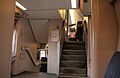
Refurbished second class interior (first series).
Stock typeElectric multiple unit
In service1994–present
ManufacturerTalbot, part of Bombardier Inc.
Number built178 sets
Formation6 cars (8600/8700)
4 cars (9400/9500)
Capacity8600/8700 – 129 (1st), 442 (2nd)
9400/9500 – 61 (1st), 330 (2nd)
OperatorsNS Reizigers
Specifications
Width3020 mm[1]
Maximum speed
  • 140 km/h (87 mph) (service)
  • 160 km/h (99 mph) (design)[1]
Traction system
Power output2,388 kW (3,202 hp) (8600/8700)
1,592 kW (2,135 hp) (9400/9500)
Electric system(s)1.5 kV DC Catenary; all units have extra space for equipment to operate on 25 kV AC Catenary
Current collectionPantograph
Track gauge1,435 mm (4 ft 8+12 in) standard gauge

VIRM trains, full name Verlengd InterRegio Materieel (transl.Lengthened interregional rolling stock), are a series of electric multiple unit (EMU) double-deck trains operated by Nederlandse Spoorwegen or NS (Dutch Railways), the principal railway operator in the Netherlands. NS has 178 of these double-deckers – 98 four-carriage sets, and 80 six-carriage sets. The trains were built between 1994 and 2009 – for the most part by Talbot, part of Bombardier Inc., with some railcars built by De Dietrich.

The VIRM trains evolved out of the previously existing DD-IRM series (DubbelDeks InterRegio Materieel or Double-deck interregional rolling stock). The first batch of 81 VIRM trains was created by lengthening all the existing DD-IRM combinations by one or two railcars. Three-unit trainsets were augmented by one carriage to transform them into a four-unit VIRM, and the four-unit sets received two more carriages, to create six-unit VIRM trains.

Names

[edit]
  • VIRM (Verlengd InterRegio Materieel)
  • DD-IRM (Dubbeldeksinterregiomaterieel)
  • Regiorunner (express train, never used)

First generation

[edit]

The first generation of DD-IRM were delivered from 1994 to 1996 as three and four car units. The three car units were delivered in the 82xx class and the four car units delivered as 84xx. The first batch of 290 double deck coaches (individual) were delivered. The first 47 were built by De Dietrich and from then on by Talbot.

As the coaches were individual but would run as a unit, they are individually numbered. Collectively they have a set number e.g., 8201, having coach number 380 8001. However, there are no double numbers, for example there can not be an 8201 and 8401 at the same time.

In 2000 an order was placed for new coaches. The 3 car sets were to be upgraded to 4 car sets, and the four car sets upgraded to 6 car sets. This is why they are now called VIRM (V = verlengd – extended). These were renumbered into the 94xx series and the 86xx series. These sets were formed between 2001 and 2005.

Second and third generation

[edit]
upright=1.35
Complete view of four carriage unit.

The second and third generation of VIRM were new sets built to the 4 and 6 coach formations, at the same time as the first generation were rebuilt. These were numbered 95xx (4 car units) and 87xx (6 car units). These sets featured different seats, which were also in the new coaches placed inside the first generation sets.

Fourth generation

[edit]

These sets were delivered from June 2008 and these are all 4 car units. They are numbered 9547–9597. These sets differ in that they do not feature the catering lift, meaning the stairs could be wider and the destination screens inside the coaches have disappeared, where instead information screens with travel information have been fitted.

Refurbishment

[edit]
Refurbished first class interior (first series).

Starting in 2015, the VIRM-1 sets were being refurbished and fitted with new interiors similar to those seen in the DDZ trainsets, and with new-style liveries. These sets are officially referred to as VIRMm1.

The refurbished 8736 departing from Arnhem Central station.

In 2021, NS started refurbishing the second and third generations of VIRM trains. The trains were fitted with a brand new interior with some notable changes from the first generation. These include the instalment USB-outlets in both classes and the introduction of "love seats" on the balcony. The trains were also painted in the new "flow" color scheme. [2]

Numbering

[edit]
vehicle type DD-IRM
1994–96
VIRM-1
2002–
VIRM-2
2002–
VIRM-3
–2005
VIRM-4
2008–09
Short Trainsets
Long Trainsets
8201...8281 (34)
8401...8481 (47)
9401...9481 (34)
8601...8681 (47)
9502...9525 (13)
8701...8723 (12)
-
8726–8746 (21)
9547–9597 (51)
-
mBvk1/2 290 8501–8662 (162) 8663–8712 (50) 8713–8754 (42) 8759–8861 (103)
ABv3/4 380 8001–8081 (81) 8101–8125 (25) 8126–8146 (21) 8147–8197 (51)
ABv5 380 8201–8247 (47) 8248–8259 (12) 8260–8280 (21)
ABv6 380 8301–8381 (81) 8382–8406 (25) 8407–8427 (21) 8428–8478 (51)
mBv7 260 8801–8847 (47) 8848–8859 (12) 8860–8880 (21)
  • 34 trainsets in 9401–9481, no double numbering with 47 trainsets in 8601–8681
  • 12 trainsets 8701...8723 only odd numbers[3] plus 13 trainsets 9502...9525 remaining numbers
  • mBvk1/2 8755–8758 are reserve carbodies, 8755 has become replacement 8718
  • mBvk1/2 8829 was built as a replacement vehicle for an older trainset

Different liveries

[edit]
9524 in OV chipkaart livery.
  • 8707 – This carried adverts for Lekker lezen boven in de trein, Comfortable reading in the upper deck of the train, for a short period in 2016. The adverts were removed because it was said they were not fireproof enough.
  • 8733 – This featured adverts between the two decks, advertising that it was the 300th VIRM set built. Livery no longer carried.
  • 8741 – This is the prototype for the midlife-revision of the VIRM-2/3 series.
  • 9411 – This is the prototype for the midlife-revision of the VIRM-1 series.
  • 9514 – This carries adverts for Lekker lezen in de trein, Comfortable reading in the train.
  • 9522 – This sported a white/magenta livery advertising the OV-Chipkaart.
  • 9524 – This carried advertising liveries for Mamma Mia and The Lion King. As well as that, it sported a completely white/magenta livery, advertising the OV-chipkaart similar to unit no. 9522.
  • 9525 – This carried the adverts for the NS/Olympic partnership.
  • 9556 – This carries a blue/yellow dotted livery on the middle of the train which makes it look like it is green, it is called the "Groene trein", Green train, for advertising the cooperation between NS and Eneco (see below). Livery was designed by two students.

Green train

[edit]

By 2015, NS hopes to let 50% of their trains run on electricity powered by wind turbines. By 2018, all the trains should be running on "clean" electricity.[4] To celebrate this and the fact that the first Dutch railway line was opened 175 years ago, NS and Eneco Energy held a competition for designing a green train.

The winners were two students from the Technical University in Delft. Their names are Michiel van Sinderen and Steffen de Jonge. Their design was to have the train be checkered with small black and blue squares. From even a small distance the train appears to be green. Michiel van Sinderen said it was the most beautiful thing he had ever made.[5] This design was brought on VIRM number 9556. It was named De Groene Trein which means The Green Train. The difference between this train and other VIRMs is the paler shade of yellow and white arrows on the doors, similar to those on DDZ trains and modernized ICRm railway cars.

The train debuted on September 20, 2014. Its maiden voyage was an extra trip from Amsterdam Centraal to Haarlem. Now it can be spotted and ridden anywhere in the Netherlands.

Services operated

[edit]

The VIRM is now the main intercity train and can be seen across most of the NS network.

Series Train type Route Material Notes
800 Intercity Den Helder - Den Helder Zuid - Anna Paulowna - SchagenHeerhugowaardAlkmaar Noord AlkmaarCastricumZaandamAmsterdam SloterdijkAmsterdam CentraalAmsterdam AmstelUtrecht Centraal's-HertogenboschEindhovenWeertRoermondSittardMaastricht VIRM This train runs only from Monday to Thursday and only towards Den Helder during rush hours. During the off-peak hours this train only runs from Alkmaar to Maastricht and back.
1400 Nachtnet Utrecht CentraalAmsterdam CentraalSchipholLeiden CentraalDen Haag HSDelftRotterdam Centraal VIRM, ICM
2100 Intercity Amsterdam CentraalAmsterdam SloterdijkHaarlemHeemstede-AerdenhoutLeiden CentraalDen Haag Centraal VIRM This train only runs until 10:00 pm and Sundays after 11:30 am.
2200 Intercity Vlissingen - Vlissingen SouburgMiddelburgArnemuidenGoesKapelle-BiezelingeKruiningen-YersekeKrabbendijkeRilland-BathBergen op ZoomRoosendaalDordrechtRotterdam Blaak - Rotterdam CentraalSchiedam CentrumDelft - Den Haag HS - Den Haag Laan van NOI - Leiden Centraal - Heemstede-Aerdenhout - HaarlemAmsterdam SloterdijkAmsterdam Centraal
2400 Intercity Lelystad Centrum - Almere Buiten - Almere Centrum - DuivendrechtAmsterdam Zuid - Schiphol AirportLeiden Centraal - Den Haag Laan van NOI - Den Haag HS - Delft - Schiedam CentrumRotterdam CentraalRotterdam Blaak - Dordrecht This train only runs until 10:00 pm and Sundays after 11:30 am. This train will not stop at Lelystad Centrum and Duivendrecht during Sundays and after 8:00 pm.
3000 Intercity Den HelderDen Helder ZuidAnna PaulownaSchagenHeerhugowaardAlkmaar NoordAlkmaarHeilooCastricumZaandamAmsterdam SloterdijkAmsterdam CentraalAmsterdam AmstelUtrecht Centraal (– Driebergen-Zeist) - Veenendaal-De KlompEde-WageningenArnhem CentraalNijmegen VIRM This trains stops only at Driebergen-Zeist after 9:00 pm and Sundays until 11:30 am.
3100 Intercity Schiphol AirportAmsterdam ZuidAmsterdam Bijlmer ArenAUtrecht CentraalDriebergen-ZeistEde-WageningenArnhem CentraalNijmegen This train only runs until 9:00 pm and Sundays after 11:30 am
3500 Intercity Schiphol AirportAmsterdam ZuidAmsterdam Bijlmer ArenAUtrecht Centraal - – 's-HertogenboschEindhovenWeertRoermondSittardHeerlen This train disconnects at Eindhoven with train 13500 towards Venlo. This train runs only between Schiphol and Utrecht Centraal after 9:30 pm.
3600 Intercity ZwolleDeventer - Zutphen - Dieren - Arnhem Centraal - Nijmegen - Oss - 's-Hertogenbosch - Tilburg - Breda - Etten-Leur - Roosendaal VIRM, DDZ
3900 Intercity Amsterdam CentraalAmsterdam AmstelUtrecht Centraal's-HertogenboschEindhoven VIRM This train only runs on Wednesdays. This train continues as 14500 towards Enkhuizen during rush hours.
13500 Intercity Eindhoven - Helmond - Deurne - Horst-Sevenum - Blerick - Venlo VIRM This train (dis)connects at train 3500 towards Schiphol Airport at Eindhoven.
21400 Nachtnet Rotterdam Centraal - Dordrecht - Breda - Tilburg - Eindhoven / Utrecht Centraal's-HertogenboschEindhoven VIRM This train only runs at Friday & Saturday night.

Accidents and incidents

[edit]
Collision involving a NS VIRM unit (right)
  • In July 2017 a VIRM collided with a lorry in Heiloo Forrest.[citation needed]
[edit]

References

[edit]
[edit]
Revisions and contributorsEdit on WikipediaRead on Wikipedia
from Grokipedia
The NS VIRM (Verlengd Materieel), meaning "Extended Inter-Regional ," is a series of double-deck (EMU) trains operated by (NS), the national railway company of the . Introduced in 1994, these trains were designed to provide high-capacity intercity services on the densely traveled Dutch rail network, featuring two levels for seating and standing to accommodate up to 330 second-class seats per four-car set. The fleet comprises 178 trainsets—98 four-car units measuring approximately 108.6 meters in length and 80 six-car units at 162.1 meters—manufactured primarily by (a Bombardier subsidiary) between 1994 and 2009, with some later production by De Dietrich. The VIRM trains have undergone extensive modernization programs to extend their service life and improve passenger experience. The first generation of 81 four-car sets received upgrades between 2016 and 2020, including new interiors with dedicated quiet zones on the upper decks for work and social areas on the lower levels, alongside energy-efficient technologies. Subsequent refurbishments for second- and third-generation sets, completed by early 2024, introduced updated seating, better accessibility, and traction system enhancements handled by . Modernization of the fourth-generation sets began in 2023, with the first units expected to be completed by the end of 2025. In 2022, NS contracted to retrofit 176 VIRM trainsets with (ETCS) Level 2 technology to meet evolving safety and interoperability standards across Europe, with installation beginning in January 2025 and completion scheduled for 2027. Additionally, a initiative remanufactured 656 VIRM carriages, reusing 99% of materials to extend their operational lifespan by another 20 years while reducing environmental impact. These trains play a central role in NS's intercity operations, serving major routes such as to Rotterdam and , with a total capacity exceeding 86,000 seats across the fleet. Known for their capabilities—powered by outputs of 1,608 kW for four-car sets and 2,312 kW for six-car sets—VIRMs contribute to efficient, high-frequency services carrying over 1 million passengers daily on the Dutch mainline network. Ongoing maintenance ensures reliability, though the fleet's characteristic swaying motion has been noted in passenger feedback, addressed through recent stability improvements during modernizations.

Design and Specifications

Overview

The NS VIRM, full name Verlengd InterRegio Materieel (VIRM), also known as Dubbeldeks InterRegio Materieel (DD-IRM), is a series of double-deck (EMU) trains operated by (NS). Designed for inter-regional and services on the Dutch rail network, the VIRM increases capacity on busy routes through its two-level passenger accommodation. Built primarily by Talbot (a Bombardier subsidiary) with contributions from De Dietrich, production spanned 1994 to 2009. The total fleet comprises 178 sets: 98 four-car units and 80 six-car units. As NS's primary intercity trains, VIRMs operate at 1.5 kV DC with built-in provisions for future 25 kV AC electrification. The type was briefly considered for the unused express name "Regiorunner."

Technical features

The NS VIRM (Verlengd InterRegio Materieel) trains employ asynchronous three-phase AC motors for propulsion, utilizing inverter technology to convert the direct current from the overhead lines into alternating current for efficient traction. These motors are cage-anchor type, with power outputs of 1,608 kW for four-car sets and 2,312 kW for six-car sets, enabling reliable performance on the Dutch rail network. The electrical system is designed for 1,500 V DC collection via pantographs, standard for the infrastructure, with built-in provisions for future upgrades to 25 kV 50 Hz AC without major structural modifications. This compatibility enhances the trains' adaptability to evolving network requirements while maintaining high-voltage safety features like insulated cabinets. Structurally, the VIRM features a double-deck configuration with a self-supporting constructed from Fe 360/510 grade material, providing robustness for the bi-level design that maximizes passenger space without compromising stability. The aluminum elements are limited to specific components like roofing and flooring for corrosion resistance and weight reduction, while the overall body width measures 3,020 mm to fit standard Dutch loading gauges. The maximum design speed is 160 km/h, though operational limits are set at 140 km/h to ensure safety and track compatibility. Bogie and suspension systems are tailored for the double-deck load distribution, with powered bogies (Bo' configuration) installed on motor cars using RMO or SIG designs that support asynchronous motor integration. These bogies feature a of 2.75 m for motor units and incorporate primary and secondary suspension for smooth ride quality over varied track conditions. Traction control is managed through inverters for precise application, while braking combines electro-pneumatic disc systems on all axles with regenerative electro-dynamic braking on powered bogies to recover during deceleration. and parking functions rely on magnetic rail for reliable stopping power. Interior features emphasize the double-deck layout with multi-level seating arrangements across upper and lower decks, optimized for travel including areas. Accessibility is supported by wide doors (1,300 mm effective width) and provisions for spaces, ensuring compliance with European standards for passenger mobility without altering the core structural envelope. Air conditioning units are compartment-specific, maintaining comfort in the bi-level environment.

Capacity and dimensions

The VIRM (Verlengd Materieel) trains are designed as double-deck electric multiple units to optimize space on the Dutch rail network, available in four-car and six-car configurations. The four-car sets (VIRM-IV) measure 108.6 meters in , with a width of 3.02 meters and a of 4.67 meters, resulting in a service weight of approximately 235.7 tonnes. Six-car sets (VIRM-VI) extend to 162.1 meters in while maintaining the same width and , with a weight of about 349 tonnes. These dimensions allow the trains to operate efficiently on standard gauge tracks while providing substantial vertical space utilization through the bi-level structure. Passenger capacity varies by configuration, emphasizing seated accommodation across both decks to handle high-volume routes. In six-car sets of the 8600 and 8700 series, there are 129 first-class seats and 442 second-class seats, offering a total of 571 seated passengers. Four-car sets in the 9400 and 9500 series provide 61 first-class seats and 330 second-class seats, totaling 391 seated passengers. These figures reflect the modular interior layout, where first-class areas are often concentrated in dedicated sections on the upper or lower decks of end cars, while second-class seating spans the majority of carriages with a mix of facing and airline-style arrangements for comfort during longer journeys. Standing room is additionally available in lower-deck vestibules and near entrances, providing approximately 223 places per trainset. The double-deck layout distributes seating evenly across upper and lower levels in each carriage, with stairwells connecting the decks for fluid passenger movement; for example, upper decks typically feature larger windows and quieter environments for first-class travel, while lower decks include more accessible entry points. Bicycle areas are integrated into designated second-class carriages, usually at one end of the trainset, allowing space for 6 non-foldable bicycles in four-car sets and 9 in six-car sets during off-peak hours (with restrictions during rush periods to prioritize standing passengers). Accessibility features include dedicated wheelchair spaces—typically two per trainset, located on the lower deck of accessible cars—equipped with securement points, alongside priority seating allocations near entrances for passengers with reduced mobility or other needs. These elements ensure the VIRM's capacity supports diverse user requirements while adhering to Dutch rail standards for inclusive design.

History and Production

Development

The development of the NS VIRM originated in the early amid rising capacity demands on Dutch intercity routes, driven by a surge in passenger numbers following the introduction of the OV-studentenkaart in , which provided to students and significantly boosted ridership. NS began engineering studies for double-deck rolling stock in 1990, emphasizing designs that could effectively double passenger capacity on existing without requiring longer platforms or train lengths, thereby optimizing use of the Dutch rail network. Planning involved close collaboration between NS and manufacturers De Dietrich for mechanical components and (later part of Bombardier) for assembly, with additional suppliers contributing bogies from Fiat-SIG and electrical systems from ; this modular approach allowed for flexible configurations in the initial DD-IRM (double-deck interregional) sets, which formed the basis for later VIRM extensions. A call for tenders on powered units was issued in autumn 1992, resulting in a January 1993 order for 50 motor coaches (with options for more) to integrate with the unpowered double-deck trailers already in planning; deliveries of the core fleet commenced in 1994. A proposed name for a high-speed variant, "Regiorunner," was considered during early conceptualization but ultimately not adopted in favor of the official DD-IRM and later VIRM designations. In 2000, NS placed an additional order for 128 coaches to extend the original three- and four-car sets into longer formations, reclassifying them as VIRM (Verlengd Materieel) and addressing ongoing capacity pressures.

First generation

The first generation of NS VIRM trains originated from the Dubbeldeks Interregio Materieel (DD-IRM) series, with 290 double-deck coaches delivered between 1994 and 1996. These comprised 162 powered end cars (second class) and 128 intermediate cars (first and second class), forming 34 three-car sets in the 82xx series and 47 four-car sets in the 84xx series. The initial 47 intermediate cars were built by De Dietrich in Reichshoffen, , while in Aken, (part of ), constructed the remaining coaches. This production batch addressed the need for higher-capacity inter-regional services on the Dutch rail network. To increase capacity amid growing passenger demand, NS initiated an extension program in 2000, ordering 128 additional intermediate cars from for delivery starting in 2001. The 34 three-car 82xx sets were lengthened by one car each to become four-car 94xx sets, while the 47 four-car 84xx sets received two additional cars to form six-car 86xx sets; the full extension process was completed by 2005, redesignating the fleet as Verlengd Interregio Materieel (VIRM). These trains entered passenger service in 1996, primarily on inter-regional routes such as the series 3600 between and , where they handled approximately half of the services from of that year.

Second and third generations

The second and third generations of NS VIRM trains represent newly built double-deck electric multiple units designed to expand the fleet and align with the extended first-generation sets. Produced between 2002 and 2005 by (later ), these generations included four-car configurations numbered in the 95xx series and six-car configurations in the 87xx series. A total of 46 new sets were delivered: 13 four-car units for shorter routes and 33 six-car units for higher-capacity services. At the time of construction, these trains featured updated seating layouts with a mix of longitudinal and transverse arrangements, providing 387 to 410 seats in four-car sets and 593 to 600 seats in six-car sets, including dedicated first-class sections with 61 to 64 seats (four-car) or 129 to 132 seats (six-car). Interiors incorporated fabric-upholstered seats in second class, throughout, and enhanced comfort elements such as improved lighting and ventilation, surpassing the original DD-IRM designs in passenger amenities while maintaining the double-deck structure for efficient space utilization. These features emphasized energy-efficient IGBT-based traction systems and closed windows for better climate control. The production of these new-build sets occurred concurrently with the extension and initial upgrades of first-generation VIRM units, facilitating fleet . By , the combined VIRM fleet—integrating the second and third generations with the modified originals—enabled uniform operations across the Dutch network, with compatible systems allowing flexible formations.

Fourth generation

The fourth generation of NS VIRM trains represents the final batch of this double-deck series, comprising 51 four-car units numbered 9547 to 9597. These sets were manufactured by and delivered starting in June 2008, with the last units entering service by 2009. This order of 205 individual coaches formed all-new four-car configurations to bolster the fleet capacity. The primary purpose of this batch was to finalize NS's fleet expansion efforts while prioritizing cost savings and , particularly by excluding features from prior generations that had become obsolete or underutilized. Catering lifts, originally intended for service trolleys but rarely used in practice, were completely removed to allow for wider staircases that enhanced passenger accessibility and flow between decks. This simplification contributed to reduced production complexity and needs without compromising core functionality. Further design adjustments included the elimination of fixed destination display screens found in the upper decks of earlier VIRM variants, as these were deemed redundant with evolving station-based information systems. In their place, the interiors were equipped with dedicated travel information screens to provide real-time updates on routes, delays, and connections, improving passenger experience through more dynamic digital displays. These changes reflected a shift toward streamlined, modernized interiors better suited to contemporary rail operations.

Refurbishment and Modernization

Initial upgrades

In 2000, (NS) placed an order for 128 new intermediate cars to address an anticipated shortage of capacity on interregional routes, enabling the lengthening of the existing 81 DD-IRM (Dubbeldeks Materieel) sets into VIRM (Verlengd Materieel) configurations. This initiative transformed all 34 three-car DD-IRM units (series 8200) into four-car sets by adding one intermediate car each, while the 47 four-car DD-IRM units (series 8400) were extended to six-car sets with two additional cars per formation, resulting in a total of 34 four-car and 47 six-car VIRM trains. The lengthening process began in 2001 at NS maintenance facilities, with the first unit (former 8201) renumbered as 9401, and continued progressively through 2005, when all modifications were completed. Upon completion, the extended four-car sets were renumbered into the 94xx series and the six-car sets into the 86xx series, marking their official designation as VIRM-1. These initial upgrades were strictly structural, focusing on the physical integration of the new intermediate cars—built to match the original DD-IRM specifications—without any significant changes to , electrical systems, or passenger amenities. The added cars enhanced overall train capacity for growing demand but retained the core features of the pre-lengthened fleet, such as the original seating layouts and control systems.

VIRM-1 program

The VIRM-1 program, initiated in 2015, represents a mid-life refurbishment effort for the first-generation VIRM double-deck electric multiple units operated by (NS), focusing on enhancing passenger comfort and sustainability after about 20 years of service. This initiative targeted the original 81 trainsets built between 1994 and 1996, involving a full strip-down and overhaul at NS's workshop to extend their operational life. The program, valued at approximately €450 million, encompassed technical upgrades alongside aesthetic and functional improvements to better align the trains with modern standards. Key interior modifications under the VIRM-1 program included redesigned seating configurations to match those in the newer DDZ (New Intercity Double-decker) trains, with upper decks featuring business-oriented airline-style seats and fold-down tables in quiet zones, while lower decks adopted informal 2+2 bay arrangements and longitudinal benches for greater flexibility. Lighting was upgraded to energy-efficient LED systems, and accessibility features were enhanced with TSI-PRM compliant wheelchair-accessible toilets, dedicated urinals, and improved luggage storage areas, all while removing outdated elements like catering elevators. These changes resulted in the refurbished trains being redesignated as VIRMm1, prioritizing passenger experience through better space utilization and environmental efficiency, with 86% of components recycled or reused. The program applied these updates to the 86xx and 94xx series, covering 81 trainsets and 412 carriages in total, with work progressing at an average rate of 20 units per year until completion in 2020. Refurbished units, such as set 8736, returned to by 2022, sporting an updated NS livery featuring bold yellow-and-blue color blocking with a prominent white arrow logo to modernize the fleet's visual identity. This overhaul ensured the first-generation VIRMs remained a core part of NS's operations into the mid-2020s.

VIRM-2 and VIRM-3 program

The VIRM-2 and VIRM-3 refurbishment program, initiated by (NS) in 2021, targeted the second and third generations of VIRM double-decker electric multiple units to extend their operational life by an additional 18 years while enhancing passenger amenities and . This initiative involved a comprehensive overhaul of 45 trainsets comprising 242 carriages, specifically the 95xx series four-car units (VIRM-2) and 87xx series six-car units (VIRM-3), with the first refurbished train returning to service in July 2021 and the entire fleet completed by early 2024. Key interior upgrades emphasized improved and modern comfort features, including the installation of USB charging outlets throughout first- and second-class sections for convenient device charging during journeys. Balconies were reconfigured with "love seats"—compact paired seating arrangements—to promote social interaction and efficient space use, alongside "stits," innovative standing furniture designed to support passengers during peak hours. The interiors adopted the new "flow" color scheme, NS's contemporary house style featuring dynamic, fluid patterns in blues and yellows that align with variations, complemented by sustainable LED lighting and an upgraded climate control system for better energy efficiency and environmental control. These modifications not only prioritized passenger comfort but also advanced energy efficiency through the new , which optimizes heating and cooling to reduce power consumption, and sustainable lighting that adjusts dynamically to external conditions. Approximately 99% of materials from the disassembly process were reused or recycled, underscoring NS's commitment to principles in the €400 million investment for this phase. In contrast to the VIRM-1 program, which focused on basic for first-generation units, the VIRM-2 and VIRM-3 program introduced these tech-forward amenities tailored to the newer generations' design.

Recent modernizations

In 2024, (NS) completed the refurbishment of its VIRM-2 and VIRM-3 double-decker electric multiple units, marking the culmination of a multi-year program that enhanced passenger comfort and accessibility across 45 trainsets. This upgrade aligned the fleet with increased service demands in the 2025 timetable, supporting higher capacity on key routes without introducing new . A significant safety-focused initiative began in September 2022, when NS awarded a to retrofit 176 VIRM vehicles (carriages) with onboard (ETCS) Level 2 technology. This upgrade ensures compliance with evolving European signaling standards, improving operational safety and efficiency on the Dutch rail network; the retrofitting work is scheduled for completion between 2023 and 2027, managed by NS's Train Modernisation Haarlem subsidiary. The project represents the first major ETCS retrofit for NS , prioritizing as more lines transition to digital signaling. As of January 2025, installation has begun on the first VIRM train. Parallel to the ETCS efforts, NS announced the VIRM-4 modernization program in February 2022, targeting all 51 four-car sets built from 2008 onward at a cost of €323 million. Pre-tryout work, involving the of one to test the design, was conducted in 2024, with the full project scheduled to begin at the end of 2025 and the first overhauled unit expected to return to service by the end of 2025, extending the fleet's operational life by approximately 18 years. Conducted by NS's Train Modernisation subsidiary, the program includes comprehensive updates to traction systems for improved energy efficiency, interior refurbishments to enhance passenger amenities and , and sustainability measures such as reusing or recycling 99% of materials. These enhancements underscore NS's commitment to fleet sustainability amid growing ridership, with full implementation planned through the late 2020s.

Fleet Composition

Numbering system

The NS VIRM (Verlengd Materieel) trains employ a four-digit numbering system for their trainsets, where the first two digits indicate the series corresponding to the generation, formation length, and historical modifications, while the last two digits provide a within the series. This convention evolved from the original DD-IRM (Dubbeldeks Materieel) designations and reflects extensions and new builds, with trainset numbers typically assigned based on the leading or end driving car. For the first generation, originally delivered as DD-IRM between and 1996, the initial numbering used the 82xx series for 34 three-car formations and the 84xx series for 47 four-car formations. Following extensions in 2000 to standardize for service, these were renumbered to the 94xx series for the 34 now four-car units and the 86xx series for the 47 six-car units, with pantographs relocated to intermediate cars. The second and third generations, introduced from 2000 onward, use the 95xx series for second-generation four-car units (13 units) and fourth-generation four-car units (51 units delivered in 2008–2009), and the 87xx series for second-generation six-car units (12 units) and third-generation six-car units (21 units). This progression in series numbering—shifting from 82xx/84xx to 94xx/86xx for extended first-generation sets, and 95xx/87xx for later builds—allows quick identification of a trainset's origin, length, and upgrade status. Individual vehicles within VIRM trainsets are assigned five- or six-digit numbers prefixed by type codes that denote their function, class configuration, and equipment. Driving cars, which house traction motors and control cabs, are coded as mAB (motorized first- and second-class) at the ends, while intermediate cars include tB (trailer second-class), AB (first- and second-class without motors), and specialized types like ABv (first- and second-class with for overhead collection). These codes follow NS conventions for electric multiple units, where "m" indicates motorized, "t" unpowered trailer, "A" first class, "B" second class, and "v" pantograph-equipped, ensuring compatibility across formations during maintenance or reconfiguration.

Formations by generation

The NS VIRM (Verlengd Materieel) trains are assembled in fixed formations that reflect their generational development, primarily as four-car or six-car units to meet varying capacity demands on routes. These compositions typically feature powered end cars (m) with driving cabs, intermediate unpowered trailers (t) for passenger accommodation, and specialized cars such as (Bt) or dining (Dt) modules integrated into the middle sections for enhanced service. In the first generation, derived from the original DD-IRM sets delivered between 1994 and 1996, formations began as basic three-car units configured as m-t-m, consisting of two motorized end cars flanking a central second-class trailer. Starting in 2000, these were systematically lengthened: the 34 three-car units received an additional to form four-car m-t-Bt-m sets, while the original 47 four-car variants (already including some intermediate trailers) were extended with a , an additional trailer, and a to create six-car m-t-Dt-t-Bt-m configurations. This extension program resulted in 81 first-generation units, comprising 34 four-car units and 47 six-car units, utilizing 418 cars in total. The second and third generations, introduced from to , featured newly constructed formations without relying on extensions, maintaining compatibility with prior designs but incorporating updated interiors and systems. The second generation included 13 four-car units in the m-t-Bt-m layout, with motorized ends bookending a standard trailer and a dedicated section, and 12 six-car units in the m-t-Dt-t-Bt-m arrangement to include a dining facility amid additional . The third generation added 21 six-car units in the same m-t-Dt-t-Bt-m configuration. These generations added 13 four-car and 33 six-car units, emphasizing modular assembly for easier maintenance. The fourth generation, delivered between 2008 and 2009, streamlined production to 51 four-car units only in an m-t-Bt-m configuration, omitting the to reduce complexity and costs while prioritizing high-density commuter patterns. These units incorporated simplified electrical and interior features for quicker deployment, with no six-car variants produced. Across all generations, the total fleet composition stands at 98 four-car units and 80 six-car units, enabling flexible coupling for longer consists where needed on busy lines.

Liveries

Standard NS livery

The standard NS livery for VIRM trains originated with the first generation units introduced in the mid-1990s, featuring prominent yellow fronts and blue sides accented by ascending blue bands toward the upper deck, which provided a dynamic visual flow aligned with the era's NS branding. This scheme was applied to the initial DD-IRM and early VIRM sets built between 1994 and the early 2000s, emphasizing visibility and during their rollout for interregional services. Post-2005, as later VIRM generations entered service and fleet standardization advanced, the livery evolved to incorporate silver bodies as the base color, paired with yellow doors on the outermost sections and blue accents including inner doors and descending bands to the lower deck, creating a more streamlined and metallic appearance. This updated design was progressively adopted on new builds from 2005 to 2009 and during initial maintenance cycles, promoting uniformity across the expanding double-deck fleet while retaining core NS yellow and blue elements for recognition. In the VIRM-1 refurbishment program commencing in , refreshed shiny and paint was applied to the exterior alongside updated accents, offering a modern aesthetic that contrasted with prior applications and improved durability against environmental wear. These changes, implemented at Nedtrain workshops, aligned the older sets with contemporary standards without altering the fundamental color palette. In 2021, NS introduced the NS Flow livery, designed by Studio Dumbar, for refurbished VIRM-2 and VIRM-3 sets. This design features a striking bold separation between and colors, with a large flowing NS arrow logo across the side, cab sections, and a flowing top replacing the previous dark grey roof. The first unit in this , set 9528, entered service in June 2021, and it has since become the standard for modernized VIRM trains, including those under the VIRM-4 program completed by 2025. The standard livery, encompassing these evolutions, is applied across VIRM generations to foster visual cohesion in daily operations, with the NS Flow design prevalent in post-2021 refurbishment configurations for enhanced fleet integration.

Promotional and special liveries

Several VIRM units have received temporary promotional wraps to highlight specific campaigns or partnerships, departing from the standard NS livery. In the early 2010s, units 9522 and 9524 were adorned with white and magenta vinyl graphics promoting the , the ' contactless ticketing system, to encourage adoption among passengers. These wraps featured imagery and messaging emphasizing the convenience of the chipkaart for seamless travel across trains, buses, and trams, and remained in service for several years before being removed around 2013. In 2016, unit 8707 was fitted with advertisements for a reading initiative titled "Lekker lezen boven in de trein" (Comfortable reading in the upper deck of the train), in collaboration with bookstores to promote during journeys. The wrap covered the train's exterior with book-themed graphics and slogans encouraging passengers to enjoy reading on the upper decks of double-decker VIRMs, aligning with efforts to enhance onboard comfort and cultural engagement. This was applied for a limited period to boost awareness of the campaign. One of the most notable special liveries is the "Groene Trein" (Green Train) on unit 9556, which debuted on September 20, 2014, at Amsterdam Centraal to mark the 175th anniversary of Dutch rail travel. Designed by students Michiel van Sinderen and Steffen de Jonge, who won a competition organized by NS and energy provider Eneco, the livery features a distinctive checkered pattern of small black and blue squares intended to evoke motion and sustainability from a distance. This design promoted NS's commitment to renewable energy, specifically the partnership with Eneco to power 50% of trains with wind energy by 2015 and 100% by 2018, symbolizing the transition to climate-neutral rail operations.

Operations

Services operated

The VIRM trains serve primarily as the backbone of intercity services operated by (NS) across the , providing high-capacity connections between major cities with limited intermediate stops. These double-deck electric multiple units are deployed on key intercity routes, such as series , which in the 2025 timetable runs from to Schiphol Airport via and Centrum. Other notable deployments include series 1400 on the Nachtnet overnight network, operating between Rotterdam Centraal, , Den Haag HS, Leiden Centraal, Schiphol Airport, Amsterdam Centraal, and Utrecht Centraal, with VIRM comprising the equipment on this service. Similarly, series 3500 utilizes VIRM for runs from Schiphol Airport to , supporting efficient airport-to-regional connectivity. These assignments underscore VIRM's role in handling peak and off-peak demand on high-traffic corridors. In the 2025 timetable, effective from December 2024, NS expanded operations with over 1,500 additional trains per week, including increased frequencies on intercity lines where VIRM remains integral due to ongoing modernizations that extend their service life on high-capacity routes. Historically, VIRM entered service in 1994 as an extension of the earlier double-deck interregional material (DD-IRM), initially focused on regional links before becoming the predominant intercity fleet by the mid-2000s through fleet expansions and upgrades.

Performance and reliability

The NS VIRM trains operate at a maximum service speed of 140 km/h, with a design speed capability of 160 km/h, the latter enabled through ongoing modernizations. These trains utilize asynchronous AC traction motors powered by Traxis IGBT-VVVF inverters, providing a total power output of 2,388 kW for six-car formations and enabling efficient acceleration. performance reaches up to 0.5 m/s² under standard conditions, supporting reliable intercity operations while adhering to Dutch rail infrastructure limits. VIRM trains are designed for the Dutch network's 1.5 kV DC electrification system (with dual-voltage capability for 25 kV 50 Hz AC sections), achieving energy efficiency through advanced and . recovers approximately 73% of braking energy in typical cycles, contributing to overall energy savings of up to 25% compared to non-eco driving strategies. Post-refurbishment enhancements, including LED and optimized HVAC systems, further improve efficiency by reducing auxiliary power draw. Reliability has been significantly enhanced following mid-life overhauls, with comprehensive refurbishments of VIRM-2, VIRM-3, and VIRM-4 series restoring 86% of components. These overhauls, costing over €323 million for the VIRM-4 alone, extend service life into the by addressing wear on critical systems like bogies and doors. A notable operational characteristic is the audible "gear shift" sound during acceleration, resulting from frequency changes in the VVVF drive system modulating the asynchronous motors.

Incidents

Notable accidents

On April 21, 2012, a VIRM (unit 8711, consisting of six double-decker coaches) collided head-on with an SLT sprinter train near Westerpark, resulting in one fatality and 190 injuries, including 24 serious cases. The collision occurred at the Singelgracht junction when the sprinter driver, distracted and misjudging track , passed a signal, leading the train to enter the path of the oncoming VIRM at approximately 40 km/h. The Dutch Safety Board investigation identified inadequate risk management by NS and ProRail, including the absence of the ATB-V&V at the signal and poor in the train designs, which exacerbated injuries due to incompatible crash energy absorbers and interior layouts. Recommendations included mandating ATB-V&V implementation, enhancing driver training on signal visibility, and updating admission standards for train to better protect occupants. On April 28, 2017, a VIRM unit collided with a lorry on a at Wouw, resulting in the train derailing. No fatalities were reported, but the incident led to significant disruptions and highlighted issues with level crossing safety. In July 2017, another VIRM unit collided with a lorry in Heiloo Forest, causing damage to the train but no serious injuries. The accident prompted reviews of freight vehicle interactions at rail crossings. On April 4, 2023, VIRM 1409 (unit 9405, a four-coach unit) struck debris from a road-rail that had encroached onto the active track near station, shortly after a had collided with the same obstacle, causing one fatality (the excavator operator) and 30 injuries, with 20 people hospitalized including the passenger train driver and nine others seriously injured. The incident stemmed from a faulty shunt bar at the road-rail access point, inadequate worksite shielding, and miscommunication among the construction team during night-time track possession, allowing the excavator to enter the in-service track without proper barriers. The Dutch Safety Board report highlighted systemic issues in managing risks when trains operate alongside worksites, noting ProRail's prior identification of the Voorschoten access as high-risk, and recommended improved safety protocols, physical barriers, and communication procedures to prevent recurrence. A was launched following the incident. On October 30, 2025, an VIRM train collided with a at a in Meteren, injuring five people with minor injuries. The , loaded with pears, became stuck on the crossing, and the collision scattered but caused no serious harm or . ProRail released footage to warn drivers about level crossing dangers. Since the retrofit of the VIRM fleet with ETCS () Level 2 technology began in 2022, enhancing automatic train protection and speed supervision, the safety record has improved overall, though incidents like the 2025 Meteren collision underscore ongoing efforts by NS to reduce level crossing and worksite risks as of November 2025.

References

Add your contribution
Related Hubs
User Avatar
No comments yet.