



Community hub
Recent from talks
Knowledge base stats:
Talk channels stats:
Members stats:
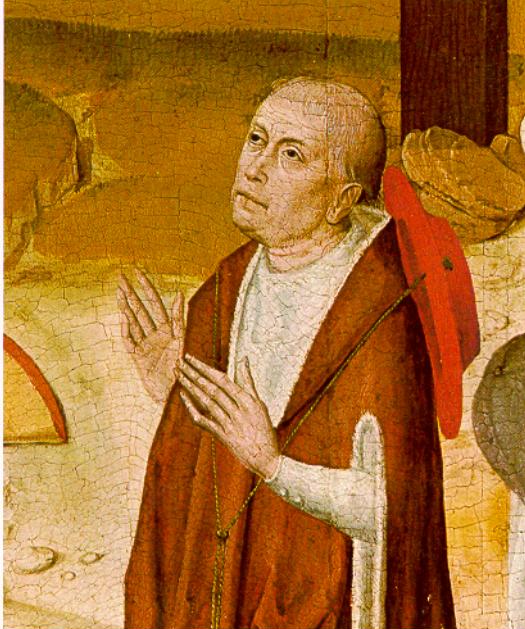
Nicholas of Cusa
Nicholas of Cusa (1401 – 11 August 1464), also referred to as Nicholas of Kues and Nicolaus Cusanus (/kjuːˈseɪnəs/), was a German Catholic bishop and polymath active as a philosopher, theologian, jurist, mathematician, and astronomer. One of the first German proponents of Renaissance humanism, he made spiritual and political contributions to European culture. A notable example of this is his mystical or spiritual writings on "learned ignorance", as well as his participation in power struggles between Rome and the German states of the Holy Roman Empire.
As papal legate to Germany from 1446, he was appointed cardinal for his merits by Pope Nicholas V in 1448 and Prince-Bishop of Brixen two years later. In 1459, he became vicar general in the Papal States. Nicholas has remained an influential figure. In 2001, the sixth centennial of his birth was celebrated on four continents and commemorated by publications on his life and work.
Nicholas was born in Kues (Latinized as "Cusa") in southwestern Germany. He was the second of four children of Johan Krebs (or Cryfftz) and Katherina Roemer. His father was "a prosperous boat owner and ferryman." Nicholas entered the Faculty of Arts of the Heidelberg University in 1416 as "a cleric of the Diocese of Trier," studying the liberal arts. He seemed to have left Heidelberg soon afterwards, as he received his doctorate in canon law from the University of Padua in 1423. In Padua, he met the later cardinals Julian Cesarini and Domenico Capranica and became friends with the mathematician Paolo dal Pozzo Toscanelli. Afterwards, he entered the University of Cologne in 1425 as "a doctor of canon law," which he appears to have both taught and practiced there. In Cologne, he made friends with the scholastic theologian Heymeric de Campo.
Following a brief period in Cologne, Nicholas returned to his hometown and became secretary to Otto of Ziegenhain, the Prince-Archbishop of Trier. Otto appointed him canon and dean at the stift of Saint Florinus in Koblenz affiliated with numerous prebends. In 1427 he was sent to Rome as an episcopal delegate. The next year he travelled to Paris to study the writings of Ramon Llull. At the same time he rejected a calling by the newly established University of Leuven. He acquired great knowledge in the research of ancient and medieval manuscripts as well as in textual criticism and the examination of primary sources. In 1433 he identified the Donation of Constantine as a fake, confirmed by Lorenzo Valla a few years later, and revealed the forgery of the Pseudo-Isidorian Decretals. He made friends with the Austrian astronomer Georg von Peuerbach and advocated a reform of the Julian calendar and the Easter computus, which, however, was not realized until the introduction of the Gregorian calendar in 1582.
After the Archbishop Otto of Trier had died in 1430, Pope Martin V appointed the Speyer bishop Raban of Helmstatt his successor. Nevertheless, the Electorate was contested by opposing parties, and in 1432 Nicholas attended the Council of Basel representing the Cologne dean Ulrich von Manderscheid, one of the claimants, who hoped to prevail against the new Pope Eugene IV. Nicholas stressed the determining influence of the cathedral chapter and its given right to participate in the succession policy, which even places the pope under an obligation to seek a consent. His efforts were to no avail in regard to Ulrich's ambitions; however, Nicholas's pleadings earned him a great reputation as an intermediary and diplomat. While present at the council, he wrote his first work, De concordantia catholica (The Catholic Concordance), a synthesis of ideas on church and empire balancing hierarchy with consent. This work remained useful to critics of the papacy long after Nicholas left Basel.
Initially as conciliarist, Nicholas approached his university friend Cardinal Julian Cesarini, who had tried to reconcile pope and council, combining reform and hierarchic order. Nicholas supported transfer of the council to Italy to meet with the Greeks, who needed aid against the Ottoman Turks. He arbitrated in the conflict with the Hussites. Between the summer of 1437 and early 1438 he was a member of the delegation sent to Constantinople with the pope's approval to bring back the Byzantine emperor and his representatives to the papally summoned Council of Florence of 1439, which was attempting to bring the Eastern Orthodox Church into union with the Western Catholic Church. The reunion achieved at this conference turned out to be very brief. Nicholas would later claim (in the postfaced dedicatory letter of On Learned Ignorance, which Nicholas finished writing on 12 February 1440) that he had chosen to write on this metaphysical topic because of a shipboard experience of divine illumination while on the ship returning from this mission to Constantinople.
After a successful career as a papal envoy, he was made a cardinal by Pope Nicholas V in 1448 or 1449. In 1450 he was both named Bishop of Brixen, in Tyrol, and commissioned as a papal legate to the German lands to spread the message of reform. In 1444, the White Tower of Brixen caught fire and in 1459 he commissioned its reconstruction in a Gothic style. This latter role, his 'Great Legation' of 1450–1452, involved travel of almost 3000 miles, preaching, teaching and reforming. He became known as the "Hercules of the Eugenian cause." His local councils enacted reforms, many of which were not successful. Pope Nicholas canceled some of Nicholas's decrees, and the effort to discourage pilgrimages to venerate the bleeding hosts of Wilsnack (the so-called Holy Blood of Wilsnack) was unsuccessful. His work as bishop between 1452 and 1458 – trying to impose reforms and reclaim lost diocesan revenues – was opposed by Duke Sigismund of Austria. The duke imprisoned Nicholas in 1460, for which Pope Pius II excommunicated Sigismund and laid an interdict on his lands. Nicholas returned to Rome, but was never able to return to his bishopric.
He died at Todi in Umbria on 11 August 1464. Sigismund's capitulation came a few days after Nicholas's death.
Hub AI
Nicholas of Cusa AI simulator
(@Nicholas of Cusa_simulator)
Nicholas of Cusa
Nicholas of Cusa (1401 – 11 August 1464), also referred to as Nicholas of Kues and Nicolaus Cusanus (/kjuːˈseɪnəs/), was a German Catholic bishop and polymath active as a philosopher, theologian, jurist, mathematician, and astronomer. One of the first German proponents of Renaissance humanism, he made spiritual and political contributions to European culture. A notable example of this is his mystical or spiritual writings on "learned ignorance", as well as his participation in power struggles between Rome and the German states of the Holy Roman Empire.
As papal legate to Germany from 1446, he was appointed cardinal for his merits by Pope Nicholas V in 1448 and Prince-Bishop of Brixen two years later. In 1459, he became vicar general in the Papal States. Nicholas has remained an influential figure. In 2001, the sixth centennial of his birth was celebrated on four continents and commemorated by publications on his life and work.
Nicholas was born in Kues (Latinized as "Cusa") in southwestern Germany. He was the second of four children of Johan Krebs (or Cryfftz) and Katherina Roemer. His father was "a prosperous boat owner and ferryman." Nicholas entered the Faculty of Arts of the Heidelberg University in 1416 as "a cleric of the Diocese of Trier," studying the liberal arts. He seemed to have left Heidelberg soon afterwards, as he received his doctorate in canon law from the University of Padua in 1423. In Padua, he met the later cardinals Julian Cesarini and Domenico Capranica and became friends with the mathematician Paolo dal Pozzo Toscanelli. Afterwards, he entered the University of Cologne in 1425 as "a doctor of canon law," which he appears to have both taught and practiced there. In Cologne, he made friends with the scholastic theologian Heymeric de Campo.
Following a brief period in Cologne, Nicholas returned to his hometown and became secretary to Otto of Ziegenhain, the Prince-Archbishop of Trier. Otto appointed him canon and dean at the stift of Saint Florinus in Koblenz affiliated with numerous prebends. In 1427 he was sent to Rome as an episcopal delegate. The next year he travelled to Paris to study the writings of Ramon Llull. At the same time he rejected a calling by the newly established University of Leuven. He acquired great knowledge in the research of ancient and medieval manuscripts as well as in textual criticism and the examination of primary sources. In 1433 he identified the Donation of Constantine as a fake, confirmed by Lorenzo Valla a few years later, and revealed the forgery of the Pseudo-Isidorian Decretals. He made friends with the Austrian astronomer Georg von Peuerbach and advocated a reform of the Julian calendar and the Easter computus, which, however, was not realized until the introduction of the Gregorian calendar in 1582.
After the Archbishop Otto of Trier had died in 1430, Pope Martin V appointed the Speyer bishop Raban of Helmstatt his successor. Nevertheless, the Electorate was contested by opposing parties, and in 1432 Nicholas attended the Council of Basel representing the Cologne dean Ulrich von Manderscheid, one of the claimants, who hoped to prevail against the new Pope Eugene IV. Nicholas stressed the determining influence of the cathedral chapter and its given right to participate in the succession policy, which even places the pope under an obligation to seek a consent. His efforts were to no avail in regard to Ulrich's ambitions; however, Nicholas's pleadings earned him a great reputation as an intermediary and diplomat. While present at the council, he wrote his first work, De concordantia catholica (The Catholic Concordance), a synthesis of ideas on church and empire balancing hierarchy with consent. This work remained useful to critics of the papacy long after Nicholas left Basel.
Initially as conciliarist, Nicholas approached his university friend Cardinal Julian Cesarini, who had tried to reconcile pope and council, combining reform and hierarchic order. Nicholas supported transfer of the council to Italy to meet with the Greeks, who needed aid against the Ottoman Turks. He arbitrated in the conflict with the Hussites. Between the summer of 1437 and early 1438 he was a member of the delegation sent to Constantinople with the pope's approval to bring back the Byzantine emperor and his representatives to the papally summoned Council of Florence of 1439, which was attempting to bring the Eastern Orthodox Church into union with the Western Catholic Church. The reunion achieved at this conference turned out to be very brief. Nicholas would later claim (in the postfaced dedicatory letter of On Learned Ignorance, which Nicholas finished writing on 12 February 1440) that he had chosen to write on this metaphysical topic because of a shipboard experience of divine illumination while on the ship returning from this mission to Constantinople.
After a successful career as a papal envoy, he was made a cardinal by Pope Nicholas V in 1448 or 1449. In 1450 he was both named Bishop of Brixen, in Tyrol, and commissioned as a papal legate to the German lands to spread the message of reform. In 1444, the White Tower of Brixen caught fire and in 1459 he commissioned its reconstruction in a Gothic style. This latter role, his 'Great Legation' of 1450–1452, involved travel of almost 3000 miles, preaching, teaching and reforming. He became known as the "Hercules of the Eugenian cause." His local councils enacted reforms, many of which were not successful. Pope Nicholas canceled some of Nicholas's decrees, and the effort to discourage pilgrimages to venerate the bleeding hosts of Wilsnack (the so-called Holy Blood of Wilsnack) was unsuccessful. His work as bishop between 1452 and 1458 – trying to impose reforms and reclaim lost diocesan revenues – was opposed by Duke Sigismund of Austria. The duke imprisoned Nicholas in 1460, for which Pope Pius II excommunicated Sigismund and laid an interdict on his lands. Nicholas returned to Rome, but was never able to return to his bishopric.
He died at Todi in Umbria on 11 August 1464. Sigismund's capitulation came a few days after Nicholas's death.