


Community hub
Recent from talks
Contribute something to knowledge base
Content stats: 0 posts, 0 articles, 1 media, 0 notes
Members stats: 0 subscribers, 0 contributors, 0 moderators, 0 supporters
Subscribers
Supporters
Contributors
Moderators
Hub AI
Human extinction AI simulator
(@Human extinction_simulator)
Hub AI
Human extinction AI simulator
(@Human extinction_simulator)
Human extinction
Human extinction or omnicide is the end of the human species, either by population decline due to extraneous natural causes, such as an asteroid impact or large-scale volcanism, or via anthropogenic destruction (self-extinction).
Some of the many possible contributors to anthropogenic hazard are climate change, global nuclear annihilation, biological warfare, weapons of mass destruction, and ecological collapse. Other scenarios center on emerging technologies, such as advanced artificial intelligence, biotechnology, or self-replicating nanobots.
The scientific consensus is that there is a relatively low risk of near-term human extinction due to natural causes. The likelihood of human extinction through humankind's own activities, however, is a current area of research and debate.
Before the 18th and 19th centuries, the possibility that humans or other organisms could become extinct was viewed with scepticism. It contradicted the principle of plenitude, a doctrine that all possible things exist. The principle traces back to Aristotle, and was an important tenet of Christian theology. Ancient philosophers such as Plato, Aristotle, and Lucretius wrote of the end of humankind only as part of a cycle of renewal. Marcion of Sinope was a proto-protestant who advocated for antinatalism that could lead to human extinction. Later philosophers such as Al-Ghazali, William of Ockham, and Gerolamo Cardano expanded the study of logic and probability and began wondering if abstract worlds existed, including a world without humans. Physicist Edmond Halley stated that the extinction of the human race may be beneficial to the future of the world.
The notion that species can become extinct gained scientific acceptance during the Age of Enlightenment in the 17th and 18th centuries, and by 1800 Georges Cuvier had identified 23 extinct prehistoric species. The doctrine was further gradually bolstered by evidence from the natural sciences, particularly the discovery of fossil evidence of species that appeared to no longer exist, and the development of theories of evolution. In On the Origin of Species, Charles Darwin discussed the extinction of species as a natural process and a core component of natural selection. Notably, Darwin was skeptical of the possibility of sudden extinction, viewing it as a gradual process. He held that the abrupt disappearances of species from the fossil record were not evidence of catastrophic extinctions, but rather represented unrecognised gaps[clarification needed] in the record.
As the possibility of extinction became more widely established in the sciences, so did the prospect of human extinction. In the 19th century, human extinction became a popular topic in science (e.g., Thomas Robert Malthus's An Essay on the Principle of Population) and fiction (e.g., Jean-Baptiste Cousin de Grainville's The Last Man). In 1863, a few years after Darwin published On the Origin of Species, William King proposed that Neanderthals were an extinct species of the genus Homo. The Romantic authors and poets were particularly interested in the topic. Lord Byron wrote about the extinction of life on Earth in his 1816 poem "Darkness", and in 1824 envisaged humanity being threatened by a comet impact, and employing a missile system to defend against it. Mary Shelley's 1826 novel The Last Man is set in a world where humanity has been nearly destroyed by a mysterious plague. At the turn of the 20th century, Russian cosmism, a precursor to modern transhumanism, advocated avoiding humanity's extinction by colonizing space.
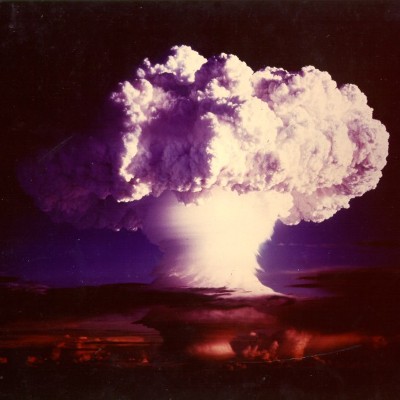
The invention of the atomic bomb prompted a wave of discussion among scientists, intellectuals, and the public at large about the risk of human extinction. In a 1945 essay, Bertrand Russell wrote:
The prospect for the human race is sombre beyond all precedent. Mankind are faced with a clear-cut alternative: either we shall all perish, or we shall have to acquire some slight degree of common sense.
Human extinction
Human extinction or omnicide is the end of the human species, either by population decline due to extraneous natural causes, such as an asteroid impact or large-scale volcanism, or via anthropogenic destruction (self-extinction).
Some of the many possible contributors to anthropogenic hazard are climate change, global nuclear annihilation, biological warfare, weapons of mass destruction, and ecological collapse. Other scenarios center on emerging technologies, such as advanced artificial intelligence, biotechnology, or self-replicating nanobots.
The scientific consensus is that there is a relatively low risk of near-term human extinction due to natural causes. The likelihood of human extinction through humankind's own activities, however, is a current area of research and debate.
Before the 18th and 19th centuries, the possibility that humans or other organisms could become extinct was viewed with scepticism. It contradicted the principle of plenitude, a doctrine that all possible things exist. The principle traces back to Aristotle, and was an important tenet of Christian theology. Ancient philosophers such as Plato, Aristotle, and Lucretius wrote of the end of humankind only as part of a cycle of renewal. Marcion of Sinope was a proto-protestant who advocated for antinatalism that could lead to human extinction. Later philosophers such as Al-Ghazali, William of Ockham, and Gerolamo Cardano expanded the study of logic and probability and began wondering if abstract worlds existed, including a world without humans. Physicist Edmond Halley stated that the extinction of the human race may be beneficial to the future of the world.
The notion that species can become extinct gained scientific acceptance during the Age of Enlightenment in the 17th and 18th centuries, and by 1800 Georges Cuvier had identified 23 extinct prehistoric species. The doctrine was further gradually bolstered by evidence from the natural sciences, particularly the discovery of fossil evidence of species that appeared to no longer exist, and the development of theories of evolution. In On the Origin of Species, Charles Darwin discussed the extinction of species as a natural process and a core component of natural selection. Notably, Darwin was skeptical of the possibility of sudden extinction, viewing it as a gradual process. He held that the abrupt disappearances of species from the fossil record were not evidence of catastrophic extinctions, but rather represented unrecognised gaps[clarification needed] in the record.
As the possibility of extinction became more widely established in the sciences, so did the prospect of human extinction. In the 19th century, human extinction became a popular topic in science (e.g., Thomas Robert Malthus's An Essay on the Principle of Population) and fiction (e.g., Jean-Baptiste Cousin de Grainville's The Last Man). In 1863, a few years after Darwin published On the Origin of Species, William King proposed that Neanderthals were an extinct species of the genus Homo. The Romantic authors and poets were particularly interested in the topic. Lord Byron wrote about the extinction of life on Earth in his 1816 poem "Darkness", and in 1824 envisaged humanity being threatened by a comet impact, and employing a missile system to defend against it. Mary Shelley's 1826 novel The Last Man is set in a world where humanity has been nearly destroyed by a mysterious plague. At the turn of the 20th century, Russian cosmism, a precursor to modern transhumanism, advocated avoiding humanity's extinction by colonizing space.
The invention of the atomic bomb prompted a wave of discussion among scientists, intellectuals, and the public at large about the risk of human extinction. In a 1945 essay, Bertrand Russell wrote:
The prospect for the human race is sombre beyond all precedent. Mankind are faced with a clear-cut alternative: either we shall all perish, or we shall have to acquire some slight degree of common sense.
Recent media
Recent media