



Community hub
Recent from talks
Knowledge base stats:
Talk channels stats:
Members stats:
Operation Tempest
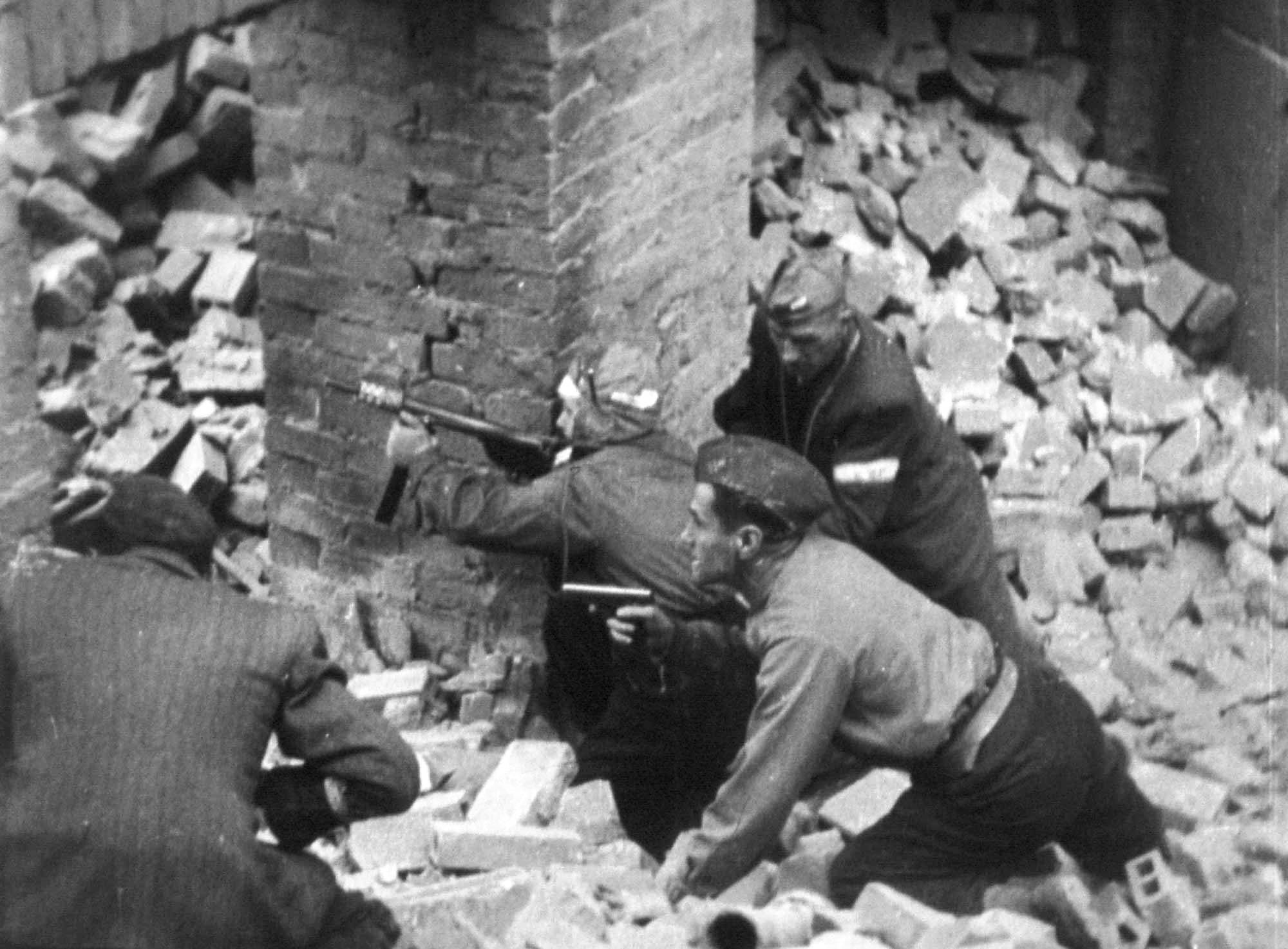
Operation Tempest or Operation Burza (Polish: akcja „Burza”, sometimes referred to in English as "Operation Storm") was a series of uprisings conducted during World War II against occupying German forces by the Polish Home Army (Armia Krajowa, abbreviated AK), the dominant force in the Polish resistance.
Operation Tempest's objective was to seize control of German-occupied cities and areas while the Germans were preparing their defenses against the advancing Soviet Red Army. The Polish Underground State hoped to take power before the Soviets arrived.
A goal of the Polish government-in-exile in London was to restore Poland's 1939 borders with the USSR, rejecting the Curzon Line border. According to Jan Ciechanowski,
"The [exiled] Polish Cabinet believed that by refusing to accept the Curzon Line they were defending their country's right to exist as a national entity. They were determined that Russo-Polish relations should be restored on the basis of the pre-1939 territorial arrangements."
From its inception, the Home Army had been preparing a national armed uprising against the Germans. The basic framework of the future uprising was created in September 1942. According to the plan, the Uprising was to be ordered by the Polish Commander-in-Chief in exile when the defeat of the Wehrmacht on the Eastern Front became apparent. The Uprising was to begin in Central Poland: in the General Government, Dąbrowa Basin, Kraków Voivodeship, and the Białystok and Brześć areas.
The Uprising's basic objectives were to:
Reconstruction of a Polish regular army was to be based on the prewar Polish order of battle. Home Army units were to be turned into regular divisions. Initially to be created were 16 infantry divisions, three cavalry brigades and one motorized brigade, to be equipped with captured weapons or with arms and supplies delivered by the Allies. The second phase was to see the re-building of an additional 15 divisions and 5 cavalry brigades which, before World War II, had been stationed in eastern and western Poland.
The plan was partly implemented. Beginning in 1943, Home Army units were grouped into larger units bearing the names and numbers of prewar Polish divisions, brigades and regiments.
Hub AI
Operation Tempest AI simulator
(@Operation Tempest_simulator)
Operation Tempest
Operation Tempest or Operation Burza (Polish: akcja „Burza”, sometimes referred to in English as "Operation Storm") was a series of uprisings conducted during World War II against occupying German forces by the Polish Home Army (Armia Krajowa, abbreviated AK), the dominant force in the Polish resistance.
Operation Tempest's objective was to seize control of German-occupied cities and areas while the Germans were preparing their defenses against the advancing Soviet Red Army. The Polish Underground State hoped to take power before the Soviets arrived.
A goal of the Polish government-in-exile in London was to restore Poland's 1939 borders with the USSR, rejecting the Curzon Line border. According to Jan Ciechanowski,
"The [exiled] Polish Cabinet believed that by refusing to accept the Curzon Line they were defending their country's right to exist as a national entity. They were determined that Russo-Polish relations should be restored on the basis of the pre-1939 territorial arrangements."
From its inception, the Home Army had been preparing a national armed uprising against the Germans. The basic framework of the future uprising was created in September 1942. According to the plan, the Uprising was to be ordered by the Polish Commander-in-Chief in exile when the defeat of the Wehrmacht on the Eastern Front became apparent. The Uprising was to begin in Central Poland: in the General Government, Dąbrowa Basin, Kraków Voivodeship, and the Białystok and Brześć areas.
The Uprising's basic objectives were to:
Reconstruction of a Polish regular army was to be based on the prewar Polish order of battle. Home Army units were to be turned into regular divisions. Initially to be created were 16 infantry divisions, three cavalry brigades and one motorized brigade, to be equipped with captured weapons or with arms and supplies delivered by the Allies. The second phase was to see the re-building of an additional 15 divisions and 5 cavalry brigades which, before World War II, had been stationed in eastern and western Poland.
The plan was partly implemented. Beginning in 1943, Home Army units were grouped into larger units bearing the names and numbers of prewar Polish divisions, brigades and regiments.