


Community hub
Recent from talks
Contribute something
Nothing was collected or created yet.
Ori Orr
View on Wikipedia
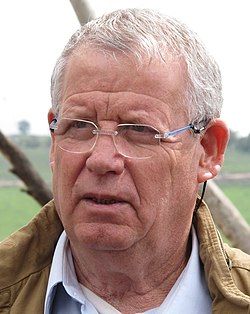
Ori Orr (Hebrew: אורי אור; born 22 April 1939) is an Israeli retired general and politician. During his service with the Israel Defense Forces, he headed the Central and Northern Commands. He later served as a member of the Knesset for the Labor Party between 1992 and 1999. During his tenure, He chaired the Foreign Affairs and Defence Committee (1992-1995) and served as Deputy Minister of Defence (1995-1996).
Key Information


Early life
[edit]Orr was born in Kfar Haim, Mandatory Palestine, in 1939.[1] His father had commited Aliyah from Austria, while his mother committed Aliyah from Russia.[2] He was awarded a Bachelor of Arts degree in Political Science & History from Tel Aviv University.[1]
Military career
[edit]Orr was drafted into the Israel Defense Forces in 1957, serving with the Armored Corps. During the Six-Day War, then Captain Orr commanded the Recon Company of the 7th Brigade,[3] which advanced through the northern shore of the Sinai Peninsula. In the War of Attrition, he commanded an armored battalion in the Sinai and the Jordan Valley. He was promoted to lieutenant colonel in August 1973, becoming the commander of the newly formed 679th (reserve) Armored Brigade, which he led during the Yom Kippur War. His Centurion-equipped unit played a significant role in stemming the Syrian attack in the Golan Heights. One of the first reserve units to arrive, it helped save the Israeli headquarters at Nafakh from being overrun.[4][5][6] Northern Front commander General Yitzhak Hofi later stated, "Ori saved us today."[7]
Following the Yom Kippur War, Orr was assigned to command the 7th Brigade. In 1976, he was made commander of an armored division on the Golan Heights, with the rank of brigadier general, and later served as Chief of Staff of Central Command. In 1981, he was promoted to general, heading Central Command between 1981 and 1983 and Northern Command between 1983 and 1986,[1] partly during the First Lebanon War. Orr left office as head of the Northern Command on 10 June 1986 and was replaced by Yossi Peled.[8] He was considered as a potential replacement for outgoing Chief of Staff Moshe Levy, and for the role of Deputy Chief of Staff.[9][10][11] But was appointed to neither role and retired from the army in 1987.[12] He was formally discharged in 1988.[13]
Political and business career
[edit]He served as the Director General of the Jewish National Fund from 1988 until 1992.[1] He was a member of the board of directors of Israel Aerospace Industries between 1988 and 1991.[14]
Orr joined the Labor Party in 1988,[15][16] heading the party's campaign with young voters during the 1988 election.[17][18] After the election, in January 1989, Orr was considered for the Chairmanship of the Israel Land Administration, but was not selected.[19][20][21] Orr helped organize primary electons for the party's electoral list in the 1992 election.[14][2] He ran in the primary, seeking elecion to the 14th slot the party's electoral list.[22][a] He was subsequently elected to the Knesset, serving as chairperson of the Foreign Affairs and Defence Committee until 1995.[1][7] After Shimon Peres formed his government following Prime Minister Rabin's assassination, Orr was made Deputy Minister of Defense.[1][7] He retained his seat in the 1996 elections, while his party went into the opposition.
In 1998, Orr drew criticism for remarks made in an interview with Haaretz journalist Daniel Ben Simon, in which he criticized Sephardi Jews as "Unwilling to hear, learn and understand life to know what's good and what's bad for them", as well as arguing Moroccan Jews were "Not eager to understand their surroundings". Orr's remarks were criticized by Labor leader Ehud Barak and President Ezer Weizman, with the latter calling for Orr's retirement from politics. Orr apologized for the remarks, and argued Ben-Shimon had mis-represnted his views in the original article.[23][7] Orr was not included on One Israel's electoral list in the 1999 election on procedural grounds, losing his seat as a result.[24]
In August 1999, Orr was appointed by Barak to serve as Chairman of the Board of Israel Aerospace Industries. He served in the role until 2005.[25][26][27][b] In 2005, he headed a committee that reviewed government funding for the security of Jewish Enclaves in East Jerusalem.[28] Orr currently serves as Chairman of the Board of the Council for Conservation of Heritage Sites in Israel.[29]
Orr is the author of two biographical books: Follow Me (1994) (Hebrew: אחרי), and These are My Brothers (2003) (Hebrew: אלה האחים שלי).
Political views
[edit]In 1988, Orr spoke in favor of a negotiated Two-state solution with the Palestine Liberation Organization.[30][31] In 1993, he opposed a return to the 1967 borders through negotiations wih the Palestinian Authority and Syrian Government, stating an agreement could not include a partition of Jerusalem or the evacuation of all settlements.[32]
Personal life
[edit]He is married and has three children.[14]
Notes
[edit]- ^ The 14th slot on Labor's list was reserved for a representative of the Sharon district. Orr defeated Rafael Edri for the position.
- ^ Orr remained on the board after his chairmanship expired in August 2002, and was appointed Interim chairman at the beginning of every board session until the appontment of a new director in July of 2005
References
[edit]- ^ a b c d e f "Ori Orr". Knesset. Retrieved 6 February 2026.
- ^ a b Benayahu, Avi (12 August 1992). "יוריד את החכ"ים לשדה" [Will bring the MKs to the field]. Bamahane (in Hebrew). pp. 16–19. Retrieved 6 February 2026 – via National Library of Israel.
- ^ Pressfield, Steven (6 May 2014). The Lion's Gate: On the Front Lines of the Six Day War. Penguin Publishing Group. p. 161. ISBN 9780698163973. Retrieved 15 February 2016.
- ^ Rabinovich, Abraham (7 May 2005). "The Golan's savior". The Jerusalem Post. Retrieved 6 February 2026.
- ^ Dunstan, Simon (17 November 2009). Centurion Vs T-55: Yom Kippur War 1973. Osprey Publishing. p. 68. ISBN 9781846033698. Retrieved 15 February 2016.
- ^ Asher, Dani (2016). Inside Israel's Northern Command: The Yom Kippur War on the Syrian Border. University Press of Kentucky. p. 135. ISBN 9780813167657.
- ^ a b c d Rabinovich, Abraham (30 July 2010). "Our McChrystal? Revisiting the case of Ori Orr". The Jerusalem Post. Retrieved 6 February 2026.
- ^ Ravy, Haim (10 June 1986). "האלוף אורי אור בחר לפרוש ביום השנה ליציאה מלבנון" [Aluf Ori Orr decided to retire on the anniversary of the withdrawal from Lebanon]. Hadashot (in Hebrew). p. 6. Retrieved 6 February 2026 – via National Library of Israel.
- ^ Ravya, Haim (6 June 1986). "תלוי בהחלטה פוליטית" [Dependent on a political decision]. Hadashot (in Hebrew). pp. 38–39. Retrieved 6 February 2026 – via National Library of Israel.
- ^ Yerushalmi, Shalom (23 May 1986). "הכוכבים נגד ולד" [The stars against Vald]. Kol Ha'ir (in Hebrew). p. 21. Retrieved 6 February 2026 – via National Library of Israel.
- ^ Bitsur, Yehoshua (26 August 1986). "יצחק רבין: גם עלי דילגו בסבב מינויים" [Yitzhak Rabin: I was also skipped over during a round of appointments]. Maariv (in Hebrew). p. 13. Retrieved 6 February 2026 – via National Library of Israel.
- ^ Levy, Eyal (11 November 2017). ""בן סימון עיוות, סילף ושיקר, הוא היה במפלגת העבודה כמו כלבלב"" [Ben-Simon twisted, manipulated and lied. He was like a puppy in the Labor Party]. Maariv (in Hebrew). Retrieved 6 February 2026.
- ^ Levitsky, Naomi (4 March 1988). "אלוף אורי אור יפשוט את מדיו בחודש הקרוב. אורי היה אלוף פיקוד מרכז, והוא מכיר את השטח. על-פי אותה היכרות, אומר אור, אתה לא יכול להיות נאור ולשבת על הירדן. ואתה לא יכול להשתלט על חריגים". Hadashot (in Hebrew). p. 38. Retrieved 6 February 2026 – via National Library of Israel.
- ^ a b c "אורי אור" [Ori Orr]. News1 (in Hebrew). 12 April 2004. Retrieved 6 February 2026.
- ^ "אלוף (מיל.) אור הצטרף לעבודה" [Aluf (Res.) Orr joins Labor]. Maariv (in Hebrew). 28 April 1988. p. 5. Retrieved 6 February 2026 – via National Library of Israel.
- ^ Levitsky, Naomi (3 May 1988). "לא סובל את הפחד מהסדר שמטיל הליכוד" [Can't stand the fear of the order imposed by Likud]. Hadashot (in Hebrew). p. 3. Retrieved 7 February 2026 – via National Library of Israel.
- ^ Rahat, Menahem (15 July 1988). "מי שיש לו בעיות במטה הבחירות, שיבוא אליי ואתן לו קורקינט" ["Whoever has problems at the campaign staff can come to me for a scooter"]. Maariv (in Hebrew). p. 16. Retrieved 7 February 2026 – via National Library of Israel.
- ^ "אורי אור: הבטחות שרון - זריית חול בעיני הציבור" [Ori Orr: "Sharon's promises - scattering sand in the eyes of the public"]. Maariv (in Hebrew). 28 August 1988. p. 6. Retrieved 7 February 2026 – via National Library of Israel.
- ^ Rahat, Menahem (26 January 1989). "כעס בסיעת המערך על הפרת הבטחה של פרס לאלוף (מיל.) אורי אור" [Anger in the Alignment caucus over Peres' broken promise to Aluf (Res.) Ori Orr]. Maariv (in Hebrew). p. 8. Retrieved 7 February 2026 – via National Library of Israel.
- ^ Rahat, Menahem (30 January 1989). "אורי אור הביע אכזבה על שלא נבחר לראש מנהל המקרקעין" [Ori Orr expresses disappointment over not being chosen to lead Land Administration]. Maariv (in Hebrew). p. 8. Retrieved 7 February 2026 – via National Library of Israel.
- ^ Kristal, Hanan (3 February 1989). "מפא"יניק שרוף" [Devoted Mapainik]. Hadashot (in Hebrew). pp. 18–19. Retrieved 7 February 2026 – via National Library of Israel.
- ^ "חדשים" [New]. Hadashot (in Hebrew). 2 April 1989. p. 3. Retrieved 7 February 2026 – via National Library of Israel.
- ^ "אור: "אני מתנצל בפני העדה המרוקאית וכל מי שנפגע"" [Orr: I apologize to the Moroccan community and to all who were hurt]. Globes (in Hebrew). 30 July 1998. Retrieved 2 October 2025.
- ^ Marom, Dror (22 August 1999). "Ori Orr Appointed Israel Aircraft Industries Chairman". Globes. Retrieved 7 February 2026.
- ^ Marom, Dror (22 August 1999). "אורי אור מונה ליו"ר התעשייה האווירית" [Ori Orr appointed Chairman of the Aerospace Industry]. Globes (in Hebrew). Retrieved 2 October 2025.
- ^ Marom, Dror (27 November 2002). "ירידה של 50% ברווח הנקי של התעשייה האווירית בתשעת החודשים" [A decrease of 20% In IAI's clean profits for the first 9 months]. Globes (in Hebrew). Retrieved 7 February 2026.
- ^ Manor, Hadas (28 July 2005). "יאיר שמיר: אקדיש לתפקידי כיו"ר דירקטוריון התעשייה האווירית "ככל שיידרש"" [Yair Shamir: "I will give anything it takes for my role as Chairman of the Board of IAI"]. Globes (in Hebrew). Retrieved 7 February 2026.
- ^ Tal, Dalia (16 January 2005). "הרצוג מינה ועדה בראשותו של אורי אור לבחינת המשך מימון פעולות השמירה והאבטחה על בתים יהודים במזרח ירושלים" [Herzog appoints committee headed by Ori Orr to examine continued funding for security and protection of Jewish Homes in East Jerusalem]. Globes (in Hebrew). Retrieved 7 February 2026.
- ^ "חברי הוועד המנהל של המועצה לשימור אתרי מורשת בישראל" [Members of the Managing Committee of the Council for Conservation of Heritage Sites in Israel]. Council for Conservation of Heritage Sites in Israel (in Hebrew). Retrieved 7 February 2026.
- ^ "אלוף (מיל.) אורי אור: אם אש"ף מכיר בהחלטות או"ם אני מוכן לדבר איתו" [Aluf (Res.) Orr: I am willing to speak with the PLO if it recognizes UN Resolutions]. Maariv (in Hebrew). 29 May 1988. p. 8. Retrieved 7 February 2026 – via National Library of Israel.
- ^ Verter, Yossi (24 May 1988). "אלוף אורי אור תומך במשא-ומתן עם אש"ף" [Aluf Ori Orr supports negotiations with the PLO]. Hadashot (in Hebrew). p. 4. Retrieved 8 February 2026 – via National Library of Israel.
- ^ Tov, Hila (25 June 1993). "ח"כ אור הקים מחנה בעבודה: "אני שולל נסיגה לקווי 67'"" [MK Orr establishes camp within Labor: "I rule out a retreat to the 1967 borders"]. Hadashot (in Hebrew). p. 6. Retrieved 7 February 2026 – via National Library of Israel.
External links
[edit]- Ori Orr on the Knesset website
- Interview on YouTube about the Oslo I Accord by Leon Charney on The Leon Charney Report
- Interivew for Bamahane, 1992, via the National Library of Israel. pp. 16-19
- Interview for Hadashot, 1993, via the National Library of Israel. pp. 34-35
- Interview for Maariv, 2017
- Interivew for Kenes Media, 2021
| Heads |
|  |
|---|---|---|
| Divisions | ||
Heads of Northern Command  | ||
|---|---|---|
|  | |
| International | |
|---|---|
| National | |
| Other | |
