Hubbry Logo
Ehud BarakEhud BarakMain
Open search
Ehud Barak
Community hub
Ehud Barak
logo
8 pages, 0 posts
0 subscribers
Be the first to start a discussion here.
Ehud Barak
Ehud Barak
from Wikipedia

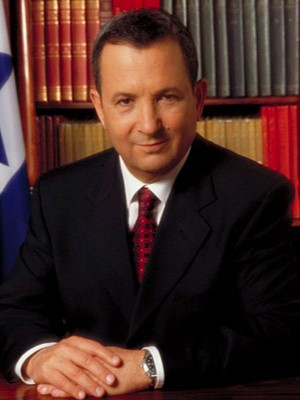
Ehud Barak (Hebrew: אֵהוּד בָּרָק [eˈhud baˈʁak] ; born Ehud Brog; 12 February 1942) is an Israeli former general and politician who served as the prime minister and Minister of Defense from 1999 to 2001. He was leader of the Labor Party between 1997 and 2001 and between 2007 and 2011. He was also Minister of Defense from 2007 to 2013.[1]

Key Information

Born on a kibbutz, Barak is the eldest of four sons; his maternal grandparents were murdered in the Holocaust. He graduated in physics and mathematics from the Hebrew University of Jerusalem and later obtained a master's in engineering-economic systems from Stanford University.

Barak's military career in the Israel Defense Forces (IDF) began in 1959, spanning 35 years and culminating in his appointment as Chief of the General Staff in 1991, serving until 1995. His military tenure is noted for his leadership in several operations, including "Operation Isotope" in 1972, the covert 1973 Israeli raid in Lebanon, and the 1976 Entebbe raid. A lieutenant general, Barak shares with two others the honor of being the most highly decorated soldier in Israel's history.

In politics, his career began with his appointment as interior minister in 1995 under Prime Minister Yitzhak Rabin. Following Rabin's assassination, he served as Minister of Foreign Affairs in Shimon Peres' government. Barak was elected to the Knesset on the Labor Party list in 1996 and subsequently was elected Labor Party leader in 1997. Barak served as Israel's most recent left-wing Prime Minister from 1999 to 2001. His tenure was marked by significant events, including the decision to form a coalition with the Orthodox party Shas, the withdrawal of Israeli forces from Southern Lebanon in 2000, and participation in the 2000 Camp David Summit aimed at resolving the Israeli–Palestinian conflict. Barak's government faced challenges, notably the protests in October 2000.

After defeat in the 2001 Israeli prime ministerial election, he left politics and engaged in international business and advisory roles. He made a political comeback in 2005, attempting to regain leadership in the Labor Party, and later served as defense minister − where he led Operation Cast Lead in 2008–09 − and deputy prime minister under Ehud Olmert and then in Benjamin Netanyahu's second government between 2007 and 2013. His decision to form the Independence party in 2011 marked a shift in his politics, influencing the dynamics within the Netanyahu government. Despite retiring from politics in 2012, he attempted another comeback, running in the September 2019 Israeli legislative election as the leader of Israel Democratic Party − a new party he formed. His party merged with others to form an alliance called the Democratic Union, but it did not win enough seats for him to become a member of the Knesset.[2] Outside of his political and military career, Barak has accumulated wealth through business endeavors and investments; his net worth is estimated to be $10–15 million.

Early life and family

[edit]
Barak (behind, second from left) with his family in 1964

Ehud Barak was born on kibbutz Mishmar HaSharon in what was then Mandatory Palestine.[3] He is the eldest of four sons of Esther (née Godin; 25 June 1914 – 12 August 2013) and Yisrael Mendel Brog (24 August 1910 – 8 February 2002).[citation needed]

His paternal grandparents, Frieda and Reuven Brog, were murdered in Pušalotas (Pushelat) in northern Lithuania (then ruled by the Russian Empire) in 1912, leaving his father orphaned at the age of two. Barak's maternal grandparents, Elka and Shmuel Godin, died at the Treblinka extermination camp during the Holocaust.[4]

Ehud hebraized his family name from "Brog" to "Barak" in 1972. It was during his military service that he met his future wife, Nava (née Cohen, born 8 April 1947 in Tiberias). They had three daughters together: Michal (born 9 August 1970), Yael (born 23 October 1974) and Anat (born 16 October 1981). He has grandchildren.[5] Barak divorced Nava in August 2003. On 30 July 2007, Barak married Nili Priel (born 25 April 1944) in a small ceremony in his private residence. In his spare time, Barak enjoys reading works by writers such as Johann Wolfgang von Goethe,[6] and he is a classical pianist, with many years of study behind him. His second cousin, Ronald Barak, is an American Olympic gymnast.[7]

Barak earned his bachelor's degree in physics and mathematics from the Hebrew University of Jerusalem in 1968, and his master's degree in engineering-economic systems in 1978 from Stanford University, California.[citation needed]

Military career

[edit]
Ehud Barak as Chief of Staff of the Israel Defense Forces
Citations and war ribbons of Ehud Barak

Barak joined the Israel Defense Forces (IDF) in 1959. He served in the IDF for 35 years, rising to the position of Chief of the General Staff and the rank of Rav Aluf (Lieutenant-General), the highest in the Israeli military. During his service as a commando in the elite Sayeret Matkal, Barak led several highly acclaimed operations, such as: "Operation Isotope", the mission to free the hostages on board the hijacked Sabena Flight 571 at Lod Airport in 1972; the covert 1973 Israeli raid in Lebanon in Beirut, in which he was disguised as a woman to kill members of the Palestine Liberation Organization; Barak was also a key architect of the June 1976 Entebbe raid, another rescue mission to free the hostages of the Air France aircraft hijacked by terrorists and forced to land at the Entebbe Airport in Uganda. These highly acclaimed operations, along with Operation Bayonet, led to the dismantling of Palestinian terrorist cell Black September. It has been alluded that Barak also masterminded the Tunis Raid on 16 April 1988, in which PLO leader Abu Jihad was killed.[8]

During the Yom Kippur War, Barak commanded an improvised regiment of tanks which, among other things, helped rescue paratrooper battalion 890, commanded by Yitzhak Mordechai, which was suffering heavy losses in the Battle of the Chinese Farm. He went on to command the 401st armored brigade and the 611st "Pillar of Fire" and 252nd "Sinai" divisions, before his appointment to head the IDF's Planning Directorate. Barak also participated in the Siege of Beirut, overseeing it from Beirut International Airport. Barak later served as head of Aman, the Military Intelligence Directorate (1983–85), head of Central Command (1986–87) and Deputy Chief of the General Staff (1987–91). He served as Chief of the General Staff between 1 April 1991 and 1 January 1995. During this period he implemented the first Oslo Accords and participated in the negotiations towards the Israel–Jordan peace treaty.

Barak was awarded the Medal of Distinguished Service and four Chief of Staff citations (Tzalash HaRamatkal) for courage and operational excellence.[9] These five decorations make him the most decorated soldier in Israeli history (jointly with close friend Nechemya Cohen).[10] In 1992 he was awarded the Legion of Merit (Commander) by the United States.[11] In 2012, he was again awarded by the United States with the Department of Defense Medal for Distinguished Public Service.[12]

Political career

[edit]

On 7 July 1995, Barak was appointed Minister of Internal Affairs by Yitzhak Rabin. When Shimon Peres formed a new government following Rabin's assassination in November 1995, Barak was made Minister of Foreign Affairs (1995–96).[13] He was elected to the Knesset on the Labor Party list in 1996, and served as a member of the Knesset Foreign Affairs and Defense Committee. In a party leadership election held after Peres' defeat in the 1996 election for Prime Minister, Barak was elected leader of the Labor Party in June 1997.

Prime Minister of Israel

[edit]
Barak at the Pentagon (1999)
Ehud Barak shaking hands with Yasser Arafat, joined by President Bill Clinton (1999)

In the 1999 Prime Ministerial election, Barak beat Benjamin Netanyahu by a wide margin. However, he sparked controversy by deciding to form a coalition with the ultra-Orthodox party Shas, who had won an unprecedented 17 seats in the 120-seat Knesset. Shas grudgingly agreed to Barak's terms that they eject their leader Aryeh Deri, a convicted felon, and enact reform to "clean up" in-party corruption. Consequentially, the left wing Meretz party quit the coalition after they failed to agree on the powers to be given to a Shas deputy minister in the Ministry of Education.[citation needed]

In 1999 Barak gave a campaign promise to end Israel's 22-year-long occupation of Southern Lebanon within a year. On 24 May 2000 Israel withdrew from Southern Lebanon. On 7 October, three Israeli soldiers were killed in a border raid by Hezbollah and their bodies were subsequently captured. The bodies of these soldiers, along with the living Elhanan Tenenbaum, were eventually exchanged for Lebanese captives in 2004.[citation needed]

The Barak government resumed peace negotiations with the PLO, stating that "Every attempt [by the State of Israel] to keep hold of this area [the West Bank and Gaza] as one political entity leads, necessarily, to either a nondemocratic or a non-Jewish state. Because if the Palestinians vote, then it is a binational state, and if they don't vote it is an apartheid state."[14] As part of these negotiations, Barak took part in the Camp David 2000 Summit which was meant finally to resolve the Israeli–Palestinian conflict but failed. Barak also allowed Foreign Minister Shlomo Ben-Ami to attend the Taba Summit with the leadership of the Palestinian Authority, after his government had fallen.[citation needed]

Domestic issues

[edit]

On 22 August 1999, Barak appointed the Tal committee which dealt with the controversial issue of ultra-Orthodox Jews' exemption from military service.[15] Following the failure of the Camp David summit with Arafat and Bill Clinton in the summer of 2000, when the original seven-year mandate of the PNA expired, and just after Israel pulled its last troops out of southern Lebanon in May 2000, the October 2000 riots led to the killing of twelve Israeli Arabs and one Palestinian by Israel Police and one Jewish civilian by Israeli Arabs.[citation needed]

Resignation

[edit]

In 2001, Barak called an election for Prime Minister.[16] In the contest, he was defeated by Likud leader Ariel Sharon, and subsequently resigned as Labor leader and from the Knesset.

In private life (2001-2007)

[edit]

Barak left Israel to work as a senior advisor with United States–based Electronic Data Systems. He also partnered with a private equity company focused on "security-related" work.[citation needed]

In 2005, Barak announced his return to Israeli politics, and ran for leadership of the Labor Party in November. However, in light of his weak poll showings, Barak dropped out of the race early and declared his support for veteran statesman Shimon Peres. Following his failed attempt to maintain leadership of the Labor party, Barak became a partner of the Pennsylvania-based investment company SCP Private Equity Partners. He also established a company "Ehud Barak Limited" which is thought to have made over NIS 30 million.[17]

After Peres lost the race to Amir Peretz and left the Labor party, Barak announced he would stay at the party, despite his shaky relationship with its newly elected leader. He declared, however, that he would not run for a spot on the Labor party's Knesset list for the March 2006 elections. Barak's attempt to return to a prominent role in Israel politics seemed to have failed. However, Peretz's hold on the Labor leadership proved unexpectedly shaky as he was badly damaged by negative views of his performance as Defense Minister during the 2006 Lebanon War, which was seen as something less than a success in Israel.[18]

Return to politics

[edit]
Israeli Minister of Defense Ehud Barak, with Prime Minister Benjamin Netanyahu after the Victoria Affair, March 2011

In January 2007, Barak launched a bid to recapture the leadership of the Labor party in a letter acknowledging "mistakes" and "inexperience" during his tenure as Prime Minister.[19] In early March 2007, a poll of Labor Party primary voters put Barak ahead of all other opponents, including Peretz.[20] In the first round of voting, on 28 May 2007, he gained 39% of the votes, more than his two closest rivals, but not enough to win the election.[21]

As a result, Barak faced a runoff against the second-place finisher, Ami Ayalon, on 12 June 2007, which he won by a narrow margin.[22]

Barak has been critical of what he sees as racist sentiments that have recently been expressed by some Israeli rabbis and rebbetzins; he views such statements as a threat to Israeli unity and that they may lead Israeli society into a "dark and dangerous place".[23]

Defense Minister and head of Ha'Avoda (2007-2011)

[edit]
Ehud Barak and Condoleezza Rice (2007)

After winning back the leadership of the Labor party, Barak was sworn in as Minister of Defense on 18 June 2007, as part of Prime Minister Olmert's cabinet reshuffle. However, on 1 July 2007, Barak led a successful effort in the Labor central committee to stipulate that Labor would leave the government coalition if Olmert did not resign by September or October 2007. The Winograd Commission would publish its final report on the performance of the Israel Defense Forces and its civilian leadership. The preliminary Winograd report, released in early 2007, laid most of the blame on Olmert for poorly planning, executing, and reviewing war strategies in the 2006 conflict against Hezbollah.[24]

From December 2008 to January 2009, Barak led the Israel Defense Forces through Operation Cast Lead in his capacity as Minister of Defence.[25]

Labor won only 13 out of the 120 Knesset seats in the 2009 elections, making them the fourth largest party. Barak and other Labor officials initially stated they would not take part in the next government. However, over the objections of some in the Labor party, in March 2009, Barak reached an agreement under which Labor joined the governing coalition led by Benjamin Netanyahu. Barak retained his position as Defense Minister.

Leaving Ha'Avoda and Minister of Defense (2011-2013)

[edit]

In January 2011, Labor Party leader Barak formed a breakaway party, Independence, which enabled him to maintain his loyal Labor's MK faction within Netanyahu's government, and prevented the departure of Labor party as a whole from Netanyahu's coalition-government. Labor previously threatened to force Barak to do so. After Barak's move, Netanyahu was able to maintain a majority of 66 MK (out of 120 in the Knesset), previously having 74 MKs within his majority coalition.

In February 2011, Barak attended a ceremony at the UN for the International Day of Commemoration in memory of the victims of the Holocaust. Barak told the UN General Assembly that "an independent, strong, thriving and peaceful State of Israel is the vengeance of the dead."[26]

Barak's Independence party was due to run in a legislative election, but decided not to in 2012, and retired from politics. Barak planned to quit since Operation Pillar of Defense but postponed it until later that year.[27]

Barak stated during an American television interview that he would "probably" strive for nuclear weapons if he were in Iran's position, adding "I don't delude myself that they are doing it just because of Israel". This comment has been criticized and compared to Barak's comment in 1998 during a television interview when he said that if he were a Palestinian he would probably have joined one of the terror organizations.[28]

Retirement activities

[edit]

In 2015, Barak invested in Reporty, a tech startup that developed video streaming and geolocation software and later changed its name to Carbyne. A large portion of the funds invested by Barak was supplied by Jeffrey Epstein.[29] For Epstein's 60th birthday in 2016 a number of letters written for the occasion by high profile individuals were compiled as a birthday gift, among these were a letter from Barak and his wife.[30] In 2023, it was revealed that Barak had visited Epstein around 30 times from 2013 to 2017 and had also flown on his jet, having first met Epstein in 2003. Barak denied any wrongdoing.[31][32][33] Barak stated that on the two occasions he flew with Epstein on private planes, Barak's wife and security guards were with him.[31] Leaked emails (released by the hacker group Handala, which "likely operates out of Iran’s Ministry of Intelligence", according to Reuters[34]) show that in one occasion when Barak visited Epstein's private island Little Saint James (in January 2014), Barak was "arranging that the security guys will not come with us to the island," but his wife Nili Priel did accompany him.[35]

Other emails released by Handala show that Epstein leveraged his relationship with Barak to approach powerful figures like Peter Thiel, a former director of Israeli signals intelligence, and two people in Vladimir Putin's circle (former Russian Deputy Minister of Economic Development Sergey Belyakov and Viktor Vekselberg).[36] Epstein arranged for Barak to meet Thiel (they had met once, in Davos), presumably to discuss geopolitics, in New York on 9 June 2014. In 2016, Epstein pitched Reporty to Thiel-founded Valar Ventures (in 2015 and 2016, Epstein invested US$40 million into funds managed by Valar [37]), but the proposal got rejected on account of being premature. Valar's McCormack said they would try to reengage when the startup was more developed though. In 2018, the Founders Fund, another firm co-founded by Thiel, joined the $15 million Series B.[36]

While scheduling the meeting with Thiel, Barak also tried to arrange to meet Putin's ally Viktor Vekselberg early in June 2014.[36] An email sent in April 2015 shows that Barak asked Epstein for his opinion on Vekselberg-backed Fifth Dimension, a startup which later shut down after being sanctioned in 2018 by the US for alleged election meddling.[36] This startup's leadership also included Benny Gantz (former Israel Defense Forces' chief-of-staff) and Ram Ben-Barak (former deputy Mossad director).[38]

Epstein victim Virginia Giuffre said that she had been sexually assaulted by Barak after being trafficked to him by Epstein. This came to light in a 2020 court filing by Alan Dershowitz. Dershowitz and Barak denied the validity of Giuffre's statement.[39]

2019 failed return to political life

[edit]

On 26 June 2019, Barak announced his return to politics and his intention to form a new party named the Israel Democratic Party, intending to challenge Netanyahu in the September 2019 Israeli legislative election. The party ran with Meretz and other parties in the Democratic Union alliance, which received five seats. Barak himself did not enter the Knesset.[2]

Financial assets

[edit]

In an interview with Haaretz reported in January 2015, Barak was asked to explain the source of his "big" capital, with which he "bought 5 apartments and connected them," and by which he "lives in a giant rental apartment in a luxury high rise." Barak said he currently earns more than a $1 million a year, and that from 2001 to 2007, he also earned more than a $1 million every year, from giving lectures and from consulting for hedge funds. Barak also said he made millions of dollars more from his investments in Israeli real estate properties.[40]

In the interview, Barak was asked whether he is a lobbyist who earns a living from "opening doors". The interviewer stated "You have arrived recently at the Kazakhstan despot Nazarbayev and the president of Ghana. You are received immediately." Barak confirmed that he has been received by these heads of state but denied earning money from opening doors for international business deals for Israeli and foreign corporations, and said he does not see any ethical or moral problems in his business activities. He further said there is no logic to demand of him, after "the natural process in democracy has ended" to not utilize the tools he accumulated in his career to secure his financial future. When asked if his financial worth is $10–15 million, Barak said "I'm not far from there."[40]

Awards and decorations

[edit]
Chief of Staff Citation
Chief of Staff Citation Chief of Staff Citation Chief of Staff Citation
Six-Day War Ribbon War of Attrition Ribbon Yom Kippur War Ribbon
First Lebanon War Ribbon Medal of Distinguished Service Commander of the Legion of Merit

See also

[edit]

References

[edit]

Bibliography

[edit]
[edit]
Revisions and contributorsEdit on WikipediaRead on Wikipedia
from Grokipedia

Ehud Barak (born Ehud Brog; 12 February 1942) is an Israeli general and politician who served as the tenth from 6 July 1999 to 7 March 2001, as Chief of the General Staff of the Israel Defense Forces from 1991 to 1995, and in multiple terms as Minister of Defense. Born in Kibbutz Mishmar HaSharon, he enlisted in the IDF in 1959, commanded elite units such as in operations including the rescue of and Operation Spring of Youth, and became one of the most decorated officers in Israeli military history with awards for valor in conflicts like the and . During his premiership, Barak ordered the unilateral withdrawal of IDF forces from in 2000 and led negotiations toward a final-status agreement with the Palestinian Authority, including the Summit with U.S. President and Palestinian leader , which collapsed without accord and preceded the Second Intifada, sparking enduring debate over the strategic concessions' long-term effects on Israel's security.

Early Life and Education

Family Background and Childhood


Ehud Barak was born Ehud Brog on February 12, 1942, at Kibbutz Mishmar HaSharon in Mandatory Palestine. He was the eldest of four sons born to Esther (née Godin) and Israel Brog. His parents, Eastern European Jewish immigrants, arrived in Palestine in the early 1930s and became founding members of the kibbutz, a communal agricultural settlement established around 1932–1933.
Barak's father originated from Lithuania, while his mother came from Poland; both exemplified the Zionist pioneering spirit by joining the kibbutz movement to build a Jewish homeland through collective labor. The family later Hebraized their surname from Brog to Barak, reflecting a common practice among immigrants to adopt Hebrew names symbolizing strength and renewal—"Barak" meaning "lightning."
Raised in the kibbutz's egalitarian environment, Barak experienced communal child-rearing, shared responsibilities, and an emphasis on self-reliance and defense preparedness amid regional tensions. This upbringing, rooted in socialist-Zionist ideals, shaped his early worldview before he enlisted in the Israel Defense Forces at age 17 in 1959.

Formal Education and Early Influences

Barak pursued his formal education amid frequent interruptions from military service obligations. He earned a B.Sc. in physics and mathematics from the Hebrew University of Jerusalem in 1968. In 1978, he completed a master's degree in economic engineering systems at Stanford University, focusing on systems analysis. His studies in quantitative disciplines cultivated an analytical approach that complemented his military training, emphasizing empirical problem-solving and strategic modeling. Early influences from his upbringing at included exposure to pioneering Zionist values of and collective defense, reinforced by the kibbutz's foundational established by his immigrant parents in . A key personal influence was a kibbutz resident with a university background who advocated for higher education, encouraging Barak to prioritize academic pursuits despite the demands of communal labor and . This blend of rigorous kibbutz discipline and intellectual encouragement shaped his commitment to blending theoretical knowledge with practical application.

Military Service

Enlistment and Special Forces Roles

Ehud Barak enlisted in the Israel Defense Forces (IDF) in 1959 at the age of 17, beginning a 35-year military career. Initially performing mandatory service, he was soon recruited into , the IDF's elite general staff reconnaissance unit known for covert operations and counter-terrorism. In , Barak underwent rigorous training and served as both a and , participating in high-risk missions that demanded exceptional physical and tactical proficiency. The unit's selection process and operations emphasized deep , , and hostage rescue, with Barak advancing through its ranks during the early amid escalating regional tensions. He completed the officers' course with distinction, solidifying his role in the unit's command structure. Barak's tenure in honed his expertise in and intelligence gathering, contributing to his reputation as one of Israel's most decorated soldiers, though specific commendations accrued over subsequent commands. His service in laid the foundation for broader leadership roles, reflecting the unit's influence on IDF doctrine for elite operations.

Major Operations and Commands

As a key figure in Israel's elite commando unit, Ehud Barak rose to command the unit and led several high-profile counterterrorism operations. In May 1972, Barak directed Operation Isotope, a raid to rescue over 100 hostages aboard hijacked by terrorists and diverted to Lod Airport; his team, disguised as airport technicians, stormed the aircraft, killed two hijackers, wounded a third, and freed all passengers without Israeli casualties. On April 9-10, 1973, Barak commanded Operation Spring of Youth, a retaliation for the Munich Olympics massacre, in which and operatives infiltrated by sea, disguised as civilians including women, to assassinate three senior Palestinian leaders—, , and Abu Youssef—responsible for planning attacks on ; the raid succeeded in eliminating the targets while minimizing civilian harm. During the from June 5 to 10, 1967, Barak served as a reconnaissance group commander in , conducting deep penetration missions behind enemy lines in Syrian and Egyptian territories to gather intelligence and disrupt forces. In the of October 1973, he commanded a tank battalion on the southern front against Egyptian forces, contributing to breakthroughs in enemy defenses and aiding the rescue of the encircled Paratroopers Brigade 890. Barak's commands extended beyond special operations to armored units, where he later led tank brigades in subsequent conflicts, including roles in operations that honed his strategic oversight of maneuvers. His in these operations earned him recognition as Israel's most decorated , with citations for valor in multiple campaigns.

Chief of the General Staff

Ehud Barak was appointed Chief of the General Staff of the on April 1, 1991, succeeding , and held the position until his resignation on January 1, 1995. Promoted to the rank of , the highest in the IDF, Barak oversaw military operations during a period of heightened threats from in and the initial stages of the with the . A key operation under Barak's command was Operation Accountability, launched on July 25, 1993, in response to Hezbollah rocket attacks on northern Israeli communities. The seven-day campaign involved intensive artillery barrages—firing over 10,000 shells—and airstrikes targeting bases, aiming to destroy infrastructure and pressure Lebanese civilians to relocate northward, thereby creating a . While the operation inflicted heavy damage, it displaced an estimated 300,000-500,000 civilians and drew international criticism for the scale of civilian impact, though Hezbollah leadership survived, leading to a fragile cease-fire. Barak characterized the engagement as a "test of wills" and warned of potential escalation if rocket fire continued. Barak also directed the IDF's military implementation of the Oslo Accords, including security coordination and redeployments following the 1993 Declaration of Principles and the 1994 Oslo II agreement. He participated in the security-related negotiations for Oslo II, emphasizing operational readiness amid the shift from confrontation to conditional peace efforts under the incoming government. His tenure maintained IDF preparedness despite political transitions, bridging conservative and Labor-led administrations, though the accords' military aspects later faced scrutiny for contributing to security vulnerabilities. Barak retired from the military in 1995 to pursue a political career, having earned recognition for his command experience.

Entry into Politics

Initial Political Involvement

Upon retiring from the Israel Defense Forces as on January 1, 1995, Ehud Barak entered politics at the invitation of Prime Minister , with whom he had a long professional relationship from their military service. Barak joined the Labor Party and was promptly appointed Minister of the Interior on July 5, 1995, overseeing domestic policy areas including immigration and local governance amid ongoing implementation of the . Following Rabin's assassination on November 4, 1995, assumed the premiership and reorganized the cabinet, elevating Barak to Minister of Foreign Affairs effective November 1995. In this role until June 1996, Barak managed Israel's diplomatic relations, including efforts to advance peace negotiations with Palestinian leaders and regional states, while navigating internal security challenges and international diplomacy. The position exposed him to high-level political decision-making, though the Labor government's term ended with electoral defeat to Benjamin Netanyahu's bloc. Barak secured election to the 14th in the May 29, 1996, legislative elections as a Labor Party representative, having placed second in the party's primaries and thus high on its list despite the coalition's loss of the prime ministership. This parliamentary entry solidified his foothold in civilian governance, positioning him for greater influence within Labor amid the party's post-election introspection.

Rise in the Labor Party

Following his retirement from the as on January 1, 1995, Ehud Barak briefly engaged in business before joining the Labor Party and entering government service. In July 1995, Prime Minister appointed him Minister of the Interior, leveraging Barak's military expertise and personal connection, as Rabin had been his commanding officer earlier in Barak's career. After Rabin's assassination on November 4, 1995, interim Prime Minister elevated Barak to Minister of Foreign Affairs on November 22, 1995, a role he held until the Labor-led coalition's defeat in the May 29, 1996, elections. Despite the electoral loss to Benjamin Netanyahu's bloc, Barak secured a seat in the on the Labor Party list, solidifying his foothold in party ranks. Barak's rapid ascent accelerated in the post-election period, as he positioned himself as a pragmatic security expert and heir to Rabin's legacy, appealing to Labor's center-right elements disillusioned with Peres's leadership amid the party's setbacks. In the Labor Party primaries held on June 3-4, 1997, Barak defeated Peres—who garnered about 34%—along with other contenders like MK Ori Orr and former minister , securing 51% of the vote among approximately 200,000 participating party members. This victory marked a shift toward a more hawkish, militarily oriented profile within Labor, with Barak emphasizing national security credentials over Peres's dovish diplomacy. His election as party chairman enabled Labor to regroup for the 1999 elections, where Barak led a coalition alliance called .

Prime Ministership (1999–2001)

Election and Domestic Agenda

Ehud Barak was elected on May 17, 1999, defeating incumbent in a direct popular vote under the then-existing . Barak received 1,791,020 votes, comprising 56.08% of the total, while Netanyahu garnered 1,402,474 votes or 43.92%. As leader of the alliance centered on the Labor Party, Barak campaigned on reviving the alongside addressing stalled domestic progress, including economic stagnation following 1.6% growth in 1998 and deepening religious-secular divides. His victory reflected voter frustration with Netanyahu's governance amid coalition instability and perceived inaction on key fronts. Barak's domestic agenda prioritized economic revitalization through resource allocation aligned with national needs and state objectives, appointing Avraham Shohat as Finance Minister to pursue growth-oriented policies. Efforts included redirecting government funding toward high-payoff projects, though implementation faced hurdles such as resistance to reforms central to reducing deficits. He also aimed to enhance and services, but these initiatives were constrained by dependencies and the overriding focus on and negotiations. A key pillar involved tackling religious-secular tensions, with Barak pledging to end blanket military draft exemptions for students and introduce civil alternatives to religious monopolies on and public observance. In August 2000, he advanced a secularization plan limiting rabbinical court privileges, enabling civil , public , and non-kosher options in state institutions, which provoked backlash from Orthodox partners like and contributed to governmental fractures. Despite forming a broad coalition upon taking office, including ultra-Orthodox parties for majority, these reforms highlighted irreconcilable divides, undermining domestic stability as peace priorities intensified.

Security and Military Decisions

As , Ehud Barak emphasized preserving Israel's qualitative military edge amid regional threats, including the proliferation of weapons of mass destruction and missile technologies in the . In a July 1999 joint statement with U.S. President , Barak underscored the need for enhanced security cooperation to address these challenges, with the reaffirming its commitment to minimizing risks Israel faced in pursuing peace. This policy reflected a strategic focus on deterrence and technological superiority, aligning with Barak's military background and first-hand experience in . The outbreak of the Second Intifada on September 28, 2000, prompted Barak, who concurrently held the Defense Minister portfolio, to direct the Israel Defense Forces (IDF) in responding to widespread Palestinian violence, including riots, shootings, and the first suicide bombings. Initial responses involved crowd control measures escalating to live fire against armed assailants, such as at and other flashpoints, resulting in significant casualties on both sides during the early months. Barak authorized limited incursions into Palestinian Authority-controlled areas, notably following the lynching of two IDF reservists in , where troops briefly entered to arrest perpetrators and dismantle militant infrastructure. These actions, including the suspension of security coordination with the PA and targeted strikes via helicopter gunships on terrorist targets, aimed to restore deterrence while Barak pursued diplomatic channels, though critics argued the measures were insufficiently aggressive, contributing to escalating terror attacks that claimed over 200 Israeli lives before his February 2001 electoral defeat. Barak's tenure also saw internal military adjustments, including preparations for force reductions post-Lebanon withdrawal and sustained U.S.-Israel defense collaborations, such as joint exercises and arms procurements to bolster air and capabilities against emerging threats from and . Public opinion polls in 2001 indicated widespread Israeli concern over security deterioration under his policies, with majorities rejecting linked peace proposals due to perceived risks to national defense. These decisions balanced offensive readiness with restraint to avoid derailing negotiations, yet empirically correlated with heightened vulnerability during the intifada's initial phase.

Peace Negotiations and Outcomes

Barak initiated peace talks with shortly after taking office in July 1999, aiming for a comprehensive withdrawal from the in exchange for normalization and security guarantees. Direct talks resumed in December 1999 at , hosted by President , involving Israeli Prime Minister Barak and Syrian Foreign Minister Farouk al-Sharaa. Despite initial exchanges, no agreement was reached on sequencing—Israel sought normalization before full withdrawal, while insisted on withdrawal first. Progress stalled following Syrian President Hafez al-Assad's death in June 2000, and his son Bashar's reluctance to engage halted the track without a deal. On the Palestinian front, Barak pursued final-status negotiations leading to the Summit from July 11 to 25, 2000, convened by with . Barak proposed concessions including territory in the and Gaza, shared sovereignty over parts of , and limited refugee returns, but Arafat rejected the framework, citing insufficient sovereignty and refugee rights. The trilateral statement emphasized ending decades of conflict but acknowledged irreconcilable gaps on core issues like , refugees, and borders, resulting in no agreement. Barak viewed the offer as culminating his strategy to resolve the conflict, yet the failure preceded the Second Intifada's outbreak in late September 2000. In December 2000, presented parameters outlining a Palestinian state on approximately 95% of the and all of Gaza, with land swaps, deferred resolution, and divided control in Jerusalem's holy sites. accepted on December 28 with reservations, particularly on settlement blocs and Ariel's status, while Arafat submitted a qualified response that did not constitute full acceptance, focusing on expanded returns and sovereignty. Talks continued at , from January 21 to 27, 2001, where negotiators reported progress on borders, security, and refugees, narrowing gaps but failing to conclude due to time constraints ahead of Israel's February 6 election. The joint statement noted advancements yet highlighted unresolved differences, particularly on implementation timelines. No binding accord emerged, contributing to Barak's electoral loss to and the suspension of high-level talks. Overall, Barak's negotiations yielded no finalized peace treaties, with Palestinian rejections amid domestic Israeli opposition to concessions cited as key factors in the breakdowns.

Withdrawal from Lebanon

As a candidate in the May 1999 Israeli prime ministerial election, Ehud Barak pledged to unilaterally withdraw Israeli Defense Forces (IDF) from within one year of taking office, framing it as a fulfillment of public demand to end the costly security zone presence established after the invasion. This commitment resonated amid growing domestic fatigue over casualties—over 1,000 Israeli soldiers killed since —and pressure from attacks, which had intensified since 1993. Following his election victory on May 17, 1999, Barak reiterated the promise, initiating partial pullbacks as early as June 1999 while pursuing parallel negotiations with for a coordinated exit tied to the Israel-Syria peace track. After Syrian-Israeli talks collapsed in March 2000, Barak directed the IDF to prepare for a unilateral withdrawal to the 1949 armistice line, with cabinet approval formalized in early 2000. The operation accelerated due to Hezbollah's escalating operations and the disintegration of the Israeli-backed (SLA), which suffered mass desertions and collapses in key outposts like Beaufort Castle. On May 24, 2000, the final IDF units evacuated the security zone, completing the pullout six weeks ahead of Barak's self-imposed July 7 deadline and 18 years after Israel's initial incursion into the area. Barak described the move as ending the "tragedy" of occupation, emphasizing compliance with UN Security Council Resolution 425, which called for Israeli withdrawal to internationally recognized borders. The hasty execution triggered immediate chaos, with SLA militiamen and their families fleeing en masse—over 6,000 crossed into Israel seeking asylum—while Hezbollah forces advanced into vacated positions, declaring a strategic victory that bolstered their domestic standing in Lebanon. Israeli critics, including opposition leaders, condemned the withdrawal as disorderly and a betrayal of allies, arguing it invited further aggression without reciprocal security arrangements; Barak's supporters, however, hailed it as a bold step that preserved military resources for potential peace deals elsewhere. In the short term, cross-border incidents persisted, with Hezbollah claiming the Shebaa Farms area as Lebanese territory to justify continued operations, setting the stage for heightened tensions.

Electoral Defeat and Resignation

In the direct prime ministerial election held on February 6, 2001, Ehud Barak was decisively defeated by leader , who secured 62.6% of the vote compared to Barak's 37.2%. The contest, triggered by Barak's resignation as on , 2000, amid a collapsing coalition and escalating Palestinian violence during the Second Intifada, reflected widespread voter frustration with Barak's security policies following the July 2000 summit's failure and the May 2000 unilateral withdrawal from . Analysts described the outcome as a "colossal repudiation" of Barak, driven by a public of insecurity and a demand for a harder line against Palestinian militancy, with Sharon's campaign emphasizing strength and deterrence. Barak conceded defeat on election night, acknowledging the results in a televised address and pledging a smooth transition. The electoral loss intensified internal divisions within the Labor Party, where Barak faced accusations of strategic missteps and leadership failures that had eroded public trust. On February 21, 2001, just two weeks after the vote, Barak resigned as Labor Party chairman and relinquished his seat in the , effectively withdrawing from active politics. He cited the need to allow the party to regroup without his polarizing presence and declined an invitation from incoming Sharon to serve as defense minister in a potential unity government. This move removed a key barrier to Labor's possible coalition with , though party officials expressed mixed reactions, with some viewing it as a necessary reset amid calls for new leadership. Barak subsequently took a sabbatical, enrolling in a fellowship at to study international security and business.

Later Political Positions

Defense Minister Tenure

Ehud Barak assumed the role of Minister of Defense on June 15, 2007, after being elected leader of the Labor Party and joining Prime Minister Ehud Olmert's coalition government. His appointment came in the aftermath of the 2006 Second Lebanon War, amid criticism of IDF performance highlighted by the Winograd Commission, with Barak's extensive military background— including service as Chief of General Staff—positioned to oversee military reforms and restore deterrence capabilities. During this initial phase under Olmert, Barak prioritized countering rocket attacks from Gaza, culminating in his leadership of Operation Cast Lead from December 27, 2008, to January 18, 2009. The operation, launched in response to intensified rocket fire, aimed to degrade militant infrastructure and alter security dynamics, with Barak declaring it an "all-out war" to enforce new rules of engagement. Israeli forces reported eliminating key leaders and over 1,000 militants, though the campaign drew international scrutiny for civilian casualties, estimated at around 1,400 and 13 . Following the 2009 elections, Barak's Labor Party joined Benjamin Netanyahu's Likud-led coalition, allowing him to retain the Defense Ministry portfolio alongside the role of from March 31, 2009. In this capacity, Barak focused on the emerging Iranian nuclear threat, advocating for potential preemptive strikes while coordinating with U.S. counterparts on sanctions and intelligence sharing. He supported ongoing security measures against Gaza threats, including naval blockades and responses to provocations such as the 2010 Gaza flotilla incident, where IDF commandos intercepted ships attempting to breach the blockade, resulting in nine activist deaths and heightened diplomatic tensions. Barak also backed Operation Pillar of Defense in November 2012, an eight-day aerial campaign targeting rocket sites, which achieved a after eliminating over 150 militants and reducing launch rates temporarily. Amid internal Labor Party dissent over continued coalition participation with , Barak and four allies formed the faction in January 2011, enabling sustained influence on defense policy without full party rupture. His tenure emphasized balancing territorial concessions in peace talks with robust deterrence, though critics argued operations like Cast Lead failed to prevent Hamas's long-term rearmament. Barak resigned on November 26, 2012, announcing his retirement from politics ahead of the January 2013 elections, citing completion of his contributions to amid shifting political landscapes. Over six years, he became Israel's longest-serving Defense Minister since , overseeing a period of intensified asymmetric threats and strategic focus on .

Labor Party Leadership and Fractures

In June 2007, Ehud Barak was elected leader of Israel's Labor Party in a primary vote, defeating former director with 51.8% of the vote to Ayalon's 47.1%, marking his return to frontline politics after a six-year hiatus following his 2001 resignation as prime minister. As party chairman, Barak assumed the role of defense minister in the coalition government led by , a position he retained after Benjamin Netanyahu's formed a new coalition in March 2009, despite Labor's traditional center-left orientation clashing with Likud's right-wing policies on security and settlements. Barak's leadership saw growing internal divisions within Labor, exacerbated by the party's decision to join Netanyahu's , which some members viewed as a of its dovish principles amid stalled peace talks and expanding settlements. In August 2009, a constitutional dispute over party primaries nearly triggered a split, but Barak brokered a last-minute deal to revise the rules and avert fragmentation, preserving unity temporarily while highlighting tensions between his pragmatic, security-focused approach and the 's more ideological wing. These fractures deepened by late 2010, as four Labor ministers—, Benjamin Ben-Eliezer, Avishay Braverman, and Shalom Simhon—publicly opposed remaining in the , citing irreconcilable differences on issues like settlement freezes and social welfare cuts, leading to threats of mass resignations. The tensions culminated on January 17, 2011, when Barak resigned as Labor chairman and, along with four loyal Knesset members (Ophir Pines-Paz, Einat Wilf, Yuli Tamir, and Matan Vilnai), formed a breakaway faction named Independence (Atzmaut), positioning it as a centrist, Zionist alternative focused on national security rather than partisan ideology. Barak justified the split by arguing that Labor had devolved into "anarchic discussions" and lost its ability to prioritize defense needs, accusing party rivals of prioritizing opposition politics over governance; critics within Labor, however, labeled the move opportunistic, aimed at securing his defense minister post amid declining party support. The fracture weakened Labor electorally, reducing its Knesset seats from 13 to 8 in the 2013 elections and contributing to its marginalization, while Independence garnered only 2 seats before dissolving in 2012.

Independent Political Efforts

In January 2011, Ehud Barak, then serving as Defense Minister in Benjamin Netanyahu's coalition government, led four fellow Labor Party Knesset members out of the party to establish the Independence (Atzmaut) faction. This breakaway was motivated by disagreements with Labor's shift toward opposition politics, allowing Barak to sustain coalition support while pursuing a centrist, Zionist platform independent of party constraints. The faction retained the five Knesset seats held by its members from the prior Labor slate. Atzmaut remained part of the governing coalition through 2012, with Barak continuing as Defense Minister until low polling ahead of the January elections prompted his announcement on November 26, 2012, that he would not seek reelection and was retiring from politics. The party fielded candidates in the vote but garnered just 0.9 percent of the national vote, falling short of the 3.25 percent and securing no seats, effectively ending its parliamentary presence. After a six-year absence from elected office, Barak reentered politics in June 2019 amid widespread protests against Netanyahu's leadership, announcing the formation of a new vehicle initially tied to his dormant Atzmaut registration before establishing the (Yisrael Demokratit). On July 6, 2019, he formalized the name, positioning it as a center-left alternative emphasizing democratic and opposition to Netanyahu's tenure. The party allied with and Tzipi Livni's faction to form the Democratic Union list for the September 17, 2019, elections. The Democratic Union obtained 4.7 percent of the vote, translating to five seats, with Barak placed high on the list but not entering parliament as the alliance prioritized other figures. Despite contributing to anti-Netanyahu momentum, the bloc could not forge a governing amid fragmented results. Barak withdrew from active campaigning before the March 2020 elections, citing strategic differences, and the party dissolved without further independent runs, marking his final electoral endeavor.

Post-Political Career and Commentary

Business Investments and Ventures

Following his resignation as Minister of Defense in May 2013, Ehud Barak entered the , focusing primarily on investments in Israeli high-tech startups within cybersecurity, defense technologies, and response systems. His ventures leveraged Israel's strengths in these fields, often involving companies founded by former officers. Barak established a , Sum (E.B.) 2015, to channel investments into early-stage tech firms. In 2015, Barak became chairman of Reporty (later rebranded as Carbyne), a startup developing location-based emergency response applications integrated with public safety networks. He held the position until May 2020, when he stepped down amid board restructuring, with the company having raised significant funding from investors including . That year, Barak also joined the board of a cybersecurity startup specializing in recognition technology for security applications. Barak co-founded Paragon Solutions in 2019 alongside former commander Ehud Schneorson and other ex-intelligence personnel, positioning it as an offensive cyber intelligence firm offering advanced surveillance tools. The company was acquired in December 2024 by U.S. AE Industrial Partners for up to $900 million, with Barak retaining a 3.5% stake expected to yield him several million dollars. He has also invested in other cybersecurity entities, including GuardiCore, a firm, and co-founded a startup that secured $12.5 million in funding in July 2018 for cybersecurity innovations. By 2018, Barak expanded into , acquiring stakes in Israeli startups targeting the growing pharmaceutical and export markets, viewing the sector as a high-potential area amid Israel's regulatory reforms. He expressed ambitions for ventures to capitalize on global demand, shifting from his earlier defense-tech focus while maintaining involvement in security-related tech. These activities have contributed to his estimated of $10–15 million, derived largely from equity in these firms.

Public Advocacy and Criticisms of Netanyahu

Following his departure from active politics, Ehud Barak emerged as one of Benjamin Netanyahu's most outspoken critics, frequently using public platforms, interviews, and op-eds to advocate for the prime minister's removal through mass protests and civil action. In March 2023, Barak described Netanyahu's proposed judicial overhaul as "an assassination of the Declaration of Independence," arguing it would transform Israel into a "crude version of or " by eroding and democratic checks. He urged widespread , including reservists refusing service and citizens blocking roads, to halt the reforms, framing them as a desperate bid by Netanyahu to evade trials. Barak attributed primary responsibility for the intelligence and security failures leading to the , 2023, attacks to Netanyahu's long-term policies, labeling it "the greatest failure in Israel's history" due to the government's prioritization of settlements and judicial changes over Gaza threats. While supporting a ground offensive to dismantle 's military capabilities, he dismissed Netanyahu's rhetoric of "destroying " as unrealistic and criticized the ensuing Gaza campaign as a "war of deception" lacking achievable goals, warning it risked entangling in a prolonged quagmire without recovery or long-term security. Into 2024 and 2025, Barak intensified calls for "civic revolt" and nonviolent mass disobedience to force early elections and oust Netanyahu, whom he accused of waging war on Israel's institutions amid stalled hostage deals and regional isolation. In May 2025, he likened Netanyahu to a "caged animal" obstructing peace frameworks that could enable Saudi normalization, and in August 2025, he described Gaza occupation plans as a "deadly trap" that would politically weaken Israel internationally. By October 2025, Barak advocated for a two-state compromise as the only viable path, criticizing Netanyahu's rejection of it as delusional amid U.S. pressure for concessions. These positions positioned Barak as a leader in anti-Netanyahu protest movements, though critics from Netanyahu's camp dismissed them as partisan incitement aimed at personal political revival rather than national unity.

Controversies and Assessments

Associations with Jeffrey Epstein

Ehud Barak, former , maintained a relationship with spanning over a decade, beginning with an introduction by around 2002–2003. Epstein maintained a long-term close relationship with Barak starting around 2003, acting as his financial advisor, deal broker, and connector to elite networks. They explored business ventures involving Israeli startups in high-tech fields such as cybersecurity and security technologies, with Epstein facilitating potential deals. After Epstein's 2008 conviction for procuring a minor for prostitution, Barak continued to meet him approximately 30–36 times between 2013 and 2017, including nearly monthly visits starting in December 2015. These encounters occurred at Epstein's properties in New York and , as documented in Epstein's private calendar reviewed by . Barak flew on Epstein's private jet at least twice, including a January 2014 flight from , to Tampa, accompanied by his wife and an Israeli security detail. Additional visits included a January 2016 trip to Epstein's townhouse. Barak has stated that his wife was often present during these interactions and that he never participated in or witnessed any inappropriate activities involving minors. Financial ties included a $2.3 million payment from the to between 2004 and 2006 for advisory reports, with the foundation denying any involvement by Epstein; as well as a $1 million by in a established in 2015 to fund an Israeli startup, Carbyne, focused on response . Leaked emails from 2013–2016 reveal provided a $1 million to 's firm, Reporty Homeland Security (later rebranded as Carbyne), and facilitated . Epstein assisted Barak in brokering a security cooperation agreement between and , signed in late 2017, by leveraging his connections to arrange meetings, including Barak's April 2013 visit to and discussions with Mongolian officials in 2015. The emails, released in October 2024 via , show daily correspondence between the two men during this period, with Epstein positioning himself as an advisor on the Mongolian Presidential . In response to scrutiny, Barak described Epstein as a "collector of people" useful for intellectual and business discussions, emphasizing that he severed ties upon learning of Epstein's 2019 arrest and denied any awareness of Epstein's criminal conduct at the time. The associations drew political attention during Israel's 2019 election, when Prime Minister called for an investigation into Barak's Epstein links amid Barak's challenge to Netanyahu's leadership. Barak dismissed the demands as politically motivated distractions from Netanyahu's corruption trials. No public evidence has linked Barak to Epstein's activities.

Financial Dealings and Ethical Questions

Following his tenure as , Barak engaged in private consulting and investment activities, partnering with the Pennsylvania-based firm and advising global entities and funds on deals. Through entities like Ehud Barak LLC, he facilitated approximately 30 consulting agreements for Israeli and foreign corporations between and , generating substantial , including an average monthly salary of $130,000 as reported in 2003. Barak maintained that these activities posed no ethical or moral issues, emphasizing their legitimacy in leveraging his expertise for non-political ventures. Barak's investments focused on high-tech and security-related startups, including stakes in cybersecurity firms like GuardiCore and emergency response technologies via Carbyne Ltd., where he served as a key backer alongside U.S. investors. In , he became chairman of InterCure, a biomedical expanding its subsidiary Canndoc, contributing to his estimated wealth accumulation in emerging sectors. More recently, Barak co-founded Paragon Solutions in 2023 with former intelligence official Ehud Schneorson, developing marketed as "ethical" for targeting criminals while claiming restrictions to vetted governments; he holds a 3.5% stake, potentially yielding significant returns from a reported $900 million acquisition bid in 2024. Ethical concerns arose from Barak's opaque reporting of income sources via his LLC, which systematically withheld public disclosure of deal specifics and partners, prompting criticism for lacking transparency expected of former public officials. In August 2015, Israel's police fraud squad and Money Laundering Prohibition Authority launched a secret probe into allegations of unreported foreign holdings and potential involving millions in undeclared overseas funds; Barak denied any violations, asserting that neither authorities nor tax officials had contacted him, and no charges resulted. Paragon's operations drew scrutiny for ethical lapses despite its selective sales pitch, with reports in 2025 documenting its infecting accounts of 90 users, including journalists and activists, in campaigns linked to governments like Italy's, where it targeted migrant policy critics and prompted cancellations. U.S. and awarded Paragon a $2 million in 2024 for tools, amid broader U.S. efforts to curb misuse, raising questions about proliferation risks and conflicts between commercial incentives and safeguards in Barak's security-tech portfolio. These incidents highlight tensions in monetizing military-derived expertise, where firms like Paragon face accusations of enabling authoritarian despite founder's assurances of restraint.

Critiques of Security Policies and Peace Concessions

Ehud Barak's unilateral withdrawal of Israeli forces from on May 24, 2000, has faced substantial criticism for weakening Israel's northern security posture and empowering . Critics contend that the abrupt exit, executed without a coordinated agreement with or , vacated a that had previously deterred incursions, allowing the group to claim a and subsequently expand its military infrastructure along the border. This development contributed to intensified rocket attacks and culminated in the , where Hezbollah's fortified positions inflicted heavy casualties and damages on , validating pre-withdrawal warnings from military analysts about the risks of unilateral disengagement. Further critiques highlight Barak's prioritization of the Syrian negotiation track during his first year as , which delayed substantive engagement with Palestinian leaders and undermined momentum in the . By focusing resources on potential concessions to , including discussions over the [Golan Heights](/page/Golan Heights), Barak's strategy left Palestinian issues unresolved, exacerbating tensions and contributing to a sense of Israeli inflexibility among Palestinian factions. Opponents argue this misallocation reflected a flawed assessment of threats, as Syrian talks yielded no agreement while Palestinian rejectionism festered, setting the stage for escalated violence. Barak's concessions at the July , where he offered approximately 91% of the and shared sovereignty over parts of , have been faulted by Israeli right-wing commentators for signaling excessive weakness without securing reciprocal security guarantees. The Palestinian rejection of these proposals, followed by the outbreak of the Second Intifada in September 2000, led critics to attribute the ensuing wave of —resulting in over 1,000 Israeli deaths—to Barak's diplomatic overreach, which they claim encouraged Arafat's strategy of violence over negotiation. Analysts from security-focused think tanks assert that the failure to condition concessions on verifiable Palestinian disarmament or recognition of Israel as a perpetuated a cycle of unfulfilled commitments, eroding public trust in territorial compromises. This perspective posits that Barak's approach, rooted in a belief in achievable final-status deals, disregarded of Palestinian leadership's maximalist demands, as demonstrated by prior Accord violations.

Personal Life and Legacy

Family and Personal Relationships

Ehud Barak was born on February 12, 1942, in Kibbutz Mishmar HaSharon as the eldest of four sons to Esther Brog (née Godin), a Zionist pioneer who died at age 100 in 2013, and Brog, who later Hebraized the family surname to Barak. His siblings include Avinoam, Muli (Shmuel), and Ruvi (Reuven), raised in the Labor Zionist tradition. Barak married Nava Cohen in 1968, and the couple had three daughters: Michal (born August 9, 1970), Yael (born October 23, 1974), and (born October 16, 1981). After 34 years of marriage, they separated in August 2003, with the divorce formalized thereafter. Nava Barak remarried businessman Shalom Singer in 2009. In 2007, Barak married Nili Priel, a 63-year-old acquaintance from his youth whom he described as an "old flame"; the private ceremony occurred at their apartment complex on July 30. Their reconnection followed mutual divorces, with Priel having been married previously. No children are reported from this marriage.

Awards, Honors, and Long-Term Impact

Ehud Barak received Israel's , the nation's highest military honor, for his extensive combat leadership in elite units. He also earned four citations recognizing exceptional courage and operational excellence during operations spanning multiple conflicts, establishing him as the most decorated soldier in Israeli Defense Forces history. These accolades reflect his command roles in , including high-risk raids in and the 1972 rescue of a downed pilot behind enemy lines. In recognition of his post-military contributions to bilateral security cooperation, Barak was awarded the United States Department of Defense's Distinguished Public Service Award, the department's highest civilian honor, by Secretary on November 30, 2012. Additional honors include the 2015 Scholar-Statesman Award from the Washington Institute for Near East Policy, honoring his strategic insights on policy, and the Golden Plate Award from the for leadership in defense and diplomacy. Barak's long-term impact on Israeli security stems from his transformation of IDF doctrine as Chief of Staff from 1991 to 1995, prioritizing technological superiority, intelligence-driven operations, and elite special forces over , which enhanced Israel's qualitative military edge against numerically superior adversaries. This shift influenced subsequent defenses against asymmetric threats, including the integration of precision strikes evident in later conflicts. His 2000 unilateral withdrawal from , while enabling Hezbollah's entrenchment and the 2006 war, pioneered the strategy that reduced terrorist infiltrations by over 90% post-2002 construction. Politically, Barak's tenure as prime minister advanced Israeli offers at the , proposing Palestinian sovereignty over 91% of the , all of Gaza, and shared control of Jerusalem's holy sites—concessions that broke long-standing taboos but collapsed without agreement, precipitating the Second Intifada and reshaping debate toward unilateral security measures over negotiated land-for-peace deals. His later roles as defense minister under multiple governments reinforced operational autonomy in Gaza operations, while his persistent advocacy for two-state solutions amid settlement expansions underscored tensions between security imperatives and territorial maximalism, influencing centrist critiques of prolonged occupations. Despite electoral defeats, Barak's emphasis on deterrence through strength and diplomatic pragmatism continues to inform Israeli strategic calculus, as seen in his 2024 endorsements of hostage recovery tied to conditional ceasefires.

References

Add your contribution
Related Hubs
User Avatar
No comments yet.