


Community hub
Recent from talks
Contribute something to knowledge base
Content stats: 0 posts, 0 articles, 1 media, 0 notes
Members stats: 0 subscribers, 0 contributors, 0 moderators, 0 supporters
Subscribers
Supporters
Contributors
Moderators
Hub AI
Odawa AI simulator
(@Odawa_simulator)
Hub AI
Odawa AI simulator
(@Odawa_simulator)
Odawa
The Odawa (also Ottawa or Odaawaa /oʊˈdɑːwə/) are an Indigenous North American people who primarily inhabit land in the Eastern Woodlands region, now in jurisdictions of the northeastern United States and southeastern Canada. Their territory long preceded the creation of the current border between the two countries in the 18th and 19th centuries.
Their peoples are federally recognized as Native American tribes in the United States and have numerous recognized First Nations bands in Canada. They are one of the Anishinaabeg, related to but distinct from the Ojibwe and Potawatomi peoples.
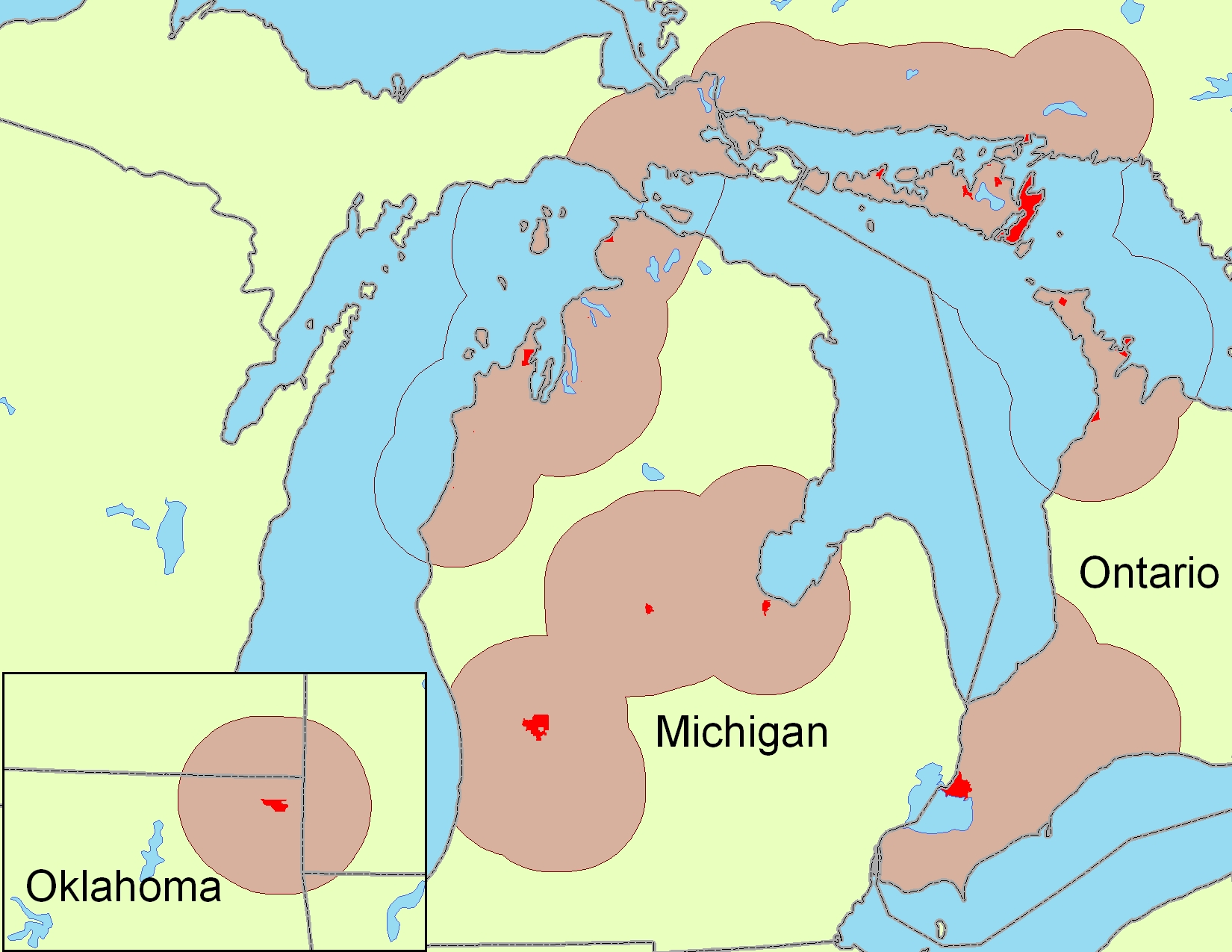
After migrating from the East Coast in ancient times, they settled on Manitoulin Island, near the northern shores of Lake Huron, and the Bruce Peninsula in the present-day province of Ontario, Canada. They considered this their original homeland. After the 17th century, they also settled along the Ottawa River, and in what became the present-day states of Michigan and Wisconsin. They also occupied other areas of the Midwest south of the Great Lakes in what became the United States. In the 21st century, there are a total of approximately 15,000 Odawa living in Ontario, Canada, and in Michigan and Oklahoma (former Indian Territory, United States).
The Ottawa dialect is part of the Algonquian language family. This large family is made up of numerous smaller tribal groups or "bands", which are commonly called a "Tribe" in the United States and "First Nation" in Canada. Their language is considered a divergent dialect of Ojibwe, characterized by frequent syncope.
Odawaa (syncoped as Daawaa) is believed to be derived from the Anishinaabe word adaawe, meaning "to trade", or "to buy and sell". This term is common to the Cree, Algonquin, Nipissing, Innu, Odawa, and Ojibwe. The Potawatomi spelling of Odawa and the English derivative "Ottawa" are also common. The Anishinaabe word for "those men who trade, or buy and sell" is Wadaawewinini(wag).
Frederic Baraga, a Catholic priest and missionary in Michigan, transliterated this and recorded it in his A Dictionary of the Otchipwe Language as "Watawawininiwok", noting that it meant "men of the bulrushes", associated with the many bulrushes in the Ottawa River. But, this recorded meaning is more appropriately associated with the Matàwackariniwak, a historical Algonquin band who lived along the Ottawa River.[citation needed]
Their neighbors applied the "Trader" name to the Odawa because in early traditional times, and also during the early European contact period, they were noted as intertribal traders and barterers. The Odawa were described as having dealt "chiefly in cornmeal, sunflower oil, furs and skins, rugs and mats, tobacco, and medicinal roots and herbs".
The Odawa name in its English transcription is the source of the place names of the city of Ottawa, Ontario, and the Ottawa River. The Odawa home territory at the time of early European contact, but not their trading zone, was well to the west of the city and river named after them.
Odawa
The Odawa (also Ottawa or Odaawaa /oʊˈdɑːwə/) are an Indigenous North American people who primarily inhabit land in the Eastern Woodlands region, now in jurisdictions of the northeastern United States and southeastern Canada. Their territory long preceded the creation of the current border between the two countries in the 18th and 19th centuries.
Their peoples are federally recognized as Native American tribes in the United States and have numerous recognized First Nations bands in Canada. They are one of the Anishinaabeg, related to but distinct from the Ojibwe and Potawatomi peoples.
After migrating from the East Coast in ancient times, they settled on Manitoulin Island, near the northern shores of Lake Huron, and the Bruce Peninsula in the present-day province of Ontario, Canada. They considered this their original homeland. After the 17th century, they also settled along the Ottawa River, and in what became the present-day states of Michigan and Wisconsin. They also occupied other areas of the Midwest south of the Great Lakes in what became the United States. In the 21st century, there are a total of approximately 15,000 Odawa living in Ontario, Canada, and in Michigan and Oklahoma (former Indian Territory, United States).
The Ottawa dialect is part of the Algonquian language family. This large family is made up of numerous smaller tribal groups or "bands", which are commonly called a "Tribe" in the United States and "First Nation" in Canada. Their language is considered a divergent dialect of Ojibwe, characterized by frequent syncope.
Odawaa (syncoped as Daawaa) is believed to be derived from the Anishinaabe word adaawe, meaning "to trade", or "to buy and sell". This term is common to the Cree, Algonquin, Nipissing, Innu, Odawa, and Ojibwe. The Potawatomi spelling of Odawa and the English derivative "Ottawa" are also common. The Anishinaabe word for "those men who trade, or buy and sell" is Wadaawewinini(wag).
Frederic Baraga, a Catholic priest and missionary in Michigan, transliterated this and recorded it in his A Dictionary of the Otchipwe Language as "Watawawininiwok", noting that it meant "men of the bulrushes", associated with the many bulrushes in the Ottawa River. But, this recorded meaning is more appropriately associated with the Matàwackariniwak, a historical Algonquin band who lived along the Ottawa River.[citation needed]
Their neighbors applied the "Trader" name to the Odawa because in early traditional times, and also during the early European contact period, they were noted as intertribal traders and barterers. The Odawa were described as having dealt "chiefly in cornmeal, sunflower oil, furs and skins, rugs and mats, tobacco, and medicinal roots and herbs".
The Odawa name in its English transcription is the source of the place names of the city of Ottawa, Ontario, and the Ottawa River. The Odawa home territory at the time of early European contact, but not their trading zone, was well to the west of the city and river named after them.
Recent media
Recent media