
Recent from talks
Paddy Finucane
Knowledge base stats:
Talk channels stats:
Members stats:
Paddy Finucane
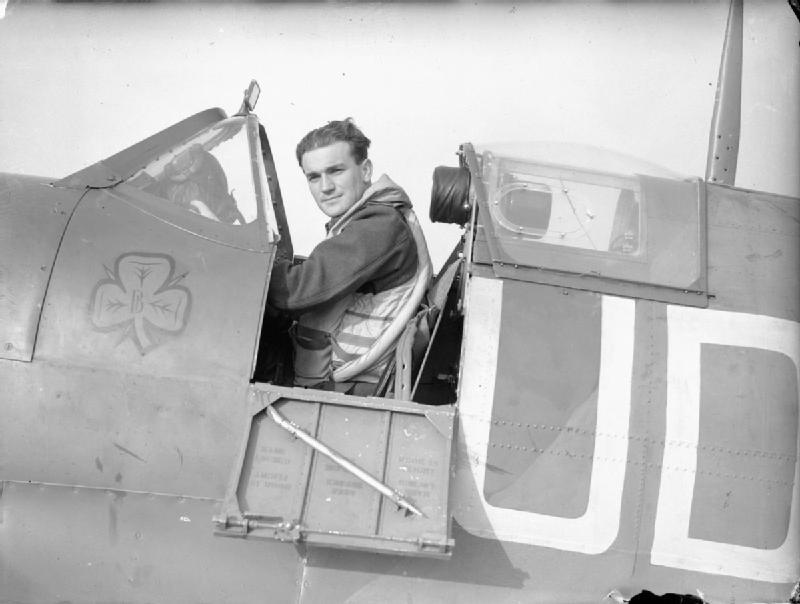
Wing Commander Brendan Eamonn Fergus Finucane, DSO, DFC & Two Bars (/fɪˈnuːkən/ fin-OO-kən; 16 October 1920 – 15 July 1942), known as Paddy Finucane among his colleagues, was an Irish Second World War Royal Air Force (RAF) fighter pilot and flying ace—defined as an aviator credited with five or more enemy aircraft destroyed in aerial combat.
Born into a Catholic family, Finucane grew up during the period also known as the "early troubles" and the Irish Civil War. In 1936, the family moved to the United Kingdom, where he developed an interest in aviation. Finucane was keen to fly, applied to join the RAF and was accepted for training as a pilot in August 1938. After a shaky training career, in which he crash-landed on one occasion, he received news that he had completed flight training. In June–July 1940, he began conversion training on the Supermarine Spitfire. On 13 July, Finucane was posted to No. 65 Squadron at RAF Hornchurch.
Finucane's first victory was scored on 12 August 1940 during the Battle of Britain. During the campaign, he was credited with two enemies destroyed, two probably destroyed and one damaged. Promoted to acting flight lieutenant in April 1941, he joined No. 452 Squadron flying offensive patrols over France—known as the Circus offensive. During this period, Finucane had his most successful period of operations, destroying 20 German aircraft, sharing in the destruction of three, with two damaged and another two probably destroyed from 4 January to 13 October 1941.
In January 1942, Finucane was promoted to the rank of squadron leader in No. 602 Squadron. Within six months, he was credited a further six individual victories, bringing his tally to 28. Four more were damaged, four were shared destroyed and two credited as individual probable victories and one shared probable. In June 1942, he became the RAF's youngest wing commander in its history. Finucane was appointed to lead the Hornchurch Wing.
On 15 July 1942, Finucane took off with his flight for a mission over France. His Spitfire was damaged by ground-fire, and while attempting to fly back to the United Kingdom across the English Channel, he was forced to ditch into the sea and perished. After his death, Finucane's brother Raymond served in No. 101 Squadron RAF and survived the war.
Finucane was credited with 28 aerial victories, five probably destroyed, six shared destroyed, one shared probable victory and eight damaged. Included in his total were 23 Messerschmitt Bf 109s, four Focke-Wulf Fw 190s and one Messerschmitt Bf 110. Official records differ over the exact total. After the war it was confirmed that two of Finucane's "probable" victories had, in fact, been destroyed but were not officially included. His total victory count could be as high as 32.
Brendan Finucane was born on 16 October 1920, the first child of Thomas Andrew and Florence Louise Finucane of 13 Rathmines Road, Rathmines, Dublin, Ireland. His mother was English, originally from Leicester. Her mother had travelled across Canada at a young age, and Florence moved to Dublin to seek her own adventure. She accepted the risks associated with living in the city. In 1919, she met Thomas Finucane, who had been involved in the Irish Rebellion. Thomas Finucane had been taught mathematics at college by Éamon de Valera, leader of the Irish opposition. As a member of the Irish Volunteers, he served under de Valera's command in the 1916 Easter Rising in Dublin. Thomas' father, Brendan Finucane's grandfather, was an Irishman who had served in the King's Own Scottish Borderers on the North-West Frontier Province. Thomas Finucane had ceased his political activism shortly before the couple married in October 1919, and after Florence had converted to Catholicism.
The couple moved to Drumcondra in October 1919, where Thomas found a job as a bank cashier. The job did not pay well, but the two managed on his meagre wages. In early 1920, they moved to Grove Road in the Rathmines district, and Brendan was born in October. Soon afterwards, Brendan and his mother were nearly killed, when caught in cross-fire between the temporary constables employed by the Royal Irish Constabulary (RIC), known as the "Black and Tans", and the Irish Republican Army (IRA). In 1921, Brendan's brother Raymond was born, followed by sisters Clare and Monica, and another brother, Kevin. The household was somewhat split over religious and political issues. Their father was a teetotaller and a strict Catholic. Their mother, however, encouraged the elder brothers to adopt a more liberal leaning in life. Brendan was educated at Synge Street and Marlborough Street. At 10, Brendan showed a keen interest in sport, particularly rugby.
Hub AI
Paddy Finucane AI simulator
(@Paddy Finucane_simulator)
Paddy Finucane
Wing Commander Brendan Eamonn Fergus Finucane, DSO, DFC & Two Bars (/fɪˈnuːkən/ fin-OO-kən; 16 October 1920 – 15 July 1942), known as Paddy Finucane among his colleagues, was an Irish Second World War Royal Air Force (RAF) fighter pilot and flying ace—defined as an aviator credited with five or more enemy aircraft destroyed in aerial combat.
Born into a Catholic family, Finucane grew up during the period also known as the "early troubles" and the Irish Civil War. In 1936, the family moved to the United Kingdom, where he developed an interest in aviation. Finucane was keen to fly, applied to join the RAF and was accepted for training as a pilot in August 1938. After a shaky training career, in which he crash-landed on one occasion, he received news that he had completed flight training. In June–July 1940, he began conversion training on the Supermarine Spitfire. On 13 July, Finucane was posted to No. 65 Squadron at RAF Hornchurch.
Finucane's first victory was scored on 12 August 1940 during the Battle of Britain. During the campaign, he was credited with two enemies destroyed, two probably destroyed and one damaged. Promoted to acting flight lieutenant in April 1941, he joined No. 452 Squadron flying offensive patrols over France—known as the Circus offensive. During this period, Finucane had his most successful period of operations, destroying 20 German aircraft, sharing in the destruction of three, with two damaged and another two probably destroyed from 4 January to 13 October 1941.
In January 1942, Finucane was promoted to the rank of squadron leader in No. 602 Squadron. Within six months, he was credited a further six individual victories, bringing his tally to 28. Four more were damaged, four were shared destroyed and two credited as individual probable victories and one shared probable. In June 1942, he became the RAF's youngest wing commander in its history. Finucane was appointed to lead the Hornchurch Wing.
On 15 July 1942, Finucane took off with his flight for a mission over France. His Spitfire was damaged by ground-fire, and while attempting to fly back to the United Kingdom across the English Channel, he was forced to ditch into the sea and perished. After his death, Finucane's brother Raymond served in No. 101 Squadron RAF and survived the war.
Finucane was credited with 28 aerial victories, five probably destroyed, six shared destroyed, one shared probable victory and eight damaged. Included in his total were 23 Messerschmitt Bf 109s, four Focke-Wulf Fw 190s and one Messerschmitt Bf 110. Official records differ over the exact total. After the war it was confirmed that two of Finucane's "probable" victories had, in fact, been destroyed but were not officially included. His total victory count could be as high as 32.
Brendan Finucane was born on 16 October 1920, the first child of Thomas Andrew and Florence Louise Finucane of 13 Rathmines Road, Rathmines, Dublin, Ireland. His mother was English, originally from Leicester. Her mother had travelled across Canada at a young age, and Florence moved to Dublin to seek her own adventure. She accepted the risks associated with living in the city. In 1919, she met Thomas Finucane, who had been involved in the Irish Rebellion. Thomas Finucane had been taught mathematics at college by Éamon de Valera, leader of the Irish opposition. As a member of the Irish Volunteers, he served under de Valera's command in the 1916 Easter Rising in Dublin. Thomas' father, Brendan Finucane's grandfather, was an Irishman who had served in the King's Own Scottish Borderers on the North-West Frontier Province. Thomas Finucane had ceased his political activism shortly before the couple married in October 1919, and after Florence had converted to Catholicism.
The couple moved to Drumcondra in October 1919, where Thomas found a job as a bank cashier. The job did not pay well, but the two managed on his meagre wages. In early 1920, they moved to Grove Road in the Rathmines district, and Brendan was born in October. Soon afterwards, Brendan and his mother were nearly killed, when caught in cross-fire between the temporary constables employed by the Royal Irish Constabulary (RIC), known as the "Black and Tans", and the Irish Republican Army (IRA). In 1921, Brendan's brother Raymond was born, followed by sisters Clare and Monica, and another brother, Kevin. The household was somewhat split over religious and political issues. Their father was a teetotaller and a strict Catholic. Their mother, however, encouraged the elder brothers to adopt a more liberal leaning in life. Brendan was educated at Synge Street and Marlborough Street. At 10, Brendan showed a keen interest in sport, particularly rugby.
Recent media