Hubbry Logo
Circus offensiveCircus offensiveMain
Open search
Circus offensive
Community hub
Circus offensive
logo
8 pages, 0 posts
0 subscribers
Be the first to start a discussion here.
Circus offensive
Circus offensive
from Wikipedia

Circus was the codename given to operations by the Royal Air Force (RAF) during the Second World War where bombers, with a mass escort of fighters, were sent over continental Europe to bring Luftwaffe fighters into combat. These were usually formations of 20 to 30 bombers escorted by up to 16 squadrons of escort fighters. Bomber formations of this size could not be ignored by the Luftwaffe.

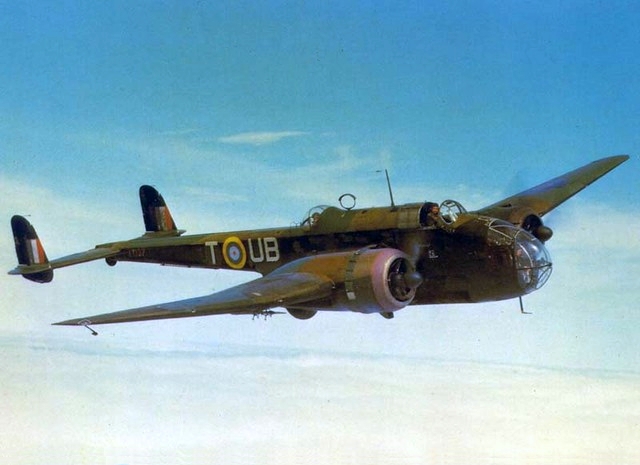
Handley Page Hampden

At first medium bombers such as the Handley Page Hampden were used but even with many escorts they were too vulnerable to flak and German fighters. The Hampdens were replaced with Bristol Blenheim light bombers but those fared no better. Heavy bombers such as the Short Stirling were easier to escort but after several missions Bomber Command needed them back.

The "Hurribomber", a fighter-bomber development of the Hawker Hurricane, was used with better results, although the small bomb load carried by this aircraft caused little damage.

There were other codenames for similar missions.

  • Ramrod: similar to Circus but with destroying a target being the principal aim. An example would be Operation Ramrod 16.
  • Ranger: large fighter formation intrusion over occupied territory with aim of wearing down German fighter force.
  • Rhubarb: small-scale freelance fighter sorties against ground targets of opportunity.
  • Roadstead: low-level attack on coastal shipping.

History

[edit]

Following the end of the Battle of Britain RAF Fighter Command moved from defensive to offensive operations where they would engage German fighters on the other side of the Channel; the operational instructions were ready by December 1940.[1] This was a result of the replacement of Hugh Dowding by the more aggressive Sholto Douglas as Air Officer Commanding-in-Chief of RAF Fighter Command. Douglas described his policy as "leaning forward into France" and it was enthusiastically supported by Trafford Leigh-Mallory who had replaced Keith Park as head of No. 11 Group RAF, whose command covered the South East of England.[2]

There would be two types of offensive operation: "Rhubarb" (initially called Mosquito), in which small patrols would cross under cover of cloudy conditions and engage any aircraft they found; and on clear weather days "Circus", in which several squadrons - possibly with a few bombers - would conduct sweeps of northern France. Circus came to mean an operation with bombers.[1]

The first circus offensive was on 11 January 1941 against Guînes with 114 Sqn of Blenheims, with nine squadrons of fighters.

Rhubarb patrols began by 66 Sqn on 20 December 1940, with two Spitfires over Le Touquet. While the pilots were allowed to attack ground targets if any presented itself, their primary objective was to bring down German aircraft. By mid-June 1941, Fighter Command had flown 149 Rhubarb patrols (336 sorties) claiming seven enemy aircraft brought down for loss of eight pilots on the British side. Circus operations with bombers began in January and eleven had been carried out by June, the targets including docks on the French coast and airfields. More than forty sweeps without bombers had been made in the same period.[1] While Fighter Command's priority was the German fighters, Bomber Command concentrated on destroying the ground targets. At higher levels in the RAF it was felt that the effects on the war by damage that could be inflicted by the bombers would be minimal; the commanders of Bomber and Fighter Commands held a conference in which it was agreed that the purpose of a Circus was to force German fighters into combat in circumstances that favoured the British and to that end the bombers had to do enough damage that the Luftwaffe could not ignore the attacks.[1]

Prior to Operation Barbarossa, the German invasion of the USSR, Air Chief Marshal Sir Charles Portal the Chief of the Air Staff directed Fighter and Bomber Commands to find a way to keep German fighters in western Europe rather than reinforce the Luftwaffe in eastern Europe. The resulting policy was to conduct Circus operations against industrial targets in the region of Bethune, Lille in north-east France; this might draw German fighter defences towards the area leaving the defences on the flanks weaker for unescorted bombers to make daylight attacks on Germany. At the same time night bombing operations would be made against the Ruhr industrial region.[1] The Air Ministry directed the RAF that the purpose of Circuses would be destruction of the ground targets with German fighters as secondary priority. It soon became clear that unescorted daylight bombing was too risky and heavy bombers should be used on night operations only.[a] Over six weeks RAF Fighter Command flew 8,000 sorties in support of 376 bomber sorties and a further 800 sorties on sweeps.[b] In August, Circuses were flown with 2 Group and 5 Group, Bomber Command.[1]

Fighter Command was losing pilots and aircraft on operations over Europe, but Douglas claimed that losses were lighter than during the Battle of Britain and aircraft losses were replaceable.[1] In fact, the losses were actually higher and the results disappointing. During 1941, Fighter Command claimed to have destroyed 800 enemy aircraft for the loss of 462 fighter pilots; however, the actual number of German aircraft destroyed was only 183.[3] Included in the lost RAF aircrew, killed or captured, were some of their most experienced officers; thirty flight lieutenants, twenty squadron leaders, six wing commanders and one group captain.[4] Amongst them were some of the Fighter Command's most vaunted aces; Eric Lock killed in the Channel, Douglas Bader captured in northern France and Paddy Finucane killed in the Pas de Calais.[5] Fighter Command found in 1941 that it was experiencing in the offensive all the same disadvantages that the Luftwaffe had experienced in 1940; operating at the limits of their range and over enemy territory so that shot-down pilots were captured rather than being able to rejoin their squadrons. Additionally the German commanders were free to choose which raids to challenge and which to ignore, since the bomber forces deployed by the RAF were rarely large enough to inflict critical damage.[6]

Besides the poor loss ratio of more than two British aircraft to one German, another stated aim of the campaign from the summer of 1941 was to divert Luftwaffe air assets away from Operation Barbarossa, the Axis invasion of the Soviet Union. Although a number of experienced German pilots were transferred back to France, no major units were withdrawn from the Eastern Front and the two fighter Geschwader in the Western Europe, Jagdgeschwader 2 and Jagdgeschwader 26, had returned to full strength by November 1941.[7] On a broader view, the campaign kept 75 fighter squadrons equipped with the most modern aircraft in the United Kingdom, compared to a total of 34 fighter squadrons in the Middle and Far East theatres. Furthermore, Spitfires were not transferred to overseas commands and the Hurricanes supplied were of older models. The situation was worse in the Far East, where the RAF had to meet the Japanese invasion of Malaya equipped with the obsolescent Brewster Buffalo, an American fighter deemed unfit for service in Europe.[8] The campaign failed in its objectives and wasted resources that were badly needed elsewhere; the Germans referred to it as the "nonsense offensive".[9]

See also

[edit]

Notes

[edit]

Footnotes

[edit]

References

[edit]

Further reading

[edit]
Revisions and contributorsEdit on WikipediaRead on Wikipedia
from Grokipedia
The Circus offensive, codenamed "Circus," consisted of a series of daylight raiding operations conducted by the Royal Air Force (RAF) during the Second World War, in which small formations of bombers were dispatched deep into occupied territory—primarily northern , , and the —under heavy escort from fighter squadrons to conduct precision strikes on military targets while primarily serving as bait to lure and attrite fighter forces. Initiated on 10 January 1941 as part of Fighter Command's transition from defensive to offensive operations following the , the Circus raids marked a strategic shift under Philip Joubert de la Ferté and later Sholto Douglas, aimed at taking the air war to the enemy, boosting British morale, and weakening the Luftwaffe's strength in the west to indirectly support Allied efforts elsewhere, such as the Eastern Front after Germany's invasion of the in June 1941. These operations typically involved bombers from No. 2 Group, such as Bristol Blenheims in early raids or heavier Short Stirlings later on, protected by up to 18 squadrons of Spitfires or Hawker Hurricanes, with missions limited to about 60 miles inland due to range constraints and focused on high-value targets like power stations, airfields, and docks—exemplified by the first heavy bomber Circus on 5 July 1941, when six Stirlings bombed Lille's railway yards. The offensive's core objective was against the , employing bombers as "bait" to draw German fighters into combat over familiar terrain for RAF pilots, rather than emphasizing bombing damage, which was often secondary and limited by the small bomber forces used. Related tactics included Rodeos (large-scale fighter sweeps without bombers), Ramrods (similar to Circuses but with a stronger emphasis on completing the bombing run), and Rhubarbs (small, opportunistic low-level attacks by pairs of fighters), all coordinated under Fighter Command to maximize engagements. By mid-1942, directives from the prioritized coastal targets and massive fighter formations to counter evolving tactics, integrating Circuses into broader combined operations like the (Operation Jubilee) on 19 August 1942, where RAF support flew over 1,000 sorties. Despite initial enthusiasm, the Circus offensive proved costly for the RAF, with Fighter Command losing approximately 462 pilots and around 600 fighters in 1941—due to factors like overclaiming victories (pilots claimed around 711 German aircraft destroyed in the second half of the year, but actual combat losses were about 103), the numerical superiority of home-based German units, and the difficulty of penetrating defended airspace. Operations were suspended in November 1941 amid high losses but resumed in March 1942 with improved tactics and , continuing at a rate of about ten raids per month targeting sites like Le Havre's docks; by 1943–1944, as Allied air superiority grew with the arrival of long-range escorts like the P-51 Mustang and intensified strategic bombing under the , traditional Circuses became obsolete, evolving into larger support roles for invasions like . Overall, while the offensive inflicted modest attrition on the and honed RAF combat skills—producing notable aces like James Edgar Johnson—it highlighted the challenges of daylight operations without overwhelming numerical advantage, influencing postwar air doctrine on escort and strategies.

Background

Strategic Context Post-Battle of Britain

The Royal Air Force's Fighter Command achieved a decisive defensive victory during the , which officially spanned from 10 July to 31 October 1940, by repelling the 's attempts to gain air superiority over southern England. Under the leadership of Sir , the RAF employed an integrated air defence system incorporating radar stations, the for command and control, and efficient pilot rotation to maintain operational strength, with monthly production of fighters holding steady between 467 and 496, helping to maintain operational strength despite attritional losses. This success inflicted the first major strategic defeat on , preventing the from neutralizing Britain's air defences and thereby thwarting , the planned invasion of the . By late October 1940, the Luftwaffe had withdrawn from large-scale daylight raids on Britain, shifting to night-time operations during the Blitz due to unsustainable losses and the failure to destroy Fighter Command as its center of gravity. This tactical retreat marked a pivotal turning point, as German intelligence misjudged RAF resilience, leading to wasted efforts on peripheral targets like London from 6 September onward. The RAF's victory not only preserved national sovereignty but also ensured Britain could serve as a launchpad for future Allied operations, while averting a potential blockade or direct aerial subjugation that might have forced capitulation. In the wake of this defensive triumph, RAF strategy transitioned under Dowding's oversight and the subsequent influence of Charles Portal, who assumed the role of Chief of the Air Staff on 25 October 1940, toward proactive measures aimed at attriting the through offensive bombing campaigns. Dowding, who was relieved of his command in November 1940, had prioritized survival during the battle, but Portal advocated for escalating raids on German air infrastructure to degrade enemy air power systematically, viewing the as vulnerable to sustained pressure that Britain could better endure. This doctrinal shift emphasized of bases, factories, and oil facilities to impose cumulative attrition, aligning with broader Allied goals of weakening Germany's aerial capabilities before a potential second front. British intelligence assessments in late 1940 and early 1941 revealed the Luftwaffe's diminished but still formidable presence in , with Luftflotte 3 maintaining defensive postures across occupied , , and the . Order-of-battle analyses indicated a significant reduction in overall strength following losses, with fighter numbers dropping significantly by January 1941 from peaks of over 1,300 earlier in the year, concentrated in key units such as and 26 based in northern and . These evaluations, drawn from and , highlighted the Luftwaffe's overstretched resources—only about two fighter wings, totaling around 180 aircraft, remained operational in the west by late 1941—prompting the RAF to target these forward bases to exploit vulnerabilities in German air coverage. Amid the ongoing Blitz from September 1940 to May 1941, Britain faced acute economic strains and morale challenges that intensified demands for visible RAF offensive actions against . The imposed severe resource pressures, with overseas investments and shipping revenues under blockade-induced threat, exacerbating debt and limiting industrial output despite shadow factories aiding aircraft production. Public resolve hardened post-Battle of Britain, yet the 's civilian toll—coupled with isolation from allies—fueled calls for retaliatory bombing to bolster home-front morale and demonstrate solidarity with occupied Europe, as articulated in publications by March 1941. Portal's leadership channeled these imperatives into operations designed to strike back, reinforcing Britain's commitment to while sustaining .

Luftwaffe Vulnerabilities and RAF Objectives

Following the , the 's operational commitments became increasingly dispersed, with significant forces redirected to preparations for the Eastern Front invasion in mid-1941 and ongoing campaigns in the Mediterranean theater, thereby reducing air coverage over to approximately 240-250 single-engine fighters by July 1941. This dispersion left the Pas de Calais region, a primary focus for RAF incursions, defended by only about 150-160 fighters initially, creating exploitable gaps in German aerial defenses. Key vulnerabilities compounded this strain, including limited coverage over , where early warning systems like Freya were sluggish and inadequate for timely , despite gradual improvements by late 1941. Additionally, severe pilot training shortages arose from high attrition rates and insufficient pre-war preparation, resulting in many inexperienced crews being deployed, with operational readiness for Bf 109 pilots dropping to around 67% by late 1940 and further deteriorating as resources were diverted eastward. The 's heavy reliance on single-engine fighters such as the Bf 109, which lacked long-range capabilities and versatility for escort duties, further hampered responses to RAF probes, as these aircraft were outnumbered and outranged by British Spitfires in cross-Channel engagements. The RAF's objectives in launching limited offensive actions were precisely tailored to exploit these weaknesses, prioritizing the attrition of fighters through engagements fought on favorable terms over occupied , thereby forcing the Germans into combat without exposing unescorted bombers to undue risk. A core aim was to erode German air strength in the West, compelling the to either reinforce from other fronts or suffer irreversible losses, ultimately paving the way for Allied air superiority essential to future invasions such as those planned across the Channel. Simultaneously, these operations sought to disrupt key elements of German industry, including aircraft factories and facilities in the region, by conducting escorted daylight raids that inflicted targeted damage while minimizing RAF bomber casualties through heavy fighter protection. This approach allowed the RAF to transition from defensive postures to proactive weakening of the enemy, balancing offensive gains against the preservation of limited resources. Supporting these efforts, flights played a crucial role in identifying and mapping German airfields and flak positions, utilizing high-altitude Spitfire missions and specialized units like those at to provide photographic that informed raid planning and enhanced the precision of subsequent strikes. These sorties not only revealed defensive layouts but also tracked deployments, enabling the RAF to anticipate responses and optimize engagement opportunities amid the identified vulnerabilities.

Development and Planning

Conception of Circus Operations

The conception of Circus operations emerged from strategic discussions within in late 1940, as the service shifted from defensive postures during the to offensive actions aimed at engaging the over occupied . Air Vice-Marshal , then commanding No. 12 Group, advocated for large-scale fighter formations to escort limited bomber raids, building on his advocacy for "" tactics that emphasized massed aircraft to achieve superiority in numbers during engagements. The detailed planning and codenaming of these operations as 'Circus' occurred in December 1940, following strategic reviews in Fighter Command. The core concept of a Circus involved deploying small groups of medium bombers, such as Bristol Blenheims, accompanied by substantially larger fighter escorts—typically numbering over 50 aircraft including Spitfires and Hurricanes—to provoke Luftwaffe interceptors into combat while minimizing risk to the bombers themselves, which served primarily as bait rather than for significant bombing impact. This approach was designed to attrite German fighter strength through superior numbers and surprise, with bombers targeting secondary objectives like barge concentrations supporting potential invasion forces. Later iterations incorporated North American Mitchells as bombers, but the initial focus remained on Blenheims for their range and speed. Early trials led to the first Circus operation on 10 1941 against targets in northern ; this involved Blenheims from No. 114 Squadron protected by fighters from No. 11 Group, marking an experimental application of the Circus idea on a modest scale with approximately 6-12 bombers and upwards of 50 escorting fighters. These initial operations tested the feasibility of crossing the Channel to draw out enemy responses without excessive losses, though encounters were limited as the often failed to rise in force. Within RAF Fighter Command, the Circus concept sparked debates over the balance of risks and benefits, particularly regarding the vulnerability of bombers to and the strain on fighter resources for operations that yielded few immediate strategic gains. Proponents like Leigh-Mallory and , who commanded the Tangmere Wing and championed tactics, argued that massed formations would overwhelm defenses and build pilot experience, countering criticisms from figures in No. 11 Group who favored more conservative, smaller-scale patrols to preserve aircraft and crews amid ongoing pilot shortages. Bader's input emphasized aggressive sweeps with wing-sized groups to maximize combat opportunities, influencing the scale of escorts in early Circuses despite concerns about coordination and fuel limitations.

Organization and Resource Allocation

The Circus offensive was primarily executed by No. 11 Group of , based in southeast England and commanded by from late 1940, which coordinated closely with to integrate fighter escorts with bombing raids. This structure allowed for rapid deployment of resources from forward bases, ensuring that operations could be launched with minimal delay to exploit weather windows and intelligence on dispositions. Fighter support drew from wings in Nos. 11 and 12 Groups of Fighter Command, equipped primarily with Spitfires and Hawker Hurricanes for escort duties, while bomber elements came from No. 2 Group, utilizing Bristol Blenheims and later Douglas Bostons for the raiding force. Examples include the Wing (Nos. 72, 92, and 609 Squadrons on Spitfires) and squadrons like No. 114 on Blenheims, with logistics supported by efficient supply chains for fuel, ammunition, and spares to maintain sortie rates. Infrastructure centered on forward airfields in and , such as , , , and , which facilitated quick scrambles and reduced turnaround times for damaged aircraft. Pilots underwent specialized training protocols emphasizing long-range escort formations and precise rendezvous procedures, often conducted over landmarks like in southeast to link bombers with fighters before crossing the Channel. The introduction of drop tanks on Spitfires and Hurricanes extended operational range beyond the initial 60-mile limit into occupied territory, enabling deeper penetrations while maintaining , though early operations relied on careful fuel management without them.

Execution of the Offensive

Early 1941 Raids and Initial Challenges

The systematic Circus operations commenced on 10 January 1941 with Circus No. 1, which targeted ammunition dumps and rail facilities in the Forêt de Guines area of northern using six bombers from No. 114 Squadron, escorted by fighters from six squadrons. This marked the start of a series of coordinated daylight raids designed to draw out and attrit forces, with bombers serving primarily as bait under heavy fighter protection. By June 1941, the RAF had executed a total of 20 such operations, gradually building experience amid the tentative scale of these early efforts. Early raids faced significant startup difficulties, including frequent weather disruptions that caused low cloud, poor visibility, and mission cancellations or deviations from planned routes. Navigation errors, exacerbated by rudimentary aids and the challenges of maintaining tight formations over unfamiliar terrain, often led to dispersed and escort groups, reducing the effectiveness of mutual protection. Additionally, unexpected concentrations of anti-aircraft fire (flak) caught formations at low altitudes, particularly around rail and industrial targets in the region, increasing vulnerability despite the escorts. Initial outcomes reflected these hurdles, with bomber loss rates remaining low—under 5% across the first wave of operations—due to the disproportionate fighter cover that deterred many interceptions. However, bore the brunt of attrition from unequal combats, where pilots exploited height advantages or numerical superiority in chosen engagements, leading to disproportionate RAF pilot casualties relative to confirmed enemy destructions. A representative case was Circus No. 9 in March 1941, targeting rail yards near , where navigation issues scattered the formation and exposed escorts to flak and opportunistic fighter attacks, resulting in multiple Spitfire and Hurricane losses without significant bomber damage. In response, the RAF implemented key adaptations, such as augmenting escort numbers from six to up to 12 squadrons per raid by mid-1941 to better shield the bombers and maintain formation integrity. Bombing runs were also shifted to higher altitudes—typically 10,000 to 15,000 feet—to minimize exposure to low-level flak batteries, though this sometimes compromised accuracy. These adjustments, drawn from debriefs of the initial operations, helped stabilize the offensive during its learning phase.

1942 Intensification and Peak Activity

As part of a deliberate strategy to weaken strength in western Europe—including support for preparations for , the Allied invasion of scheduled for November— intensified Circus operations with a surge that began in July 1942, culminating in major actions like the on 19 August 1942. This built on efforts to target critical infrastructure, including power stations like that at , airfields such as Abbeville-Drucat, and railway yards across northern and . By year's end, over 100 such raids had been launched, reflecting the offensive's peak activity amid growing Allied coordination, though operations decreased somewhat after Dieppe. Circus missions in this period increasingly integrated with emerging USAAF efforts, as American units under VIII Fighter Command provided escort support to RAF bombers, exemplified by Circus No. 201 on 31 July 1942, which struck the Abbeville-Drucat airfield. These joint actions extended operational ranges deeper into occupied territory, including , where bombers could penetrate up to 200 miles from English bases while drawing out enemy interceptors. At their height, individual Circuses employed up to 200 fighters—often from 12 to 16 squadrons of Spitfires—to protect formations of just 20 Blenheims or Bostons, prioritizing fighter-to-fighter engagements over bombing precision. The introduction of the in summer 1942 bolstered this phase, with early Typhoon squadrons like No. 266 assuming escort roles from June 1942 onward, offering superior speed and range for low-level protection against Focke-Wulf Fw 190s. However, the heightened pace imposed severe logistical burdens, including acute from repeated exposures to intense combat and the demands of multiple daily sorties—reaching 2-3 per squadron in high-activity months like June and October. Maintenance issues further compounded these strains, as rapid wear on engines and airframes limited turnaround times amid the relentless operational tempo.

Tactics and Engagements

RAF Bomber and Fighter Tactics

RAF bombers during Circus operations flew in tight box formations, typically consisting of six to twelve aircraft, at altitudes ranging from 10,000 to 15,000 feet to maximize mutual defensive fire from onboard gunners against intercepting fighters. These formations allowed for concentrated firepower while the bombers pressed attacks on secondary targets across northern France, though initial raids often depended on visual navigation, with later missions benefiting from the Gee navigation system for improved target location. Fighter escorts, mainly Spitfires and Hurricanes organized into wings of multiple squadrons, adopted the formation—two mutually supporting pairs of aircraft—for superior visibility and maneuverability during engagements. Spitfire squadrons provided top cover at higher altitudes, typically 20,000 feet or above, to intercept threats approaching the bomber stream from superior positions, while coordination with the bombers relied on maintained until enemy intercepts were imminent to avoid detection. As variants of the standard Circus raids, "" operations involved fighter-only sweeps without bombers to provoke responses and inflict attrition. To adapt to German interception tactics, RAF fighters executed diving attacks from altitude to break up enemy formations and disrupt coordinated assaults on the bombers. Upon mission completion, escorts prioritized withdrawal toward the , enabling downed pilots to bailout over water where could provide support and increase survival rates.

Luftwaffe Responses and Interceptions

Initially, the displayed a degree of complacency toward the early RAF Circus raids in 1941, often ignoring smaller formations or mounting limited responses due to resource constraints, including commitments on the Eastern Front after June 1941. However, as the operations intensified, units such as (JG 2) and (JG 26) shifted to more aggressive interception strategies, deploying Messerschmitt Bf 109F fighters to shadow and harass RAF bombers and escorts. By late 1941, the introduction of the superior in JG 26 and JG 2—beginning operational service in September 1941 and expanding significantly by April 1942—enabled these squadrons to challenge RAF Spitfire Mk V formations more effectively, often outmaneuvering them in climbs and dives. Luftwaffe defensive tactics emphasized exploiting altitude advantages, with interceptors climbing above RAF formations to launch "bounce" attacks from high cover, including ambushes emerging from layers to surprise escorts. These efforts were closely coordinated with ground-based defenses, including heavy flak batteries that targeted low-flying bombers and networks such as the Freya early-warning system for long-range detection and the radars for precise gun-laying and ground-controlled interceptions. JG 26 and JG 2 pilots frequently targeted stragglers and tail-enders to avoid prolonged dogfights, conserving fuel and ammunition while maximizing disruption. To counter the raids' growing frequency, the introduced massed fighter attack formations, signaled by the traditional "Horrido" to coordinate assaults on RAF bomber boxes. Response times were shortened by relocating forward operating bases closer to the Channel coast, allowing quicker scrambles from sites in northern and . Under the influence of General der Jagdflieger , who assumed the role in 1941, Luftwaffe doctrine increasingly prioritized free-ranging fighter sweeps (Freie Jagd) to engage RAF escorts aggressively rather than solely pursuing bombers, aiming to attrit Fighter Command's strength over occupied territory.

Outcomes and Assessment

Losses, Claims, and Statistical Analysis

During the Circus offensive from 1941 to 1942, the Royal Air Force (RAF) incurred substantial losses, particularly among its fighter squadrons tasked with escorting bombers over occupied Europe. Fighter Command lost over 500 , comprising approximately 411 Spitfires and 93 Hurricanes in 1941, with additional losses in 1942 pushing the total higher; bomber losses exceeded 100 across both years, though these were comparatively lighter due to the protective fighter escorts. The pilot casualty rate was severe, with around 463 Fighter Command pilots lost from June to December 1941 alone, equating to a death rate of approximately 20% among engaged in these operations, as many were killed or captured when their were downed over hostile territory. Breakdowns by phase reveal varying intensities: in 1941, early Circus raids saw a claimed kill ratio of roughly 1:1 (RAF victories to losses), but this deteriorated as operations intensified, with Fighter Command losing about 400 fighters overall that year against confirmed losses of 103 fighters from June to December. By 1942, losses mounted further, with 574 RAF day fighters destroyed amid claims of 560 enemy , while actual German fighter losses totaled 272 from all causes; non-combat attrition, including weather-related incidents and accidents, accounted for 20-30% of RAF losses, such as at least 70 fighters in the second half of 1941. In 1941, records indicate 236 fighters lost from all causes, with 103 in against the RAF. RAF claims of German aircraft destroyed during Circus operations totaled around 556 fighters in 1941, but post-war audits adjusted these downward to the confirmed Luftwaffe combat losses of 103 that year after accounting for overclaims, which were common due to combat confusion and unverified sightings; these statistics were derived from squadron operational records, pilot combat reports, and post-war cross-verification with captured German documents, providing a more accurate picture than wartime tallies. Comparative efficiency analyses highlight the offensive's growing unsustainability: by late 1942, cost-benefit ratios showed RAF fighter losses outpacing confirmed destructions by a factor of nearly 2:1, straining pilot replacements and production, as each Circus sortie demanded heavy escort commitments with limited strategic returns in enemy attrition.

Strategic Impact on the Air War

The Circus offensive played a pivotal role in attriting Luftwaffe fighter forces, contributing to their overall weakening ahead of major Allied operations such as the in August 1942 and the in June 1944. By drawing German fighters into repeated engagements over occupied France and the , these operations inflicted significant losses on Luftwaffe pilots and aircraft, with postwar assessments indicating 154 German aircraft destroyed in 1941 alone from such daylight raids. This sustained pressure reduced the Luftwaffe's operational reserves and combat effectiveness, forcing a strategic reallocation of resources that diminished their support for other fronts. The offensive also shifted the dynamics of air superiority in the European theater by compelling the to bolster defenses in the West, including the expansion of the Kammhuber Line night fighter system, with strength reaching approximately 320 aircraft by September 1942, and increased production of heavy anti-aircraft guns from 199 per month in early 1942 to 348 per month by late 1942, alongside heavy flak batteries expanding from 967 in 1941 to 1,148 in 1942. This diversion tied down German air assets that might otherwise have reinforced the Eastern Front or Mediterranean campaigns, indirectly aiding Soviet advances by limiting interdiction capabilities. For the RAF, the operations provided invaluable experience to pilots and honed escort tactics, fostering a transition toward more effective doctrines while enhancing overall morale through demonstrated offensive initiative. Despite these gains, the Circus offensive faced substantial criticisms for its high cost in elite RAF pilots—approximately 463 lost between June and December 1941—and the relatively minimal material damage inflicted on German infrastructure, as many raids achieved limited accuracy against dispersed targets. These factors, combined with unsustainable daylight loss rates exceeding 6% in some 1943 missions, prompted a doctrinal shift by early 1943 toward predominantly night area bombing campaigns, which prioritized Bomber Command's survival and broader strategic effects over direct fighter attrition.

References

Add your contribution
Related Hubs
User Avatar
No comments yet.