
Recent from talks
Paintings by Adolf Hitler
Knowledge base stats:
Talk channels stats:
Members stats:
Paintings by Adolf Hitler
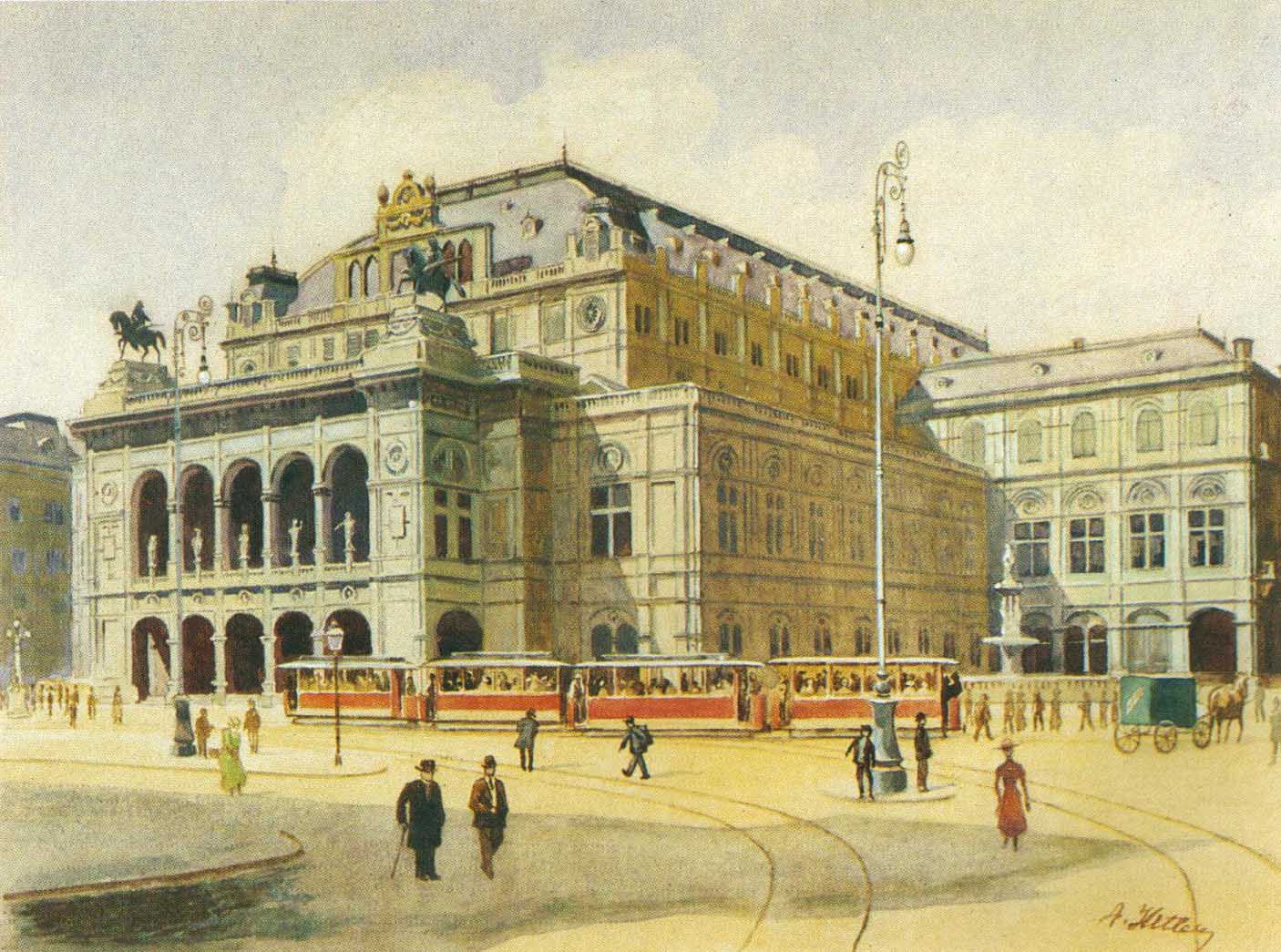
Adolf Hitler, the dictator of Nazi Germany from 1933 until his suicide in 1945, was a painter in his youth. While living in Vienna between 1908 and 1913, Hitler worked as a professional artist and produced hundreds of works, to little commercial or critical success.
A number of the paintings were recovered after World War II and sold at auctions. Others were seized by the United States Army and are still in U.S. government possession.
Hitler's preferred subject was architecture, which he represented using "an amalgam of conventional styles". Instead of progressing, his works copied from nineteenth century and other artists. He drew primarily from Greco-Roman classicism, the Italian Renaissance, and Neoclassicism. He liked the technical ability displayed by this art as well as the comprehensible symbolism. He called Rudolf von Alt his greatest teacher. Both Hitler and von Alt exhibited an interest in similar subject matter and use of color.[citation needed]
In his 1925 autobiography Mein Kampf (My Struggle), Hitler described how, in his youth, he wanted to become a professional artist, but his dreams were ruined because he failed the entrance exam of the Academy of Fine Arts Vienna. Hitler was rejected twice by the institute, once in 1907 and again in 1908. In his first examination, he had passed the preliminary portion which was to draw two of the assigned iconic or Biblical scenes, in two sessions of three hours each. The second portion was to provide a previously prepared portfolio for the examiners. It was noted that Hitler's works contained too few heads. The institute considered that he had more talent in architecture than in painting. One of the instructors, sympathetic to his situation and believing he had some talent, suggested that he apply to the academy's School of Architecture. However, that would have required returning to secondary school from which he had dropped out and to which he was unwilling to return. Although Hitler became a painter and never practiced architecture, he came to regard painting as "mere subsistence work" and considered architecture his true calling.
According to a conversation in August 1939, one month before the outbreak of World War II, published in The British War Blue Book, Hitler told British ambassador Nevile Henderson, "I am an artist and not a politician. Once the Polish question is settled, I want to end my life as an artist."
From 1908 to 1913, Hitler made a meager living as a professional artist. He painted his first self-portrait in 1910 at the age of 21. This painting, along with twelve other paintings by Hitler, was discovered by U.S. Army Sergeant Major Willie J. McKenna in 1945 in Essen, Germany.[unreliable source]
Samuel Morgenstern, an Austrian businessman and a business partner of the young Hitler in his Vienna period, bought many of Hitler's paintings. According to Morgenstern, Hitler came to him for the first time at the beginning of the 1910s, either in 1911 or in 1912. When Hitler came to Morgenstern's glazier store for the first time, he offered Morgenstern three of his paintings. Morgenstern kept detailed records of his clientele, through which it was possible to locate the buyers of Hitler's paintings. It was found that the majority of the buyers were Jewish. An important client of Morgenstern, a lawyer by the name of Josef Feingold, bought a series of paintings by Hitler depicting old Vienna.
When Hitler served in World War I at the age of 25 in 1914, he carried fine paper and canvas with him to the front and spent hours of leave time drawing and painting. The works he painted during this period were among his last before he became a politician. The themes of his wartime painting included farmers' houses, the dressing-station, etc.
Hub AI
Paintings by Adolf Hitler AI simulator
(@Paintings by Adolf Hitler_simulator)
Paintings by Adolf Hitler
Adolf Hitler, the dictator of Nazi Germany from 1933 until his suicide in 1945, was a painter in his youth. While living in Vienna between 1908 and 1913, Hitler worked as a professional artist and produced hundreds of works, to little commercial or critical success.
A number of the paintings were recovered after World War II and sold at auctions. Others were seized by the United States Army and are still in U.S. government possession.
Hitler's preferred subject was architecture, which he represented using "an amalgam of conventional styles". Instead of progressing, his works copied from nineteenth century and other artists. He drew primarily from Greco-Roman classicism, the Italian Renaissance, and Neoclassicism. He liked the technical ability displayed by this art as well as the comprehensible symbolism. He called Rudolf von Alt his greatest teacher. Both Hitler and von Alt exhibited an interest in similar subject matter and use of color.[citation needed]
In his 1925 autobiography Mein Kampf (My Struggle), Hitler described how, in his youth, he wanted to become a professional artist, but his dreams were ruined because he failed the entrance exam of the Academy of Fine Arts Vienna. Hitler was rejected twice by the institute, once in 1907 and again in 1908. In his first examination, he had passed the preliminary portion which was to draw two of the assigned iconic or Biblical scenes, in two sessions of three hours each. The second portion was to provide a previously prepared portfolio for the examiners. It was noted that Hitler's works contained too few heads. The institute considered that he had more talent in architecture than in painting. One of the instructors, sympathetic to his situation and believing he had some talent, suggested that he apply to the academy's School of Architecture. However, that would have required returning to secondary school from which he had dropped out and to which he was unwilling to return. Although Hitler became a painter and never practiced architecture, he came to regard painting as "mere subsistence work" and considered architecture his true calling.
According to a conversation in August 1939, one month before the outbreak of World War II, published in The British War Blue Book, Hitler told British ambassador Nevile Henderson, "I am an artist and not a politician. Once the Polish question is settled, I want to end my life as an artist."
From 1908 to 1913, Hitler made a meager living as a professional artist. He painted his first self-portrait in 1910 at the age of 21. This painting, along with twelve other paintings by Hitler, was discovered by U.S. Army Sergeant Major Willie J. McKenna in 1945 in Essen, Germany.[unreliable source]
Samuel Morgenstern, an Austrian businessman and a business partner of the young Hitler in his Vienna period, bought many of Hitler's paintings. According to Morgenstern, Hitler came to him for the first time at the beginning of the 1910s, either in 1911 or in 1912. When Hitler came to Morgenstern's glazier store for the first time, he offered Morgenstern three of his paintings. Morgenstern kept detailed records of his clientele, through which it was possible to locate the buyers of Hitler's paintings. It was found that the majority of the buyers were Jewish. An important client of Morgenstern, a lawyer by the name of Josef Feingold, bought a series of paintings by Hitler depicting old Vienna.
When Hitler served in World War I at the age of 25 in 1914, he carried fine paper and canvas with him to the front and spent hours of leave time drawing and painting. The works he painted during this period were among his last before he became a politician. The themes of his wartime painting included farmers' houses, the dressing-station, etc.
Recent media