Hubbry Logo
ReductionsReductionsMain
Open search
Reductions
Community hub
Reductions
logo
8 pages, 0 posts
0 subscribers
Be the first to start a discussion here.
Reductions
Reductions
from Wikipedia
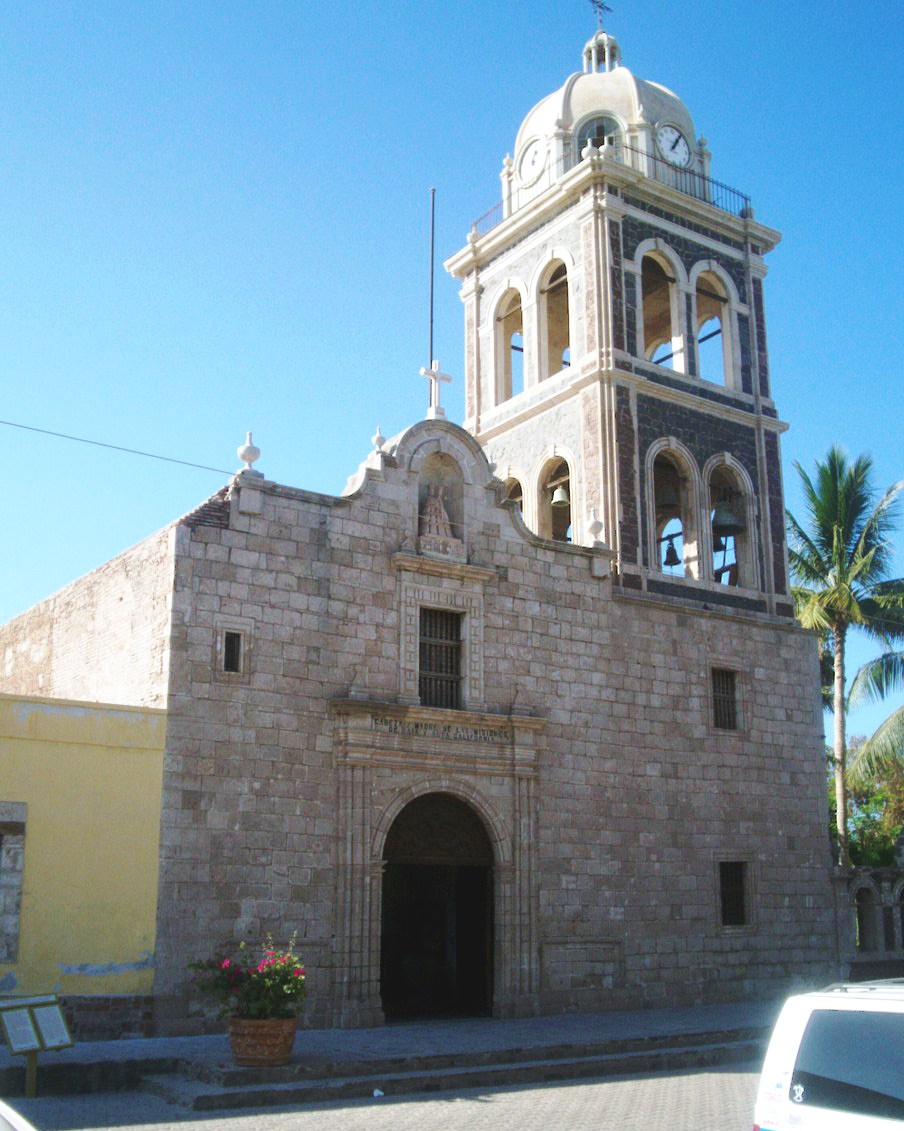
A church was always at the center of the reductions; this one is in Loreto, Baja California Sur.

Reductions (Spanish: reducciones, also called congregaciones; Portuguese: reduções) were settlements established by Spanish rulers and Roman Catholic missionaries in Spanish America and the Spanish East Indies (the Philippines). In Portuguese-speaking Latin America, such reductions were also called aldeias. The Spanish and Portuguese relocated, forcibly in many cases, indigenous inhabitants (Indians or Indios) of their colonies into urban settlements modeled on those in Spain and Portugal. The Royal Academy of Spain defines reducción (reduction) as "a grouping into settlement of indigenous people for the purpose of evangelization and assimilation."[1] In colonial Mexico, reductions were called "congregations" (congregaciones).[2][3]

Forced resettlements aimed to concentrate indigenous people into communities, facilitating civil and religious control over populations.[4] The concentration of the indigenous peoples into towns facilitated the organization and exploitation of their labor. The practice began during Spanish colonization in the Caribbean, relocating populations to be closer to Spanish settlements, often at a distance from their home territories, and likely facilitated the spread of disease.[5] Reductions could be either religious, established and administered by an order of the Roman Catholic church (especially the Jesuits), or secular, under the control of Spanish or Portuguese governmental authorities. The best known, and most successful, of the religious reductions were those developed by the Jesuits in Paraguay and neighboring areas in the 17th century. The largest and most enduring secular reductions were those imposed on the highland people of the former Inca Empire of Peru during the rule of Viceroy Francisco de Toledo (1569–1581).

During the early stages of Christianisation of the Americas, Spanish Catholic authorities might establish ecclesiastical missionary proto-parish subdivisions - Spanish: doctrinas; singular: Spanish: doctrina, lit.'doctrine' – for the indoctrination of the faith.[6][7]

Spanish West Indies

[edit]

The policy of reductions was begun in 1503 by Spanish colonists on Caribbean islands. In the words of the Spanish rulers, "It is necessary that the Indians be assigned to towns in which they will live together and that they not remain or wander separated from each other in the backcountry."[8] The Spanish ordered Indian villages to be destroyed and selected sites where new villages should be built. The concentration, or reducción of the Indian population, facilitated the Spaniards' access to Indian labor, the promulgation of Christianity, and the collection of taxes and tribute.[9] Moreover, the reduction of the Indians was intended to break down ethnic and kinship ties and detribalize the residents to create a generic, pan-Indian population, disregarding their numerous tribes and different cultures.[10]

North America

[edit]

The Spanish began creating reductions in Mexico shortly after Hernan Cortés's conquest in the 1520s. They were begun in Baja California in the 17th century and California in the late 18th century. Reductions in Mexico were more commonly known as congregaciones.[11]

South America

[edit]

Indian reductions in the Andes, mostly in present-day Peru and Bolivia, began on a large scale in 1570 during the rule of Viceroy Francisco de Toledo. Toledo worked to remake the society of the former Inca Empire, with some success. In a few years, he had resettled about 1.4 million Indians into 840 communities, many of which were the nuclei of present-day cities, towns, and villages.[12]

Probably the most famous of the reductions were in the areas of present-day Paraguay and neighboring Argentina, Brazil, and Bolivia in the 17th and 18th centuries. These were created by the Jesuit order of the Catholic Church, governed by the Jesuits through indigenous chief-turned-governors.[13] In the case of this Guaraní mission, the Jesuits aimed to make Christians of the Guaraní, impose European values and customs (which were regarded as essential to a Christian life), and isolate and protect the Guaraní from European colonists and slavers.[14][15][16][17] After the territory of the Guarani was transferred to Portugal, forced expulsion by the Portuguese led to the so-called Guaraní War, with heavy losses for the Guaraní. The Portuguese colonizers also secured the expulsion of the Jesuits.[18][17]

The Jesuits could not duplicate the success of the Guaraní mission in the Andes, on the Moxos, among the Chiquitos, or in the Chaco.[19]

National and global suppression of the Society of Jesus put an end to the reduction system. Native wealth were sequestered by national authorities and the natives enslaved. According to David Brading, this was one of the factors for the Latin American Wars of Independence.[20]

Spanish East Indies

[edit]

In the Spanish Philippines, the Spanish colonial government founded hundreds of towns and villages across the archipelago modeled on towns and villages in Spain. The authorities often adopted a policy of reductions for the resettlement of inhabitants from far-flung scattered barrios or barangays to move into a centralized cabecera (town/district capital), where a newly built church and an ayuntamiento (town hall) were situated.[21] This allowed the government to defend, control and Christianize the indigenous population in scattered independent settlements, to conduct population counts, and to collect tributes.[22] This enforced resettlement led to several revolts in the 17th century, often led by community shamans (babaylan). In some cases, entire villages would move deeper into island interiors to escape the reductions.[23]

A similar policy was implemented in the nearby Mariana Islands during the Spanish–Chamorro Wars (1670–1699).[24]

See also

[edit]

References

[edit]

Further reading

[edit]
Revisions and contributorsEdit on WikipediaRead on Wikipedia
from Grokipedia
The Reductions, formally known as the Jesuit reductions (Spanish: reducciones jesuíticas), were a network of self-governing communal settlements established by the Society of Jesus between 1609 and the mid-eighteenth century in the Guaraní territories of the , spanning present-day , northeastern , and southern , with the primary aims of converting indigenous populations to and insulating them from the system's forced labor and slave raids by Portuguese . These missions, numbering around 30 dedicated to the Guaraní, organized residents into structured communities resembling Spanish pueblos, complete with churches, schools, workshops, and farmlands worked under communal tenure to produce staples like , , and for internal use and export trade yielding up to 100,000 pesos annually. At their peak in 1732, the reductions supported 141,242 inhabitants, including over 113,000 baptized Christians by 1767, sustained by indigenous labor directed by Jesuit superiors who implemented education in , , and crafts alongside spiritual instruction. The settlements' militia, trained and armed by the , successfully repelled major incursions, such as those following the 1630s relocations from Guayrá, enabling demographic recovery and economic prosperity that contrasted sharply with the depopulation elsewhere in colonial . Yet this autonomy fostered tensions with viceregal authorities, exacerbated by the 1750 Treaty of Madrid's territorial concessions—which sparked the of 1754–1756—and broader Enlightenment-era suspicions of Jesuit political influence, culminating in King Charles III's 1767 expulsion decree that dissolved the order's presence and triggered the missions' swift collapse, with populations plummeting to 45,000 by 1796 amid abandonment and renewed exploitation. Surviving ruins, such as those at La Santísima Trinidad de Paraná (founded 1706) and Jesús de Tavarangüe (founded 1685), exemplify the missions' architectural legacy and were designated World Heritage sites in 1993 for their testimony to this unique socio-economic experiment.

Origins and Purpose

Establishment in Colonial Context

The Jesuit reductions emerged amid the exploitative system, which granted Spanish colonists rights to indigenous labor but frequently devolved into abuses and overwork, undermining both evangelization efforts and indigenous survival. Portuguese bandeirante slave raids from , intensifying from the early , further decimated Guaraní populations, capturing tens of thousands for enslavement in Brazilian plantations and prompting calls for protective congregations. In this context, Jesuit missionaries, authorized under Spanish royal directives, initiated reductions to gather dispersed indigenous groups into fortified settlements, shielding them from raiders while facilitating . The first such reduction, San Ignacio Guazú, was established in 1609 in the Guaraní territories of present-day , at the request of Hernando Arias de Saavedra and Francisco de Lizárraga, marking the onset of systematic Jesuit missionary activity in the region. This initiative built upon prior Franciscan missionary precedents in but expanded under Jesuit administration, emphasizing communal relocation to counter colonial encroachments. By the mid-18th century, the network had grown to approximately 30 missions, accommodating up to 141,000 indigenous residents at its peak in 1732, primarily Guaraní peoples relocated from vulnerable areas.

Core Objectives: Evangelization, Protection, and Civilization

The Jesuit reductions pursued evangelization as their foremost objective, relocating indigenous Guaraní populations to mission villages to facilitate mass through daily instruction, sacraments, and , resulting in 702,086 baptisms between 1610 and 1768. This process integrated religious practice into communal life, replacing nomadic patterns with sedentary settlements where European-style , crafts such as and , and practices were taught to promote and moral discipline. By concentrating populations under Jesuit oversight, the missions enabled systematic , with each reduction featuring churches and schools that reinforced Christian doctrine as the foundation for . Protection constituted a parallel goal, shielding natives from enslavement and exploitation by Portuguese and Spanish encomenderos through geographic isolation and the formation of indigenous militias by 1640, supported by royal decrees in 1606 and 1609 that exempted mission from forced labor. Many Guaraní voluntarily migrated to the reductions seeking refuge, as evidenced by their flight from raiders and colonists, which allowed populations to stabilize and grow despite epidemics, reaching peaks of around 150,000 inhabitants across over 30 towns by the mid-18th century. This defensive strategy not only preserved lives but also created conditions for sustained communal development, contrasting with demographic collapses in unprotected areas. Civilization efforts emphasized restructuring indigenous society along Christian principles, including the abolition of polygamy through enforced monogamous marriages—typically arranged at ages 15 for girls and 17 for boys—with threats of divine for to ensure adherence. Structured in elementary schools across reductions taught reading, writing, music, and Spanish for linguistic unity, while advanced pupils studied Latin, fostering administrative skills and cultural integration without eradicating all native elements. These reforms, grounded in the causal logic that moral and hygienic order precedes stability, contributed to recovery—from 30,548 in 1648 to 95,089 in 1750—demonstrating empirical viability over fragmented tribal existence.

Organizational Framework

Governance and Hierarchy

The governance of the Jesuit reductions operated under a theocratic model, with ultimate vested in the missionaries while incorporating indigenous institutions for local administration. Typically, each reduction was overseen by two : a responsible for spiritual affairs, such as and sacraments, and a companion—often a brother—handling temporal matters like resource allocation and daily operations. This dual structure ensured religious discipline underpinned practical management, with providing guidance to an indigenous elite literate in Guaraní, Spanish, and sometimes Latin, who assisted in and administrative roles. Local decision-making occurred through cabildos, or town councils, composed of elected indigenous officials mirroring Spanish colonial hierarchies but adapted to Guaraní customs, including a corregidor as town governor, teniente as deputy, three alcaldes as bailiffs or judges, four regidores as councilmen, an alguazil mayor as police prefect, a procurador as steward, and an escribano as scribe. Elections took place annually in December, subject to Jesuit approval and final ratification by the Spanish governor, which provided insulation from broader colonial interference while retaining nominal ties to the crown; indigenous caciques often held senior positions, preserving traditional leadership. The cabildo convened daily to report to the Jesuit priest after Mass, execute directives, and adjudicate minor disputes, fostering a hierarchical yet participatory system that minimized direct Spanish encomendero exploitation. Discipline was enforced through Jesuit guidelines emphasizing mildness combined with firmness to instill Christian morals and , with punishments scaled to offenses: or whipping for minor infractions, confinement on reduced rations or labor assignments for serious ones, and isolation in a women's house (cotiguazu) for female offenders. Capital crimes resulted in expulsion to secular authorities rather than execution, reflecting the reductions' internal norms. This approach, applied by 2-3 to communities of 1,000-2,000 souls, yielded greater stability and lower incidence of abuse or revolt compared to the system, where indigenous subjects endured serf-like bondage, frequent uprisings, and unchecked exploitation by Spanish grantees; reductions instead promoted communal property and personal liberty, enabling self-sustaining with reduced corruption from external predation. Membership was largely voluntary, as Guaraní groups relocated to reductions for protection against Portuguese slavers and , though exit carried social and practical risks amid frontier threats.

Economic and Communal Systems

The economic systems of the Jesuit reductions combined communal labor on shared lands with private plots, fostering through structured incentives rather than uniform collectivism. Adults dedicated two days per week to communal fields producing staple crops and resources like and , which supported mission needs and generated surpluses for trade. family allotments, known as chacras, allowed personal cultivation, enabling excess production that contributed to overall self-sufficiency without reliance on Spanish subsidies. This hybrid approach linked effort to output, as evidenced by exports comprising over 70% of mission revenues by the , funding operational independence. Artisanal workshops supplemented by training indigenous workers in trades such as blacksmithing, , and , which enhanced productivity and diversified outputs for internal use and . These facilities produced tools, textiles, and hides from large herds, with plantations and operations forming the backbone of export-oriented activities that sustained the reductions' . Empirical records indicate that such crafts and agricultural surpluses, including products, were traded regionally, obviating the need for external funding and demonstrating causal efficacy of the organized labor division. Communal living in grid-planned villages contrasted with prior dispersed indigenous settlements, incorporating housing around central plazas to facilitate oversight and . Wooden homes, water supplies, sewers, and infirmaries promoted , correlating with organized that included trained nurses and medicines in each reduction. This structure supported population stability, with hospitals and structured care addressing ailments more effectively than in fragmented pre-reduction communities.

Primary Geographic Implementations

Guaraní Reductions in Paraguay and Adjacent Territories

The Guaraní reductions in Paraguay and adjacent territories of present-day Argentina and Brazil represented the largest and most populous implementation of the Jesuit mission system, encompassing approximately 30 settlements established between 1609 and the early 1730s. The first reduction, San Ignacio Guazú, was founded in 1609 in what is now Paraguay, followed by progressive expansions that included key sites such as San Ignacio Miní, La Santísima Trinidad de Paraná (established 1706), and Jesús de Tavarangüé. These missions featured standardized urban layouts with a central plaza flanked by the church, residences arranged in grid patterns, workshops, and communal facilities, designed to facilitate organized communal life and defense. By the early 18th century, the complex housed around 140,000 Guaraní residents, reflecting the scale achieved through voluntary migrations and alliances with local indigenous groups. Evangelization efforts in these reductions emphasized adaptation to Guaraní culture and language, with Jesuits conducting services and primarily in Guaraní to foster deeper conversion and integration. Missionaries translated catechisms and liturgical texts into Guaraní, enabling indigenous participation in religious practices while gradually incorporating European elements into local customs. Educational initiatives included schools for in Guaraní and Spanish, alongside specialized training in music, where Guaraní musicians were taught European notation and composition, contributing to a vibrant tradition that featured works influenced by Jesuit composers like Domenico Zipoli. These adaptations distinguished the Guaraní missions by their reliance on indigenous alliances, which bolstered and cultural synthesis unique to the region's demographic density. The missions' strategic location along the and Upper Paraná rivers facilitated alliances with Guaraní communities against external threats, culminating in organized resistance to territorial changes imposed by the 1750 Treaty of Madrid. This treaty ceded seven eastern missions to , prompting Spanish and Portuguese forces to attempt Guaraní displacements starting in 1754, which met with armed opposition in the of 1754–1756. Guaraní militias, trained in Jesuit-organized defenses, mobilized thousands to defend their settlements, highlighting the depth of loyalty forged through the reductions' communal structures and distinguishing this complex from smaller or less militarized mission networks elsewhere.

Missions in Chiquitos and Moxos Regions

The Jesuit missions in the Chiquitos and Moxos regions of eastern represented a distinct implementation of the reductions system, established primarily between 1691 and 1760 to evangelize and organize diverse indigenous groups in the tropical lowlands. In Chiquitos, Jesuits founded eleven settlements over 76 years, beginning with San Francisco Javier in 1691, though only six principal missions—San Francisco Javier, Concepción, San Ignacio de Velasco, San Miguel, San Rafael, and —endure as architectural ensembles inspired by European ideal city models adapted to local materials and conditions. In Moxos (also known as de Moxos), the Jesuits established up to 28 missions from 1682 to 1743, targeting semi-nomadic peoples across a vast wetland area, though many were abandoned by the late 18th century due to environmental challenges and mobility. These missions housed smaller populations compared to the Guaraní reductions, peaking at around 25,000 in Chiquitos by 1766 and 30,000 in Moxos by the 1730s, reflecting the fragmented ethnic landscape rather than large unified tribes. Unlike the Guaraní missions facing intense Portuguese bandeirante slave raids, those in Chiquitos and Moxos experienced comparatively less external predation, allowing focus on internal consolidation among diverse groups such as the Chiquitano, who emerged as a synthesized from amalgamated resettled in the reductions. This gathering of disparate tribes empirically curtailed chronic intertribal warfare and raiding prevalent in the pre-mission era, as communal living under Jesuit oversight enforced peace and mutual defense, evidenced by sustained population stability and the absence of recorded major internal conflicts post-founding. The missions' fortified layouts, including perimeter walls around settlements and robust church structures built from local wood and , provided against sporadic nomadic incursions, prioritizing defensive architecture over the expansive plazas of Paraguayan models. A hallmark of these reductions was the innovative fusion of European with indigenous elements, preserved in extensive archives that survived the 1767 Jesuit expulsion. Chiquitos missions retain approximately 5,500 musical scores, while Moxos hold around 7,000, including adaptations of works by composers like Domenico Zipoli, performed on native-crafted instruments blending European designs with local woods. This synthesis, taught to indigenous musicians, produced a unique style recognized for its cultural ; the Chiquitos missions' churches and musical heritage were inscribed on UNESCO's World Heritage List in 1990 for exemplifying this indigenous-European artistic integration, distinct from the more agrarian focus of Guaraní reductions.

Extensions to North America and Spanish East Indies

In , Jesuit missionaries established short-lived missions starting in 1566, aiming to congregate and evangelize native groups like the and , but faced immediate hostility leading to the martyrdom of several priests and full withdrawal by 1572. These efforts, unlike the sustained reductions in , failed due to fierce native resistance and logistical isolation, with no permanent congregations formed before Franciscan successors took over amid later English and French colonial pressures that destroyed most missions by the early 1700s. Further north in Mexico's Tarahumara highlands (modern Chihuahua), Jesuits implemented reduction policies from 1607, establishing the first mission pueblo in 1611 under Father Juan Fonte to settle nomadic Tarahumara groups into fixed communities for evangelization and protection from Spanish miners and settlers. However, recurrent revolts, including a major uprising in 1652 that halted expansion for two decades, and the Tarahumara's persistent seminomadic lifestyle resisting congregation, limited success; by the Jesuit expulsion in 1767, only loose nominal affiliations existed among scattered populations, contrasting sharply with the dense, self-sustaining Guarani reductions that housed over 140,000 by the 1730s. This partial integration stemmed from causal factors like terrain-enabled evasion of labor drafts for silver mining and cultural aversion to sedentary life, yielding lower baptism and retention rates than in South America's more amenable riverine lowlands. In the , Jesuit reductions emerged in the from the 1590s, targeting peripheral islands like the and to counter Moro Muslim raids and while incorporating locals into the trade network. Missions such as those in from 1718 emphasized congregating tribes like the Teduray against external threats, but operated on a fragmented, smaller scale with fewer than a dozen permanent outposts by the 1760s, lacking the densities and of South American models due to ongoing Moro incursions and geographic dispersal. These efforts achieved superficial conversions amid hybrid indigenous practices, with geopolitical isolation and integration into extractive trade routes—rather than isolated self-sufficiency—contributing to shallower cultural shifts and higher rates compared to Paraguay's fortified, agrarian enclaves. Overall, peripheral extensions faltered from nomadic dispersals, rival colonial encroachments, and mismatched environmental incentives, underscoring the reductions' dependence on sedentary, lowland contexts for viability.

Achievements

Economic Self-Sufficiency and Trade

The Jesuit reductions achieved economic self-sufficiency through a combination of communal , extensive ranching, and artisanal production, transitioning indigenous populations from subsistence to organized surplus generation. Common fields (tupamba) supplied community needs, while private plots (abamba) allowed individual cultivation, with outputs stored collectively to support the vulnerable and fund requirements. herds expanded dramatically, reaching a total of 719,761 head of across the missions by the time of the Jesuit expulsion in , alongside significant sheep flocks estimated at 30,000 per major . This agrarian base, supplemented by crafts such as and weaving, enabled the missions to produce essentials like and tools internally, requiring only minimal external subsidies—such as an annual 300-peso stipend per from the crown in the . Trade networks further bolstered this autonomy, with missions exporting surplus goods including , hides, timber, , , , and to colonial ports like and in exchange for imported necessities such as iron, fine cloths, and wine. Barter-based commerce generated an average annual income of 100,000 pesos, equivalent to approximately 7 reals according to royal commission reports, facilitating the maintenance of like wharves and a fleet of around 2,000 boats on the for transport and limited activities. These revenues directly funded defensive militias and fortifications without incurring , as mission accounts demonstrated balanced operations reliant on indigenous labor organized through rotational systems that tracked individual outputs for equitable distribution. Audits and inventories, including those conducted post-expulsion in 1787, refuted claims of Jesuit personal wealth hoarding, revealing no amassed treasures, gold mines, or hidden funds beyond modest church ornaments—such as an altar at San Borja valued at the equivalent of 30,000 steers—and confirming that assets remained communal property under mission administration. Jesuit missionaries drew fixed salaries of 250–300 pesos annually, with no of individual enrichment, as corroborated by earlier royal probes in 1640 and 1657, as well as testimonials from figures like Bishop Pedro Taxardo in 1721. This communal framework, while theocratic, fostered indigenous economic gains through of productive assets, enabling sustained market participation that rivaled secular colonial enterprises in output scale.

Cultural Integration and Artistic Developments

In the Jesuit reductions, formed a core element of cultural integration, with missions establishing workshops that taught European instruments such as the , viola, , , harpsichords, and organs to indigenous residents. Jesuit musicians, including Domenico Zipoli, who served as a and in the reductions after 1716, composed works and trained Guaraní and Chiquitano individuals in composition and performance, leading to indigenous chapel masters directing ensembles by the mid-18th century. These efforts produced hybrid repertoires blending European styles with local adaptations, evidenced by preserved scores in archives that demonstrate indigenous participation in production. Architectural developments in the reductions, particularly in the Chiquitos and Moxos missions, featured wooden churches that fused European structural principles with indigenous decorative motifs, such as botanical patterns derived from local vegetation and echoes of traditional body-painting and designs. Structures like the church in San Miguel de Velasco incorporated pulpits and altars with these hybrid elements, constructed largely by indigenous artisans under Jesuit supervision, resulting in ensembles that served both religious and communal functions. This synthesis preserved aspects of native aesthetics while adapting them to Christian , contrasting with the more uniform imposition seen in settlements. Literacy initiatives emphasized Guaraní-language instruction through printed catechisms and texts produced via the first South American introduced to the reductions around , fostering written culture among residents and enabling indigenous authorship of devotional works. Jesuit policies prioritized vernacular languages for evangelization, translating scriptures and conducting liturgies in Guaraní, which contributed to its enduring vitality as a —unlike the encomienda system, where Spanish dominance often suppressed native tongues to enforce labor compliance. Such integration, marked by voluntary engagement in artistic pursuits, underscored a model of that retained linguistic and expressive elements absent in coercive colonial frameworks.

Military Defense and Population Growth

The Jesuit reductions established indigenous militias trained in European-style tactics, including musketry and fortifications, which effectively defended against incursions by Portuguese seeking slaves. These militias, numbering in the thousands and led by Guaraní caciques, patrolled borders and repulsed raids that had devastated non-mission populations, preserving community integrity through coordinated defense rather than passive reliance on Spanish colonial forces. In the of 1754–1756, approximately 4,000 indigenous fighters from the seven eastern reductions mobilized against a joint Spanish-Portuguese expeditionary force of over 3,000 troops enforcing territorial relocation under the Treaty of Madrid. Initial engagements saw Guaraní militias inflict significant casualties—estimated at up to 1,500 on the Iberian side—through ambushes and fortified positions armed with Jesuit-supplied firearms, delaying advances for months despite lacking heavy . This resistance, directed by indigenous leaders like cacique Iñigo, demonstrated tactical agency and refuted portrayals of reductions' inhabitants as mere victims devoid of martial capacity. Population in the Guaraní reductions expanded from around 100,000 by the late to a peak of 141,000 across 30 missions by 1732, reflecting sustained growth amid regional declines elsewhere. This demographic increase stemmed from isolation protocols limiting exposure to epidemic diseases that ravaged uncongregated tribes, coupled with Jesuit-introduced medical practices such as , herbal remedies, and basic sanitation that reduced below prevailing colonial averages. Protection from slave raids further enabled natural increase, as mission militias deterred abductions that historically halved non-mission Guaraní numbers, establishing a causal chain from defensive efficacy to stability.

Criticisms and Internal Dynamics

Suppression of Indigenous Practices

The Jesuit missionaries in the Guaraní reductions systematically prohibited indigenous spiritual practices such as , conducted by payé or , viewing them as idolatrous and antithetical to Christian doctrine. This suppression extended to social customs like , which was prevalent among tribal elites and reinforced chiefly authority, and to intertribal raids that perpetuated endemic warfare among Guaraní groups. These bans were enforced through missionary oversight, , and communal regulations, aiming to foster moral reform and social order within the missions. Such interventions provoked resistance, particularly from traditional leaders whose power bases were undermined. In the early seventeenth century, Guaraní chiefs, opposing the prohibition of —which diminished their prestige and multiple familial alliances—orchestrated revolts against Jesuit authority, resulting in the deaths of two priests and a , with others fleeing missions temporarily. Similar unrest arose from efforts to curtail shamanistic rituals and raiding expeditions, though these were quelled through persuasion, relocation of missions, and appeals to protective benefits against external slavers. Mission records document these episodes as initial hurdles in conversion, with revolts subsiding as indigenous populations adapted to the new framework. The cessation of intertribal raids under Jesuit prohibitions contributed to a marked decline in internal , transforming the reductions into relatively pacified communities compared to the pre-mission of constant intertribal conflict and enslavement. Historical accounts from the period note the absence of warfare within missions after these reforms, contrasting with surrounding regions plagued by raids; population stability and growth in the reductions—reaching over 100,000 Guaraní by the mid-eighteenth century—provide indirect evidence of reduced mortality from . Paternalistic further entrenched these changes, with exercising oversight via appointed indigenous cabildos that monitored adherence to bans, limiting mobility to prevent relapse into old practices or vulnerability to enslavers. While entry into reductions was often voluntary, driven by offers of and material support, exit was discouraged through communal and spiritual exhortations, as documented in Jesuit correspondence emphasizing the risks of . This system co-opted select indigenous elites into administrative roles, eroding the autonomous authority of traditional chiefs, whose influence shifted from warfare and polygamous alliances to mediated under guidance.

Labor Conditions and Autonomy Debates

In the Jesuit reductions of , indigenous residents were required to contribute labor to communal enterprises, typically 4 to 6 hours daily on tasks including field cultivation, building maintenance, and artisanal production, after which they tended private family plots yielding personal sustenance and surplus for trade. This structured routine, enforced through Jesuit supervision to ensure collective welfare and defense readiness, yielded substantial agricultural outputs—such as exports reaching 50,000 arrobas annually by the mid-18th century—while allowing time for rest, religious observance, and recreation like music and practice. Comparisons to the system highlight the reductions' relative protections: encomenderos exacted perpetual and labor from natives dispersed across estates, often involving physical , family separations, and exposure to European diseases without communal safeguards, whereas reduction labor supported self-contained economies and shielded populations from such bondage. Empirical records from Jesuit administrators, corroborated by Spanish colonial audits, indicate that reduction inhabitants experienced lower mortality from and achieved absent in encomiendas, where labor demands frequently exceeded 10 hours daily under punitive oversight. Debates over emphasize indigenous cabildos—elected councils of Guaraní leaders—that adjudicated internal disputes, allocated resources, and governed daily affairs, fostering a semblance of self-rule within a theocratic framework where Jesuits retained veto on , warfare, and external relations to prevent factionalism or relapse into pre-mission practices. Proponents argue this hybrid preserved order amid external threats, enabling population growth from approximately 100,000 in the early 1700s to over 140,000 by 1732; critics, including 18th-century Enlightenment figures like , who in his Essai sur les mœurs (1756) decried the setup as priestly absolutism suppressing natural liberty, often discounted such metrics in favor of abstract ideals of incompatible with frontier communalism. Evidence of coerced labor includes documented apostasies, where individuals fled missions for fringes or wilderness, though rates remained low relative to inflows, with frequent returns driven by bandeirante raids that enslaved an estimated 10,000-30,000 Guaraní between 1628 and 1630 alone; this pattern underscores labor's protective dimension over pure exploitation, as voluntary adhesion sustained the system despite alternatives.

Relations with Indigenous Leadership

In the Jesuit reductions, indigenous caciques were integrated into the mission's system, serving as officials and advisors, but their traditional hereditary authority was curtailed through a shift toward flexible or appointed succession patterns aligned with mission objectives. This transformed caciques into largely symbolic placeholders by the eighteenth century, as evidenced by census records showing diminished influence over factional groups compared to pre-mission chieftainships. Jesuit administration prioritized loyal leaders who facilitated evangelization and communal order, effectively subordinating elite power to oversight. Tensions emerged internally as enforced Christian norms that eroded cacique privileges, such as , prompting resentment among accustomed to multiple wives as markers of status. While outright revolts were infrequent, this cultural imposition contributed to factional divides, with some viewing the loss of autonomy as a of their social standing within Guarani hierarchies. Jesuit records, though potentially biased toward portraying compliance, document instances where elite resistance manifested in passive noncompliance or appeals to retain traditional practices under the guise of adaptation. Despite these frictions, many caciques demonstrated loyalty by leading indigenous militias in defenses against external threats, as seen in the Battle of Mbororé on March 11, 1641, where Guarani forces under mission-aligned chiefs routed over 1,500 Portuguese bandeirantes, preserving reduction populations. This alliance reflected a pragmatic calculus: elites traded diminished privileges for collective protection and economic stability, with chiefs often petitioning Jesuits for arms and organization to safeguard their communities. By the 1750s, amid the Treaty of Madrid's territorial reallocations, indigenous factions crystallized, with some caciques resenting Jesuit dominance yet rallying against Spanish and Portuguese expulsion orders, as evidenced by missives from leaders urging retention of the missions for security. These divisions highlighted underlying elite grievances over power dilution, but empirical outcomes—such as unified resistance in the subsequent Guarani War (1754–1756)—underscore that protection from enslavement outweighed resentments for most, framing the relationship as a strategic partnership rather than unmitigated subjugation.

External Conflicts and Decline

Clashes with Bandeirantes and Enslavers

The Jesuit reductions faced persistent threats from Portuguese bandeirantes, slave-raiding expeditions originating from São Paulo, which targeted Guaraní populations for capture and sale into bondage beginning in the early 17th century. Initial raids in the 1620s and 1630s devastated nascent missions in the Guayrá region, with bandeirantes under leaders like Antônio Raposo Tavares destroying at least 21 settlements and enslaving thousands of indigenous people, prompting the Jesuits to relocate surviving communities southward to more defensible positions near the Paraná and Uruguay rivers. To counter these incursions, the reductions organized Guaraní militias armed with European firearms—contrary to Spanish colonial prohibitions on indigenous armament—which proved effective in repelling attackers. The pivotal Battle of Mbororé on March 11, 1641, saw approximately 4,300 Guaraní warriors, trained and led by Jesuit , decisively defeat a bandeirante force of around 300 and their indigenous allies, killing over 100 invaders and capturing survivors; this victory, combined with a follow-up engagement, deterred large-scale raids for over a century by demonstrating the reductions' capacity for coordinated defense. While the concentrated populations of the reductions made them visible targets, facilitating some ongoing captures estimated in the several thousands across sporadic smaller expeditions through the 17th and early 18th centuries, the communal structure enabled rapid mobilization and fortification, arguably preventing far greater losses through enslavement that would have occurred under dispersed tribal conditions. Tensions escalated in the mid-18th century following the 1750 Treaty of Madrid, which redrew colonial boundaries and required the evacuation of seven eastern reductions, displacing some 30,000 Guaraní to Portuguese-controlled territory and exposing them to renewed enslavement risks. Guaraní leaders, supported by Jesuit advisors, rejected the relocation, sparking the of 1754–1756; militias from the reductions clashed with combined Spanish-Portuguese forces, including bandeirante-style contingents, in guerrilla actions that inflicted significant casualties on invaders before ultimate defeat due to superior and numbers, with estimates of 1,000–2,000 Guaraní killed. This conflict underscored the reductions' role as refuges against enslavers, as the organized resistance prolonged protection for populations that had previously faced unchecked predation.

Jesuit Expulsion and Crown Suppression

The expulsion of the Jesuits from Spanish territories, including the reductions, formed a core element of the Bourbon Reforms under King Charles III, aimed at centralizing royal authority and curtailing ecclesiastical privileges perceived as obstacles to state power. Influenced by Portugal's earlier expulsion in 1759 under the Marquis of Pombal, who accused the Jesuits of undermining monarchical sovereignty amid territorial disputes over reductions near the border, Charles III issued a secret decree on February 27, 1767, ordering the immediate removal of all Jesuit members from Spain and its empire. This pragmática expelled approximately 2,200 Jesuits from Spanish America, stripping the reductions of their administrative and spiritual leadership overnight. The policy targeted the Jesuits' semi-autonomous governance in the missions, which Bourbon officials viewed as a "state within a state" fostering divided loyalties, despite the order's rationale emphasizing threats to royal absolutism rather than substantiated treason. Implementation in the Río de la Plata reductions began in mid-1767, with royal troops arresting and confining them for to , abandoning an estimated 150,000 Guaraní residents across thirty missions to sudden disarray. Without oversight, mission economies faltered as indigenous cabildos struggled to maintain order, prompting mass desertions and dispersal into surrounding frontiers where natives faced renewed predation by settlers. Crown intendants seized mission properties, including livestock and tools, often reallocating them to encomenderos who advocated for the expulsion to revive personal labor drafts under the system. This transition prioritized fiscal extraction over continuity, as Bourbon administrators dismantled communal structures to integrate natives into taxable colonial hierarchies, exacerbating vulnerabilities without evidence of disloyalty—claims of papal allegiance over the king remained politically motivated assertions rather than empirically verified acts of . Post-expulsion records from 1768 onward document a sharp rise in indigenous enslavement and forced relocations, as the leadership vacuum enabled bandeirantes and encomenderos to raid unprotected settlements, undoing prior protections against such incursions. The policy's architects, including Visitador José de Gálvez, framed the move as essential for enlightened governance, yet it empirically facilitated the reimposition of coercive labor regimes that the reductions had resisted, aligning with broader regalist efforts to subordinate religious orders to civil authority. No contemporary investigations uncovered plots of rebellion among the expelled, underscoring the expulsion's roots in ideological suspicions of Jesuit wealth and influence rather than concrete threats.

Post-Expulsion Destruction

The reductions experienced accelerated physical and social disintegration after the Jesuit expulsion in 1767, as administrative handover to Franciscan friars and secular authorities exposed systemic vulnerabilities in the Bourbon colonial framework. Franciscan overseers, numbering far fewer than the and lacking comparable expertise in mission governance, presided over mismanagement of communal resources, including the dissipation of mission temporalities through and inefficient oversight. This policy failure dismantled the self-sustaining economic model, rendering the reductions insolvent and prompting widespread emigration among the Guaraní to evade exploitative labor demands. Epidemics ravaged the unprotected populations in the and beyond, compounded by renewed incursions from slave traders who exploited the absence of Jesuit-organized defenses, capturing thousands for enslavement in . Combined with nutritional deficits from disrupted , these factors halved the mission populations by 1800, reducing them from approximately 90,000 in the late to around 45,000. Key sites like Jesús de Tavarangüe, an unfinished reduction initiated in 1685, were abandoned shortly after 1767, with unfinished stone structures—intended for a grand church and residences—left to deteriorate amid lack of upkeep. Archaeological investigations reveal evidence of material scavenging by subsequent and locals for reuse in nearby constructions, accelerating the deliberate partial dismantling and contributing to the irreversible ruin of architectural complexes that had once housed thousands. Despite this collapse, pockets of Guaraní descendants persisted in former mission territories, blending Catholic rituals with indigenous customs in fragmented communities.

Legacy and Modern Perspectives

Historical Evaluations and Debunked Myths

Historiographical interpretations of the Jesuit reductions have evolved, often mirroring broader ideological divides. In the , European observers, including liberals, commended the missions for shielding Guaraní populations from Portuguese bandeirantes and Spanish colonists who sought to enslave them, portraying the Jesuits' armed defenses and communal organization as a bulwark against the era's rampant indigenous exploitation. Contemporary right-leaning analyses underscore the reductions' role in fostering technological, agricultural, and advancements that elevated indigenous living standards and ensured demographic resilience against colonial depredations, in contrast to left-leaning academic narratives that emphasize cultural erasure and paternalistic control as facets of European —a perspective influenced by systemic biases in modern favoring decolonial frameworks over empirical outcomes. The notion of the reductions as a "socialist utopia," popularized in some 20th-century accounts, mischaracterizes their economy as a blend of communal , incentivized labor, and external oriented toward self-sufficiency and surplus generation under authority, functioning more as theocratic directed enterprise than egalitarian collectivism. Assertions of Jesuit accumulation of vast personal fortunes, propagated by expulsion-era critics jealous of mission prosperity, were refuted by Spanish royal audits following the 1767 expulsion, which inventoried only mission-held assets like and tools reinvested for communal sustenance and , with no evidence of private . Claims of pervasive coercion in mission formation overlook the voluntary migration of Guaraní families to reductions for from enslavement, evidenced by sustained population inflows that swelled communities despite intermittent raids, as documented in Jesuit administrative logs. Demographic reconstructions from mission censuses reveal indigenous survival rates in the reductions markedly superior to those in unprotected zones, with Guaraní numbers peaking at approximately 141,000 across 30 settlements by 1732—sustained through systematic mitigation, diversification, and protection—contrasting sharply with the near-total collapse of non-mission sedentary groups amid epidemics and predation.

Archaeological and Preservation Efforts

Archaeological interest in the Jesuit reductions emerged in the 19th and early 20th centuries, with initial explorations uncovering structural remains such as church foundations and scattered artifacts including polychrome wooden sculptures and nativity scenes featuring Guaraní elements. These efforts were limited, as professional archaeology focused less on the relatively recent sites (1609–1767), prioritizing older indigenous cultures, though they revealed the scale of mission complexes with apartment buildings, schools, and workshops. In the late 20th century, systematic restorations at key sites like La Santísima Trinidad de Paraná and Jesús de Tavarangüe in exposed additional foundations and artifacts during building repairs initiated since 1980, aiding in understanding urban layouts. Similar work in the Chiquitos missions of , starting in the 1970s and intensifying in 1983–1984, uncovered thousands of scores—over 4,000 sheets in one instance—hidden under altars, preserving evidence of indigenous-European musical fusion. Since the 2000s, the has supported conservation projects across the Guaraní missions, including capacity-building workshops in , , and for structural stabilization and sustainable management, emphasizing protection of historic fabric without compromising authenticity. At Trinidad specifically, these initiatives have focused on repairing damaged architecture while training local teams. In 2024, advanced for the Jesuit Guaraní missions through inter-institutional commitments, developing plans to mitigate climate change impacts like flooding and erosion, with events held to outline actions for and site resilience. These efforts build on prior interdisciplinary assessments, such as the 2003 expert mission, to address ongoing environmental threats.

UNESCO Recognition and Contemporary Significance

The Jesuit reductions have received World Heritage designation for their exemplification of a distinctive synthesis of European architectural and organizational principles with indigenous Guaraní and Chiquitos cultural elements, formed during the 17th and 18th centuries. Key sites include the Jesuit Missions of the Guaranis, encompassing ruins in (San Ignacio Miní, Santa Ana, Nuestra Señora de Loreto, and Santa María la Mayor) and (São Miguel das Missões), inscribed in 1983 and 1984 for their preserved urban layouts and mission structures that reflect self-sustaining communities. Similarly, the six Jesuit Missions of the Chiquitos in —San Francisco Javier, Concepción, Santa Ana la Vieja, San Miguel, San Rafael, and de Chiquitos—were recognized in 1990 as living heritage of theocratic settlements inspired by ideal cities, featuring intact churches and music traditions blending and native influences. These inscriptions highlight the reductions' role in fostering hybrid societies that integrated Christian doctrine with local labor systems and arts, distinct from typical colonial enterprises. In contemporary contexts, ongoing conservation efforts underscore the reductions' global heritage value amid environmental and developmental pressures. In September 2024, Paraguay established an inter-institutional framework for risk at the Jesuit Guaraní missions, involving and national agencies to address threats like and while enhancing site monitoring. These initiatives build on earlier restorations that have preserved architectural scales and cultural artifacts, enabling the sites to serve as models for sustainable heritage in tropical regions. Economically, to these locations has stimulated local revenues; for instance, visitor influxes to São Miguel das Missões and San Ignacio Miní support regional employment in guiding, hospitality, and crafts, with annual footfall contributing to post-2000 economic persistence traceable to the missions' historical agropastoral foundations. The reductions' legacy prompts reevaluations prioritizing empirical evidence of their protective function against external enslavement—such as from Portuguese —over narratives emphasizing coercion without accounting for indigenous population growth and voluntary participation in hybrid economies. Verifiable records indicate these settlements generated surpluses through communal and crafts, influencing modern discussions on development models that balance cultural integration with , as seen in debates contrasting indigenous land claims with the enduring architectural and social fusions that outlasted the Jesuits' 1767 expulsion. This causal framework reveals the reductions as a pragmatic experiment in shielding vulnerable groups via organized defense and production, challenging biased academic portrayals that downplay their role in averting demographic collapse amid colonial frontier dynamics.

References

Add your contribution
Related Hubs
User Avatar
No comments yet.