
Recent from talks
Patrol Air Cushion Vehicle
Knowledge base stats:
Talk channels stats:
Members stats:
Patrol Air Cushion Vehicle
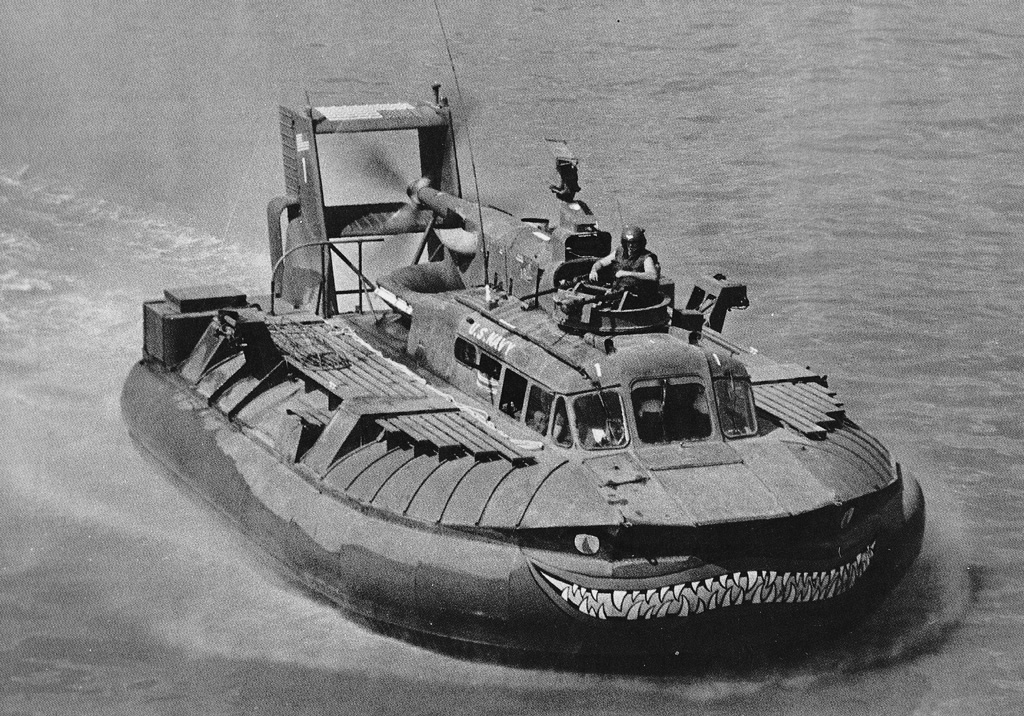
The Patrol Air Cushion Vehicle (PACV), also known as the Air Cushion Vehicle (ACV) in Army and Coast Guard service, was a United States Navy and Army hovercraft used as a patrol boat in marshy and riverine areas during the Vietnam War between 1966 and 1970. Six hovercraft were built, three for the Army and three for the Navy.
The military developed the PACV because its lack of draft meant that it could operate unimpeded in the shallow and reed-choked waters widespread in South Vietnam, most notably in the Mekong Delta and Plain of Reeds. The PACV was also found to be valuable because of its unusually high speed of 60 knots (110 km/h; 69 mph), faster than other watercraft in the conflict. However, it faced major drawbacks, including its high cost of $1 million (equivalent to 13 Patrol Boat, Rivers) and unreliability. During the conflict, two of the Army's three hovercraft were destroyed by the Viet Cong. The PACVs in Vietnam were considered "unsuccessful" in evaluations and were withdrawn in 1970. Following their service in Vietnam, the Navy PACVs returned to the United States where they were used by the Coast Guard, where another sank in an accident.
The PACV was based on the Bell Aerosystems SK-5 hovercraft; a licensed version of the British Saunders-Roe (later, British Hovercraft Corporation) SR.N5 hovercraft. The SK-5 was adapted for American military use in 1965. Three were purchased by the US Navy for operations in the emerging Vietnam War. Training of PACV crews was performed in the waters off Coronado, California near San Diego. Design of the Army ACVs began in 1966 and was completed
Two different designs were made: one for the Navy and one for the Army. The Navy's hovercraft, called Patrol Air Cushion Vehicles, more closely resembled the civilian SK-5s that they were based on while the Army craft had more extensive modifications. Each hovercraft was 38 ft 10 in (11.84 m) long, with a beam of 23 ft 9 in (7.24 m) and a height of 16 ft 6 in (5.03 m) when floating on its air cushion. It weighed 15,660 pounds (7.10 tonnes) fully loaded. Army and Navy PACVs had a crew of 4—driver, radar operator, and gunners—and could carry up to 12 troops, many of whom rode on the outside of the vehicle.
Both designs were powered by a General Electric 7LM100-PJ102 gas turbine engine. The engine, its 304-gallon (1,150 litre) fuel tank, an auxiliary power unit, and the Westland transmission were located amidships. The engine powered both the three-blade variable-pitch propeller for thrust and the 7-foot (2.1 m) diameter centrifugal fan for lift. The transmission served to link the engine and lift fan so that the fan could provide lift and thrust. Twin rudders and elevators sat behind the fans. As a hovercraft, the PACV could skim over water, including shallow and reed-choked waters, flat land, and ice. The PACV/ACV was very fast compared to contemporary watercraft, being capable of speeds up to 60 knots (110 km/h; 69 mph). It had a range of 165 nautical miles (306 km; 190 mi) and endurance of seven hours
The Army hovercraft, called Air Cushion Vehicles, had more extensive modifications. They had heavier armor and reinforced, load-bearing decks. Army ACVs carried 1,000 pounds (450 kg) of armor—roughly equal to that of an M113 armored personnel carrier. The armor was thickest around the engine, transmission, and fuel tanks, providing protection from .50 caliber rounds fired at 200 yards (180 m), while the armor around the crew compartment could only block .30 caliber rounds fired at 100 yards (91 m). To save weight, many crews removed the armor around the crew compartment, and an Army evaluation recommended that it be removed altogether because of it "did not provide any protection to the crew," especially against heavier weapons such as recoilless rifles, artillery, and RPGs.
The communications package consisted of a six-station intercom system, UHF radios, and a radio security set. The boats were shipped with AN/ARC-54 FM radios. However, these proved unreliable, with an operational ready rate of only 35 percent. Army units sought to replace them with VRC-125s. While it is not known if this replacement occurred, one ACV did receive a VRC-46 radio. The hovercraft carried a Decca 202 radar with a dish antenna, which could detect targets within 24 miles (39 km). Some Army ACVs were fitted with XM3 Personnel Detectors (better known as XM-3 "people sniffers"), which could detect human emissions including carbon and ammonia. This equipment was used to find hidden enemies. Dog teams were also sometimes carried to help detect enemies. The radar was found to be very effective, including for navigating in low-visibility and foggy conditions.
The PACV was armed with twin .50 caliber M2 Browning machine guns in a roof-mounted turret in the front and two 7.62mm M60 machine guns, one port and one starboard. The Army initially equipped their hovercraft with a minigun and 40 mm M5 automatic grenade launcher as well. Only one ACV was outfitted with a grenade launcher, however, and the miniguns were removed to make space for more troops and cargo because it was found to be effective only for suppressive fire.
Hub AI
Patrol Air Cushion Vehicle AI simulator
(@Patrol Air Cushion Vehicle_simulator)
Patrol Air Cushion Vehicle
The Patrol Air Cushion Vehicle (PACV), also known as the Air Cushion Vehicle (ACV) in Army and Coast Guard service, was a United States Navy and Army hovercraft used as a patrol boat in marshy and riverine areas during the Vietnam War between 1966 and 1970. Six hovercraft were built, three for the Army and three for the Navy.
The military developed the PACV because its lack of draft meant that it could operate unimpeded in the shallow and reed-choked waters widespread in South Vietnam, most notably in the Mekong Delta and Plain of Reeds. The PACV was also found to be valuable because of its unusually high speed of 60 knots (110 km/h; 69 mph), faster than other watercraft in the conflict. However, it faced major drawbacks, including its high cost of $1 million (equivalent to 13 Patrol Boat, Rivers) and unreliability. During the conflict, two of the Army's three hovercraft were destroyed by the Viet Cong. The PACVs in Vietnam were considered "unsuccessful" in evaluations and were withdrawn in 1970. Following their service in Vietnam, the Navy PACVs returned to the United States where they were used by the Coast Guard, where another sank in an accident.
The PACV was based on the Bell Aerosystems SK-5 hovercraft; a licensed version of the British Saunders-Roe (later, British Hovercraft Corporation) SR.N5 hovercraft. The SK-5 was adapted for American military use in 1965. Three were purchased by the US Navy for operations in the emerging Vietnam War. Training of PACV crews was performed in the waters off Coronado, California near San Diego. Design of the Army ACVs began in 1966 and was completed
Two different designs were made: one for the Navy and one for the Army. The Navy's hovercraft, called Patrol Air Cushion Vehicles, more closely resembled the civilian SK-5s that they were based on while the Army craft had more extensive modifications. Each hovercraft was 38 ft 10 in (11.84 m) long, with a beam of 23 ft 9 in (7.24 m) and a height of 16 ft 6 in (5.03 m) when floating on its air cushion. It weighed 15,660 pounds (7.10 tonnes) fully loaded. Army and Navy PACVs had a crew of 4—driver, radar operator, and gunners—and could carry up to 12 troops, many of whom rode on the outside of the vehicle.
Both designs were powered by a General Electric 7LM100-PJ102 gas turbine engine. The engine, its 304-gallon (1,150 litre) fuel tank, an auxiliary power unit, and the Westland transmission were located amidships. The engine powered both the three-blade variable-pitch propeller for thrust and the 7-foot (2.1 m) diameter centrifugal fan for lift. The transmission served to link the engine and lift fan so that the fan could provide lift and thrust. Twin rudders and elevators sat behind the fans. As a hovercraft, the PACV could skim over water, including shallow and reed-choked waters, flat land, and ice. The PACV/ACV was very fast compared to contemporary watercraft, being capable of speeds up to 60 knots (110 km/h; 69 mph). It had a range of 165 nautical miles (306 km; 190 mi) and endurance of seven hours
The Army hovercraft, called Air Cushion Vehicles, had more extensive modifications. They had heavier armor and reinforced, load-bearing decks. Army ACVs carried 1,000 pounds (450 kg) of armor—roughly equal to that of an M113 armored personnel carrier. The armor was thickest around the engine, transmission, and fuel tanks, providing protection from .50 caliber rounds fired at 200 yards (180 m), while the armor around the crew compartment could only block .30 caliber rounds fired at 100 yards (91 m). To save weight, many crews removed the armor around the crew compartment, and an Army evaluation recommended that it be removed altogether because of it "did not provide any protection to the crew," especially against heavier weapons such as recoilless rifles, artillery, and RPGs.
The communications package consisted of a six-station intercom system, UHF radios, and a radio security set. The boats were shipped with AN/ARC-54 FM radios. However, these proved unreliable, with an operational ready rate of only 35 percent. Army units sought to replace them with VRC-125s. While it is not known if this replacement occurred, one ACV did receive a VRC-46 radio. The hovercraft carried a Decca 202 radar with a dish antenna, which could detect targets within 24 miles (39 km). Some Army ACVs were fitted with XM3 Personnel Detectors (better known as XM-3 "people sniffers"), which could detect human emissions including carbon and ammonia. This equipment was used to find hidden enemies. Dog teams were also sometimes carried to help detect enemies. The radar was found to be very effective, including for navigating in low-visibility and foggy conditions.
The PACV was armed with twin .50 caliber M2 Browning machine guns in a roof-mounted turret in the front and two 7.62mm M60 machine guns, one port and one starboard. The Army initially equipped their hovercraft with a minigun and 40 mm M5 automatic grenade launcher as well. Only one ACV was outfitted with a grenade launcher, however, and the miniguns were removed to make space for more troops and cargo because it was found to be effective only for suppressive fire.
Recent media