Hubbry Logo
Pay and displayPay and displayMain
Open search
Pay and display
Community hub
Pay and display
logo
8 pages, 0 posts
0 subscribers
Be the first to start a discussion here.
Pay and display
Pay and display
from Wikipedia
Metric Accent Pay and display ticket machine, Bristol City centre

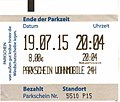
A pay and display machine is a type of ticket machine used for regulating parking in urban areas or in car parks. It relies on a customer purchasing a ticket from a machine and displaying the ticket on the dashboard, windscreen or passenger window of the vehicle. Details included on a printed ticket are generally the location and operator of the machine, expiry time, fee paid and time entered.

Systems

[edit]

The first generation of pay and display machines in the United States was introduced in 1950 by Park-UR-Self, based in San Francisco, California. Park-Ur-Self has grown to become the leading manufacturer of pay and display machines in the United States and now goes by the name Ventek International.

Pay and display

[edit]

Pay and display systems differ from road-side parking meters in that one machine can service multiple vehicle spaces, resulting in lower set up costs. In addition, this system theoretically prevents drivers from taking advantage of parking meters that have time remaining; this factor alone has doubled parking revenues in cities that have switched to pay and display.[1] A driver may occasionally take advantage of remaining time should a departing parker give away a ticket with remaining time. This can be prevented by putting the license plate number on the ticket.

In addition, pay and display machines can also accept a wider variety of coins, and many even accept credit cards, making it unnecessary for drivers to carry large amounts of change. The use of credit cards has another advantage - the machines do not have to be emptied of coins as often, and the costs of counting coin and possible pilfering by employees who empty the parking meters also reduces their overall costs.

In the UK pay and display is used for both on-street parking control and parking in car parks and multi-storey car parks where access barrier systems are not installed.

Machines

[edit]

Tickets

[edit]

Pay on foot

[edit]
A machine for the pay on foot system.

Pay on foot is a variant where the driver is issued with a ticket at a barrier upon entering the car park. At the end of their stay the driver inserts the ticket into a machine which calculates the amount based on the duration of stay. The driver then exits the car park by inserting the paid ticket into another barrier. This system means that drivers do not have to decide on their duration in advance.

Higher technology systems

[edit]

Progressions of pay and display include pay by phone parking and Pay by Plate, where payment is linked to a specific vehicle registration plate.

Coupon parking

[edit]
Coupons used for parking in Singapore

Coupon parking, also known as parking vouchers, is a variation of pay and display without the use of machines; instead, the motorist purchases a booklet of coupons in advance from the authorities. To use a parking coupon, the motorist has to completely tear off tabs of the date and time, or scratch off panels on the date and time in which he/she leaves the vehicle. This process is similar to disc parking, except that a parking disc is reusable whereas a coupon can only be used once. In the Republic of Ireland, reusable free-parking discs are unknown and parking coupons are called "parking discs".[2][3] The coupon is displayed on the dashboard or hung from the top of a door window facing the roadside. Multiple coupons are used if the parking time exceeds the allowance given for a single coupon, though this is not always permitted. The system is widely used in Singapore and Brazil, and in parts of some countries such as New Zealand, Malaysia, Austria, Ireland and Israel.

See also

[edit]

References

[edit]
Revisions and contributorsEdit on WikipediaRead on Wikipedia
from Grokipedia
Pay and display is a parking management system used for regulating vehicle parking in urban streets, lots, and car parks, in which drivers pay for a specified duration at a centralized pay station—typically a coin- or card-operated machine—and then display the issued ticket or receipt visibly on their vehicle's dashboard to indicate the time of purchase and expiration. The system emerged in the mid-20th century as an alternative to individual parking meters, with the first pay and display machines introduced in the United States during the 1950s by companies such as Park-UR-Self in , aiming to streamline payment collection across multiple spaces. It gained popularity in other regions, including the , where initial implementations appeared in 1968 in as part of broader efforts to manage growing urban congestion and turnover in parking areas. By reducing the need for a machine per parking spot, pay and display lowered installation and costs for municipalities while facilitating through straightforward visual checks of displayed tickets. In practice, users approach a pay station, select their desired parking duration (often ranging from 30 minutes to several hours), complete payment via accepted methods like coins, credit cards, or contactless options, and affix the resulting ticket to comply with local rules, with failure to display potentially resulting in fines. Key benefits include enhanced revenue generation for parking authorities, improved space utilization by encouraging timely departures, and adaptability to variable pricing based on demand or time of day in modern installations. Although traditional ticket-based systems remain widespread in cities like New York, Washington, D.C., and various UK boroughs, many have evolved to integrate mobile apps and pay-by-phone services for cashless convenience, often without requiring a physical display and using license plate recognition for verification.

Introduction

Definition and Purpose

Pay and display is a in which motorists pay in advance at a centralized —often a or pay station—for a specified duration of time, receiving a ticket or permit that must be visibly displayed inside the , typically on the or . This method differs from traditional single-space meters, which require coins or payment directly at each spot, and from post-payment systems like pay-on-exit, where fees are settled upon leaving a facility. The displayed ticket serves as , allowing enforcement officers to verify compliance without needing to inspect individual meters. The primary purpose of pay and display systems is to facilitate efficient collection for parking authorities while promoting higher vehicle turnover in urban environments to alleviate congestion. By enabling upfront for estimated time, the encourages shorter stays in high-demand areas, optimizing space utilization and supporting smoother compared to free or unlimited . Additionally, it simplifies for municipalities, as officers can scan multiple vehicles from a distance using the visible tickets, reducing the need for time-intensive checks at each meter. This approach contrasts with older coin-operated meters by centralizing payment points, which lowers operational complexity and maintenance demands. Key benefits include enhanced efficiency in densely populated or high-traffic zones, where a single machine can serve dozens of spaces, thereby cutting installation and upkeep costs for local governments relative to deploying individual meters or relying on manual ticketing. These systems also generate steady revenue streams that can be reinvested in urban infrastructure, while providing users with flexible payment options for precise durations, fostering fairer access to limited resources. Pay and display evolved from early parking meters first installed in , adapting the concept to multi-space control for modern needs. Globally, pay and display has been predominant in Europe since the late 1970s, driven by high labor costs that favored automated solutions, and has seen growing adoption in North America as well as in densely populated Asian countries like Japan, South Korea, and Taiwan for both on-street and off-street applications.

Historical Development

The pay and display parking system originated in the United States in 1950, when Park-UR-Self (now Ventek International) introduced the first ticket-based machines as an efficient alternative to individual coin-operated parking meters, allowing drivers to pay for a duration of time at a central kiosk and display the ticket on their vehicle dashboard. This innovation addressed growing urban parking demands by reducing the need for one meter per space, thereby lowering installation and maintenance costs in densely populated areas. The system's development was a direct response to post-World War II urban expansion and surging automobile ownership, which exacerbated traffic congestion and parking shortages in cities across North America and Europe as populations shifted to car-dependent lifestyles. In , adoption began in the late 1960s, with the installing its first pay and display machine in in 1968, initially as a mechanical coin-operated device that was quickly upgraded to an electric model to improve reliability. The system spread across during the 1970s, gaining traction in countries like and amid similar postwar urbanization challenges, where it offered a scalable solution for off-street and on-street management. In the United States, widespread trials and implementation occurred in the 1970s, particularly in major cities facing acute parking pressures, marking a shift from traditional meters to multi-space kiosks that streamlined enforcement and revenue collection. By the 1990s, pay and display systems achieved greater standardization through European and international guidelines for equipment, such as the first edition of EN 12414 in 1990, which specified technical and functional requirements for ticket machines to ensure and safety across borders. The 1990s brought significant advancements with the integration of electronic components, including digital displays and card readers, which reduced vulnerability to compared to purely mechanical models by minimizing exposed coin slots and enhancing tamper-resistant casings. These machines saw widespread global adoption by 2000, with millions deployed in urban centers worldwide to manage escalating demands. However, from the onward, their prevalence has declined in some regions due to the rise of app-based and alternatives, which offer greater convenience and further reduce physical infrastructure needs.

Core Components

Payment Machines

Payment machines in pay and display systems are available in several types to suit different parking environments, including standalone kiosks for individual or small-group use, multi-bay units that serve multiple parking spaces simultaneously, and drive-up models integrated with entry or exit barriers for lot-based operations. These machines are constructed from durable, weather-resistant materials such as or extruded aluminum, often reinforced for vandal resistance, with powder-coated casings for corrosion protection. They typically achieve high IP ratings (e.g., IP65) for and operate reliably in a range of outdoor temperatures (commonly -25°C to +60°C) and humidity levels. Key operational features enable user-friendly transactions, with acceptance of coins (across multiple denominations), banknotes, credit/debit cards, and contactless methods including NFC and mobile wallets like . Interaction occurs through displays or touchscreens for selecting parking duration and viewing instructions, often supporting multiple languages and tariff modes. Thermal printing mechanisms produce tickets from rolls holding thousands of permits. Technical specifications emphasize efficiency and autonomy, with power sources including solar panels or . Machines handle daily transaction volumes of hundreds, featuring secure with battery backup and error-handling via status indicators for issues like jams or low funds. Modular components support easy maintenance and high reliability, with (MTBF) often exceeding several months. Specifications vary by manufacturer and model, often complying with standards like EN 12407 for parking equipment. Maintenance focuses on preventing downtime from common mechanical problems, such as coin jams in validators, which require periodic cleaning and inspection. Units typically need servicing several times per year, with accessible designs facilitating quick sessions; high-security features like self-locking coin boxes and alarms further minimize unauthorized tampering. Recent upgrades incorporate contactless payment modules to reduce reliance on coin mechanisms, thereby lowering jam-related failures and extending operational life with warranties up to 5 years.

Tickets and Validation

Pay and display tickets are typically issued as paper receipts or self-adhesive labels from the payment machine, designed for easy attachment to the vehicle's interior. These tickets print essential details including the expiry time and date, the parking zone code, the machine's , and sometimes the amount paid or start time. To deter counterfeiting, many tickets incorporate security elements such as barcodes for digital verification. Display requirements mandate that the ticket be placed in a prominent position, such as on the or attached to the inside of the , ensuring all printed information—particularly the expiry time—is clearly visible from outside the vehicle without obstruction by tinted glass, items, or glare. In jurisdictions like the and cities such as New York, the ticket must face upward and be legible to enforcement officers patrolling on foot, promoting compliance and efficient checks. Failure to meet these visibility standards often results in fines, as improper placement accounts for a notable share of violations; for instance, in , failure to display a contributed to 4.64% of parking fines in 2024. Validation of tickets occurs mainly through visual inspection by parking attendants, who confirm the expiry time against the current time and verify the ticket's authenticity via printed details or barcode scans using handheld devices. Enforcement allows a grace period after expiry to account for minor delays in returning to the vehicle, typically 5 to 10 minutes in many UK council-operated areas, though this varies by local authority. For expiration handling, tickets often use thermal printing with protective coatings to minimize fading from sunlight or heat, while digital timestamps encoded in barcodes enable precise electronic checks; any evidence of tampering, such as alterations to the expiry or removal of security features, leads to immediate invalidation and penalties.

System Variations

Pay on Foot

Pay on foot is a variation of pay and display parking systems in which drivers enter a facility without making an upfront , instead receiving a ticket or having their vehicle details recorded upon entry to track parking duration. Time is monitored through barriers, sensors, or automated license plate recognition, and is required at dedicated exit kiosks or pay stations based on the actual time parked, often using tiered rates such as $2 per hour for the first two hours and $4 per hour thereafter to encourage turnover. This approach differs from standard pay and display by deferring until departure, allowing for precise billing aligned with usage. The system is commonly implemented in multi-story garages and surface lots where stay durations are unpredictable, such as at shopping malls, airports, hospitals, and event venues, providing flexibility for users whose parking needs may vary. For instance, in urban areas like , , and , Washington, pay on foot facilitates efficient management of high-traffic facilities by enabling drivers to pay only for the time used without committing to a fixed duration at entry. This setup reduces congestion at entry points and supports revenue optimization through accurate tracking. The process begins with a ticket being issued at an entry terminal upon arrival, which records the entry time and location for later validation, similar to basic ticket mechanisms used in other systems. Before exiting, the driver scans the ticket at a pay station to calculate and settle the fee via cash, card, or , with options for extensions if more time is needed. The validated ticket is then inserted at the exit terminal to raise the barrier, ensuring smooth departure while minimizing queues at gates. While this eliminates upfront payment lines, it involves higher operational costs due to the need for multiple pay stations and integrated verification equipment compared to simpler display systems.

Coupon Parking

Coupon parking is a prepaid variation of pay and display systems that relies on vouchers or coupons purchased in advance for designated zones, eliminating the need for on-site payment machines during each use. Users acquire books of coupons, cards, or digital equivalents ahead of time, typically from local authorities or authorized vendors, specifying the zone and duration of validity. Once obtained, vehicle operators simply display the relevant coupon visibly on the or provide digital proof via an app if the system supports virtual validation, allowing for straightforward, machine-free sessions. This approach is particularly suited to predictable parking needs, such as daily commutes or long-term stays, and is often implemented in residential or event-heavy areas to streamline access without real-time transactions. As of 2024, many councils have transitioned to virtual permits for added convenience. Common types of coupon parking include resident permits and event-based vouchers. Resident permits function as annual or multi-month coupons offered at discounted rates to eligible households in controlled parking zones (CPZs), granting unlimited parking during restricted hours without daily machine interactions. For instance, in the UK, councils like Hackney issue these as virtual or physical permits tied to vehicle registration and address verification, promoting stable neighborhood parking. Event-based coupons, such as 24-hour vouchers, cater to temporary influxes like festivals or sports events; examples include Wembley Stadium's event day scratch-card permits in Brent, which allow visitors or locals to park in designated zones during match days without standard pay and display requirements. These types prioritize convenience for planned usage, with resident options often subsidized to encourage local residency. Validation in coupon parking typically involves affixing a physical sticker to the vehicle for long-term permits or displaying a detachable for shorter durations, while digital versions use app-linked codes or virtual displays checked remotely. Enforcement occurs through zone-specific patrols by parking attendants or automated number plate recognition (ANPR) systems, where officers verify the 's validity against the zone's rules and expiry date. In the UK, boroughs like Waltham Forest have transitioned to fully virtual resident permits, eliminating physical display and reducing risks via checks. This method ensures compliance without interrupting the user's experience, though display requirements align with broader pay and display standards for visibility. Coupon parking sees significant adoption in the and , particularly for residential applications, due to its simplicity and lower operational demands compared to machine-based systems. As of 2012, in Kensington and Chelsea, approximately 82% of the 34,000 on-street parking places were reserved for permit holders, reflecting broad implementation across the city's 32 boroughs to manage . Australian examples include City Council's book of free parking vouchers for pensioners, providing four hours of access in multi-storey car parks. Administratively, coupon systems, especially virtual ones, offer cost savings through reduced , mailing, and manual processing; councils like report enhanced efficiency and environmental benefits from paperless virtual permits. Overall, these systems generate considerable revenue—UK councils collected over £360 million from residential permits in 2020–2024—while minimizing enforcement overheads.

Hybrid Systems

Hybrid pay and display systems integrate traditional ticket-based mechanisms, such as dashboard ticket display for on-street or pay-on-foot stations in structured facilities, with ticketless technologies like license plate recognition (LPR) to provide redundancy and adaptability in diverse environments. This combination allows for seamless operations where LPR handles most transactions, while fallback ticket issuance supports pay and display or pay-on-foot validation during failures, such as poor visibility or system glitches. A key variation involves blending pay and display with pay-on-foot setups, particularly in transitional zones like on-street adjacent to garages, where users can obtain an initial display ticket and later top up via exit pay stations. Coupon-based integrations further enhance this by permitting extensions through machines that validate and add time to existing tickets, streamlining multi-zone without full re-payment. Notable implementations include DESIGNA's ticketless hybrid system at Mammut Mall in Budapest, Hungary, which merges LPR entry/exit with barcode ticket backups for pay stations, resulting in faster processing and elevated customer satisfaction. In park-and-ride contexts, hybrid validation combines display tickets with coupon or digital top-ups for transit integration, as seen in EU facilities under sustainable urban mobility plans; these approaches support reduced car dependency in targeted urban zones. These systems offer benefits like flexibility for mixed-use areas, where varying user needs—such as short-term display alongside longer-term foot payments—are met without dedicated silos, thereby minimizing validation errors and operational disruptions. Enhanced reliability from dual methods contributes to broader mobility shifts under sustainable urban mobility plans. Challenges include the need for intricate user guidance across multiple interfaces, which can confuse motorists unfamiliar with hybrid flows, and elevated initial costs from combining hardware like LPR cameras, barriers, and pay stations due to integration complexities.

Modern Advancements

Digital Integration

Digital integration in pay and display systems has transformed traditional payments by leveraging mobile applications and contactless technologies, enabling users to purchase virtual tickets without physical machines in many cases. apps such as PayByPhone allow drivers to initiate parking sessions remotely by entering their and duration via GPS or manual input, generating a digital permit that is verified by enforcement systems through license plate recognition. This app operates in over 1,300 cities across , , and as of 2025, facilitating seamless payments without the need for coins or cards at meters. Key technologies driving this evolution include near-field communication (NFC) and radio-frequency identification (RFID) upgrades to existing payment machines, which support tap-to-pay options for credit cards and mobile wallets like Apple Pay or Google Pay. In the payment process, users often scan a QR code displayed on the parking meter using their smartphone camera to link directly to the app, completing the transaction in seconds and receiving an emailed digital receipt as proof of payment. In jurisdictions like parts of California and the UK, these digital tickets eliminate the requirement for physical display on the vehicle dashboard, relying instead on cloud-based validation to reduce vandalism and weather-related issues. Adoption of digital pay and display has seen significant growth, driven by the convenience of app-based systems amid rising penetration. For instance, London's RingGo app integrates with over 100 local authorities to manage on-street and off-street parking digitally and generated £37.6 million in revenues in 2024. These advancements offer notable advantages, including a significant reduction in paper waste through the elimination of printed tickets. Users benefit from real-time session extensions via app notifications, avoiding overpayment or fines for expired time, while security is enhanced through tokenization protocols that protect payment data by replacing sensitive information with unique identifiers during transactions.

Automated Enforcement

Automated enforcement in pay and display parking systems relies on advanced technologies such as (ANPR) cameras, which scan vehicle license plates to cross-reference against displayed tickets or digital validations, achieving accuracy rates of 95% to 98% under favorable conditions. These cameras capture images in real time, enabling the system to detect non-compliance without manual intervention. Complementing ANPR, algorithms analyze ticket visibility and expiry times. The enforcement process integrates ANPR data directly with centralized payment databases, allowing for instantaneous validation of whether a vehicle's fee has been paid and remains active. Upon identifying a violation, such as an expired ticket, the system automatically generates and mails a fine to the vehicle owner, with typical penalties ranging from $50 to $100 in many jurisdictions and £50 to £130 in the UK (with increases of £30 in some areas from April 2025). This automation extends to brief cross-checks with digital payment records, ensuring comprehensive coverage across hybrid pay and display setups. Notable implementations include San Francisco's SFpark initiative, which deploys in-ground sensors to monitor space occupancy and enforce linked to pay and display requirements, improving turnover and compliance in high-demand zones. In the , ANPR-based enforcement systems have incorporated data anonymization after short retention periods to comply with the General Data Protection Regulation (GDPR), effective since 2018, while safeguarding privacy. These technologies deliver substantial impacts, including faster violation processing compared to traditional patrols and a notable decrease in required enforcement personnel, allowing officers to focus on complex cases. However, challenges persist, such as false positive rates of 2% to 5%, often due to poor lighting or obscured plates, which necessitate ongoing AI refinements to minimize erroneous citations.

Implementation Considerations

Operational Challenges

One significant operational challenge in pay and display systems arises from user confusion regarding payment zones, rates, and procedures, which contributes to a notable portion of issued fines. For instance, in , approximately 13% of parking tickets issued between 2012 and 2018 (over 475,000 out of 3.6 million) were found to be erroneous, often due to unclear or misunderstandings about payment requirements, leading to unnecessary penalties and disputes. To address accessibility for users with disabilities, particularly those with visual impairments, some machines incorporate audio guidance features, such as screen readers and headphone jacks, enabling independent operation in compliance with standards like with Disabilities Act (ADA). These adaptations, however, require consistent implementation to avoid excluding vulnerable users from equitable parking access. Maintenance demands pose another key hurdle, as pay and display machines are susceptible to and environmental factors. incidents, including defacement and damage to kiosks, can affect multiple units in a single event, as seen in , where nearly all newly installed machines were targeted shortly after deployment, incurring substantial repair costs. conditions exacerbate these issues; frigid temperatures, for example, can cause malfunctions in mechanisms or overall operation, as reported in Sudbury, Ontario, where cold snaps led to delays in ticket issuance from pay-and-display devices. Additionally, systems relying on cash payments necessitate regular staffing for collections, typically on a weekly basis, to retrieve accumulated funds and prevent overflow or theft risks. Efficiency in pay and display operations is often hampered by variable turnover rates and downtime from breakdowns. For example, in Beach's resort area, on-street spaces see an average stay of about 1.5 hours per vehicle, influencing overall space utilization and potential. Machine failures in high-use urban areas can result in lost , compounded by the need for prompt repairs to maintain compliance and user trust, though specific loss percentages vary by location and maintenance protocols. To mitigate these challenges, municipalities have implemented pilot programs focused on user education and enhancements. In Washington, D.C.'s parkDC initiative, improved signage and real-time information apps enhanced the parking experience, with 15% more users reporting satisfaction and fewer navigational issues. Such targeted interventions demonstrate potential for reducing operational friction through better communication and design refinements.

Regulatory Frameworks

Pay and display systems are governed by a patchwork of national, regional, and local regulations that standardize enforcement, fines, and operational standards to ensure fair application across jurisdictions. In the , the 2015/413 Directive on procedures for the exchange of information between Member States on traffic offences facilitates cross-border enforcement of road-safety-related violations, such as speeding. This builds on a 2017 ruling that parking fines issued by judicial or administrative authorities are enforceable EU-wide if they meet procedural safeguards, promoting uniformity in how pay and display infractions are handled across borders. A 2023 proposal seeks to amend the directive to include additional offences, such as dangerous , potentially broadening its application. In the , regulations vary significantly by state and municipality; for instance, Vehicle Code sections like 40215 allow for digital processing and appeals of parking citations, enabling cities such as to issue electronic tickets through systems like PayTix for streamlined enforcement. Policies surrounding pay and display often include pricing controls to prevent excessive charges and ensure revenue supports public infrastructure. Many jurisdictions impose hourly caps, such as San Francisco's maximum of $6 per hour in metered areas to balance accessibility and revenue generation as of 2025. Revenue from parking fees is frequently allocated to traffic and transportation improvements; in , a dedicated policy directs meter revenues toward maintaining streets, sidewalks, and transit enhancements within Parking Benefit Districts. Internationally, the 1968 Vienna Convention on Road Signs and Signals provides a framework for standardized parking signage, requiring uniform symbols like the blue "P" for permitted parking to aid cross-border compliance and reduce confusion for international drivers. Enforcement standards emphasize fairness through grace periods and accessible dispute mechanisms. In the United Kingdom, a mandatory 10-minute applies after the paid duration expires in council-operated areas, allowing drivers time to return to their vehicles without penalty. Dispute processes are robust, with appeals to bodies like the Parking on Private Land Appeals (POPLA) service yielding a 37% success rate for contested charges as of 2020-2021, while Penalty Tribunal appeals succeed in about 64% of cases. Globally, enforcement differs markedly: European countries impose stricter fines, often up to €135 for unauthorized in places like , whereas Asian regulations vary widely, with fining SGD 70–240 for violations and at HKD 320 fixed for illegal . Post-2020, many regions mandated options for pay and display machines in response to health guidelines, such as New York City's shift to app-based payments via ParkNYC to minimize physical interactions.

References

Add your contribution
Related Hubs
User Avatar
No comments yet.