


Community hub
Recent from talks
Contribute something
Nothing was collected or created yet.
Signage
View on Wikipedia | This article needs additional citations for verification. (May 2014) |


Signage is the design or use of signs and symbols to communicate a message.[1][2] Signage also means signs collectively or being considered as a group.[3] The term signage is documented to have been popularized in 1975 to 1980.[2]
Signs are any kind of visual graphics created to display information to a particular audience. This is typically manifested in the form of wayfinding information in places such as streets or on the inside and outside buildings. Signs vary in form and size based on location and intent, from more expansive banners, billboards, and murals, to smaller street signs, street name signs, sandwich boards and lawn signs. Newer signs may also use digital or electronic displays.
The main purpose of signs is to communicate, to convey information designed to assist the receiver with decision-making based on the information provided. Alternatively, promotional signage may be designed to persuade receivers of the merits of a given product or service. Signage is distinct from labeling, which conveys information about a particular product or service.
Definition and etymology
[edit]The term 'sign' comes from the old French signe (noun), signer (verb), meaning a gesture or a motion of the hand. This, in turn, stems from Latin 'signum' indicating an"identifying mark, token, indication, symbol; proof; military standard, ensign; a signal, an omen; sign in the heavens, constellation."[4] In the English, the term is also associated with a flag or ensign. In France, a banner not infrequently took the place of signs or sign boards in the Middle Ages. Signs, however, are best known in the form of painted or carved advertisements for shops, inns, cinemas, etc. They are one of various emblematic methods for publicly calling attention to the place to which they refer.
The term 'signage' appears to have come into use in the 20th century as a collective noun used to describe a class of signs, especially advertising and promotional signs which came to prominence in the first decades of the twentieth century.[5] The Oxford Dictionary defines the term signage as "Signs collectively, especially commercial or public display signs."[6]

History
[edit]
Some of the earliest signs were used informally to denote the membership of specific groups. Early Christians used the sign or a cross or the Ichthys (i.e. fish) to denote their religious affiliations, whereas the sign of the sun or the moon would serve the same purpose for pagans.[7]
The use of commercial signage has a very ancient history. Retail signage and promotional signs appear to have developed independently in the East and the West. In antiquity, the ancient Egyptians, Romans and Greeks were known to use signage. In ancient Rome, signboards were used for shop fronts as well as to announce public events.[8] Roman signboards were usually made from stone or terracotta. Alternatively, they were whitened areas, known as albums on the outer walls of shops, forums and marketplaces. Many Roman examples have been preserved; among them the widely recognized bush to indicate a tavern, from which is derived the proverb, "A good wine needs no bush".[9] Apart from the bush, certain identifiable trade signs that survive into modern times include the three balls of pawnbrokers and the red and white barber's pole. Of the signs identified with specific trades, some of these later evolved into trademarks. This suggests that the early history of commercial signage is intimately tied up with the history of branding and labelling.[10]
Recent research suggests that China exhibited a rich history of early retail signage systems.[11] One well-documented, early example of a highly developed brand associated with retail signage is that of the White Rabbit brand of sewing needles, from China's Song dynasty period (960–1127 CE).[12][13] A copper printing plate used to print posters contained message, which roughly translates as: "Jinan Liu's Fine Needle Shop: We buy high quality steel rods and make fine quality needles, to be ready for use at home in no time."[14] The plate also includes a trademark in the form of a white rabbit which signified good luck and was particularly relevant to the primary purchasers, women with limited literacy. Details in the image show a white rabbit crushing herbs, and included advice to shoppers to look for the stone white rabbit in front of the maker's shop. Thus, the image served as an early form of brand recognition.[15] Eckhart and Bengtsson have argued that during the Song dynasty, Chinese society developed a consumerist culture, where a high level of consumption was attainable for a wide variety of ordinary consumers rather than just the elite. The rise of a consumer culture prompted the commercial investment in carefully managed company image, retail signage, symbolic brands, trademark protection and sophisticated brand concepts.[13]
During the Medieval period, the use of signboards was generally optional for traders. However, publicans were on a different footing. As early as the 14th century, English law compelled innkeepers and landlords to exhibit signs. In 1389, King Richard II of England compelled landlords to erect signs outside their premises. The legislation stated "Whosoever shall brew ale in the town with intention of selling it must hang out a sign, otherwise he shall forfeit his ale."[16] Legislation was intended to make public houses easily visible to passing inspectors of the quality of the ale they provided (during this period, drinking water was not always good to drink and ale was the usual replacement). In 1393 a publican was prosecuted for failing to display signs. The practice of using signs spread to other types of commercial establishments throughout the Middle Ages.[17] Similar legislation was enacted in Europe. For instance, in France edicts were issued 1567 and 1577, compelling innkeepers and tavern-keepers to erect signs.[18]

Large towns, where many premises practiced the same trade, and especially, where these congregated in the same street, a simple trade sign was insufficient to distinguish one house from another. Thus, traders began to employ a variety of devices to differentiate themselves. Sometimes the trader used a rebus on his own name (e.g. two cocks for the name of Cox); sometimes he adopted a figure of an animal or other object, or portrait of a well-known person, which he considered likely to attract attention. Other signs used the common association of two heterogeneous objects, which (apart from those representing a rebus) were in some cases merely a whimsical combination, but in others arose from a popular misconception of the sign itself (e.g. the combination of the leg and star may have originated in a representation of the insignia of the garter), or from corruption in popular speech (e.g. the combination goat and compasses is said by some to be a corruption of God encompasses).
Around this time, some manufacturers began to adapt the coats of arms or badges of noble families as a type of endorsement. These would be described by the people without consideration of the language of heraldry, and thus such signs as the Red Lion, the Green Dragon, etc., have become familiar, especially as pub signs. By the 17th and 18th centuries, the number of commercial houses actively displaying the royal arms on their premises, packaging and labelling had increased, but many claims of royal endorsement were fraudulent. By 1840, the rules surrounding the display of royal arms were tightened to prevent false claims. By the early 19th century, the number of royal warrants granted rose rapidly when Queen Victoria granted some 2,000 royal warrants during her reign of 64 years.[19]
Since the object of signboards was to attract the public, they were often of an elaborate character. Not only were the signs themselves large and sometimes of great artistic merit (especially in the 16th and 17th centuries, when they reached their greatest vogue) but the posts or metal supports protruding from the houses over the street, from which the signs were swung, were often elaborately worked, and many beautiful examples of wrought-iron supports survive both in England and continental Europe.
Exterior signs were a prominent feature of the streets of London from the 16th century. Large overhanging signs became a danger and a nuisance in the narrow ways as the city streets became more congested with vehicular traffic. Over time, authorities were forced to regulate the size and placement of exterior signage. In 1669, a French royal order prohibited the excessive size of sign boards and their projection too far over the streets. In Paris in 1761, and in London, about 1762–1773, laws were introduced which gradually compelled sign boards to be removed or fixed flat against the wall.
For the most part, signs only survived in connection with inns, for which some of the greatest artists of the time painted sign boards, usually representing the name of the inn. With the gradual abolition of sign boards, the numbering of houses began to be introduced in the early 18th century in London. It had been attempted in Paris as early as 1512, and had become almost universal by the close of the 18th century, though not enforced until 1805. Another important factor was that during the Middle Ages a large percentage of the population was illiterate and so pictures were more useful as a means of identifying a public house. For this reason there was often no reason to write the establishment's name on the sign and inns opened without a formal written name—the name being derived later from the illustration on the public house's sign. In this sense, a pub sign can be thought of as an early example of visual branding.[20]

During the 19th century, some artists specialized in the painting of signboards, such as the Austro-Hungarian artist Demeter Laccataris. Pending this development, houses which carried on trade at night (e.g. coffee houses, brothels, etc.) had various specific arrangements of lights, and these still survive to some extent, as in the case of doctors' surgeries, and chemists' dispensaries.
Several developments in the early 20th century provided the impetus for widespread commercial adoption of exterior signage. The first, spectaculars, erected in Manhattan in 1892, became commonplace in the first decade of the 20th century and by 1913, "the skies were awash with a blaze of illuminated, animated signs."[21] In the 1920s, the newly developed neon sign was introduced to the United States. Its flexibility and visibility led to widespread commercial adoption and by the 1930s, neon signs were a standard feature of modern building around the world.[22] Privilege signs, which employed the manufacturer's brand as a form of retail endorsement, were common on retail stores during the 20th century, but their use has waned as retailers gained increasing power in the late 20th century. A small number of privilege signs are still present, but most have become abandoned ghost signs.[23][24][25]
An early computer generated hard copy of various size metal printed characters for displays was introduced and patented in 1971, Patent US3596285A, may have been the first data driven printed example of signage in the USA.
Historic retail sign boards
-
 Four Times Night painting by William Hogarth depicting a retail sign c. 1738
 -
 Four Times of the Day: Noon by William Hogarth, painting depicting retail signage, 18th century
 -
 Four Times of the Day: Noon by William Hogarth, (detail), 18th century
 -
 Painting by William Hogarth, depicting large, overhanging retail sign, 18th century
 -
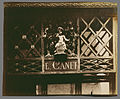 Eugène Atget, Shop Sign, rue Saint-Louis-en-l'Île, c. 1908
 -
 Inn sign above historic crossroads, Sutton, Surrey, Greater London


Role and function of signage
[edit]
In general, signs perform the following roles or functions:
- Information-provision: signs conveying information about services and facilities, such as maps, directories, instructional signs or interpretive signage used in museums, galleries, zoos, parks and gardens, exhibitions, tourist and cultural attractions that enhance the customer's experience.[26] Retail signage state product names or simply the prices. Highway signs, Billboards, digital displays of stock market quotes, etc.
- Persuasion: promotional signage designed to persuade users of the relative merits of a company, product or brand.
- Direction/ Navigation: signs showing the location of services, facilities, functional spaces and key areas, such as sign posts or directional arrows.
- Identification: signs indicating services and facilities, such as room names and numbers, restroom signs, or floor designations.
- Safety and Regulatory: signs giving warning or safety instructions, such as warning signs, traffic signs, exit signs, signs indicating what to do in an emergency or natural disaster or signs conveying rules and regulations.
- Navigation – may be exterior or interior (e.g. with interactive screens in the floor as with "informational footsteps" found in some tourist attractions, museums, and the like or with other means of "dynamic wayfinding").[27]
Signs may be used in exterior spaces or on-premises locations. Signs used on the exterior of a building are often designed to encourage people to enter and on the interior to encourage people to explore the environment and participate in all that the space has to offer. Any given sign may perform multiple roles simultaneously. For example, signage may provide information, but may also serve to assist customers navigate their way through a complex service or retail environment.[28][29]
Signage conventions
[edit]Pictograms
[edit]
Pictograms are images commonly used to convey the message of a sign. In statutory signage, pictograms follow specific sets of colour, shape and sizing rules based on the laws of the country in which the signage is being displayed. For example, In UK and EU signage, the width of a sign's pictogram must be 80% the height of the area it is printed to. In the US, to comply with the ADA Accessibility Guidelines, the same pictogram must be located within its own defined field, with raised characters and braille located beneath the field.
For a pictogram to be successful it must be recognizable across cultures and languages, even if there is no text present. Following standard color and shape conventions increases the likelihood that the pictogram and sign will be universally understood.
Sign shape
[edit]The shape of a sign can help to convey its message. Shape can be brand- or design-based, or can be part of a set of signage conventions used to standardize sign meaning. Usage of particular shapes may vary by country and culture.
Some common signage shape conventions are as follows:
- Rectangular signs are often used to portray general information to an audience.
- Circular signs often represent an instruction that must be followed, either mandatory or prohibitive.
- Triangular signs are often warning signs, used to convey danger or caution.
Sign technology
[edit]
Materials
[edit]Below is a list of commonly used materials in signmaking shops.
- Acrylic
- Aluminium composite panel
- Corrugated plastic
- High-density polyethylene (HDPE)
- High-density polyurethane
- Medium density overlay panels
- Modular curved frame technology
- Oilcloth
- Polyvinyl chloride (PVC or vinyl)
- Polycarbonate
- Polypropylene, polystyrene, and other thermoplastics
- Wood
- Stainless Steel
- Plexiglass
- Channelume Signs
Processes
[edit]Below is a list of commonly used processes in signmaking shops.
- CNC routing
- Laser cutting
- Abrasive blasting
- Plotter cutting
- Printmaking, Screen printing, or sign painting
- Channel lettering
- Vacuum forming
- Steam welding / rolling
- Laminating prints

Lighting
[edit]Signs frequently use lighting as a means of conveying their information or as a way to increase visibility.
Neon signs, introduced in 1910 at the Paris Motor Show, are produced by the craft of bending glass tubing into shapes. A worker skilled in this craft is known as a glass bender, neon or tube bender.
Light-emitting diodes (LEDs ) are frequently used in signs for both general illumination, display of alphanumeric characters with animation effects, or as part of multi-pixel video displays. LED signs became common at sport venues, businesses, churches, schools, and government buildings. Brightness of LED signs can vary, leading to some municipalities in the United States banning their use due to issues such as light pollution.[30]
See also
[edit]References
[edit]- ^ The American Heritage Dictionary of the English Language (Fourth ed.). Houghton Mifflin Company. 2000.
- ^ a b Random House Kernerman Webster's College Dictionary. K Dictionaries Ltd, Random House, Inc. 2010.
- ^ Collins English Dictionary – Complete and Unabridged. HarperCollins Publishers. 2003.
- ^ Harper, Douglas. "sign". Online Etymology Dictionary.
- ^ signage. Collins Dictionary
- ^ signage.Oxford English Dictionary
- ^ Van Voorst, R., RELG: World, Cengage, 2012, p. 257t
- ^ Beard, Fred K. (2017). "The Ancient History of Advertising: Insights and Implications for Practitioners". Journal of Advertising Research. 57 (3): 239–244. doi:10.2501/JAR-2017-033. S2CID 168647966.
- ^ Corballis, P. (1989) Pub Signs, Lennard/Queen Anne
- ^ Beard, F.K. (2016) "A History of Advertising and Sales Promotion," in The Routledge Companion to Marketing History, D.G. Brian Jones and Mark Tadajewski (eds), Oxon, Routledge, pp 201–224. ISBN 9780367868710
- ^ Moore, Karl; Reid, Susan (2008). "The birth of brand: 4000 years of branding". Business History. 50 (4): 419–432. doi:10.1080/00076790802106299. S2CID 130123204.
- ^ Eckhardt, G. and Bengtsson, A., "Pulling the White Rabbit Out of the Hat: Consuming Brands in Imperial China," Archived 2023-07-22 at the Wayback Machine Advances in Consumer Research, [European Conference Proceedings] Vol. 8, 2008
- ^ a b Eckhardt, Giana M.; Bengtsson, Anders (2009). "A Brief History of Branding in China". Journal of Macromarketing. 30 (3): 210–221. doi:10.1177/0276146709352219. S2CID 154558621.
- ^ Zonggghuo lish bowu guan (ed.) (1991), Zonggghuo godai shi cako tulu: song yuan shiqi, Shanghai, Shanghai Educational Institute, p. 109
- ^ Petty, R.D. (2016) "A History of Brand Identity Protection and Brand Marketing," in The Routledge Companion to Marketing History, D.G. Brian Jones, Mark Tadajewski (eds), Oxon, Routledge, p. 99. ISBN 9780367868710
- ^ Manton, Dafydd (2008). Ale and Arty in Sheffield: The Disappearing Art of Pub Signs. Sheffield, England: Arc Publishing and Print. ISBN 978-1906722005.
- ^ "Employee Identification with the Corporate Identity – Issues and Implications". International Studies of Management & Organization. 32 (3): 28–44. 2014. doi:10.1080/00208825.2002.11043663. JSTOR 40397540. S2CID 153469112.
- ^ Roth. D. (2014) The History of Retail in 100 Objects. W P P Group. ISBN 978-0957195813
- ^ Barford, V. (12 July 2013) "Royal warrants: What they tell us about the Royal Family," BBC News Magazine,
- ^ Martin, J. (1993) Stanley Chew's Pub Signs: A Celebration of the Art and Heritage of British Pub Signs, Images Booksllers
- ^ Starr, T. and Hayman, E. (1998) Signs and Wonders: The Spectacular Marketing of America, Doubleday
- ^ Ribbat, C. and Anthony, M. (2013) Flickering Light: A History of Neon, London, Reakteon Books, p. 11. ISBN 9781780231273
- ^ David W. Dunlap (17 October 2013). "Tracking 'Privilege Signs' as They Vanish". The New York Times. Retrieved 17 October 2013.
- ^ Haas, Cynthia Lea (1997). Ghost Signs of Arkansas. University of Arkansas Press. p. 19. ISBN 9781610751698.
- ^ O'Toole, Lawrence (2012). Fading Ads of Philadelphia. History Press. p. 103. ISBN 9781609495435.
- ^ Calori, C. (2007) Signage and Wayfinding Design: A Complete Guide to Graphic Design Systems, Wiley. pp. 8–9. ISBN 978-1-119-08582-9
- ^ Taylor, Charles R. (2010). "The Role of Signage in Marketing: Outdoor Advertising, Out-of-Home Media, and On-Premise Signs". Wiley International Encyclopedia of Marketing. doi:10.1002/9781444316568.wiem04011. ISBN 9781405161787.
- ^ Bitner, M.J., "Servicescapes: The Impact of Physical Surroundings on Customers and Employees," Journal of Marketing, vol. 56, no. 2, 1992, pp 57 -71
- ^ Katz, K.L. and Rossiter, J. (1991) "Store Atmosphere: An Environmental Psychology Approach," in Bateson, J.E.G., Managing Services Marketing: Text, Cases and Readings, Dryden, Orlando, Fl, pp. 227–243. ISBN 9780138070175
- ^ Isaacs, Deanna (September 4, 2013). ""Little" LED billboards, big nuisance". Chicago Reader. Archived from the original on February 23, 2014. Retrieved February 3, 2014.
Further reading
[edit]- Recommendations on the Transport of Dangerous Goods: Model Regulations. New York: United Nations. 2005. ISBN 978-92-1-139106-0.
- Sutton, James (1965). Signs in Action. London: Studio Vista. OCLC 456695324.
- Wenzel, Patrick (2004). Signage Planning Manual: Planning Aids for the Design of Pedestrian Signage Systems. Hünstetten: P. Wenzel. ISBN 978-3000128646.
External links
[edit]


Signage
View on GrokipediaFundamentals
Definition
Signage encompasses visual communication tools that employ text, images, symbols, or a combination thereof to transmit messages such as information, directions, warnings, or advertisements within public or private environments. According to the International Sign Association, an individual sign serves as "any device, structure, fixture, painting, or visual image using words, graphics, symbols, numbers, or letters designed for the purpose of conveying information or attracting attention," while signage refers to the broader application and coordination of such elements.[7] Key characteristics of signage include its versatility in form—ranging from fixed installations to temporary displays, indoor placements to outdoor exposures, and static formats to dynamic digital variants—with a strong focus on ensuring visibility, readability, and accessibility for diverse audiences. Visibility demands that signs be detectable and conspicuous under varying conditions, such as lighting and distance, to capture attention effectively.[8] Readability emphasizes legible typography, appropriate contrast, and comprehensible content to facilitate quick interpretation.[8] Accessibility, as outlined in U.S. standards, requires visual clarity for those with disabilities, including high-contrast finishes and tactile elements where applicable, to promote equitable use in shared spaces.[9] In distinction from isolated graphics or standalone signs, signage functions as an integrated system of multiple signs designed to operate cohesively, enhancing overall communication flow and user experience across an environment. For instance, road signs form a networked system to regulate traffic and promote safety on highways, shop fronts utilize coordinated displays to brand and attract customers to retail spaces, and informational plaques collectively narrate historical or educational contexts at sites like museums or landmarks.Etymology
The word "sign" originates from the Latin signum, meaning a mark, token, seal, or symbol, which entered Middle English as signe around 1225 via Old French signe and Anglo-French influences.[10][11] This root reflects early uses denoting gestures, indications, or emblems conveying meaning, evolving from ancient Roman concepts of visible identifiers.[12] The term "signage," referring collectively to signs as a system or set, emerged in the mid-20th century, with its first recorded use in 1949, formed by adding the suffix -age (indicating a collective or result) to "sign."[1][13] This distinguished it from the singular "sign," initially appearing in contexts like public or directional displays, and gained prominence in the 1970s for encompassing organized sign systems.[14] Related terms in the signage context include "signal," derived from late 14th-century Old French seignal, a diminutive of signale from Medieval Latin signale (neuter of signalis, "of a sign"), ultimately tracing to Latin signum and denoting a communicative mark or indication.[15][16] "Symbol," entering English in the mid-15th century from Late Latin symbolum and Ancient Greek súmbolon (from syn- "together" + bállein "to throw," implying a token or matching piece), evolved to mean a representative sign or emblem in visual communication.[17] "Semiotics," coined by John Locke in 1690 from Greek sēmeiōtikós ("observant of signs," from sēmeîon "sign"), denotes the study of signs and their interpretation, foundational to understanding signage as a signifying system.[18][19] Cultural variations highlight diverse linguistic evolutions: in French, "panneau" (used for sign panels or boards) derives from Old French panel, a diminutive of Vulgar Latin pannellus from pannus ("piece of cloth"), reflecting historical associations with fabric displays or notices.[20] In Chinese, "标志" (biāozhì, meaning sign or mark) combines "标" (biāo, originally denoting a standard or banner) and "志" (zhì, implying a record or emblem), forming a modern compound for symbols and identifiers.[21]Historical Development
Ancient Origins
The earliest forms of signage emerged in prehistoric times through markings that served communicative or symbolic functions, predating written language. Cave paintings and petroglyphs, such as those in the Lascaux Caves in France dating to approximately 15,000 BCE, functioned as proto-signage by denoting territorial boundaries, hunting grounds, or ritual significance, allowing communities to convey information visually across generations. These markings, often created with natural pigments on rock surfaces, represent foundational efforts to externalize meaning for public or communal awareness, as evidenced by their placement in accessible yet sacred locations.[22] In ancient civilizations, signage evolved into more structured systems tied to governance, religion, and commerce. Egyptian hieroglyphs, inscribed on monuments and obelisks around 3000 BCE, served as durable public signage to proclaim pharaonic decrees, religious narratives, and territorial claims, ensuring information endured in the harsh desert environment. Similarly, in Mesopotamia, cuneiform script on clay tablets from the Sumerian period (circa 3200 BCE) included signs for trade and administration, such as merchant seals and market indicators that facilitated economic exchanges in urban centers like Uruk. These early scripts transformed abstract symbols into practical tools for informing traders and officials, marking a shift toward signage as a medium for societal organization. Classical antiquity further refined signage for civic and commercial purposes. In ancient Greece, notices in the agora—public squares—often used painted wooden boards or stone inscriptions from the 5th century BCE to announce laws, events, and sales, promoting transparency in democratic assemblies. Roman shop signs, known as tituli picti, were colorful wall paintings or hanging signs depicting goods like bread or wine, dating back to the 1st century BCE in Pompeii, which helped illiterate citizens identify businesses in bustling streets. In India, Emperor Ashoka's pillars from the 3rd century BCE bore edicts in Brahmi script, erected across the empire as monumental signage to disseminate moral and administrative messages, emphasizing royal authority and public welfare. These ancient signages commonly employed materials like stone for permanence, wood for portability, and natural paints derived from minerals or plants to withstand environmental exposure, prioritizing durability in public spaces. Their primary purposes centered on conveying authority, guiding behavior, and enabling commerce, laying the groundwork for signage as a universal tool for information dissemination without reliance on spoken language.Medieval and Early Modern Developments
During the medieval period in Europe, from the 11th to 15th centuries, signage proliferated in urban centers as guilds regulated trade and craftsmanship. Pictorial shop signs, often carved from wood or forged in iron and depicting symbols like a boot for cobblers or a golden fleece for wool merchants, became essential for identifying businesses to largely illiterate populations. These hanging or projecting signs, sometimes illuminated by lanterns, were mandated by town laws to project over streets, aiding navigation in crowded markets and fostering early branding. Materials emphasized weather resistance, with paints from natural dyes, and designs evolved to include heraldic elements reflecting guild prestige. This era marked signage's shift toward commercial utility, influencing later advertising practices.[23][24]Modern Advancements
The Industrial Revolution marked a pivotal shift in signage production, enabling mass manufacturing techniques that replaced handcrafted methods with scalable processes. In the late 19th century, enamel signs emerged as a durable, weather-resistant option for advertising, achieved by fusing powdered glass onto steel sheets in kilns—a technique patented by Benjamin Baugh in 1859, which allowed for vibrant, long-lasting designs suitable for outdoor use.[25] This innovation facilitated widespread deployment in urban and commercial settings, contrasting with earlier, labor-intensive precedents from ancient civilizations. By the 1920s, illuminated signage advanced further with the invention of neon lights by French engineer Georges Claude, who demonstrated the first neon lamp at the 1910 Paris Motor Show and commercialized it for advertising by 1912, using electrified noble gases to produce glowing, attention-grabbing displays.[26] Neon signs quickly proliferated in Europe and the United States, enhancing visibility at night and symbolizing modernity in burgeoning cityscapes.[27] The 20th century saw signage evolve through standardization efforts and corporate innovation, driven by post-World War II infrastructure booms. In the United States, the Manual on Uniform Traffic Control Devices (MUTCD), first published in 1935 and revised extensively after 1945, established national standards for road signs, including the adoption of aluminum substrates in 1945 and color codification in 1954 (e.g., red for stop, yellow for warning), which improved safety and consistency across highways.[28] The Federal-Aid Highway Act of 1956 further reinforced uniformity by funding the Interstate System, mandating standardized signage to support high-speed travel and reduce confusion.[29] Concurrently, corporate branding elevated signage as a marketing tool; Coca-Cola, from the 1890s onward, pioneered iconic designs like arrow-shaped signs in 1908 and later bottle-contour motifs post-1915 patent, creating instantly recognizable emblems that reinforced brand identity in retail environments.[30] Globally, stylistic and regional adaptations reflected cultural and economic contexts. In Europe during the 1920s and 1930s, Art Deco influenced signage with geometric patterns, bold typography, and luxurious materials like chrome and enamel, as seen in Parisian shopfronts and London theaters, embodying the era's optimism and machine-age aesthetic.[31] In Asia, post-1945 urbanization in cities like Tokyo transformed traditional kanban (wooden or cloth signs) into electrified neon arrays, adapting Western technologies to dense, vertical urban forms amid rapid reconstruction and economic growth, resulting in vibrant, layered streetscapes.[32] These advancements were propelled by socioeconomic drivers, particularly urbanization, which increased public signage density to manage navigation, commerce, and information flow in expanding populations. As cities grew denser from the late 19th century, signage proliferated to claim space, direct traffic, and promote goods, turning urban environments into visual ecosystems that balanced functionality with commercial appeal.[33]Functions and Roles
Informational Purposes
Signage serves core functions in delivering factual information, instructions, and historical context to users, enabling informed decision-making in non-commercial settings. For instance, informational signs provide essential details such as operating hours or basic guidelines without enforcing rules or promoting products.[9] In educational environments, these signs convey knowledge about exhibits or resources, enhancing visitor understanding and engagement.[34] Examples of informational signage include museum labels that describe artifacts' historical significance, library directories outlining section layouts and resource availability, and event schedules detailing program timings and speakers. In retail contexts, non-advertising product information panels list specifications like dimensions or materials to assist consumer choices. These applications ensure users receive accurate, context-specific knowledge efficiently.[35] Accessibility standards are integral to informational signage, ensuring inclusivity for diverse users. Under the Americans with Disabilities Act (ADA), signs must use sans-serif fonts, high-contrast colors, and character heights scaled to viewing distance—typically 5/8 inch minimum for tactile elements where required—to accommodate visual impairments.[9] Multilingual signage in diverse areas, such as public libraries or urban facilities, incorporates translations of key facts to support non-English speakers, aligning with language access guidelines that prioritize clear, equivalent information across languages.[35][36] Effectiveness of informational signage hinges on clarity through visual hierarchy, where bold headings and larger fonts guide quick scanning of content, reducing cognitive load and improving comprehension. Factors like concise phrasing and logical information layering—prioritizing primary facts before details—enhance readability, as evidenced in federal design manuals emphasizing structured layouts for public information delivery.[37] Historically, such signage has evolved from ancient inscriptions providing communal knowledge to modern panels, maintaining a focus on neutral information sharing.[38]Regulatory and Safety Uses
Regulatory and safety signage serves to enforce rules, mitigate hazards, and promote compliance in environments such as workplaces, public spaces, and transportation systems, thereby preventing injuries and ensuring adherence to legal standards. These signs communicate directives through standardized visuals and text, distinguishing them from purely informational displays by emphasizing enforceable actions and risk avoidance. Common types include warning signs, which alert to potential hazards like slippery surfaces with phrases such as "Caution: Wet Floor" and yellow backgrounds to indicate cautionary risks.[39] Prohibition signs denote forbidden activities, often using a red circle with a diagonal slash, as in "No Smoking" to prevent fire or health hazards in designated areas.[40] Mandatory signs require specific actions for safety, featuring blue circular designs with symbols like a helmet for "Wear Head Protection," compelling compliance in high-risk settings such as construction sites.[41] International and national standards govern these signs to ensure uniformity and effectiveness. The ISO 7010 standard, updated in 2019, specifies graphical symbols, colors, and formats for safety signs aimed at accident prevention, fire protection, and emergency evacuation, using colors like red for prohibition and blue for mandatory actions.[42] In the United States, OSHA's 29 CFR 1910.145 outlines specifications for accident prevention signs and tags, requiring distinct colors—red for danger, yellow for caution—and clear messaging to warn against hazards or unsafe practices in workplaces.[39] The evolution of regulatory signage traces back to 19th-century industrial reforms, such as the UK's 1833 Factory Act, which mandated safer working conditions in factories amid rising accident concerns during the Industrial Revolution, laying groundwork for modern safety regulations.[43] By the mid-20th century, formal standards emerged, with U.S. safety signage guidelines introduced in 1941 to address industrial accident surges.[44] Contemporary advancements include digital alerts, where networked displays integrate with systems like the Common Alerting Protocol to broadcast real-time emergency instructions, overriding routine content for immediate hazard response in public venues.[45] Studies underscore the impact of these signs on compliance and accident reduction. Research indicates that well-designed warning signs, incorporating signal words, hazard descriptions, and instructions, enhance behavioral compliance and hazard avoidance, with field studies showing improved outcomes when signs are salient and placed optimally.[46] For instance, explicit signage detailing consequences like penalties boosts adherence rates, contributing to lower incident frequencies in controlled environments, though effectiveness varies by factors such as sign condition and worker training.[47] Overall, safety signage interventions have been linked to reductions in workplace accidents in various reviews of visual communication strategies.Commercial Applications
Commercial signage plays a pivotal role in marketing, branding, and economic promotion by capturing consumer attention in high-traffic areas and reinforcing brand identity. Common forms include billboards, which are large outdoor structures designed for visibility along highways and urban routes; storefront displays that highlight products and promotions directly at retail entrances; and promotional banners used for temporary events or sales announcements. Digital variants, such as LED advertisements, enhance these traditional formats by enabling dynamic content updates and higher engagement through illuminated, video-capable screens.[48][49][50] Strategies in commercial signage emphasize brand consistency to build recognition and loyalty, as exemplified by McDonald's Golden Arches logo, introduced in 1968 and derived from the architectural arches of its early restaurants designed in 1953. This iconic symbol has maintained uniformity across global locations, contributing to the chain's visual identity. Return on investment (ROI) from signage is substantial, with retail studies indicating that effective implementations can increase foot traffic by 20-30% and sales by up to 30%, particularly through digital displays that provide targeted messaging and interactivity.[51][52][53][54] Regulations govern commercial signage to balance free speech with public interests, including zoning laws that limit sign sizes and placements to prevent visual clutter. In the United States, the Supreme Court has addressed these through cases like Central Hudson Gas & Electric Corp. v. Public Service Commission (1980), establishing a four-part test for regulating commercial speech that must be truthful, non-misleading, and not overly restrictive. More recently, City of Austin v. Reagan National Advertising of Austin, LLC (2022) struck down distinctions between on-premises and off-premises digital signs as content-based restrictions violating the First Amendment. Globally, trends contrast vibrant, unregulated street advertising in areas like New York City's Times Square, where LED billboards generate massive exposure for brands, with stricter European regulations that emphasize environmental and aesthetic controls, as seen in bans or limitations in cities like Paris and Grenoble. Illumination techniques, such as LED backlighting, are often integrated into these displays for enhanced visibility.[55][56][57][58][59]Design Conventions
Symbols and Pictograms
Symbols and pictograms serve as non-verbal visual elements in signage, enabling communication across linguistic and cultural boundaries through simplified graphical representations. Pictograms are representational icons that directly depict objects, actions, or concepts in a concrete manner, such as a stylized airplane for airport facilities. In contrast, ideograms convey abstract ideas with a more distant relationship to the referent, while arbitrary symbols rely entirely on learned conventions without inherent resemblance to the concept they represent.[60] The International Organization for Standardization (ISO) 7001 standard registers over 1,000 such public information symbols, designed for scalability and reproduction in various signage applications to minimize comprehension barriers.[61] The evolution of pictograms in signage dates back to prehistoric cave paintings around 40,000 BCE, with the oldest known figurative art found in Sulawesi, Indonesia.[62] Sites like Lascaux in France, dated to around 17,000 years ago, feature simple illustrations of animals and objects that functioned as early visual markers.[63] This tradition progressed through ancient petroglyphs and Neolithic scripts, evolving into more structured systems in civilizations like Mesopotamia and ancient Egypt. A pivotal modern advancement occurred with Otl Aicher's design of 99 pictograms for the 1972 Munich Olympics, which established a benchmark for universal, democratic visual language in public spaces and influenced subsequent international standards.[64] One key advantage of pictograms lies in their cross-cultural readability, allowing quick interpretation without verbal dependency; usability studies report recognition rates of up to 95% for critical safety symbols like exit indicators in diverse populations. This high efficacy stems from their concrete, familiar forms, which outperform abstract alternatives in spontaneous comprehension tests. However, limitations arise in complex scenarios where cultural differences lead to ambiguous interpretations—for instance, a pictogram of a cow may evoke nourishment in Western contexts but religious reverence in Indian ones, potentially reducing accuracy below 50% for non-universal concepts.[65][66] In practical applications, pictograms are widely used in airports to denote directions, baggage claim, and transportation hubs, adhering to ISO 7001 for consistent wayfinding amid international travelers. Restroom signage commonly features gender-specific icons or toilet bowl representations to ensure accessibility, as mandated by standards like the Americans with Disabilities Act, which requires tactile pictograms at least 5/8 inch (16 mm) high for permanent facilities. Despite their strengths, these symbols may falter in intricate environments requiring nuanced instructions, where supplementary text is often necessary to achieve full comprehension rates above the ISO threshold of 67%.[61][9][67]Shapes and Colors
In signage design, shapes play a crucial role in enabling rapid recognition and conveying meaning without reliance on text, adhering to established geometric standards for perceptual efficiency. In the United States, the Manual on Uniform Traffic Control Devices (MUTCD) specifies distinct shapes for traffic signs to facilitate instant comprehension: octagonal for stop signs to symbolize absolute halt, triangular for yield signs to indicate cautionary precedence, rectangular for most regulatory signs to denote mandates or permissions, and diamond-shaped for warning signs to alert to potential hazards.[68] These forms leverage human visual processing biases toward unique contours, allowing drivers to identify sign types from afar even in low-visibility conditions.[68] Cultural and regional variations in shape conventions reflect adaptations to local norms while aligning with international agreements like the 1968 Vienna Convention on Road Signs and Signals. In Europe, signatories to the convention use circular shapes with red borders for prohibition signs to universally signal restrictions, contrasting with the MUTCD's rectangular regulatory forms; warning signs adopt equilateral triangles with red borders and yellow backgrounds for hazard alerts, promoting cross-border consistency among the 50+ contracting parties.[69] Such variations ensure that shapes transcend linguistic barriers, with the triangular warning form in Europe echoing psychological associations of pointed edges with urgency, distinct from the broader diamond in U.S. practice.[69] Colors in signage amplify perceptual impact through standardized palettes that evoke psychological responses tied to safety and guidance, grounded in empirical studies of human cognition. Red consistently signals danger or prohibition, triggering heightened alertness due to its association with blood and fire in evolutionary psychology, as seen in MUTCD specifications for stop signs and the Vienna Convention's red-bordered prohibitions.[68][69] Green denotes permission or safety, fostering a sense of security and forward movement, while yellow or orange warns of caution, with research showing these hues increase perceived hazard levels progressively from low (white/green) to high (red).[68][70] Blue provides informational or directional cues, evoking calm and reliability in both U.S. and European systems.[69] Typography integration enhances shape and color effectiveness by prioritizing legibility for distant or dynamic viewing, with sans-serif fonts dominating standards for their clean lines and reduced visual clutter. The Federal Highway Administration (FHWA) mandates fonts like the Clearview or Highway Gothic series for U.S. traffic signage, as these sans-serif typefaces achieve up to 15-20% greater legibility distances compared to serifs, particularly at highway speeds where stroke clarity prevents misreading.[71] Uppercase letters with ample stroke width and spacing further optimize recognition, integrating seamlessly with bold colors for high-speed environments.[71] Accessibility considerations in signage design mandate high-contrast combinations to accommodate users with visual impairments, ensuring equitable readability across diverse populations. Under the Americans with Disabilities Act (ADA) Standards, visual characters must contrast with their background by at least 70%, calculated as the absolute difference in light reflectance values divided by the higher value, to support those with low vision; this aligns conceptually with Web Content Accessibility Guidelines (WCAG) 2.1's 4.5:1 luminance ratio for normal text, extending principles to physical signage for inclusive wayfinding.[9][72] Non-glare finishes complement these ratios, minimizing reflections and enhancing the psychological clarity provided by shapes and colors.[9]Technological Aspects
Materials and Durability
Signage materials are selected based on their ability to withstand environmental conditions while maintaining visual clarity and structural integrity. Common materials include metals such as aluminum and steel, which are favored for outdoor applications due to their strength and resistance to harsh weather.[73][74] Plastics like acrylic are widely used for indoor signage, offering versatility in shaping and translucency, while wood remains a traditional choice for rustic or heritage-style signs.[75][76] Composites, such as Dibond (an aluminum panel with a polyethylene core), provide enhanced weather resistance for both indoor and outdoor use.[77] Durability in signage materials is primarily determined by factors like UV resistance and corrosion prevention, which protect against degradation from sunlight and moisture. UV-resistant coatings on plastics and metals prevent fading and cracking, extending usability in prolonged sun exposure.[78][79] Aluminum's natural oxide layer inhibits rust, while powder-coating on steel signage can achieve a lifecycle of 10-20 years in outdoor settings.[80][81] Sustainability considerations have driven the adoption of recyclable and eco-friendly materials in signage production. Recycled aluminum and metals reduce resource consumption and waste, as these materials can be repurposed without significant loss in quality.[82] Since the 2010s, bamboo has emerged as a renewable alternative, valued for its rapid growth and biodegradability, particularly in indoor or temporary applications.[83][84] Material selection balances cost against environmental exposure to optimize performance and longevity. Vinyl is preferred for temporary signage due to its low cost and ease of application in short-term scenarios, whereas porcelain enamel is chosen for permanent installations requiring exceptional resistance to weathering and vandalism.[85][86] For high-exposure outdoor sites, durable options like powder-coated metals justify higher upfront costs through reduced replacement frequency.[87]Manufacturing Processes
The manufacturing of signage encompasses a range of techniques that transform raw materials into functional displays, beginning with design conceptualization and culminating in final assembly. Traditional methods remain relevant for custom and artisanal applications, while modern and digital approaches emphasize efficiency and precision in large-scale production.[88] Traditional signage production often relies on screen printing, a stencil-based technique where ink is pushed through a fine mesh screen onto substrates like metal, wood, or plastic to create durable, vibrant graphics suitable for outdoor use.[89] Engraving, another longstanding method, involves mechanically or chemically incising designs into materials such as brass or stone using tools like burins or acids, producing raised or recessed lettering that withstands weathering.[90] For bespoke artisanal signs, hand-painting offers unparalleled customization, where artisans apply pigments freehand or with stencils directly onto surfaces, a practice rooted in historical signmaking that prioritizes aesthetic uniqueness over mass replication.[91] In the post-2000s era, computer numerical control (CNC) routing has revolutionized signage fabrication by using automated routers to carve intricate shapes and letters from materials like acrylic or aluminum with sub-millimeter precision, significantly reducing labor and enabling complex 3D profiles.[92] Laser cutting, adopted widely during the same period, employs high-powered lasers to vaporize material along vector paths, ideal for clean edges on thin sheets of metal or wood without physical contact, minimizing waste and supporting rapid prototyping.[92] Additive manufacturing via 3D printing, emerging prominently after 2000, facilitates the creation of prototypes and small-batch signs by layering materials like resin or filament, allowing for innovative geometries unattainable through subtractive methods.[93] Digital workflows integrate computer-aided design (CAD) software to model signage with exact specifications, generating files that drive production equipment for seamless transitions from concept to output.[94] Vinyl wrapping, a quick-application technique, involves digitally printing graphics onto adhesive vinyl films, which are then precisely cut and applied to flat or curved surfaces, offering cost-effective customization for temporary or vehicle-based signage.[95] Quality control in signage manufacturing ensures longevity through standardized testing, such as ASTM D3359 for adhesion, where a cross-hatch pattern is scored into the applied coating and tape is pulled to assess bonding integrity on various substrates. Fade resistance is evaluated using ASTM G154, which exposes samples to fluorescent UV lamps in accelerated cycles to simulate environmental degradation, confirming color stability over extended periods.[96] These protocols, often applied post-assembly, verify performance against industry benchmarks for outdoor durability.[88]Illumination Techniques
Illumination techniques in signage are essential for ensuring visibility in low-light or nighttime conditions, enhancing both functionality and aesthetic appeal without relying on dynamic digital displays. These methods range from passive reflection to active lighting systems, designed to withstand environmental challenges while minimizing energy use. Traditional approaches laid the groundwork for visibility, while modern innovations have prioritized efficiency and durability. Traditional illumination techniques primarily involved active and passive methods to achieve glow in signage. Backlit panels, consisting of enclosed cabinets with internal light sources, were commonly used to evenly illuminate sign faces from behind, providing consistent visibility for commercial and informational purposes. Halogen bulbs, introduced in the 1970s for applications like billboard lighting, offered brighter and more focused illumination compared to earlier incandescent options, though they required ballasting to manage power efficiently. For passive illumination, reflective paints incorporating micro-glass beads or retroreflective materials were applied to sign surfaces, allowing ambient light—such as from vehicle headlights—to bounce back toward the source, creating a glow effect without electricity. These paints enhanced nighttime legibility on traffic and safety signs, reducing accident risks in low-visibility scenarios. Modern techniques have shifted toward energy-efficient active lighting, with LED integration becoming widespread since the 1990s due to its superior brightness and longevity over traditional sources. LEDs consume up to 80% less power than incandescent or halogen bulbs, making them ideal for sustained outdoor use in signage like channel letters and cabinets. OLED technology, an advanced variant, enables flexible, thin-layer illumination for curved or custom sign designs, further improving energy efficiency by directly emitting light without backlighting. Meanwhile, neon signage has seen a revival, utilizing argon gas mixed with other noble gases to produce vibrant colors like blue, green, and yellow, offering a nostalgic yet durable alternative to early 20th-century designs. This resurgence combines traditional glass tubing with modern enhancements for better weather resistance. Smart features have elevated illumination by incorporating automation and sustainability. Solar-powered signs harness photovoltaic panels to charge batteries, providing off-grid lighting that eliminates wiring and reduces electricity costs significantly, often operating for 10-18 hours nightly on a full charge. Dimming controls, integrated via sensors or timers, adjust brightness based on ambient light levels, achieving energy savings of up to 50% by halving power draw during low-traffic periods. These features support applications in nighttime safety, such as illuminating emergency exits or road markers, and commercial visibility, where consistent glow attracts customers after dark. To ensure reliability in harsh conditions, many illuminated signs adhere to the IP65 standard, which protects against dust ingress and low-pressure water jets, enabling year-round outdoor deployment.Contemporary Applications
Wayfinding Systems
Wayfinding systems integrate signage into structured navigation frameworks to orient users within complex environments, such as buildings, campuses, or urban areas, by providing spatial cues that support decision-making and reduce disorientation. These systems extend beyond isolated signs to create a cohesive hierarchy of information, drawing on environmental psychology to enhance legibility and user confidence. Foundational to their design is the concept of imageability, which refers to the ease with which a space can be perceived and mentally structured, influencing how signage reinforces cognitive mapping. Key components of wayfinding systems include directional arrows, which indicate immediate routes at decision points; zone maps, offering overview orientations at entryways or hubs; and hierarchical signage, which layers information from broad categories (e.g., building zones) to specific destinations (e.g., room numbers). This hierarchy aligns with urban planner Kevin Lynch's 1960 theory of imageability, where elements like paths, nodes, districts, edges, and landmarks form the basis for signage that builds intuitive mental models of the environment. For instance, directional arrows and maps prioritize visibility and simplicity to guide users along primary paths, while hierarchical elements ensure progressive disclosure of details to avoid information overload.[97] Design principles emphasize consistency across all signage elements, such as uniform typography, iconography, and placement, to foster familiarity and reduce cognitive effort. Minimalism is central, favoring clear, uncluttered layouts with sans-serif fonts and intuitive symbols over excessive text, which supports rapid comprehension in high-stress settings like hospitals. Color-coding further aids path distinction, as seen in hospital floor guides where distinct hues delineate departments or routes, enhancing route memory and segmentation without relying solely on verbal cues. These principles ensure signage integrates with architectural features, like sightlines and landmarks, to create a seamless navigational flow.[98][99][100] Notable case studies illustrate effective implementation. At Heathrow Airport, post-2000s upgrades, particularly with the 2008 opening of Terminal 5, incorporated prominent illuminated signage and clear sightlines to streamline passenger flows in a high-volume international hub, reversing prior satisfaction declines through rationalized end-to-end guidance. In urban planning, Singapore's Land Transport Authority wayfinding signage employs a grid-based system with zoned landmarks, color-coded paths, and named routes (e.g., JWalk) to integrate pedestrian, cycling, and transit navigation across developments, using modular signs at 20-30 meter intervals for reassurance.[101][102][103] Empirical metrics highlight the efficacy of well-designed systems, with studies showing user success rates in reaching destinations via signage and maps reaching 86% in hospital environments, underscoring the impact of integrated components on navigation efficiency. Such rates reflect improved comprehension when principles like hierarchy and color-coding are applied, though variations occur based on user demographics, such as age-related differences in symbol recognition.[104]Digital and Interactive Signage
Digital and interactive signage encompasses electronic displays that deliver dynamic, responsive content, primarily utilizing LCD and LED screens for high-resolution visuals and touch interfaces for user engagement. These technologies enable real-time content updates through IoT integration, allowing signage to connect with sensors and networks for adaptive displays, such as dynamic traffic signs that adjust messages based on live data like congestion or weather conditions, a practice that gained prominence in the 2010s with the rise of smart infrastructure.[105][106][107][108][109][110] Advancements in this field include AI-driven personalization, where machine learning algorithms analyze viewer data to tailor content, such as using facial recognition to deliver targeted advertisements based on demographics or expressions. Additionally, augmented reality (AR) overlays, accessed via mobile apps, enhance interactivity by superimposing digital elements onto physical signage, creating immersive experiences like virtual product try-ons in retail settings. These innovations build on basic illumination techniques by incorporating responsive software for context-aware displays.[111][112][113][114][115] Key applications span retail environments, where digital menus dynamically update pricing and promotions to influence purchasing decisions, and smart city kiosks that provide interactive wayfinding, public alerts, and community information through touch-enabled interfaces. The global digital signage market, driven by these uses, is projected to reach USD 29.19 billion in 2025, reflecting robust growth from IoT and AI adoption in urban and commercial sectors.[116][117][118][119][105] Despite these benefits, challenges persist, including cybersecurity vulnerabilities like unauthorized access to networks that could hijack displays for malicious content, necessitating robust encryption and regular updates. High energy consumption from continuous operation of LED and LCD screens also raises sustainability concerns, though mitigated by power-saving features like auto-dimming. Furthermore, regulations such as the EU's GDPR impose strict data privacy requirements on interactive systems using facial recognition or sensors, mandating consent and data minimization to protect user information.[120][121][122][123][124][125][126][127][128]References
- https://en.wiktionary.org/wiki/semiotics
- https://en.wiktionary.org/wiki/panneau