Hubbry Logo
Pedro BialPedro BialMain
Open search
Pedro Bial
Community hub
Pedro Bial
logo
8 pages, 0 posts
0 subscribers
Be the first to start a discussion here.
Pedro Bial
Pedro Bial
from Wikipedia

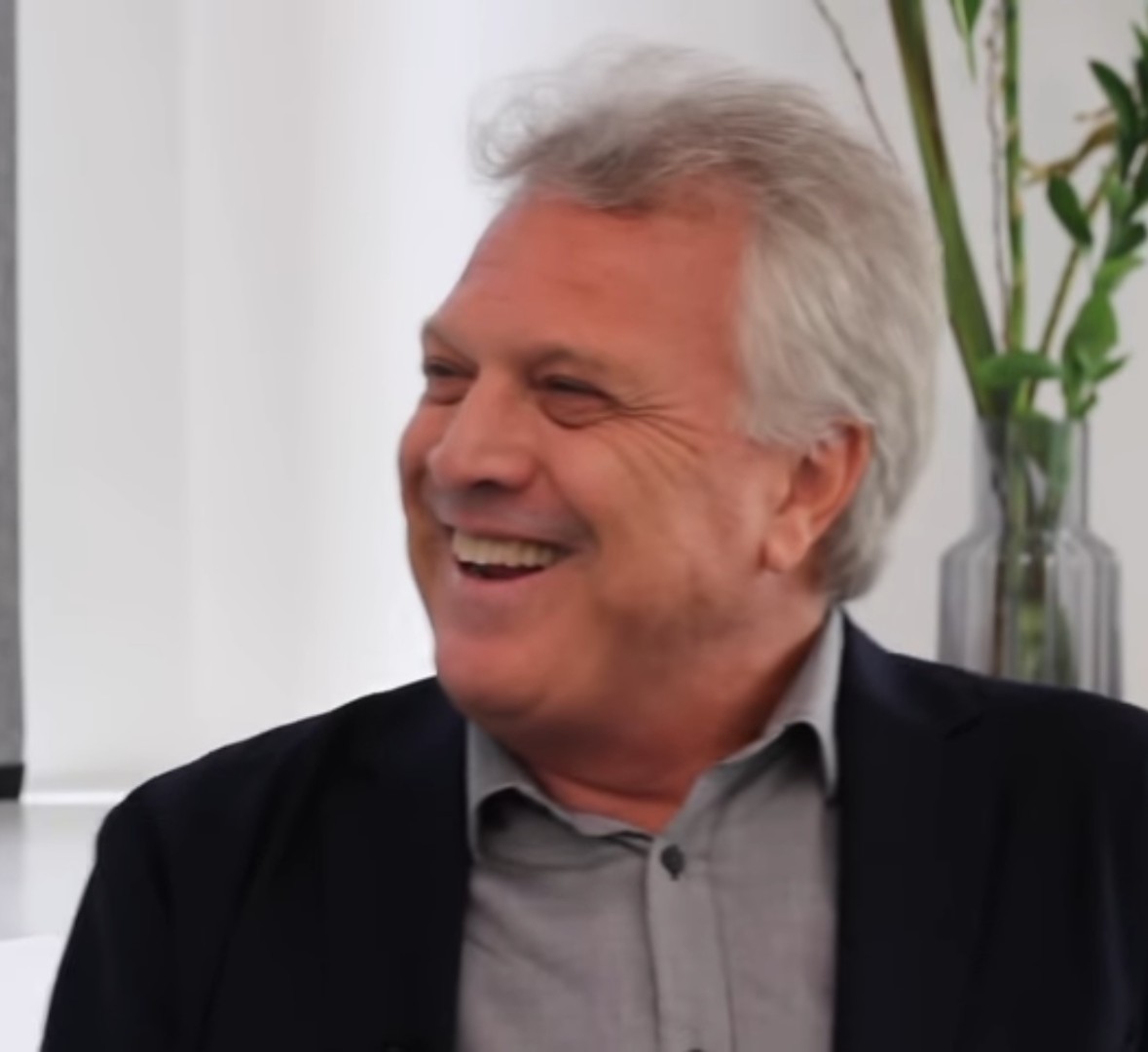
Pedro Bial (born March 29, 1958) is a Brazilian producer, director, writer, journalist and a TV presenter. He is best known for hosting the variety show Fantástico, and the reality show Big Brother Brasil (the Brazilian version of Big Brother).[1]

Key Information

Career

[edit]

Bial graduated in journalism from PUC-RJ. His career, as a reporter, began at Rede Globo in 1981. In 1988, he started to work for Jornal Hoje and Globo Repórter. He also hosted Rede Globo's live broadcast of Rock in Rio II. Bial was international correspondent for Globo network from 1988 to 1996.[2] He replaced Renato Machado on August 13, 1988.

In 1996, he started to host Fantástico. As of 2014, he's been hosting the Big Brother Brasil for 14 seasons.[2]

In 2003 he translated and interpreted Wear Sunscreen by Mary Schmich, which was a great success.[3]

On July 5, 2012, he started to present a brand new show called Na Moral.[4]

In 2017, Bial left Big Brother Brazil, after 17 editions. In the same year, he takes charge of a talk show called Conversa com Bial.

He is currently a Trustee and columnist of the Instituto Millenium.[5]

Writing and filmmaking

[edit]

Bial is also an accomplished writer and filmmaker. He has published a couple of books, including Roberto Marinho (the authorized biography of Roberto Marinho, founder of Rede Globo) Bial directed the documentary Outras Histórias (2000)[6] and the feature film Jorge Mautner – O Filho do Holocausto (2012).[7][8]

Personal life

[edit]

Bial comes from a family with diverse professional backgrounds. His father, Pedro Hans Bial, was a physician Jewish refugee converted to Catholicism who fled Nazi Germany in 1940,[9] and his mother, Suzane Bial, was a German teacher born on 3 July 1924 in Berlin who immigrated to Brazil in 1934.[10][11][12] Both of his parents were refugees.[9][12] His brother, Alberto Bial, is a basketball coach, and his sister, Irene Bial, is a psychotherapist.[7]

He has been married multiple times. His first marriage was to journalist Renée Castelo Branco, with whom he had a daughter named Ana. He later married actress Fernanda Torres from 1982 to 1985. Bial then married actress Giulia Gam between 1998 and 1999. In 2017, Bial married his current wife, Maria Prata, a Brazilian journalist. The couple has two children together, Laura and Dora.[7][13]

References

[edit]
Revisions and contributorsEdit on WikipediaRead on Wikipedia
from Grokipedia
Pedro Bial is a Brazilian journalist, television presenter, writer, and documentary filmmaker known for his prominent career at Rede Globo, where he hosted major programs including Fantástico and Big Brother Brasil. Born in Rio de Janeiro on March 29, 1958, he graduated in social communication from PUC-Rio and joined Globo in 1981 after completing the broadcaster's journalism training course. He initially worked as a reporter and editor on programs such as Jornal Hoje and Globo Repórter before serving as an international correspondent in London from 1988 to 1996, covering major global events including the fall of the Berlin Wall, the end of the Soviet Union, and wars in the Gulf and Bosnia. Returning to Brazil, he became one of the main presenters of Fantástico from 1996 onward, bringing a journalistic approach to the long-running weekly magazine show. Bial gained widespread recognition as the host of Big Brother Brasil from 2002 to 2016, presenting 16 editions of the reality show and engaging with participants through his elimination speeches. He later created and hosted Na Moral from 2012 to 2014 and has presented Conversa com Bial since 2017, a late-night talk show that expanded to include documentary series under the Conversa.doc umbrella on Globoplay, addressing topics such as social issues, celebrity profiles, and music tributes. Beyond television, Bial has directed documentaries including an authorized one on Roberto Marinho, contributed to music specials including editions of Som Brasil, and authored collections of his chronicles, establishing himself as a versatile figure in Brazilian media.

Early life and education

Family background

Pedro Bial was born on March 29, 1958, in Rio de Janeiro, Brazil. His father, Pedro Hans Israel Bial, was a German advertising professional and theater director who immigrated to Brazil after the rise of Hitler. His mother, Suzane Bial (née Suzane Israel), was a German psychoanalyst and social worker who also immigrated after the rise of Hitler. Bial grew up in a family shaped by his parents' immigration from Germany following the rise of Nazism. He is the youngest of three siblings: brother Alberto Bial, a basketball coach and sports commentator, and sister Irene Bial, a psychotherapist. When Bial was 14, after his father's death, he spent a year studying in the United States.

Education

Pedro Bial completed his secondary education at Colégio Santo Inácio in Botafogo, Rio de Janeiro. He was classmates and friends with Agenor de Miranda Araújo Neto, the future singer known as Cazuza, with whom he shared school years and memories from that period. He went on to study at the Pontifícia Universidade Católica do Rio de Janeiro (PUC-Rio), graduating in Comunicação Social in 1980. Immediately after graduation, Bial entered Rede Globo in 1981 by participating in the network's telejournalism training course, marking the start of his professional career in television.

Journalism career

Early reporting at Rede Globo

Pedro Bial began his professional career at Rede Globo in 1981 after completing a training course in telejornalismo offered by the network. Having graduated in Comunicação Social from PUC-Rio in 1980, this course provided his entry point into television journalism at the broadcaster. Following the training, he spent two months as an editor at TV Aratu, Globo's affiliate in Bahia, before returning to Rio de Janeiro to take on roles as an editor of reports for Jornal Hoje and Jornal das Sete. In 1983, he began substituting for Leda Nagle to conduct special interviews aired on Saturdays in Jornal Hoje. From 1984 to 1988, Bial worked as an exclusive reporter for Globo Repórter, where he emphasized the foundational value of his early editing experience in shaping his fieldwork approach. He reflected that starting in editing allowed him to learn from others' material before venturing into reporting himself. In 1991, Bial gained early exposure to hosting by presenting the televised coverage of Rock in Rio II.

International correspondent

Pedro Bial assumed the role of Rede Globo's international correspondent based in London in August 1988, succeeding Renato Machado, and held the position until 1996. During these eight years, he delivered reports that brought a distinctive Brazilian perspective and sensitivity to major global events marking the end of the 20th century. His coverage included the Fall of the Berlin Wall in 1989, the Gulf War from 1990 to 1991, and the collapse of the Soviet Union. He also reported from locations during the Yugoslav Wars, including a 1994 incident in which he was near a bomb explosion. In one notable encounter while reporting in the Jordan desert, Bial participated in a Bedouin hospitality ritual by eating a sheep's eye. His work as correspondent built upon his prior domestic reporting experience at Rede Globo before transitioning to international assignments.

Television hosting career

Fantástico

Pedro Bial served as anchorman of Fantástico, Rede Globo's prominent weekly news and variety magazine program, from 1996 to 2007. He assumed the role in 1996 upon returning to Brazil after eight years as a correspondent in London, co-presenting the show with Fátima Bernardes during a major restructuring of Globo's journalism division. His prior international experience informed his coverage of major global events, including anchoring the program directly from World Cup host nations starting with France in 1998, where he presented post-match chronicles illustrated with Globo's imagery. In 2007, during his final year as main presenter, Bial also presented and co-directed the nine-episode series "É Muita História" on Fantástico, a segment that revisited and debunked myths from official Brazilian historiography with humor and educational intent, inspired by Eduardo Bueno's book Brasil: Uma História. Co-written with Bueno and João Carrascosa, the series featured Bueno in period costumes delivering research-driven narratives that entertained while informing viewers about lesser-taught aspects of history, premiering on September 9, 2007.

Big Brother Brasil

Pedro Bial was the longtime presenter of Big Brother Brasil, commanding the reality show for 15 consecutive editions from its debut in 2002 through the 2016 season. He initially shared hosting duties with actress Marisa Orth during the first edition but assumed the primary role for the remainder of his tenure. Bial became the figure most closely associated with the program, known for his signature poetic and reflective elimination speeches that became a defining element of the show's identity. After 14 years leading the program since its premiere in 2002, Bial announced his departure in August 2016 to take on a new late-night talk show on Rede Globo in the former time slot of Programa do Jô. Tiago Leifert was selected as his successor, assuming the presentation starting with the 17th edition in January 2017.

Later talk shows and programs

Following the conclusion of his long tenure on Big Brother Brasil at the end of 2016, Pedro Bial focused on a series of talk shows and other television programs emphasizing interviews, cultural tributes, and investigative content. Earlier, between 2012 and 2014, he created and hosted Na Moral, a discussion program that examined contemporary moral and ethical dilemmas from multiple perspectives and formats. In 2016, Bial presented Programa com Bial on the GNT channel, a weekly interview series that highlighted prominent Brazilian women in culture and entertainment, featuring guests such as Fernanda Montenegro and her daughter Fernanda Torres in its premiere episode. Since May 2017, he has hosted Conversa com Bial, a late-night talk show on TV Globo that succeeded the time slot long held by Programa do Jô, prioritizing informal conversations over traditional interviews and incorporating archival material to evoke personal memories and emotions from guests including politicians, artists, and international personalities. The program achieved notable impact with a 2018 episode exposing allegations of abuse against João de Deus, which prompted additional complaints and contributed to his subsequent arrest. It adapted to remote production from Bial's home during the COVID-19 pandemic starting in 2020, returned to studio filming without an audience in 2023, and resumed with live audience presence in 2024, while also gaining an earlier primetime slot on GNT that year. Beginning in 2022, Bial presented specials in the Som Brasil musical series on Globo, paying tribute to major Brazilian artists including Chitãozinho & Xororó, Thiaguinho, Djavan, Milton Nascimento, Sandy, Alexandre Pires, Titãs, Raça Negra, and Fábio Jr. In 2023 and 2024, he hosted the revival of the investigative program Linha Direta after a 16-year hiatus, delivering two seasons of ten episodes each that revisited prominent criminal cases and assisted authorities in apprehending fugitives. Also in 2023, Bial served as presenter and contributed to the documentary series Vale o Escrito – A Guerra do Jogo do Bicho, produced by the Conversa.doc team associated with his talk show.

Documentary and film work

Major documentaries directed

Pedro Bial has directed several major documentaries that reflect his journalistic roots in exploring personal stories, cultural legacies, and social issues in Brazil. His work in the genre often combines intimate interviews, archival material, and narrative depth to illuminate his subjects. In 2012, Bial co-directed Jorge Mautner - O Filho do Holocausto with Heitor D'Alincourt, a feature-length documentary chronicling the life of the poet, musician, and tropicalismo pioneer Jorge Mautner. The film traces Mautner's trajectory from his parents' escape from Nazism to his artistic achievements, political exile, and enduring influence on Brazilian culture, incorporating live performances, interviews with figures such as Caetano Veloso and Gilberto Gil, archival footage, and excerpts from Mautner's autobiography. It earned awards for best screenplay, cinematography, and editing at the Festival de Gramado. Bial co-directed Encarcerados, which premiered in 2021, with Claudia Calabi and Fernando Grostein Andrade. The documentary examines daily life inside Brazilian prisons through the perspective of correctional officers, drawing from Dráuzio Varella's book Carcereiros and filmed across eight penitentiaries in São Paulo to highlight the demanding and often overlooked work of prison guards while reflecting on broader societal treatment of incarceration. In 2023, Bial served as artistic and general director for Xuxa, o Documentário, a five-episode series produced for Globoplay. The documentary series traces the life and multifaceted career of presenter and singer Xuxa Meneghel, featuring exclusive interviews and archival material to cover her trajectory in television, music, and popular culture.

Other film contributions

Pedro Bial has made limited but notable appearances in film beyond his primary work as a director, including acting roles, voice dubbing, and other contributions. His acting credits include portraying Armando in Bingo: O Rei das Manhãs (2017) and Professor Mauro in Desenrola (Untangle, 2010). He also had minor acting roles in various productions between 1986 and 2006. In voice work, Bial provided the Brazilian Portuguese dubbing for the character Doris in Shrek 2 (2004). He narrated "A Floresta" (The Forest) in the Brazilian version of the Nature Is Speaking series (2015). Additionally, he served as artistic supervisor for Vale o Escrito (2023). These contributions reflect a selective involvement in acting and related roles, distinct from his extensive documentary directing.

Writing and cultural contributions

Published books

Pedro Bial has authored several books, primarily consisting of journalistic chronicles, biographies, and related works. One of his notable publications is the authorized biography Roberto Marinho, published in 2004 by Jorge Zahar Editor. This 390-page volume chronicles the life of Roberto Marinho, founder of Rede Globo, portraying him as a key figure in 20th-century Brazilian history. Other published works include the collection Crônicas de Repórter (1996), Mensagem aos Brothers (a compilation of chronicles from Big Brother Brasil), Conversa com Bial em Casa: os 70 anos da TV brasileira em tempos de internet e isolamento social (2020), the biography Luiza Helena – Mulher do Brasil (2022), and Isabel do vôlei da vida: A onda mais alta de Ipanema (a tribute to volleyball player Isabel Salgado). These titles reflect his contributions to biographical and journalistic literature.

Poetry and narrations

Pedro Bial has demonstrated a deep and enduring affinity for poetry, rooted in his participation in recital groups since the 1980s. He co-founded the poetry collective Os Camaleões in 1984 with journalists Claufe Rodrigues and Luiz Petry, which gained prominence in the Carioca literary scene through its organization of saraus and recitals featuring lively presentations of Brazilian poetry. The group became a cultural phenomenon of the era before disbanding, though Bial's engagement with poetry persisted, including a 2018 reunion of Os Camaleões for a new poetry event. He continues to participate in poetry recitals and related cultural activities, occasionally sharing interpretations of works by poets such as Vinícius de Moraes and Carlos Drummond de Andrade. One of Bial's most impactful contributions to spoken-word narration came in 2003 with "Filtro Solar", his Portuguese-language adaptation and narration of Mary Schmich's 1997 essay "Wear Sunscreen" (popularized internationally by Baz Luhrmann's spoken-word track "Everybody's Free (To Wear Sunscreen)"). Released as a single, the piece combined reflective life advice with a musical backdrop and achieved significant popularity in Brazil, becoming a hit particularly in 2004 and resonating widely for its thoughtful message on self-care, relationships, and personal growth. This narration remains one of his most recognized works in the realm of spoken performance, reflecting his ability to bring introspective texts to a broad audience.

Personal life

Marriages and relationships

Pedro Bial has had several significant relationships and marriages. His first long-term relationship was with journalist Renée Castelo Branco. He married actress Fernanda Torres in 1982, when she was 17 years old and he was 24; the marriage ended in 1985 after three years. In 1998, Bial married actress Giulia Gam, with the couple separating in 1999 after nearly two years together. His marriage to producer Isabel Diegues began in 2000 and lasted until 2009. He has been married to journalist Maria Prata since their relationship began in 2017; Bial has described this as his only official marriage with legal paperwork.

Children and family

Pedro Bial is the father of five biological children and considers two additional children from his relationship with Renée Castelo Branco as part of his family, having helped raise them. His eldest biological child is Ana, born in 1987 from his relationship with Renée Castelo Branco. He helped raise Marina and João, who are Renée Castelo Branco's children. From his marriage to actress Giulia Gam, Bial has a son named Theo, born in 1998. With Isabel Diegues, he has José Pedro, born in 2002. With Maria Prata, he has Laura, born in 2017, and Dora, born in 2019. These relationships have contributed to a blended family with children across different stages of life.

References

Add your contribution
Related Hubs
User Avatar
No comments yet.