



Community hub
Recent from talks
Contribute something to knowledge base
Content stats: 0 posts, 0 articles, 1 media, 0 notes
Members stats: 0 subscribers, 0 contributors, 0 moderators, 0 supporters
Subscribers
Supporters
Contributors
Moderators
Hub AI
Pest control AI simulator
(@Pest control_simulator)
Hub AI
Pest control AI simulator
(@Pest control_simulator)
Pest control
Pest control is the regulation or management of a species defined as a pest; such as any animal, plant or fungus that impacts adversely on human activities or environment. The human response depends on the importance of the damage done and will range from tolerance, through deterrence and management, to attempts to completely eradicate the pest. Pest control measures may be performed as part of an integrated pest management strategy.
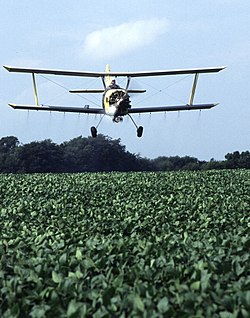
In agriculture, pests are kept at bay by mechanical, cultural, chemical and biological means. Ploughing and cultivation of the soil before sowing mitigate the pest burden, and crop rotation helps to reduce the build-up of a certain pest species. Concern about environment means limiting the use of pesticides in favour of other methods. This can be achieved by monitoring the crop, only applying pesticides when necessary, and by growing varieties and crops which are resistant to pests. Where possible, biological means are used, encouraging the natural enemies of the pests and introducing suitable predators or parasites.
In homes and urban environments, the pests are the rodents, birds, insects and other organisms that share the habitat with humans, and that feed on or spoil possessions. Control of these pests is attempted through exclusion or quarantine, repulsion, physical removal or chemical means. Alternatively, various methods of biological control can be used including sterilisation programmes.
Pest control is at least as old as agriculture, as there has always been a need to keep crops free from pests. As long ago as 3000 BC in Egypt, cats were used to control pests of grain stores such as rodents. Ferrets were domesticated by 1500 BC in Europe for use as mousers. Mongooses were introduced into homes to control rodents and snakes, probably by the ancient Egyptians.
The conventional approach was probably the first to be employed, since it is comparatively easy to destroy weeds by burning them or ploughing them under, and to kill larger competing herbivores. Techniques such as crop rotation, companion planting (also known as intercropping or mixed cropping), and the selective breeding of pest-resistant cultivars have a long history.
Chemical pesticides were first used around 2500 BC, when the Sumerians used sulphur compounds as insecticides. Modern pest control was stimulated by the spread across the United States of the Colorado potato beetle. After much discussion, arsenical compounds were used to control the beetle and the predicted poisoning of the human population did not occur. This led the way to a widespread acceptance of insecticides across the continent. With the industrialisation and mechanization of agriculture in the 18th and 19th centuries, and the introduction of the insecticides pyrethrum and derris, chemical pest control became widespread. In the 20th century, the discovery of several synthetic insecticides, such as DDT, and herbicides boosted this development.
The harmful side effect of pesticides on humans has now resulted in the development of newer approaches, such as the use of biological control to eliminate the ability of pests to reproduce or to modify their behavior to make them less troublesome.[citation needed] Biological control is first recorded around 300 AD in China, when colonies of weaver ants, Oecophylla smaragdina, were intentionally placed in citrus plantations to control beetles and caterpillars. Also around 4000 BC in China, ducks were used in paddy fields to consume pests, as illustrated in ancient cave art. In 1762, an Indian mynah was brought to Mauritius to control locusts, and about the same time, citrus trees in Burma were connected by bamboos to allow ants to pass between them and help control caterpillars. In the 1880s, ladybirds were used in citrus plantations in California to control scale insects, and other biological control experiments followed. The introduction of DDT, a cheap and effective compound, put an effective stop to biological control experiments. By the 1960s, problems of resistance to chemicals and damage to the environment began to emerge, and biological control had a renaissance. Chemical pest control is still the predominant type of pest control today, although a renewed interest in traditional and biological pest control developed towards the end of the 20th century and continues to this day.
Biological pest control is a method of controlling pests such as insects and mites by using other organisms. It relies on predation, parasitism, herbivory, parasitody or other natural mechanisms, but typically also involves an active human management role. Classical biological control involves the introduction of natural enemies of the pest that are bred in the laboratory and released into the environment. An alternative approach is to augment the natural enemies that occur in a particular area by releasing more, either in small, repeated batches, or in a single large-scale release. Ideally, the released organism will breed and survive, and provide long-term control. Biological control can be an important component of an integrated pest management programme.
Pest control
Pest control is the regulation or management of a species defined as a pest; such as any animal, plant or fungus that impacts adversely on human activities or environment. The human response depends on the importance of the damage done and will range from tolerance, through deterrence and management, to attempts to completely eradicate the pest. Pest control measures may be performed as part of an integrated pest management strategy.
In agriculture, pests are kept at bay by mechanical, cultural, chemical and biological means. Ploughing and cultivation of the soil before sowing mitigate the pest burden, and crop rotation helps to reduce the build-up of a certain pest species. Concern about environment means limiting the use of pesticides in favour of other methods. This can be achieved by monitoring the crop, only applying pesticides when necessary, and by growing varieties and crops which are resistant to pests. Where possible, biological means are used, encouraging the natural enemies of the pests and introducing suitable predators or parasites.
In homes and urban environments, the pests are the rodents, birds, insects and other organisms that share the habitat with humans, and that feed on or spoil possessions. Control of these pests is attempted through exclusion or quarantine, repulsion, physical removal or chemical means. Alternatively, various methods of biological control can be used including sterilisation programmes.
Pest control is at least as old as agriculture, as there has always been a need to keep crops free from pests. As long ago as 3000 BC in Egypt, cats were used to control pests of grain stores such as rodents. Ferrets were domesticated by 1500 BC in Europe for use as mousers. Mongooses were introduced into homes to control rodents and snakes, probably by the ancient Egyptians.
The conventional approach was probably the first to be employed, since it is comparatively easy to destroy weeds by burning them or ploughing them under, and to kill larger competing herbivores. Techniques such as crop rotation, companion planting (also known as intercropping or mixed cropping), and the selective breeding of pest-resistant cultivars have a long history.
Chemical pesticides were first used around 2500 BC, when the Sumerians used sulphur compounds as insecticides. Modern pest control was stimulated by the spread across the United States of the Colorado potato beetle. After much discussion, arsenical compounds were used to control the beetle and the predicted poisoning of the human population did not occur. This led the way to a widespread acceptance of insecticides across the continent. With the industrialisation and mechanization of agriculture in the 18th and 19th centuries, and the introduction of the insecticides pyrethrum and derris, chemical pest control became widespread. In the 20th century, the discovery of several synthetic insecticides, such as DDT, and herbicides boosted this development.
The harmful side effect of pesticides on humans has now resulted in the development of newer approaches, such as the use of biological control to eliminate the ability of pests to reproduce or to modify their behavior to make them less troublesome.[citation needed] Biological control is first recorded around 300 AD in China, when colonies of weaver ants, Oecophylla smaragdina, were intentionally placed in citrus plantations to control beetles and caterpillars. Also around 4000 BC in China, ducks were used in paddy fields to consume pests, as illustrated in ancient cave art. In 1762, an Indian mynah was brought to Mauritius to control locusts, and about the same time, citrus trees in Burma were connected by bamboos to allow ants to pass between them and help control caterpillars. In the 1880s, ladybirds were used in citrus plantations in California to control scale insects, and other biological control experiments followed. The introduction of DDT, a cheap and effective compound, put an effective stop to biological control experiments. By the 1960s, problems of resistance to chemicals and damage to the environment began to emerge, and biological control had a renaissance. Chemical pest control is still the predominant type of pest control today, although a renewed interest in traditional and biological pest control developed towards the end of the 20th century and continues to this day.
Biological pest control is a method of controlling pests such as insects and mites by using other organisms. It relies on predation, parasitism, herbivory, parasitody or other natural mechanisms, but typically also involves an active human management role. Classical biological control involves the introduction of natural enemies of the pest that are bred in the laboratory and released into the environment. An alternative approach is to augment the natural enemies that occur in a particular area by releasing more, either in small, repeated batches, or in a single large-scale release. Ideally, the released organism will breed and survive, and provide long-term control. Biological control can be an important component of an integrated pest management programme.
Recent media
Recent media