Hubbry Logo
Peter DavisonPeter DavisonMain
Open search
Peter Davison
Community hub
Peter Davison
logo
8 pages, 0 posts
0 subscribers
Be the first to start a discussion here.
Peter Davison
Peter Davison
from Wikipedia

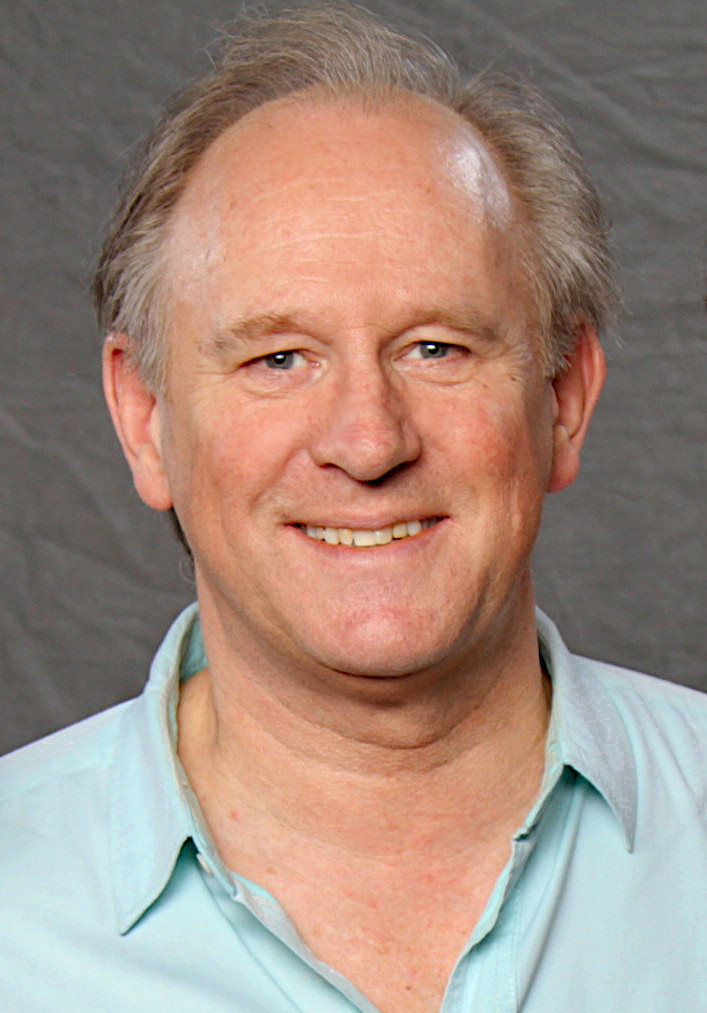
Peter Malcolm Gordon Moffett (born 13 April 1951), known professionally as Peter Davison, is an English actor. He played Tristan Farnon in the 1978 BBC television adaptation of James Herriot's All Creatures Great and Small stories, and starred as the fifth incarnation of the Doctor in Doctor Who (1981–1984), at the time the youngest actor to play the role.

Key Information

Davison's other starring roles included the sitcoms Holding the Fort (1980–1982) and Sink or Swim (1980–1982), Dr. Stephen Daker in A Very Peculiar Practice (1986–1988), and Albert Campion in Campion (1989–1990). He also played David Braithwaite in At Home with the Braithwaites (2000–2003), "Dangerous" Davies in The Last Detective (2003–2007), and Henry Sharpe in Law & Order: UK (2011–2014).

Early life and education

[edit]

Davison was born Peter Malcolm Gordon Moffett in Streatham, London, on 13 April 1951.[1][2] His father, Claude Moffett, was from British Guiana (now Guyana);[3][4] he worked as a radio engineer and later opened a grocer's shop.[5] His English mother,[6] Sheila Moffett (née Hallett),[2] worked in intelligence during World War II before becoming a housewife.[7] On his mixed-race background, Davison noted: "Not a lot of people know about that because I look so damned English".[6][8] Davison had three sisters: Shirley, Pamela and Barbara.[6][2]

While in Streatham, he attended Granton Primary School.[citation needed] The family then moved to Knaphill in Surrey. During this time, Davison was a member of an amateur theatre company called the Byfleet Players.[1][9]

Davison attended at Winston Churchill School, St John's, Woking, Surrey. Out of the five GCEs he took, he failed four. He re-sat the exams, and achieved two more.[10] He then had several odd jobs, including a stint as a mortuary attendant, at Brookwood Hospital,[10] and a Hoffman Press operator. Early aspirations at a teacher-training college or his father's plan for a job at a building society vanished.[11] Being interested in making music, he also attempted to get a record deal.[10]

Davison studied at the Central School of Speech and Drama until 1972.[3][10] His first job was as an actor and assistant stage manager at the Nottingham Playhouse.[10] He chose the stage name Peter Davison to avoid confusion with the actor and director Peter Moffatt, with whom Davison later worked. He only uses "Davison" professionally.

Career

[edit]

Early career (1975–1978)

[edit]

Davison's first television work was a 1975 episode of the children's science fiction television programme The Tomorrow People, alongside American actress Sandra Dickinson, whom he married on 26 December 1978. Davison portrayed an alien named Elmer, who arrives on Earth along with his sister (played by Dickinson) and his mother, known as "the Mama" (played by Margaret Burton). "I kind of understood how things worked. I understood where the cameras were, and when the light came on, that was your cue to speak," Davison said in 2025. "I just felt at home."[10]

In the mid-1970s, during a lull in his acting career, Davison spent 18 months working in a tax office in Twickenham.[1] In 1976, Davison was offered a prominent role in the 13-part TV series Love for Lydia opposite Jeremy Irons; the series was broadcast on ITV the following year. Davison went to his local secondhand bookshop and found a first edition of the 1952 novel by H. E. Bates. One of the producers of the television adaptation was Bates's son, Richard, whom Davison gave the book to.[10]

Davison has also appeared in several British sitcoms, including Holding the Fort (1980–82) and Sink or Swim (1980–82), as well as appearing in dramatic roles.[1]

All Creatures Great and Small (1978–1990)

[edit]

In 1978, Davison's performance as the youthfully mischievous Tristan Farnon in All Creatures Great and Small made him a household name.[nb 1][12] He was initially to appear in five episodes, but Robert Hardy, who played his screen brother, Siegfried, enjoyed their interplay so much that he asked for Davison to be given more screen time.[10] Davison was absent for 24 episodes in the second run of the series, including the majority of series five and six, due to other acting commitments.[12][nb 2][nb 3][13]

Doctor Who (1981–1984 and later revivals)

[edit]

In 1980, Davison signed a contract to play the fifth incarnation of the Doctor in Doctor Who for three years, succeeding Tom Baker (the Fourth Doctor) and, at age 29, was at the time the youngest actor to have played the lead role,[14] a record he retained for nearly thirty years until Matt Smith (the Eleventh Doctor) took the role in 2009 at age 26.[6][8] Attracting such a high-profile actor as Davison was as much of a coup for the programme as getting the role was for him, but he did not renew his contract because he feared being typecast.[15] Patrick Troughton (who had played the Second Doctor and whom Davison had watched on the programme as a teenager) recommended to Davison that he leave the role after three years, and Davison followed his advice.[16][17] The Fifth Doctor encountered many of the Doctor's best-known adversaries, including the Cybermen in Earthshock (1982) and the Daleks and Davros in Resurrection of the Daleks (1984). In the 1983 serial Arc of Infinity, in addition to portraying the Fifth Doctor, Davison portrayed the human form of Omega, sharing the role with Ian Collier.[nb 4]

Davison in 2004

Since 1999, Davison has reprised his role as the Fifth Doctor in numerous Doctor Who audio dramas for Big Finish Productions; he also reprised the role of Omega in an audio drama of the same name, again sharing the role with Collier. He returned to the TV series in "Time Crash", a special episode written by Steven Moffat for Children in Need; in the episode (2007) the Fifth Doctor met the Tenth Doctor, played by Davison's future son-in-law David Tennant.[18][19]

Davison has been critical of some aspects of Doctor Who's original run, and has expressed great admiration for the 21st century revival. In 2008, he spoke unfavourably of some of the writing for the series during his tenure, saying some of the scripts had been "suspect" and "knocked off" by authors who had not been science fiction fans, which he contrasted with the revived series and Big Finish audio productions.[20] In 2013, he also praised the frisson between the Doctor and companions in the revived series, and argued that the previous series had struggled to "write a good companion's part" because "they never once thought it was a good idea to put any frisson or sexual tension – even in its most innocent form – between the Doctor and companion". Davison said the series had failed to write a good companion's part until Rose, when the series came back.[21] Interviewed in 2013, Davison stated that The Caves of Androzani, The Visitation and Earthshock were his favourite serials from his time on the series, and that Time-Flight was the biggest disappointment because of a lack of budget.[22]

In 2013 he wrote and directed The Five(ish) Doctors Reboot, a comedy short film commemorating Doctor Who's 50th anniversary. Davison plays a fictionalised version of himself who becomes disgruntled after not being invited to appear in the 50th anniversary special The Day of the Doctor, and so schemes with Colin Baker and Sylvester McCoy to trespass onto the set.[23][24]

In 2013, Davison said he had a "slight problem" with a female Doctor, which he compared to having "a female James Bond".[25] In July 2017, Davison reacted positively to the casting of Jodie Whittaker as the Thirteenth Doctor, but said he was sad about "the loss of a role model for boys".[26] Davison closed his Twitter account following the backlash to his comments, saying the "toxicity" from the series’ viewers on both sides of the dispute had been "sobering".[27]

In 2022, Davison returned to portray the Doctor on television again in "The Power of the Doctor".[28] He reprised the role again in Tales of the TARDIS.[29][30]

1984–present

[edit]

After Davison left Doctor Who in 1984, he took a role in Anna of the Five Towns, a period drama. In 1985, he appeared in an All Creatures Great and Small Christmas special, and a feature-length episode of the American show Magnum, P.I. ("Deja Vu"), set in the UK. Davison played Dr Stephen Daker, the central character in A Very Peculiar Practice (1986–88). Written by Andrew Davies, it concerns a university's health centre; Daker is the centre's only effective physician. The black comedy-drama ran for two series and had a sequel with A Very Polish Practice in 1992, a television film mainly set in a post-communist Polish hospital. In 1986 he appeared as Lance Fortescue in an episode of the BBC's Miss Marple ("A Pocketful of Rye").

Davison reprised his role as Tristan Farnon in four more series of All Creatures Great and Small between 1988 and 1990, although he was absent from 24 episodes of the final three to play the lead in Campion, a series based on the period whodunnits of Margery Allingham. He appeared in the sitcoms Fiddlers Three for ITV in 1991, and Ain't Misbehavin' in 1993 and 1995. He played Jim Huxtable in the 1993 TV movie Harnessing Peacocks, based on the novel by Mary Wesley.

In 1994, Davison provided the voice of Mole in The Wind in the Willows animated special Mole's Christmas. He also appeared as a doctor in Heartbeat episode "A Bird in the Hand", and played Squire Gordon in the 1994 film of Black Beauty.[31] Davison presented Heavenly Bodies, a six-part series about astronomy (1995).[nb 5][32] Davison guest starred in the sixth episode of the crime drama Jonathan Creek in 1998 as the son-in-law of a horror writer who was shot dead on Halloween. The following year he played the outgoing head teacher in the television series Hope and Glory, and appeared in Parting Shots, the last film to be directed by Michael Winner.[31]

In 2000, Davison returned to another major role as David Braithwaite in At Home with the Braithwaites. During convention appearances in 2013, Davison cited this as his favourite among the roles he has played. Also in 2000, he appeared in the recurring role of Inspector Christmas in several episodes of Diana Rigg's Mrs Bradley Mysteries. The first episode, Death at the Opera, saw Davison appear with his future son-in-law (and future Doctor Who actor), David Tennant.[33] Davison starred as Dangerous Davies in the television series The Last Detective (2003–2007) and as Dr Bill Shore in Distant Shores (2005–2008), both for ITV. In 2006, he appeared as Professor George Huntley in The Complete Guide to Parenting, and appeared as himself in the TV series Hardware. Davison starred as Martin Chadwick, one half of an overworked couple coping with two irresponsible daughters and his senile mother at home, in the BBC Two comedy Fear, Stress and Anger (2007). The show also starred his daughter Georgia Tennant. Later in 2007, he played Hubert Curtain in an episode of ITV's Agatha Christie's Marple ("At Bertram's Hotel").

Davison at London Comic Con in 2016

In 2009, Davison appeared in Unforgiven, an ITV1 drama starring Suranne Jones. Davison played John Ingrams, a lawyer who helps Jones' character, Ruth Slater, find her sister after her release from prison.[34] In July 2009, he appeared in an episode of Midsomer Murders,[35] and made a guest appearance as a teacher in the sitcom Miranda (2009).[36] In 2009, Davison had a small role as a bank manager in Micro Men, a drama about the rise of the British home computer market in the late 1970s and early 1980s. In 2009, he played Denis Thatcher in The Queen, a docudrama on Channel 4.[3]

In 2010, Davison was announced as joining the regular cast of the UK version of Law and Order as Henry Sharpe, the Director of the London Crown Prosecution Service (CPS). Davison appeared from the beginning of the series' fifth season, alongside fellow Doctor Who actress Freema Agyeman. He appeared in an episode of the police comedy-drama New Tricks (2011), and in 2013 he played divorcee Michael in the comedy series Pat and Cabbage, as well as appearing in an episode of the ITV detective series Lewis.

Davison had been lined up to appear in writer/director Daisy Aitkens' first feature-length film You, Me and Him(2016). However, due to a scheduling clash, Davison was forced to pull out of the film. The film stars his son-in-law David Tennant, and is co-produced by Davison's daughter, Georgia.[37] In 2017, Davison appeared in an episode of the third series of Grantchester, playing a cricket-loving solicitor.[38]

Davison appeared with Christopher Timothy in the three-part series Great British Car Journeys(2018)[39][40] (known internationally as Vintage Roads Great & Small) for More4. In the first series the pair travelled in a Morgan 4/4 on three trips from London to Land's End, from Loch Ness to The Isle of Skye and from Cardiff to Snowdonia.[41][42] The series was recommissioned by Channel 4 for a second series on More4 (2019).[39][43] He narrated the tenth season of Channel 5's documentary series, The Yorkshire Vet, which follows a number of veterinarians working in Weatherby, Kirkbymoorside and Huddersfield.[53]

Radio

[edit]

Davison has appeared in several radio series, including the BBC Radio 4 comedy drama series King Street Junior (1985). He appeared in Change at Oglethorpe (1995), and the following year he played Richard Stubbs in a six-part comedy Minor Adjustment. Davison played Dr Anthony Webster in the comedy series Rigor Mortis on Radio 4 in 2003 and 2006, and made a guest appearance in the first episode of the second series of the BBC Radio 4 science fiction comedy series Nebulous (2006). In 2008, Davison voiced Simon Draycott in the radio adaptation of The Long Dark Tea-Time of the Soul, and between 2012 and 2013 he played Richard Lyons in the BBC Radio 2 comedy Welcome to Our Village, Please Invade Carefully.

Theatre roles

[edit]

Davison appeared in Neil Simon's Barefoot in the Park (at the Apollo Theatre alongside his then wife, Sandra Dickinson (1984). In 1991, he appeared in Arsenic and Old Lace at the Chichester Festival Theatre. Further theatre appearances during the 1990s include: The Last Yankee, by Arthur Miller at the Young Vic Theatre and later the Duke of York's Theatre, London in 1993, and Vatelin in An Absolute Turkey, by Georges Feydeau, at the Gielgud Theatre in 1994. In 1996 he played the role of Tony Wendice in the theatrical production of Dial M for Murder. Davison appeared as Amos Hart in Chicago at the Adelphi Theatre in 1999, and played Dr Jean-Pierre Moulineaux, in Under the Doctor at the Churchill Theatre, Bromley and later at the Comedy Theatre, London (2001).

Davison at the 2012 New York Comic Con

Between July 2007 and March 2008, Davison performed as King Arthur in the London production of Spamalot.[3] Throughout 2010 and 2011, Davison appeared as Professor Callahan in the West End production of Legally Blonde, which opened at the Savoy Theatre.[54]

Davison played the part of Oliver Lucas in David Hare's play The Vertical Hour at the Park Theatre, London (2014).[55] In 2015, Davison joined the cast of Gypsy in its West End transfer to the Savoy Theatre in London, playing the role of Herbie,[3] alongside Imelda Staunton as Rose.

In 2024 Davison joined the cast of the musical Kiss Me, Kate at the Barbican Theatre, playing the part of the General.[56]

Other work

[edit]

Davison and his wife composed and performed the theme tunes to Button Moon, a children's programme broadcast in the 1980s, and Mixed Blessings, a sitcom broadcast on ITV in 1978.[1] Davison subsequently appeared alongside Dickinson as the Dish of the Day in the television version of The Hitchhiker's Guide to the Galaxy in 1981.

Davison was the subject of This Is Your Life in 1982 when he was surprised by Eamonn Andrews while filming a promotional piece for Doctor Who in Trafalgar Square in London.[57]

Davison lent his name to be used to endorse two science-fiction anthology books published by Hutchinson: Peter Davison's Book of Alien Monsters released in 1982[58] and Peter Davison's Book of Alien Planets released in 1983.[59]

Personal life

[edit]
Davison at the Magic City Comic Con in 2016

Davison has been married three times. He married Diane Russell in 1973; they divorced in 1975.[60]

On 26 December 1978, Davison married American-British actress Sandra Dickinson in Maryland.[60] The couple divorced in 1994. Davison and Dickinson's daughter is actress Georgia Tennant (born 1984).[61] In 2011 she married actor David Tennant, who played the Tenth Doctor[62] and later the Fourteenth Doctor.[63]

Davison married his third wife, actress and writer Elizabeth Morton, in 2003. The couple have two sons, Louis[62] (born 1999) and Joel (born 2001). They both appeared in The Five(ish) Doctors playing themselves. Louis Moffett made his professional theatrical acting debut aged 14, playing Prince Edward in the 2014 Trafalgar Studios stage production of Richard III, credited as Louis Davison, having adopted his father's stage name as his own.[64] His brother Joel also made his theatrical debut aged 13 in the summer of 2014, playing Jack in The Widowing of Mrs Holroyd at the Orange Tree Theatre, Richmond.[65] Louis Davison plays the part of Victor in Tim Burton's film, Miss Peregrine's Home for Peculiar Children released in 2016,[66] and Joel Davison played Lord Heybrook in French Without Tears at the Orange Tree Theatre, Richmond.[67] Louis appeared as Parker Whitfield in BBC One's Holby City, and as King Edmund Ironside in Netflix's Vikings: Valhalla.

Davison's autobiography, Is There Life Outside the Box?: An Actor Despairs, was published in 2016.[68][69]

Political views

[edit]

In April 2010, Davison declared his support for the Labour Party at the general election of that year.[70] In the election campaign, Davison narrated one of Labour's election broadcasts.[71] Davison was also one of 48 celebrities who signed a letter warning voters against Conservative Party policy towards the BBC.[72]

Davison publicly supported the UK's membership of the European Union in the 2016 EU referendum, describing Brexit supporters as "mad old farts who want to return the country to an age that never existed".[73]

Notes

[edit]

References

[edit]
[edit]
Revisions and contributorsEdit on WikipediaRead on Wikipedia
from Grokipedia
Peter Malcolm Gordon Moffett (born 13 April 1951), known professionally as Peter Davison, is an English actor best known for his portrayal of the in the series from 1981 to 1984. Born in , , Davison initially gained prominence playing the veterinary student Tristan Farnon in the adaptation of James Herriot's All Creatures Great and Small from 1978 to 1980 and in its 1988–1990 revival. Davison's tenure as the Fifth Doctor spanned 69 episodes across three seasons, characterized by a youthful, cricket-attired emphasizing vulnerability and moral complexity amid the series' traditional adventures against cosmic threats. Prior to , his early career included stage work and television roles such as in (1975–1976), establishing him as a versatile supporting actor before his breakthrough in All Creatures Great and Small. Post-, Davison sustained a prolific career in British television, with notable appearances in comedies like Holding the Fort (1980–1982) and Sink or Swim (1980–1981), as well as dramatic roles in series such as (1986–1988) and guest spots in Miranda (2009–2015), earning him a Golden Nymph Award for Outstanding Actor in a Comedy Series in 2007. His personal life includes marriage to actress and fathering actress , who is wed to fellow alumnus , linking two generations of the series' actors. Davison has continued performing into the , including voice work in audio dramas and returns to in specials like (1993) and Time Crash (2007), while maintaining a reputation for affable professionalism without major public controversies.

Early life

Upbringing and education

Peter Davison was born Peter Malcolm Gordon Moffett on 13 April 1951 in , , to parents Claude and Sheila Moffett. His father, originally from (now ), worked as a civil servant. Davison's interest in cricket was fostered by his father's Guyanese heritage and love for the sport. He grew up with three sisters, Barbara, Pamela, and Shirley. The family resided in during his early years, where Davison attended Granton . In 1961, at age 10, they relocated to the area in , specifically to the village of Horsell or nearby Knaphill. There, he attended School in and developed an interest in as a teenager, participating in local amateur dramatics such as the Players. Davison pursued formal training in the performing arts at the Central School of Speech and Drama in , graduating in 1972.

Acting career

Early roles and breakthrough

Davison's professional acting career began in theatre after graduating from the in 1972, with his first role as in a production of Shakespeare's at the Nottingham Playhouse. He adopted the stage name Peter Davison to distinguish himself from another actor named Peter Moffett, his birth name. Early stage work included appearances in repertory theatre, building experience in both and , such as a small role in Love's Labour's Lost later that year. His television debut occurred in 1975, portraying the character Elmer in the episode "The Medusa Strain" of the children's series . Subsequent early television roles included minor parts in series like Fair Game (1976) and the period drama (1977), where he played the lovesick suitor Tom Holland opposite , marking an initial step toward greater visibility. Davison achieved his breakthrough in 1978 with the role of the charming and roguish veterinary student Tristan Farnon in the adaptation of James Herriot's All Creatures Great and Small, which aired from 1978 to 1990 and drew large audiences for its depiction of rural life in and 1940s. The series' success, based on Herriot's autobiographical novels, established Davison as a prominent television actor, with Tristan's witty and irresponsible persona contrasting the more serious lead character played by . This role preceded his casting as the in and highlighted his versatility in light-hearted, character-driven narratives.

All Creatures Great and Small (1978–1990)

Peter Davison portrayed Tristan Farnon, the younger brother of Siegfried Farnon and a perennial veterinary student prone to academic failure and boisterous escapades, in the BBC's All Creatures Great and Small, which adapted the veterinary memoirs of James Herriot set in interwar Yorkshire. The character served as comic foil to the practice's daily rigors, often involving drunken nights, pranks, and half-hearted work efforts that tested Siegfried's patience. Davison's casting in the role, which debuted in the series premiere on 28 January 1978, propelled him to prominence after minor television appearances, with his depiction of Tristan's youthful mischief earning widespread recognition. He featured alongside Christopher Timothy as James Herriot and Robert Hardy as Siegfried, contributing to the ensemble's portrayal of Skeldale House operations amid livestock emergencies and local customs. The production spanned four seasons from 1978 to 1980, a 1983 Christmas special, and revival seasons in 1988–1990, totaling 90 episodes filmed largely on location in Yorkshire with live animals that introduced logistical hurdles like unpredictable behaviors during shoots. Davison appeared in the majority of episodes across the run, including key arcs where Tristan's schemes—such as evading exams or courting locals—intersected with Herriot's professional growth, though his presence diminished in later revival installments due to scheduling. In reflections on the production, Davison highlighted the authenticity gained from on-site animal interactions, which mirrored Herriot's real experiences but demanded amid real-time mishaps like escaped disrupting takes. The role's blend of levity and loyalty underscored the series' appeal, blending veterinary realism with character-driven humor drawn from Herriot's observations of rural camaraderie and folly.

Doctor Who (1981–1984)

Peter Davison was announced as the on 3 December 1980 during an appearance on the BBC's . He first appeared in the role in the closing moments of the serial , broadcast on 21 March 1981, where he regenerated from the , portrayed by . Davison's full debut occurred in Castrovalva, the first serial of Season 19, which aired from 4 January to 24 January 1982. Davison portrayed the across Seasons 19 to 21, comprising 20 serials and 69 episodes in total. His tenure featured companions including (), Nyssa (), (), (), the android Kamelion (voiced by ), and (). Key serials included Black Orchid (the first full-color story without prior companions), Kinda and (exploring psychological themes), (noted for its dramatic companion death), the 20th anniversary special (broadcast 23–24 November 1983), and . The Doctor's characterization emphasized a youthful, athletic persona, often depicted wearing a cream-colored , striped , a with a , and a stick of on his —symbolizing an detection method—and carrying a . Davison's era under producer introduced stylistic changes, including a shift toward more ensemble dynamics and occasional experimental narratives, though some stories like and Frontios faced production challenges. His departure was finalized after , broadcast from 8–16 March 1984, in which the Doctor regenerates due to spectrox toxaemia poisoning. Davison had signed a three-year in 1981 and elected not to renew it, citing a desire at age 32 to avoid and pursue diverse roles amid a demanding schedule. In later reflections, he expressed momentary regret during filming, questioning "What have I done?" but affirmed the decision aligned with career progression.

Mid-to-late career television (1985–present)

Following his departure from Doctor Who in 1984, Davison starred as Henry Mynors in the BBC period drama miniseries Anna of the Five Towns in 1985. That same year, he reprised his role as Tristan Farnon in an All Creatures Great and Small Christmas special, appeared as Lance Fortescue in the Agatha Christie adaptation Miss Marple: A Pocket Full of Rye, and guest-starred as Ian MacKerras in the episode "Deja Vu" of the American series Magnum, P.I.. From 1986 to 1988, Davison led the satirical series as Dr. Stephen Daker, portraying a naive idealist navigating the absurdities of a fictional English university health centre. In 1989 and 1990, he took the title role of the aristocratic detective in the adaptation of Margery Allingham's novels, appearing in 10 episodes across two series. The 1990s saw lighter fare, including the Fiddlers Three (1991) as Ralph, and Ain't Misbehavin' (1994) as Clive Quigley, a history teacher in a comedic exploration of marital discord. Entering the 2000s, Davison played family patriarch David Braithwaite in the ITV comedy-drama from 2000 to 2003, depicting a lottery-winning family's dynamics over 24 episodes. He then starred as the unorthodox detective in (2003–2007), solving crimes for ITV in three series totaling 15 episodes. From 2005 to 2008, he portrayed plastic surgeon Dr. Bill Shore in the comedy-drama Distant Shores, where his character relocates to a remote island to mend his marriage, spanning 10 episodes across two series. Davison joined the ITV series Law & Order: UK in 2011 as Henry Sharpe, the Director of the Crown Prosecution Service, appearing in 22 episodes until 2014. He also featured in the 2013 comedy special The Five(ish) Doctors Reboot, playing a fictionalized version of himself attempting to return to Doctor Who. In recent years, Davison has taken supporting roles such as Henry Reynolds in the 2020 BBC miniseries Life, a drama about family secrets spanning six episodes. He voiced Higgins in an episode of Thunderbirds Are Go in 2020. Additional appearances include Tales of the Tardis (2023) and The Gold (2023–2025), where he played Commissioner Gordon Stewart in three episodes of the latter's heist drama.

Theatre roles

Davison's stage career spans decades, encompassing both dramatic revivals and , often in West End and touring productions. His early notable role came in 1994 as Vatelin in Peter Hall's production of An Absolute Turkey at the . In 1996, he played the scheming husband Tony Wendice in a touring production of Frederick Knott's . Transitioning to musicals, Davison appeared as Amos Hart in the long-running West End revival of Chicago at the Adelphi Theatre from late 1998 to 1999, delivering the hapless husband's signature number "Mr. Cellophane." In 2001, he took the lead as the satirical Dr. Jean-Pierre Moulineaux in the comedy Under the Doctor at the Churchill Theatre in Bromley. Davison returned to musical leads as in the West End production of Monty Python's Spamalot at the Palace Theatre from 2007 to 2008, succeeding in the role of the questing monarch amid the show's comedic anarchy. From 2009 to 2012, he portrayed the opportunistic Professor Callahan in The Musical at the , contributing to its extended run with performances noted for wry authority. In the 2015–2016 revival of Gypsy at the , directed by Jonathan Kent, Davison played , the weary candy salesman, earning a 2016 Laurence Olivier Award nomination for Best Actor in a Supporting Role in a Musical. More recently, in 2024, he appeared as the General in Bart Sher's production of Cole Porter's at the Theatre. Throughout these roles, Davison has balanced comedic timing with dramatic precision, drawing on his profile to sustain engagements.

Radio, audio dramas, and other media

Davison starred as deputy headmaster Eric Brown in the comedy-drama series King Street Junior, which aired its first series in April 1985 and focused on the staff of an inner-city . The programme ran for ten series until 1998, though Davison appeared primarily in the initial seasons. In the , he portrayed pathologist Dr. Anthony Webster in the black comedy , a series set in an NHS hospital's department that broadcast three seasons between 2003 and 2006. The show depicted the morbid daily routines and interpersonal tensions among staff handling autopsies and diagnostics. Davison played Richard Lyons, a cricket enthusiast and father figure, in the BBC Radio 4 sci-fi comedy Welcome to Our Village, Please Invade Carefully, which aired two series in 2012 and 2013, centering on an of a rural English village conducted through subtle bureaucratic means. Since 1999, Davison has extensively reprised his role as the in full-cast audio dramas produced by , including the ongoing : The Fifth Doctor Adventures range, which features stories with companions like , Nyssa, , and Peri across time and space adventures. These releases, often in box sets of four episodes, have included titles such as Forty (2022) and Conflicts of Interest, with new volumes continuing annually as of 2025. Beyond , he has contributed to Big Finish's adaptations of other franchises, though his primary focus remains the role. In addition to scripted dramas, Davison has narrated audiobooks, including adaptations of Douglas Adams's novels as BBC Radio full-cast productions and novelizations such as . He has also appeared in radio interviews and mixtape specials, such as BBC Radio 2's in 2023, reflecting on career soundtracks.

Personal life

Marriages and family

Davison's first marriage was to Diane J. Russell in 1973, when he was 21 years old; the union ended in after approximately one year, with no children. He married American actress on December 26, 1978; the couple collaborated professionally, including composing the theme for the 1980s children's series . They had one daughter, Georgia Moffett (born December 25, 1984), who became an actress known for roles such as Jennifer in . The marriage ended in in 1994 after 16 years, amid reported personal and professional strains. Georgia later married actor in 2011, linking the families through the franchise, as Tennant portrayed the . In 2003, Davison married actress and writer ; the couple resides in and have two sons, Louis Davison (born 1999) and Joel Davison (born 2001), both of whom have pursued acting careers, with Louis appearing in series such as Vikings: Valhalla. This marriage represents Davison's third, following his earlier unions.

Views and commentary

Political positions

Davison publicly endorsed the Labour Party ahead of the , stating, "I'll be voting Labour without a doubt. I tremble at the idea we might put a back into power." In November 2015, he criticised proposed reforms to the licence fee under the Conservative-led , describing them as politically motivated efforts to "slowly dismantle" the broadcaster. Davison campaigned for the United Kingdom to remain in the during the 2016 , tweeting on 14 June 2016: "Dear young people. Please don't let you're future be stolen by mad old farts who want to return the country to an age that never existed." In a June 2024 interview, he defended the programme —which he starred in as the from 1981 to 1984—as inherently "liberal and progressive," noting its historical critiques of issues such as corporations and the arms race, while emphasising that such elements served the story without overt preaching.

Opinions on Doctor Who and the entertainment industry

Peter Davison has expressed that has historically been a liberal and progressive program, embedding —such as critiques of corporations and the —without explicitly announcing its intent, which he believes maintains narrative integrity. In a June 2024 interview, he stated that overt political messaging alters "the optics" of the show, distinguishing it from its subtler classic era approach. Regarding the 2017 casting of Jodie Whittaker as the first female Doctor, Davison voiced mild reservations, noting that regeneration traditionally served to refresh the show's style rather than enable arbitrary changes like gender swaps, which he felt risked prioritizing political correctness over established lore: "Regeneration used to be a way of changing the style of the show... Now it’s almost like saying 'We can do whatever we want.'" He also highlighted potential interpersonal dynamics, such as a male companion instructing a female Doctor, which could complicate role model perceptions in a post-#MeToo context. Nonetheless, he affirmed the possibility of success with strong writing and emphasized the Doctor as a non-violent hero, a trait he values as exemplary. In mid-2025 comments, Davison critiqued recent episodes under ' return for their frenetic pacing and structural shortcomings, likening them to "trailer television" that prioritizes spectacle over coherent storytelling to accommodate perceived short attention spans: "If something isn't happening every two minutes, they think people will switch off." He attributed this to an overemphasis on advanced , which he compared to superhero films, resulting in "huge gaps in the narrative" that burden viewers with inference rather than delivering plotted depth. While acknowledging public backlash over perceived prioritization of themes—evidenced by a poll showing 46% of continuing viewers citing "" elements as detracting from quality—Davison focused his critique on production choices rather than ideology directly. On the broader entertainment industry, Davison has lamented a disconnect between London-based television executives and wider audiences, arguing that creators operate within an insular "bubble" that neglects regional preferences: "We think about the audience inside our little bubble but not the people out there in the wider country." He has observed diminished creative autonomy at the , where higher-ups dictate content, leading to formulaic output over . Additionally, he opposes retroactively classic scripts for contemporary sensitivities, viewing it as patronizing to audiences capable of contextualizing historical works.

Legacy and reception

Critical assessment of performances

Davison's tenure as the from 1982 to 1984 drew initial criticism for portraying a perceived as overly vulnerable and insufficiently authoritative compared to predecessors like Tom Baker's . Fans and observers noted the character's passive demeanor and youthfulness—Davison was 31 at —leading to perceptions of blandness or ineffectiveness in high-stakes scenarios, such as hollow victories against antagonists. This contrasted with the more dominant styles of earlier incarnations, contributing to a lack of broad critical reassessment during his era, exacerbated by the three-season limit imposed by producer . Retrospective views have reframed these traits positively, with many now regarding the performance as underrated for its emphasis on relatability and emotional depth, portraying a "normal guy" who triumphs through intellect rather than bravado. Davison's likability and subtle handling of grief, as in "Earthshock" (1982), garnered praise for humanizing the Doctor, though some critiques persist on occasional coldness or mildness. His continued excellence in Big Finish audio dramas further highlights strengths in voice work and character consistency. In All Creatures Great and Small (1978–1980, 1988–1990), Davison's debut as the roguish veterinary student Tristan Farnon earned acclaim for infusing the role with charm, humor, and exuberance, elevating the series' blend of , , and rural veterinary life into a staple praised for its heartwarming authenticity. Later roles, such as the enigmatic detective (1988–1990), showcased his versatility in mystery adaptations, with reviewers noting a positive, engaging presence that suited understated sleuthing. Theatre performances, including revivals like (2024), have been commended for Davison's elegant delivery and timing, though specific critical analyses remain sparse compared to his television work. Overall, Davison's career reflects consistent professionalism across media, with strengths in affable, nuanced characterizations outweighing era-specific critiques in long-term fan and peer regard.

Cultural impact and recent activities

Davison's portrayal of the marked a shift toward a more youthful and humanized interpretation of the character, serving as a transitional era between the bombastic and the dynamic Sixth, with his tenure emphasizing vulnerability and moral dilemmas over eccentricity. His final serial, (1984), stands out for its tight plotting and thematic depth on heroism and , often ranked among the pinnacle achievements of the series. This era's focus on ensemble dynamics and restrained action influenced perceptions of the Doctor as an adventurer rather than a flamboyant showman, contributing to the character's enduring appeal in British . Prior to , Davison's role as the roguish Tristan Farnon in All Creatures Great and Small (1978–1980, 1988–1990) captured the charm of veterinary life, drawing large audiences and cementing his status as a staple of period drama television during a time of rising interest in rural British heritage narratives. The series' success, bolstered by his comedic timing and rapport with co-stars like , helped popularize adaptations of James Herriot's works, fostering cultural nostalgia for pre-modern countryside professions. In 2024, Davison returned to the stage as General Harrison Howell in the Cole Porter musical Kiss Me, Kate at London's Barbican Theatre, running from June 4 to September 14, where he portrayed the detached military suitor amid the production's metatheatrical chaos. He has continued engaging with Doctor Who fandom through conventions, including appearances at Angels, Demons and Doctors in May 2024 and scheduled events like Comic Con Northern Ireland on September 6–7, 2025. In June 2025, Davison voiced reservations about contemporary episodes under showrunner , noting "huge narrative gaps" that rendered them akin to disjointed trailers lacking overarching continuity, a critique echoed in fan discussions on the series' episodic structure post-2023 revival. He also participated in a June 2025 interview reflecting on his career trajectory from All Creatures Great and Small to . An "Audience With Peter Davison" event is set for November 9, 2025, at MAC Birmingham, highlighting his ongoing draw for audiences revisiting his television legacy.

References

Add your contribution
Related Hubs
User Avatar
No comments yet.