
Recent from talks
Philip III of Spain
Knowledge base stats:
Talk channels stats:
Members stats:
Philip III of Spain
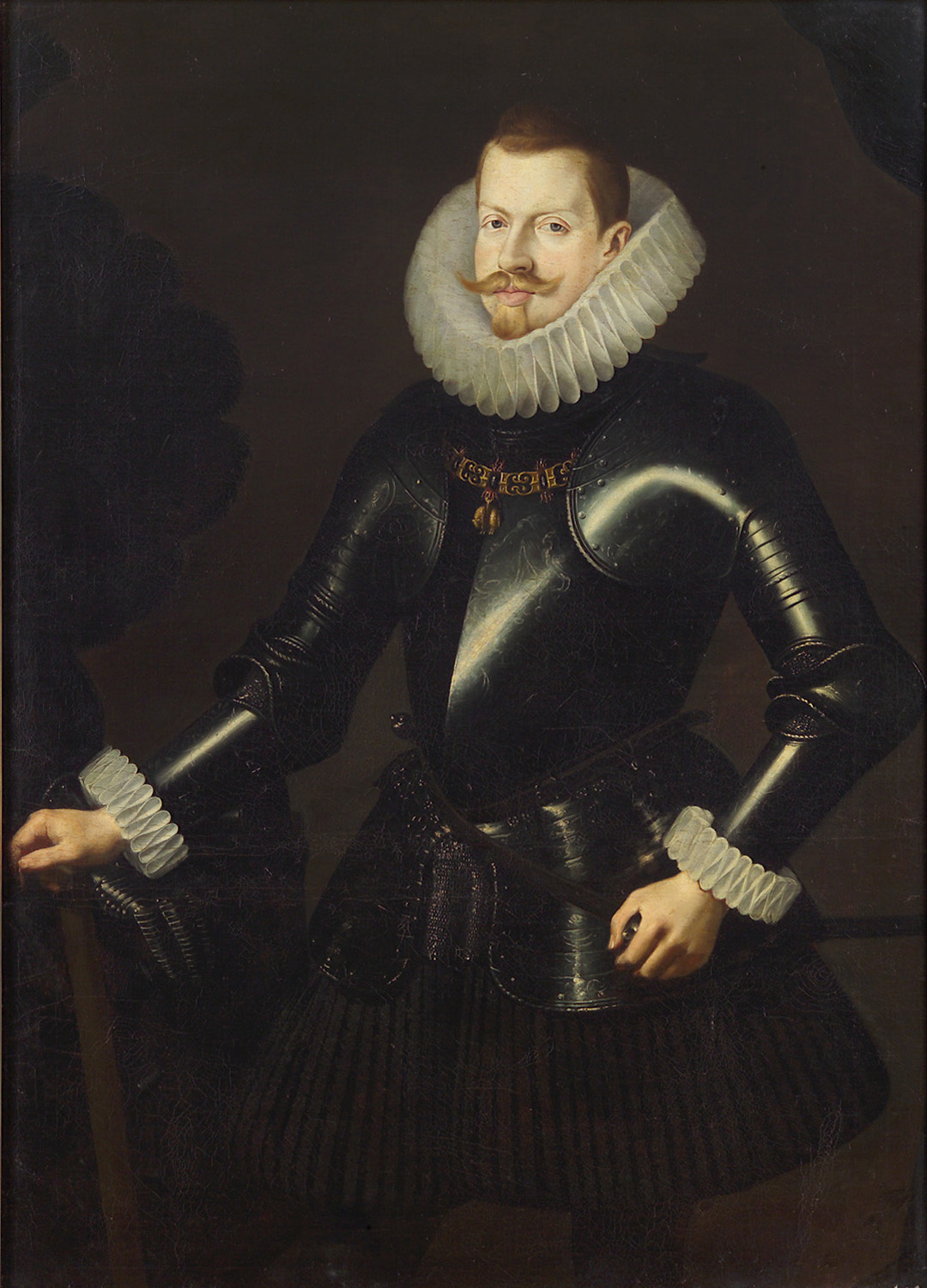
Philip III (Spanish: Felipe III, Portuguese: Filipe II; 14 April 1578 – 31 March 1621) was King of Spain and Portugal (as Philip II) during the period known as the Iberian Union, reigning from 1598 until his death in 1621. He was also King of Naples and Sicily, Duke of Milan, and Lord of the Seventeen Provinces. A member of the House of Habsburg, he was born in Madrid to King Philip II of Spain and his fourth wife, Anna of Austria. The family was heavily inbred; Philip II and Anna were uncle and niece, as well as cousins.
One year after inheriting the throne, he married his Habsburg cousin Margaret of Austria, the sister of Ferdinand II, Holy Roman Emperor. Philip quickly delegated most of his power and duties to his chief minister, the Duke of Lerma, whose influence shaped much of his reign. In the outskirts of his territories, military power was upheld by successful but capricious proconsuls, such as Ambrogio Spinola and the Duke of Osuna. Though Philip is associated with a period of relative peace in Western Europe, called the Pax Hispanica by some historians, his lack of focus contributed to the Spanish Empire's gradual decline.
Although known in Spain as "Philip the Pious", his international political reputation has been negative. Historians C. V. Wedgwood, R. A. Stradling, and J. H. Elliott have described him as an "undistinguished and insignificant man", a "miserable monarch", and a "pallid, anonymous creature, whose only virtue appeared to reside in a total absence of vice." In particular, Philip's reliance on the Duke of Lerma drew much criticism. Many historians trace Spain's decline to the economic difficulties that began early in its reign. Nonetheless, as the ruler of the Spanish Empire at its height, the king who achieved a temporary peace with the Dutch (1609–1621), and who brought Spain into the Thirty Years' War (1618–1648) through an initially successful campaign, his reign remains a pivotal period in Spanish history.
Following the death of Philip III's older half-brother Don Carlos, Prince of Asturias, their father Philip II concluded that Carlos's problems had been exacerbated by exposure to political factions at the Spanish court. He believed that Carlos's education and upbringing had been compromised, contributing to his mental instability and disobedience. He began to make more serious arrangements for his other sons. Philip II appointed Juan de Zúñiga, then Prince Diego's governor, to continue this role for Philip, and García de Loaysa as his tutor. They were assisted by Cristóvão de Moura, 1st Marquis of Castelo Rodrigo, a trusted advisor of Philip II. Philip believed that together they would provide a stable upbringing for Prince Philip and avoid the fate of his older brother Carlos. Philip's education followed guidelines established by Father Juan de Mariana, emphasizing moderation and personal discipline, with the goal of forming a king who was neither tyrannical nor overly influenced by courtiers.
In his youth, "he imitates (as he does) King Saint Ferdinand, displaying in his actions a miraculous combination of valor and holiness." Prince Philip appears to have been liked by his contemporaries, described as 'dynamic, good-natured, and earnest,' suitably pious, and possessing a 'lively body and a peaceful disposition,' albeit with a relatively weak constitution. Comparisons with the disobedient and ultimately insane Carlos were generally favorable to Prince Philip, although some observers noted that he appeared less intelligent and politically competent than his late brother. Indeed, although Philip was educated in Latin, French, Portuguese and astronomy, and appears to have been a competent linguist, recent historians suspect that much of his tutors' focus on Philip's undeniably pleasant, pious and respectful disposition was to avoid reporting that, languages aside, he was not in fact particularly intelligent or academically gifted. Nonetheless, Philip does not appear to have been naïve – his correspondence with his daughters shows a distinctive cautious streak in his advice on dealing with court intrigue.
Philip first met the Marquis of Denia – the future Duke of Lerma – then a gentleman of the King's chamber, in his early teens. Lerma and Philip became close friends, but Lerma was considered unsuitable by the King and Philip's tutors. Lerma was dispatched to Valencia as viceroy in 1595, with the aim of removing Philip from his influence; but after Lerma pleaded poor health, he was allowed to return two years later.
By then in poor health himself, King Philip II grew deeply troubled over the prince's future, and he attempted to establish de Moura as a future, trusted advisor to his son, appointing his ally, García Loaysa y Girón, as archbishop of Toledo. The Prince received a new, conservative Dominican confessor. The following year, Philip II died, and his son became King Philip III.
Philip married his cousin, Margaret of Austria, on 18 April 1599, a year after becoming king. Margaret, the sister of the future Emperor Ferdinand II, would be one of three women at Philip's court who would apply considerable influence over the King. Margaret was considered by contemporaries to be extremely pious—in some cases, excessively pious, and too influenced by the Church—'astute and very skillful' in her political dealings, although 'melancholic' and unhappy over the influence of the Duke of Lerma over her husband at court. Margaret continued to fight an ongoing battle with Lerma for influence until her death in 1611. Philip had an 'affectionate, close relationship' with Margaret, and paid her additional attention after they had a son in 1605.
Hub AI
Philip III of Spain AI simulator
(@Philip III of Spain_simulator)
Philip III of Spain
Philip III (Spanish: Felipe III, Portuguese: Filipe II; 14 April 1578 – 31 March 1621) was King of Spain and Portugal (as Philip II) during the period known as the Iberian Union, reigning from 1598 until his death in 1621. He was also King of Naples and Sicily, Duke of Milan, and Lord of the Seventeen Provinces. A member of the House of Habsburg, he was born in Madrid to King Philip II of Spain and his fourth wife, Anna of Austria. The family was heavily inbred; Philip II and Anna were uncle and niece, as well as cousins.
One year after inheriting the throne, he married his Habsburg cousin Margaret of Austria, the sister of Ferdinand II, Holy Roman Emperor. Philip quickly delegated most of his power and duties to his chief minister, the Duke of Lerma, whose influence shaped much of his reign. In the outskirts of his territories, military power was upheld by successful but capricious proconsuls, such as Ambrogio Spinola and the Duke of Osuna. Though Philip is associated with a period of relative peace in Western Europe, called the Pax Hispanica by some historians, his lack of focus contributed to the Spanish Empire's gradual decline.
Although known in Spain as "Philip the Pious", his international political reputation has been negative. Historians C. V. Wedgwood, R. A. Stradling, and J. H. Elliott have described him as an "undistinguished and insignificant man", a "miserable monarch", and a "pallid, anonymous creature, whose only virtue appeared to reside in a total absence of vice." In particular, Philip's reliance on the Duke of Lerma drew much criticism. Many historians trace Spain's decline to the economic difficulties that began early in its reign. Nonetheless, as the ruler of the Spanish Empire at its height, the king who achieved a temporary peace with the Dutch (1609–1621), and who brought Spain into the Thirty Years' War (1618–1648) through an initially successful campaign, his reign remains a pivotal period in Spanish history.
Following the death of Philip III's older half-brother Don Carlos, Prince of Asturias, their father Philip II concluded that Carlos's problems had been exacerbated by exposure to political factions at the Spanish court. He believed that Carlos's education and upbringing had been compromised, contributing to his mental instability and disobedience. He began to make more serious arrangements for his other sons. Philip II appointed Juan de Zúñiga, then Prince Diego's governor, to continue this role for Philip, and García de Loaysa as his tutor. They were assisted by Cristóvão de Moura, 1st Marquis of Castelo Rodrigo, a trusted advisor of Philip II. Philip believed that together they would provide a stable upbringing for Prince Philip and avoid the fate of his older brother Carlos. Philip's education followed guidelines established by Father Juan de Mariana, emphasizing moderation and personal discipline, with the goal of forming a king who was neither tyrannical nor overly influenced by courtiers.
In his youth, "he imitates (as he does) King Saint Ferdinand, displaying in his actions a miraculous combination of valor and holiness." Prince Philip appears to have been liked by his contemporaries, described as 'dynamic, good-natured, and earnest,' suitably pious, and possessing a 'lively body and a peaceful disposition,' albeit with a relatively weak constitution. Comparisons with the disobedient and ultimately insane Carlos were generally favorable to Prince Philip, although some observers noted that he appeared less intelligent and politically competent than his late brother. Indeed, although Philip was educated in Latin, French, Portuguese and astronomy, and appears to have been a competent linguist, recent historians suspect that much of his tutors' focus on Philip's undeniably pleasant, pious and respectful disposition was to avoid reporting that, languages aside, he was not in fact particularly intelligent or academically gifted. Nonetheless, Philip does not appear to have been naïve – his correspondence with his daughters shows a distinctive cautious streak in his advice on dealing with court intrigue.
Philip first met the Marquis of Denia – the future Duke of Lerma – then a gentleman of the King's chamber, in his early teens. Lerma and Philip became close friends, but Lerma was considered unsuitable by the King and Philip's tutors. Lerma was dispatched to Valencia as viceroy in 1595, with the aim of removing Philip from his influence; but after Lerma pleaded poor health, he was allowed to return two years later.
By then in poor health himself, King Philip II grew deeply troubled over the prince's future, and he attempted to establish de Moura as a future, trusted advisor to his son, appointing his ally, García Loaysa y Girón, as archbishop of Toledo. The Prince received a new, conservative Dominican confessor. The following year, Philip II died, and his son became King Philip III.
Philip married his cousin, Margaret of Austria, on 18 April 1599, a year after becoming king. Margaret, the sister of the future Emperor Ferdinand II, would be one of three women at Philip's court who would apply considerable influence over the King. Margaret was considered by contemporaries to be extremely pious—in some cases, excessively pious, and too influenced by the Church—'astute and very skillful' in her political dealings, although 'melancholic' and unhappy over the influence of the Duke of Lerma over her husband at court. Margaret continued to fight an ongoing battle with Lerma for influence until her death in 1611. Philip had an 'affectionate, close relationship' with Margaret, and paid her additional attention after they had a son in 1605.
Recent media