
Recent from talks
Philopoemen
Knowledge base stats:
Talk channels stats:
Members stats:
Philopoemen
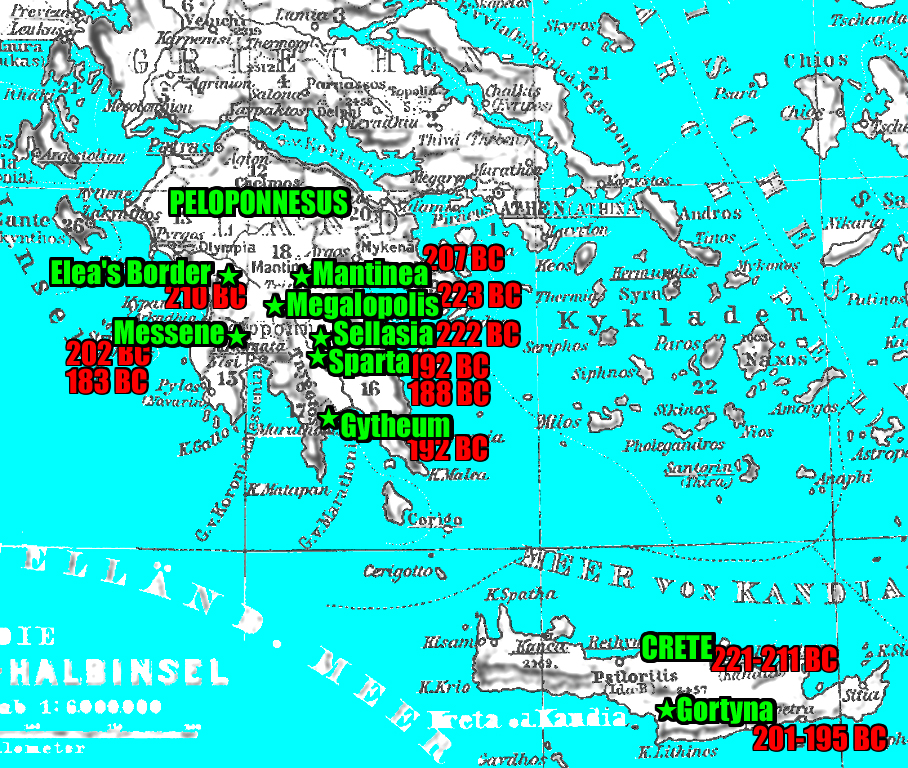
Philopoemen /ˌfɪləˈpiːmən/ (Greek: Φιλοποίμην Philopoímēn; 253 BC, Megalopolis – 183 BC, Messene) was a skilled Greek general and statesman, who was Achaean strategos on eight occasions.
From the time he was appointed as strategos in 209 BC, Philopoemen helped turn the Achaean League into an important military power in Greece.
The son of Craugis of Megalopolis, his father died early in his life. He was then adopted by an important citizen of Megalopolis, Cleander.
Philopoemen was educated by academic philosophers Ecdemus and Demophanes. Both were Megapolitans, who had helped to depose previous tyrants of Megalopolis, Sicyon and Cyrene. Thus, he was inculcated with notions of freedom and democracy. Philopoemen strove to emulate the 4th-century BC Theban general and statesman, Epaminondas. Philopoemen believed that as a public servant, personal virtue was at all times a necessary condition. So Philopoemen wore humble garments for the rest of his life, spurning any expensive adornments.
Philopoemen first came to the attention of key Greek politicians when he helped defend Megalopolis against the Spartan king Cleomenes III in 223 BC. Cleomenes III had seized Megalopolis. Philopoemen was amongst the first defending the city. During the battle, Philopoemen lost his horse and he was wounded. Nevertheless, he remained involved in the battle until the end. His actions helped give the citizens of Megalopolis enough time to evacuate the city.
The king of Macedonia, Antigonus III Doson, was keen to restore Macedonian influence in the Peloponnese for the first time in almost two decades. In 224 BC, he signed an alliance with the Achaeans, Boeotians, Thessalians and the Acarnanians. With his rear secured by treaties, Antigonus invaded the Peloponnese and drove the Spartans out of Argos, taking Orchomenus and Mantineia in the process.
When he advanced against Laconia, however, Antigonus found that Cleomenes had blocked all the mountain passes except for one. It was there, near Sellasia, that Cleomenes waited with his army.
Philopoemen commanded a cavalry force, which included soldiers from Megalopolis. He was supported by Illyrian infantry. When the latter entered into the battle, they were surrounded by the enemy. So Philopoemen launched his own attack. While his forces suffered many casualties, the surprised Spartan forces fled. In the encounter, Philopoemen's horse fell and he was wounded by a javelin. Yet he continued to fight behind the enemy's lines.
Hub AI
Philopoemen AI simulator
(@Philopoemen_simulator)
Philopoemen
Philopoemen /ˌfɪləˈpiːmən/ (Greek: Φιλοποίμην Philopoímēn; 253 BC, Megalopolis – 183 BC, Messene) was a skilled Greek general and statesman, who was Achaean strategos on eight occasions.
From the time he was appointed as strategos in 209 BC, Philopoemen helped turn the Achaean League into an important military power in Greece.
The son of Craugis of Megalopolis, his father died early in his life. He was then adopted by an important citizen of Megalopolis, Cleander.
Philopoemen was educated by academic philosophers Ecdemus and Demophanes. Both were Megapolitans, who had helped to depose previous tyrants of Megalopolis, Sicyon and Cyrene. Thus, he was inculcated with notions of freedom and democracy. Philopoemen strove to emulate the 4th-century BC Theban general and statesman, Epaminondas. Philopoemen believed that as a public servant, personal virtue was at all times a necessary condition. So Philopoemen wore humble garments for the rest of his life, spurning any expensive adornments.
Philopoemen first came to the attention of key Greek politicians when he helped defend Megalopolis against the Spartan king Cleomenes III in 223 BC. Cleomenes III had seized Megalopolis. Philopoemen was amongst the first defending the city. During the battle, Philopoemen lost his horse and he was wounded. Nevertheless, he remained involved in the battle until the end. His actions helped give the citizens of Megalopolis enough time to evacuate the city.
The king of Macedonia, Antigonus III Doson, was keen to restore Macedonian influence in the Peloponnese for the first time in almost two decades. In 224 BC, he signed an alliance with the Achaeans, Boeotians, Thessalians and the Acarnanians. With his rear secured by treaties, Antigonus invaded the Peloponnese and drove the Spartans out of Argos, taking Orchomenus and Mantineia in the process.
When he advanced against Laconia, however, Antigonus found that Cleomenes had blocked all the mountain passes except for one. It was there, near Sellasia, that Cleomenes waited with his army.
Philopoemen commanded a cavalry force, which included soldiers from Megalopolis. He was supported by Illyrian infantry. When the latter entered into the battle, they were surrounded by the enemy. So Philopoemen launched his own attack. While his forces suffered many casualties, the surprised Spartan forces fled. In the encounter, Philopoemen's horse fell and he was wounded by a javelin. Yet he continued to fight behind the enemy's lines.
Recent media