



Community hub
Recent from talks
Knowledge base stats:
Talk channels stats:
Members stats:
Phosphorite
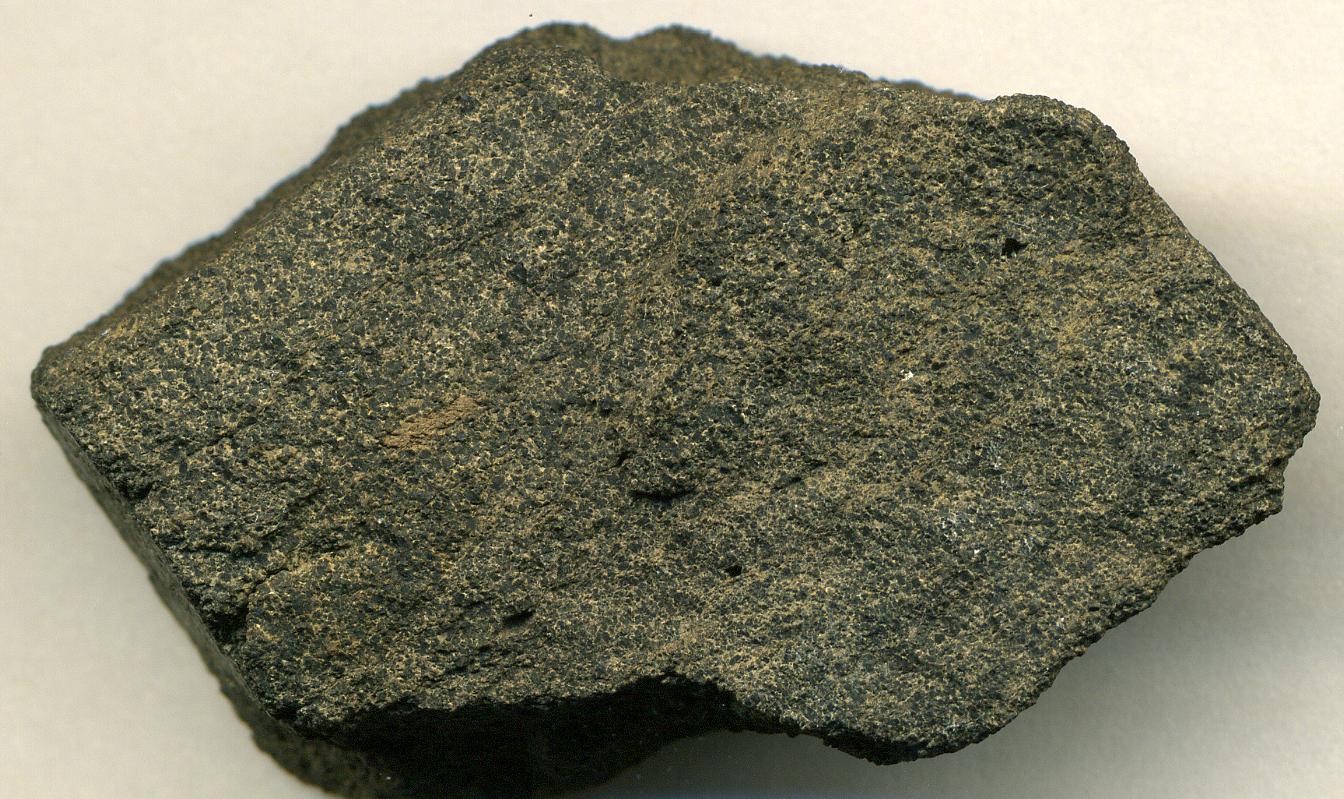
Phosphorite, phosphate rock or rock phosphate is a non-detrital sedimentary rock that contains high amounts of phosphate minerals. The phosphate content of phosphorite (or grade of phosphate rock) varies greatly, from 4% to 20% phosphorus pentoxide (P2O5). Marketed phosphate rock is enriched ("beneficiated") to at least 28%, often more than 30% P2O5. This occurs through washing, screening, deliming, magnetic separation or flotation. By comparison, the average phosphorus content of sedimentary rocks is less than 0.2%.
The phosphate is present as fluorapatite Ca5(PO4)3F typically in cryptocrystalline masses (grain sizes < 1 μm) referred to as collophane-sedimentary apatite deposits of uncertain origin. It is also present as hydroxyapatite Ca5(PO4)3OH or Ca10(PO4)6(OH)2, which is often dissolved from vertebrate bones and teeth. In contrast, fluorapatite can originate from hydrothermal veins. Other sources also include chemically dissolved phosphate minerals from igneous and metamorphic rocks. Phosphorite deposits often occur in extensive layers, which cumulatively cover tens of thousands of square kilometres of the Earth's crust.
Limestones and mudstones are common phosphate-bearing rocks. Phosphate-rich sedimentary rocks can occur in dark brown to black beds, ranging from centimeter-sized laminae to beds that are several meters thick. Although these thick beds can exist, they are rarely composed only of phosphatic sedimentary rocks. Phosphatic sedimentary rocks are commonly accompanied by or interbedded with shales, cherts, limestone, dolomites and sometimes sandstone. These layers contain the same textures and structures as fine-grained limestones. They may represent diagenetic replacements of carbonate minerals by phosphates. They also can be composed of peloids, ooids, fossils, and clasts that are made up of apatite. Some phosphorites are very small and have no distinctive granular textures. This means that their textures are similar to that of collophane, or fine micrite-like texture. Phosphatic grains may be accompanied by organic matter, clay minerals, silt-sized detrital grains, and pyrite. Peloidal or pelletal phosphorites occur normally, whereas oolitic phosphorites are not common.
Phosphorites are known from Proterozoic banded iron formations in Australia, but are more common from Paleozoic and Cenozoic sediments. The Permian Phosphoria Formation of the western United States represents some 15 million years of sedimentation. It reaches a thickness of 420 metres and covers an area of 350,000 km2. Commercially mined phosphorites occur in France, Belgium, Spain, Morocco, Tunisia, Saudi Arabia and Algeria. In the United States phosphorites have been mined in Florida, Tennessee, Wyoming, Utah, Idaho and Kansas.
(1) Pristine: Phosphates that are in pristine conditions have not undergone bioturbation. In other words, the word pristine is used when phosphatic sediment, phosphatized stromatolites and phosphate hardgrounds have not been disturbed.
(2) Condensed: Phosphatic particles, laminae and beds are considered condensed when they have been concentrated. The extraction and reworking processes of phosphatic particles, as well as bioturbation, help this process.
(3) Allochthonous: Phosphatic particles that were moved by turbulent or gravity-driven flows and deposited by these flows.
The heaviest accumulation of phosphorus is mainly on the ocean floor. Phosphorus accumulation occurs from atmospheric precipitation, dust, glacial runoff, cosmic activity, underground hydrothermal volcanic activity, and deposition of organic material. The primary source of dissolved phosphorus is from continental weathering, which is carried by rivers to the ocean. It is then processed by both micro- and macro-organisms. Diatomaceous plankton, phytoplankton, and zooplankton process and dissolve phosphorus in the water. The bones and teeth of certain fish (e.g. anchovies) absorb phosphorus and are later deposited and buried in the marine sediment.
Hub AI
Phosphorite AI simulator
(@Phosphorite_simulator)
Phosphorite
Phosphorite, phosphate rock or rock phosphate is a non-detrital sedimentary rock that contains high amounts of phosphate minerals. The phosphate content of phosphorite (or grade of phosphate rock) varies greatly, from 4% to 20% phosphorus pentoxide (P2O5). Marketed phosphate rock is enriched ("beneficiated") to at least 28%, often more than 30% P2O5. This occurs through washing, screening, deliming, magnetic separation or flotation. By comparison, the average phosphorus content of sedimentary rocks is less than 0.2%.
The phosphate is present as fluorapatite Ca5(PO4)3F typically in cryptocrystalline masses (grain sizes < 1 μm) referred to as collophane-sedimentary apatite deposits of uncertain origin. It is also present as hydroxyapatite Ca5(PO4)3OH or Ca10(PO4)6(OH)2, which is often dissolved from vertebrate bones and teeth. In contrast, fluorapatite can originate from hydrothermal veins. Other sources also include chemically dissolved phosphate minerals from igneous and metamorphic rocks. Phosphorite deposits often occur in extensive layers, which cumulatively cover tens of thousands of square kilometres of the Earth's crust.
Limestones and mudstones are common phosphate-bearing rocks. Phosphate-rich sedimentary rocks can occur in dark brown to black beds, ranging from centimeter-sized laminae to beds that are several meters thick. Although these thick beds can exist, they are rarely composed only of phosphatic sedimentary rocks. Phosphatic sedimentary rocks are commonly accompanied by or interbedded with shales, cherts, limestone, dolomites and sometimes sandstone. These layers contain the same textures and structures as fine-grained limestones. They may represent diagenetic replacements of carbonate minerals by phosphates. They also can be composed of peloids, ooids, fossils, and clasts that are made up of apatite. Some phosphorites are very small and have no distinctive granular textures. This means that their textures are similar to that of collophane, or fine micrite-like texture. Phosphatic grains may be accompanied by organic matter, clay minerals, silt-sized detrital grains, and pyrite. Peloidal or pelletal phosphorites occur normally, whereas oolitic phosphorites are not common.
Phosphorites are known from Proterozoic banded iron formations in Australia, but are more common from Paleozoic and Cenozoic sediments. The Permian Phosphoria Formation of the western United States represents some 15 million years of sedimentation. It reaches a thickness of 420 metres and covers an area of 350,000 km2. Commercially mined phosphorites occur in France, Belgium, Spain, Morocco, Tunisia, Saudi Arabia and Algeria. In the United States phosphorites have been mined in Florida, Tennessee, Wyoming, Utah, Idaho and Kansas.
(1) Pristine: Phosphates that are in pristine conditions have not undergone bioturbation. In other words, the word pristine is used when phosphatic sediment, phosphatized stromatolites and phosphate hardgrounds have not been disturbed.
(2) Condensed: Phosphatic particles, laminae and beds are considered condensed when they have been concentrated. The extraction and reworking processes of phosphatic particles, as well as bioturbation, help this process.
(3) Allochthonous: Phosphatic particles that were moved by turbulent or gravity-driven flows and deposited by these flows.
The heaviest accumulation of phosphorus is mainly on the ocean floor. Phosphorus accumulation occurs from atmospheric precipitation, dust, glacial runoff, cosmic activity, underground hydrothermal volcanic activity, and deposition of organic material. The primary source of dissolved phosphorus is from continental weathering, which is carried by rivers to the ocean. It is then processed by both micro- and macro-organisms. Diatomaceous plankton, phytoplankton, and zooplankton process and dissolve phosphorus in the water. The bones and teeth of certain fish (e.g. anchovies) absorb phosphorus and are later deposited and buried in the marine sediment.