


Community hub
Recent from talks
Contribute something
Nothing was collected or created yet.
Pissant
View on Wikipedia

A pissant, also seen as piss ant or piss-ant, refers to a type of ant. The word is also used as a pejorative noun or adjective, indicating insignificance.[1]
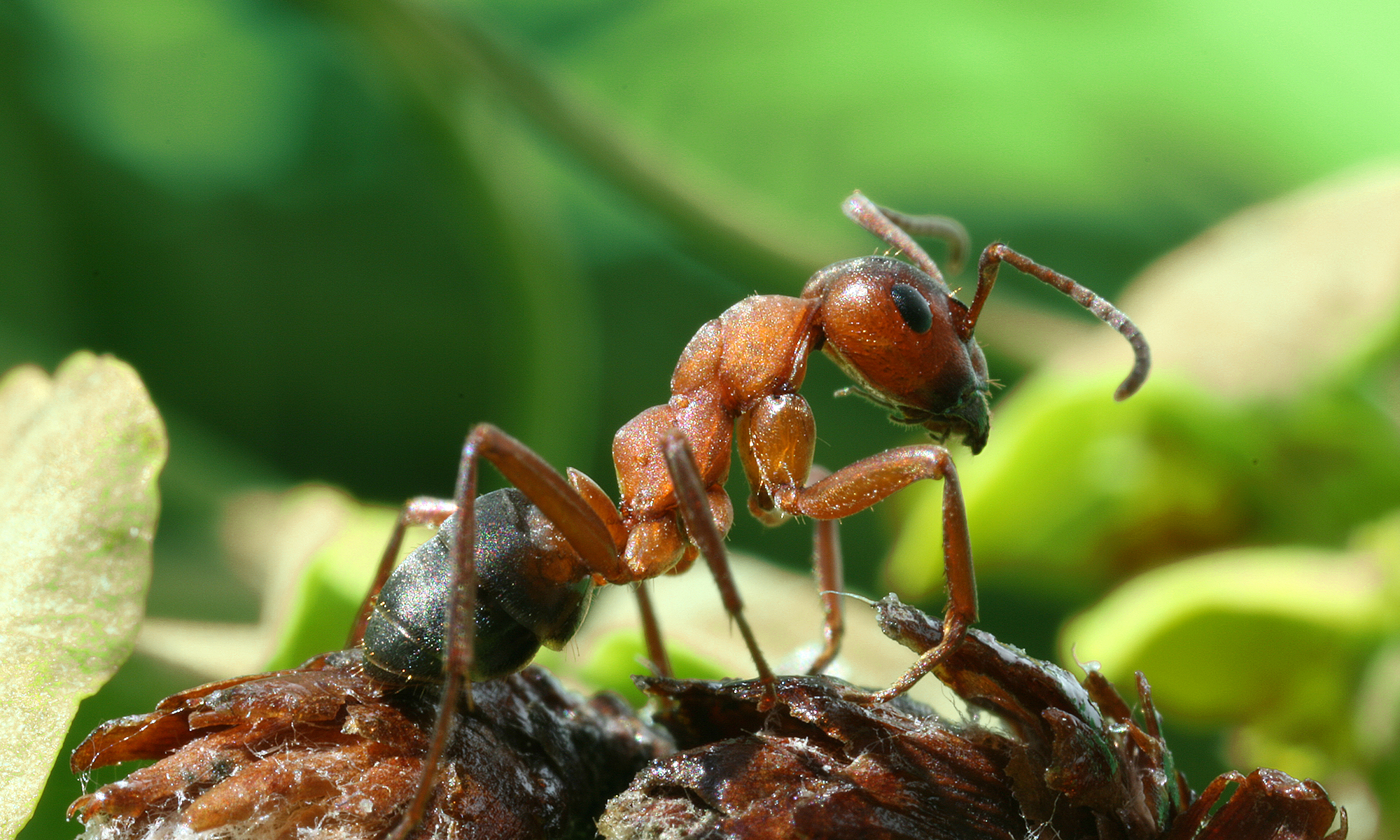
The original pissant is any of a certain group of large ant species, commonly called wood ants, that make mounded nests in forests throughout most of Europe.[2] The name pissant arises from the urine-like odour produced by their nesting material—needles and straw from pine trees—and the formic acid that constitutes their venom.[3] Formica rufa is one such ant, but there are others with similar characteristics. Forelius and Iridomyrmex are two genera of piss ants.[4] In the United States, the word pissant may refer to any small ant that infests a home.[5]
Slang
[edit]Pissant is an epithet for an inconsequential, irrelevant, or worthless person, especially one who is irritating or contemptible out of proportion to his or her perceived significance. A Virginia politician is said to have silenced a heckler by saying, "I'm a big dog on a big hunt and I don't have time for a piss-ant on a melon stalk".[6]
The term piss-ant also may be used as an adjective, usually as a pejorative, to mean insignificant and annoying. In conversations with his advisors during the Vietnam War, U.S. President Lyndon B. Johnson referred to Vietnam as "a piddling piss-ant little country".[7] In the context of incorporating a celebrity's family into the limelight, Alex Reimer, a frequent guest at Boston's radio station WEEI, called Tom Brady's daughter "an annoying little pissant" in January 2018 prior to Super Bowl LII.[8]
Culture
[edit]Pissant also may be used positively. Ron Ault of the AFL-CIO said, in describing the relationship of his trade union to the Pentagon, "Our job is to be the irritant piss ant stinging them on their ankles at every opportunity."[9]
After being defeated 4–0 in a 2009 Australian semi-final football match against Melbourne Victory, Adelaide United coach Aurelio Vidmar's post-match press conference became infamous when he described Adelaide as a "pissant town", with the Adelaide media perceived to be working against him and the club. The rant gained nationwide publicity in Australia.[10]
In the 1960 musical The Unsinkable Molly Brown, the title character says, "I'm as good as any piss ant that ever lived!" in the patter opening to the song "I Ain't Down Yet".
A character in Kurt Vonnegut's 1963 novel Cat's Cradle had a specific definition of a pissant as type of person:
A pissant is somebody who thinks he's so damn smart, he can never keep his mouth shut. No matter what anybody says, he's got to argue with it. You say you like something, and, by God, he'll tell you why you’re wrong to like it. A pissant does his best to make you feel like a boob all the time. No matter what you say, he knows better.[11]
Chapter 1 of Stephen King's The Stand (1978) opens with the words:
Hapscomb's Texaco sat on Number 93 just north of Arnette, a pissant four-street burg about 110 miles from Houston.[12]
Tony Stark nicknames Ant-Man a pissant in Avengers: Endgame (2019).
Brandon Jack, a former Australian rules footballer, named his 2025 novel set in a professional Australian Football League club, Pissants.[13]
See also
[edit]References
[edit]- ^ Pissant Archived 2011-11-08 at the Wayback Machine, Merriam-Webster Dictionary
- ^ "Formica polyctena (European Red Wood Ant)". Iucnredlist.org. 1 August 1996. Retrieved 22 October 2013.
- ^ "Take Our Word For It Issue 102". Takeourword.com. 25 September 2000. Archived from the original on 23 October 2013. Retrieved 22 October 2013.
- ^ Kris M. Havstad, Structure and Function of a Chihuahuan Desert Ecosystem Archived 2016-03-02 at the Wayback Machine, Oxford University Press US, 2006, p. 256.
- ^ "Pissant, Piss Ants, Small Ant Pests, Sugar Ants". Pestproducts.com. Archived from the original on 11 September 2013. Retrieved 22 October 2013.
- ^ Epps, Garrett (1 January 1980). "The Fourth Court of Appeals is losing a star". Style Weekly. Richmond, Virginia. Archived from the original on 3 December 2013. Retrieved 28 November 2013.
- ^ Record, Jeffrey (1998). The Wrong War: Why We Lost in Vietnam. Naval Institute Press. ISBN 1-55750-699-X. Archived from the original on 31 December 2013. Retrieved 22 October 2013.
- ^ "Tom Brady ends WEEI interview, upset with remark about daughter". Boston Herald. Archived from the original on 7 February 2018. Retrieved 6 February 2018.
- ^ Barr, Stephen (20 August 2004). "Blunt Talk on Union Web Site Spotlights Frustration Over Labor Relations Changes". The Washington Post. Archived from the original on 20 December 2013. Retrieved 22 October 2013.
- ^ Lynch, Michael; Hogan, Jesse (15 February 2009). "Adelaide feels wrath of Vidmar". The Age. Melbourne. Archived from the original on 4 December 2013. Retrieved 22 October 2013.
- ^ Pissant Archived 2017-09-21 at the Wayback Machine quote at Goodreads.com
- ^ Pissant Archived 2022-01-29 at the Wayback Machine quote at Goodreads.com
- ^ Jack, Brandon (2025). Pissants. Simon & Schuster/Summit. ISBN 9781761633072.
Pissant
View on GrokipediaEtymology
Linguistic Origins
The term "pissant" originates from the obsolete English word "pismire," a designation for an ant that first appeared in the late 14th century. "Pismire" is a compound formed from Middle English pisse, meaning "urine" (from Old English pīsan, to urinate), and mire, an early term for "ant" from Old English myre (cognate with Old Norse maurr). This etymological pairing stems from the acrid, urine-like odor emitted by ant hills, attributed to the formic acid secreted by ants in their nests.[6] By the 17th century, "piss" had established itself as a vulgar intensifier in English vernacular, influencing the phonetic and morphological reshaping of "pismire" into "pissant." The Oxford English Dictionary identifies the earliest recorded instance of "pissant" in 1649, within Nicholas Culpeper's A Physical Directory, where it denotes an ant in reference to a plant's habitat: "Some countries cal it Pissant, because it is found in great abundance about Pismires, or Ants nests."[4] In this context, "pissant" functions as a direct synonym for ant, blending the vulgar prefix with the familiar noun for clarity.[3] The phonetic evolution from "pismire" to "pissant" occurred primarily through dialectal variation and folk etymology, particularly in southern and midland English dialects, where the unfamiliar second element mire was supplanted by the more recognizable "ant." This shift simplified pronunciation from approximately /ˈpɪsmaɪər/ to /ˈpɪsænt/, reflecting broader patterns of word reformation in Early Modern English. Early citations in the Oxford English Dictionary illustrate this progression.[4]Historical Development
The earliest documented uses of "pissant" appear in mid-17th-century English texts referring to ants, particularly in medical and herbal contexts. In 1649, the English botanist Nicholas Culpeper employed the term in his writings on natural history, describing a type of ant likely associated with its formic acid odor resembling urine.[4] This usage built on earlier compounds like "pismire," a 14th-century word for ant derived from "piss" and "mire" (an obsolete term for ant), reflecting observations of anthill smells in European folklore.[3] By the 19th century, "pissant" gained regional traction in British and American dialects, especially in folklore tying ants to pungent odors. An early figurative use appears in 1846 in the story "A Quarter Race in Kentucky": "gals... come pourin out of the woods like pissants out of an old log."[3] In American literature, it surfaced in George Washington Harris's 1867 collection Sut Lovingood's Yarns, where the term described small black ants in rural Southern settings, hinting at emerging colloquial ties to Appalachian speech patterns that emphasized the insect's "piss"-like scent from nesting materials.[7] These appearances marked a transitional phase, with the word appearing sporadically in dialectal accounts of rural life rather than formal publications.[3] The term's semantic broadening into a pejorative for humans began in the early 20th century, with the first recorded slang application in 1903 denoting an insignificant or contemptible person, primarily in American English.[3] By 1935, Merriam-Webster cited its use as a generalized insult in Harold L. Davis's novel Honey in the Horn, solidifying the shift from literal insect to derogatory noun.[1] In the mid-20th century, slang dictionaries like Green's Dictionary of Slang (first entries around 1932) standardized it further, extending to adjectival forms like "pissant" for something trivial or irritating, reflecting broader adoption in informal American vernacular.[8]Meanings and Usage
Literal Meaning as an Insect
The term "pissant" historically and etymologically refers to a small ant, derived from the urine-like odor of formic acid secreted by certain species in the family Formicidae, particularly those in the subfamily Formicinae, where this secretion serves as a defensive mechanism.[3][9] In American dialects, however, it is used more generally for small, commonplace ants invading homes or fields, such as small black ants in the genus Lasius or Formica fusca, found in gardens, forests, or woodlands.[7][10] Historically, "pissant" derives from the Middle English "pismire," an archaic name for ants literally meaning "urine ant," owing to the pungent formic acid odor reminiscent of urine.[11] From the 17th to 19th centuries, the term appeared in folklore and regional entomological descriptions, particularly in rural American dialects like Appalachian English, where it referred to commonplace small garden ants invading homes or fields.[10] Literary examples from this period, such as in George Washington Harris's 1867 collection Sut Lovingood's Yarns, illustrate its use in depicting everyday encounters with these insects in Southern U.S. settings.[12] In contemporary standard English, the literal use is obsolete or confined to dialects. In contrast to larger species like carpenter ants (Camponotus spp.), which are also in Formicinae but grow up to 20 mm and primarily nest in wood, pissants are notably smaller—typically 3-6 mm—and associated with more noticeable odors from soil nests or low vegetation.[9] This distinction highlights their role as nuisance pests rather than structural damage causers. The term often appears in phrases like "pissant hill," describing modest anthills formed by these colonies in grassy or woodland areas.[12]Slang Application to People
In the early 20th century, "pissant" emerged as a primary slang term denoting a contemptible, petty, or insignificant person, often evoking disdain for someone perceived as trivial or irritating. This derogatory application, first attested around 1930, draws on the insect's diminutive nature to underscore human inadequacy or worthlessness.[8] The term functions flexibly as a noun, such as in "You stupid pissant," or as an adjective modifying nouns, for example, "pissant complaints" or "that pissant clerk," highlighting annoyances or minor figures out of proportion to their impact.[1] Its connotations include pettiness, weakness, and a sense of moral scruffiness, amplified by the vulgar undertones of "piss," which confine its use to informal settings and render it offensive or inappropriate in professional environments.[13] Examples from 1930s American slang dictionaries demonstrate this grammatical versatility and persistent link to "ant-like" insignificance, as in phrases like "drunk as a pissant" to describe extreme intoxication or "You son-of-a-pissant!" as a direct insult.[8]Cultural Impact
In Literature and Media
The term "pissant" has appeared in various literary works as a derogatory slang for insignificant or contemptible individuals, often underscoring themes of pettiness and social hierarchy. In Kurt Vonnegut's 1963 novel Cat's Cradle, the word is explicitly defined in dialogue as "somebody who thinks he's so damn smart, he can never keep his mouth shut," portraying the character as obnoxiously self-important and disruptive to group dynamics.[14] The novel also features a chapter titled "The Pissant Hilton," where characters mock a shabby hotel, using the term to emphasize its lowly status and evoke a sense of ironic disdain.[14] Earlier 20th-century American literature employed "pissant" to depict rural or working-class disdain. In H. L. Davis's Pulitzer Prize-winning 1935 novel Honey in the Horn, the phrase "liar and pissant" is hurled at a character dismissing horse ownership as chaotic, highlighting tensions between traditional livelihoods and modern judgments in the American West.[15] More recently, Brandon Jack's 2025 debut novel Pissants centers on a group of unruly Australian Football League fringe players nicknamed the "Pissants," portraying them as crude, underachieving misfits whose antics satirize the hyper-masculine culture of professional sports.[16] In film, "pissant" often serves as a sharp insult in comedic or dramatic contexts to belittle antagonists or underdogs, reinforcing class or regional stereotypes. The 1982 musical The Best Little Whorehouse in Texas includes the song "A Lil' Ole Bitty Pissant Country Place," where characters deride a small-town brothel as insignificant and backward, using the term to amplify rural caricature and moral hypocrisy. Similarly, in the 2001 comedy Corky Romano, the protagonist adopts the alias "Agent Pissant" during an undercover operation, turning the slur into a humorous badge of incompetence that underscores his bumbling, low-status persona.[17] The 1988 film Big features the line "You little pissant" in a confrontational scene, directed at a childlike adult to assert dominance and highlight generational power imbalances.[18] Television has incorporated the word in family-oriented narratives to convey childish or familial spats. In the 1971 TV movie The Homecoming: A Christmas Story—a precursor to The Waltons—a young character protests, "I don't feel like a pissant," after being called one by a sibling, illustrating sibling rivalry and the term's role in everyday domestic insults within a Depression-era Appalachian setting.[19] Across these media, "pissant" frequently marks characters as insignificant pests or antagonists, emphasizing themes of belittlement and often perpetuating stereotypes of rural or lower-class life as noisy yet powerless.[13]Regional and Dialectal Variations
The term "pissant" exhibits a strong presence in American English, particularly in regional dialects of the Southern and Appalachian United States, where it has been used both literally for a small ant and figuratively for an insignificant or contemptible person since the early 20th century.[3] This dual usage persists in Appalachian speech patterns, often evoking local environmental references to ants while serving as a colorful insult in oral traditions. In contrast to its prominence in American English, "pissant" is rarer in British English after the early 20th century, where the literal sense tied to "pismire" (an older term for ant derived from urine's smell near anthills) lingers mainly in Scots and Northern English dialects without the widespread slang connotation of vulgarity or pettiness. The word's more profane tone in the U.S., frequently rendered as the two-word "piss ant," underscores a cultural divergence, with American variants emphasizing disdain for minor annoyances or people.[1] Meanwhile, Australian English adopts "pissant" as an offensive adjective for something insignificant or irritating, blending it into local idioms like "drunk as a pissant" to denote extreme intoxication.[20] Dialectal evolutions highlight "pissant"'s roots in Scots-English, where connections to "pismire" maintain a literal insect reference in rural speech, evolving separately from the American slang shift toward human insult by the early 1900s.[6] Modern online discourse has facilitated a global spread of the term, yet it retains distinct regional flavors—Southern American users often pair it with hyperbolic expressions of contempt, while Australian contexts favor idiomatic extensions—demonstrating adaptation without uniform standardization.References
- https://antwiki.org/wiki/Formicinae