
Recent from talks
Grigory Potemkin
Knowledge base stats:
Talk channels stats:
Members stats:
Grigory Potemkin
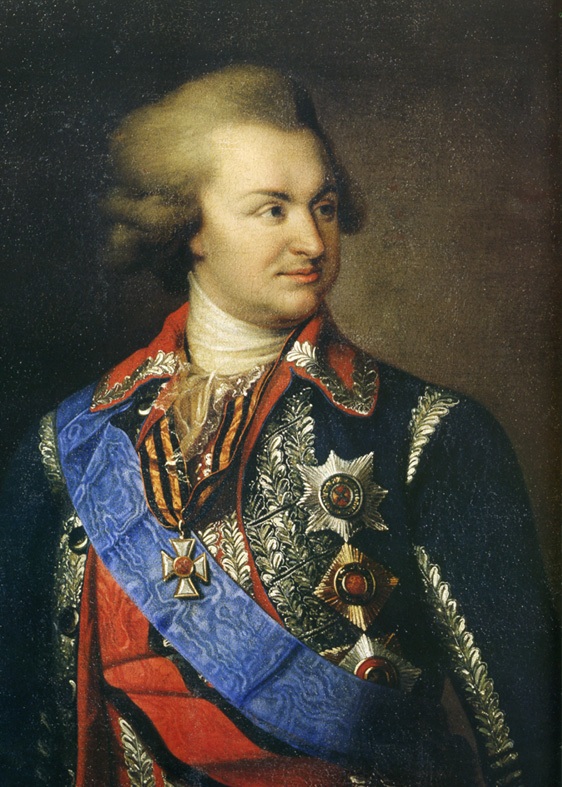
Prince Grigory Aleksandrovich Potemkin-Tauricheski (11 October [O.S. 30 September] 1739 – 16 October [O.S. 5 October] 1791) was a Russian military leader, statesman, nobleman, and favourite of Catherine the Great. He died during negotiations over the Treaty of Iași, which ended a war with the Ottoman Empire that he had overseen.
Potemkin was born into a family of middle-income landowners of Russian nobility. He first attracted Catherine's favor for helping in her 1762 coup, then distinguished himself as a military commander in the Russo-Turkish War (1768–1774). He became Catherine's lover, favorite and possibly her consort. After their passion cooled, he remained her lifelong friend and favored statesman. Catherine obtained for him the title of Prince of the Holy Roman Empire and gave him the title of Prince of the Russian Empire among many others: he was both a Grand Admiral and the head of all of Russia's land and irregular forces. Potemkin's achievements include the peaceful annexation of the Crimea (1783) and the successful second Russo-Turkish War (1787–1792), during which the armed forces under his command besieged Ochakov.
In 1775, Potemkin became the governor-general of Russia's new southern provinces. An absolute ruler, he worked to colonize the wild steppes, controversially dealing firmly with the Cossacks who lived there. He founded the towns of Kherson, Nikolayev, Sevastopol, and Yekaterinoslav. Ports in the region became bases for his new Black Sea Fleet.
His rule in the south is associated with the (probably mythical) "Potemkin village", a ruse involving the construction of painted façades to mimic real villages, full of happy, well-fed people, for visiting officials to see. Potemkin was known for his love of women, gambling and material wealth. He oversaw the construction of many historically significant buildings, including the Tauride Palace in Saint Petersburg.
A distant relative of the Muscovite diplomat Pyotr Potemkin (1617–1700), Grigory was born in the village of Chizhovo near Smolensk into a family of middle-income noble landowners. His father, Alexander Potemkin (1673–1746), was a decorated war veteran. His mother Daria Vasilievna Kondyreva (1704–1780) was "good-looking, capable and intelligent", though their marriage proved ultimately unhappy. Potemkin received his first name in honour of his father's cousin Grigory Matveevich Kizlovsky, a civil servant who became his godfather. Historian Simon Sebag Montefiore has suggested that Kizlovsky fathered Potemkin, who became the centre of attention, heir to the village and the only son among six children. As the son of an (albeit petty) noble family, he grew up with the expectation that he would serve the Russian Empire.
After Alexander died in 1746, Daria took charge of the family. In order to achieve a career for her son, and aided by Kizlovsky, the family moved to Moscow, where Potemkin enrolled at a gymnasium school attached to the University of Moscow. The young Potemkin became adept at languages and interested in the Russian Orthodox Church. He enlisted in the army in 1750 at age eleven, in accordance with the custom of noble children. In 1755 a second inspection placed him in the élite Horse Guards regiment.
Having graduated from the university school, Potemkin became one of the first students to enroll at the university itself. Talented in both Greek and theology, he won the university's gold medal in 1757 and became part of a twelve-student delegation sent to Saint Petersburg later that year. The trip seems to have affected Potemkin: afterwards he studied little and was soon expelled. Faced with isolation from his family, he rejoined the Guards, where he excelled. At this time his net worth amounted to 430 souls (serfs), equivalent to that of the poorer gentry. His time was taken up with "drinking, gambling, and promiscuous lovemaking", and he fell deep in debt.
Grigory Orlov, one of Catherine's lovers, led a palace coup in June 1762 that ousted the Emperor Peter III and enthroned Catherine II. Sergeant Potemkin represented his regiment in the revolt. Allegedly, as Catherine reviewed her troops in front of the Winter Palace before their march to the Peterhof, she lacked a sword-knot (or possibly hat plumage), which Potemkin quickly supplied. Potemkin's horse then appeared to refuse to leave her side for several minutes before Potemkin and the horse returned to the ranks.
Hub AI
Grigory Potemkin AI simulator
(@Grigory Potemkin_simulator)
Grigory Potemkin
Prince Grigory Aleksandrovich Potemkin-Tauricheski (11 October [O.S. 30 September] 1739 – 16 October [O.S. 5 October] 1791) was a Russian military leader, statesman, nobleman, and favourite of Catherine the Great. He died during negotiations over the Treaty of Iași, which ended a war with the Ottoman Empire that he had overseen.
Potemkin was born into a family of middle-income landowners of Russian nobility. He first attracted Catherine's favor for helping in her 1762 coup, then distinguished himself as a military commander in the Russo-Turkish War (1768–1774). He became Catherine's lover, favorite and possibly her consort. After their passion cooled, he remained her lifelong friend and favored statesman. Catherine obtained for him the title of Prince of the Holy Roman Empire and gave him the title of Prince of the Russian Empire among many others: he was both a Grand Admiral and the head of all of Russia's land and irregular forces. Potemkin's achievements include the peaceful annexation of the Crimea (1783) and the successful second Russo-Turkish War (1787–1792), during which the armed forces under his command besieged Ochakov.
In 1775, Potemkin became the governor-general of Russia's new southern provinces. An absolute ruler, he worked to colonize the wild steppes, controversially dealing firmly with the Cossacks who lived there. He founded the towns of Kherson, Nikolayev, Sevastopol, and Yekaterinoslav. Ports in the region became bases for his new Black Sea Fleet.
His rule in the south is associated with the (probably mythical) "Potemkin village", a ruse involving the construction of painted façades to mimic real villages, full of happy, well-fed people, for visiting officials to see. Potemkin was known for his love of women, gambling and material wealth. He oversaw the construction of many historically significant buildings, including the Tauride Palace in Saint Petersburg.
A distant relative of the Muscovite diplomat Pyotr Potemkin (1617–1700), Grigory was born in the village of Chizhovo near Smolensk into a family of middle-income noble landowners. His father, Alexander Potemkin (1673–1746), was a decorated war veteran. His mother Daria Vasilievna Kondyreva (1704–1780) was "good-looking, capable and intelligent", though their marriage proved ultimately unhappy. Potemkin received his first name in honour of his father's cousin Grigory Matveevich Kizlovsky, a civil servant who became his godfather. Historian Simon Sebag Montefiore has suggested that Kizlovsky fathered Potemkin, who became the centre of attention, heir to the village and the only son among six children. As the son of an (albeit petty) noble family, he grew up with the expectation that he would serve the Russian Empire.
After Alexander died in 1746, Daria took charge of the family. In order to achieve a career for her son, and aided by Kizlovsky, the family moved to Moscow, where Potemkin enrolled at a gymnasium school attached to the University of Moscow. The young Potemkin became adept at languages and interested in the Russian Orthodox Church. He enlisted in the army in 1750 at age eleven, in accordance with the custom of noble children. In 1755 a second inspection placed him in the élite Horse Guards regiment.
Having graduated from the university school, Potemkin became one of the first students to enroll at the university itself. Talented in both Greek and theology, he won the university's gold medal in 1757 and became part of a twelve-student delegation sent to Saint Petersburg later that year. The trip seems to have affected Potemkin: afterwards he studied little and was soon expelled. Faced with isolation from his family, he rejoined the Guards, where he excelled. At this time his net worth amounted to 430 souls (serfs), equivalent to that of the poorer gentry. His time was taken up with "drinking, gambling, and promiscuous lovemaking", and he fell deep in debt.
Grigory Orlov, one of Catherine's lovers, led a palace coup in June 1762 that ousted the Emperor Peter III and enthroned Catherine II. Sergeant Potemkin represented his regiment in the revolt. Allegedly, as Catherine reviewed her troops in front of the Winter Palace before their march to the Peterhof, she lacked a sword-knot (or possibly hat plumage), which Potemkin quickly supplied. Potemkin's horse then appeared to refuse to leave her side for several minutes before Potemkin and the horse returned to the ranks.
Recent media