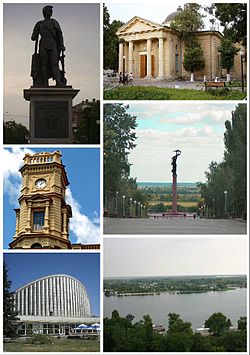
Recent from talks
Contribute something
Nothing was collected or created yet.
Kherson
View on Wikipedia
Kherson (Ukrainian and Russian: Херсон, Ukrainian: [xerˈsɔn] ⓘ, Russian: [xʲɪrˈson]) is a port city in southern Ukraine that serves as the administrative centre of Kherson Oblast. Located by the Black Sea and on the Dnieper River, Kherson is the home to a major ship-building industry and is a regional economic centre.[4] At the beginning of 2022, its population was estimated at 279,131.[4]
Key Information
From March to November 2022, the city was occupied by Russian forces during their invasion of Ukraine. Ukrainian forces recaptured the city on 11 November 2022. In June 2023, the city was flooded following the Russian[5] destruction of the nearby Kakhovka Dam.[6]
Etymology
[edit]As the first new settlement in the "Greek project" of Empress Catherine and her favourite Grigory Potemkin, it was named after the Heraclea Pontic colony of Chersonesus (Ancient Greek: Χερσόνησος, romanized: Khersónēsos [kʰer.só.nɛː.sos][a]) which was located on the Crimean Peninsula, meaning 'peninsular shore'.[7][8]
History
[edit]
Crimean Khanate 1648–1774
Russian Empire 1774–1917
- Beginning of 1917–1921 Revolution
Russian Provisional Government/Russian Republic Mar–Nov 1917
UPR Nov 1917 – Jan 1918
UPRS Jan–Apr 1918
Ukrainian People's Republic/Ukrainian State Apr 1918 – Jan 1919
Southern Russia Intervention Jan–Mar 1919
Ukrainian SSR Mar–May 1919
Borotbists May–Jul 1919
Ukrainian SSR Jul 1919
ARSR Jul 1919 – Apr 1920
Ukrainian SSR Apr 1920 – Dec 1922
- End of 1917–1921 Revolution
Soviet Union 1922–1941
Nazi Germany 1941–1944 (occupation)
Soviet Union 1944–1991
Ukraine 1991–2022
Russia Mar–Nov 2022 (occupation)
Ukraine 2022–present
Early days and Russian Empire era (until 1917)
[edit]Kherson was preceded by the town of Bilechowisce, first marked on a map by Guillaume Le Vasseur de Beauplan from 1648. Bilchowisce was listed as one of the three chief towns of Yedisan in a 1701 book by English cartographer Herman Moll.[9] A French-language map of the site in 1769 (inset) shows a Russian-built fort or sconce named St. Alexandre. This had been built in 1737 during the Russo-Turkish War and served the Zaporizhian Sich as an administrative center, run by local Cossacks.
The Russian Empire annexed the territory from the Crimean Khanate in 1774, and a decree of Catherine the Great on 18 June 1778 founded Kherson on the high bank of the Dnieper as a central fortress of the Black Sea Fleet.
1783 saw the city granted the rights of a district town and the opening of a local shipyard where the hulls of the Russian Black Sea fleet were laid. Within a year the Kherson Shipping Company began operations. By the end of the 18th century, the port had established trade with France, Italy, Spain and other European countries. Between 1783 and 1793 Poland's maritime trade via the Black Sea was conducted through Kherson by the Kompania Handlowa Polska. The Poles leased a piece of the shoreline and built houses, exchange offices, workshops and warehouses.[10] There was substantial immigration of Poles and a Polish consulate was established in 1783.[10] In 1791, Potemkin was buried in the newly built St. Catherine's Cathedral. In 1803 the city became the capital of the Kherson Governorate.[4]

Industry, beginning with breweries, tanneries and other food and agricultural processing, developed from the 1850s.[citation needed] According to the Geographical Dictionary of the Kingdom of Poland and other Slavic Countries from 1880, the city was mostly inhabited by Ukrainians, Greeks and Jews.[11] According to the 1897 census, the population of the city was 59,076 of which, on the basis of their first language, 47.2% were recorded as Russian, 29.1% as Jewish, 19.6% Ukrainian, 1.7% Polish.[12][13] During the revolution of 1905 there were workers' strikes and an army mutiny (an armed demonstration by soldiers of the 10th Disciplinary Battalion) in the city.[14]
Soviet era (1917–1991)
[edit]Early Bolshevik period
[edit]In the Russian Constituent Assembly election held in November 1917—the first and last free election in Kherson for 70 years—Bolsheviks who had seized power in Petrograd and Moscow received just 13.2 percent of the vote in the Governorate. The largest electoral bloc in the district, with 43 percent of the vote, was an alliance of Ukrainian Socialist Revolutionaries (SRs), Russian Socialist Revolutionaries and the United Jewish Socialist Workers Party.[15]
The Bolsheviks dissolved SR-dominated Assembly after its first sitting,[16] and proceeded to force from Kiev the Central Council of Ukraine (Tsentralna Rada) whose response to the Leninist coup had been to proclaim the independence of the Ukrainian People's Republic (UPR). But, before the Bolsheviks could secure Kherson, they were obliged to cede the region under the terms of the March 1918 Treaty of Brest-Litovsk to the German and Austrian controlled Ukrainian State. After the withdrawal of German and Austrian forces in November 1918, the efforts of the UPR (the Petluirites) to assert authority were frustrated by a French-led Allied intervention which occupied Kherson in January 1919.[17]

In March 1919, the Green Army of local warlord Otaman Nykyfor Hryhoriv ousted the French and Greek garrison and precipitated the Allied evacuation from Odesa. In July, the Bolsheviks defeated Hryhoriv who had called upon the Ukrainian people to rise against the "Communist impostors" and their "Jewish commissars",[18] and had perpetrated pogroms,[18] including in the Kherson region.[19] Kherson itself was occupied by the counter-revolutionary Whites before finally falling to the Bolshevik Red Army in February 1920.[4] In 1922 the city and region was formally incorporated into the Ukrainian SSR a constituent republic of the Soviet Union.[citation needed]
The population was radically reduced from 75,000 to 41,000 by the famine of 1921–1923, but then rose steadily, reaching 97,200 in 1939.[20]
World War II and post-War period
[edit]In 1940, the city was one of the sites of executions of Polish officers and intelligentsia committed by the Soviets as part of the Katyn massacre.[21]
Further devastation and population loss resulted from the German occupation during the Second World War. The German occupation, which lasted from August 1941 to March 1944, contended with both Soviet and Ukrainian nationalist (OUN) underground cells. The Kherson district leadership of the OUN was headed by Bohdan Bandera (brother of OUN leader Stepan Bandera).[22]
In September 1941, the Germans executed the city's remaining Jewish population, several thousand men, women and children, in anti-tank ditches near the village of Zelenivka.[23] Later, they used the place to bury Soviet soldiers from a prisoner-of-war camp in the city (Stalag 370).[24][25]
In the post-war decades, which saw substantial industrial growth, the population more than doubled, reaching 261,000 by 1970.[26] The new factories, including the Comintern Shipbuilding and Repairs Complex, the Kuibyshev Ship Repair Complex, and the Kherson Cotton Textile Manufacturing Complex (one of the largest textile plants in the Soviet Union), and Kherson's growing grain-exporting port, drew in labour from the Ukrainian countryside. This changed the city's ethnic composition, increasing the Ukrainian share from 36% in 1926 to 63% in 1959, while reducing the Russian share from 36 to 29%. The Jewish population never recovered from the Holocaust visited by the Germans: accounting for 26% of residents in 1926, their number had fallen to just 6% in 1959.[26]
In independent Ukraine
[edit]With a turnout of 83.4% of eligible voters, 90.1% of the votes cast in Kherson Oblast affirmed Ukrainian independence in the national referendum of 1 December 1991.[27] With the collapse of the Soviet Union, Kherson and its industries experienced severe dislocation. Over the following three decades, the population of both the city and the region declined, reflecting both a significant excess of deaths over live births and persistent net-emigration from the area.[28][29]
The 2014 pro-Russian unrest in eastern and southern Ukraine was marked in Kherson by a small demonstration of some 400 persons.[30] Following the Russian occupation of Crimea in 2014, Kherson housed the office of the Ukrainian President's representative in Crimea.[31]
In July 2020, as part of the general administrative reform of Ukraine, the Kherson Municipality was merged as Kherson urban hromada into newly established Kherson Raion, one of five raions in the Kherson Oblast of which the city remained the administrative centre.[32][33]

A "City Profile", part of the SCORE (Social Cohesion and Reconciliation)[34] Ukraine 2021 project funded by USAID, the United Nations Development Programme (UNDP), and the European Union, concluded that "more than 80% of citizens in Kherson city feel their locality is a good place to live, work, and raise a family". This was despite a low level of trust in the local authorities in whom corruption was perceived to be high. It also found that, while more inclined to express support for co-operation with Russia than for membership of the EU, "citizens in Kherson feel attached to their Ukrainian identity".[35]
2020 local election
[edit]In the last free elections before the 2022 Russian invasion, the Ukrainian local elections held on 25 October 2020, the results of Kherson City Council elections were as follows:[36]
| Party | Percentage of vote | Seats |
|---|---|---|
| We Have to Live Here! | 23.1% | 17 seats |
| Opposition Platform – For Life | 14.5% | 11 seats |
| Servant of the People | 13.0% | 10 seats |
| Volodymyr Saldo Bloc | 11.8% | 9 seats |
| European Solidarity | 8.6% |
The parties widely perceived as pro-Russian, and Euro-skeptic,[37] Opposition Platform, Volodymyr Saldo Bloc, and Party of Shariy (3.9%) had a combined vote of just over 30% of the total, and secured 20 out of the 54 seats on the city council. In the wake of the invasion, the Opposition Platform and the Party of Shariy were banned by the National Security Council for alleged ties to the Kremlin.[38][39][40]
The Volodymyr Saldo Bloc dissolved; its deputies in Kyiv joined the newly formed faction "Support to the programs of the President of Ukraine".[41] From 26 April 2022, Volodymyr Saldo himself, who had been mayor of Kherson from 2002 to 2012, went on to serve the Russian occupiers, as head of the Kherson military–civilian administration.[42][43]
Russian invasion from February 2022
[edit]Kherson witnessed heavy fighting in the first days of the 2022 Russian invasion of Ukraine (Kherson offensive).[44] As of 2 March the city was under Russian control,[45][46] and as early as 8 March the Russian FSB was reported to be tasked with crushing resistance.[47]
Under the Russian occupation, locals continued to stage street protests against the invading army's presence and in support of the unity of Ukraine.[48][49] According to the Ukrainian government, the Russian military sought to create a puppet Kherson People's Republic in the style of the Russian-backed separatist polities in the Donbas region and tried to coerce local councillors into endorsing the move, detaining those activists and officials who opposed their design.[50]
By 26 April 2022, Russian troops had taken over the city's administration headquarters and had appointed both a new mayor,[51] former KGB agent Alexander Kobets, and ex-mayor Volodymyr Saldo as a new civilian-military regional administrator.[52] The next day, Ukraine's Prosecutor General said that troops used tear gas and stun grenades to disperse a further pro-Ukraine rally in the city centre.[51] In an indication of an intended split from Ukraine, on the 28th the new administration announced that from May it would switch the region's payments to the Russian ruble. Citing unnamed reports about alleged discrimination against Russian speakers, its deputy head, Kirill Stremousov, said that "reintegrating the Kherson region back into a Nazi Ukraine is out of the question".[53]

On 30 September 2022, the Russian Federation claimed to have annexed Kherson Oblast.[54] The United Nations General Assembly condemned the proclaimed annexations with a vote of 143–5.[55]
Russian forces were ordered to withdraw from the city by defence minister Sergei Shoigu and regroup on the eastern side of the Dnieper on 9 November 2022. Ukrainian officials claimed that Russian troops were destroying bridges connecting the city to the other bank of the river.[56][57] On 11 November, Ukraine announced that its forces had entered the city following the Russian withdrawal.[58][59]

Before retreating, the Russian army destroyed infrastructure facilities of the city (communications, water, heat, electricity, TV tower),[60][61] looted two main museums (Local History Museum and the Art Museum), transporting their items to Crimean museums,[62][63] and took away several monuments to historical figures.[64][65]
In June 2023, the city was flooded following the Russian[5] destruction of the nearby Kakhovka Dam.[6]
On 23 October 2023, online voting concluded on the renaming of numerous streets and localities in Kherson for purposes of decolonization and derussification. This was in accordance with Law of Ukraine "On Condemnation and Prohibition of Propaganda of Russian Imperial Policy in Ukraine and Decolonization of Toponymy", giving local councils six months to remove problematic toponymy.[66]
With Russian forces entrenched just across the Dnipro River, the city remains subject to frequent shelling,[67] and since May 2024, to small drone attacks that target civilians in a terror campaign that has become known as the ″human safari″. Drones, according to American freelance journalist Zarina Zabrisky many of them funded by Russian civilians, hit targets such as people at bus stops, commuters and children playing in parks, with footage of the attacks being shared and celebrated on Russian social media.[68][69] According to the Kherson City Council Executive Committee, between 1 May and 16 December 2024, drone attacks in Kherson killed at least 30 civilians and injured another 483.[70] In March 2025, the regional governor, Oleksandr Prokudin, was reporting between 600 and 700 drone attacks a week in the city.[71]
In these conditions, the city's pre-war population of 280,000[4] has shrunk to just 60,000.[71]
Demographics
[edit]
|
| ||||||||||||||||||||||||||||||||||||||||||||||||||||||
| Source: [20][72] | |||||||||||||||||||||||||||||||||||||||||||||||||||||||
Ethnicity
[edit]According to the Ukrainian National Census in 2001, Kherson had a majority population of Ukrainians (76.5%), with a large minority of Russians (19.9%) and 3.6% others. The exact ethnic composition was as follows:[73]
Languages
[edit]| Languages | 1897[74] | 2001[75] |
|---|---|---|
| Ukrainian | 19.6% | 53.4% |
| Russian | 47.2% | 45.3% |
| Yiddish | 29.1% | |
| Polish | 1.7% | |
| German | 0.7% |
Administrative divisions
[edit]There are three urban districts:
- Tsentralnyi District, meaning the Central District,[76] is the central and oldest district of the city. Includes departments: Tavriiskyi, Pіvnichnyi and Mlyny.[citation needed] It was known as Suvorovskyi District until October 2023, when it was renamed in compliance with nationwide laws on derussification of toponymy. The old name was derived from that of the Tsarist Russian military leader Alexander Suvorov.[76]
- Dniprovskyi District, named for the Dnieper river. Includes departments: Antonivka, Molodizhne, Zelenivka, Petrivka, Bohdanivka, Soniachne, Naddniprianske, Inzhenerne.[citation needed]
- Korabelnyi District, which includes the following departments: Shumenskyi, Korabel, Zabalka, Sukharne, Zhytloselyshche, Selyshche-4, Selyshche-5.[citation needed]
Geography
[edit]Climate
[edit]Under the Köppen climate classification, Kherson has a humid continental climate (Dfa).[77]
| Climate data for Kherson (1991–2020, extremes 1955–present) | |||||||||||||
|---|---|---|---|---|---|---|---|---|---|---|---|---|---|
| Month | Jan | Feb | Mar | Apr | May | Jun | Jul | Aug | Sep | Oct | Nov | Dec | Year |
| Record high °C (°F) | 15.2 (59.4) |
18.6 (65.5) |
24.9 (76.8) |
32.0 (89.6) |
37.7 (99.9) |
39.5 (103.1) |
40.5 (104.9) |
40.7 (105.3) |
36.4 (97.5) |
32.0 (89.6) |
21.8 (71.2) |
17.2 (63.0) |
40.7 (105.3) |
| Mean daily maximum °C (°F) | 1.4 (34.5) |
3.1 (37.6) |
8.8 (47.8) |
16.5 (61.7) |
22.9 (73.2) |
27.5 (81.5) |
30.3 (86.5) |
30.1 (86.2) |
23.7 (74.7) |
16.1 (61.0) |
8.4 (47.1) |
3.3 (37.9) |
16.0 (60.8) |
| Daily mean °C (°F) | −1.6 (29.1) |
−0.6 (30.9) |
4.1 (39.4) |
10.6 (51.1) |
16.7 (62.1) |
21.2 (70.2) |
23.8 (74.8) |
23.3 (73.9) |
17.5 (63.5) |
10.9 (51.6) |
4.7 (40.5) |
0.4 (32.7) |
10.9 (51.6) |
| Mean daily minimum °C (°F) | −4.4 (24.1) |
−3.8 (25.2) |
0.0 (32.0) |
5.0 (41.0) |
10.6 (51.1) |
15.3 (59.5) |
17.5 (63.5) |
16.7 (62.1) |
11.8 (53.2) |
6.3 (43.3) |
1.6 (34.9) |
−2.2 (28.0) |
6.2 (43.2) |
| Record low °C (°F) | −26.3 (−15.3) |
−24.4 (−11.9) |
−20.2 (−4.4) |
−7.9 (17.8) |
−1.5 (29.3) |
5.5 (41.9) |
9.2 (48.6) |
6.6 (43.9) |
−5.0 (23.0) |
−7.6 (18.3) |
−16.2 (2.8) |
−22.2 (−8.0) |
−26.3 (−15.3) |
| Average precipitation mm (inches) | 33 (1.3) |
28 (1.1) |
30 (1.2) |
32 (1.3) |
43 (1.7) |
59 (2.3) |
44 (1.7) |
29 (1.1) |
38 (1.5) |
36 (1.4) |
34 (1.3) |
38 (1.5) |
444 (17.5) |
| Average extreme snow depth cm (inches) | 2 (0.8) |
3 (1.2) |
1 (0.4) |
0 (0) |
0 (0) |
0 (0) |
0 (0) |
0 (0) |
0 (0) |
0 (0) |
0 (0) |
1 (0.4) |
3 (1.2) |
| Average rainy days | 9 | 7 | 9 | 12 | 11 | 11 | 9 | 6 | 9 | 9 | 12 | 10 | 114 |
| Average snowy days | 11 | 10 | 6 | 0 | 0 | 0 | 0 | 0 | 0 | 0.3 | 4 | 8 | 39 |
| Average relative humidity (%) | 86.5 | 82.6 | 75.9 | 66.7 | 65.2 | 63.6 | 60.1 | 57.8 | 65.8 | 76.2 | 84.8 | 87.1 | 72.7 |
| Mean monthly sunshine hours | 66 | 89 | 142 | 215 | 275 | 301 | 333 | 307 | 233 | 152 | 76 | 49 | 2,238 |
| Source 1: Pogoda.ru.net[78] | |||||||||||||
| Source 2: NOAA (humidity and sun 1991–2020)[79] | |||||||||||||
Transport
[edit]
Kherson has a seaport on the Dnieper river – the Port of Kherson – and a port on the Koshevaya or Koshova river – the Kherson River Port.
Kherson is connected to the national railroad network of Ukraine. There are daily long-distance services to Kyiv, Lviv and other cities.
Kherson is served by Kherson International Airport.[80] It operates a 2,500 x 42-meter concrete runway, accommodating Boeing 737, Airbus 319/320 aircraft, and helicopters of all series.[81]
Economy
[edit]- Kherson Shipyard
- VVV-Spetstekhnika dredger factory
Education
[edit]
There are 77 high schools as well as 5 colleges. There are 15 institutions of higher education, including:
- Kherson State Maritime Academy
- Kherson State Agrarian and Economic University
- Kherson State University
- Kherson National Technical University
- International University of Business and Law
The documentary Dixie Land was filmed at a music school in Kherson.[82]
Main sights
[edit]
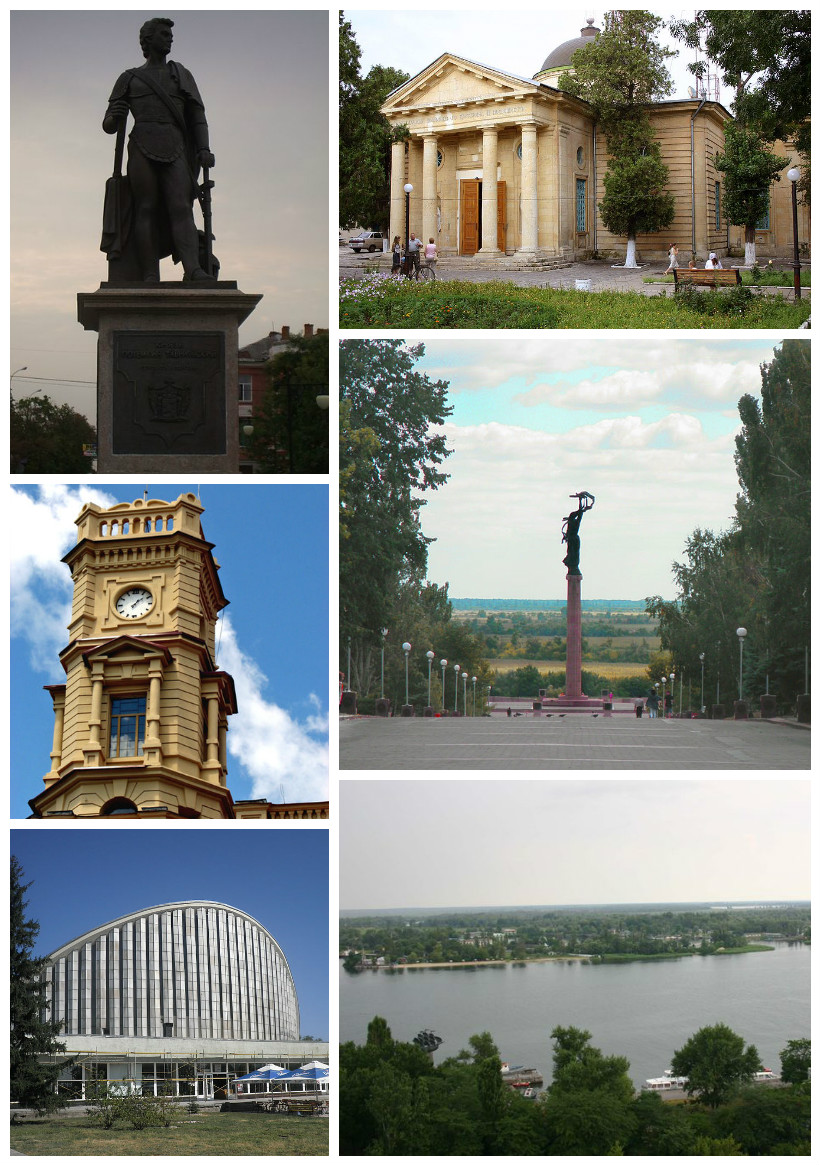
- The Church of St. Catherine – was built in the 1780s, supposedly to Ivan Starov's designs, and contains the tomb of Prince Grigory Potemkin.
- Jewish cemetery – Kherson has a large Jewish community which was established in the mid-nineteenth century.[83]
- Kherson TV Tower
- Adziogol Lighthouse, a hyperboloid structure designed by Vladimir Shukhov in 1911
- The Kherson Art Museum[84] has a collection of icons, and Ukrainian and Russian paintings and sculptures. Particularly noteworthy are Portrait of a Woman (1883) by Konstantin Makovsky; The Tempest is Coming by Ivan Aivazovsky; Sunset by Alexei Savrasov; Cattle Yard in Abramtsevo by Vasily Polenov; At the Stone by Ivan Kramskoi; The Charioteer, by Peter Clodt von Jürgensburg (sculptor); Prince Svyatoslav by Eugene Lanceray (sculptor); Mephistopheles by Mark Antokolsky (sculptor); Near the Monastery by German painter August von Bayer (1859); Oaks (1956); Moloditsya (1938) and Still Life with the Blue Broom (1930), by Oleksii Shovkunenko (born in Kherson).
Notable people
[edit]


- Grigory Adamov (1886–1945), Soviet science fiction writer
- Georgy Arbatov (1923–2010), Soviet and Russian political scientist.[85]
- Vladimir Baranov-Rossine (1888–1944), Ukrainian/Russian/French painter, avant-garde artist and inventor.
- Max Barskih (born 1990), Ukrainian singer and songwriter.
- Kristina Berdynskykh (born 1983), political journalist.[86]
- Stefania Berlinerblau (1852–1921), American anatomist and physician, investigated blood circulation
- Maximilian Bern (1849–1923), German writer and editor.
- Sergei Bondarchuk (1920–1994), Soviet and Russian actor, film director, and screenwriter
- Lev Davidovitch Bronstein (1879–1940), better known as Leon Trotsky, Bolshevik revolutionary and Marxist theorist, was born in the village of Bereslavka, Kherson Governorate.[87]
- Artem Datsyshyn (1979–2022), Ukrainian ballet dancer and soloist
- Ivan Gannibal (1735–1801), eminent Russian military leader and a founder of the city
- Sergei Garmash (born 1958), Soviet and Russian film and stage actor.
- Yefim Golïshev (1897–1970), painter and composer associated with the Dada movement in Berlin.
- Nikolai Grinko (1920–1989), Soviet and Ukrainian actor
- Kateryna Handziuk (1985–2018), Ukrainian civil rights and anti-corruption activist
- John Howard (1726–1790), English prison reformer; he died of typhus whilst in Kherson.[88]
- Mircea Ionescu-Quintus (1917–2017), Romanian politician, writer and jurist
- Yurii Kerpatenko (1976–2022), Ukrainian conductor
- Ihor Kolykhaiev (born 1971), Ukrainian politician and entrepreneur, Mayor of Kherson since 2020
- Samuel Maykapar (1867–1938), Russian romantic composer, pianist and professor of music
- Yuriy Odarchenko (born 1960), a politician, Governor of Kherson Oblast since 2014
- Nicholas Perry (born 1992), social media personality, known online as Nikocado Avocado
- Sergei Polunin (born 1989), Russian ballet dancer, actor and model.[89]
- Prince Grigory Potemkin (1739–1791), military leader, statesman and nobleman; a founder of the city.[90]
- Salomon Rosenblum (1873–1925), later known as Sidney Reilly, a secret agent, adventurer and playboy, employed by the British Secret Intelligence Service; may have inspired spy character, James Bond.
- Nissan Rilov (1922–2007), former soldier, Israeli artist and supporter of Palestinians
- Moshe Sharett (1894–1965), 2nd Prime Minister of Israel from 1953 to 1955
- Viktor Petrovich Skarzhinsky (1787–1861), wealthy landowner; squadron commander in the Russian Patriotic War of 1812[91]
- Inna Shevchenko (born 1990), Ukrainian feminist and leader of the women's movement FEMEN
- Sergei Stanishev (born 1966), Bulgarian politician, 49th Prime Minister of Bulgaria
- Prince Alexander Suvorov (1730–1800), Russian general; a founder of the city.[92]
- Svitlana Tarabarova (born 1990), Ukrainian singer, songwriter, music producer and actress.
- Mikhail Yemtsev (1930–2003), Soviet and Russian science fiction writer

Sport
[edit]- Anastasiia Chetverikova (born 1998), sprint canoeist, team silver medallist at the 2020 Summer Olympics
- Inna Gaponenko (born 1976), chess player, International Master & Woman Grandmaster.
- Oleksandr Holovko (born 1972), former footballer with 414 club caps and 58 for Ukraine
- Pavlo Ishchenko (born 1992), Ukrainian-Israeli boxer
- Oleksandr Karavayev (born 1992), footballer with over 250 club caps and 45 for Ukraine
- Yevhen Kucherevskyi (1941–2006), Ukrainian football coach of Dnipro Dnipropetrovsk
- Larisa Latynina (born 1934), Soviet gymnast, has won nine Olympic gold medals
- Tatiana Lysenko (born 1975), Soviet and Ukrainian gymnast, two gold and a bronze medal at the 1992 Summer Olympics
- Yuriy Maksymov (born 1968), football coach and former midfielder with 384 club caps and 27 for Ukraine.
- Yuri Nikitin (born 1978), gymnast and gold medallist at the 2004 Summer Olympics
- Tancerev Mykola Olegovich (born 1997), professional rower
- Sergei Postrekhin (born 1957), sprint canoer, gold and silver medallist at the 1980 Summer Olympics
- Serhiy Shevchenko (1958-2024), Ukrainian football player and coach
- Serhiy Tretyak (born 1963), retired Ukrainian footballer with over 500 club caps
- David Tyshler (1927–2014), Ukrainian/Soviet fencer, two gold and a bronze medal at the 1956 Summer Olympics
- Roman Vintov (born 1978), former Russian/Ukrainian footballer with over 460 club caps
Twin cities
[edit]Notes
[edit]References
[edit]- ^ "Прокудін розповів, скільки людей зараз проживають у Херсоні" [Prokudin stated how many people currently live in Kherson]. Ukrinform (in Ukrainian). 28 January 2025. Archived from the original on 22 August 2025.
- ^ "Kherson left partially without power after Russian attack". Ukrainska Pravda. Retrieved 29 September 2025.
- ^ Alona Zakharov (21 September 2022). "Was Kolyhaev's secretary: Zelensky appointed a head of the Herson military administration". 24 Kanal (in Ukrainian). Archived from the original on 25 December 2022. Retrieved 25 December 2022.
- ^ a b c d e "Херсон" [Kherson]. In Vvedensky, B. A., ed. (1957). Большая Советская Энциклопедия [The Great Soviet Encyclopedia]. Vol. 46. 2nd ed. Moscow: State Scientific Publishing House. pp. 121–122.
- ^ a b Glanz, James; Santora, Marc; Robles, Pablo; Willis, Haley; Leatherby, Lauren; Koettl, Christoph; Khavin, Dmitriy (16 June 2023). "Why the Evidence Suggests Russia Blew Up the Kakhovka Dam". The New York Times. Retrieved 30 October 2024.
- ^ a b Sabbagh, Dan (6 June 2023). "As flood waters rise around them, Kherson residents cast blame for destroyed dam on 'inhumane' Moscow". The Guardian. ISSN 0261-3077. Archived from the original on 6 June 2023. Retrieved 6 June 2023.
- ^ Yanko, M. T. (1998). Toponimichnyi slovnyk Ukrainy: slobnyk-doidnyk Топонімічний словник України: словник-довідник [Toponymic dictionary of Ukraine: Reference Dictionary].
- ^ Luchyk, V. V. (2014). Etymolohichnyi slovnyk toponimiv Ukrainy Етимологічний словник топонімів України [Etymological dictionary of Toponyms of Ukraine].
- ^ Moll, Herman (1701). A System Of Geography: Or, A New & Accurate Description Of The Earth In all its Empires, Kingdoms and States. Illustrated with History and Topography, And Maps of every Country, Fairly Engraven on Copper, according to the latest Discoveries and Corrections. London. p. 442.
- ^ a b Mądzik, Marek (1973). "Z dziejów polskiego handlu na pobrzeżu Morza Czarnego w końcu XVIII w.". Annales Universitatis Mariae Curie-Skłodowska (in Polish). 28: 212.
- ^ Słownik geograficzny Królestwa Polskiego i innych krajów słowiańskich, Tom I (in Polish). Warszawa. 1880. p. 571.
{{cite book}}: CS1 maint: location missing publisher (link) - ^ Первая Всеобщая перепись населения Российской империи, 1897 г. (in Russian). Vol. XLVII. 1904. pp. 90–95.
- ^ Демоскоп Weekly – Приложение. Справочник статистических показателей. Demoscope.ru. Archived from the original on 11 June 2022. Retrieved 19 July 2022.
- ^ "Херсон" [Kherson]. In Zhukov, E. M., ed. (1974). Советская историческая энциклопедия [Soviet Historical Encyclopedia]. Vol. 15. Moscow: State Scientific Publishing House. pp. 504–506, 571–573.
- ^ Oliver Henry Radkey (1989). Russia goes to the polls: the election to the all-Russian Constituent Assembly, 1917. Cornell University Press. pp. 161–163. ISBN 978-0-8014-2360-4.
- ^ Figes, Orlando (1997). A People's Tragedy: The Russian Revolution 1891–1924, London: Pimlico. p. 516.
- ^ Akulov, Mikhail (18 October 2013). War Without Fronts: Atamans and Commissars in Ukraine, 1917–1919 (doctoral dissertation). Archived from the original on 3 April 2019. Retrieved 10 August 2022 – via Digital Access to Scholarship at Harvard.
- ^ a b Werth, Nicolas (2019). "Chap. 5: 1918–1921. Les pogroms des guerres civiles russes" [The pogroms of the Russian civil wars]. Le cimetière de l'espérance. Essais sur l'histoire de l'Union soviétique (1914–1991) [Cemetery of Hope. Essays on the History of the Soviet Union (1914–1991)]. Collection Tempus (in French). Perrin. ISBN 978-2-262-07879-9.
- ^ Danilenko, Vladimir (2006). Jewish Pogroms in Ukraine, 1918–1921. Fond FR-3050 Kiev District Commission of the Jewish Public Committee for the Provision of Aid to Victims of Pogroms; Opis' 1–3 (PDF). Kyiv: The State Archive of the Kyiv Oblast. p. 4. Archived (PDF) from the original on 28 September 2021. Retrieved 6 April 2022.
- ^ a b "Kherson". www.encyclopediaofukraine.com. Archived from the original on 30 October 2023. Retrieved 1 November 2023.
- ^ Strasz, Małgorzata, ed. (2020). Zbrodnia katyńska (in Polish). Warsaw: IPN. p. 17. ISBN 978-83-8098-825-5.
- ^ Koval'chuk, Vladimir. Богдан – загадочный брат Степана Бандеры [Bohdan is the mysterious brother of Stepan Bandera]. День [Dyen'], No. 30, 20 February 2009.
- ^ Megargee, Geoffrey P.; Dean, Martin (2012). The United States Holocaust Memorial Museum Encyclopedia of Camps and Ghettos, 1933-1945, Volume II: Ghettos in German-Occupied Eastern Europe. Indiana University Press. pp. 1614–1625.
- ^ "Gefängnis Cherson" [Kherson Prison] (in German). Germany: The Federal Archives. Archived from the original on 7 May 2022. Retrieved 7 May 2022.
- ^ "German Camps". Retrieved 7 May 2022.
- ^ a b "Kherson". Encyclopedia of Ukraine. Archived from the original on 11 March 2022. Retrieved 6 April 2022.
- ^ "Ukrainian Independence Referendum". Seventeen Moments in Soviet History. 28 September 2015. Archived from the original on 14 April 2022. Retrieved 6 April 2022.
- ^ На Херсонщині демографічна ситуація загострюється: на 100 померлих – 38 новонароджених [In the Kherson region, the demographic situation is worsening: 38 newborns per 100 deaths]. Kherson News (in Ukrainian). Archived from the original on 31 August 2022. Retrieved 31 August 2022.
- ^ На Херсонщині зменшується чисельність населення [In the Kherson region, the population is decreasing]. Khersonci (in Ukrainian). Archived from the original on 30 September 2022. Retrieved 31 August 2022.
- ^ В Херсоне прошел пророссийский митинг [Pro-Russian rally held in Kherson]. Liga.net (in Ukrainian). 1 March 2014. Archived from the original on 10 August 2022. Retrieved 10 August 2022.
- ^ Official website Archived 3 March 2016 at the Wayback Machine. Presidential representative of Ukraine in Crimea.
- ^ Про утворення та ліквідацію районів. Постанова Верховної Ради України № 807-ІХ [About the formation and liquidation of districts. Resolution of the Verkhovna Rada of Ukraine No. 807-IX]. Holos Ukrainy Голос України [Voice of Ukraine] (in Ukrainian). 18 July 2020. Archived from the original on 9 July 2021. Retrieved 3 October 2020.
- ^ Нові райони: карти + склад [New areas: maps + composition] (in Ukrainian). Ministry of Development of Communities and Territories of Ukraine. 17 July 2020. Archived from the original on 2 March 2021. Retrieved 26 September 2021.
- ^ Newton, Andrew. "SCORE Index". www.scoreforpeace.org. Archived from the original on 1 September 2022. Retrieved 10 August 2022.
- ^ SCORE Eastern Ukraine 2021 (23 June 2022). "Kherson 2021, City Profile – Ukraine". ReliefWeb. Archived from the original on 30 September 2022. Retrieved 10 August 2022.
- ^ "Kherson. City Council elections 25 October 2020. Results, Ukraine Elections". ukraine-elections.com.ua. Archived from the original on 25 May 2022. Retrieved 26 June 2022.
- ^
- "Kennan Cable No. 45: Six Reasons the 'Opposition Platform' Won in Eastern Ukraine". Woodrow Wilson International Center for Scholars. Archived from the original on 28 March 2022. Retrieved 19 August 2021.
- "The changing face of pro-Russian political forces in Ukraine". Uacrisis.org. 9 July 2021. Archived from the original on 28 March 2022. Retrieved 19 August 2021.
- ^ "Parliament dissolves pro-Russian Opposition Platform faction following Security Council ban". Kyiv Independent. 14 April 2022. Archived from the original on 25 June 2022. Retrieved 26 June 2022.
- ^ "NSDC bans pro-Russian parties in Ukraine". Ukrinform. 20 March 2022. Archived from the original on 20 March 2022. Retrieved 20 March 2022.
- ^ (in Ukrainian) "Court bans Sharia Party". Archived 26 June 2022 at the Wayback Machine. Ukrainska Pravda (16 June 2022)
- ^ Депутати 'Блоку Сальдо' не згодні з діями Сальдо: написали лист керівництву Херсонської облради [Deputies of the "Saldo Bloc" do not agree with the actions of Saldo: they wrote a letter to the leadership of the Kherson Regional Council]. Suspil'ne (in Ukrainian). 14 March 2022. Archived from the original on 20 March 2022. Retrieved 20 March 2022.
- ^ "Kherson mayor refuses to cooperate with collaborators and invaders". Ukrinform. 26 April 2022. Archived from the original on 8 June 2022. Retrieved 27 April 2022.
- ^ Российские оккупационные силы назначили своих 'руководителей' в Херсоне и области [Russian occupation forces have appointed their 'leaders' in Kherson and the region]. Crimea.Realities (in Russian). 26 April 2022. Archived from the original on 9 May 2022. Retrieved 27 April 2022.
- ^ "Fighting under way near Kherson, Mykolaiv, Odessa – Ukrainian official". Reuters. 26 February 2022. Archived from the original on 26 February 2022. Retrieved 26 February 2022.
- ^ Oliphant, Roland (2 March 2022). "Vladimir Putin set to 'cut Ukraine in two' as key city of Kherson falls to Russians". The Daily Telegraph. Archived from the original on 3 March 2022. Retrieved 3 March 2022.
- ^ "Kherson falls – Kyiv under fire – Mariupol tragedy". Politico.eu. 3 March 2022. Archived from the original on 3 March 2022. Retrieved 3 March 2022.
- ^ "Ukraine's military: As Russian invasion slows down, FSB goes after resistance in Kherson and Mykolaiv regions". The Kyiv Independent. 8 March 2022. Archived from the original on 6 July 2022. Retrieved 6 July 2022.
- ^ "Crowds take to the streets of Kherson". BBC News. 13 March 2022. Archived from the original on 13 March 2022. Retrieved 13 March 2022.
- ^ Peterson, Scott; Naselenko, Oleksandr (6 April 2022). "Tear gas, arrogance, and resistance: Life in Russia-occupied Kherson". Christian Science Monitor. ISSN 0882-7729. Archived from the original on 20 June 2022. Retrieved 7 April 2022.
- ^ "Missing reporter among several journalists, activists and officials said to be detained by Russian forces". CNN. 19 March 2022. Archived from the original on 19 March 2022. Retrieved 19 March 2022.
- ^ a b Prentice, Alessandra; Zinets, Natalia (27 April 2022). "Russian forces disperse pro-Ukraine rally, tighten control in occupied Kherson". Reuters. Archived from the original on 8 May 2022. Retrieved 27 April 2022.
- ^ "Russian-Occupied Kherson Names New Leadership Amid Pro-Ukraine Protests, Rocket Attacks". The Moscow Times. 28 April 2022. Archived from the original on 7 May 2022. Retrieved 28 April 2022.
- ^ Vasilyeva, Nataliya (28 April 2022). "Occupied Kherson will switch to Russian currency, puppet government says". The Telegraph. ISSN 0307-1235. Archived from the original on 7 May 2022. Retrieved 28 April 2022.
- ^ "Russia-Ukraine war live: Putin annexes Ukrainian regions; Kyiv applies for Nato membership". The Guardian. 30 September 2022. Archived from the original on 27 October 2023. Retrieved 30 September 2022.
- ^ "UN General Assembly Condemns Russia's 'Illegal Annexation' Of Ukrainian Regions". Radio Free Europe/Radio Liberty. 12 October 2022. Archived from the original on 9 November 2022. Retrieved 9 November 2022.
- ^ Trevelyan, Mark (9 November 2022). "Russia abandons Ukrainian city of Kherson in major retreat". Reuters. Archived from the original on 10 November 2022. Retrieved 9 November 2022.
- ^ "Russia orders retreat from Kherson, key city in southern Ukraine". NBC News. 9 November 2022. Archived from the original on 9 November 2022. Retrieved 9 November 2022.
- ^ "Ukraine says its forces entering Kherson after Russian retreat". RTÉ News. 11 November 2022. Archived from the original on 11 November 2022. Retrieved 11 November 2022.
- ^ "Ukrainian forces enter Kherson after Russian retreat". Archived 24 November 2022 at the Wayback Machine. Times of Israel. Accessed 26 February 2024.
- ^ Освобождение Херсона и другие события 261-го дня войны [Liberation of Kherson and other events of the 261st day of the war]. Deutsche Welle (in Russian). 11 November 2022. Archived from the original on 28 November 2022.
- ^ Возвращение. Как живет освобожденный Херсон [Return. How liberated Kherson lives]. Deutsche Welle (in Russian). 22 November 2022. Archived from the original on 3 December 2022.
- ^ "Ukraine reports looting of Kherson museums by Russian troops". El País. 17 November 2022. Archived from the original on 10 February 2023. Retrieved 5 December 2022.
- ^ "Russia to take over Ukrainian museum collections as formal annexation plans announced". The Art Newspaper. 30 September 2022. Archived from the original on 14 November 2022.
- ^ 'У нас будет бойня, мы готовы'. Кто остается в Херсоне и кто его покидает ['We will have a massacre, we are ready'. Who is staying in Kherson and who is leaving it]. BBC News (in Russian). 27 October 2022. Archived from the original on 19 November 2022.
- ^ В РФ заявили об атаке беспилотников на Черноморский флот и выходе из 'зерновой сделки'. 248-й день войны России против Украины [Russia announces drone attack on Black Sea Fleet and withdrawal from 'grain deal'. 248th day of Russia's war against Ukraine]. Radio France internationale (in Russian). 29 October 2022. Archived from the original on 30 October 2022.
- ^ Husakov, V'yacheslav (23 October 2023). Нові назви херсонських вулиць: що обрали учасники онлайн-голосування [New names of Kherson streets: what the participants of the online voting chose]. Most (in Ukrainian). Archived from the original on 30 October 2023. Retrieved 30 October 2023.
- ^ Nielson, Nikolaj (1 February 2024). "Kherson – a city under siege on Ukraine's 1,000km frontline". EUobserver. Retrieved 4 June 2024.
- ^ Hambling, David (11 October 2024). "Terrifying 'Human Safari' In Kherson As Russian Drones Hunt Civilians". Forbes. Retrieved 30 October 2024.
- ^ Zivo, Adam (9 October 2024). "Russian drones are hunting civilians in Ukraine". National Post. Retrieved 30 October 2024.
- ^ "Hunted From Above". Human Rights Watch. 3 June 2025.
- ^ a b Hunder, Max (24 March 2025). "Ukraine's most dangerous city craves respite from killer drones as peace talks run on". Reuters.
- ^ "Cities & Towns of Ukraine".
- ^ "Національний склад міст".
- ^ Национальный состав населения городов (по языку) Archived 13 August 2015 at the Wayback Machine Всероссийская перепись населения 1897
- ^ "Рідні мови в об'єднаних територіальних громадах України".
- ^ a b "In Kherson, the city's Suvorovsky district was renamed Central". Ukrinform (in Ukrainian). 18 October 2023. Archived from the original on 7 November 2023. Retrieved 16 November 2023.
- ^ Peel, M. C.; Finlayson, B. L.; McMahon, T. A. (2007). "Updated world map of the Köppen–Geiger climate classification" (PDF). Hydrology and Earth System Sciences. 11 (5): 1633–1644. Bibcode:2007HESS...11.1633P. doi:10.5194/hess-11-1633-2007. ISSN 1027-5606. Archived (PDF) from the original on 3 February 2012.
- ^ "Pogoda.ru.net" (in Russian). May 2011. Archived from the original on 14 December 2019. Retrieved 8 November 2021.
- ^ "Kherson Climate Normals 1991–2020". World Meteorological Organization Climatological Standard Normals (1991–2020). National Oceanic and Atmospheric Administration. Archived from the original (CSV) on 20 April 2025. Retrieved 20 April 2025.
- ^ "Міжнародний аеропорт Херсон". Khe.aero. Archived from the original on 3 February 2022. Retrieved 19 July 2022.
- ^ "AIS of Ukraine". Archived from the original on 13 August 2013. Retrieved 22 August 2013.
- ^ Bondarchuk, Roman. "Dixie Land". Cineuropa. Archived from the original on 8 May 2021. Retrieved 24 February 2021.
- ^ "KHERSON". JewishEncyclopedia.com. Archived from the original on 22 September 2012. Retrieved 19 August 2012.
- ^ "Херсонський обласний художній музей ім. Олексія Шовкуненка". Artmuseum.ks.ua. Archived from the original on 25 March 2022. Retrieved 19 July 2022.
- ^ Levy, Clifford J. "Georgi A. Arbatov, a Bridge Between Cold War Superpowers, Is Dead at 87" Archived 6 February 2015 at the Wayback Machine, The New York Times, 2 October 2010. Accessed 4 October 2010.
- ^ "My return to Kherson: the courage of my hometown". Financial Times. Retrieved 8 September 2025.
- ^ Vinogradoff, Paul (1922). . Encyclopædia Britannica. Vol. 32 (12th ed.). pp. 781–782.
- ^ . Encyclopædia Britannica. Vol. 13 (11th ed.). 1911. pp. 832–833.
- ^ "Self-destructive dance superstar Sergei Polunin: 'Ukraine put me on a list of terrorists'". TheGuardian.com. 7 March 2019. Archived from the original on 6 February 2022. Retrieved 7 February 2022.
- ^ Bain, Robert Nisbet (1911). . Encyclopædia Britannica. Vol. 22 (11th ed.). p. 205.
- ^ Мицик, Ю.А.; Томазов, В.В. "СКАРЖИНСЬКІ". Institute of History of Ukraine (in Ukrainian). Archived from the original on 15 April 2023. Retrieved 8 February 2023.
- ^ . Encyclopædia Britannica. Vol. 26 (11th ed.). 1911. pp. 172–173.
- ^ "Cherson - Partnerstadt der Landeshauptstadt Kiel". Retrieved 7 March 2024.
External links
[edit]- . Encyclopædia Britannica. Vol. 15 (11th ed.). 1911. p. 776.
- . Encyclopædia Britannica. Vol. 15 (11th ed.). 1911. p. 776.
- Pictures of Kherson Archived 29 January 2018 at the Wayback Machine
- The murder of the Jews of Kherson during World War II, at Yad Vashem website.
Kherson
View on GrokipediaName and Etymology
Etymology and historical naming
The name Kherson originates from the Russian transliteration Херсон, adopted at the city's founding in 1778 as a deliberate reference to the ancient Greek colony of Chersonesos (Χερσόνησος), located on the southwestern tip of the Crimean Peninsula and established around 422 BCE.[7] This nomenclature evoked the Greek chersónēsos, combining chersós ("dry land" or "barren") and nêsos ("island"), literally denoting a "peninsula" to reflect the site's protruding geography into the Black Sea.[8] The choice aligned with Catherine II's imperial "Greek project," which sought to symbolically link New Russia to classical antiquity through revived Hellenic toponyms, as evidenced in 18th-century Russian state decrees and Potemkin's correspondence.[9] Historically, the name remained stable under Russian imperial administration, appearing as Херсонъ in official documents from the late 1700s onward, without significant variants or indigenous pre-founding designations for the specific urban site, which lacked prior permanent settlement.[10] This Russian form, rooted in phonetic adaptation of the Greek original rather than Scythian or Turkic precursors to the region, persisted through the 19th and early 20th centuries in imperial gazetteers and censuses, underscoring its origin in Enlightenment-era classicism over local ethnic linguistics.[11] Post-1778, Russian governance formalized Kherson as the exclusive designation, distinguishing it from broader peninsular references like Chersonesus Taurica in classical texts.[9]History
Early settlement and Cossack era
The lower Dnieper region, encompassing the area of modern Kherson at the river's estuary into the Black Sea, features archaeological evidence of Scythian activity from the 5th century BCE onward, including fortified hillforts such as Konsulivske, which belonged to late Scythian settlements in the steppe zone.[12] These sites reveal defensive structures adapted to the open terrain, indicating semi-permanent occupations amid nomadic pastoralism. Greek influences are attested through artifacts like coins and ceramics unearthed near the Dnieper, reflecting interactions with coastal colonies such as Olbia, approximately 100 km upstream, where Scythian elites acquired imported goods via trade routes.[13] Subsequent waves of nomadic tribes, including Sarmatians, Pechenegs, Cumans, and Mongol-era groups under the Golden Horde, dominated the steppe, prioritizing mobility over fixed agriculture due to the vast grasslands, seasonal flooding, and vulnerability to raids. By the 15th century, the territory integrated into the Crimean Khanate's sphere, where Nogai and Tatar nomads conducted regular incursions, rendering the area known as the "Wild Fields" largely depopulated except for transient herding camps. Ottoman records from the 16th-17th centuries describe the estuary environs as sparsely inhabited buffer zones, patrolled to counter steppe threats rather than settled intensively.[14] From the late 16th century, Zaporozhian Cossacks, operating from upstream strongholds like the Dnieper Sich, extended their reach to the estuary through riverine raids targeting Ottoman ports and Tatar encampments, establishing temporary outposts for provisioning and reconnaissance. These expeditions, peaking in the early 17th century under leaders like Petro Sahaidachny, secured intermittent control over the lower Dnieper for maritime strikes but avoided permanent bases owing to Tatar reprisals and the lack of natural defenses in the floodplain steppe. Cossack chronicles and contemporary accounts emphasize the strategic value of the estuary for Black Sea access, yet document its role as a frontier contested by nomadic horsemen, limiting enduring habitation until imperial interventions.[15]Russian Empire period (1770s–1917)
Kherson was founded on June 18, 1778, by decree of Catherine II, under the direction of Grigory Potemkin, as a fortified outpost on the Dnieper River's right bank to secure Russian gains from the Russo-Turkish War of 1768–1774 against the Ottoman Empire and Crimean Khanate.[16] The location was selected for its defensibility and proximity to the Black Sea, enabling naval projection and blocking southern incursions, with initial construction relying on Russian troops, conscripted serfs, and laborers to erect bastions, an admiralty, and dockyards.[17] This establishment reflected imperial strategy to populate and militarize the steppe frontier, transforming sparsely inhabited lands into a base for further southward expansion. The city initially functioned as Russia's premier Black Sea naval hub, with the Kherson Admiralty producing frigates and galleys for fleet operations until its role diminished after Sevastopol's founding in 1783.[3] Economically, it emerged as a vital export terminal for grain harvested from surrounding chernozem soils, channeling agricultural surplus via river and sea routes to European markets and sustaining imperial revenue through tariffs and shipping.[18] Shipbuilding persisted alongside commercial docks, while policies incentivized settlement by diverse groups including ethnic Russians, Greeks fleeing Ottoman rule, German colonists, and Jewish merchants, diversifying the workforce and commerce. By the late 19th century, infrastructure investments spurred growth: wool mills processed local textiles, and a railway link via Mykolaiv opened in 1907, integrating Kherson into broader imperial networks for freight and passengers. The 1897 census recorded a population of 59,076, reflecting urbanization driven by port activity and agricultural booms, with Russians comprising the plurality alongside significant Ukrainian, Jewish, and minority presences.[19] These developments solidified Kherson's status as an administrative center in New Russia guberniya, balancing military legacy with trade-oriented prosperity until 1917.Revolutionary and early Soviet period (1917–1941)
Following the Russian Revolution, Kherson experienced intense contestation among Ukrainian nationalists of the Ukrainian People's Republic (UNR), White forces under Anton Denikin, and Bolshevik armies during the Russian Civil War. The city changed hands multiple times, with early Bolshevik incursions repelled by Austro-German and UNR forces in 1918, but Ataman Nykyfor Hryhoriv's troops—initially anti-Bolshevik—occupied Kherson on March 10, 1919, before Hryhoriv's fluctuating allegiances led to further instability.[20] Bolshevik forces, advancing as part of the 3rd Ukrainian Soviet Army, secured lasting control over the region by late 1919 to early 1920 amid the Red Army's counteroffensives against White and nationalist holdouts.[21] This transition involved the Red Terror, a campaign of executions targeting perceived counter-revolutionaries; declassified Soviet archives reveal widespread Cheka operations in southern Ukraine, though precise Kherson figures remain fragmentary, with regional estimates indicating thousands liquidated in reprisals against White sympathizers and nationalists from 1918–1920.[22] Under the New Economic Policy (NEP) introduced in 1921, Kherson's port facilities and related industries saw partial recovery, facilitating grain exports amid the 1921–1923 famine recovery efforts, as Ukrainian ports like Kherson handled increased shipments to stabilize Soviet trade.[23] Shipbuilding and maritime repair activities resumed across Soviet Ukraine's Black Sea facilities during the 1921–1927 restoration phase, with pre-war hulls completed and limited new construction, though Kherson's yard focused more on auxiliary port infrastructure than large-scale output until later decades.[24] This NEP-era liberalization briefly boosted local agriculture and commerce, but forced collectivization from 1929 onward disrupted rural suppliers, culminating in the Holodomor famine of 1932–1933, which caused severe depopulation in southern oblasts including those encompassing Kherson's hinterlands (then part of Odesa Oblast). Empirical demographic data indicate excess deaths exceeding 200,000 in Odesa Oblast alone, with rural areas losing up to 20–25% of population through starvation and related causes, as grain requisitions prioritized urban and export needs over local sustenance.[25] The 1930s saw accelerated industrialization under the Five-Year Plans, shifting Kherson toward mechanical and food processing sectors, but this coincided with the Great Purge (1937–1938), which arrested nearly 200,000 in the Ukrainian SSR, executing about two-thirds, including local officials, intellectuals, and suspected nationalists in Kherson's diverse urban milieu.[26] Cultural policies emphasized Russification, subordinating Ukrainian and minority languages (e.g., Yiddish, Greek) in administration and education, while promoting Russian as the lingua franca; this affected Kherson's Jewish and Greek communities, who comprised significant urban minorities, through closure of national schools and districts like the Jewish raion at Kalynindorf nearby, established in 1927 but eroded by linguistic standardization and purges.[27][28] Such measures, rooted in centralization rather than ethnic promotion initially, intensified post-1932 to consolidate control amid perceived disloyalty among non-Russian groups.World War II and late Soviet era (1941–1991)
German forces of Army Group South occupied Kherson on August 22, 1941, during the advance into southern Ukraine as part of Operation Barbarossa.[29] The occupation administration, initially under military command from August to October 1941, oversaw the establishment of a Jewish ghetto housing over 7,000 remaining Jews—about 40-45% of the pre-war Jewish population—before its liquidation through mass executions by Einsatzgruppe D and local auxiliaries.[30] Forced labor was systematically imposed on civilians, including deportation of thousands to Reich territories for industrial work, amid broader policies of resource extraction and suppression of resistance.[31] Soviet partisan and underground groups conducted sabotage and intelligence operations in the Kherson region throughout the occupation, disrupting supply lines and targeting collaborators, as documented in post-war archival investigations.[32] Soviet records attribute approximately 20,000 civilian deaths in the oblast to occupation policies, including executions, starvation, and forced labor, though such figures encompass military losses and reflect centralized wartime reporting potentially inflated for mobilization purposes. The city sustained heavy infrastructural damage from artillery and aerial bombardment during the prolonged occupation. The Red Army liberated Kherson on March 13, 1944, as part of the Nikopol–Krivoi Rog Offensive by the 3rd Ukrainian Front, enabling immediate salvage operations amid retreating German scorched-earth tactics. Post-war reconstruction prioritized heavy industry under the Fourth Five-Year Plan (1946–1950), restoring the port and expanding shipbuilding capacities at the Kherson Shipyard, which had hosted limited pre-war facilities but grew into a key Soviet maritime producer of merchant vessels and dredgers.[16] Subsequent plans integrated Kherson into Dnieper River cascade development, with the Kakhovka Hydroelectric Station (constructed 1955–1963) providing power and enabling large-scale irrigation for oblast farmlands, boosting grain and cotton output tied to collectivized agriculture.[33] However, by the Brezhnev era (1964–1982), systemic stagnation manifested in decelerating industrial growth and agricultural inefficiencies, exacerbated by environmental fallout from reservoir-induced hydrology: elevated groundwater tables promoted soil salinization and alkalinization in irrigated zones, degrading arable land productivity despite chemical mitigation attempts.[34] [35] These issues stemmed from over-reliance on hydraulic engineering without adequate drainage, contributing to long-term desertification risks in the lower Dnieper basin.Post-independence development (1991–2014)
Ukraine's declaration of independence in August 1991 marked the beginning of Kherson's integration into a market-oriented economy, but the city faced acute disruptions from the dissolution of Soviet supply chains and centralized planning. Nationwide hyperinflation, which reached 10,473% annually in 1993, devastated industrial output and eroded household purchasing power, with regional centers like Kherson experiencing similar contractions in manufacturing and trade.[36] Privatization efforts in the mid-1990s transferred state assets to private hands, but inefficient restructuring and corruption led to underinvestment in key facilities, exacerbating de-industrialization in heavy sectors.[37] Kherson's port and shipbuilding industries, pillars of the local economy under Soviet rule, suffered marked declines as export volumes to former Soviet republics plummeted and global competition intensified. The Kherson Shipyard, once a major producer of river and sea vessels, saw production fall sharply due to lost orders and financing constraints, mirroring Ukraine's broader industrial output drop of 50-60% from 1991 levels.[38] Port cargo throughput diminished amid reduced riverine trade on the Dnieper, shifting reliance toward lighter industries and services by the early 2000s.[39] Agriculture emerged as a stabilizing force, with the surrounding oblast leveraging fertile chernozem soils for grain and sunflower production, key exports that grew in volume post-privatization of collective farms. Sunflower seeds and oil became prominent commodities, benefiting from Ukraine's reorientation toward European markets and WTO accession in 2008, which facilitated tariff reductions and proximity advantages for Black Sea shipments.[40] By the 2010s, agribusiness accounted for a growing share of regional GDP, though vulnerability to weather and global prices persisted.[41] Demographic trends reflected economic strains, with Kherson's population declining from 361,000 in the 1989 census to 328,900 by 2001 and an estimated 305,000 in 2014, driven by out-migration to urban centers like Kyiv and Odessa in search of opportunities, alongside low fertility rates below replacement levels.[42] Urban infrastructure deteriorated in tandem, with aging Soviet-era housing and utilities facing maintenance shortfalls, contributing to visible decay in residential districts despite sporadic municipal renovations.[39]Euromaidan Revolution and prelude to war (2014–2022)
In Kherson, the Euromaidan Revolution elicited limited public mobilization compared to central and western Ukraine. Small pro-Euromaidan rallies occurred in the city, supported by local activists advocating European integration, but these lacked the scale of Kyiv's protests due to the region's Russian-speaking majority and economic ties to Russia. Rural districts of Kherson Oblast, however, demonstrated strong backing for Viktor Yanukovych during the 2010 presidential election, where he garnered approximately 61% of the vote in the first round, reflecting preferences for closer Moscow alignment over EU-oriented reforms.[43] Following Yanukovych's flight on February 22, 2014, sporadic pro-Russian actions surfaced in Kherson, including attempts to seize administrative buildings and a March 22 demonstration by around 300 Communist Party members calling for Ukraine's federalization. These efforts were swiftly outnumbered and dispersed by pro-Ukrainian counter-protests involving up to 3,000 participants, with local self-defense units forming to monitor and deter separatist infiltrations from Crimea. Later incidents, such as paid agitators from Zaporizhia posing as Kherson residents in August 2014, were publicly exposed and rejected by locals, underscoring the failure of unrest to gain traction beyond fringe groups.[44][45] Post-revolution governance shifted with the appointment of interim officials, including military administrations in response to security threats, alongside national anti-corruption initiatives that targeted local procurement and port operations. However, oligarchic networks retained influence over Kherson's river port, a key grain export hub, where private interests complicated transparency efforts amid ongoing economic dependencies on Black Sea trade. The Donbas conflict's spillover, marked by Minsk I (September 2014) and Minsk II (February 2015) protocols that mandated ceasefires and political decentralization but repeatedly faltered due to violations—over 10,000 ceasefire breaches documented by OSCE monitors by 2018—fostered a climate of militarization in southern oblasts like Kherson.[46][47] Escalating naval frictions culminated in the November 25, 2018, Kerch Strait clash, where Russian border guards rammed and captured three Ukrainian vessels attempting Azov Sea transit, detaining 24 sailors and prompting martial law in Ukraine. This incident disrupted regional shipping routes, indirectly straining Kherson's port logistics through heightened Black Sea patrols and insurance costs, while amplifying local perceptions of Russian encirclement without sparking widespread domestic upheaval.[48]Russo-Ukrainian War involvement (2022–present)
Russian advance and occupation (February–November 2022)
Russian forces, advancing from Crimea, surrounded Kherson in late February 2022 and captured the city on 2 March following brief resistance from Ukrainian territorial defense units.[49] The occupation administration was established shortly after, with Russian troops imposing control over local infrastructure and suppressing Ukrainian resistance.[50] By April 2022, Russian forces had formalized administrative oversight, appointing collaborators like Vladimir Saldo as governor and integrating local institutions into Russian structures.[50] During the occupation, reports documented forced Russification efforts, including propaganda dissemination and coercion of residents to accept Russian passports and currency.[51]Local referendum, annexation claims, and Russian governance
From 23 to 27 September 2022, Russian authorities conducted referendums in occupied Kherson Oblast, claiming voter turnout exceeded 75% and approval rates reached 87% for joining Russia.[52] International observers, including Human Rights Watch, described the votes as conducted at gunpoint with no genuine participation from the majority of residents, many of whom had fled.[53] On 30 September 2022, Russia formally annexed Kherson along with Donetsk, Luhansk, and Zaporizhzhia oblasts, incorporating the territory into its federal structure despite lacking control over significant portions.[52] [53] The United Nations General Assembly condemned the annexation as illegal, with 143 member states voting in favor of a resolution rejecting it.[54] Russian governance under the occupation involved installing proxy officials and extracting resources, though Ukrainian partisan activities disrupted operations.[55]Ukrainian counteroffensive and city liberation (November 2022)
Ukrainian forces launched a counteroffensive in southern Ukraine starting in August 2022, pressuring Russian positions west of the Dnieper River.[56] On 9 November, Russian commander Sergey Surovikin ordered the withdrawal of troops from Kherson city to the eastern bank, citing the need to avoid encirclement and preserve forces.[57] The retreat was completed by 11 November, with Russian units destroying bridges to hinder Ukrainian pursuit.[58] Ukrainian troops entered the city unopposed on 11 November, confirming liberation after eight months of occupation; celebrations ensued amid reports of mined infrastructure and looted sites left by retreating forces.[57] [59]Post-liberation period and ongoing frontline status (2023–2025)
Following liberation, Kherson city remained under Ukrainian control, but Russian artillery from the left bank of the Dnieper continued intensive shelling, causing civilian casualties and infrastructure damage.[60] The 6 June 2023 destruction of the Kakhovka Dam upstream flooded parts of the right bank, displacing thousands in Kherson and contaminating water supplies, with long-term ecological impacts including loss of 90% of the reservoir's volume.[61] [62] By mid-2025, approximately 30% of Kherson Oblast was liberated, while Russian forces held the eastern bank, maintaining the frontline status and periodic advances in adjacent areas.[63] Ukrainian authorities reported ongoing reconstruction efforts amid depopulation, with the city described as a "front-line ghost city" due to sustained bombardment reducing daily life to essentials.[64] As of October 2025, Russian occupation elements persisted in administrative claims over the oblast, but Kherson city itself endured under Ukrainian governance with fortified defenses.[65]Russian advance and occupation (February–November 2022)
Russian forces began their advance into Kherson Oblast on February 24, 2022, the first day of the full-scale invasion of Ukraine, with armored columns crossing northward from Crimea into the oblast and targeting key infrastructure such as the Chornobaivka airfield near Kherson city.[66][67] Ukrainian defenders, including elements of the Joint Forces grouping under Operational Command South, conducted initial resistance including ambushes on Russian convoys at Chornobaivka, destroying or damaging dozens of vehicles in the first weeks, but faced overwhelming numerical superiority and retreated across the Dnieper River to avoid encirclement.[66][67] By March 2, 2022, Russian troops entered Kherson city, securing the oblast capital and its port on the Dnieper with minimal urban fighting after Ukrainian forces completed their withdrawal; this marked the first major Ukrainian city captured intact during the invasion.[68][66] Russian officials claimed full control of the oblast by March 15, consolidating positions along the Dnieper and using the Antonivskyi Bridge to supply forces further west toward Mykolaiv.[67] Under occupation, Russian military authorities established a provisional administration, appointing former Ukrainian parliamentarian Volodymyr Saldo as civilian governor on March 20; the regime introduced the Russian ruble as legal tender, enforced passportization drives offering Russian citizenship, and suppressed dissent through arrests and dispersal of protests, including an anti-occupation rally on March 29 using stun grenades and vehicles.[69][66] Ukrainian partisan activity persisted, with sabotage against Russian logistics reported throughout the period, while cross-river Ukrainian artillery strikes intensified from July onward, targeting bridges and command posts to disrupt supply lines amid Russian defensive fortifications around the city.[66][55]Local referendum, annexation claims, and Russian governance
Russian-installed occupation authorities in Kherson Oblast organized a referendum on joining the Russian Federation from September 23 to 27, 2022, alongside similar votes in occupied parts of Donetsk, Luhansk, and Zaporizhzhia oblasts.[70] [71] Russian state media reported that 87.05% of participants in Kherson Oblast voted in favor of accession, with a claimed turnout of 76.86%.[72] The voting occurred under military control, with reports of armed personnel overseeing polling stations, door-to-door ballot collection, and exclusion of independent international observers, leading Ukraine and Western governments to denounce it as coerced and lacking legitimacy.[52] [73] United Nations representatives described the process as illegal under international law, emphasizing that territorial changes cannot be validated through referendums held amid armed conflict and occupation.[74] On September 30, 2022, Russian President Vladimir Putin signed treaties in the Kremlin formalizing the annexation of Kherson Oblast—defined by its pre-war administrative borders—into the Russian Federation, despite Russian forces controlling only portions of the territory at the time.[75] Russia incorporated the oblast into its Southern Federal District and claimed it as the 85th, 86th, 87th, and 88th federal subjects collectively, asserting historical and purported popular sovereignty justifications.[70] The United Nations General Assembly condemned the annexations on October 12, 2022, with 143 member states voting in favor of a resolution declaring them invalid and reaffirming Ukraine's territorial integrity within internationally recognized borders.[54] Under Russian governance, the Kherson Military-Civilian Administration was established to administer occupied areas, with Volodymyr Saldo—a former Ukrainian parliamentarian—appointed acting governor on June 26, 2022, following the assassination of his predecessor.[63] Administrators introduced Russian rubles as legal tender by July 2022, mandated Russian-language education, and initiated passportization programs to issue Russian citizenship documents to residents.[50] Efforts to enforce loyalty included property seizures from absent owners and suppression of dissent through arrests and filtration camps, amid ongoing Ukrainian partisan activity and shelling that disrupted implementation.[50] Russian officials reported integrating local collaborators into administrative roles, but governance faced logistical challenges from incomplete territorial control and local resistance, with no verifiable evidence of broad voluntary compliance.[76]Ukrainian counteroffensive and city liberation (November 2022)
In the autumn of 2022, Ukrainian forces initiated a counteroffensive in Kherson Oblast, leveraging Western-supplied HIMARS rocket systems to target Russian ammunition depots, command posts, and bridges over the Dnipro River, thereby disrupting enemy logistics and supply lines.[77][78] By late October, these strikes and incremental ground advances enabled Ukrainian troops to liberate several villages south and west of Kherson city, such as Dudchany and Novooleksandrivka, narrowing the Russian-held salient and threatening encirclement of their positions on the right bank of the Dnipro.[66] On November 9, 2022, Russian commander Sergei Surovikin announced the withdrawal of forces from the right bank, citing the need to consolidate defenses amid unsustainable logistics and Ukrainian pressure, with troops beginning to ferry equipment and personnel across the Dnipro to the left bank.[57] The retreat involved the destruction of infrastructure, including bridges mined with explosives, and the evacuation of administrative personnel, though Russian sources claimed an orderly tactical repositioning to avoid losses.[58] By 5:00 a.m. Moscow time on November 11, 2022, Russian officials stated the withdrawal was complete, leaving no units behind on the right bank.[79] Ukrainian forces then entered Kherson city without encountering significant resistance, raising the national flag over municipal buildings and confirming the liberation later that day, marking the first recapture of a major Ukrainian regional capital since the invasion began.[80] Local residents reportedly greeted advancing troops with Ukrainian flags, though the city faced immediate challenges from mined areas and damaged utilities.[58] This development represented a strategic setback for Russia, which had occupied the city since March 2022, while providing a morale boost for Ukraine amid ongoing attrition warfare.Post-liberation period and ongoing frontline status (2023–2025)
Following the Ukrainian liberation of Kherson on November 11, 2022, Russian forces retreated to the eastern bank of the Dnieper River but maintained intense artillery, drone, and missile barrages on the city and surrounding areas from entrenched positions on the left bank.[60][81] These attacks persisted through 2023–2025, resulting in approximately 200 civilian deaths in the city by late 2023 and ongoing casualties, with residents adapting to frequent outgoing Ukrainian fire and incoming strikes that damaged infrastructure and deterred returns.[82][83] By mid-2025, the city's population had dwindled to around 65,000, primarily elderly residents, as younger demographics evacuated amid the shelling and economic stagnation, with only 5% of pre-war businesses operational by early 2024.[84][85] Reconstruction efforts commenced rapidly after liberation, restoring power to the city's first substation within 15 days and achieving 90% coverage within a month, though sustained damage from shelling necessitated ongoing repairs.[63] By August 2025, Ukrainian authorities had restored over 6,450 facilities damaged by hostilities across the Kherson region, including homes, schools, and utilities, supported by regional military administration initiatives.[86] Despite these advances, proximity to the frontline limited progress, with thousands of buildings still ruined and civilian evacuations ordered from vulnerable districts in August 2025 due to escalated Russian strikes on bridges and populated areas.[87][84] The frontline in Kherson Oblast stabilized along the Dnieper River post-liberation, with Russian forces controlling the left bank and approximately 70% of the oblast as of mid-2025, while Ukrainian forces held the city and about 30% of the territory.[63] Russian assaults in the Kherson direction continued sporadically through 2024–2025, including attempts to advance across the river, but yielded no confirmed territorial gains, as Ukrainian defenses repelled incursions amid broader Russian focus on eastern fronts.[88] Ukrainian operations remained defensive in the sector, prioritizing bridgehead protection and counter-battery fire, with no major recrossing efforts reported by October 2025.[89] The city's status as a forward position underscored persistent vulnerabilities, with residents and officials expressing resolve for eventual victory while enduring daily threats.[90][91]Geography
Physical geography and location
Kherson lies on the right (west) bank of the lower Dnieper River in southern Ukraine, at coordinates approximately 46°40′N 32°37′E.[92][93] The city is positioned about 25 kilometers upstream from the Dnieper's mouth into the Black Sea, enabling navigational access to the sea through the river's estuary despite the waterway's division into upstream and downstream segments.[92] This placement on the floodplain exposes the area to seasonal inundation risks from Dnieper overflows, particularly during spring thaws, which historically reshape local wetlands and lowlands.[94] The regional terrain consists predominantly of steppe landscapes with chernozem soils typical of the Pontic-Caspian steppe zone, supporting expansive grasslands but vulnerable to erosion and waterlogging in riverine depressions.[95] The Dnieper forms a natural barrier bisecting the Kherson Oblast, with the right bank featuring elevated bluffs overlooking the river valley and the left bank comprising broader alluvial plains extending toward the sea.[92] Approximately 100 kilometers southeast of the city, the Askania-Nova Biosphere Reserve preserves one of Europe's last intact virgin steppe tracts, harboring over 500 plant species and diverse ungulate populations adapted to arid grasslands.[96]Climate and environmental features
Kherson exhibits a humid subtropical climate (Köppen Cfa) with continental influences, featuring hot summers and relatively mild winters. Average winter lows in January reach around -3°C to -5°C, while summer highs in July average 28–30°C with lows near 16°C. Annual precipitation measures approximately 464 mm, predominantly occurring during the warmer months, supporting steppe vegetation but rendering the region susceptible to seasonal droughts.[97][98]| Month | Avg Max (°C) | Avg Mean (°C) | Avg Min (°C) | Precipitation (mm) |
|---|---|---|---|---|
| January | 2.1 | -1.2 | -3.5 | 42 |
| February | 3.5 | 0.1 | -2.4 | 38 |
| March | 9.2 | 4.5 | 0.5 | 38 |
| April | 16.5 | 10.8 | 5.5 | 40 |
| May | 22.1 | 16.0 | 10.2 | 47 |
| June | 26.5 | 20.0 | 13.8 | 58 |
| July | 28.8 | 22.2 | 15.8 | 56 |
| August | 28.5 | 21.8 | 15.2 | 51 |
| September | 23.8 | 17.0 | 10.8 | 52 |
| October | 17.2 | 11.0 | 5.5 | 41 |
| November | 9.5 | 4.5 | 0.2 | 46 |
| December | 3.8 | 0.5 | -2.0 | 44 |
Demographics
Population dynamics and trends
The population of Kherson peaked at 348,338 according to the 1989 Soviet census.[42] By the 2001 Ukrainian census, it had declined to 328,373, reflecting broader post-Soviet trends of economic emigration to larger cities or abroad amid industrial stagnation and limited opportunities.[42] This downward trajectory continued, with official estimates placing the city's population at 279,131 as of January 2022, driven by persistent out-migration and a fertility rate below the replacement level of 2.1 children per woman, consistent with Ukraine's national average of approximately 1.2 in the pre-war decade.[42][104] The Russian invasion in February 2022 accelerated depopulation through forced displacements and voluntary evacuations during the occupation from March to November 2022, with roughly 70% of residents—around 200,000 people—fleeing the city.[105] Following Ukrainian liberation on November 11, 2022, the population stabilized temporarily at about 71,000 by late 2023 but continued to shrink due to ongoing Russian artillery shelling from across the Dnieper River, infrastructure damage, and economic hardship.[82] As of January 2025, Kherson's population was estimated at 66,000, representing about 25% of its pre-war figure, with over 65% of remaining residents aged 60 or older by mid-2025, underscoring an acute aging crisis exacerbated by war-related mortality and the exodus of working-age individuals.[106][107] Pre-war United Nations projections for Ukraine anticipated a median age rising to 45 by 2030, a trend mirrored locally through chronically low birth rates—averaging under 2,000 annually in Kherson oblast before 2022—and net negative natural increase.[108]Ethnic composition
The ethnic composition of Kherson reflects historical patterns of settlement initiated during the Russian Empire's expansion into the region, where the city was established in 1778 under Grigory Potemkin as a fortified port, attracting Russian administrators, military personnel, and colonists alongside local Ukrainian populations and other groups from the empire's interior. [7] This influx contributed to a notable Russian minority persisting into the modern era, compounded by Soviet-era industrialization that drew further migrants, though extensive intermarriage and cultural integration have often rendered ethnic boundaries fluid, with many descendants of Russian settlers identifying culturally as Ukrainian over time. [39] The most recent comprehensive data from the 2001 Ukrainian census recorded Kherson's city population as approximately 74% ethnically Ukrainian, 20% Russian, and 2% Belarusian, with the remainder comprising smaller groups such as Tatars, Armenians, and Jews. [109] These self-reported figures highlight a Ukrainian majority, though regional variations within Kherson Oblast showed higher Ukrainian proportions (around 82%) due to more rural ethnic homogeneity. [110] Post-2014 developments, including Russia's annexation of Crimea and the Donbas conflict, correlated with shifts in self-identification, as evidenced by national and regional polls indicating strengthened Ukrainian ethnic consciousness even in historically Russified southern areas like Kherson. For instance, surveys by the Razumkov Centre in 2024 found 95% of Ukrainians nationwide identifying as ethnically Ukrainian, up from prior decades, with similar trends in southeastern regions where bilingualism and shared history previously allowed dual or fluid identities. [111] This evolution underscores that ethnic labels in Kherson are not rigidly predictive of political allegiance or cultural orientation, as interethnic families and assimilation have long complicated binary categorizations. [112] During the 2022 Russian occupation, Ukrainian intelligence and resistance reports estimated collaboration with occupying forces at around 10% of the local population, primarily opportunistic individuals rather than ethnically driven groups, while the majority engaged in passive non-cooperation or active resistance irrespective of self-identified ethnicity. [105] Such patterns align with broader empirical observations that ethnic Russian minorities in Ukraine have not uniformly supported irredentist claims, prioritizing local ties and pragmatic survival over imperial narratives.Language usage
Russian has predominated as the language of daily communication in Kherson, reflecting the city's historical role as a Russified urban center in southern Ukraine. Pre-war sociological surveys, such as those conducted by the Razumkov Centre, indicated that in southern regions including Kherson Oblast, 57% of residents used Russian exclusively in everyday interactions, with an additional 15% employing it alongside Ukrainian, totaling over 70% Russian prevalence. These figures contrast with declared native languages from the 2001 census, where 73% identified Ukrainian as primary in the oblast, underscoring a gap between official ethnolinguistic identity and practical bilingual usage shaped by Soviet-era Russification and regional migration patterns. Post-liberation in November 2022, while Ukrainian became mandatory for school curricula under national education laws, surveys of Kherson residents revealed persistent Russian dominance in informal settings, with a 2024 Pochuty Foundation poll of 403 locals reporting pre-invasion communication primarily in Russian or mixed forms by a majority.[113] Consumption of Russian-language media endures, often via online platforms or broadcasts accessible despite restrictions, as evidenced by regional reports of hybrid viewing habits amid wartime disruptions to Ukrainian outlets.[114] This bilingual reality debunks notions of monolingual Ukrainian homogeneity, with many residents code-switching fluidly based on context, family, and peer groups. Local dialects exhibit mixes influenced by Cossack-era Ukrainian substrates and subsequent Russian overlays, including surzhyk—a hybrid vernacular blending Ukrainian grammar with Russian lexicon—prevalent in rural Kherson areas and urban peripheries. Linguistic studies of the Ukrainian Black Sea coast, encompassing Kherson's environs, document surzhyk as a native form for about 20% of speakers, alongside 17% bilingual Ukrainian-Russian usage, reflecting centuries of intermingling from Zaporozhian Cossack settlements and imperial colonization.[115] These patterns persist, fostering pragmatic multilingualism rather than rigid linguistic divides.Religious affiliations
The religious landscape of Kherson is dominated by Eastern Orthodoxy, with adherents comprising the vast majority of the population, aligning with national surveys indicating that approximately 70% of Ukrainians self-identify as Orthodox.[116] Local parish records and demographic patterns in southern Ukraine suggest a similar predominance in Kherson, where Orthodox communities form the core of religious life. The 2018 autocephaly granted to the Orthodox Church of Ukraine (OCU) by the Ecumenical Patriarchate of Constantinople precipitated a schism from the Ukrainian Orthodox Church of the Moscow Patriarchate (UOC-MP), which remains canonically linked to the Russian Orthodox Church.[117] In Kherson, this division has manifested in parish transitions to the OCU, heightened tensions during the Russian occupation (2022–2023) when UOC-MP clergy were sometimes perceived as aligned with occupation authorities, and subsequent legal pressures on UOC-MP entities post-liberation.[118] Smaller religious minorities include Roman and Greek Catholics, Protestants (such as Baptists and Evangelicals), and a residual Jewish community, collectively accounting for under 5% of residents based on regional estimates.[118] The Jewish presence traces to the imperial Russian era, with Kherson hosting multiple synagogues by the late 19th century, including a Chabad-affiliated structure built in 1895 that served as a communal hub until Soviet closures and was restored to the community in the 1990s.[10] [119] Catholic and Protestant groups maintain limited parishes, often facing amplified risks in border areas due to wartime disruptions.[120] The ongoing conflict has severely impacted religious infrastructure, with Russian forces damaging or destroying numerous sites in Kherson during the 2022 occupation and artillery exchanges through 2025. In the Kherson region, approximately 20% of OCU-affiliated churches sustained damage, alongside higher proportions of minority denominational buildings; notable incidents include the September 2025 shelling of the OCU's Holy Dormition Cathedral and the August 2024 destruction of a Ukrainian Greek Catholic church in nearby Antonivka.[121] [122] [123] Nationwide data corroborates this pattern, documenting over 600 Christian sites affected, including Orthodox cathedrals central to Kherson's heritage like St. Catherine's.[124]Government and Administration
Local governance structure
Kherson's local governance follows Ukraine's decentralized framework established by the 1997 Law on Local Self-Government, which structures municipal administration as a mayor-council system for cities of oblast significance. The city council (rada), comprising 54 deputies elected proportionally in the October 2020 local elections, holds legislative authority, including budgeting, land use, and local regulations, while the executive branch is led by a head of the united territorial community—typically the directly elected mayor—who oversees daily operations and implementation.[125] Since Russia's full-scale invasion and the imposition of martial law on February 24, 2022—extended repeatedly by parliamentary decree through November 2025—local elections have been suspended nationwide, preserving the 2020 council's mandate beyond its original five-year term to ensure continuity amid wartime exigencies. In frontline areas like Kherson, the President appoints a head of the city military administration to supersede civilian leadership, granting enhanced powers for security, evacuation, and resource allocation under the 2015 Law on the Legal Regime of Martial Law. Following the city's liberation on November 11, 2022, Ihor Kolykhaev, the elected mayor since 2020, had been detained by Russian forces earlier that year, prompting presidential appointments: Roman Mrochko served from March 2023 until his dismissal in April 2025, succeeded by Yaroslav Shanko on June 3, 2025, who coordinates with national authorities on defense and reconstruction.[126][127] During the Russian occupation from March to November 2022, collaborationist authorities under Vladimir Saldo—a former Kherson mayor—imposed a parallel "military-civilian administration" aligned with Moscow, issuing decrees on resource extraction and propaganda, but these structures collapsed upon Ukrainian forces' advance and hold no legal validity in the city today, with Saldo now administering only occupied left-bank territories.[50][128]Administrative divisions and regional role
Kherson functions as the administrative center of Kherson Oblast, which prior to Ukraine's 2020 decentralization reform consisted of 18 raions until consolidated into five larger districts, alongside the city as a separate municipal entity outside the raion framework. The city spans approximately 205 km², enabling it to operate autonomously in local governance while coordinating oblast-wide policies. This pre-war structure supported administrative efficiencies, such as streamlined oversight of rural councils, urban municipalities, and resource allocation across 237 rural councils, nine cities, and 30 towns, fostering effective regional planning before disruptions from the 2022 invasion.[129] As the oblast capital, Kherson held a central role in coordinating southern Ukraine's agricultural output and fluvial trade, with the region recognized as a key producer of wheat, vegetables, gourds, and fruits—accounting for significant national shares in grain and horticulture—while managing Dnieper River ports for barge terminals and grain elevators essential to exports. The administrative divisions facilitated targeted support for farming cooperatives and logistics hubs, enhancing productivity in an oblast covering 28,461 km².[130][129] Since Russia's February 2022 invasion, a de facto administrative bifurcation has emerged, with Ukrainian oblast authorities based in Kherson city—regained by Ukrainian forces on November 11, 2022—exercising control over right-bank (western) territories, while Russian occupation persists on the left-bank (eastern) areas east of the Dnieper, including annexed southern districts, complicating unified regional administration and enforcement.[131][129]Political events and elections
In the years preceding the 2014 Revolution of Dignity, Kherson Oblast displayed consistent support for pro-Russian political forces, exemplified by Viktor Yanukovych securing approximately 65% of the vote in the 2010 presidential election compared to Yulia Tymoshenko's 29%. This pattern reflected broader trends in southern Ukraine, where parties advocating closer ties with Russia, such as the Party of Regions, dominated local politics. Post-Maidan, voting patterns shifted amid decommunization efforts and the exclusion of overtly pro-Russian parties; in the 2014 presidential election, Petro Poroshenko received 37.5% in the oblast, outpacing remaining competitors, while pro-Russian candidates like Oleg Tsaryov garnered minimal support due to boycotts and security concerns. The October 25, 2020, local elections in Kherson featured fragmented results across the city and oblast councils, underscoring persistent political divides and voter disengagement. In the Kherson City Council (54 seats), no party achieved a majority; the local "We Have to Live Here!" party led with about 20.6% of votes, followed by European Solidarity at 14.8% and Servant of the People at 12.5%, with independent candidate Ihor Kolykhaiev winning the mayoralty on a similar platform. Oblast council results mirrored this, with European Solidarity topping at 18% and Opposition Platform—For Life (a successor to pro-Russian groups) at 17%, amid 21 competing parties. Turnout remained low at roughly 35-37%, consistent with national figures of 36.9%, attributed to apathy, COVID-19 restrictions, and distrust in fragmented politics.[132][133][134] During the Russian occupation from March to November 2022, authorities organized a referendum on September 23–27 claiming accession to Russia, reporting 87.1% approval in Kherson Oblast from a 76.9% turnout (about 483,000 votes). These figures, disseminated via Russian state media, faced widespread rejection for lacking empirical validity; independent analyses highlighted coercion through door-to-door voting under armed supervision, mass displacement reducing the eligible electorate by over half, and exclusion of credible international observers, rendering results unverifiable and non-representative. Organizations including Amnesty International and the UN General Assembly condemned the process as a sham, citing violations of electoral standards and failure to reflect local sentiment amid ongoing conflict. Russian claims of broad support contrast with pre-occupation polls showing majority Ukrainian identification, but absence of neutral verification precludes causal attribution to genuine preference.[135][54][72]Economy
Historical economic foundations
Kherson emerged as a vital economic outpost in the Russian Empire, leveraging its strategic position at the Dnipro River's mouth to serve as a primary conduit for grain exports from southern Ukraine's black-earth steppes. Established in 1778, the port facilitated barge transport down the Dnipro, enabling shipments to the Black Sea and European markets; by the late 19th century, the Kherson Governorate alone accounted for 7.3% of global grain exports.[136] Cabotage vessels departing from Kherson carried substantial loads of grain, flour, wool, and coal, underpinning the region's agrarian prosperity and attracting rural labor migration.[137] Cargo throughput reached 1.1 million tons by 1913, bolstered by port dredging to 7.3 meters in 1908 and a 1907 railway link to Mykolaiv.[39] Soviet industrialization transformed Kherson's economy from predominantly agrarian trade to a mixed base incorporating heavy industry, though agriculture remained foundational. Early Soviet investments emphasized food processing diversification, with facilities like a confectionery plant (1928), grain elevator (1931), and cannery (1932) processing local produce to support collectivized farming outputs.[39] Ship repair works established in 1931 evolved into the Kherson Shipbuilding Complex, incorporating metallurgy for pig-iron founding and machine-building via the Petrovsky Plant, aligning with broader Five-Year Plan priorities for downstream industrial capacity.[39] Annual port cargo stabilized near 1 million tons by 1939, reflecting wartime disruptions followed by reconstruction focused on export-oriented sectors.[39] By the late Soviet period, these foundations sustained 56 major enterprises in the 1980s, with shipbuilding as a flagship, though vulnerability to riverine dependencies persisted.[39] The port's role in bulk handling, including grain terminals built 1930–1932, underscored enduring ties to steppe agriculture amid industrial overlays.[39]Pre-2022 industries and trade
Agriculture dominated Kherson Oblast's economy before 2022, contributing 26.9% to gross value added in 2019, though this share had declined from 36.5% in 2016 amid fluctuating commodity prices and structural challenges.[138] The region produced grains, sunflowers, vegetables, fruits, and dairy, employing a significant portion of the workforce and accounting for about 70% of export value in 2020, with total oblast exports at $281 million that year.[138] Processing industries, particularly food-related, comprised 29.2% of industrial sales in 2019, down from 50.1% in 2016, highlighting vulnerability to market shifts.[138] Manufacturing, including mechanical engineering and ship repair, made up 14.5% of GVA in 2019, but the sector had contracted post-Soviet dissolution due to severed supply chains, lost Russian markets (dropping from 9% of exports in 2016 to 3.2% in 2020), and limited investment.[138] Ship repair facilities, such as the Kherson State Plant “Pallada” and operations by Smart Maritime Group, exhibited slow development and reduced output, reflecting broader regional industrial stagnation since the 1990s as Ukraine transitioned from centralized planning.[138] The Port of Kherson supported trade logistics, handling agricultural shipments along the Dnieper River and Black Sea routes, with overall oblast GDP at $2.2 billion, representing 1.6% of Ukraine's total.[139] The EU-Ukraine Deep and Comprehensive Free Trade Area, implemented in 2016, facilitated tariff reductions that boosted agricultural exports to Europe, enabling diversification from traditional partners and contributing to pre-2022 growth in the sector despite global competition.[140] Unemployment averaged 11.3% in 2020, exceeding the national rate of 9.5%, with informal activities in agriculture and trade masking higher effective underemployment as official figures captured only registered labor.[138][139] Average monthly salaries lagged at $347, compared to Ukraine's $430, underscoring economic pressures in peripheral industries.[139]War disruptions, occupation effects, and reconstruction efforts
During the Russian occupation of Kherson from March 2 to November 11, 2022, Ukrainian authorities reported extensive looting of industrial and agricultural assets, including the destruction and plunder of UkrLandFarming's facilities in the oblast, valued at $270 million by the company.[141] Human Rights Watch documented systematic pillaging of cultural institutions, with Russian forces removing artifacts and equipment from museums, though verification was limited by ongoing hostilities.[142] Russian officials, including occupation administrator Vladimir Saldo, denied organized looting, attributing reported losses to wartime necessities or Ukrainian sabotage, while emphasizing purported infrastructure maintenance under their control.[143] The occupation halted operations at Kherson's commercial seaport, a key export hub for grain and metals, exacerbating regional economic contraction as part of national Black Sea port blockades that inflicted daily losses of approximately $170 million across Ukraine's maritime trade.[144] Post-liberation assessments by Ukrainian entities, corroborated by international observers, estimated infrastructure damages in Kherson city and surrounding areas at billions of dollars, encompassing destroyed energy grids, housing, and transport networks left heavily mined by retreating forces.[85] The Kyiv School of Economics' ongoing tallies, integrated into World Bank rapid damage needs assessments, highlight Kherson oblast's severe hits to productive capacity, with occupation-era exploitation of local resources like grain exports further compounding losses through illicit sales estimated in the hundreds of millions regionally.[145] Russian narratives post-withdrawal framed the retreat as tactical, claiming minimal long-term harm and crediting their administration for stability, in contrast to UN Human Rights Monitoring Mission reports detailing occupation-induced civilian abuses, forced deportations, and environmental degradation from mined farmlands.[146] Reconstruction efforts since late 2022 have prioritized demining and energy restoration, with the European Union and UNDP supplying specialized underwater demining equipment to Kherson's emergency services in March 2025 to clear riverine and coastal hazards impeding agriculture and navigation.[147] Ukrainian plans aim to complete demining of arable fields on the right bank by summer 2025, supported by international funding exceeding $700 million nationally for explosive ordnance removal, though Kherson's proximity to the front line delays full implementation.[148] EU grants totaling nearly €600 million in 2025 have bolstered national energy resilience projects, including grid repairs applicable to Kherson's damaged substations, looted or sabotaged during occupation.[149] As of October 2025, persistent Russian shelling from the Dnipro's left bank—killing civilians and damaging over 80 structures in a single October 24 attack—has sustained economic fragility, fostering black markets for essentials like gasoline coupons amid supply disruptions.[150][151] Ukrainian regional officials report incremental progress in aid-driven recovery, while Russian cross-border claims exaggerate territorial gains to undermine these efforts.[65]Infrastructure and Transport
Transportation systems
Kherson's transportation infrastructure centers on its position along the Dnipro River, facilitating riverine cargo transport, with supporting road, rail, and limited air links. The Dnipro River port, known as Kherson Sea Port, serves as a key node for maritime trade on the inland waterway system connecting to the Black Sea, historically handling significant volumes of agricultural exports and bulk goods, underscoring its strategic value for regional logistics and economic connectivity.[152][63] The Antonivka Road Bridge, spanning the Dnipro River to link the city's right bank with the left-bank districts and beyond, has been a critical artery for vehicular and supply movement, subjected to multiple destructions and repair efforts since early 2022 that have repeatedly disrupted crossings.[153][154] Road networks include European route E97 (aligned with Ukrainian M17 highway), which extends southward from Kherson through Henichesk toward Crimea, providing a primary overland corridor for freight and passenger traffic with historical strategic relevance for southern connectivity.[155] Rail infrastructure, anchored by Kherson railway station established in 1907, integrates into Ukraine's national network via Ukrzaliznytsia, offering links to Odesa and other Black Sea ports, with lines emphasizing the route's role in bulk goods transport and military logistics potential.[156] Kherson International Airport has remained non-operational for passenger and commercial flights since February 2022, with no resumption as of 2025.[157]Utilities, housing, and war-related damages
Kherson's electricity infrastructure has endured repeated damage from Russian shelling since the city's liberation in November 2022, resulting in frequent blackouts affecting tens of thousands of residents. On January 12, 2025, artillery strikes damaged power equipment, leaving approximately 23,000 households without electricity.[158] In April 2025, Russian forces destroyed a key energy facility in the region, exacerbating vulnerabilities in the local grid.[159] These incidents reflect broader patterns of targeted attacks on Ukrainian energy assets, with the International Energy Agency noting in October 2025 that Ukraine's power system faces severe risks ahead of winter due to cumulative war-related degradation, though decentralized generation and generators have become critical for continuity in frontline areas like Kherson.[160] Water supply systems in Kherson have been disrupted primarily by the June 6, 2023, breach of the Kakhovka Dam, which eliminated the reservoir serving as a primary source for the oblast, affecting up to one million people reliant on it for drinking, irrigation, and industrial needs.[161] The event severed 94% of irrigation networks in Kherson Oblast from their water source, forcing shifts to alternative Dnieper River intakes and groundwater, but subsequent shelling has periodically interrupted pumping stations and pipelines.[162] By 2024, restoration efforts included bolstering well access, yet lowered groundwater levels from reservoir depletion have compounded shortages, with humanitarian reports indicating persistent access challenges for civilians.[163] Housing stock in Kherson has suffered extensive war-related destruction, with over 9,396 public and private facilities damaged or destroyed since Russia's full-scale invasion began in February 2022, including a significant portion of residential buildings rendered uninhabitable by shelling and the initial 2023 flooding from the Kakhovka breach.[164] In 2024 alone, the tally of affected structures rose by 23.4% due to intensified Russian artillery fire from occupied territories across the Dnieper, limiting internally displaced persons' returns as repairs lag amid ongoing insecurity.[165] National assessments align with this, estimating 13% of Ukraine's homes damaged or destroyed by late 2024, with Kherson Oblast bearing disproportionate losses from proximity to the front line.[166] Reconstruction initiatives, such as those targeting rear communities, have restored select units but cover only a fraction of needs, leaving many families in temporary accommodations or displaced.[167]Culture and Society
Cultural heritage and traditions
Kherson's cultural traditions are predominantly shaped by Eastern Orthodox Christianity, with major holidays such as Easter (Pascha) observed through rituals including the baking of kulich (Easter bread) and communal gatherings for blessing foods at churches, practices maintained even amid ongoing conflict as of April 2025.[168] Local commemorations also honor patron saints like St. Barsanuphius of Kherson, with liturgical services held annually on October 17, reflecting the region's deep ties to Orthodox ecclesiastical heritage.[169] Folklore in the Kherson area draws from Cossack legacies of the Dnipro River floodplains, incorporating songs and dances that emphasize themes of freedom and steppe life, preserved through oral traditions and regional settlements like Hola Prystan established in 1709.[9] These elements blend with imperial-era influences from the city's 1778 founding as a Russian Black Sea outpost, fostering a shared Russo-Ukrainian cultural repertoire verified in archival records of local performances and crafts.[170] Literary traditions feature contributions from 19th-century authors associated with the region, such as Dniprova Chaika, whose works engaged Ukrainian themes within the broader Russian imperial literary canon, alongside figures like Ivan Karpenko-Kary who developed dramatic forms echoing classical influences.[171] The opening of the city's theater in 1889, modeled after the Odesa Opera House, facilitated stagings of such repertoire, establishing enduring ties to Russian classics performed in Ukrainian contexts.[170] In response to wartime disruptions since 2022, cultural expressions have adapted with motifs of defiance and endurance, as local artists sustain folk practices and performances under occupation to affirm communal identity and resilience.[172][168]Main sights and landmarks
St. Catherine's Cathedral, constructed between 1781 and 1786 under the direction of Prince Grigory Potemkin, stands as one of Kherson's oldest surviving religious structures, featuring neoclassical architecture influenced by St. Petersburg designs.[173] The cathedral originally housed Potemkin's tomb until Russian forces removed his remains on October 26, 2022, during their withdrawal from the city.[142] It sustained roof damage from Russian shelling on August 3, 2023, with fires complicating emergency response efforts.[173] The remnants of the Kherson Fortress, established by Potemkin in 1778 as part of the city's founding defenses, include the Ochakiv Gates, which represent early imperial military architecture along the Dnieper River.[174] Monuments associated with Potemkin, such as his equestrian statue in Potomkinskyi Garden Square, were dismantled and removed by Russian occupation authorities in late 2022 alongside other imperial-era figures like Suvorov and Ushakov.[175] The Kherson Regional Art Museum, featuring a distinctive clock tower and collections of local and European art, suffered extensive looting during the 2022 Russian occupation, with over 10,000 items—nearly the entire holdings—stolen under the guise of evacuation.[176] The Dnieper River embankments, historically lined with promenades and monuments like the Anchor and Cannon, have faced repeated shelling threats post-liberation in November 2022, though partial cleanup and access restoration occurred amid ongoing cross-river attacks.[177] Parks such as Park Slavy, containing war memorials, remain partially accessible but vulnerable to artillery fire from occupied territories.[178]Social life and community resilience
During the Russian occupation of Kherson from March to November 2022 and subsequent frontline proximity, local volunteer networks emerged to distribute humanitarian aid, including food, medicine, and essentials to vulnerable civilians. Organizations such as the Union of Help to Kherson, established in 2022, have focused on supporting displaced and at-risk groups in Kherson Oblast through direct aid deliveries amid ongoing shelling. Post-liberation distributions intensified, with volunteers coordinating supplies in central Kherson as early as November 17, 2022, aiding residents facing shortages after months of disrupted services. By August 2025, volunteers continued assisting with pet evacuations and aid amid escalating humanitarian needs near the Dnipro River.[179][180][181] Evacuations have strained family structures, with mandatory orders since 2022 prioritizing children under 18 and their caregivers from high-risk areas, leading to separations where adults remain to maintain property or work while minors relocate to safer regions. In Kherson Oblast, orders affected 50 towns by March 2025 and expanded to 44 right-bank locations by late July 2025, displacing thousands and disrupting traditional support systems as parents balanced survival needs with child safety.[182][183][184] Surveys indicate sustained community resilience, with social support networks boosting morale among non-displaced residents; for instance, family and peer aid correlated with higher positive affect and lower war-induced stress in Ukrainian samples including frontline areas like Kherson. Monitoring reports from 2024 highlight cohesion through local initiatives, where civil society engagement mitigated occupation-era trauma, though prolonged exposure to shelling tested endurance. Over 30 community surveys in Kherson underscore adaptive strategies like mutual aid as key to psychological coping.[185][186][187][188] Local media outlets have played a role in countering Russian propaganda by fact-checking claims, such as debunking false narratives of impending assaults on Kherson in September 2025 through evidence-based reporting on military realities. Efforts emphasize media literacy to discern disinformation, with Kherson-based platforms like MOST analyzing tactics like fabricated "prophet" predictions to maintain public awareness amid hybrid information warfare.[189][190]Education and Notable Figures
Educational institutions
Kherson State University, established in 1917 through the relocation of the Yuryivsk Teacher's Institute to the city, functions as the leading higher education provider, encompassing faculties in pedagogy, linguistics, economics, and natural sciences.[191] Pre-invasion enrollment stood at approximately 8,000 students across its programs.[192] The institution faced severe operational challenges after Russia's February 2022 invasion, including a period of occupation until November 2022, during which Russian authorities imposed curriculum changes aligned with Moscow's standards in occupied areas.[193] Post-liberation, persistent shelling prompted a shift to remote instruction, with classes conducted via online platforms to ensure continuity amid infrastructure vulnerabilities and air raid disruptions.[194] Prior to the war, Kherson municipality operated around 151 educational facilities, primarily public schools serving primary and secondary levels.[195] Russian strikes inflicted widespread damage, affecting 86% of these institutions in the community by May 2024, with many requiring extensive repairs or temporary relocation of operations.[195] Nationwide patterns documented by UNESCO indicate over 3,400 Ukrainian schools damaged since 2022, underscoring the regional scale of infrastructure losses in frontline areas like Kherson.[196] Enrollment across schools and universities has declined sharply due to resident displacement and safety concerns, with the education workforce in the Kherson region nearly halved since the invasion's onset.[197] Most remaining facilities, numbering 165 in the broader right-bank area, now rely on fully online or hybrid models to accommodate reduced student numbers and mitigate risks from ongoing hostilities.[198]Notable individuals
Kherson has been the birthplace of individuals who have made verifiable contributions across politics, arts, sciences, and sports, often achieving recognition through specific professional milestones despite regional challenges like the ongoing conflict. Empirical records show a modest number of figures with global impact, such as pioneering roles in institutions or athletic records, though many contemporary associations stem from public service amid wartime disruptions.[199][200] In politics and public service, Ihor Kolykhaiev, born May 8, 1971, in Kherson, was elected mayor in 2020 with 64.3% of the vote in the first round, focusing on urban development projects before the 2022 Russian occupation led to his detention; he remained in the city during initial phases, coordinating civilian responses until captured.[201][202] His tenure marked efforts to maintain local governance continuity, with over 100,000 residents under his administration pre-war.[203] The arts sector features Sergei Polunin, born November 20, 1989, in Kherson, who trained initially in gymnastics before transitioning to ballet; at age 19 in 2009, he became the Royal Ballet's youngest principal dancer, performing lead roles in 28 productions and earning critical acclaim for technical prowess, including 52 elevations per minute in Don Quixote.[200] His career extended to film, appearing in Murder on the Orient Express (2017) and directing productions via his company PoluninInk since 2018, though later pro-Russian statements led to Ukrainian citizenship revocation in 2025.[204] Scientific contributions include Jacques Bronfenbrenner, born 1883 in Kherson, who advanced microbiology through research on bacterial lysis and immunity; his 1910s experiments at the Rockefeller Institute demonstrated phage therapy's potential against staphylococci, influencing early antibiotic alternatives with publications in Journal of Experimental Medicine documenting infection control rates exceeding 90% in lab models.[199] These works informed U.S. public health protocols during epidemics, verified via archival records from his tenure at Washington University School of Medicine until 1953. Sports figures from Kherson include limited but documented athletes, with regional training hubs producing Olympians; however, city-specific births tie to disciplines like ballet-crossovers rather than pure athletics, reflecting infrastructural constraints pre-2022. Further categorizations in politics, military, arts, sciences, and sports highlight localized impacts, such as administrative resilience metrics during occupation.[205]In politics, military, and public service
Vladimir Saldo, who served three terms as mayor of Kherson from 2002 to 2012, switched allegiance to Russian authorities following the 2022 invasion and has acted as head of the Russian-installed administration in Kherson Oblast since October 2022.[128][206] Saldo, previously a member of Ukraine's Party of Regions, established a pro-Russian "Salvation Committee for Peace and Order" in the city early in the occupation.[207] On the Ukrainian side, Volodymyr Mykolayenko, mayor of Kherson from 2015 to 2020, refused collaboration and was detained by Russian forces in June 2022, remaining in captivity for over three years until his release in a prisoner exchange on August 24, 2025.[208] Similarly, Ihor Kolykhaiev, elected mayor in 2020, led civic resistance in the liberated city after Russian withdrawal in November 2022. Ukrainian partisans, including groups like the ATESH movement and Yellow Ribbon, conducted sabotage against occupation forces in Kherson Oblast, such as destroying Russian logistics and electronic warfare systems as late as October 2025.[209][210] Figures like Kostyantyn Kozak coordinated attacks on Russian targets during the initial occupation phase.[81] Historically, Grigory Potemkin, as governor-general of New Russia under Catherine the Great, oversaw the founding of Kherson fortress in 1778, establishing it as a key Black Sea outpost despite not being a native of the region.[9]In arts, sciences, and sports
Larisa Latynina, born in Kherson on December 27, 1934, achieved prominence as a Soviet artistic gymnast, securing nine Olympic gold medals across the 1956, 1960, and 1964 Games, along with 14 individual and four team medals, establishing her as the most decorated female Olympian until 2012.[211] Her accomplishments included all-around titles and multiple apparatus golds, contributing to the Soviet Union's dominance in gymnastics during the era.[212] In visual arts, Mykhailo Andriienko-Nechytailo (1894–1982), born in Kherson, emerged as a key figure in Ukrainian avant-garde painting and stage design, producing works that blended modernist techniques with theatrical elements during the early 20th century.[213] Contemporary contributions include those of graphic artist Tamara Kachalenko (pseudonym Vita Black), a Kherson native who trained at Kherson State University and focuses on illustrative and defiant themes amid regional challenges.[214] Scientific notables from Kherson encompass agronomist Isaak Wahl (1915–2004), who, after emigrating from the city to Palestine in 1933, advanced plant pathology research in Israel, authoring studies on fungal diseases affecting crops.[215] Local institutions like Kherson State Agricultural University have supported agronomy research, with faculty such as Sergiy Lavrenko contributing to soil science and crop management publications.[216]Territorial Status and Disputes
Historical territorial claims
The territory of modern Kherson, situated at the confluence of the Dnieper River and the Black Sea, was part of the vast steppe known as the Wild Fields, nominally under the control of the Crimean Khanate from its establishment in 1441 until the late 18th century. The Khanate, a successor state to the Golden Horde, maintained suzerainty over these nomadic grazing lands through tribute extraction and raids, while functioning as a vassal of the Ottoman Empire, which exerted influence via military protection and economic ties without direct provincial administration.[217][218] The Russo-Turkish War of 1768–1774 shifted control decisively, culminating in the Treaty of Küçük Kaynarca signed on July 21, 1774, by which the Ottoman Empire ceded to Russia the fortresses of Kerch and Yenikale, along with significant portions of the Yedisan steppe—including lands adjacent to the Dnieper estuary—granting Moscow its first direct outlets to the Black Sea and establishing the Crimean Khanate as a nominal independent protectorate under Russian influence.[219][220] This treaty marked the initial legal transfer of northern Black Sea coastal territories from Ottoman-Tatar dominion to Russian sovereignty, driven by Catherine the Great's strategic aim to secure naval bases and expand southward.[221] Subsequent Russian annexation of the Crimean Khanate in 1783, following internal Khanate instability and further diplomatic pressure, consolidated these gains, with the fortress city of Kherson founded in 1778 by Grigory Potemkin to anchor Russian military presence and facilitate colonization of the newly acquired Novorossiya territories.[221] Prior to the emergence of modern Ukrainian nationalism in the 19th century and state formations after 1917, no independent Ukrainian or Cossack entities asserted enduring territorial claims over the Kherson steppe, which remained a frontier zone contested primarily between Ottoman-aligned Tatars and expanding Russian forces.[218]Self-determination arguments and 2022 referendum
Kherson was established in 1778 as a fortress city by the Russian Empire under Catherine the Great, following the annexation of the territory from the Crimean Khanate in 1774, marking its origins within Russian imperial administration and fostering enduring cultural and administrative links to Russia.[9] [222] In the city of Kherson, ethnic Russians comprised approximately 22% of the population according to the 2001 Ukrainian census, higher than the oblast-wide figure of 14.1%, alongside widespread use of Russian as a primary language—spoken as the mother tongue by 24.9% in the oblast and predominant in daily communication for a significant portion of residents, particularly in urban areas—supporting claims of cultural continuity and affinity with Russian heritage despite an ethnic Ukrainian majority.[110] [223] Pro-Russian advocates frame these historical and demographic factors as grounding a case for self-determination, positing that the region's population, with its substantial Russian-speaking segment exposed to policies perceived as discriminatory post-2014, warranted remedial secession akin to international precedents where minority protections justified territorial adjustments.[224] [225] The September 23–27, 2022, referendum in Russian-occupied parts of Kherson Oblast, organized by local proxy authorities, reported a turnout of 76.86% and 87.05% voting in favor of joining the Russian Federation, with organizers asserting the process reflected authentic local will amid ongoing conflict.[72] [70] Supporters maintain the vote's outcome aligns with self-determination principles under international law, emphasizing high participation as evidence of voluntary expression despite the wartime context, and invoke consistency with the 2008 Western recognition of Kosovo's unilateral independence—declared without a referendum but upheld against Serbia's territorial claims—as a precedent for prioritizing ethnic and historical self-rule over parent-state integrity in cases of perceived oppression.[226] [227] While the referendum's methodology lacked independent international observation and occurred under military control—potentially influencing participation through security pressures or absentee voting arrangements—proponents counter that pre-existing pro-Russian sentiment, evidenced by demographic data and historical polls favoring closer ties, rendered the results a credible manifestation of regional preferences rather than mere coercion.[228][229]Ukrainian legal position and international non-recognition
Ukraine asserts sovereignty over Kherson Oblast based on the December 1, 1991, referendum on independence, in which residents across Ukraine, including those in Kherson, participated and approved the Act of Declaration of Independence by a national margin of 92.3 percent, establishing the borders of the independent state that encompass Kherson as an integral oblast.[230] [231] This outcome was affirmed internationally upon Ukraine's recognition as a sovereign state, with its constitution delineating administrative borders including Kherson without alteration. The 1994 Budapest Memorandum further reinforced this position, as Russia, along with the United States and United Kingdom, provided security assurances to respect Ukraine's independence, sovereignty, and existing borders in exchange for Ukraine's accession to the Nuclear Non-Proliferation Treaty and relinquishment of its nuclear arsenal.[232] [233] The International Court of Justice (ICJ) has issued provisional measures supporting Ukraine's legal stance against Russian actions in territories like Kherson. On March 16, 2022, in the case Allegations of Genocide under the Convention on the Prevention and Punishment of the Crime of Genocide (Ukraine v. Russian Federation), the ICJ ordered Russia to immediately suspend all military operations in Ukraine, finding plausible rights requiring protection under the Genocide Convention and rejecting Russia's pretextual justifications for the invasion that encompassed Kherson.[234] This ruling implicitly addresses occupations in regions such as Kherson by mandating cessation of operations that violate Ukraine's territorial integrity, with non-compliance noted in subsequent ICJ proceedings.[235] International non-recognition of Russia's September 2022 annexation claims over Kherson is near-universal, as evidenced by United Nations General Assembly Resolution ES-11/4 adopted on October 12, 2022, which passed with 143 votes in favor, 5 against, and 35 abstentions, explicitly condemning the "illegal so-called referendums" and calling on all states, organizations, and UN agencies not to recognize any alteration to Ukraine's territorial integrity, including in Kherson Oblast.[236] [237] Only Russia has formally incorporated the territory, with no other UN member states extending diplomatic recognition to the annexation, aligning with broader consensus rejecting force-based territorial changes.[238] This stance echoes prior UNGA resolutions affirming Ukraine's borders as of 1991.Geopolitical implications and ongoing conflict dynamics
Russian forces have maintained control over the left bank of the Dnieper River in Kherson Oblast since their withdrawal from the right bank in November 2022, enabling persistent artillery and drone strikes on Ukrainian-held positions, including the city of Kherson, without achieving territorial breakthroughs. As of October 2025, limited Russian probing attacks in the Kherson direction have yielded no significant advances, with Ukrainian forces reporting no active offensives in the left-bank island zones despite ongoing positional fighting.[239][240] The stalemate stems from the Dnieper's natural defensive barrier, extensive Russian fortifications including minefields and layered defenses established post-2022, and mutual lacks in air superiority and manpower for large-scale crossings, mirroring broader frontline dynamics where neither side has mounted successful major operations since Ukraine's 2023 counteroffensive stalled.[241][242] Economic factors underpin the conflict's persistence, as control of left-bank territories grants Russia access to Kherson Oblast's fertile chernozem soils, which pre-war contributed substantially to Ukraine's agricultural exports—accounting for key portions of global wheat, barley, and sunflower seed supplies disrupted by the invasion. The region's ports, including the damaged Kherson port, facilitated over a million tons of annual grain shipments before 2022, providing Russia incentives to retain holdings for resource extraction and to deny Ukraine revenue streams vital for war sustainment.[243][63][244] Geopolitically, Kherson's status reinforces Russia's territorial claims from the 2022 annexation, complicating negotiations that remain inextricably linked to the wider war, including demands for recognition of control over Donetsk, Luhansk, Zaporizhzhia, and Crimea. 2025 assessments indicate slim prospects for localized resolutions, as Russian leadership, including Vladimir Putin, has reiterated requirements for Ukraine to cede occupied oblasts, while emerging U.S. policy shifts under President Trump may pressure for broader ceasefires but face resistance over sovereignty issues.[143][245][246] The entrenched positions sustain attrition warfare, with resource imbalances favoring Russia's artillery dominance but Ukrainian resilience preventing collapse, absent decisive external aid or internal concessions.[239]References
- https://www.wikidata.org/wiki/Q65212886


