Hubbry Logo
Pull buoyPull buoyMain
Open search
Pull buoy
Community hub
Pull buoy
logo
8 pages, 0 posts
0 subscribers
Be the first to start a discussion here.
Pull buoy
Pull buoy
from Wikipedia
Pull buoy

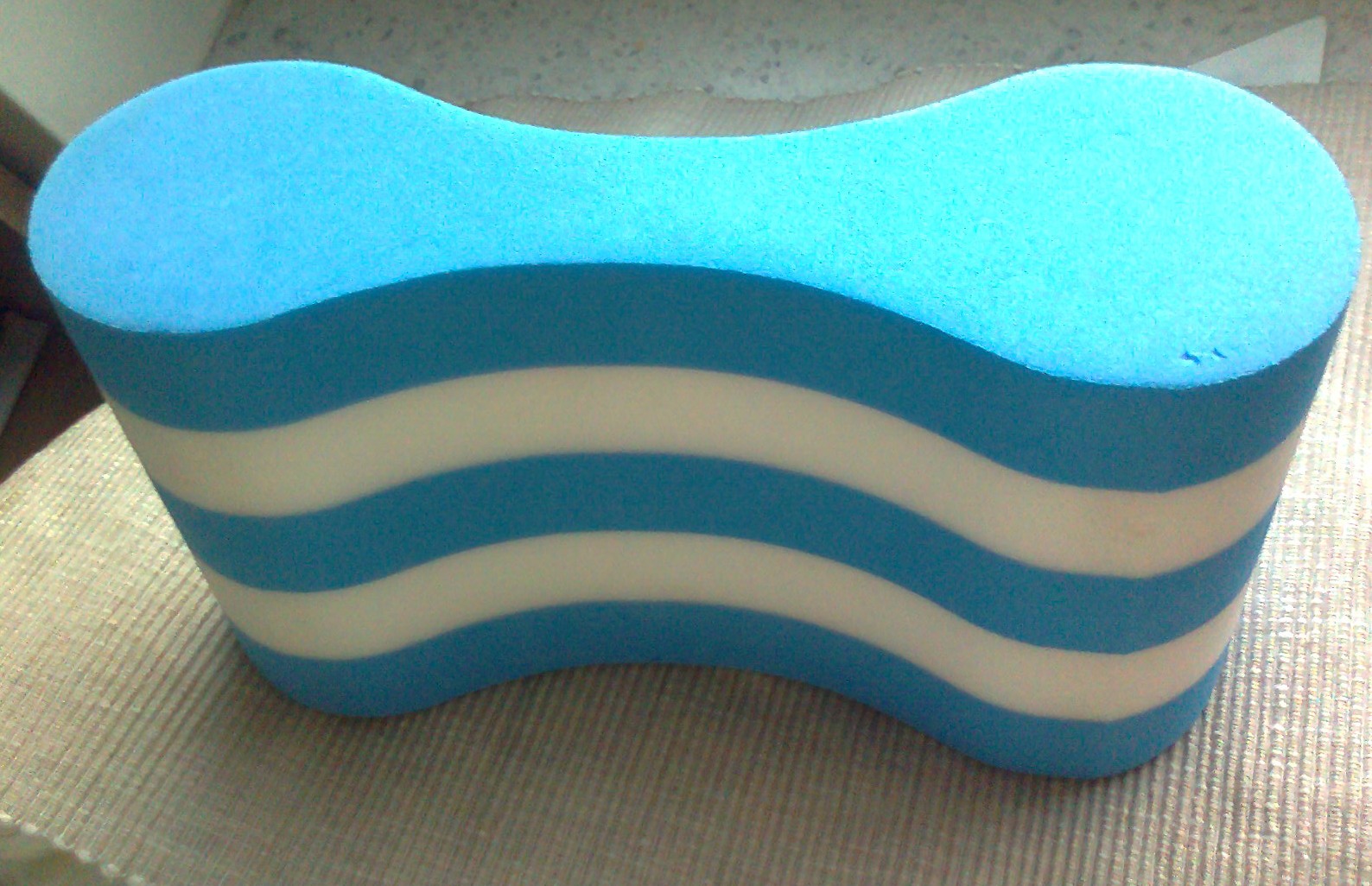
A pull buoy or leg float is a figure-eight shaped piece of closed-cell foam used in swim workouts. Swimmers place the buoy between their thighs or their ankles to provide support to the body without kicking their legs; this allows the swimmer to focus on training only their arms[1] and developing both endurance and upper body strength.

The pull buoy was originally invented by Fred Carbonero in the 1960s. Carbonero was a swim coach and created the pull buoy to add resistance in the water.[2] He started a company called Pull Buoy in 1964.[3]

Using the pull buoy gives the arms a more focused workout by providing flotational support for hips and legs. Good body position and technique can be established and a bilateral breathing rhythm can be refined.

The pull buoy can be combined with a rubber ring to tie one's feet together, so there is no notion of kick. It also provides individuals with heavy legs with a way to be better positioned in the water.

Pull buoy is often confused with pool buoy, particularly by those who have never seen the term written. Pull here refers to the pull phase of the swim stroke which this device helps to train. Pool buoys usually refers to the floating plastic lines used to demarcate lap lanes in a pool.

References

[edit]
Revisions and contributorsEdit on WikipediaRead on Wikipedia
from Grokipedia
A pull buoy is a compact foam flotation device used in swimming training, typically placed between a swimmer's thighs or ankles to provide buoyancy to the lower body and elevate the legs toward the water's surface. Designed primarily for workouts, it eliminates or minimizes leg kicking, allowing swimmers to isolate and strengthen the upper body while maintaining a streamlined, horizontal position in the water. Commonly shaped like a figure-eight or ergonomic float for secure placement, pull buoys are suitable for swimmers of all levels, from novices to elite athletes, and are often paired with other aids like paddles or snorkels to enhance drills focused on stroke mechanics. By forcing reliance on arm propulsion, they help develop efficient catch, pull, and recovery techniques, reduce drag from poor leg positioning, and build endurance without overtaxing the cardiovascular system during recovery sessions. This tool adds variety to routines, enabling exercises such as stroke counting or high-elbow drills, and coaches report improvements in race performance among competitive swimmers and triathletes.

Definition and Purpose

Overview

A pull buoy is a buoyant flotation device shaped like a figure-eight, typically constructed from closed-cell , designed to be held between the thighs during to support the legs and hips. This shape allows it to fit securely without slipping or restricting arm movement, making it suitable for use primarily in pool sessions. The core function of a pull buoy is to provide additional that elevates the hips and legs, preventing them from dragging or sinking in the and thereby isolating the upper body for focused arm . By neutralizing leg involvement, it mimics the supportive buoyancy of a , enabling swimmers to concentrate on refining stroke technique and building pulling strength without the interference of kicks. Originating as a by swim coach Fred Carbonero for competitive swimmers, the pull buoy has become a standard training aid in aquatic sports, particularly for disciplines like freestyle and where upper body efficiency is key.

Training Applications

Pull buoys are primarily employed in technique drills to isolate and refine the pull and patterns in swimmers, allowing for focused practice without the interference of leg propulsion. In endurance sets, they facilitate upper body conditioning by elevating the legs and reducing drag, enabling swimmers to sustain longer distances while building pulling strength and . For rehabilitation purposes, pull buoys support injured swimmers in maintaining aerobic capacity and stroke rhythm without straining the lower body, particularly in cases of lower body injuries such as hip injuries, where kicking exacerbates pain. These applications extend across various swimming contexts, including competitive where they aid in efficiency and power development for elite athletes. In preparation, pull buoys help multisport athletes improve upper body propulsion and body alignment during swim sessions, compensating for fatigue from prior or running efforts. programs utilize them to enhance and technique for adult swimmers, often integrating them into sessions to address age-related mobility challenges. For beginners in swim lessons, pull buoys promote body position awareness by providing buoyancy support, helping novices maintain a horizontal streamline while learning arm coordination. In program integration, pull buoys are commonly paired with structured sets such as 4x100m freestyle pulls to target sustained arm effort and pacing. They also feature in bilateral drills, where the added encourages balanced and even-sided development. Within periodized , pull buoys play a key role in pre-season phases to build foundational pull strength and endurance before incorporating full-body propulsion, typically comprising no more than 25% of session volume to avoid dependency. In swimrun events, specialized pull buoys—distinct from standard pool models due to their adjustable straps and compact design—assist participants in open-water transitions by providing leg flotation during swims, reducing drag and aiding quick shifts to running segments.

History

Invention

The pull buoy was invented in 1964 by Fred Carbonero, a former college swimmer and coach, who founded Pull-Buoy, Inc. that same year to develop specialized training equipment for swimmers. At the time, competitive swimming training relied primarily on kickboards, leaving a gap in tools that could isolate upper-body mechanics without involving the legs. Carbonero's motivation stemmed from the needs he observed in team training sessions. The device was designed to help swimmers focus on arm technique and build by providing to the lower body, thereby preventing leg fatigue and allowing concentrated pull efforts. Early prototypes consisted of simple foam blocks shaped as double-cylinder flotation devices, which Carbonero tested in college pools to enhance efficiency and arm strength among athletes. These initial designs emphasized drag creation for the legs to intensify upper-body work, addressing the limitations of existing aids. Although no specific patent for the original pull buoy is documented in public records, the product was first commercialized and marketed in the late through Pull-Buoy, Inc., quickly gaining adoption among amateur and professional for its practical benefits in technique refinement.

Evolution and Adoption

Following its invention in the mid-, the pull buoy saw rapid post-invention growth in competitive during the and , becoming a standard piece of training equipment alongside kickboards and paddles in programs emphasizing high-volume workouts. U.S. Masters Swimming was founded in 1970. Its adoption extended to elite levels, supporting the intensive regimens of the era's Olympic who trained up to 30 hours per week in pools. By the 2000s, the pull buoy was used in training. Recent advancements, such as 2023 research applying the ADDIE model, developed innovative pull buoy prototypes as educational tools for instruction, validating their effectiveness through expert reviews (83% validity score) and field tests with students (94.5% large-group satisfaction). Major brands such as and produce pull buoys. By the , pull buoys also played a role in open-water and endurance events, aiding in non-pool environments. The pull buoy's cultural impact solidified its status as a staple in curricula worldwide. This integration underscores its evolution from a niche tool to an essential aid in technique enhancement across amateur and professional communities.

Design and Construction

Materials and Manufacturing

Pull buoys are primarily constructed from closed-cell foam materials, most commonly (EVA) or , which offer superior , flexibility, and resistance to absorption. EVA foam, in particular, provides a soft yet durable structure that supports the legs without causing skin irritation during extended use. The manufacturing process begins with the production of EVA foam sheets through a foaming extrusion method, where raw copolymer is mixed with blowing agents, heated, and expanded into uniform sheets. These sheets are then cut or compression-molded into the characteristic figure-eight or shapes typical of pull buoys, ensuring consistent density for reliable flotation. variants are produced using similar foaming processes to create durable foam structures. Durability is enhanced through the inclusion of UV-resistant additives in the foam formulation, allowing pull buoys to withstand prolonged exposure to sunlight and chlorinated pool water without significant degradation. High-quality EVA models resist chlorine damage and maintain structural integrity over regular training sessions, often lasting multiple seasons with proper rinsing and air-drying after use. Safety features emphasize non-toxic and compositions, with EVA and foams free from chemical residues that could leach into water. These materials minimize risks of allergic reactions or for users of all ages.

Shapes and Variations

Pull buoys typically feature a standard or figure-8 shape designed to fit securely between the thighs, with contoured ends that wrap around the upper legs to prevent slippage during use. This design, often molded from a single piece of , provides balanced buoyancy while allowing natural hip rotation. Alternatively, two-piece models consist of separate foam cylinders connected by adjustable straps, enabling users to customize the fit and separation for varying leg sizes. Variations in pull buoys cater to different user needs and contexts. Junior sizes are smaller and lighter, with reduced volume to suit children or petite adults, ensuring easier handling without overwhelming . models incorporate straps or cords for attachment to the thighs, allowing secure retention in open-water conditions where traditional gripping may fail. Oversized versions offer greater volume and lift, particularly beneficial for rehabilitation or swimmers with denser legs, as they elevate the hips more effectively to the water's surface. The shape and size of a pull buoy directly influence swimming performance by affecting , drag, and stability. The figure-8 contour provides enhanced lift for beginners, supporting better body alignment and reducing the effort needed to maintain position. In contrast, streamlined or narrower designs minimize water resistance for advanced users, promoting a more hydrodynamic profile while challenging core engagement. Adjustable models, such as those with variable strap lengths, allow for progressive adaptation as training intensity increases.

Usage Techniques

Basic Implementation

To implement a pull buoy effectively in basic sessions, begin by positioning it correctly between the upper thighs, just below the area, while squeezing it gently to secure it without creating tension in the legs. This placement ensures the legs remain straight and together, providing optimal to elevate the hips and maintain a streamlined body position. Once placed, enter the water via a wall push-off or shallow , keeping the head in a neutral position aligned with the spine to avoid unnecessary drag. This setup is suitable for pull-focused work in freestyle and , and can be used in though it is more challenging due to the leg-driven nature of the stroke, allowing swimmers to isolate upper body propulsion while the buoy supports the lower body. For beginners, incorporate the pull buoy into short intervals of 25-50 meters, with adequate rest between repetitions to build without overwhelming the upper body. Limit continuous sets to 10-20 minutes to prevent fatigue, gradually increasing as technique improves. Common errors include bending the knees or holding the buoy too loosely or low near the knees, which diminishes and causes the hips to sink, increasing drag and reducing effectiveness. Proper grip and positioning mitigate these issues, ensuring the buoy functions as intended.

Integration in Drills and Workouts

Pull buoys are frequently integrated into swim drills to refine upper body technique by isolating movements while maintaining body alignment. In the catch-up drill, swimmers hold the buoy between their thighs and extend one forward until the other hand touches it, promoting precise timing and coordination. Single-arm pulls, with the buoy positioned between the thighs, allow swimmers to focus on one at a time to develop bilateral and even power. These drills emphasize controlled rotation and extension without leg propulsion. Within structured workouts, pull buoys enhance endurance and skill in varied formats, such as individual medley () training where swimmers perform arm-only segments across all four strokes to build versatility. For triathlon simulations, they replicate wetsuit buoyancy during long-distance pulls, aiding open-water preparation. Pyramid sets, like ascending from 50m to 100m to 150m with increasing speed, use the buoy to progressively challenge stroke efficiency and pacing. Combining the buoy with a snorkel shifts focus to breathing patterns during extended sets, isolating upper body rhythm. Progression in pull buoy usage begins with basic assisted pulls to establish form, then advances to more demanding variations, such as adding resistance tools for power development. In sets focusing on control, the buoy supports extended recovery periods to enhance . Coaches recommend alternating pull buoy sessions with dedicated kick sets to ensure balanced across muscle groups. Monitoring stroke rate improvements can be achieved using tempo trainers during these drills to quantify technique gains.

Benefits and Drawbacks

Training Advantages

Pull buoys enhance swimmers' body position by providing that elevates the hips and legs, aligning the body more horizontally in the water and promoting a streamlined form that minimizes resistance. This improved alignment reduces overall drag during , allowing swimmers to maintain a more efficient path through the water without the hindrance of sinking legs. By supporting the lower body, the device enables better focus on upper body mechanics while fostering a neutral spine and reduced frontal surface area exposure. The use of a pull buoy intensifies the workload on the upper body, particularly targeting the latissimus dorsi, shoulders, and core muscles to build pulling strength and endurance. This isolation shifts propulsion demands entirely to the arms, encouraging a high-elbow catch position that maximizes water leverage and stroke efficiency. Over time, regular incorporation strengthens these muscle groups, improving overall arm pull power and sustaining higher intensities during longer swims. Pull buoys facilitate technique refinement by eliminating leg movement, allowing swimmers to concentrate on body rotation and patterns without interference from kicking. This setup promotes greater and roll for balanced and supports bilateral practice, where swimmers alternate sides every three to develop and reduce imbalances. Such focused drills enhance rotational and rhythm, leading to smoother, more coordinated freestyle execution. Beyond core training, pull buoys serve as a low-impact recovery tool following injuries, enabling upper body workouts while offloading stress from the legs and lower back. For triathletes, the added simulates the lift provided by a , helping acclimate to race-day body positioning and efficiency in open water. This makes it valuable for maintaining fitness during rehabilitation or preparing for wetsuit-legal events without full-body strain.

Potential Limitations

Over-reliance on pull buoys during training can lead to dependency, where swimmers become accustomed to the artificial for maintaining body position, potentially weakening muscles and fostering poor kicking habits if not balanced with full-body swims. This neglect of work, particularly on extended freestyle sets, turns the device into a that discourages the development of natural propulsion from the lower body. Without periodic alternation to unassisted , such habits may hinder overall efficiency and endurance in races requiring integrated kicking. Prolonged use of pull buoys can exacerbate physical strain, particularly shoulder overuse, as the device shifts the entire propulsive workload to the upper body, increasing the risk of tendinitis or impingement in susceptible individuals. In extended sets, this isolation amplifies repetitive stress on the and surrounding structures, making it contraindicated for those with pre-existing shoulder conditions. Additionally, improper placement or fit may cause thigh chafing from friction during subtle leg movements, while swimmers with limited or lower back mobility may find the required leg locking uncomfortable or aggravating, potentially worsening pain or restricting access to the tool. Technique pitfalls arise when pull buoys are not monitored closely, as the buoyancy can limit hip rotation and disrupt the kinetic chain, leading to incomplete body roll and reduced stroke length. This artificial support often outsources core stability, potentially encouraging compensatory movements that compromise overall coordination if swimmers fail to engage their midsection actively. In strokes like butterfly, the device's leg immobilization is particularly less effective, as the undulating dolphin kick is integral to propulsion and timing; restricting it isolates the arms but diminishes the stroke's natural rhythm and power transfer from the core. While it aids arm-focused drills, overemphasis here may reinforce incomplete rotation without addressing the full demands of the stroke. Maintenance presents ongoing concerns, as exposure to chlorinated pool water can degrade the foam material over time, diminishing and effectiveness. Regular rinsing with fresh water after use is essential to remove chemicals that accelerate breakdown, with air drying in shaded areas preventing further deterioration from UV or heat. in this area leads to warped shapes or loss of flotation, requiring replacement to sustain training utility.

Comparisons to Other Equipment

Versus Kickboards

Pull buoys and kickboards serve distinct yet complementary roles in , primarily differing in their functional design and targeted muscle groups. A pull , placed between the thighs, provides to the lower body, immobilizing the legs and allowing swimmers to concentrate exclusively on arm and upper-body . In contrast, a kickboard is gripped by the hands or held under the chest, supporting the upper body while enabling focused leg kicking to develop lower-body power. This fundamental distinction—legs supported versus arms supported—makes pull buoys ideal for isolating the pull phase of strokes, whereas kickboards emphasize the kick phase. In terms of training emphasis, pull buoys enhance pull efficiency, upper-body strength, and overall stroke technique by reducing drag from inactive legs and promoting a streamlined body position. They are particularly effective for building in the arms and improving and catch without the fatigue of full-body . Kickboards, however, target kick power, ankle flexibility, and leg endurance, helping swimmers develop a stronger "engine" in the lower body to contribute to overall propulsion. This leg-centric focus aids in refining kicking technique, such as flutter or kicks, and building through sustained lower-body efforts. Common use cases highlight their specialized applications in workouts. Pull buoys are often employed for stroke isolation drills in swim , such as extended freestyle or pulls, where maintaining lane discipline and focusing on arm rhythm is key. They support longer sets for technique refinement without compromising form due to leg fatigue. Kickboards, by comparison, are staples in warm-ups, cool-downs, or sprint kick sessions, allowing swimmers to practice explosive leg drives or build kick stamina in shorter, high-intensity bursts. Both tools overlap in aiding body position by leveraging foam to encourage a horizontal, hydrodynamic alignment in the water, though pull buoys excel at elevating the hips for pull-focused efficiency. The choice between them depends on goals: pull buoys are preferred for endurance-oriented pulls and recovery swims, while kickboards suit power-building bursts and beginner flotation practice.

Versus Fins and Paddles

Pull buoys differ from swim fins primarily in their passive versus active roles in training. While a pull buoy tucked between the thighs provides to elevate the legs and hips without contributing any , allowing swimmers to isolate and refine upper-body technique, fins attach to the feet to actively extend from the , increasing speed and reducing overall drag to support full-body streamlining and leg strength development. In contrast to hand paddles, pull buoys enable natural arm pulls by supporting body position and eliminating leg drag, fostering balance and unassisted efficiency, whereas paddles enlarge the hand's surface area to amplify pull power, enhance water catch feedback, and build upper-body strength through increased resistance. Swimmers often combine pull buoys with paddles to maximize upper-body loading and core engagement—for instance, in sets focusing on length and power—while using pull buoys alone emphasizes technique without added resistance. Selection between these tools depends on training goals: pull buoys suit position correction and arm isolation for swimmers with sinking legs, whereas fins and paddles are ideal for speed enhancement, muscle overload, or propulsion refinement in dynamic drills.

References

Add your contribution
Related Hubs
User Avatar
No comments yet.