


Community hub
Recent from talks
Contribute something
Nothing was collected or created yet.
Polyurethane
View on Wikipedia

Polyurethane (/ˌpɒliˈjʊərəˌθeɪn, -jʊəˈrɛθeɪn/;[1] often abbreviated PUR and PU) is a class of polymers composed of organic units joined by carbamate (urethane) links. In contrast to other common polymers such as polyethylene and polystyrene, polyurethane does not refer to a single type of polymer but a group of polymers. Unlike polyethylene and polystyrene, polyurethanes can be produced from a wide range of starting materials, resulting in various polymers within the same group. This chemical variety produces polyurethanes with different chemical structures leading to many different applications. These include rigid and flexible foams, and coatings, adhesives, electrical potting compounds, and fibers such as spandex and polyurethane laminate (PUL). Foams are the largest application accounting for 67% of all polyurethane produced in 2016.[2]
A polyurethane is typically produced by reacting a polymeric isocyanate with a polyol.[3] Since a polyurethane contains two types of monomers, which polymerize one after the other, they are classed as alternating copolymers. Both the isocyanates and polyols used to make a polyurethane contain two or more functional groups per molecule.
Global production in 2019 was 25 million metric tonnes,[4] accounting for about 6% of all polymers produced in that year.
History
[edit]
Otto Bayer and his coworkers at IG Farben in Leverkusen, Germany, first made polyurethanes in 1937.[5][6] The new polymers had some advantages over existing plastics that were made by polymerizing olefins or by polycondensation, and were not covered by patents obtained by Wallace Carothers on polyesters.[7] Early work focused on the production of fibers and flexible foams and PUs were applied on a limited scale as aircraft coating during World War II.[7] Polyisocyanates became commercially available in 1952, and production of flexible polyurethane foam began in 1954 by combining toluene diisocyanate (TDI) and polyester polyols. These materials were also used to produce rigid foams, gum rubber, and elastomers. Linear fibers were produced from hexamethylene diisocyanate (HDI) and 1,4-Butanediol (BDO).
DuPont introduced polyethers, specifically poly(tetramethylene ether) glycol, in 1956. BASF and Dow Chemical introduced polyalkylene glycols in 1957. Polyether polyols were cheaper, easier to handle and more water-resistant than polyester polyols. Union Carbide and Mobay, a U.S. Monsanto/Bayer joint venture, also began making polyurethane chemicals.[7] In 1960 more than 45,000 metric tons of flexible polyurethane foams were produced. The availability of chlorofluoroalkane blowing agents, inexpensive polyether polyols, and methylene diphenyl diisocyanate (MDI) allowed polyurethane rigid foams to be used as high-performance insulation materials. In 1967, urethane-modified polyisocyanurate rigid foams were introduced, offering even better thermal stability and flammability resistance. During the 1960s, automotive interior safety components, such as instrument and door panels, were produced by back-filling thermoplastic skins with semi-rigid foam.
In 1969, Bayer exhibited an all-plastic car in Düsseldorf, Germany. Parts of this car, such as the fascia and body panels, were manufactured using a new process called reaction injection molding (RIM), in which the reactants were mixed and then injected into a mold. The addition of fillers, such as milled glass, mica, and processed mineral fibers, gave rise to reinforced RIM (RRIM), which provided improvements in flexural modulus (stiffness), reduction in coefficient of thermal expansion and better thermal stability. This technology was used to make the first plastic-body automobile in the United States, the Pontiac Fiero, in 1983. Further increases in stiffness were obtained by incorporating pre-placed glass mats into the RIM mold cavity, also known broadly as resin injection molding, or structural RIM.
Starting in the early 1980s, water-blown microcellular flexible foams were used to mold gaskets for automotive panels and air-filter seals, replacing PVC polymers. Polyurethane foams are used in many automotive applications including seating, head and arm rests, and headliners.
Polyurethane foam (including foam rubber) is sometimes made using small amounts of blowing agents to give less dense foam, better cushioning/energy absorption or thermal insulation. In the early 1990s, because of their impact on ozone depletion, the Montreal Protocol restricted the use of many chlorine-containing blowing agents, such as trichlorofluoromethane (CFC-11). By the late 1990s, blowing agents such as carbon dioxide, pentane, 1,1,1,2-tetrafluoroethane (HFC-134a) and 1,1,1,3,3-pentafluoropropane (HFC-245fa) were widely used in North America and the EU, although chlorinated blowing agents remained in use in many developing countries. Later, HFC-134a was also banned due to high ODP and GWP readings, and HFC-141B was introduced in early 2000s as an alternate blowing agent in developing nations.[8]
Chemistry
[edit]Polyurethanes are produced by reacting diisocyanates with polyols,[9][10][11][12][13][14] often in the presence of a catalyst, or upon exposure to ultraviolet radiation.[15] Common catalysts include tertiary amines, such as DABCO, DMDEE, or metallic soaps, such as dibutyltin dilaurate. The stoichiometry of the starting materials must be carefully controlled as excess isocyanate can trimerise, leading to the formation of rigid polyisocyanurates. The polymer usually has a highly crosslinked molecular structure, resulting in a thermosetting material which does not melt on heating; although some thermoplastic polyurethanes are also produced.

![{\displaystyle {\begin{array}{l}{{\text{R-N=C=O}}{}+{}\mathrm {H} {\vphantom {A}}_{\smash[{t}]{2}}\mathrm {O} {}\mathrel {\xrightarrow {\mathrm {step} \ 1} } {}\mathrm {R} {\vphantom {A}}_{\smash[{t}]{1}}{-}{\underset {|~ \atop \displaystyle \mathrm {H} }{\mathrm {N} }}{-}{\overset {\displaystyle \mathrm {O} ~ \atop \|}{\mathrm {C} }}{-}\mathrm {O} {-}\mathrm {H} {}\mathrel {\xrightarrow[{\mathrm {decomposes} }]{\mathrm {step} \ 2}} {}\mathrm {R} {-}\mathrm {NH} {\vphantom {A}}_{\smash[{t}]{2}}\ {}+{}\ \mathrm {CO} {\vphantom {A}}_{\smash[{t}]{2}}{\mskip {2mu}}(\mathrm {g} )}\\{{\text{R-N=C=O}}{}+{}\mathrm {R} {-}\mathrm {NH} {\vphantom {A}}_{\smash[{t}]{2}}{}\mathrel {\xrightarrow {\mathrm {step} \ 3} } {}{-}\mathrm {R} {-}{\underset {|~ \atop \displaystyle \mathrm {H} }{\mathrm {N} }}{-}{\overset {\displaystyle \mathrm {O} ~ \atop \|}{\mathrm {C} }}{-}{\underset {|~ \atop \displaystyle \mathrm {H} }{\mathrm {N} }}{-}\mathrm {R} }{-}\end{array}}}](https://wikimedia.org/api/rest_v1/media/math/render/svg/9bfbab6bcdb2b48aca822083d63d757617fe6ea3)
The most common application of polyurethane is as solid foams, which requires the presence of a gas, or blowing agent, during the polymerization step. This is commonly achieved by adding small amounts of water, which reacts with isocyanates to form CO2 gas and an amine, via an unstable carbamic acid group. The amine produced can also react with isocyanates to form urea groups, and as such the polymer will contain both these and urethane linkers. The urea is not very soluble in the reaction mixture and tends to form separate "hard segment" phases consisting mostly of polyurea. The concentration and organization of these polyurea phases can have a significant impact on the properties of the foam.[16]
The type of foam produced can be controlled by regulating the amount of blowing agent and also by the addition of various surfactants which change the rheology of the polymerising mixture. Foams can be either "closed-cell", where most of the original bubbles or cells remain intact, or "open-cell", where the bubbles have broken but the edges of the bubbles are stiff enough to retain their shape, in extreme cases reticulated foams can be formed. Open-cell foams feel soft and allow air to flow through, so they are comfortable when used in seat cushions or mattresses. Closed-cell foams are used as rigid thermal insulation. High-density microcellular foams can be formed without the addition of blowing agents by mechanically frothing the polyol prior to use. These are tough elastomeric materials used in covering car steering wheels or shoe soles.
The properties of a polyurethane are greatly influenced by the types of isocyanates and polyols used to make it. Long, flexible segments, contributed by the polyol, give soft, elastic polymer. High amounts of crosslinking give tough or rigid polymers. Long chains and low crosslinking give a polymer that is very stretchy, short chains with many crosslinks produce a hard polymer while long chains and intermediate crosslinking give a polymer useful for making foam. The choices available for the isocyanates and polyols, in addition to other additives and processing conditions allow polyurethanes to have the very wide range of properties that make them such widely used polymers.
Raw materials
[edit]The main ingredients to make a polyurethane are di- and tri-isocyanates and polyols. Other materials are added to aid processing the polymer or to modify the properties of the polymer. PU foam formulation sometimes have water added too.
Isocyanates
[edit]Isocyanates used to make polyurethane have two or more isocyanate groups on each molecule. The most commonly used isocyanates are the aromatic diisocyanates, toluene diisocyanate (TDI) and methylene diphenyl diisocyanate, (MDI). These aromatic isocyanates are more reactive than aliphatic isocyanates.
TDI and MDI are generally less expensive and more reactive than other isocyanates. Industrial grade TDI and MDI are mixtures of isomers and MDI often contains polymeric materials. They are used to make flexible foam (for example slabstock foam for mattresses or molded foams for car seats),[17] rigid foam (for example insulating foam in refrigerators) elastomers (shoe soles, for example), and so on. The isocyanates may be modified by partially reacting them with polyols or introducing some other materials to reduce volatility (and hence toxicity) of the isocyanates, decrease their freezing points to make handling easier or to improve the properties of the final polymers.

Aliphatic and cycloaliphatic isocyanates are used in smaller quantities, most often in coatings and other applications where color and transparency are important since polyurethanes made with aromatic isocyanates tend to darken on exposure to light.[page needed][18] The most important aliphatic and cycloaliphatic isocyanates are 1,6-hexamethylene diisocyanate (HDI), 1-isocyanato-3-isocyanatomethyl-3,5,5-trimethyl-cyclohexane (isophorone diisocyanate, IPDI), and 4,4′-diisocyanato dicyclohexylmethane (H12MDI or hydrogenated MDI). Other more specialized isocyanates include Tetramethylxylylene diisocyanate (TMXDI).
Polyols
[edit]Polyols are polymers in their own right and have on average two or more hydroxyl groups per molecule. They can be converted to polyether polyols by co-polymerizing ethylene oxide and propylene oxide with a suitable polyol precursor.[19] Polyester polyols are made by the polycondensation of multifunctional carboxylic acids and polyhydroxyl compounds. They can be further classified according to their end use. Higher molecular weight polyols (molecular weights from 2,000 to 10,000) are used to make more flexible polyurethanes while lower molecular weight polyols make more rigid products.
Polyols for flexible applications use low functionality initiators such as dipropylene glycol (f = 2), glycerine (f = 3), or a sorbitol/water solution (f = 2.75).[20] Polyols for rigid applications use higher functionality initiators such as sucrose (f = 8), sorbitol (f = 6), toluenediamine (f = 4), and Mannich bases (f = 4). Propylene oxide and/or ethylene oxide is added to the initiators until the desired molecular weight is achieved. The order of addition and the amounts of each oxide affect many polyol properties, such as compatibility, water-solubility, and reactivity. Polyols made with only propylene oxide are terminated with secondary hydroxyl groups and are less reactive than polyols capped with ethylene oxide, which contain primary hydroxyl groups. Incorporating carbon dioxide into the polyol structure is being researched by multiple companies.
Graft polyols (also called filled polyols or polymer polyols) contain finely dispersed styrene–acrylonitrile, acrylonitrile, or polyurea (PHD) polymer solids chemically grafted to a high molecular weight polyether backbone. They are used to increase the load-bearing properties of low-density high-resiliency (HR) foam, as well as add toughness to microcellular foams and cast elastomers. Initiators such as ethylenediamine and triethanolamine are used to make low molecular weight rigid foam polyols that have built-in catalytic activity due to the presence of nitrogen atoms in the backbone. A special class of polyether polyols, poly(tetramethylene ether) glycols, which are made by polymerizing tetrahydrofuran, are used in high performance coating, wetting and elastomer applications.
Conventional polyester polyols are based on virgin raw materials and are manufactured by the direct polyesterification of high-purity diacids and glycols, such as adipic acid and 1,4-butanediol. Polyester polyols are usually more expensive and more viscous than polyether polyols, but they make polyurethanes with better solvent, abrasion, and cut resistance. Other polyester polyols are based on reclaimed raw materials. They are manufactured by transesterification (glycolysis) of recycled poly(ethyleneterephthalate) (PET) or dimethylterephthalate (DMT) distillation bottoms with glycols such as diethylene glycol. These low molecular weight, aromatic polyester polyols are used in rigid foam, and bring low cost and excellent flammability characteristics to polyisocyanurate (PIR) boardstock and polyurethane spray foam insulation.
Specialty polyols include polycarbonate polyols, polycaprolactone polyols, polybutadiene polyols, and polysulfide polyols. The materials are used in elastomer, sealant, and adhesive applications that require superior weatherability, and resistance to chemical and environmental attack. Natural oil polyols derived from castor oil and other vegetable oils are used to make elastomers, flexible bunstock, and flexible molded foam.
Co-polymerizing chlorotrifluoroethylene or tetrafluoroethylene with vinyl ethers containing hydroxyalkyl vinyl ether produces fluorinated (FEVE) polyols. Two-component fluorinated polyurethanes prepared by reacting FEVE fluorinated polyols with polyisocyanate have been used to make ambient cure paints and coatings. Since fluorinated polyurethanes contain a high percentage of fluorine–carbon bonds, which are the strongest bonds among all chemical bonds, fluorinated polyurethanes exhibit resistance to UV, acids, alkali, salts, chemicals, solvents, weathering, corrosion, fungi and microbial attack. These have been used for high performance coatings and paints.[21]
Phosphorus-containing polyols are available that become chemically bonded to the polyurethane matrix for the use as flame retardants. This covalent linkage prevents migration and leaching of the organophosphorus compound.
Bio-derived materials
[edit]Interest in sustainable "green" products raised interest in polyols derived from vegetable oils,[22][23][24] fatty acids,[25] lignin, sorbitol,[26] etc. These are mostly contributing to polyol part. There are attempts made to prepare isocyanate part using bio-derived material. However, as far as commercialization is concern, polyol part is more targeted being easy and required in more quantity than isocyanate part. Various oils used in the preparation polyols for polyurethanes include soybean oil, cottonseed oil, neem seed oil, algae oil,[27][28] and castor oil. Vegetable oils are functionalized in various ways and modified to polyetheramides, polyethers, alkyds, etc. Renewable sources used to prepare polyols may be fatty acids or dimer fatty acids.[29] Some biobased and isocyanate-free polyurethanes exploit the reaction between polyamines and cyclic carbonates to produce polyhydroxyurethanes.[30]
Chain extenders and cross linkers
[edit]Chain extenders (f = 2) and cross linkers (f ≥ 3) are low molecular weight hydroxyl and amine terminated compounds that play an important role in the polymer morphology of polyurethane fibers, elastomers, adhesives, and certain integral skin and microcellular foams.
The elastomeric properties of these materials are derived from the phase separation of the hard and soft copolymer segments of the polymer, such that the urethane hard segment domains serve as cross-links between the amorphous polyether (or polyester) soft segment domains. This phase separation occurs because the mainly nonpolar, low melting soft segments are incompatible with the polar, high melting hard segments. The soft segments, which are formed from high molecular weight polyols, are mobile and are normally present in coiled formation, while the hard segments, which are formed from the isocyanate and chain extenders, are stiff and immobile. As the hard segments are covalently coupled to the soft segments, they inhibit plastic flow of the polymer chains, thus creating elastomeric resiliency. Upon mechanical deformation, a portion of the soft segments are stressed by uncoiling, and the hard segments become aligned in the stress direction. This reorientation of the hard segments and consequent powerful hydrogen bonding contributes to high tensile strength, elongation, and tear resistance values.[12][31][32][33][34] The choice of chain extender also determines flexural, heat, and chemical resistance properties.
The most important chain extenders are ethylene glycol, 1,4-butanediol (1,4-BDO or BDO), 1,6-hexanediol, cyclohexane dimethanol and hydroquinone bis(2-hydroxyethyl) ether (HQEE). All of these glycols form polyurethanes that phase separate well and form well defined hard segment domains, and are melt processable. They are all suitable for thermoplastic polyurethanes with the exception of ethylene glycol, since its derived bis-phenyl urethane undergoes unfavorable degradation at high hard segment levels.[10] Diethanolamine and triethanolamine are used in flex molded foams to build firmness and add catalytic activity. Diethyltoluenediamine is used extensively in RIM, and in polyurethane and polyurea elastomer formulations.
| Compound type | Molecule | Mol. mass |
Density (g/cm3) |
Melting pt (°C) |
Boiling pt (°C) |
|---|---|---|---|---|---|
| Hydroxyl compounds – difunctional molecules | Ethylene glycol | 62.1 | 1.110 | −13.4 | 197.4 |
| Diethylene glycol | 106.1 | 1.111 | −8.7 | 245.5 | |
| Triethylene glycol | 150.2 | 1.120 | −7.2 | 287.8 | |
| Tetraethylene glycol | 194.2 | 1.123 | −9.4 | 325.6 | |
| Propylene glycol | 76.1 | 1.032 | Supercools | 187.4 | |
| Dipropylene glycol | 134.2 | 1.022 | Supercools | 232.2 | |
| Tripropylene glycol | 192.3 | 1.110 | Supercools | 265.1 | |
| 1,3-Propanediol | 76.1 | 1.060 | −28 | 210 | |
| 1,3-Butanediol | 92.1 | 1.005 | — | 207.5 | |
| 1,4-Butanediol | 92.1 | 1.017 | 20.1 | 235 | |
| Neopentyl glycol | 104.2 | — | 130 | 206 | |
| 1,6-Hexanediol | 118.2 | 1.017 | 43 | 250 | |
| 1,4-Cyclohexanedimethanol | — | — | — | — | |
| HQEE | — | — | — | — | |
| Ethanolamine | 61.1 | 1.018 | 10.3 | 170 | |
| Diethanolamine | 105.1 | 1.097 | 28 | 271 | |
| Methyldiethanolamine | 119.1 | 1.043 | −21 | 242 | |
| Phenyldiethanolamine | 181.2 | — | 58 | 228 | |
| Hydroxyl compounds – trifunctional molecules | Glycerol | 92.1 | 1.261 | 18.0 | 290 |
| Trimethylolpropane | — | — | — | — | |
| 1,2,6-Hexanetriol | — | — | — | — | |
| Triethanolamine | 149.2 | 1.124 | 21 | — | |
| Hydroxyl compounds – tetrafunctional molecules | Pentaerythritol | 136.2 | — | 260.5 | — |
| N,N,N′,N′-Tetrakis (2-hydroxypropyl) ethylenediamine |
— | — | — | — | |
| Amine compounds – difunctional molecules | Diethyltoluenediamine | 178.3 | 1.022 | — | 308 |
| Dimethylthiotoluenediamine | 214.0 | 1.208 | — | — |
Catalysts
[edit]Polyurethane catalysts can be classified into two broad categories, basic and acidic amine. Tertiary amine catalysts function by enhancing the nucleophilicity of the diol component. Alkyl tin carboxylates, oxides and mercaptides oxides function as mild Lewis acids in accelerating the formation of polyurethane. As bases, traditional amine catalysts include triethylenediamine (TEDA, also called DABCO, 1,4-diazabicyclo[2.2.2]octane), dimethylcyclohexylamine (DMCHA), dimethylethanolamine (DMEA), Dimethylaminoethoxyethanol and bis-(2-dimethylaminoethyl)ether, a blowing catalyst also called A-99. A typical Lewis acidic catalyst is dibutyltin dilaurate. The process is highly sensitive to the nature of the catalyst and is also known to be autocatalytic.[36]
Another class of catalysts was published in a study in May 2024. In this study, polyurethane synthesis was investigated in the presence of acid catalysts, namely dimethylphosphite (DMHP), methanesulfonic acid (MSA), and trifluoromethanesulfonic acid (TFMSA). The thermodynamic profile was examined and described in detail through computational tools, showing that TFMSA had the best catalytic properties. The study aimed to open the door to a new class of catalysts.[37]
Factors affecting catalyst selection include balancing three reactions: urethane (polyol+isocyanate, or gel) formation, the urea (water+isocyanate, or "blow") formation, or the isocyanate trimerization reaction (e.g., using potassium acetate, to form isocyanurate rings). A variety of specialized catalysts have been developed.[38][39][40]
Surfactants
[edit]Surfactants are used to modify the characteristics of both foam and non-foam polyurethane polymers. They take the form of polydimethylsiloxane-polyoxyalkylene block copolymers, silicone oils, nonylphenol ethoxylates, and other organic compounds. In foams, they are used to emulsify the liquid components, regulate cell size, and stabilize the cell structure to prevent collapse and sub-surface voids.[41] In non-foam applications they are used as air release and antifoaming agents, as wetting agents, and are used to eliminate surface defects such as pin holes, orange peel, and sink marks.
Production
[edit]Polyurethanes are produced by mixing two or more liquid streams. The polyol stream contains catalysts, surfactants, blowing agents (when making polyurethane foam insulation) and so on. The two components are referred to as a polyurethane system, or simply a system. The isocyanate is commonly referred to in North America as the 'A-side' or just the 'iso'. The blend of polyols and other additives is commonly referred to as the 'B-side' or as the 'poly'.[citation needed] This mixture might also be called a 'resin' or 'resin blend'. In Europe the meanings for 'A-side' and 'B-side' are reversed.[citation needed] Resin blend additives may include chain extenders, cross linkers, surfactants, flame retardants, blowing agents, pigments, and fillers. Polyurethane can be made in a variety of densities and hardnesses by varying the isocyanate, polyol or additives.
Health and safety
[edit]Fully reacted polyurethane polymer is chemically inert.[42] No exposure limits have been established in the U.S. by OSHA (Occupational Safety and Health Administration) or ACGIH (American Conference of Governmental Industrial Hygienists). It is not regulated by OSHA for carcinogenicity.
.jpg)
Polyurethanes are combustible.[43] Decomposition from fire can produce significant amounts of carbon monoxide and hydrogen cyanide, in addition to nitrogen oxides, isocyanates, and other toxic products.[44] Due to the flammability of the material, it has to be treated with flame retardants (at least in case of furniture), almost all of which are considered harmful.[45][46] California later issued Technical Bulletin 117 2013 which allowed most polyurethane foam to pass flammability tests without the use of flame retardants. Green Science Policy Institute states: "Although the new standard can be met without flame retardants, it does NOT ban their use. Consumers who wish to reduce household exposure to flame retardants can look for a TB117-2013 tag on furniture, and verify with retailers that products do not contain flame retardants."[47]
Liquid resin blends and isocyanates may contain hazardous or regulated components. Isocyanates are known skin and respiratory sensitizers. Additionally, amines, glycols, and phosphate present in spray polyurethane foams present risks.[48]
Exposure to chemicals that may be emitted during or after application of polyurethane spray foam (such as isocyanates) are harmful to human health and therefore special precautions are required during and after this process.[49]
In the United States, additional health and safety information can be found through organizations such as the Polyurethane Manufacturers Association (PMA) and the Center for the Polyurethanes Industry (CPI), as well as from polyurethane system and raw material manufacturers. Regulatory information can be found in the Code of Federal Regulations Title 21 (Food and Drugs) and Title 40 (Protection of the Environment). In Europe, health and safety information is available from ISOPA,[50] the European Diisocyanate and Polyol Producers Association.
Manufacturing
[edit]The methods of manufacturing polyurethane finished goods range from small, hand pour piece-part operations to large, high-volume bunstock and boardstock production lines. Regardless of the end-product, the manufacturing principle is the same: to meter the liquid isocyanate and resin blend at a specified stoichiometric ratio, mix them together until a homogeneous blend is obtained, dispense the reacting liquid into a mold or on to a surface, wait until it cures, then demold the finished part.
Dispensing equipment
[edit]Although the capital outlay can be high, it is desirable to use a meter-mix or dispense unit for even low-volume production operations that require a steady output of finished parts. Dispense equipment consists of material holding (day) tanks, metering pumps, a mix head, and a control unit. Often, a conditioning or heater–chiller unit is added to control material temperature in order to improve mix efficiency, cure rate, and to reduce process variability. Choice of dispense equipment components depends on shot size, throughput, material characteristics such as viscosity and filler content, and process control. Material day tanks may be single to hundreds of gallons in size and may be supplied directly from drums, IBCs (intermediate bulk containers, such as caged IBC totes), or bulk storage tanks. They may incorporate level sensors, conditioning jackets, and mixers. Pumps can be sized to meter in single grams per second up to hundreds of pounds per minute. They can be rotary, gear, or piston pumps, or can be specially hardened lance pumps to meter liquids containing highly abrasive fillers such as chopped or hammer-milled glass fiber and wollastonite.[citation needed]
-
 A high-pressure polyurethane dispense unit, showing control panel, high-pressure pump, integral day tanks, and hydraulic drive unit
 -
 A high-pressure mix head, showing simple controls (front view)
 -
 A high-pressure mix head, showing material supply and hydraulic actuator lines (rear view)


The pumps can drive low-pressure (10 to 30 bar, 1 to 3 MPa) or high-pressure (125 to 250 bar, 12.5 to 25.0 MPa) dispense systems. Mix heads can be simple static mix tubes, rotary-element mixers, low-pressure dynamic mixers, or high-pressure hydraulically actuated direct impingement mixers. Control units may have basic on/off and dispense/stop switches, and analogue pressure and temperature gauges, or may be computer-controlled with flow meters to electronically calibrate mix ratio, digital temperature and level sensors, and a full suite of statistical process control software. Add-ons to dispense equipment include nucleation or gas injection units, and third or fourth stream capability for adding pigments or metering in supplemental additive packages.
-
 A low-pressure mix head with calibration chamber installed, showing material supply and air actuator lines
 -
 Low-pressure mix head components, including mix chambers, conical mixers, and mounting plates
 -
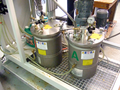 5-gallon (20-liter) material day tanks for supplying a low-pressure dispense unit


Tooling
[edit]Distinct from pour-in-place, bun and boardstock, and coating applications, the production of piece parts requires tooling to contain and form the reacting liquid. The choice of mold-making material is dependent on the expected number of uses to end-of-life (EOL), molding pressure, flexibility, and heat transfer characteristics.
RTV silicone is used for tooling that has an EOL in the thousands of parts. It is typically used for molding rigid foam parts, where the ability to stretch and peel the mold around undercuts is needed. The heat transfer characteristic of RTV silicone tooling is poor. High-performance, flexible polyurethane elastomers are also used in this way.
Epoxy, metal-filled epoxy, and metal-coated epoxy is used for tooling that has an EOL in the tens of thousands of parts. It is typically used for molding flexible foam cushions and seating, integral skin and microcellular foam padding, and shallow-draft RIM bezels and fascia. The heat transfer characteristic of epoxy tooling is fair; the heat transfer characteristic of metal-filled and metal-coated epoxy is good. Copper tubing can be incorporated into the body of the tool, allowing hot water to circulate and heat the mold surface.
Aluminum is used for tooling that has an EOL in the hundreds of thousands of parts. It is typically used for molding microcellular foam gasketing and cast elastomer parts, and is milled or extruded into shape.
Mirror-finish stainless steel is used for tooling that imparts a glossy appearance to the finished part. The heat transfer characteristic of metal tooling is excellent.
Finally, molded or milled polypropylene is used to create low-volume tooling for molded gasket applications. Instead of many expensive metal molds, low-cost plastic tooling can be formed from a single metal master, which also allows greater design flexibility. The heat transfer characteristic of polypropylene tooling is poor, which must be taken into consideration during the formulation process.
Applications
[edit]In 2007, the global consumption of polyurethane raw materials was above 12 million metric tons, and the average annual growth rate was about 5%.[51] Revenues generated with PUR on the global market are expected to rise to approximately US$75 billion by 2022.[52] As they are such an important class of materials, research is constantly taking place and papers published.[53]
Degradation and environmental fate
[edit]Effects of visible light
[edit]

Polyurethanes, especially those made using aromatic isocyanates, contain chromophores that interact with light. This is of particular interest in the area of polyurethane coatings, where light stability is a critical factor and is the main reason that aliphatic isocyanates are used in making polyurethane coatings. When PU foam, which is made using aromatic isocyanates, is exposed to visible light, it discolors, turning from off-white to yellow to reddish brown. It has been generally accepted that apart from yellowing, visible light has little effect on foam properties.[54][55] This is especially the case if the yellowing happens on the outer portions of a large foam, as the deterioration of properties in the outer portion has little effect on the overall bulk properties of the foam itself.
It has been reported that exposure to visible light can affect the variability of some physical property test results.[56]
Higher-energy UV radiation promotes chemical reactions in foam, some of which are detrimental to the foam structure.[57]
Hydrolysis and biodegradation
[edit]Polyurethanes may degrade due to hydrolysis. This is a common problem with shoes left in a closet, and reacting with moisture in the air.[58]
Microbial degradation of polyurethane is believed to be due to the action of esterase, urethanase, hydrolase and protease enzymes.[59] The process is slow as most microbes have difficulty moving beyond the surface of the polymer. Susceptibility to fungi is higher due to their release of extracellular enzymes, which are better able to permeate the polymer matrix. Two species of the Ecuadorian fungus Pestalotiopsis are capable of biodegrading polyurethane in aerobic and anaerobic conditions such as found at the bottom of landfills.[60][61] Degradation of polyurethane items at museums has been reported.[62] Polyester-type polyurethanes are more easily biodegraded by fungus than polyether-type.[63]
See also
[edit]- Botanol, a material with higher plant-based content
- Passive fire protection
- Penetrant (mechanical, electrical, or structural)
- Polyaspartic
- Polyurethane dispersion
- Thermoplastic polyurethanes
- Thermoset polymer matrix
References
[edit]- ^ "polyurethane". Dictionary.com Unabridged (Online). n.d.
- ^ Gama, Nuno; Ferreira, Artur; Barros-Timmons, Ana (27 September 2018). "Polyurethane Foams: Past, Present, and Future". Materials. 11 (10): 1841. Bibcode:2018Mate...11.1841G. doi:10.3390/ma11101841. PMC 6213201. PMID 30262722.
- ^ "Polyurethane". American Chemistry Council. Retrieved 2022-09-19.
- ^ "Polyurethane global market volume 2015-2026". Statista. Retrieved 23 July 2021.
- ^ Bayer, Otto (1947). "Das Di-Isocyanat-Polyadditionsverfahren (Polyurethane)". Angewandte Chemie. 59 (9): 257–72. Bibcode:1947AngCh..59..257B. doi:10.1002/ange.19470590901.
- ^ DE 728981, I.G. Farbenindustrie A.G., "Verfahren zur Herstellung von Polyurethanen bzw. Polyharnstoffen [Process for the production of polyurethanes or polyurea]", published 1942-12-07
- ^ a b c Seymour, Raymond B.; Kauffman, George B. (1992). "Polyurethanes: A class of modern versatile materials". Journal of Chemical Education. 69 (11): 909. Bibcode:1992JChEd..69..909S. doi:10.1021/ed069p909.
- ^ Feske, Bert (October 2004). "The Use of Saytex RB-9130/9170 Low Viscosity Brominated Flame Retardant Polyols in HFC-245fa and High Water Formulations" (PDF). Polyurethanes Expo 2004. Las Vegas, NV: Alliance for the Polyurethane Industry Technical Conference. p. 309. Retrieved 2007-08-01.
- ^ n ≥ 2
- ^ a b Gum, Wilson; Riese, Wolfram; Ulrich, Henri (1992). Reaction Polymers. New York: Oxford University Press. ISBN 978-0-19-520933-4.
- ^ Harrington, Ron; Hock, Kathy (1991). Flexible Polyurethane Foams. Midland: The Dow Chemical Company.
- ^ a b Oertel, Gunter (1985). Polyurethane Handbook. New York: Macmillen Publishing Co., Inc. ISBN 978-0-02-948920-8.[page needed]
- ^ Ulrich, Henri (1996). Chemistry and Technology of Isocyanates. New York: John Wiley & Sons, Inc. ISBN 978-0-471-96371-4.[page needed]
- ^ Woods, George (1990). The ICI Polyurethanes Book. New York: John Wiley & Sons, Inc. ISBN 978-0-471-92658-0.[page needed]
- ^ Soto, Marc; Sebastián, Rosa María; Marquet, Jordi (2014). "Photochemical Activation of Extremely Weak Nucleophiles: Highly Fluorinated Urethanes and Polyurethanes from Polyfluoro Alcohols". The Journal of Organic Chemistry. 79 (11): 5019–27. doi:10.1021/jo5005789. PMID 24820955.
- ^ Kaushiva, Byran D. (August 15, 1999). Structure-Property Relationships of Flexible Polyurethane Foams (Ph.D.). Virginia Polytechnic Institute.
- ^ "Technical data sheet from Dow Chemical". Archived from the original on 2007-10-13. Retrieved 2007-09-15.
- ^ Randall, David; Lee, Steve (2002). The Polyurethanes Book. New York: Wiley. ISBN 978-0-470-85041-1.
- ^ Petrović, Zoran S. (2008). "Polyurethanes from Vegetable Oils". Polymer Reviews. 48 (1): 109–155. doi:10.1080/15583720701834224. S2CID 95466690.
- ^ EP 0755955, Hager, Stanley L.; Knight, James E. & Helma, Gregory F. et al., "Polyether polyols suitable for flexible polyurethane foam prepared by co-initiation of aqueous solutions of solid polyhydroxyl initiators", published 1997-01-29, assigned to ARCO Chemical Technology
- ^ Bob Parker. "FEVE Technology for Higher Performance Coating Systems on Bridges" (PDF). Paintsquare.com. Archived from the original (PDF) on 15 August 2021. Retrieved 5 March 2022.
- ^ Khanderay, Jitendra C., and Vikas V. Gite. "Vegetable oil-based polyurethane coatings: recent developments in India." Green Materials 5.3 (2017): 109-122.
- ^ Niemeyer, Timothy; Patel, Munjal; Geiger, Eric (September 2006). A Further Examination of Soy-Based Polyols in Polyurethane Systems. Salt Lake City, UT: Alliance for the Polyurethane Industry Technical Conference.
- ^ "New Twist on Green: 2008 Ford Mustang Seats Will Be Soy-Based Foam". Edmunds inside line. July 12, 2007. Archived from the original on 2008-05-31. Retrieved 2010-06-15.
- ^ SD Rajput, PP Mahulikar, VV Gite, Biobased dimer fatty acid containing two pack polyurethane for wood finished coatings, Progress in Organic Coatings 77 (1), 38-46 https://doi.org/10.1016/j.porgcoat.2014.04.030
- ^ A Anand, RD Kulkarni, VV Gite, Preparation and properties of eco-friendly two pack PU coatings based on renewable source (sorbitol) and its property improvement by nano ZnO, Progress in Organic Coatings 74 (4), 764-767, https://doi.org/10.1016/j.porgcoat.2011.09.031
- ^ Chandrashekhar K Patil, Harishchandra D Jirimali, Jayasinh S Paradeshi, Bhushan L Chaudhari, Prakash K Alagi, Pramod P Mahulikar, Sung Chul Hong, Vikas V Gite, Chemical transformation of renewable algae oil to polyetheramide polyols for polyurethane coatings, Progress in Organic Coatings 151, 106084, https://doi.org/10.1016/j.porgcoat.2020.106084
- ^ CK Patil, HD Jirimali, JS Paradeshi, BL Chaudhari, VV Gite, Functional antimicrobial and anticorrosive polyurethane composite coatings from algae oil and silver doped egg shell hydroxyapatite for sustainable development, Progress in Organic Coatings 128, 127-136, https://doi.org/10.1016/j.porgcoat.2018.11.002
- ^ Biobased dimer fatty acid containing two pack polyurethane for wood finished coatings, SD Rajput, PP Mahulikar, VV Gite, Progress in Organic Coatings 77 (1), 38-46
- ^ Nohra, Bassam; Candy, Laure; Blanco, Jean-François; Guerin, Celine; Raoul, Yann; Mouloungui, Zephirin (2013). "From Petrochemical Polyurethanes to Biobased Polyhydroxyurethanes" (PDF). Macromolecules. 46 (10): 3771–92. Bibcode:2013MaMol..46.3771N. doi:10.1021/ma400197c. Archived (PDF) from the original on 2017-09-22.
- ^ Blackwell, J.; Nagarajan, M. R.; Hoitink, T. B. (1981). "The Structure of the Hard Segments in MDI/diol/PTMA Polyurethane Elastomers". ACS Symposium Series. 172. Washington, D.C.: American Chemical Society: 179–196. doi:10.1021/bk-1981-0172.ch014. ISBN 978-0-8412-0664-9. ISSN 0097-6156.
- ^ Blackwell, John; Gardner, Kenncorwin H. (1979). "Structure of the hard segments in polyurethane elastomers". Polymer. 20 (1): 13–17. doi:10.1016/0032-3861(79)90035-1. ISSN 0032-3861.
- ^ Grillo, D. J.; Housel, T. L. (1992). "Physical Properties of Polyurethanes from Polyesters and Other Polyols". Polyurethanes '92 Conference Proceedings. New Orleans, LA: The Society of the Plastics Industry, Inc.
- ^ Musselman, S. G.; Santosusso, T. M.; Sperling, L. H. (1998). "Structure Versus Performance Properties of Cast Elastomers". Polyurethanes '98 Conference Proceedings. Dallas, TX: The Society of the Plastics Industry, Inc.
- ^ A Guide to Glycols. Midland, Mich.: The Dow Chemical Co., Chemicals and Metals Department. 1992. Brochure 117-00991-92Hyc.
- ^ Adam, Norbert; Avar, Geza; Blankenheim, Herbert; Friederichs, Wolfgang; Giersig, Manfred; Weigand, Eckehard; Halfmann, Michael; Wittbecker, Friedrich-Wilhelm; Larimer, Donald-Richard; Maier, Udo; Meyer-Ahrens, Sven; Noble, Karl-Ludwig; Wussow, Hans-Georg (2005). "Polyurethanes". Ullmann's Encyclopedia of Industrial Chemistry. Weinheim: Wiley-VCH. doi:10.1002/14356007.a21_665.pub2. ISBN 978-3-527-30673-2.
- ^ Waleed, H. Q.; Viskolcz, B.; Fiser, B. (2024). "Urethane Synthesis in the Presence of Organic Acid Catalysts—A Computational Study". Molecules (Basel, Switzerland). 29 (10): 2375. doi:10.3390/molecules29102375. PMC 11123846. PMID 38792235.
- ^ "Jeffcat Amine Catalysts for the Polyurethane Industry" (PDF). 2006. Archived from the original (PDF) on 2007-11-29. Retrieved 2007-10-23.
- ^ "Building quality with Air Products trimerisation catalysts" (PDF). 2003. Archived from the original (PDF) on 2007-11-29. Retrieved 2007-10-23.
- ^ "FOMREZ Specialty Tin Catalysts for Polyurethane Applications". 120-074-10. January 2001.
- ^ Randall, David; Lee, Steve, eds. (2002). "10". The Polyurethanes Book. The United Kingdom: Huntsman International LLC, Polyurethanes business. pp. 156–159. ISBN 978-0470850411. Archived from the original on 2018-05-24. Retrieved 2018-05-23.
- ^ Dernehl, C. U. (1966). "Health hazards associated with polyurethane foams". Journal of Occupational Medicine. 8 (2): 59–62. PMID 5903304.
- ^ "Health Alert: Polyurethane exposure" (PDF). Archived from the original (PDF) on 2004-10-19. Retrieved 2009-12-19.
- ^ McKenna, Sean Thomas; Hull, Terence Richard (2016). "The fire toxicity of polyurethane foams". Fire Science Reviews. 5 (1): 3. doi:10.1186/s40038-016-0012-3.
- ^ "Environmental Profiles of Chemical Flame-Retardant Alternatives for Low-Density Polyurethane Foam". United States Environmental Protection Agency. September 2005.
- ^ "Flame Retardants Used in Flexible Polyurethane Foam – Draft Update to a 2005 Alternatives Assessment". United States Environmental Protection Agency. June 2014. Archived from the original on November 21, 2014.
- ^ "Manufacturers" (PDF). greensciencepolicy.org. 2015. Archived (PDF) from the original on 2015-12-19.
- ^ "Help Wanted: Spray Polyurethane Foam Insulation Research". NIOSH Science Blog. CDC. 21 March 2012.
- ^ "Quick Safety Tips for Spray Polyurethane Foam Users". United States Environmental Protection Agency. 4 August 2015.
- ^ "Home : ISOPA". www.isopa.org.
- ^ Avar, G. (October 2008). "Polyurethanes (PU)". Kunststoffe International (10/2008): 123–7.
- ^ "Market Study: Polyurethanes and Isocyanates". Ceresana. July 2013.
- ^ Jakhmola, Swati; Das, Sonalee; Dutta, Kingshuk (2023-10-31). "Emerging research trends in the field of polyurethane and its nanocomposites: Chemistry, Synthesis, Characterization, Application in coatings and Future perspectives". Journal of Coatings Technology and Research. 21 (1): 137–172. doi:10.1007/s11998-023-00841-z. ISSN 1935-3804. S2CID 264908475.
- ^ "Discoloration of polyurethane foam" (PDF). Foamex Information sheet. Archived from the original (PDF) on 2010-09-24. Retrieved 2010-09-26.
- ^ Valentine, C.; Craig, T.A.; Hager, S.L. (1993). "Inhibition of the Discoloration of Polyurethane Foam Caused by Ultraviolet Light". Journal of Cellular Plastics. 29 (6): 569–88. doi:10.1177/0021955X9302900605. S2CID 208363195.
- ^ Blair, G. Ron; Dawe, Bob; McEvoy, Jim; Pask, Roy; de Priamus, Marcela Rusan; Wright, Carol (2007). The Effect of Visible Light on the Variability of Flexible Foam Compression Sets (PDF). Orlando, FL: Center for the Polyurethane Industry. Retrieved 2008-01-26.
- ^ Newman, Christopher R.; Forciniti, Daniel (2001). "Modeling the Ultraviolet Photodegradation of Rigid Polyurethane Foams". Industrial & Engineering Chemistry Research. 40 (15): 3346–52. doi:10.1021/ie0009738.
- ^ "Hydrolysis, The Crumbling of Shoe Soles explained | Safety Shoes and Gloves". www.safetyjogger.com.
- ^ Toward, Gary T. (June 2002). "Biodegradation of polyurethane: a review". International Biodeterioration & Biodegradation. 49 (4): 245–252. Bibcode:2002IBiBi..49..245H. doi:10.1016/S0964-8305(02)00051-3.
- ^ Russell, J. R.; Huang, J.; Anand, P.; Kucera, K.; Sandoval, A. G.; Dantzler, K. W.; Hickman, D.; Jee, J.; Kimovec, F. M.; Koppstein, D.; Marks, D. H.; Mittermiller, P. A.; Nunez, S. J.; Santiago, M.; Townes, M. A.; Vishnevetsky, M.; Williams, N. E.; Vargas, M. P. N.; Boulanger, L.-A.; Bascom-Slack, C.; Strobel, S. A. (2011). "Biodegradation of Polyester Polyurethane by Endophytic Fungi". Applied and Environmental Microbiology. 77 (17): 6076–84. Bibcode:2011ApEnM..77.6076R. doi:10.1128/AEM.00521-11. PMC 3165411. PMID 21764951.
- ^ "Could Plastic-Eating Mushrooms Solve mankind's Plastic Problem?". Sciencemint. 2021-04-14. Archived from the original on 2021-07-09. Retrieved 2021-07-02.
- ^ Cappitelli, F.; Sorlini, C. (2007). "Microorganisms Attack Synthetic Polymers in Items Representing Our Cultural Heritage". Applied and Environmental Microbiology. 74 (3): 564–9. Bibcode:2008ApEnM..74..564C. doi:10.1128/AEM.01768-07. PMC 2227722. PMID 18065627.
- ^ Tokiwa, Yutaka; Calabia, Buenaventurada P.; Ugwu, Charles U.; Aiba, Seiichi (2009). "Biodegradability of Plastics". International Journal of Molecular Sciences. 10 (9): 3722–42. doi:10.3390/ijms10093722. PMC 2769161. PMID 19865515.
External links
[edit]
- Center for the Polyurethanes Industry: information for EH&S issues related to polyurethanes developments
- Polyurethane synthesis, Polymer Science Learning Center, University of Southern Mississippi
- Polyurethane Foam Association: Industry information, educational materials and resources related to flexible polyurethane foam
- PU Europe: European PU insulation industry association (formerly BING): European voice for the national trade associations representing the polyurethane insulation industry
- ISOPA: European Diisocyanate & Polyol Producers Association: ISOPA represents the manufacturers in Europe of aromatic diisocyanates and polyols


| International | |
|---|---|
| National | |
| Other | |

Polyurethane
View on GrokipediaPolyurethane is a class of synthetic polymers produced by the polyaddition reaction of diisocyanates with compounds containing hydroxyl groups, such as polyols, forming repeating urethane linkages (-NHCOO-) in the molecular structure.[1][2] This reaction, which is exothermic and often catalyzed, allows for the creation of materials ranging from soft flexible foams to hard rigid plastics, elastomers, coatings, adhesives, and fibers, depending on the specific reactants, additives, and processing conditions.[1][3] The versatility stems from the ability to tailor molecular weight, cross-linking density, and phase separation, enabling properties like high resilience, thermal insulation, abrasion resistance, and chemical durability.[4][5] Discovered in 1937 by Otto Bayer and his team at IG Farben in Germany through an innovative polyaddition process using diisocyanates, polyurethane marked a breakthrough in polymer chemistry, shifting from condensation to addition polymerization methods.[6][7] Initially developed for fibers and coatings, its commercial expansion post-World War II capitalized on foam production techniques, leading to widespread adoption in industries such as furniture, automotive, construction, and appliances.[8][5] Key applications include flexible polyurethane foam for mattresses and seat cushions, rigid foam for building insulation, thermoplastic polyurethanes for durable wheels and hoses, and polyurethane coatings for protective finishes on vehicles and machinery.[1][3] Production typically involves high-pressure mixing of isocyanate and polyol components in metering machines, followed by molding or spraying, with global output exceeding millions of tons annually due to demand for energy-efficient and lightweight materials.[9][5]
History
Invention and Early Research
Polyurethane was invented in 1937 by Otto Bayer (1902–1982) and his research team at IG Farben's laboratories in Leverkusen, Germany, then part of the Bayer division's Central Scientific Laboratory.[6] The discovery centered on the polyaddition reaction, in which diisocyanates react with compounds containing active hydrogen atoms, such as polyols, to form polyurethane polymers without the elimination of by-products typical in polycondensation processes.[10] This mechanism was patented under German Patent DRP 728981, published on November 13, 1937, marking the foundational intellectual property for polyurethane synthesis.[10] The research originated from efforts to create synthetic fibers competitive with nylon, leveraging isocyanate chemistry explored since the 1920s.[7] Bayer's experiments accidentally yielded polyurethane through controlled polyaddition, producing both linear polyurethanes and related polyureas.[11] Initial work emphasized reaction kinetics and polymer chain formation, demonstrating the versatility of the process for generating materials with tailored properties like elasticity and hardness.[6] Early investigations in the late 1930s addressed challenges in reaction control and scalability, overcoming skepticism regarding the stability of isocyanate-based polymers.[6] The team's synthesis of polyurethane foams by mixing small volumes of precursors highlighted potential for lightweight, insulating materials, though wartime resource constraints limited extensive application testing until the 1940s.[10] This foundational research established polyurethane as a distinct class of polymers, distinct from earlier synthetics like polyesters.[11]Commercial Development and Expansion
Following World War II, polyurethane commercialization accelerated as wartime applications in rubber substitutes transitioned to civilian uses. DuPont introduced the first commercial rigid polyurethane foam in 1948, primarily for insulation.[12] By 1953, large-scale production of rigid polyurethane foam commenced in the United States, focusing on thermal insulation applications.[13] The 1950s witnessed key expansions in flexible polyurethane foams, with Bayer achieving the first slabstock flexible foam in 1952 using toluene diisocyanate and polyester polyols, enabling resilient cushioning for furniture and vehicle seats.[8] Major firms including DuPont, Dow Chemical, BASF, and Bayer advanced formulations, incorporating polyols like polytetramethylene ether glycol and isocyanates such as methylene diphenyl diisocyanate, which broadened polyurethane into elastomers, adhesives, and coatings.[14] These innovations capitalized on polyurethane's mechanical strength, flexibility, and insulation properties, driving adoption in consumer and industrial sectors.[15] Further diversification occurred in the late 1950s with commercial flexible cushioning foams akin to contemporary variants, extending to mattresses and footwear.[15] Rigid foams entered refrigeration insulation by 1962, while structural uses in sandwich panels and automotive components fueled ongoing market growth through the 1960s and 1970s.[8] This period's technological refinements and processing advancements, such as reaction injection molding demonstrated in 1967, solidified polyurethane's role across diverse industries.[14]Modern Advancements and Diversification
Since the phase-out of chlorofluorocarbons (CFCs) in the 1990s under the Montreal Protocol, polyurethane production has incorporated alternative blowing agents such as hydrocarbons and hydrofluoroolefins (HFOs), enabling ozone-safe foams with comparable thermal insulation properties; for instance, HFO-based formulations like HandiFoam E84, introduced around 2025, achieve Class A fire ratings and perform reliably across temperature variations from -18°C to 49°C.[16] These shifts addressed environmental mandates while maintaining energy efficiency in rigid foams, which constitute over 30% of global polyurethane consumption for building insulation.[17] Bio-based polyurethanes have diversified feedstocks, replacing up to 100% of petroleum-derived polyols with renewable sources like soybean oil, castor oil, and lignocellulosic biomass; developments since the early 2000s have yielded foams with mechanical properties rivaling conventional variants, such as tensile strengths exceeding 200 kPa and densities around 30-40 kg/m³.[18] By 2023, bio-polyols from vegetable oils and waste-derived monomers reduced reliance on fossil fuels, with applications expanding to flexible foams for furniture and automotive seating, where biodegradability enhances end-of-life management.[19] Peer-reviewed studies confirm these materials exhibit phase separation and thermal stability comparable to petrochemical counterparts, though with slightly lower glass transition temperatures due to branched structures from natural polyols.[20] Recycling innovations have addressed polyurethane's durability-induced waste challenges, with chemical glycolysis and hydrolysis processes recovering polyols from scrap foams since the 2010s; a 2025 Dow-Gruppo Fiori collaboration developed a solvent-free method to depolymerize end-of-life vehicle foams, yielding reusable polyols with 95% purity for closed-loop production.[21] Thermochemical approaches, including pyrolysis at 500-700°C, convert rigid polyurethane waste into syngas and char, while catalyst-embedded foams—such as those with zirconium complexes—enable reshaping at 150°C without monomer loss, demonstrated in laboratory-scale recovery of 80-90% material value.[22] These methods counteract the material's resistance to biodegradation, diverting millions of tons annually from landfills, though scalability remains limited by energy costs and impurity separation.[23] Functional advancements include self-healing polyurethanes via dynamic covalent bonds like disulfide or Diels-Alder linkages, restoring up to 90% mechanical integrity after damage through heat or light triggers, with prototypes since 2020 targeting coatings and elastomers.[24] Shape-memory variants, incorporating nano-fillers like graphene, exhibit recovery strains over 200% for biomedical stents and actuators. Diversification extends to membranes for CO2 separation, achieving permeabilities of 100-500 Barrer, and anti-corrosive polyurea coatings for oil pipelines, where spray-applied layers withstand 10,000 hours of salt fog exposure.[25][26] In medicine, thermoplastic polyurethanes with tailored moduli (1-10 MPa) support long-term implants like vascular grafts, reducing thrombosis via surface modifications. Global market projections reflect this expansion, with bio-based segments growing at 10-15% CAGR to $84 million by 2033, driven by regulatory pressures in Europe and Asia.[27][28]Chemistry
Polymerization Mechanisms
Polyurethanes are formed via step-growth polyaddition polymerization, where multifunctional isocyanates react with polyols to produce polymers containing repeating urethane (-NH-COO-) linkages.[2] The core reaction involves the nucleophilic addition of the hydroxyl group from the polyol to the electrophilic carbon of the isocyanate group, yielding a urethane bond without the elimination of byproducts.[2] This process requires monomers with functionality of at least two to achieve polymerization, enabling both linear chain extension and, with higher functionality or side reactions, crosslinking.[2] The detailed mechanism proceeds through the attack of the oxygen lone pair on the isocyanate carbon, forming a zwitterionic intermediate, followed by intramolecular proton transfer to stabilize the urethane linkage.[29] Catalysts such as tertiary amines (which enhance nucleophilicity of the hydroxyl) and organotin compounds (which activate the isocyanate) significantly accelerate the reaction, often enabling processing at ambient temperatures.[2] Kinetic studies indicate that while the fundamental mechanism is step-growth, catalytic conditions can lead to chain-growth-like behavior, where propagation at active catalytic complexes dominates over random condensation, resulting in higher molecular weights at lower conversions.[30] In polyurethane foam production, the polymerization is coupled with a blowing reaction where water reacts with isocyanate to form an unstable carbamic acid, which decomposes into carbon dioxide gas and an amine; the amine subsequently reacts with additional isocyanate to form urea linkages.[31] This dual-reaction system—gelling (urethane formation) and blowing—allows for simultaneous polymer network development and foam expansion, with catalysts selectively promoting one or the other to control foam properties.[2] Branching and crosslinking arise from side reactions, including allophanate formation (isocyanate addition to urethane nitrogen) and biuret formation (isocyanate addition to urea), which occur under excess isocyanate conditions and contribute to thermoset characteristics.[2] These mechanisms enable tailored polymer architectures, from flexible elastomers to rigid foams, depending on reactant stoichiometry, catalysts, and additives.[30]Molecular Structure and Variants
Polyurethanes are polymers characterized by repeating urethane (carbamate) linkages, with the general structural unit -[NH-C(=O)-O]-, formed via the step-growth polymerization of diisocyanates and compounds bearing hydroxyl groups, such as diols or polyols.[2] This linkage arises from the nucleophilic addition of the hydroxyl oxygen to the electrophilic carbon of the isocyanate group, releasing no byproducts in the primary reaction.[1] The molecular architecture typically features segmented block copolymers, where soft segments—derived from high-molecular-weight polyols like polyethers (e.g., poly(tetramethylene ether) glycol) or polyesters (e.g., adipate esters)—provide chain flexibility and elasticity, while hard segments—formed by diisocyanates reacting with short-chain extenders like 1,4-butanediol—create rigid domains stabilized by intermolecular hydrogen bonding between urethane NH and C=O groups.[32] This microphase separation, driven by thermodynamic incompatibility between segments, yields materials with tailored mechanical properties, such as toughness in elastomers or insulation in rigid foams.[33] Structural variants of polyurethanes arise primarily from differences in monomer functionality, chain length, and crosslinking density. Linear polyurethanes, produced using difunctional monomers (e.g., diisocyanates and diols), form thermoplastic structures that can be processed by melting, exemplified by thermoplastic polyurethanes (TPUs) with molecular weights often exceeding 50,000 g/mol.[2] In contrast, thermosetting variants incorporate multifunctional monomers (e.g., triols or polyols with functionality >2), leading to branched or crosslinked networks via allophanate, biuret, or urea linkages from side reactions, which prevent melting and enhance dimensional stability under heat.[32] Isocyanate choice further diversifies structures: aromatic diisocyanates like toluene-2,4-diisocyanate (TDI) or 4,4'-methylene diphenyl diisocyanate (MDI) yield denser hard segments but lower lightfastness, whereas aliphatic diisocyanates such as hexamethylene diisocyanate (HDI) produce clearer, UV-stable polymers suited for coatings.[2] Polyol variants influence segment polarity and hydrolytic resistance; polyester polyols, with ester linkages, offer better oil resistance but susceptibility to hydrolysis, while polyether polyols provide superior flexibility and water resistance due to ether bonds.[1] Hybrid structures, such as polycaprolactone-based or polycarbonate polyols, combine attributes like biodegradability or enhanced weatherability.[34] Water-blown foams introduce urea linkages (-NH-C(=O)-NH-) from isocyanate-water reactions, forming interpenetrating polymer networks that stiffen the matrix.[2] Overall, these structural modifications enable polyurethanes to span from elastomeric (low crosslinking, high soft segment content) to rigid (high hard segment, crosslinked) forms, with precise control over molecular weight distribution (polydispersity index typically 1.5–2.5) dictating processability and performance.[32]Raw Materials
Isocyanates
Isocyanates are organic compounds characterized by the functional group –N=C=O, with diisocyanates featuring two such groups serving as essential precursors in polyurethane synthesis through their reaction with polyols to form urethane linkages.[35] Aromatic diisocyanates predominate in industrial polyurethane production due to their reactivity and cost-effectiveness, enabling the creation of foams, elastomers, and coatings via step-growth polymerization.[36] Toluene diisocyanate (TDI), a mixture primarily of 2,4- and 2,6-isomers, is manufactured by phosgenation of toluene diamine derived from toluene nitration and reduction, yielding a colorless to pale yellow liquid with high vapor pressure that facilitates flexible foam production for applications like mattresses and upholstery.[37] TDI-based polyurethanes exhibit superior elasticity and load-bearing properties compared to alternatives, accounting for a significant portion of flexible slabstock foam output, though its use requires stringent controls owing to acute respiratory irritation potential at concentrations as low as 0.02 ppm.[38][39] Methylene diphenyl diisocyanate (MDI), produced via phosgenation of methylene dianiline (MDA) obtained from aniline and formaldehyde condensation, exists mainly as the 4,4'-isomer alongside 2,4'- and minor 2,2'-variants, forming a solid or liquid prepolymer suited for rigid foams and structural adhesives.[40][41] Polymeric MDI, with higher functionality from oligomeric content, enhances cross-linking density in insulation panels, while monomeric MDI variants offer tailored reactivity; global production exceeds 8 million metric tons annually, underscoring its dominance in energy-efficient rigid polyurethane systems.[42] Aliphatic diisocyanates such as hexamethylene diisocyanate (HDI) and isophorone diisocyanate (IPDI) supplement aromatic types for light-stable coatings and elastomers, but constitute a minor fraction of polyurethane raw materials due to higher costs and slower reaction kinetics.[36] All isocyanates pose sensitization risks, with toluene diisocyanate exhibiting the highest acute toxicity among common variants, necessitating engineering controls and personal protective equipment in handling to mitigate occupational asthma incidence rates reported up to 5-10% in exposed workers.[43][37]Polyols
Polyols constitute the principal hydroxyl-functional components in polyurethane formulations, reacting with isocyanates to generate urethane linkages via step-growth polymerization. These compounds are predominantly oligomeric alcohols exhibiting functionalities of 2 to 6 hydroxyl groups per molecule and molecular weights typically spanning 500 to 6000 g/mol, with the specific values dictating the degree of cross-linking, chain extension, and resultant polymer morphology in polyurethanes.[2] [44] The predominant categories encompass polyether polyols and polyester polyols, each imparting distinct attributes to the derived polyurethanes. Polyether polyols, synthesized through base-catalyzed ring-opening polymerization of alkylene oxides—such as ethylene oxide (yielding primary hydroxyls for enhanced reactivity) or propylene oxide (conferring steric hindrance and secondary hydroxyls)—initiated by low-molecular-weight polyols like glycerin or propylene glycol, predominate in flexible foam production due to their low viscosity, cost-effectiveness, and resilience against hydrolysis and microbial degradation.[2] [44] These polyols, often employing potassium hydroxide as a catalyst at temperatures around 100–150°C, facilitate polyurethanes with superior flexibility, rebound resilience, and low-temperature performance, though they exhibit comparatively lower tensile strength and solvent resistance.[2] In contrast, polyester polyols arise from polycondensation reactions between di- or trifunctional alcohols (e.g., ethylene glycol, diethylene glycol, or 1,4-butanediol) and dicarboxylic acids or their derivatives (such as adipic acid or phthalic anhydride), conducted under acid catalysis or vacuum distillation to eliminate water and achieve hydroxyl values of 50–200 mg KOH/g.[44] [2] This class yields polyurethanes characterized by elevated mechanical robustness, abrasion resistance, adhesion to substrates, and oil compatibility, rendering them suitable for coatings, elastomers, and adhesives; however, their higher viscosity (often exceeding 10,000 mPa·s at 25°C), susceptibility to hydrolytic cleavage in moist environments, and elevated production costs limit broader adoption relative to polyethers.[44] [45] Specialized polyols, including polycarbonate variants produced via copolymerization of CO₂ with epoxides or transesterification processes, and polycaprolactone polyols derived from ε-caprolactone ring-opening, address niche demands for amplified hydrolytic stability, oxidative resistance, and thermal endurance in applications like exterior coatings or biomedical devices, despite premiums in expense and processing complexity.[46] Functionality profoundly modulates polyurethane characteristics: difunctional polyols promote linear, elastomeric structures, whereas trifunctional or higher variants (e.g., those initiated with trimethylolpropane) engender branched, rigid networks essential for insulating foams, with hydroxyl values inversely correlating to molecular weight to maintain stoichiometric balance in formulations.[2] Polyol selection thus causally governs phase separation, microphase morphology, and end-use performance, underscoring empirical optimization in industrial synthesis.[2]Additives and Catalysts
Catalysts accelerate the exothermic reaction between isocyanates and polyols in polyurethane synthesis, enabling control over gelation, blowing, and curing times while minimizing unreacted monomers.[2] Tertiary amine catalysts, such as triethylenediamine (also known as DABCO or TEDA) and N,N-dimethylcyclohexylamine, primarily catalyze the blowing reaction by facilitating isocyanate-water interactions to generate carbon dioxide gas for foam expansion.[47] These amines enhance nucleophilic attack on the isocyanate carbonyl, with activity tunable by structure—bis(dimethylaminoethyl)ether, for instance, shows high selectivity for blow catalysis at concentrations of 0.1-0.5 parts per hundred polyol (pphp).[48] Organotin compounds serve as gelling catalysts, promoting urethane and urea bond formation through coordination to the isocyanate group, which increases electrophilicity and accelerates nucleophilic addition by polyols or amines.[49] Common examples include dibutyltin dilaurate (DBTDL) and stannous octoate, used at 0.05-0.2 pphp in flexible foam production; DBTDL exhibits strong activity in aromatic isocyanate systems but can lead to yellowing due to tin-mediated oxidation.[50] Hybrid systems often combine amines and tins for balanced reactivity, as pure amine catalysis may yield uneven cell structures while excess tin risks over-gelling.[51] Recent shifts favor non-tin alternatives like bismuth or zinc carboxylates amid regulatory concerns over organotin toxicity, though tins remain prevalent for high-performance elastomers due to superior efficiency.[51] Additives beyond catalysts tailor polyurethane properties, including rheology, stability, and end-use performance, typically comprising 1-20% of formulations by weight. Silicone surfactants, such as polyether-modified polysiloxanes, reduce surface tension (to 20-25 mN/m) and stabilize emulsions, preventing cell wall rupture in foams by promoting uniform nucleation and drainage control during expansion.[52] In rigid foams, they enable closed-cell structures with thermal conductivities as low as 0.02 W/m·K.[53] Flame retardants constitute a critical additive class, particularly for flexible slabstock foams meeting standards like California TB 117; tris(1-chloro-2-propyl) phosphate (TCPP) is widely used at 5-15 pphp, acting via gas-phase radical scavenging to reduce peak heat release rates by 30-50%.[54] Reactive variants, like phosphorus-polyol hybrids, incorporate covalently to minimize migration and volatilization, enhancing long-term efficacy without compromising mechanical integrity.[55] Other additives include antioxidants (e.g., hindered phenols at 0.5-1 pphp) to inhibit thermo-oxidative degradation, UV absorbers for coatings exposed to sunlight, and fillers like calcium carbonate (up to 20 pphp) for cost reduction and tensile reinforcement in elastomers.[56] Plasticizers such as dioctyl phthalate improve flexibility in sealants but require careful dosing to avoid leaching.[57] Selection depends on application—e.g., high-resilience foams prioritize cell openers for elasticity, while rigid insulation favors blowing agents like HFOs alongside stabilizers.[58]Production Processes
Synthesis Reactions
Polyurethanes are primarily synthesized through a step-growth polymerization process involving the nucleophilic addition reaction between isocyanates and compounds containing hydroxyl groups, such as polyols. In this reaction, the oxygen atom of the hydroxyl group attacks the electrophilic carbon atom of the isocyanate (-N=C=O) group, forming a urethane linkage (-NH-COO-) without the elimination of small molecules.[59] This exothermic addition is the foundational step in creating linear or branched polymer chains, depending on the functionality of the monomers used—typically diisocyanates like toluene diisocyanate (TDI) or methylene diphenyl diisocyanate (MDI) reacting with diols or polyols.[1] The reaction proceeds via an uncatalyzed or catalyzed mechanism, where catalysts such as tertiary amines or organotin compounds accelerate the process by enhancing nucleophilicity or stabilizing intermediates. While fundamentally step-growth, certain catalytic conditions can introduce chain-growth elements through active intermediates, influencing molecular weight distribution and final properties.[30] In polyurethane foam production, the primary gelation reaction (isocyanate-polyol) competes with the blow reaction, where isocyanate reacts with water to generate carbon dioxide gas and urea linkages, providing cellular structure.[60] Crosslinking and side reactions further diversify the structure: excess isocyanate can react with urethane to form allophanate linkages, or with urea to form biuret, enhancing network density and mechanical strength.[61] These secondary reactions are controlled by stoichiometry and conditions to tailor properties like elasticity or rigidity. Alternative isocyanate-free routes, such as those using cyclic carbonates and amines to form poly(hydroxyurethane)s, have been explored to mitigate toxicity concerns, though they remain less common industrially.[62]Industrial Manufacturing Techniques
Industrial manufacturing of polyurethane involves exothermic polymerization reactions between polyisocyanates and polyols, often conducted using one-shot, prepolymer, or quasi-prepolymer methods to produce foams, elastomers, coatings, and other forms.[63] These processes require precise control of temperature, mixing, and reaction kinetics to achieve desired material properties, with production scaled via batch or continuous systems equipped with metering pumps, mix heads, and molds.[64] High-pressure impingement mixing, developed in the early 1960s, dominates many applications by colliding high-velocity streams of reactants at pressures up to 3,500 psi within a mixing chamber, enabling rapid homogenization without mechanical agitators.[65][66] This technique is particularly advantageous for fast-cure systems with pot lives as short as approximately 20 seconds, as it allows rapid mixing and dispensing before significant reaction occurs, thereby minimizing premature curing within the equipment. Low-pressure systems are generally less suitable for such short pot life formulations due to slower mixing speeds and higher risk of material curing in the mixer. For flexible polyurethane foams, slabstock production employs a continuous process where the liquid reaction mixture, including blowing agents and catalysts, is poured onto a moving conveyor belt to form large bun-shaped blocks up to several meters long, which cure, expand, and are subsequently sliced into sheets.[67] This method suits high-volume, uniform-density foams for mattresses and upholstery, offering cost-effectiveness and scalability but limited shape complexity.[68] In contrast, molded foam manufacturing uses discontinuous pouring or injection into closed molds for shaped components like automotive seats, allowing tailored densities and geometries but requiring higher energy for mold release and surface treatments to minimize defects like pin-holes.[69][70] Rigid polyurethane foams are often produced via continuous lamination for insulation panels or pour-in-place techniques for appliances, utilizing high-pressure machines to optimize cell structure and thermal performance under industrial conditions.[71] Reaction injection molding (RIM) facilitates production of structural parts by metering low-viscosity polyol and isocyanate into a mix head at high pressure, then injecting the blend at lower pressures (typically 50-150 psi) into heated molds for in-situ polymerization, ideal for large, lightweight components in automotive and electronics industries.[72][73] Casting processes for elastomers typically employ two-component machines with separate tanks for polyol and isocyanate, each under vacuum for degassing prior to mixing, followed by impingement mixing and pouring into open or closed molds, with subsequent curing at ambient or elevated temperatures. For fast-cure systems with pot lives of approximately 20 seconds, post-mixing vacuum degassing is not feasible due to the extremely short working time; instead, components are degassed separately in the tanks under vacuum, commonly to levels around 29 inHg, to remove dissolved gases and prevent air bubbles in the final parts. High-pressure impingement mixing machines are preferred over low-pressure systems to enable rapid dispensing and minimize curing in the equipment. Common vacuum-related issues include incomplete degassing leading to bubbles in cast parts, vacuum leaks in tanks allowing air ingress, or air entrapment during high-speed mixing. Solutions involve maintaining consistent tank vacuum, using high-pressure machines for fast shots, and optionally applying vacuum to the mold for bubble-free casting. Extrusion and compression molding adapt polyurethane for profiles and sheets.[3] Spray techniques apply reactive mixtures via high-pressure guns for in-situ foaming in insulation or coatings, ensuring uniform coverage on complex surfaces.[74] Waste streams, including start-up flush and flash from molds, are managed to minimize environmental impact in these operations.[75]Properties
Physical and Mechanical Characteristics
Polyurethanes exhibit diverse physical and mechanical properties that vary significantly with formulation, including the type of polyol, isocyanate, chain extenders, and processing methods such as casting or foaming. Solid polyurethane elastomers generally possess densities of 1.10 to 1.25 g/cm³, enabling lightweight yet robust components.[76] [77] Hardness ranges from Shore A 20 for highly flexible grades to Shore D 70 for rigid materials, with higher hardness correlating to increased tensile strength and reduced elongation.[78] [79] Mechanically, polyurethane elastomers demonstrate tensile strengths from 20 to 80 MPa and elongations at break of 300% to 700%, which underpin their exceptional toughness, impact resistance, and fatigue endurance compared to natural rubber or other synthetics.[80] [79] [81] These materials also feature high tear propagation resistance, often exceeding 50 kN/m, and superior abrasion resistance, with Taber abrasion loss rates below 100 mg per 1000 cycles under ASTM D4060 testing.[81] Young's moduli typically fall between 5 and 1000 MPa, allowing customization for applications requiring either compliance or stiffness.[82] Polyurethane abrasion-resistant strips are available in both non-cellular (solid) and microcellular (dense cellular) forms. Non-cellular solid polyurethane provides extremely high abrasion resistance, tear resistance, tensile strength, and durability, making it ideal for severe wear applications. Microcellular polyurethane offers good abrasion and tear resistance, high impact strength, lighter weight, and flexibility comparable to solid rubber. These forms commonly exhibit resistance to oils, UV radiation, ozone, chemicals, and wide temperature ranges (e.g., -40°C to +80°C for many grades). Solid forms are preferred for maximum abrasion resistance, while microcellular variants suit applications requiring reduced weight.[83] [84] [85]| Property | Typical Range for Elastomers | Test Standard Example |
|---|---|---|
| Tensile Strength | 20–80 MPa | ASTM D412 |
| Elongation at Break | 300–700% | ASTM D412 |
| Tear Strength | 50–150 kN/m | ASTM D624 |
| Abrasion Loss | <100 mg/1000 cycles | ASTM D4060 |
| Property | Flexible Foams (Typical) | Rigid Foams (Typical) |
|---|---|---|
| Density | 20–60 kg/m³ | 30–200 kg/m³ |
| Compressive Strength | 0.05–0.2 MPa (10% strain) | 0.1–5 MPa (10% strain) |
| Modulus | 0.5–5 MPa | 20–100 MPa |
Chemical and Thermal Behaviors
Polyurethanes exhibit chemical behaviors influenced by their segmental composition, particularly the polyol type. Polyester-based polyurethanes undergo hydrolysis of ester linkages in soft segments under humid or aqueous conditions, resulting in decreased molecular weight and melting point reduction from approximately 55°C to 39°C.[90] Polyether-based polyurethanes demonstrate greater resistance to hydrolysis, maintaining integrity even at elevated temperatures where urethane bonds may partially degrade.[91] Oxidative processes further contribute to degradation, eroding mechanical properties in elastomeric forms, as observed in biomedical implants where reactive oxygen species attack polymer chains.[92] In terms of reactivity with other chemicals, polyurethanes show fair to good resistance to dilute acids and bases; for instance, exposure to 30% sulfuric acid yields short-term stability without significant breakdown, while sodium chloride solutions at 10% pose negligible effects.[93] Polyester variants outperform polyethers against oils, solvents, and weak acids or bases, whereas polyethers excel in aqueous environments due to minimized swelling.[94] Many formulations also provide good resistance to oils, ozone, UV radiation, and various chemicals, enhancing suitability for demanding environments.[85] [83] Enzymatic and microbial degradation can also occur in biological settings, involving chain scission alongside hydrolysis and oxidation.[95] Thermally, polyurethanes display glass transition temperatures (Tg) that depend on hard and soft segment ratios, with rigid foam examples ranging from 43°C in recycled formulations to 50.4°C in standard benchmarks; soft-segment Tg often falls below -20°C in elastomers.[96] Service temperatures commonly range from -40°C to +80°C or wider depending on grade and formulation. Thermal stability varies, but decomposition generally begins at urethane groups between 200 and 300°C in a multi-stage process, extending to 410°C for rigid resins and up to 510°C for flexible ones under inert conditions.[97][98] Flammability remains a key concern, as unmodified polyurethanes, particularly foams, are highly combustible with low limiting oxygen indices, decomposing above 170°C to release isocyanates, polyols, and olefins alongside toxic effluents like carbon monoxide and hydrogen cyanide.[99][100] This behavior underscores the need for additives to enhance char formation and suppress ignition in applications requiring fire resistance.[101]Applications
Foams and Insulation Materials
Rigid polyurethane foams dominate insulation applications owing to their closed-cell structure, which traps gases with low thermal conductivity, yielding values as low as 0.022 W/m·K in optimized formulations.[102] This performance surpasses many conventional insulators, such as fiberglass (around 0.04 W/m·K), allowing for reduced material thickness while achieving high R-values—typically R-6 to R-7 per inch for closed-cell variants.[103] Rigid foams are produced via reaction of polyols and isocyanates, often with blowing agents like hydrofluoroolefins, forming boards, panels, or continuous pours for use in building envelopes, refrigeration appliances, and district heating pipes.[104] In construction, rigid polyurethane insulation boards and sandwich panels integrate into walls, roofs, and floors, where their compressive strength (up to 200 kPa) supports structural loads alongside thermal barriers.[105] Spray-applied polyurethane foams expand on-site to fill irregular spaces, providing both insulation and air sealing; closed-cell sprays resist moisture ingress better than open-cell types, which prioritize sound absorption but offer lower R-values (around R-3.5 per inch).[106] These materials contributed to the rigid polyurethane foam market reaching $47.82 billion globally in 2023, driven by demand for energy-efficient buildings.[107] Flexible polyurethane foams, characterized by open-cell networks, find limited insulation roles, primarily in acoustic damping for vehicles or HVAC systems rather than thermal resistance, where their conductivity exceeds 0.035 W/m·K.[108] Commercial production of rigid foams for insulation began in the 1950s, following Otto Bayer's 1937 synthesis of polyurethanes, evolving into high-performance variants that reduce building energy consumption by up to 30% in retrofits.[109] Despite advantages in efficiency, challenges include flammability requiring additives and potential off-gassing during curing, though aged foams maintain stable conductivity over decades.[110]Coatings, Adhesives, and Sealants
Polyurethanes serve as key components in coatings, adhesives, and sealants (collectively known as CASE applications) owing to their tunable mechanical properties, including high tensile strength, elasticity, and adhesion to diverse substrates such as metals, wood, and concrete.[111] These materials form through the reaction of polyols and isocyanates, enabling formulations that cure via moisture or two-component mixing to yield durable films or bonds resistant to abrasion, chemicals, and environmental degradation.[2] In industrial contexts, polyurethane-based products in this sector contributed to a global adhesives market segment projected to reach USD 12.09 billion by 2030, driven by demand in automotive and construction.[112] Polyurethane coatings excel in protective applications, providing superior mechanical resistance, chemical durability, and flexibility compared to alternatives like epoxies in certain environments.[113] Aliphatic polyurethane coatings, distinguished by their isocyanate structure, maintain color stability and gloss retention under UV exposure, outperforming aromatic variants in outdoor weathering tests.[114] For instance, formulations incorporating recycled polyethylene terephthalate (up to 15% w/w) enhance thermal stability, with coatings exhibiting reduced corrosion rates in saline environments per electrochemical impedance spectroscopy.[115] Automotive refinishing and marine applications leverage these coatings for their toughness and low-temperature performance, where abrasion resistance can exceed that of traditional alkyds by factors of 2-5 in standardized Taber tests.[111] In residential settings, water-based polyurethane finishes are used for sealing hardwood floors, providing durable abrasion and moisture resistance suitable for high-traffic areas with low maintenance requirements.[116] In adhesives, polyurethanes offer rapid "green strength" development, allowing handling of bonded assemblies within minutes of application before full cure, which facilitates efficient assembly lines in furniture and electronics manufacturing.[117] Typical one-part polyurethane adhesives achieve lap-shear strengths of 10-15 MPa on wood or metal substrates, with elongation at break up to 400% enabling bonds that accommodate substrate movement without failure.[118] Automotive uses highlight their durability, providing abrasion-resistant joints in vehicle underbodies that withstand cyclic loading and exposure to oils, with market growth tied to electric vehicle production demands for lightweight bonding.[119] Polyurethane sealants predominate in construction for joint sealing, exhibiting high modulus variants with adhesive strengths suited to heavy-duty gaps in concrete and masonry, while maintaining flexibility to bridge movements up to 25% of joint width.[120] Their resistance to shock, vibration, and weathering—superior to silicone in adhesion to porous surfaces—ensures longevity in facades and expansion joints, with formulations curing to tensile strengths of 1-2 MPa and elongation exceeding 500%.[121] In infrastructural repairs, these sealants reduce water ingress by forming impermeable barriers, as evidenced by performance in ASTM C920 standards for movement capability and adhesion under cyclic conditions.[122] The sector's expansion reflects a projected market value of USD 5.0 billion by 2034, fueled by urban infrastructure projects requiring chemical and UV stability.[123]Elastomers and Structural Uses
Polyurethane elastomers, formed through the polyaddition reaction of diisocyanates and polyols, exhibit rubber-like properties characterized by high tensile strength, often exceeding 50 MPa in optimized formulations, and elongation at break typically ranging from 300% to over 600%, enabling applications requiring flexibility under load.[124] [125] These materials demonstrate superior abrasion resistance and tear strength compared to many conventional rubbers, attributed to their microphase-separated morphology where hard segments provide reinforcement and soft segments confer elasticity.[126] [127] In industrial settings, polyurethane elastomers are employed in dynamic components such as conveyor rollers, wheels, and belts, where their low heat buildup under cyclic loading and high load-bearing capacity outperform alternatives like natural rubber.[128] Automotive uses include bushings, seals, and suspension parts, leveraging their fatigue resistance and ability to maintain performance across temperature ranges from -40°C to 80°C.[129] Medical applications extend to catheters and implants, benefiting from biocompatibility and tunable mechanical properties in thermoplastic polyurethane variants.[130] For structural purposes, polyurethanes serve as cores in sandwich composites, such as glass fiber-reinforced panels with polyurethane foam, providing lightweight alternatives to traditional materials with flexural strengths suitable for marine and aerospace flooring or sheathing.[131] [132] In building construction, rigid polyurethane foams fill structural insulated panels (SIPs) with plywood or composite facings, offering thermal insulation alongside compressive strengths up to 200 kPa and shear resistance for load-bearing walls and roofs.[133] [134] These composites achieve energy absorption superior to homogeneous foams due to the synergistic effects of foam density gradients and facing adhesion, as demonstrated in flexural testing of degraded cores retaining over 70% initial stiffness post-exposure.[135]Health and Safety
Toxicology of Components and Processes
Diisocyanates, such as toluene diisocyanate (TDI) and methylene diphenyl diisocyanate (MDI), constitute the primary toxic components in polyurethane synthesis due to their high reactivity and potential for respiratory sensitization.[136][137] Inhalation exposure to TDI vapors or aerosols during production can induce acute irritation of the eyes, nose, throat, and lungs, progressing to occupational asthma in sensitized individuals, with symptoms including chest tightness, coughing, and bronchospasm.[138][139] MDI similarly acts as a potent sensitizer, with animal studies and human epidemiology demonstrating dose-dependent respiratory effects at concentrations as low as 0.005 ppm, though oral toxicity remains low (LD50 >5,000 mg/kg in rats).[140][35] Skin contact with either compound may cause dermatitis or systemic absorption leading to hypersensitivity reactions.[141] Polyols, the polyhydroxy compounds reacted with diisocyanates, exhibit low acute toxicity, with most formulations showing no significant irritancy or systemic effects in standard dermal or inhalation tests (e.g., LC50 >2,000 mg/m³ for 4-hour rat exposures).[142] However, certain polyol blends may contain impurities or additives that contribute to mild eye or skin irritation during handling.[143] Catalysts, typically tertiary amines (e.g., triethylenediamine) or organotin compounds, pose additional risks; amine catalysts can hydrolyze to volatile amines causing mucous membrane irritation and potential dermal sensitization, while tin-based catalysts like dibutyltin dilaurate exhibit chronic toxicity in high exposures, including neurobehavioral effects in rodents at doses exceeding 10 mg/kg/day.[144][145] In polyurethane manufacturing processes, such as high-pressure impingement mixing or spray foaming, worker exposure occurs primarily through aerosolized isocyanates and off-gassing amines during the exothermic reaction and curing phases, with peak concentrations reported up to 0.1 ppm in uncontrolled environments.[139][146] OSHA permissible exposure limits (PELs) mandate ceilings of 0.02 ppm for TDI and MDI over 10 minutes, with engineering controls like local exhaust ventilation required to mitigate dermal and inhalational uptake, as surface contamination can lead to indirect vapor release.[147][148] Cross-sectional studies of foam production workers have linked chronic low-level exposures (average 0.01-0.05 ppm TDI) to elevated respiratory symptoms and reduced lung function, underscoring the need for personal protective equipment like supplied-air respirators.[43] Blowing agents, if hydrocarbons or older chlorofluorocarbons, add flammability and asphyxiation hazards during foaming, though modern hydrofluoroolefins reduce these risks.[149]Risks in Use and Exposure
Exposure to isocyanates during the application of polyurethane products, such as spray foam insulation or coatings, poses significant respiratory risks to workers, including acute irritation of the eyes, nose, throat, and lungs, as well as chest tightness and difficulty breathing.[139] Prolonged or repeated exposure can lead to occupational asthma, with prevalence rates among exposed workers ranging from 5% to 10% in manufacturing settings and up to 30% in end-user applications like spray painting.[150][151] These effects stem from the sensitizing properties of diisocyanates like toluene diisocyanate (TDI) and methylene diphenyl diisocyanate (MDI), which react with moisture in the body to form irritants.[152] In consumer use, cured polyurethane foams in items like mattresses, furniture, and upholstery generally present low acute toxicity risks, as residual isocyanates are minimal after polymerization, with risk assessments indicating negligible health hazards from trace TDI levels below 1 ppm.[153] However, off-gassing of volatile organic compounds (VOCs), including formaldehyde and other semi-VOCs, can occur initially from flexible polyurethane foams, potentially causing mild respiratory irritation, headaches, or eye discomfort in sensitive individuals, particularly in poorly ventilated spaces.[154][155] Faulty installation of spray polyurethane foam (SPF) insulation has been linked to persistent pulmonary symptoms, such as shortness of breath and cough, in homeowners, attributed to incomplete curing and release of unreacted isocyanates or amines.[156] Skin contact with uncured polyurethanes or during processing can result in dermatitis or allergic reactions, manifesting as redness, rash, or sensitization upon re-exposure.[157] Machining or abrading solid polyurethane parts may generate inhalable dust, though health effects are primarily mechanical irritation rather than chemical toxicity.[158] Overall, while cured products are stable and low-risk for everyday handling, improper use or ventilation during application amplifies exposure hazards, underscoring the need for adherence to safety protocols.[159]Regulatory Frameworks and Mitigation
In the United States, the Occupational Safety and Health Administration (OSHA) establishes permissible exposure limits (PELs) for key isocyanates used in polyurethane production, such as toluene diisocyanate (TDI) and methylene diphenyl diisocyanate (MDI), at 0.02 parts per million (ppm) as an 8-hour time-weighted average, with a ceiling limit of 0.2 ppm for TDI to prevent acute respiratory effects.[139][160] The Environmental Protection Agency (EPA) regulates emissions from polyurethane foam production under National Emission Standards for Hazardous Air Pollutants (NESHAP), targeting volatile organic compounds and hazardous air pollutants like methylene chloride, which was prohibited in foam fabrication operations by 2003 standards, with further amendments in 2021 and 2024 to reduce residual risks.[161][162]| Isocyanate | OSHA PEL (8-hour TWA) | Short-Term Exposure Limit |
|---|---|---|
| TDI | 0.02 ppm | 0.1 ppm (10 min) |
| MDI | 0.02 ppm | None specified |